
How Abstract Art Supports Calm Interiors Without Making a Space Feel Empty
TL;DR
Calm interiors are often misunderstood as empty interiors.
In reality, the most emotionally grounding spaces usually contain strong visual atmosphere, softness and depth rather than sterile minimalism. Abstract art helps create this balance because it introduces movement, texture, colour and emotional presence into a room without overwhelming it visually.
Good abstract art prevents calm interiors from feeling cold, lifeless or emotionally flat. Instead of filling a space with visual noise, it creates emotional coherence and helps the room feel more grounded, layered and psychologically comfortable to spend time in.
The key is choosing artwork with emotional intelligence, spatial awareness and enough depth to support the atmosphere of the room rather than simply decorating the walls.
For collector-grade abstract works designed for calm, emotionally intelligent interiors, explore Selected Works or request access to the private Collector’s Vault.
Definition: what makes an interior feel calm?
A calm interior is a space that supports emotional ease, visual balance and nervous system regulation through thoughtful use of colour, texture, lighting, spatial flow and atmosphere. Calm interiors are not necessarily minimalist or empty. Instead, they feel grounded, cohesive and emotionally comfortable to spend time inside.
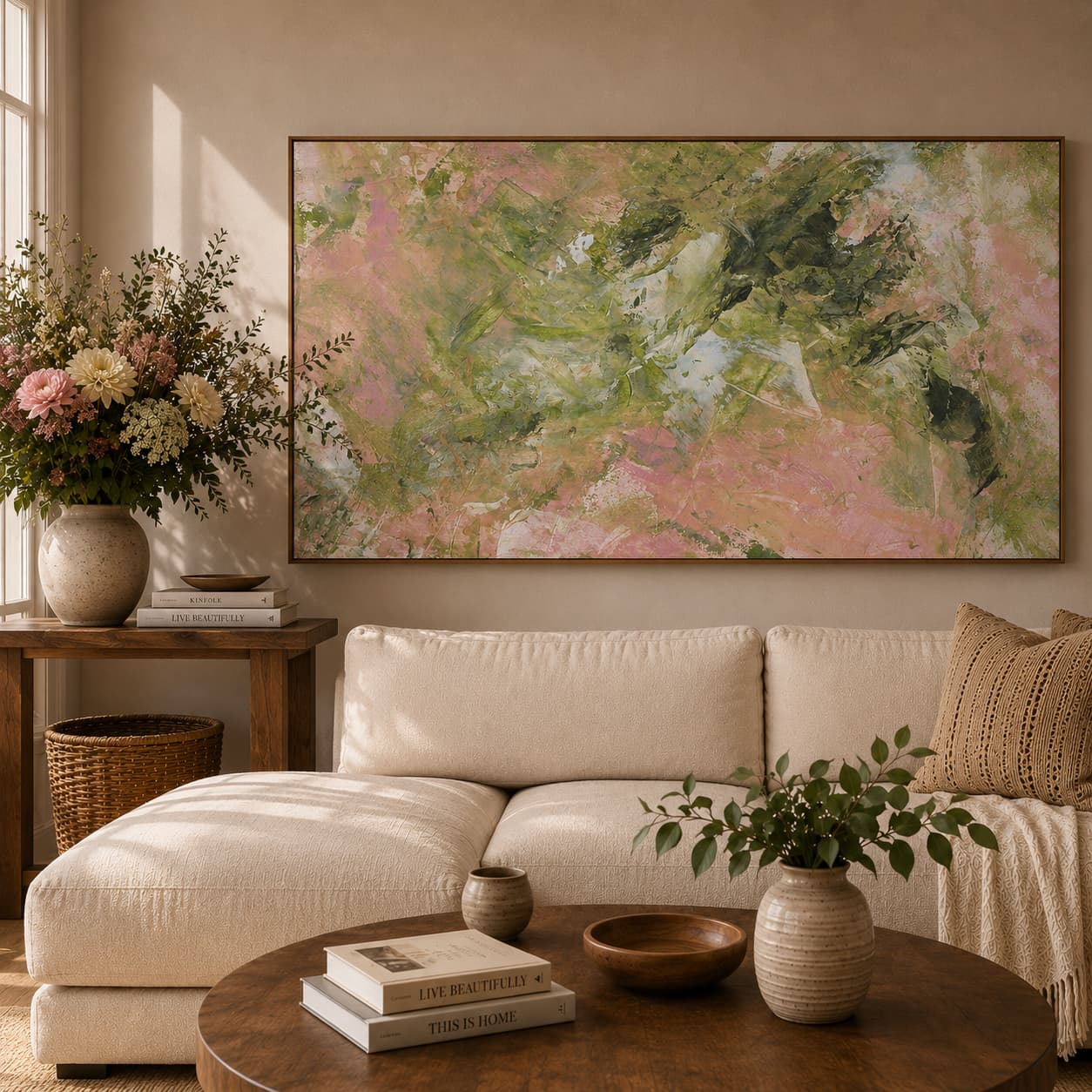
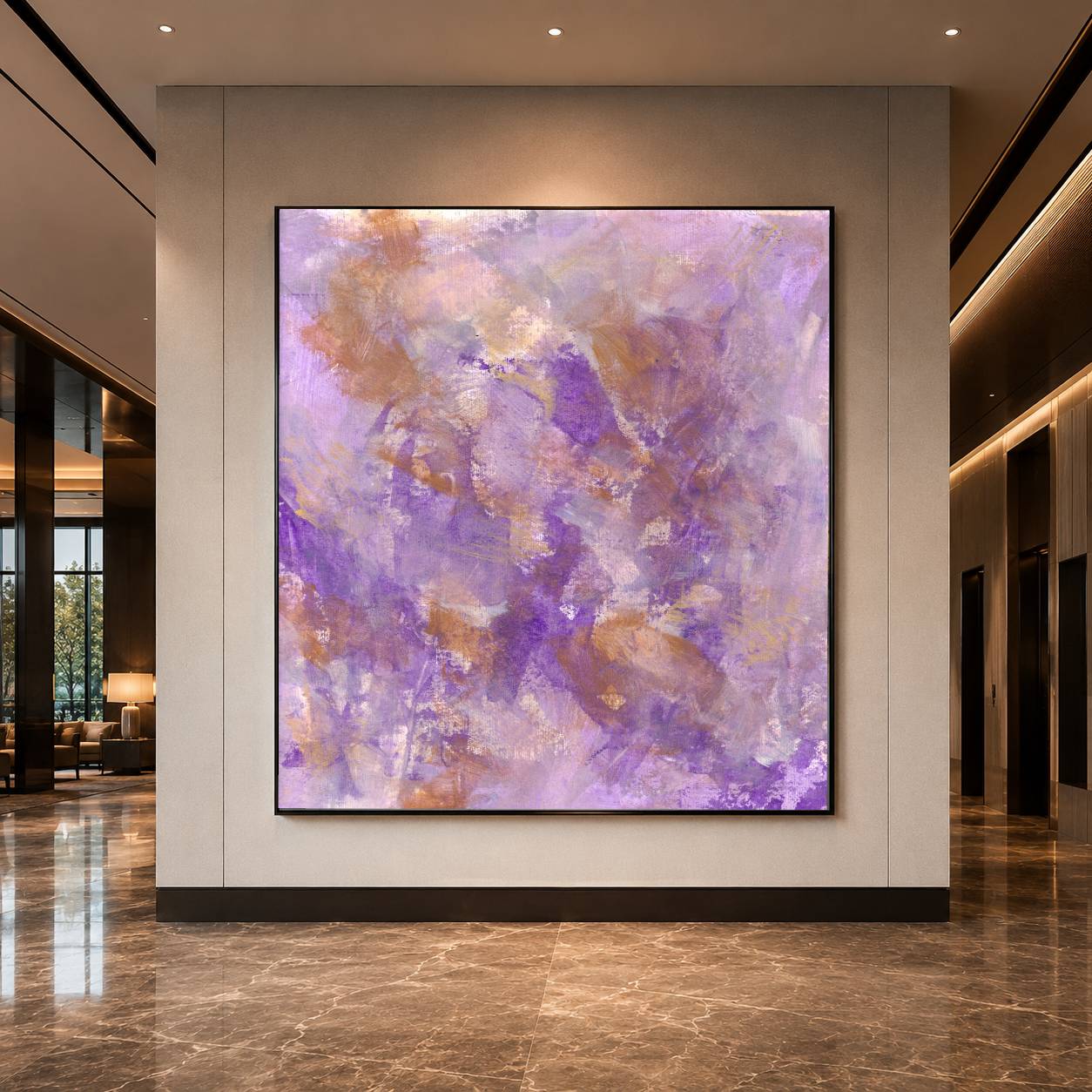
Why so many “calm interiors” accidentally feel emotionally dead
A lot of modern interiors are trying very hard to feel calm while quietly creating the emotional atmosphere of an expensive waiting room where nobody has slept properly since 2019.
Everything is beige. Everything matches. Everything is technically elegant.
And somehow the room still feels emotionally hollow.
That happens because many people confuse calm with absence. They remove colour, texture, emotional depth and visual variation until the room becomes so restrained that nothing inside it feels alive anymore. The space may look aesthetically controlled in photographs, but psychologically, it can start feeling strangely sterile after prolonged exposure.
Calm does not come from emptiness alone. It comes from emotional coherence.
A genuinely calming room still needs warmth, softness, rhythm, atmosphere and sensory depth. The nervous system responds positively to spaces that feel balanced and emotionally grounded, not spaces stripped of all visual life in pursuit of algorithm-approved minimalism.
This is where abstract art becomes incredibly important.
Good abstract work introduces an emotional atmosphere without creating clutter. It gives the eye somewhere to settle while still preserving spaciousness and visual calm. The room begins feeling emotionally inhabited rather than simply staged.
And honestly, many modern interiors do not need less personality. They need less visual panic disguised as luxury restraint.
Why abstract art works especially well in calm interiors
Abstract art functions differently from highly literal or heavily decorative imagery because it allows colour, movement, texture and composition to shape atmosphere directly without demanding constant narrative attention.
That matters enormously inside calmer spaces.
Highly detailed figurative artwork can sometimes dominate minimalist interiors because the eye becomes pulled continuously toward recognisable subject matter. Decorative wall art often creates visual fragmentation because it behaves more like styling filler than emotional architecture. Abstract work tends to integrate more naturally because the composition interacts with the room spatially rather than functioning purely as illustration.
This is one reason abstract canvases often feel so effective in quiet interiors.
-
- They soften architecture.
- They introduce emotional texture.
- They create movement without noise.
The artwork becomes part of the atmosphere itself rather than simply another object attached to the wall.
As explored in The Difference Between Decorative Art and Emotionally Intelligent Art, emotionally intelligent abstract work changes how a space feels psychologically rather than merely completing it visually.
That distinction matters far more than most people realise.
Why calm interiors still need emotional depth
Many people designing calmer interiors become afraid of visual intensity altogether.
-
- They remove contrast.
- Reduce texture.
- Avoid boldness.
- Strip back personality.
Then wonder why the room feels emotionally disconnected despite technically following every minimalist design rule currently haunting Pinterest and luxury property brochures.
The problem is not the restraint itself. The problem is emotional flatness.
A calming space still needs emotional layers in order to feel psychologically restorative. Human nervous systems generally respond well to softness, variation, rhythm and subtle sensory richness. Spaces become calming not because nothing exists inside them, but because the elements present feel coherent and balanced together.
-
- Abstract art helps introduce exactly this kind of depth.
- Texture catches light differently throughout the day.
- Colour creates emotional temperature.
- Movement softens rigid architecture.
- Scale changes spatial perception.
The room gains atmosphere without becoming visually crowded.
This is one reason emotionally intelligent interiors often rely on fewer but stronger pieces rather than endless decorative accessories. One substantial abstract work can create more emotional grounding than twenty smaller decorative objects all competing for attention simultaneously.
Why texture matters more than people think
Texture plays an enormous role in how calm interiors feel physically and psychologically.
Flat, highly polished interiors often become emotionally cold because every surface reflects visual information in the same hard, controlled way. Abstract canvas works introduce softer sensory variation through layered surfaces, movement and material depth that interact more naturally with light and space.
This is especially important in modern interiors dominated by clean lines, stone surfaces, polished woods, glass and architectural minimalism. Without softer visual textures, these spaces can start feeling slightly emotionally distant even when beautifully designed.
Abstract art helps soften that rigidity. The eye slows down. Light behaves differently. The room begins feeling more human.
This is partly why collector-grade abstract canvases often create a stronger calming effect than mass-produced decorative prints. The texture itself contributes to the emotional experience of the space rather than merely delivering visual information instantly before disappearing psychologically into the background.
As explored in What Makes Collector-Grade Canvas Art Different from Decorative Wall Art, emotionally resonant work tends to contain more material depth, atmospheric complexity and visual longevity than generic decorative pieces designed purely to coordinate quickly with current trends.
Why calm spaces still need focal points
A common mistake in minimalist or calm interiors is removing too many focal points in pursuit of visual simplicity.
Without emotional anchors, rooms can begin feeling directionless. The eye drifts through the space without settling anywhere properly, which paradoxically creates subtle visual restlessness even inside supposedly calming interiors.
Abstract art solves this beautifully because it creates a focal point without overwhelming the room.
The eye lands. Breath slows slightly. The room feels visually organised.
Importantly, calm focal points behave differently from loud statement pieces designed purely for attention. Emotionally intelligent abstract work usually creates presence through atmosphere rather than spectacle. The artwork feels integrated into the architecture instead of aggressively interrupting it.
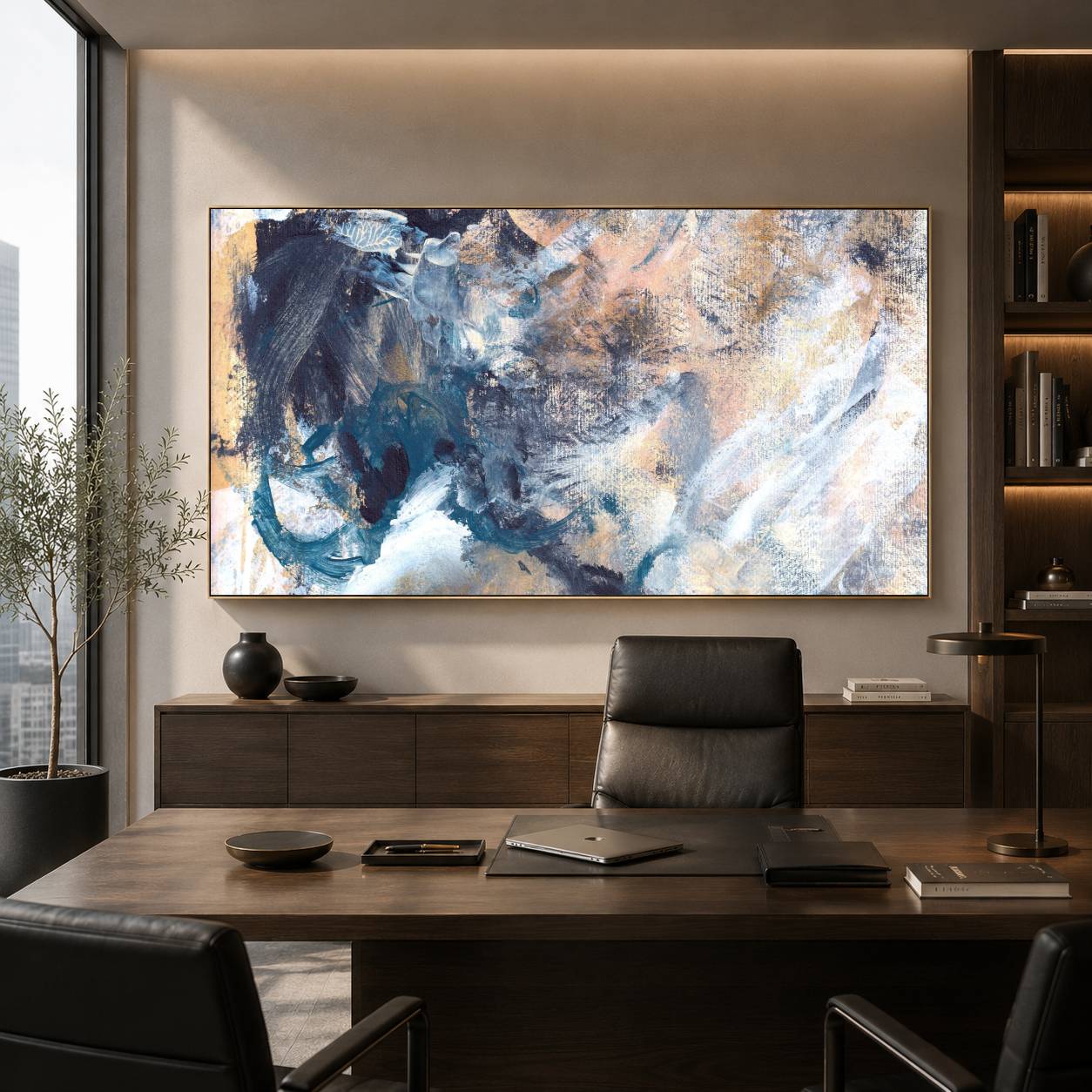
This is particularly effective in larger open-plan spaces where calmer interiors can otherwise begin feeling emotionally empty or unfinished. As explored in How to Buy Large Abstract Art Without Overwhelming a Room, oversized abstract works often make interiors feel calmer rather than busier because they reduce fragmentation and strengthen spatial coherence.
One meaningful focal point generally creates more calm than constant decorative distraction.
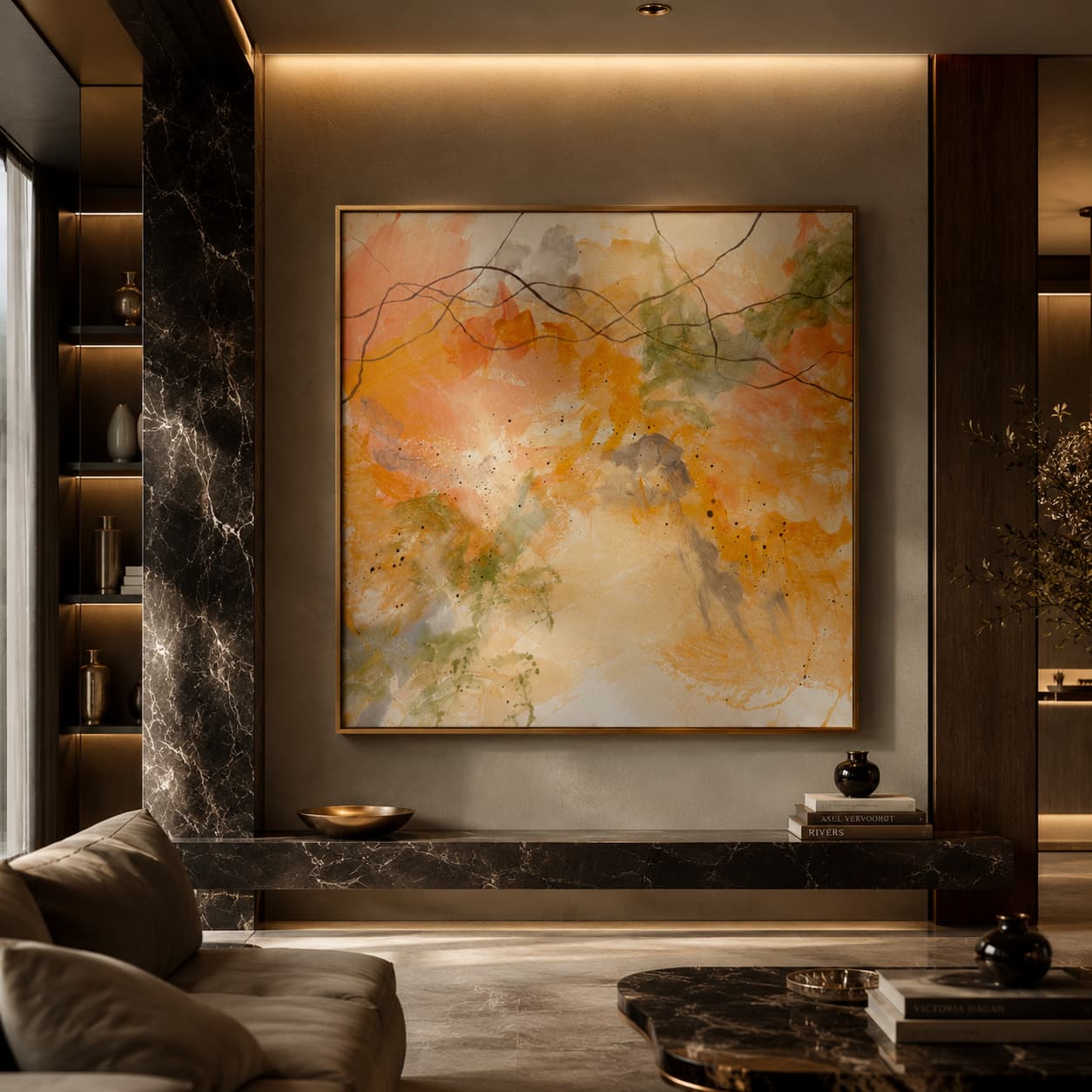
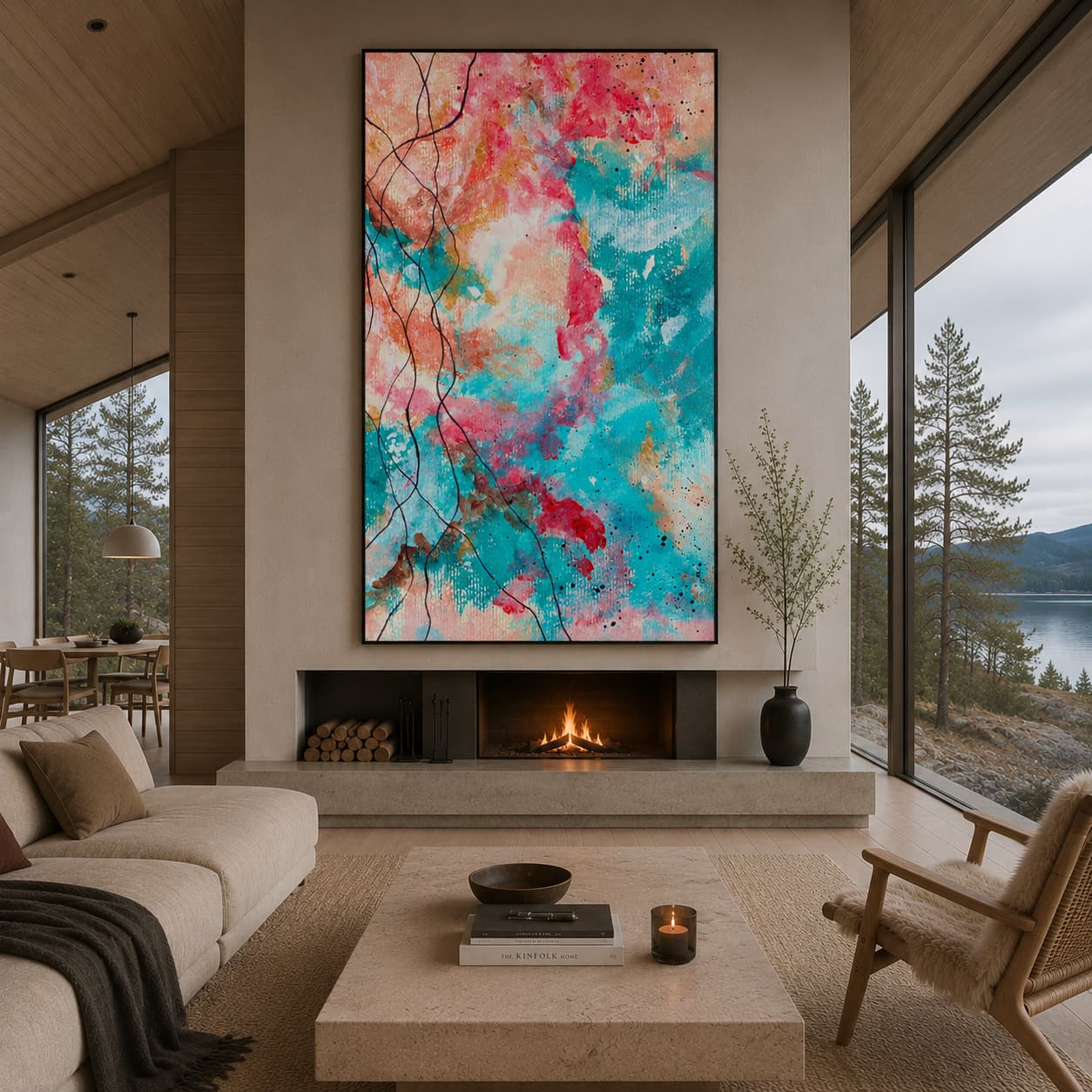
Why colour changes emotional atmosphere so dramatically
Colour influences the nervous system response constantly, whether people consciously analyse it or not.
-
- Warm, earthy tones often feel grounding.
- Soft neutrals feel expansive.
- Layered greens and blues may feel calming.
- Deep charcoals can create stillness and depth when balanced correctly.
The emotional effect depends not only on the colour itself but on texture, composition, saturation and surrounding architectural context.
This is why abstract art can become such a powerful tool inside calm interiors. Colour exists less as decoration and more as an emotional atmosphere. Instead of merely “matching” the room, the artwork begins shaping how the room feels physically over time.
As discussed in How Colour in Abstract Art Changes the Feeling of a Room, emotionally intelligent colour palettes create psychological softness and spatial balance rather than simply visual coordination.
And importantly, calming colour does not necessarily mean pale or boring.
Some of the calmest interiors use rich darker tones, textured layering and restrained contrast extremely effectively because emotional calm comes from coherence, not blandness.
Decision box: what makes abstract art work in calm interiors?
| Good abstract art for calm interiors… | Avoid artwork that… |
|---|---|
|
Creates emotional atmosphere |
Feels visually frantic |
|
Uses balanced colour relationships |
Relies on harsh contrast only |
|
Contains texture and depth |
Feels flat and generic |
|
Supports the architecture |
Fights the room visually |
|
Creates grounding focal points |
Creates unnecessary clutter |
|
Feels emotionally coherent |
Exists only to match décor |
|
Ages beyond trend cycles |
Feels trend-dependent |
|
Allows the eye to rest |
Demands constant attention |
|
Softens modern spaces |
Feels commercially sterile |
|
Encourages presence |
Feels emotionally empty |
Why abstract art prevents minimalism from becoming sterile
Minimalism becomes problematic when people interpret it purely as reduction. Real calm usually requires warmth alongside restraint.
Abstract art helps create that balance because it introduces emotional and sensory richness without adding clutter. The room still feels spacious and intentional, but no longer emotionally vacant.
This becomes particularly important in homes where people actually live rather than merely photograph interiors for social media. Human nervous systems generally need some degree of softness, rhythm and visual nourishment in order to feel psychologically comfortable over long periods.
Without that, minimalist interiors can begin feeling emotionally exhausting despite looking aesthetically “clean.”
Abstract work introduces life back into the space without destroying calm.
Movement softens stillness. Texture softens architecture. Colour softens emptiness. The room feels inhabited again.
Why emotionally intelligent art changes how people physically behave in a room
People move differently inside emotionally coherent environments.
They often speak more softly. Relax more naturally. Slow down physically. Remain present longer.
This is partly why emotionally intelligent abstract art matters beyond aesthetics alone. The visual atmosphere of a room affects the nervous system behaviour constantly. Artwork contributes directly to that atmosphere, whether consciously acknowledged or not.
A calming abstract canvas can subtly shift the emotional pacing of a space simply through composition, colour balance and visual rhythm. The room begins supporting restoration rather than constant stimulation.
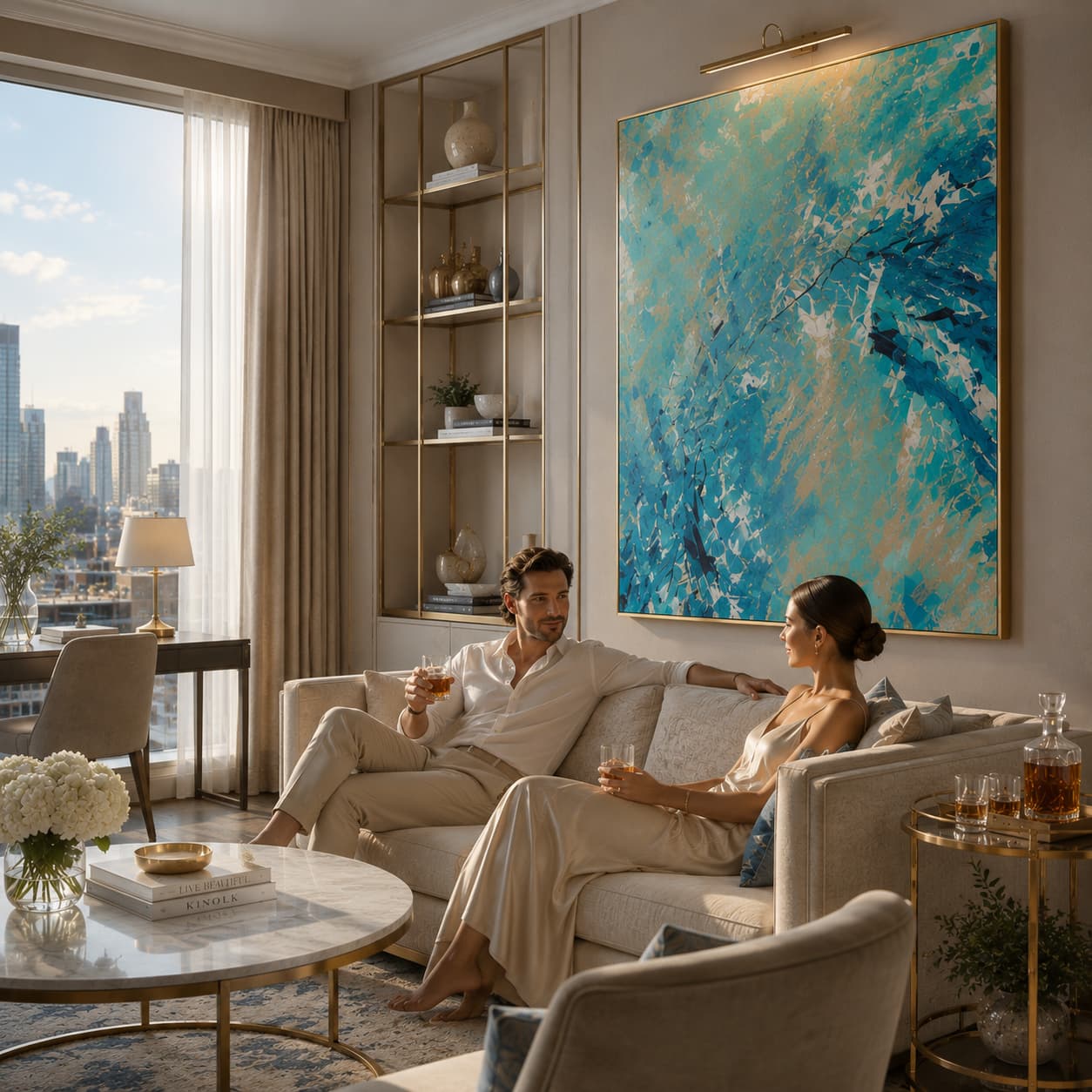
This becomes incredibly valuable inside bedrooms, reading spaces, wellness environments, calm offices and slower living areas where emotional regulation matters as much as visual styling itself.
As explored in What Happens When You Buy Art Without a Sales Pitch, emotionally resonant work creates relationships with viewers over time rather than functioning only as decorative consumption.
The artwork becomes part of daily emotional experience itself.
Why calm interiors usually contain fewer, stronger pieces
One of the defining characteristics of emotionally intelligent calm interiors is restraint with intention rather than emptiness through fear.
These spaces often use fewer visual elements overall, but the elements chosen carry more emotional and spatial weight. Abstract art works beautifully within this approach because one substantial piece can hold the emotional atmosphere of an entire room without requiring endless decorative support around it.
This is why many calming interiors avoid excessive gallery walls, endless accessories or hyper-styled decorative layering. Too many competing visual elements fragment attention and subtly increase nervous system stimulation even when each object individually appears aesthetically pleasing.
A strong abstract work often simplifies the room emotionally.
The space breathes more easily.
The eye settles more naturally.
The atmosphere feels clearer.
And honestly, many interiors become calmer not because people remove everything, but because they finally stop adding decorative filler that contributes absolutely nothing emotionally beyond proving somebody once visited a very committed homeware website at 1am.
Comparison table: calm emotionally intelligent interiors vs sterile minimalist
| Calm emotionally intelligent interiors | Sterile minimalist interiors |
|---|---|
|
Feel psychologically grounded |
Feel emotionally flat |
|
Use texture and atmosphere |
Over-prioritise emptiness |
|
Contain meaningful focal points |
Lack visual anchors |
|
Support nervous system calm |
Can feel cold or clinical |
|
Use abstract art intentionally |
Avoid emotional depth |
|
Feel warm and lived in |
Feel staged or impersonal |
|
Balance restraint with softness |
Focus only on reduction |
|
Encourage slower visual pacing |
Feel visually disconnected |
|
Age more gracefully |
Often trend-dependent |
|
Create emotional memory |
Create aesthetic neutrality |
Why collector-grade abstract art feels different in calm spaces
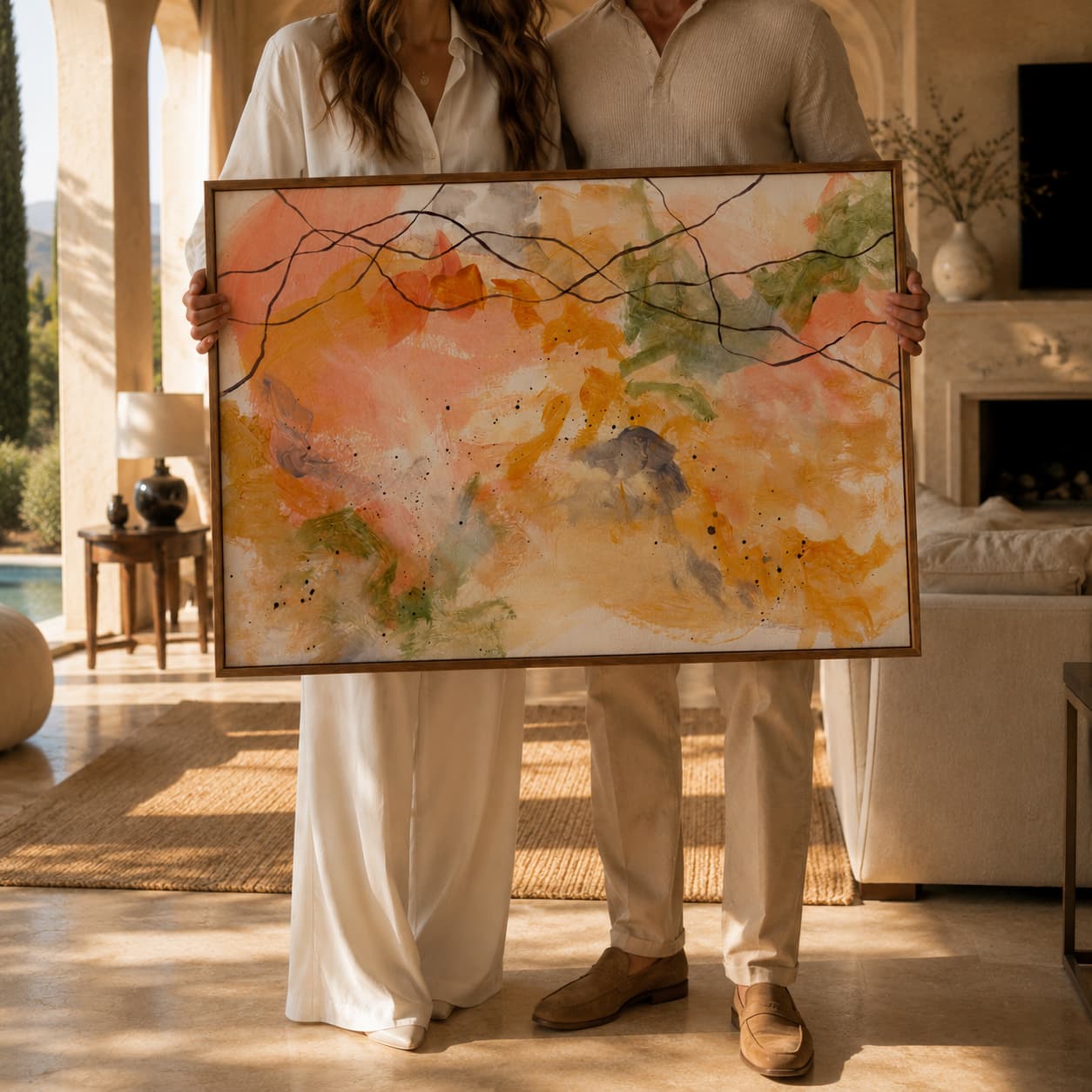
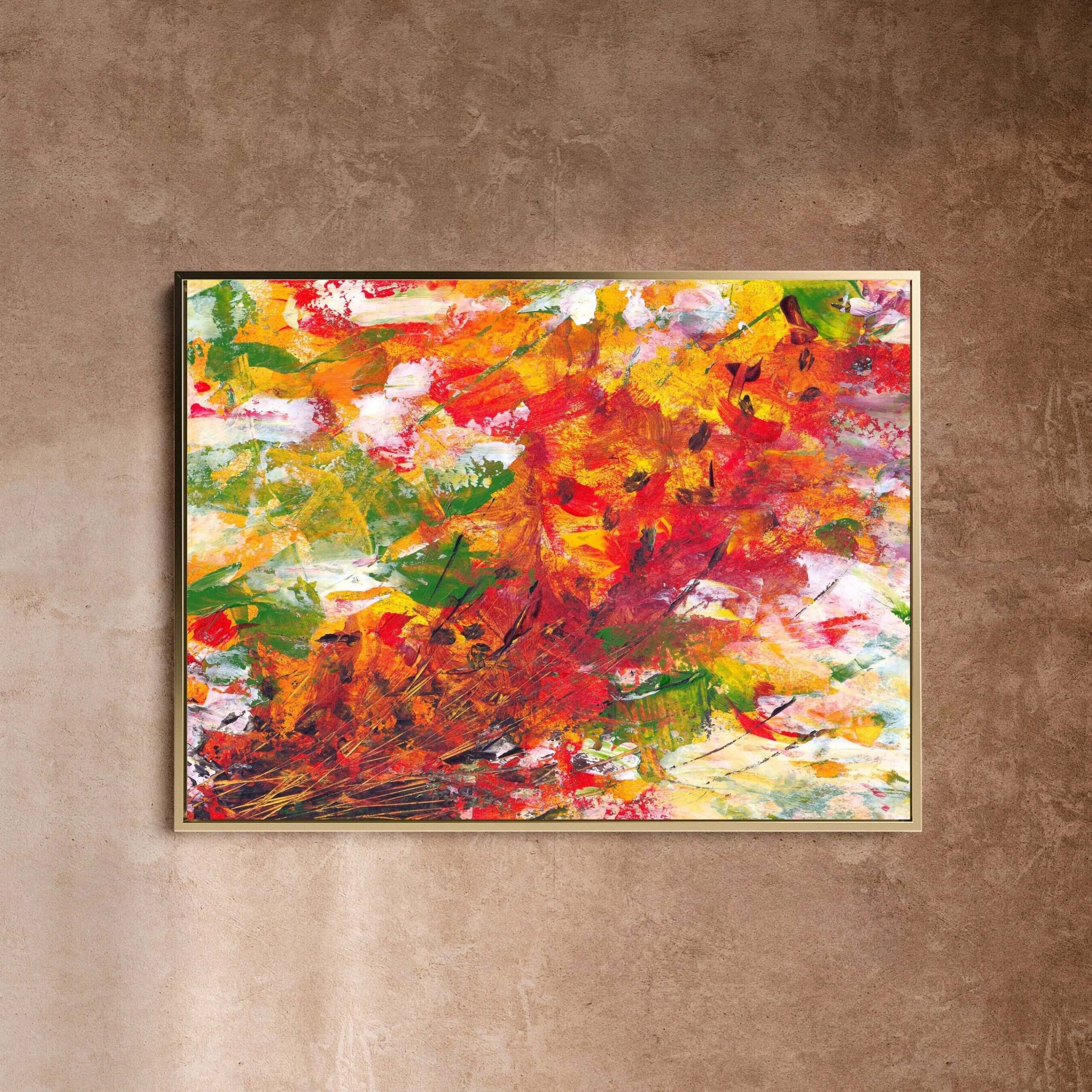
Large-scale collector-grade abstract works often create stronger calming effects because they contain more visual depth and atmospheric complexity than highly generic decorative pieces.
-
- The colour relationships feel layered rather than flat.
- The texture behaves naturally in changing light.
- The composition allows breathing space.
- The emotional tone feels intentional rather than commercially manufactured.
This is why collector-grade abstract art often transforms calm interiors so effectively. The work contributes something emotionally substantial to the room rather than simply filling empty wall space.
As explored in Why Abstract Canvas Prints Work Better Than Mass-Produced Wall Art, emotionally resonant work tends to age better precisely because it creates an ongoing experience rather than instant visual consumption.
The room continues feeling emotionally alive over time rather than aesthetically exhausted after six weeks.
Practical checklist: how to choose abstract art for calm interiors
| Question to ask | Why it matters |
|---|---|
|
Does the artwork feel emotionally grounding? |
Atmosphere matters more than trend |
|
Is the colour palette calming but layered? |
Flat neutrality can feel sterile |
|
Does the work contain texture? |
Texture softens the room psychologically |
|
Is the composition balanced? |
Calm comes from coherence |
|
Does the piece support the architecture? |
Art should feel integrated |
|
Is the scale appropriate? |
Tiny artwork often weakens calm spaces |
|
Does the room feel warmer with the art? |
Emotional response matters |
|
Can the eye rest within the composition? |
Overstimulation reduces calm |
|
Will the work age beyond trends? |
Long-term atmosphere matters |
|
Does the artwork create presence without noise? |
That is the ideal balance |
Final thoughts: calm interiors should feel emotionally alive, not emotionally absent
A calm interior should not feel empty. It should feel settled. There is a difference.
The most restorative spaces usually contain emotional atmosphere, softness, texture and visual grounding rather than sterile perfection. Abstract art helps create this balance because it introduces depth and presence without relying on clutter or excessive decoration.
-
- Good abstract work slows the eye down.
- Softens architecture.
- Creates emotional coherence.
- Allows the room to feel quieter without becoming lifeless.
And honestly, many people are not actually craving emptiness in their homes. They are craving relief from overstimulation, visual chaos and emotional noise.
Emotionally intelligent abstract art helps create that relief not by removing all feeling from a space, but by helping the room feel calmer, softer and more human to exist inside every day.
If you are looking for collector-grade abstract art designed for calm, emotionally intelligent interiors, explore Selected Works or request access to the private Collector’s Vault.
You can also read:
The Difference Between Decorative Art and Emotionally Intelligent Art
How Colour in Abstract Art Changes the Feeling of a Room
How to Buy Large Abstract Art Without Overwhelming a Room
Why Abstract Canvas Prints Work Better Than Mass-Produced Wall Art
Key Takeaway
Abstract art often helps calm interiors feel warmer, softer and more emotionally complete because it introduces atmosphere and visual depth without relying on clutter, excessive decoration or overstimulating design choices.
Frequently Asked Questions
Abstract art creates atmosphere, texture and emotional depth without relying on excessive visual clutter or overly literal imagery.
Yes. Minimalist spaces can feel sterile when they lack warmth, texture, emotional grounding or meaningful focal points.
Balanced colour, movement, texture and composition help the nervous system settle visually and emotionally inside the space.
No. Rich darker tones, layered earth colours and restrained contrast can also create calming emotional atmospheres.
Texture softens hard architectural lines and creates sensory depth, helping spaces feel warmer and more emotionally comfortable.
Emotionally intelligent art is artwork that influences atmosphere and emotional experience rather than functioning only as decoration.
Often yes. One substantial piece usually reduces visual fragmentation and creates stronger emotional coherence within a room.
Without focal points, rooms can feel emotionally directionless or visually empty despite looking minimalist.
Calm interiors feel grounded and emotionally coherent, while empty interiors often feel sterile, unfinished or emotionally disconnected.
Collector-grade work usually contains more depth, texture, atmosphere and emotional complexity than mass-produced decorative pieces.