
The Difference Between Decorative Art and Emotionally Intelligent Art
TL;DR
Decorative art is usually chosen to fill a wall, match a colour palette or complete an interior visually. Emotionally intelligent art goes deeper. It changes the atmosphere of a space, influences how people physically and emotionally feel inside it and creates a stronger sense of presence, calm, tension, softness or reflection.
That does not mean decorative art is automatically “bad,” nor does emotionally intelligent art need to be pretentious, gloomy or psychologically exhausting to live with.
The difference is intention. Decorative art often functions visually. Emotionally intelligent art functions emotionally as well.
It interacts with the nervous system, the architecture and the lived experience of the room itself rather than existing purely as surface-level styling.
For collector-grade works designed with emotional depth and atmosphere in mind, explore Selected Works or request access to the private Collector’s Vault.
Definition: what is emotionally intelligent art?
Emotionally intelligent art refers to artwork created or selected with emotional atmosphere, psychological resonance and sensory impact in mind. Rather than functioning only as decoration, emotionally intelligent art influences how a space feels through colour, texture, composition, movement, scale and emotional presence.
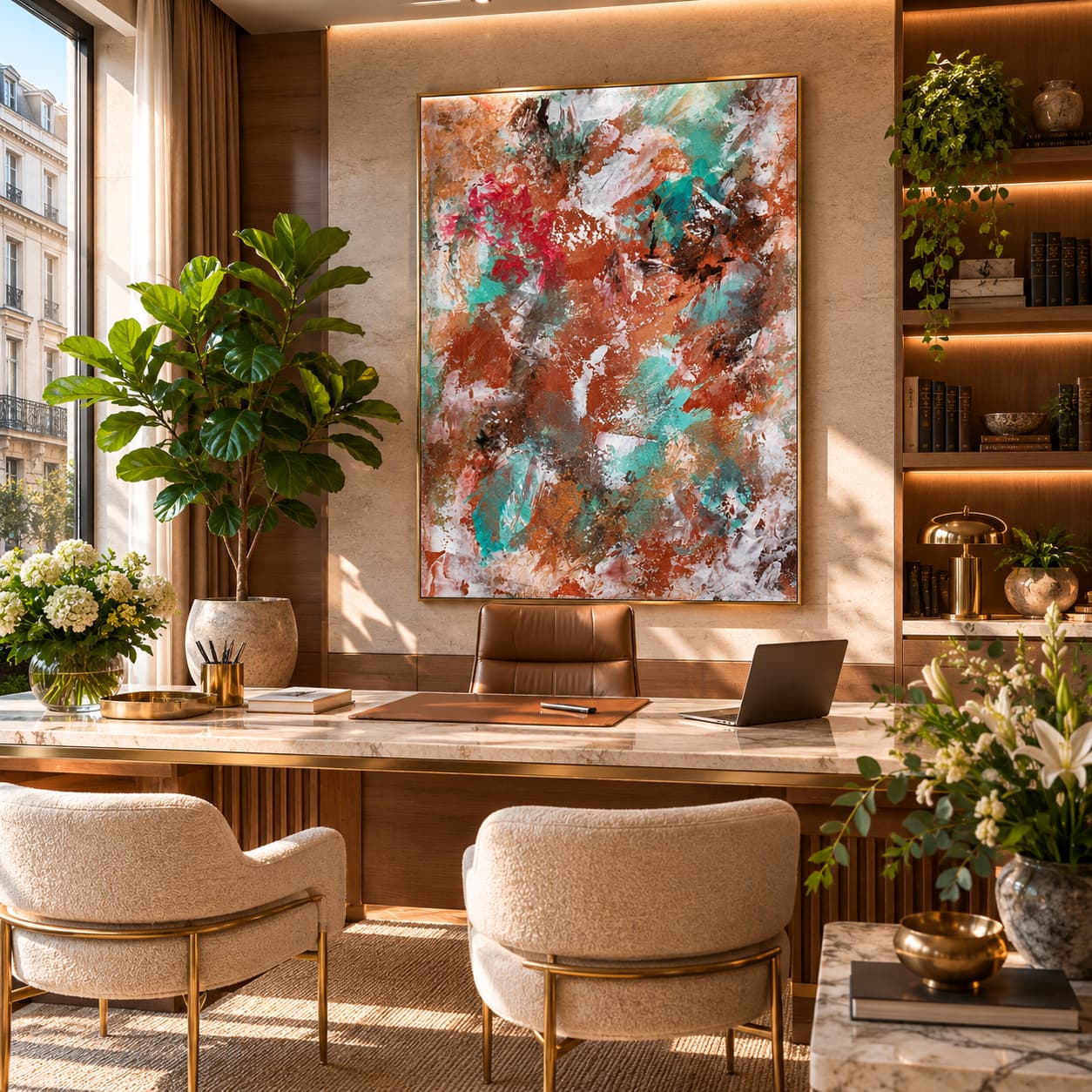
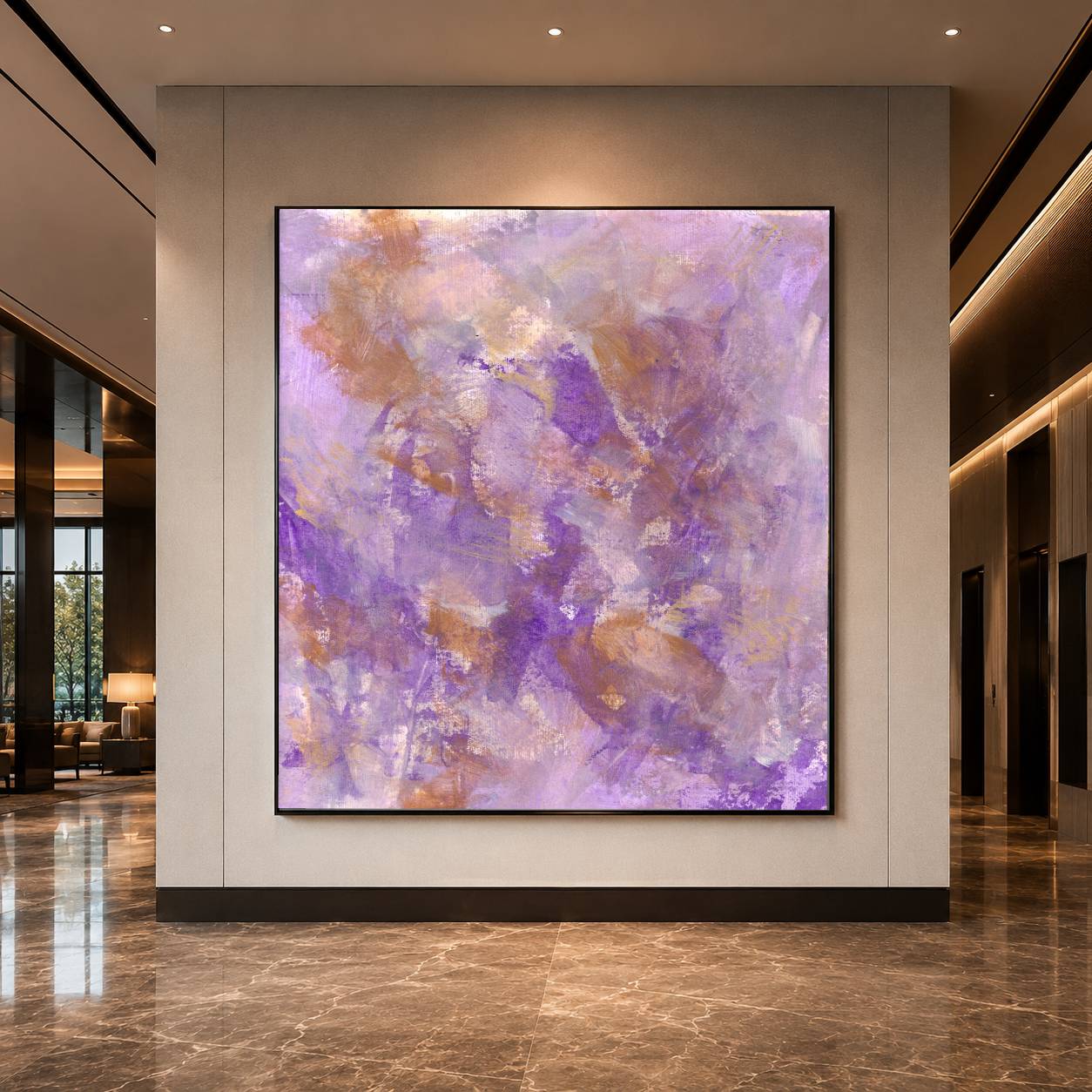
Why so much modern art buying has become strangely shallow
A lot of people now buy art the same way they buy cushions. That is not entirely their fault.
Modern interiors are saturated with styling content, teaching people to think about art primarily as coordination rather than experience. Artwork becomes another decorative layer inside the room instead of something capable of influencing the emotional atmosphere in a deeper way.
People are encouraged to ask:
-
- Does it match the sofa?
- Will it work with the curtains?
- Is the beige warm enough?
Can we add another beige one just in case the first beige wasn’t emotionally committed enough?
The problem is not that visual harmony matters. Of course it matters. Interiors should feel cohesive. But when art becomes purely decorative, something important often disappears from the room itself.
Presence. Emotional texture. Psychological depth.
A sense that the space contains something genuinely felt rather than simply selected to satisfy an algorithm trained entirely on “modern neutral living room inspo.”
Decorative art often finishes a room visually. Emotionally intelligent art changes the experience of being inside it. That is a very different role.
Decorative art usually prioritises coordination first
Decorative art is often chosen primarily to support the visual styling of a room. Again, there is nothing inherently wrong with that.
Decorative pieces can still be beautiful. They can soften a space, introduce colour and create cohesion visually. Many people buy decorative artwork because they want their home to feel complete and visually balanced, which is perfectly reasonable.
The issue appears when decoration becomes the only purpose the artwork serves.
In many mass-produced interiors, artwork is selected almost entirely through surface-level matching. The art exists to echo colours already present in the room rather than contributing anything emotionally distinct to the atmosphere itself.
That usually creates interiors that look technically polished but emotionally flat. Nothing feels wrong exactly. But nothing really stays with you either. The room feels styled rather than alive.
This becomes especially obvious in spaces filled with highly generic wall art designed purely to imitate current trends. Perfectly colour-coordinated abstract prints with no emotional tension, no movement, no texture and no sense of human experience behind them often disappear psychologically after about thirty seconds.
They decorate the wall. They do not deepen the room.
Emotionally intelligent art changes the atmosphere of the space itself
Emotionally intelligent art behaves differently because it interacts with the nervous system as well as the eye.
The artwork creates an emotional atmosphere.
-
- Sometimes that atmosphere feels calming.
- Sometimes grounding.
- Sometimes expansive.
- Sometimes quietly tense.
- Sometimes reflective.
- Sometimes soft and restorative.
The point is not whether the artwork feels “positive” all the time. The point is that it creates an emotional response deeper than simple visual coordination.
This is one reason abstract art can become so powerful in emotionally intelligent interiors. Abstract work allows colour, movement, scale and texture to influence emotional perception directly without relying entirely on literal subject matter.
A room with emotionally intelligent artwork often feels different before people consciously understand why.
The nervous system responds first.
This is explored further in How Colour in Abstract Art Changes the Feeling of a Room, where colour is discussed not simply as design theory but as emotional architecture inside the home itself.
Because colour changes physical experience constantly whether people consciously analyse it or not.
Why emotionally intelligent interiors often feel calmer
One of the biggest misunderstandings about emotionally intelligent art is the assumption that it must always be dramatic, intellectually heavy or aggressively conceptual.
Actually, emotionally intelligent art often creates more calm than decorative art because it contains emotional coherence rather than visual noise.
Many decorative interiors feel strangely overstimulating despite technically following all the “right” design rules. Every object coordinates. Every colour palette behaves. Every surface looks curated. Yet the room still feels emotionally exhausting because nothing inside it has genuine depth or stillness.
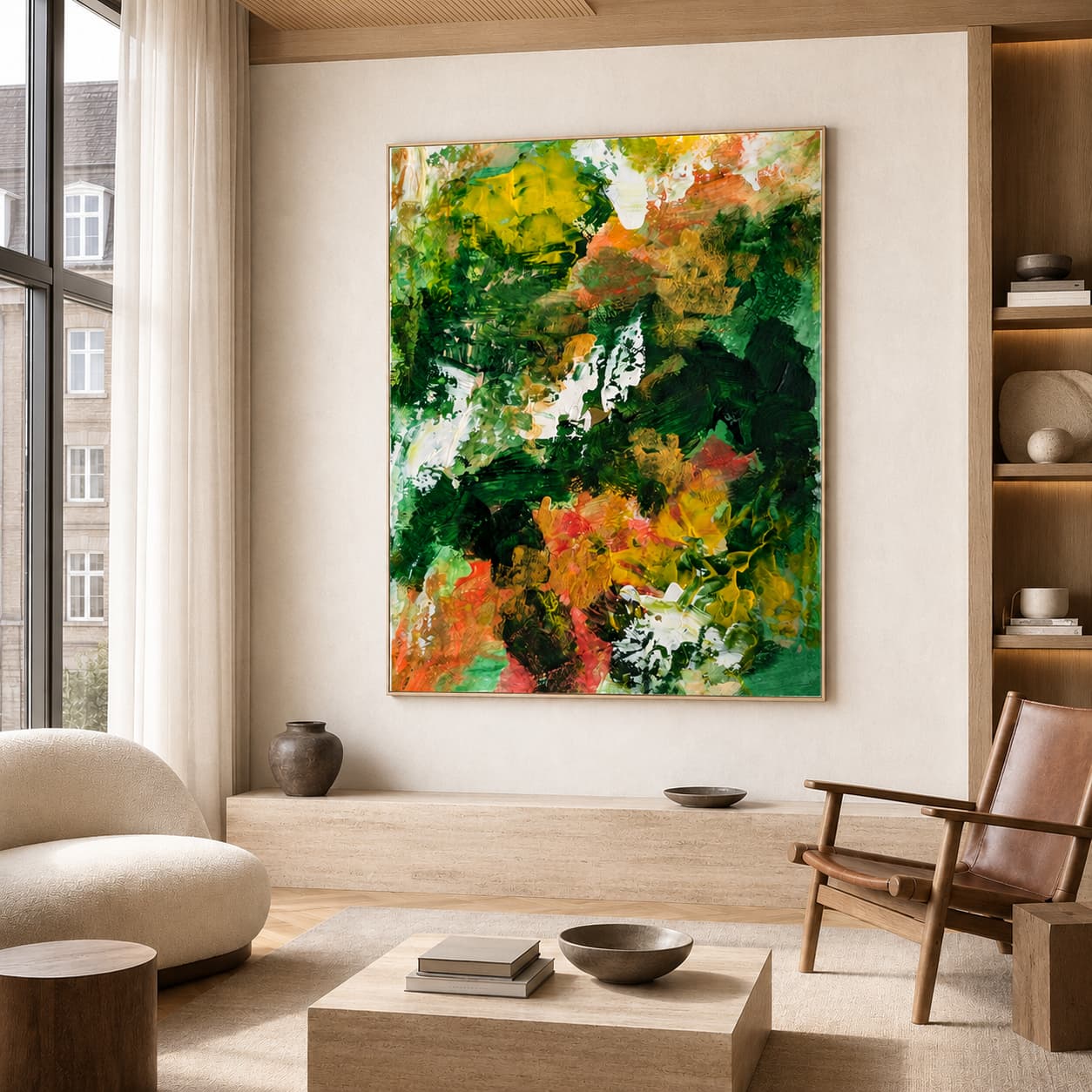
Emotionally intelligent art often introduces exactly that missing layer. Texture slows the eye down. Movement softens the architecture. Colour creates emotional grounding. Scale changes spatial perception. The room stops feeling like a styled showroom and starts feeling psychologically inhabitable again.
This is one reason large abstract canvases often work beautifully in calmer interiors. As discussed in How to Buy Large Abstract Art Without Overwhelming a Room, oversized emotionally resonant artwork frequently reduces visual fragmentation rather than increasing it.
One meaningful piece often creates more calm than fifteen smaller decorative objects all competing for nervous system attention simultaneously.
Why emotionally intelligent art tends to age better
Trend-driven decorative art often dates quickly because its primary purpose is visual coordination with current design trends rather than emotional longevity.
You can usually spot this immediately in interiors built entirely around whatever algorithmically dominated Pinterest six months ago.
The art feels temporary. Emotionally intelligent art tends to age differently because emotional atmosphere does not move at the same speed as trend cycles. Work rooted in texture, movement, colour depth, emotional resonance and spatial feeling usually remains psychologically engaging long after trend palettes change.
People continue responding to it because the artwork still offers experience rather than merely decoration.
This is why collector-grade abstract work often survives stylistic changes inside interiors more successfully than mass-produced decorative pieces. The work continues interacting with the room emotionally instead of depending entirely on trend relevance.
As explored in Why Abstract Canvas Prints Work Better Than Mass-Produced Wall Art, emotionally resonant art usually carries more complexity, material depth and psychological atmosphere than highly generic decorative prints.
And honestly, most people eventually become tired of artwork chosen purely to match the scatter cushions.
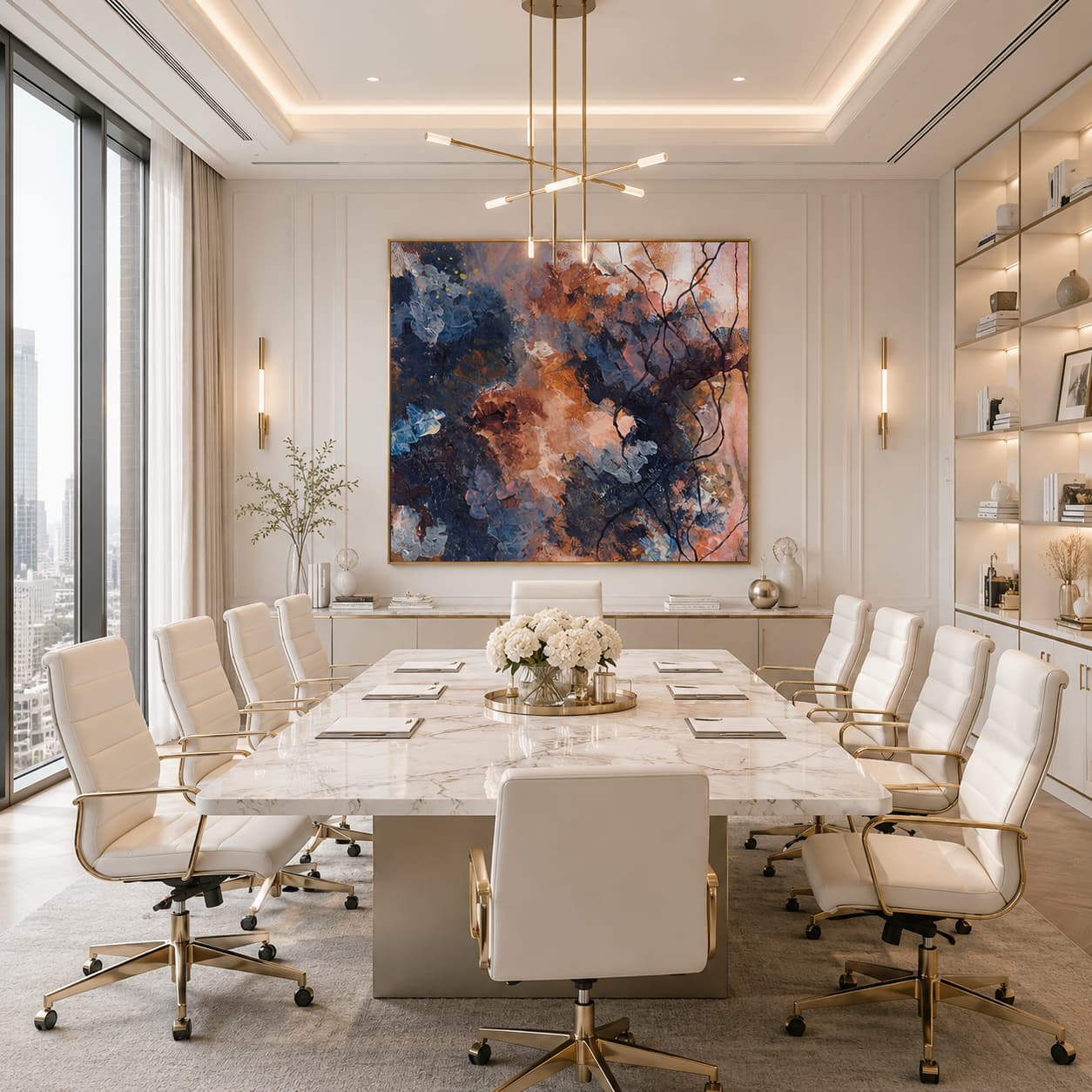
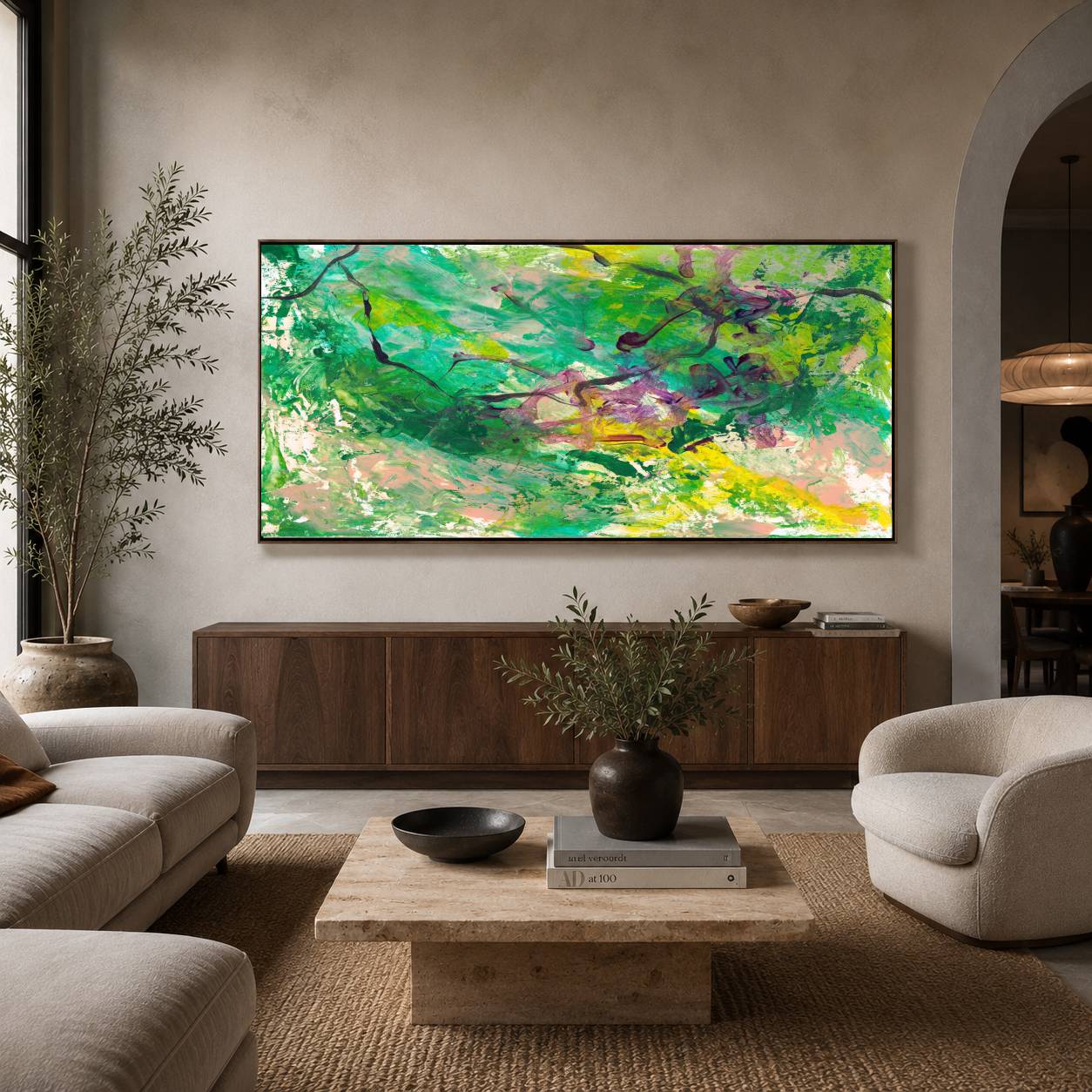
Decision box: decorative art vs emotionally intelligent art
| Decorative art | Emotionally intelligent art |
|---|---|
|
Primarily visual |
Visual and emotional |
|
Often trend-driven |
Often atmosphere-driven |
|
Chosen to coordinate |
Chosen to resonate |
|
Completes styling |
Changes spatial feeling |
|
Surface-level impact |
Psychological impact |
|
Often mass-produced |
Often more intentional |
|
Immediate visual appeal |
Slower emotional depth |
|
Designed to blend in |
Designed to interact with the room |
|
May date quickly |
Often ages more gracefully |
|
Decorative function first |
Emotional experience first |
Why texture matters so much emotionally
Texture changes how artwork feels physically inside a space.
Flat decorative prints often deliver all visual information immediately. The eye consumes the image quickly and moves on. Emotionally intelligent artwork usually behaves more slowly because texture creates depth, softness and sensory variation throughout the day.
Light interacts differently with layered surfaces. Colour shifts subtly. Movement inside the composition becomes more noticeable over time.
The artwork continues revealing itself rather than existing as one instantly consumed visual statement.
This is especially important in modern interiors where architecture can sometimes feel slightly sterile or emotionally distant without softer visual layers. Textured abstract canvas work often reintroduces warmth and humanity into spaces dominated by hard surfaces, polished materials and highly controlled styling.
Texture slows people down. That matters psychologically far more than most people realise.
Why emotionally intelligent art is not always “pretty”
Decorative art often prioritises immediate likability. Emotionally intelligent art prioritises resonance. Those are not always the same thing.
Some emotionally intelligent works feel calming immediately. Others feel quietly uncomfortable, reflective or emotionally charged in ways that reveal themselves gradually over time. That does not make the work negative. It makes the work emotionally active rather than merely decorative.
Good emotionally intelligent art creates relationship.
The viewer keeps returning to it because the work continues offering something psychologically layered rather than instantly exhausted after one glance.
Importantly, emotionally intelligent art does not need to become performative, inaccessible or absurdly self-important to achieve this. A work can feel emotionally deep without requiring a seventeen-page curatorial essay explaining why the artist once cried near a pear and transformed Western consciousness forever through textured charcoal.
Emotional intelligence in art often appears through subtlety.
Stillness. Tension. Movement. Colour relationships. Spatial feeling. Quiet honesty. Not spectacle.
Why emotionally intelligent art changes how people behave in a room
People move differently inside emotionally coherent spaces.
-
- They settle more easily.
- They slow down more naturally.
- They feel calmer physically.
This is why emotionally intelligent artwork matters far beyond aesthetics alone. The visual environment influences nervous system state constantly. Colour, scale, texture and composition all contribute to how a room feels psychologically over time.
A room filled with emotionally disconnected decorative filler often feels visually busy even when technically minimalist. A room containing emotionally resonant artwork often feels calmer because the visual atmosphere feels coherent rather than fragmented.
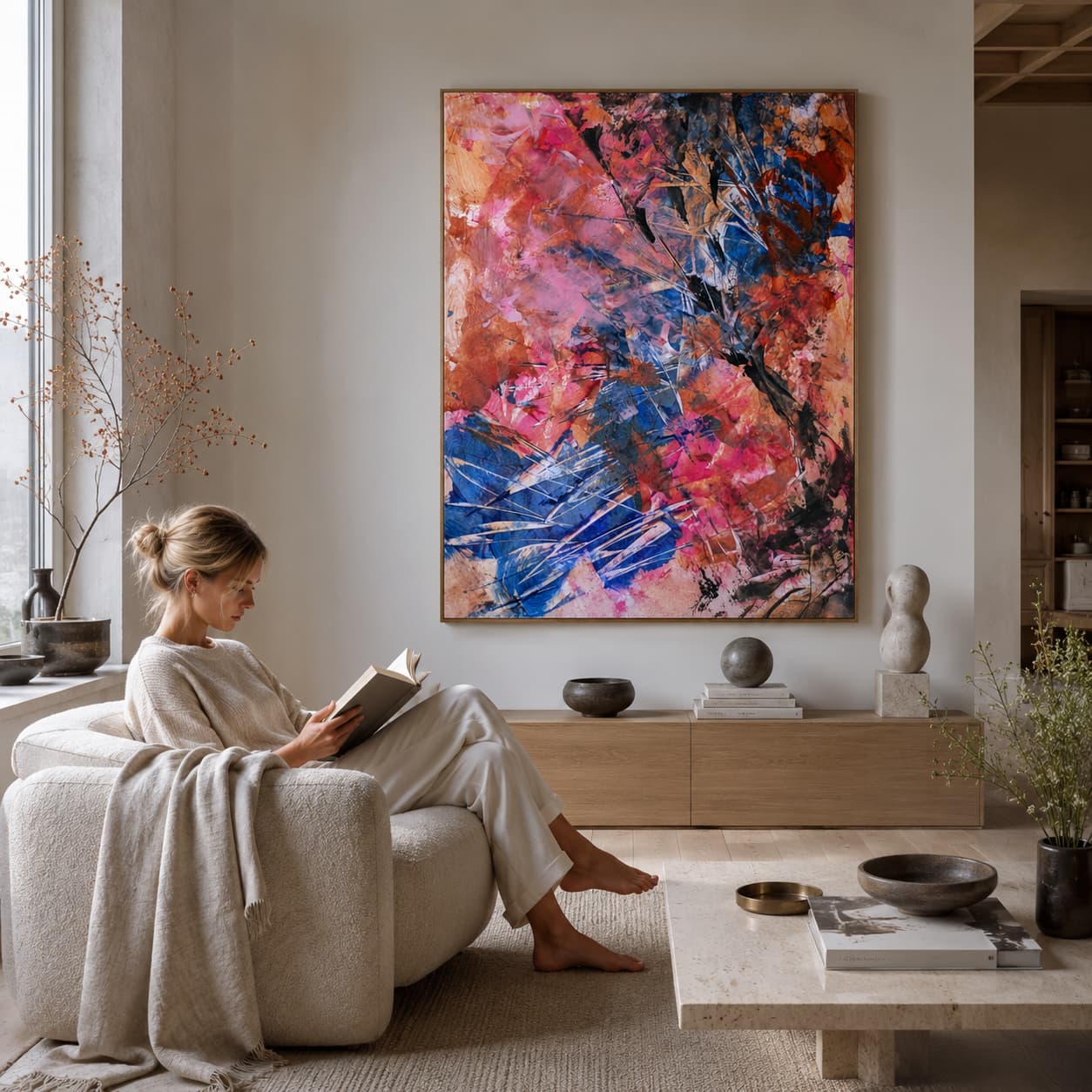
This becomes especially important in spaces designed for restoration, reflection or presence.
-
- Homes.
- Retreats.
- Quiet offices.
- Bedrooms.
- Reading spaces.
- Wellness environments.
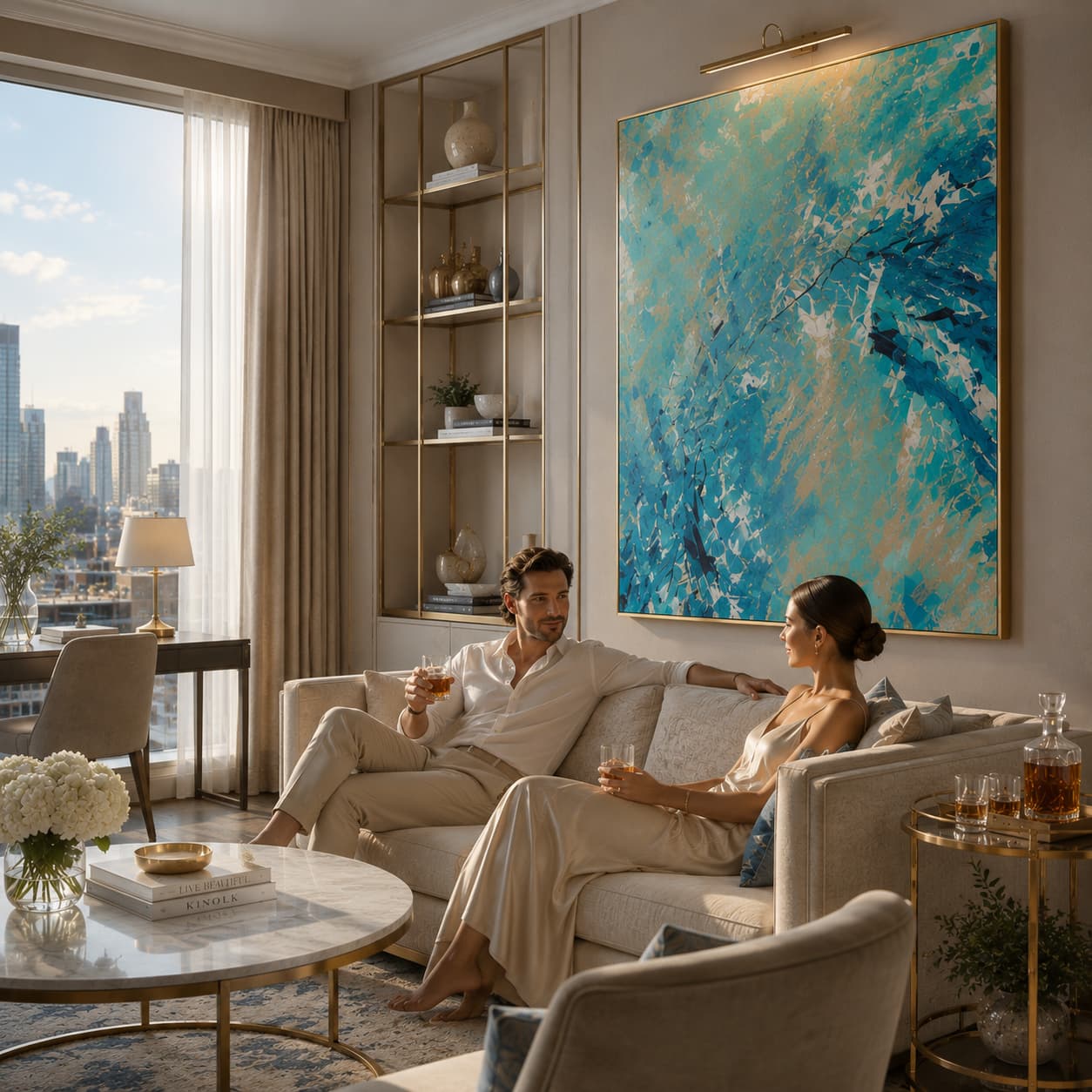
Emotionally intelligent art supports the emotional purpose of the room itself rather than functioning purely as decoration layered on top afterwards.
Why emotionally intelligent art often feels more personal
People tend to connect more deeply with emotionally intelligent art because the relationship becomes experiential rather than purely decorative. The artwork may remind them of something difficult to explain.
-
- A feeling.
- A memory.
- A state of calm.
- A sense of stillness.
A certain emotional texture they recognise intuitively without needing language for it.
Decorative art can absolutely still be enjoyed aesthetically, but emotionally intelligent art often creates attachment. People continue thinking about the piece long after leaving the room because the artwork interacts with something psychological rather than merely visual.
This is partly why collectors often speak about emotionally resonant works differently from decorative purchases. The relationship feels less transactional and more lived with over time.
The artwork becomes part of the emotional architecture of daily life itself.
Comparison table: emotionally intelligent interiors vs purely decorative interiors
| Emotionally intelligent interiors | Purely decorative interiors |
|---|---|
|
Feel psychologically grounded |
Often feel visually styled only |
|
Use art to shape atmosphere |
Use art mainly to coordinate |
|
Prioritise emotional coherence |
Prioritise trend consistency |
|
Encourage nervous system calm |
Can feel visually overstimulating |
|
Usually contain fewer stronger pieces |
Often filled with decorative filler |
|
Age more gracefully |
Often trend-dependent |
|
Encourage slower visual engagement |
Built for quick visual impact |
|
Feel more personal |
Feel more generic |
|
Support lived experience |
Support surface aesthetics |
|
Create emotional memory |
Create visual impression |
Why luxury interiors increasingly value emotional intelligence
High-end interiors are shifting away from obvious status signalling and towards emotional atmosphere.
People increasingly want homes that feel restorative rather than performative. Quiet luxury, emotionally intelligent design and slower interiors have become more relevant partly because people are exhausted by constant visual overstimulation everywhere else.
Emotionally intelligent art fits naturally into that shift because the work contributes something psychologically meaningful to the room itself.
-
- Not louder.
- Not more excessive.
- More grounded.
- More layered.
- More emotionally coherent.
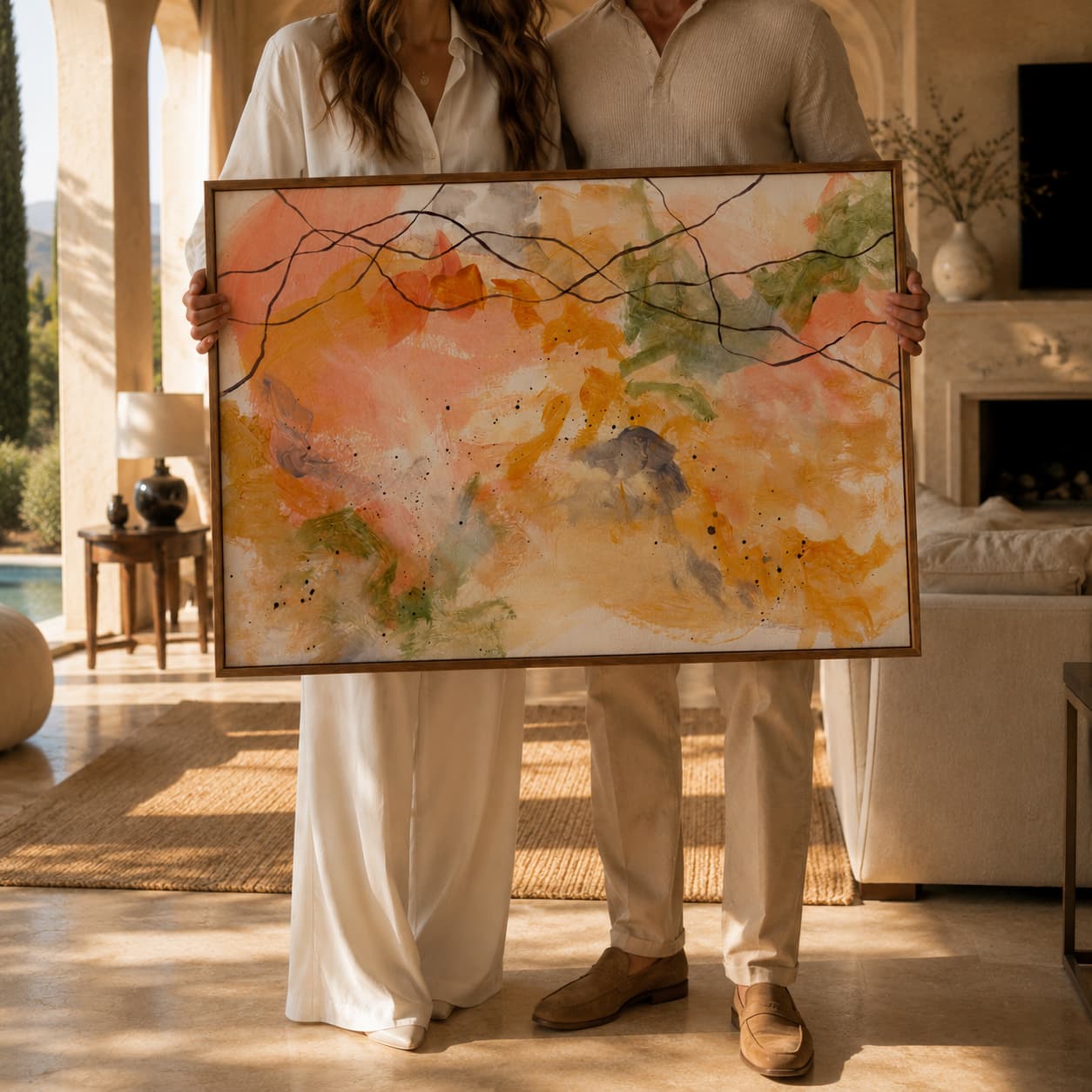
This is why many contemporary collectors are moving away from highly generic decorative wall art and towards more atmospheric, textural and emotionally resonant works that create presence rather than visual filler.
They want the room to feel something. Not just to look expensive.
Practical checklist: how to recognise emotionally intelligent art
| Question to ask | Why it matters |
|---|---|
|
Does the artwork create emotional atmosphere? |
Emotional response matters |
|
Does the piece still hold attention over time? |
Depth lasts longer than novelty |
|
Is the colour emotionally coherent? |
Colour changes room feeling |
|
Does the texture add softness or depth? |
Texture affects nervous system response |
|
Does the artwork support the purpose of the room? |
Art should align with lived experience |
|
Does the piece feel personal rather than generic? |
Emotional connection matters |
|
Would the artwork still matter without trends? |
Longevity matters |
|
Does the room feel calmer or more grounded with it? |
Atmosphere is the real test |
|
Does the work invite reflection? |
Emotional engagement creates depth |
|
Is the art doing more than simply matching décor? |
Decoration alone rarely creates presence |
Conclusion
Decorative art is not automatically meaningless. Beautiful decorative work can absolutely improve interiors visually and create cohesion within a space. But emotionally intelligent art offers something deeper.
-
- It changes the atmosphere
- It changes pacing
- It changes how people physically and emotionally experience the room itself
The artwork stops functioning purely as visual coordination and starts becoming part of the emotional architecture of daily life. That difference matters more than many people realise. Because ultimately, most people are not actually craving more perfectly styled interiors.
They are craving spaces that allow them to feel calmer, softer, more grounded and more connected to themselves after spending most of life overstimulated by noise, speed and visual clutter.
Emotionally intelligent art helps create that shift quietly. Not through spectacle. Through presence.
If you are looking for collector-grade abstract work designed with emotional atmosphere and spatial presence in mind, explore Selected Works or request access to the private Collector’s Vault.
You can also read:
How Colour in Abstract Art Changes the Feeling of a Room
What Makes Collector-Grade Canvas Art Different from Decorative Wall Art
Why Abstract Canvas Prints Work Better Than Mass-Produced Wall Art
How to Buy Large Abstract Art Without Overwhelming a Room
Key Takeaway
Emotionally intelligent art is not necessarily louder, more expensive or more dramatic than decorative art. In many cases, it is quieter. The difference is that it creates an emotional atmosphere and psychological depth rather than simply filling visual space.
Frequently Asked Questions
Emotionally intelligent art is artwork designed or chosen to create emotional atmosphere and psychological resonance rather than functioning only as decoration.
Decorative art is usually selected primarily to support the visual styling or colour palette of a room.
Absolutely. Decorative art can still improve interiors visually and create cohesion within a space.
Emotionally intelligent art affects atmosphere, nervous system response and emotional perception rather than simply filling visual space.
No. However, abstract art often works especially well because colour, texture and movement communicate emotionally without relying entirely on literal imagery.
Texture creates depth, softness and sensory variation, helping artwork interact more naturally with light and atmosphere.
Not perfectly. The artwork should support the emotional tone of the room rather than only coordinating visually.
Because the artwork and design elements work together emotionally rather than competing visually for attention.
Not necessarily, although collector-grade emotionally resonant work often involves stronger materials, greater depth and more intentional composition.
Many people now want interiors that feel restorative, personal and emotionally grounded rather than simply trend-driven or visually styled.