
What Makes a Good Workplace Wellbeing Programme?
TL;DR
A good workplace wellbeing programme helps employees feel better, function better and sustain their wellbeing over time. It goes beyond awareness campaigns, wellbeing emails and occasional motivational events by addressing the realities of how people actually work.
The strongest programmes support physical wellbeing, mental wellbeing and workplace culture simultaneously. They are practical, accessible and easy to engage with rather than adding another task to already overloaded calendars.
Most importantly, they focus on creating experiences that employees genuinely use rather than initiatives that look impressive in a company newsletter and are forgotten two weeks later.
Definition: what is a workplace wellbeing programme?
A workplace wellbeing programme is a structured initiative designed to support the physical, mental and emotional wellbeing of employees. Programmes may include movement sessions, wellbeing workshops, health initiatives, employee support services, wellbeing resources and workplace culture improvements intended to help staff remain healthy, engaged and productive.

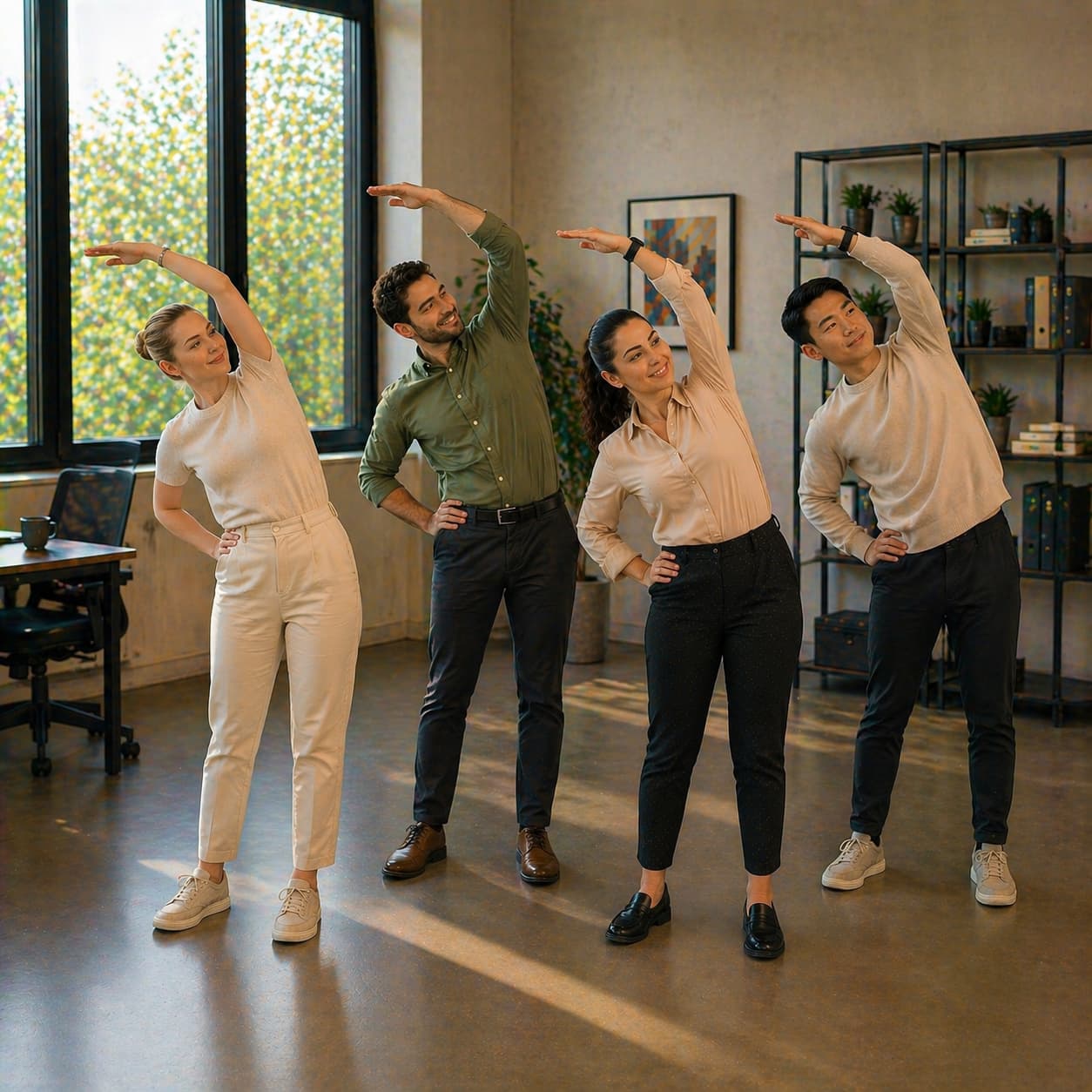
Why many workplace wellbeing programmes fail
Most organisations genuinely want to support their employees. That is rarely the problem.
The challenge is that many wellbeing programmes are designed around information rather than behaviour. Employees are given resources, encouraged to prioritise wellbeing and reminded regularly that self-care is important. While all of those things have value, they often fail to address the reality of modern working life.
People already know they should move more. They know sleep matters. They know stress management is important. They know spending twelve hours staring at a screen while surviving on caffeine and determination is probably not the ideal long-term wellbeing strategy.
The problem is not awareness. The problem is implementation.
When workloads are high, deadlines are approaching and calendars are overflowing, wellbeing advice often becomes another item on the list of things employees know they should do but cannot realistically sustain.
This is why many workplace wellbeing initiatives struggle to create lasting change.
The information may be correct. The experience is missing.
Why wellbeing should feel practical rather than aspirational
One of the quickest ways to lose employee engagement is to make wellbeing feel like another performance target. Employees do not need a wellbeing programme that quietly implies they should become better human beings before Thursday.
They need support that fits inside real working lives.
A good wellbeing programme recognises that most people are already trying their best. The goal is not perfection. The goal is creating small, sustainable opportunities for employees to feel physically and mentally better throughout the working day.
That might involve:
-
- Movement sessions
- Better recovery habits
- Stress management support
- Practical wellbeing tools
- Health education
- Opportunities for connection
- More flexible working practices
The strongest initiatives feel achievable rather than aspirational.
Employees should leave thinking, “I can actually do this,” rather than, “That sounded nice, but there is absolutely no chance I am fitting it into my week.”
Why physical wellbeing is often overlooked
Many organisations focus heavily on mental wellbeing while paying surprisingly little attention to the physical experience of work. This is understandable because mental health conversations have rightly become more visible in recent years. However, many workplace challenges have physical components too.
Employees spend hours sitting. Shoulders become tight. Posture deteriorates. Energy drops. Movement decreases. Physical discomfort gradually becomes normal.
When the body feels uncomfortable, concentration often suffers too.
This is one reason movement-based wellbeing support is becoming increasingly valuable. It addresses something employees physically experience every day rather than asking them to absorb more information.
As explored in Why Workplace Wellbeing Needs Physical Practice, Not Just Advice, wellbeing becomes much more effective when people experience it physically rather than simply hearing about it conceptually.
Why a good programme should support the whole person
Employees do not arrive at work as isolated productivity units. They arrive as human beings carrying responsibilities, stress, ambitions, challenges and lives outside the office.
A strong wellbeing programme acknowledges this complexity without becoming overly intrusive. It should support:
-
- Physical wellbeing
- Mental wellbeing
- Emotional wellbeing
- Social connection
- Sustainable working habits
That does not mean organisations need to solve every problem employees encounter. It means recognising that wellbeing is rarely separated neatly into categories.
-
- Physical discomfort affects mood.
- Stress affects sleep.
- Poor sleep affects concentration.
- Reduced concentration affects work performance.
Everything influences everything else. The best programmes understand these connections.
Why movement is becoming a key part of workplace wellbeing
Many workplace wellbeing programmes historically focused on education. Employees attended talks. Read resources. Completed training.
While education remains valuable, organisations are increasingly recognising that movement offers something different. Movement is immediate. Employees feel the effects directly.
A short movement session can improve posture awareness, reduce stiffness and create a noticeable shift in energy levels within minutes. Unlike some wellbeing initiatives, movement does not require employees to remember information later.
The experience itself becomes the intervention.
This is one reason programmes such as Sit Happens focus on practical workplace movement rather than adding another layer of wellbeing advice to an already crowded landscape.
As discussed in How Sit Happens Helps Teams Reduce Stiffness, Fatigue and Brain Fog, employees often respond strongly to wellbeing support that improves how they physically feel during the working day.
Why employee engagement matters more than programme complexity
Some of the least effective wellbeing programmes are also the most elaborate. They contain multiple platforms.
Complicated tracking systems. Extensive resources. Endless optional activities. Everything appears impressive. Almost nobody uses it.
Meanwhile, a simple initiative that employees genuinely engage with often creates far greater impact. A good wellbeing programme should be:
-
- Accessible
- Practical
- Inclusive
- Easy to understand
- Easy to participate in
Complexity is not the same thing as effectiveness. Employees are far more likely to participate consistently when support feels simple and relevant.
Decision box: what good workplace wellbeing programmes do
| Effective programmes | Less effective programmes |
|---|---|
|
Focus on practical action |
Focus only on information |
|
Fit into working life |
Add more pressure |
|
Encourage participation |
Depend on motivation alone |
|
Support physical wellbeing |
Ignore physical experience |
|
Feel inclusive |
Feel performative |
|
Are easy to access |
Are overly complicated |
|
Create sustainable habits |
Rely on one-off events |
|
Respond to employee needs |
Follow trends blindly |
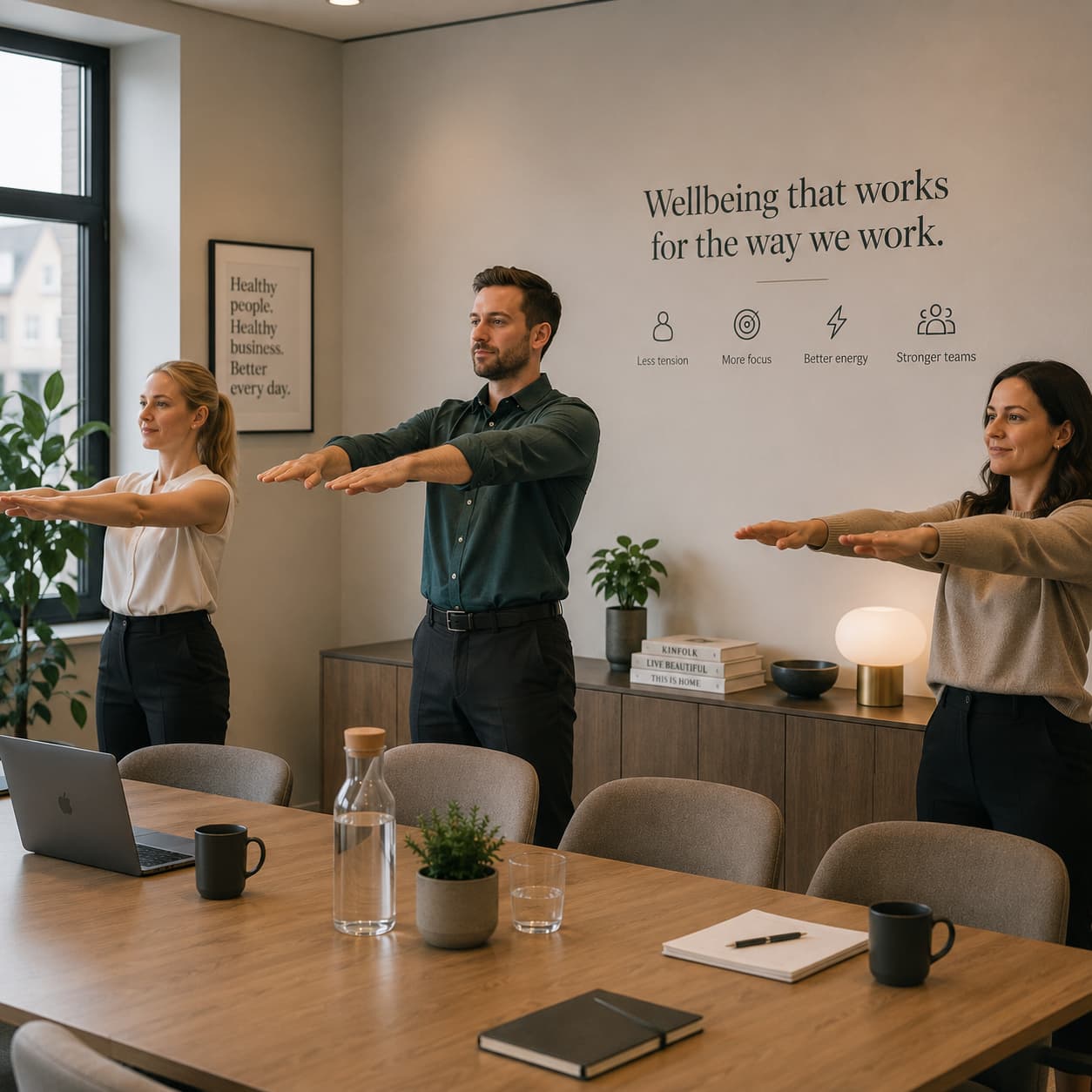

Why one-off wellbeing days rarely create lasting change
There is nothing wrong with wellbeing days. Many organisations run excellent events that employees genuinely enjoy.
The problem arises when a single wellbeing day becomes the entire wellbeing strategy. Meaningful change generally happens through repetition.
Employees build healthier habits over time.
They develop movement awareness gradually. They learn what supports their energy and focus through regular experience. One-off interventions can create awareness. Ongoing support creates change.
This is why the strongest workplace wellbeing strategies combine occasional events with regular opportunities for engagement throughout the year.
Why psychological safety matters
Employees are unlikely to engage fully with wellbeing programmes if they feel judged, pressured or monitored. A good programme creates an environment where participation feels safe and voluntary.
This is particularly important when introducing movement-based initiatives.
People arrive with different experiences, confidence levels and physical abilities. Programmes should feel welcoming rather than intimidating. Employees should never feel as though wellbeing has become another area where they are being assessed.
The objective is support. Not performance.
Why measuring success requires more than attendance numbers
Attendance is useful. It is not everything. A wellbeing programme may attract large numbers initially while creating very little long-term impact. Conversely, a smaller programme may quietly improve employee experience in meaningful ways over time.
Useful indicators often include:
-
- Employee feedback
- Engagement levels
- Retention
- Energy and morale
- Participation consistency
- Perceived value
The goal is not simply getting people through the door. The goal is to create positive experiences that employees continue benefiting from after the session ends.
How Sit Happens fits into workplace wellbeing
Sit Happens was created around a simple observation.
Most workplace wellbeing programmes talk about wellbeing. Far fewer help employees experience it physically.
The programme combines practical movement, mobility, posture awareness and nervous system regulation, designed specifically for desk-based teams. Rather than asking employees to become fitness enthusiasts, the focus is on helping people feel more comfortable, energised and physically capable during the working day.
Sessions are designed to fit realistically into workplaces and support employees who spend long periods sitting, concentrating and working at screens.
The aim is not to turn the office into a gym. It is to help people move, breathe and function better while doing the work they are already there to do.


Comparison table: wellbeing theatre vs meaningful wellbeing
| Wellbeing Theatre | Meaningful Wellbeing |
|---|---|
|
Looks impressive |
Feels useful |
|
Focuses on appearances |
Focuses on outcomes |
|
Creates temporary enthusiasm |
Builds sustainable habits |
|
Relies on awareness alone |
Encourages practical action |
|
One-off interventions |
Ongoing support |
|
Trend-driven |
Employee-driven |
|
Adds complexity |
Creates simplicity |
|
Easy to announce |
Worth continuing |
Practical questions to ask about any wellbeing programme
Before introducing a new initiative, organisations should ask:
-
- Will employees realistically use this?
- Does it address real workplace challenges?
- Is it accessible to everyone?
- Does it support physical as well as mental wellbeing?
- Can it be sustained long term?
- Does it feel relevant to daily work?
- Will employees find value in it?
- Does it encourage participation without pressure?
- Is it easy to engage with?
- Does it improve the employee experience?
These questions often reveal more than the programme description itself.
Final thoughts
A good workplace wellbeing programme does not exist to impress visitors, populate annual reports or generate photographs for social media. It exists to help employees feel better.
That may sound obvious, but it is surprisingly easy to forget.
The strongest programmes focus on real people experiencing real working days. They acknowledge the physical and mental demands of modern work while offering support that feels practical, sustainable and genuinely useful.
Whether that support comes through movement, education, culture change or a combination of approaches, the underlying principle remains the same.
Wellbeing works best when people can actually practise it. Not just read about it.
If your organisation is exploring practical wellbeing support for desk-based teams, you may also find these articles useful:
Why Workplace Wellbeing Needs Physical Practice, Not Just Advice
How Sit Happens Helps Teams Reduce Stiffness, Fatigue and Brain Fog
How Long Is Too Long to Sit?
Why Desk-Based Teams Need Movement Before More Wellbeing Advice
Office Movement Training for HR Teams: Questions to Ask Before Booking
Corporate Movement Programmes in Nottingham: How to Choose the Right Provider
You can also learn more about Sit Happens, a movement-based workplace wellbeing programme designed specifically for desk-based teams.
Key takeaway
The best workplace wellbeing programmes do not simply tell employees to look after themselves. They create environments and opportunities that make wellbeing easier to practise during the working day itself.
Frequently Asked Questions
A workplace wellbeing programme is a structured initiative designed to support employee health, wellbeing and workplace experience.
Many focus on awareness alone without helping employees implement healthy behaviours in daily work.
Effective programmes often include physical wellbeing, mental wellbeing, practical support and opportunities for ongoing engagement.
Yes. Movement-based initiatives are increasingly recognised as valuable tools for supporting employee wellbeing.
Physical comfort influences energy, focus, posture, productivity and overall employee experience.
Programmes that feel practical, accessible and relevant are generally more successful.
They can be valuable, but they usually work best as part of a broader ongoing strategy.
Feedback, engagement, retention and employee experience often provide useful indicators.
Well-designed programmes can support employee wellbeing, engagement and workplace performance over time.
Sit Happens is a movement-based workplace wellbeing programme designed specifically for desk-based teams to support posture, movement, nervous system regulation and physical wellbeing.