
How Long Is Too Long to Sit?
TL;DR
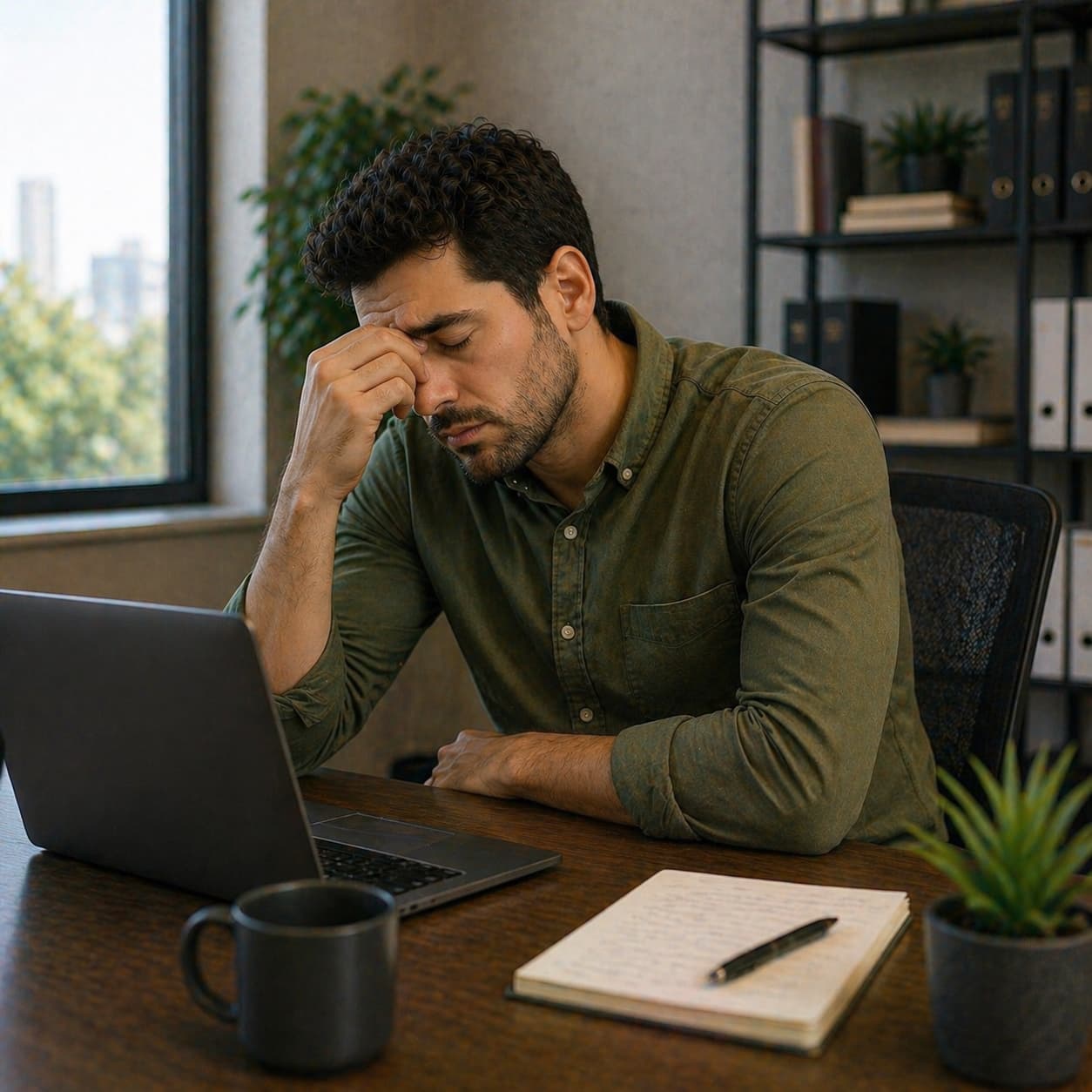
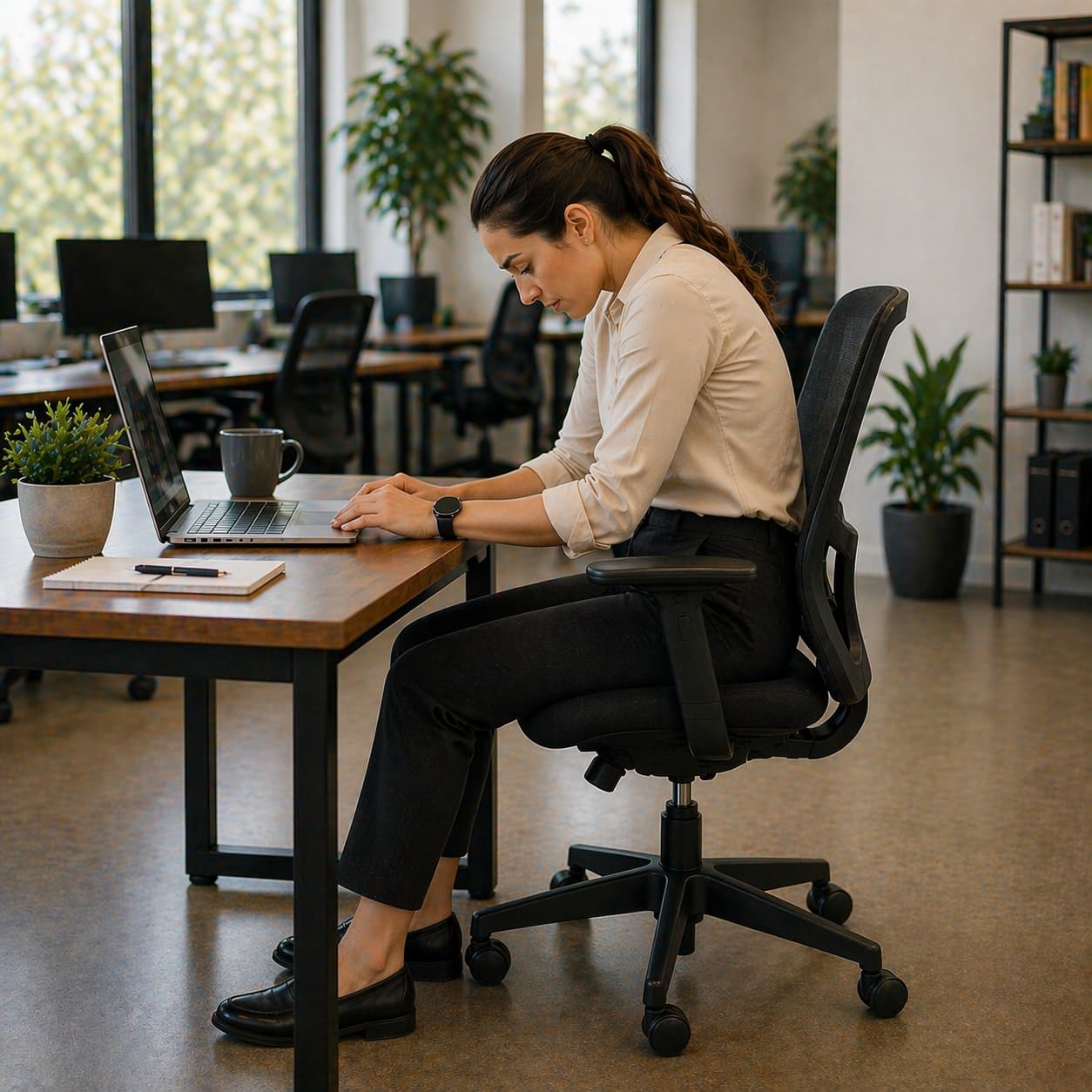
Most experts agree that remaining seated for long uninterrupted periods is not ideal, even if you exercise regularly outside work. The issue is not sitting itself. The problem begins when sitting becomes prolonged, repetitive and uninterrupted for hours at a time.
For desk-based employees, regularly changing position, standing up, walking briefly and introducing movement throughout the day is often more important than chasing the perfect chair or posture.
The goal is not to avoid sitting completely. The goal is to avoid staying still for too long.
Definition: what is prolonged sitting?
Prolonged sitting refers to extended periods spent seated with little movement or position change. While there is no universally agreed cut-off point, many health professionals recommend breaking up sitting regularly rather than remaining seated continuously for hours at a time.
Why sitting itself is not actually the problem
Sitting has acquired a remarkably bad reputation over the past decade.
You could be forgiven for thinking that the human body immediately begins disintegrating the moment somebody lowers themselves into an office chair. Entire industries have emerged promising to rescue workers from the apparent catastrophe of spending any time seated whatsoever.
The reality is far less dramatic. Human beings are perfectly capable of sitting.
We sit while eating, reading, driving, socialising and resting. Sitting is a normal human behaviour and has been for a very long time. The body is not harmed simply because somebody spends part of their day seated.
The problem arises when sitting becomes the only position we occupy for extended periods without interruption.
The body thrives on variety.
- Walking.
- Standing.
- Reaching.
- Turning.
- Changing position.
- Shifting weight.
- Moving between tasks.
Modern working life often removes much of that variety. Many employees now spend large portions of the day moving from one meeting to another while physically remaining in almost exactly the same position throughout.
The issue is not the chair. The issue is the lack of movement.
This is why Why Desk-Based Teams Need Movement Before More Wellbeing Advice focuses so heavily on movement variety rather than demonising sitting itself.
The body generally tolerates sitting extremely well.
What it does not enjoy is remaining trapped in one position indefinitely.
What happens when we stay seated for too long?
The effects are usually subtle at first.
People rarely stand up after a long morning at their desk and immediately declare that prolonged sitting has transformed them into a Victorian ghost. Instead, the effects accumulate gradually.
- Shoulders begin feeling tighter.
- The upper back becomes stiff.
- The hips feel restricted.
- Concentration starts drifting.
- Energy drops.
- Posture collapses.
- Movement becomes less frequent.
Many people notice these changes so gradually that they assume feeling physically uncomfortable at work is simply normal.
In reality, the body is often responding exactly as expected to prolonged stillness.
The nervous system thrives on movement input. Muscles are designed to contract and relax. Joints are designed to move through different ranges. Breathing works more effectively when posture changes regularly throughout the day.
When movement disappears, the body begins adapting to that lack of variety. Unfortunately, those adaptations are not always particularly comfortable.
Why the body prefers movement variety
One of the biggest misunderstandings around workplace wellbeing is the idea that there must be one perfect position.
People often spend years searching for the ideal desk setup, the ideal chair, the ideal monitor height or the ideal posture that will somehow eliminate discomfort permanently.
The truth is that the best posture is usually the next posture. The body responds positively to change.
A perfectly aligned position held for three hours is often less beneficial than several different positions adopted throughout the same period.
- Movement provides information.
- It improves circulation.
- Changes the muscular demands.
- Reduces repetitive loading.
- Encourages breathing variation.
- Keeps the nervous system engaged.
This is why many workplace wellbeing programmes are increasingly moving away from posture correction alone and towards movement-based approaches.
As explored in How to Reduce Desk Stiffness Without Turning Work Into a Fitness Class, most employees do not need complicated exercise routines during the workday. They simply need more opportunities to move.
How long is too long?
This is the question most people really want answered. Unfortunately, there is no magical number where the body suddenly decides enough is enough. The answer depends on factors such as:
- Overall health
- Movement habits
- Fitness levels
- Work demands
- Previous injuries
- Individual tolerance
However, many workplace health professionals encourage people to avoid sitting continuously for more than thirty to sixty minutes without some form of movement. That movement does not need to be dramatic.
- Standing up.
- Walking to refill a water bottle.
- Stretching briefly.
- Taking a call while standing.
- Changing workstations.
Even small interruptions can help introduce movement variety back into the day. The goal is not perfection. The goal is to break up long periods of uninterrupted stillness.
Why movement helps concentration as well as comfort
Many people think movement is purely about physical health. In reality, movement often influences concentration just as much.
Think about how many employees experience the final hour before lunch. Energy drops. Attention wanders. Motivation disappears. The temptation to stare out of the window and contemplate abandoning civilisation entirely becomes surprisingly attractive.
While many factors contribute to this, prolonged stillness often plays a role. Movement influences:
- Alertness
- Breathing
- Energy levels
- Blood flow
- Physical comfort
- Nervous system regulation
Employees frequently report clearer thinking after even brief movement breaks.
This is one reason organisations are increasingly exploring workplace movement support rather than relying entirely on traditional wellbeing initiatives.
As discussed in Why Workplace Wellbeing Needs Physical Practice, Not Just Advice, people often benefit more from physically experiencing regulation than simply hearing about it.
Why standing all day is not the answer either
Whenever discussions about sitting become popular, somebody inevitably suggests replacing every chair in existence with a standing desk and declaring victory. Unfortunately, standing all day creates its own challenges.
The body does not particularly enjoy remaining static in any position for prolonged periods. Standing continuously can contribute to:
- Leg fatigue
- Lower back discomfort
- Foot discomfort
- Postural strain
The solution is not replacing one static position with another. The solution is movement.
- Sit.
- Stand.
- Walk.
- Stretch.
- Shift.
- Move.
The body generally responds best when these options are available throughout the day.
This is one reason the most effective workplace wellbeing strategies focus on flexibility rather than rigid rules.
Decision box: signs you may be sitting too long
| Possible sign | What it may indicate |
|---|---|
|
Stiff hips |
Lack of movement variety |
|
Tight shoulders |
Prolonged desk posture |
|
Mid-afternoon fatigue |
Reduced movement and alertness |
|
Lower back discomfort |
Extended static positioning |
|
Difficulty concentrating |
Physical and mental fatigue |
|
Frequent fidgeting |
Body seeking movement |
|
Neck tension |
Repetitive posture demands |
|
Reduced energy |
Prolonged stillness |
Why movement breaks do not need to become fitness sessions
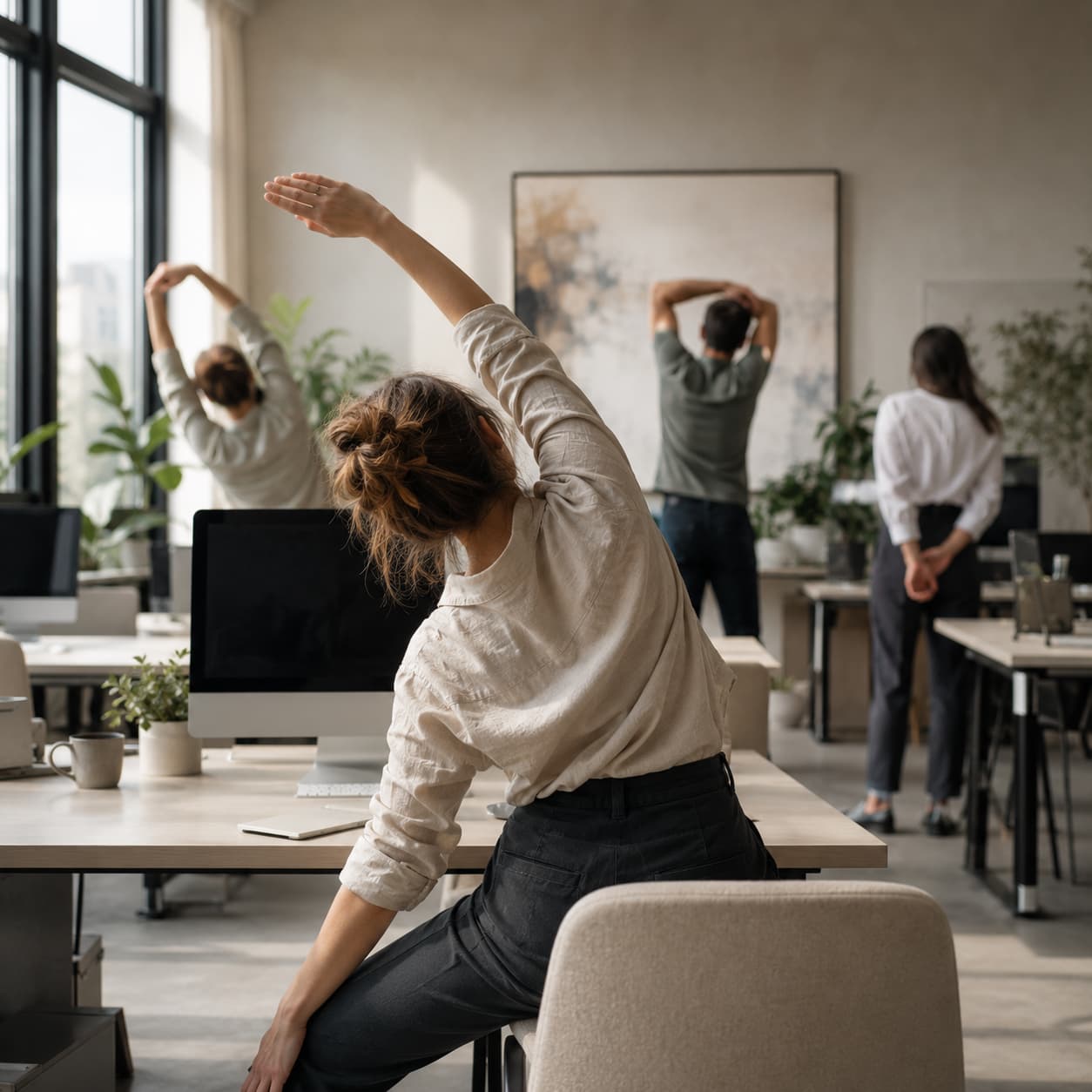
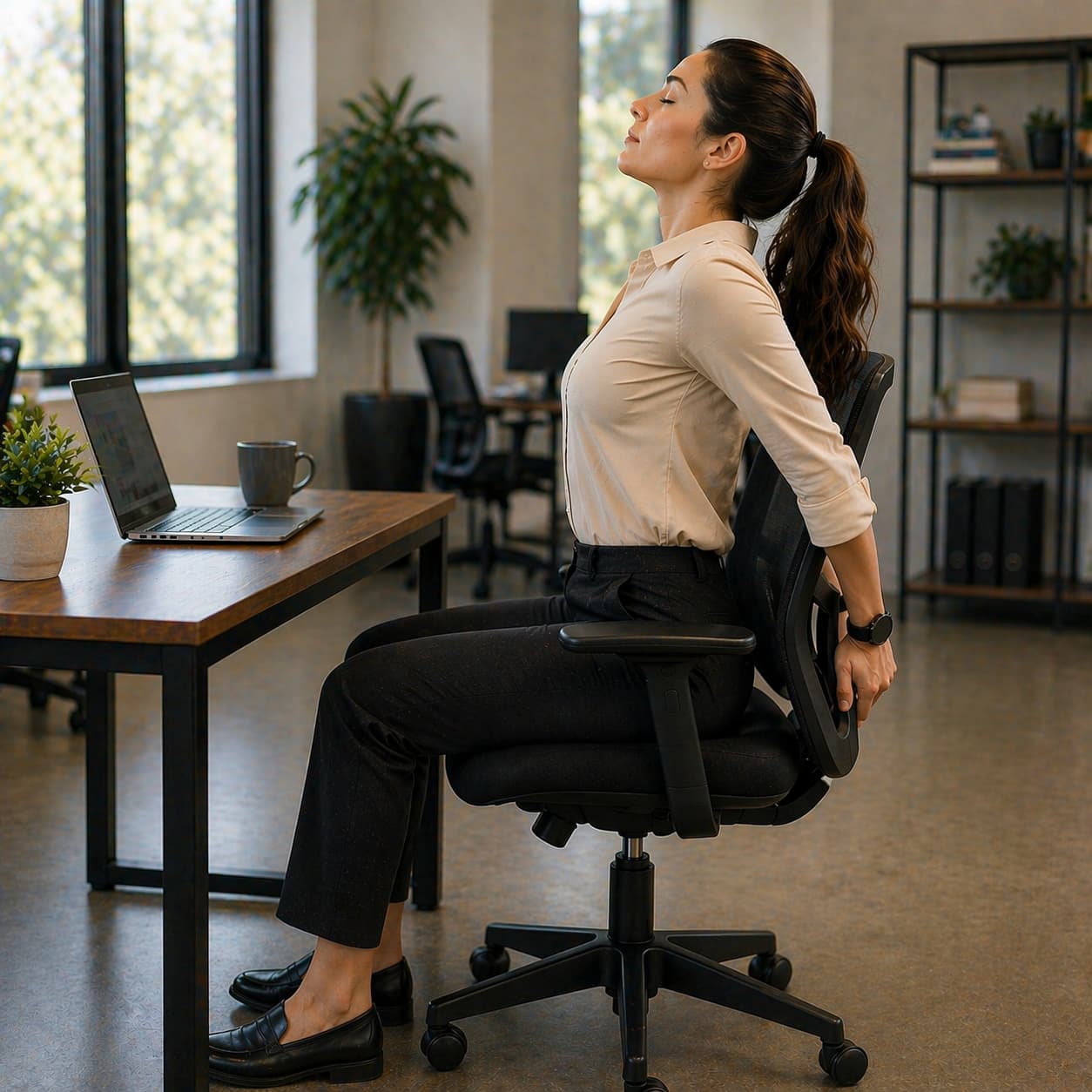
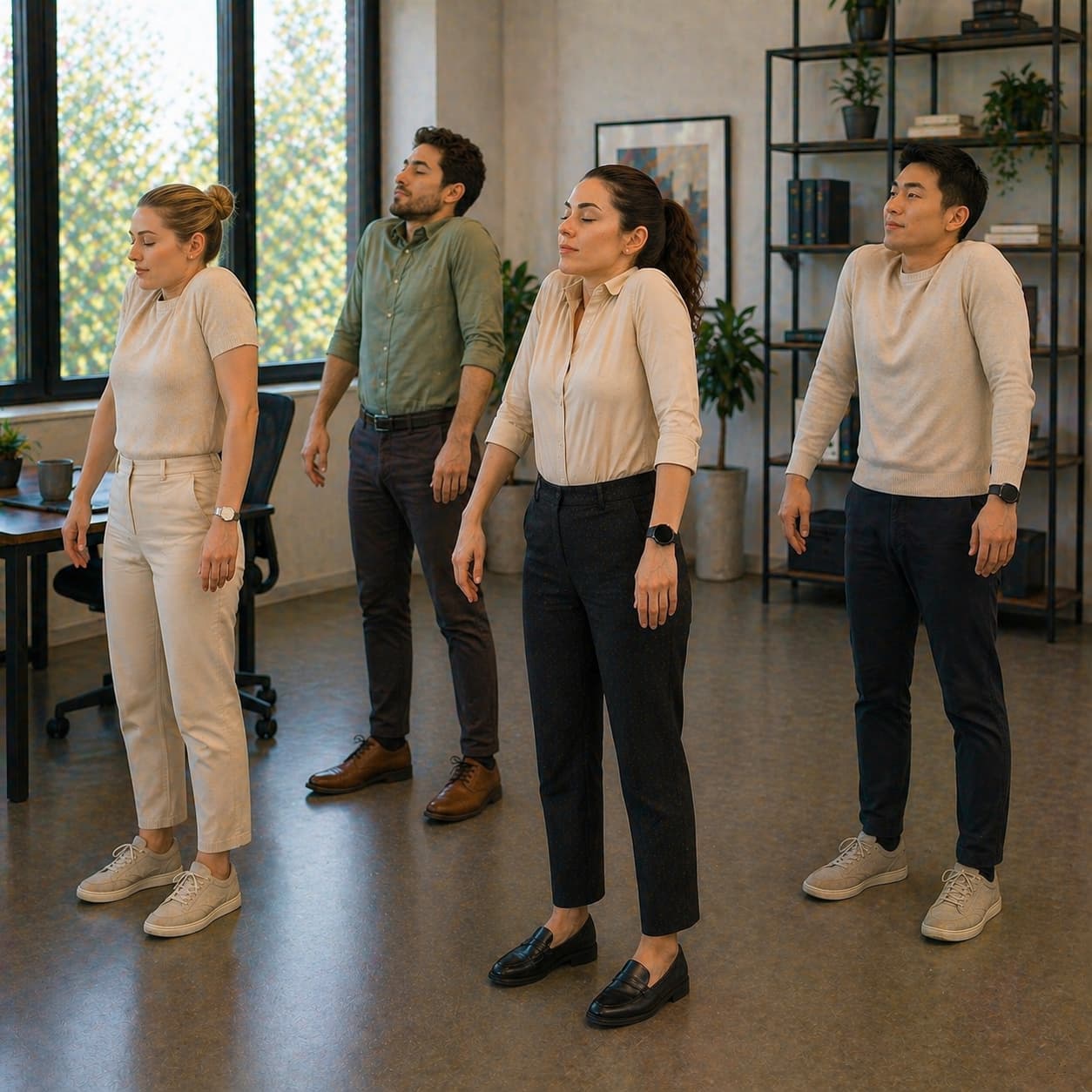
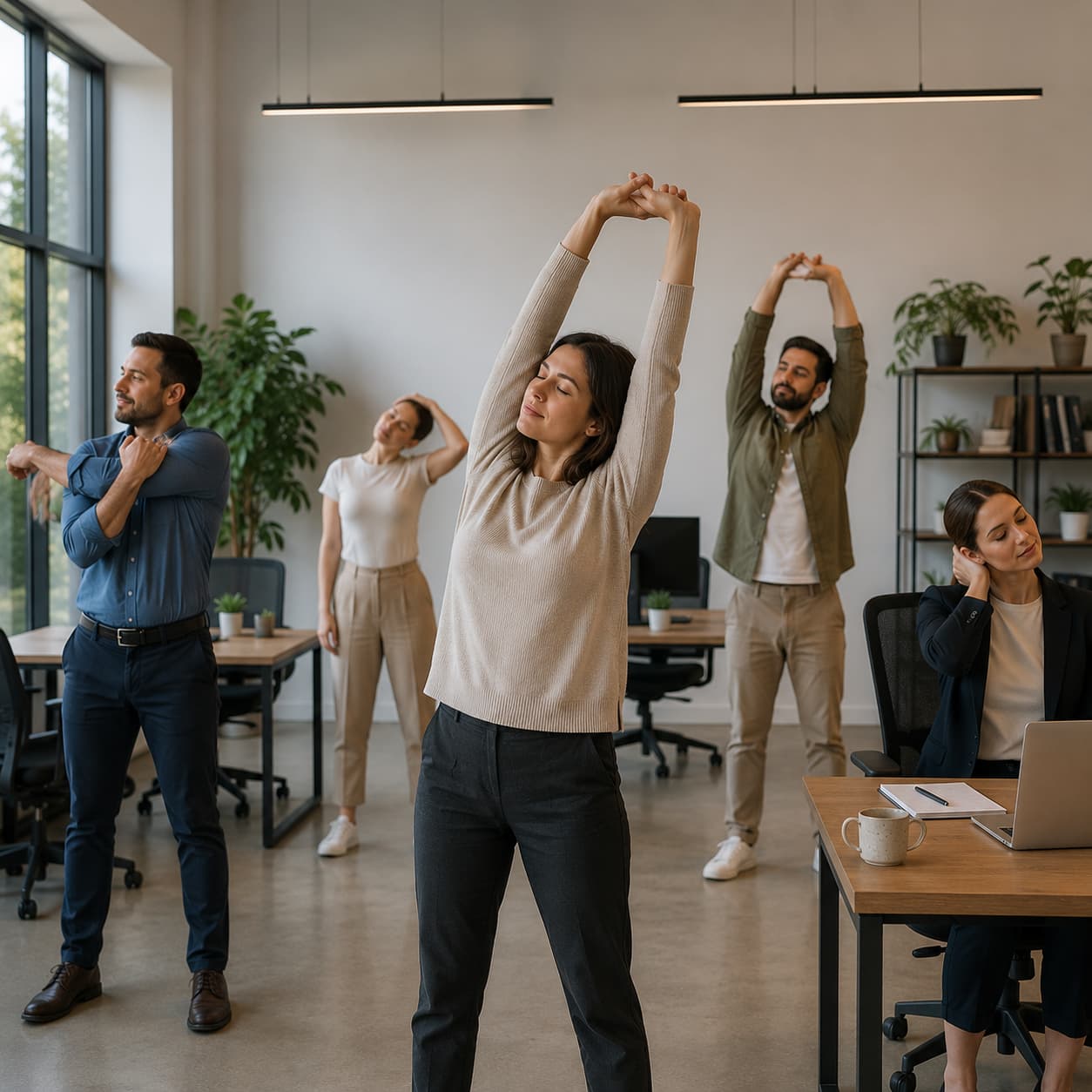
One reason some employees resist workplace movement is that they imagine it involves turning the office into a group exercise class. Thankfully, that is rarely necessary. Movement breaks can be simple.
- A short walk.
- Gentle mobility work.
- A standing reset.
- A few minutes away from the desk.
The objective is not athletic performance. The objective is restoring movement variety.
Most people are not looking to set personal fitness records between emails.
They simply want to feel less stiff, less tired and more comfortable throughout the day.
This is exactly why How Sit Happens Helps Teams Reduce Stiffness, Fatigue and Brain Fog focuses on practical workplace movement rather than turning offices into improvised fitness studios.
Why modern work creates unique movement challenges
Many jobs used to contain natural movement. People walked between departments. Travelled more frequently. Moved between tasks physically.
Today’s work often concentrates activity onto a single screen.
Meetings occur online. Communication occurs online. Planning occurs online. Problem-solving occurs online. Entire days can pass with remarkably little movement occurring naturally.
This makes intentional movement increasingly important.
Employees no longer receive as much movement automatically through the structure of the workday itself. They often need opportunities to create it deliberately.
That does not require complicated systems. It simply requires awareness.
Comparison table: uninterrupted sitting vs regular movement breaks
| Uninterrupted Sitting | Regular Movement Breaks |
|---|---|
|
More stiffness |
Improved mobility |
|
Greater physical tension |
Reduced tension |
|
Increased fatigue |
Better energy regulation |
|
Less posture variation |
More movement variety |
|
Reduced physical comfort |
Greater comfort |
|
Lower movement input |
Increased movement throughout day |
|
Can feel mentally draining |
Supports concentration |
|
Encourages static behaviour |
Encourages adaptability |
Why workplace culture matters
Individual habits matter, but workplace culture influences behaviour too.
Many employees know movement would help them. They simply do not feel comfortable doing it. Some worry about appearing unproductive. Others feel awkward standing during meetings or stepping away from their desk regularly.
This is where organisational culture becomes important.
When movement is normalised, employees are far more likely to engage in behaviours that support their wellbeing. The healthiest workplaces are often not those with the most elaborate wellbeing programmes.
They are the workplaces where people feel permitted to move.
Practical ways to reduce prolonged sitting
Rather than focusing on rigid rules, try introducing simple opportunities for movement throughout the day.
Consider:
- Standing during phone calls
- Walking between meetings when possible
- Taking short movement breaks
- Refilling water regularly
- Using stairs
- Stretching between tasks
- Changing positions frequently
- Walking during thinking time
None of these actions are revolutionary. That is precisely why they work. Small changes repeated consistently tend to outperform dramatic interventions that nobody maintains.
Final thoughts
So how long is too long to sit?
The honest answer is that the body usually starts benefiting from movement long before discomfort becomes obvious. Sitting itself is not harmful.
Remaining still for extended periods is where many problems begin.
The goal is not eliminating chairs, buying expensive gadgets or transforming every workplace into a fitness centre. The goal is to introduce enough movement variety to support how the body naturally functions. Because ultimately, the body is designed to move.
Not constantly. Not intensely. Just regularly.
And for most desk-based workers, that small distinction makes a surprisingly large difference.
If you enjoyed this article, you may also find these useful:
Why Desk-Based Teams Need Movement Before More Wellbeing Advice
What Chronic Sitting Does to the Nervous System (And Why Teams Feel Fried by Midday)
How Sit Happens Helps Teams Reduce Stiffness, Fatigue and Brain Fog
How to Reduce Desk Stiffness Without Turning Work Into a Fitness Class
Why Workplace Wellbeing Needs Physical Practice, Not Just Advice
Office Movement Training for HR Teams: Questions to Ask Before Booking
Corporate Movement Programmes in Nottingham: How to Choose the Right Provider
Key takeaway
Sitting is not the enemy. Remaining in the same position for extended periods without movement is what creates many of the physical and mental challenges people associate with desk-based work.
Frequently Asked Questions
Sitting itself is not bad. Problems usually arise when sitting becomes prolonged and uninterrupted for long periods.
Many experts recommend introducing movement every 30 to 60 minutes where possible.
Not necessarily. The most beneficial approach is usually alternating between sitting, standing and moving.
Yes. Prolonged stillness can contribute to fatigue, discomfort and reduced focus.
Common signs include stiffness, neck tension, shoulder discomfort, fatigue and reduced concentration.
Do I need exercise breaks during work?
Many people report improved alertness and concentration after moving regularly throughout the day.
Often the bigger issue is lack of movement variety rather than posture alone.
By encouraging movement breaks, flexible working habits and a culture where movement feels normal.
Stand up more frequently, walk when possible and change position regularly throughout the day.
Sit Happens is a movement-based workplace wellbeing programme designed specifically for desk-based teams to support posture, movement, nervous system regulation and physical wellbeing.