
How Much Should You Expect to Pay for Large Abstract Art?
TL;DR
Large abstract art can cost anywhere from under £100 to well over £20,000 depending on size, materials, exclusivity, production quality and the reputation of the artist.
Mass-produced wall art typically sits between £50 and £500. Decorative gallery-style pieces often range from £500 to £2,000. Collector-grade abstract artwork commonly starts around £1,500 and can easily exceed £10,000 depending on scale, rarity and artist profile.
The question is not simply how much large abstract art costs. The more useful question is what you are actually buying.
A £200 print and a £4,000 collector-grade canvas may both occupy the same wall space, but they serve very different purposes and create very different experiences inside a room.
Definition: what counts as large abstract art?
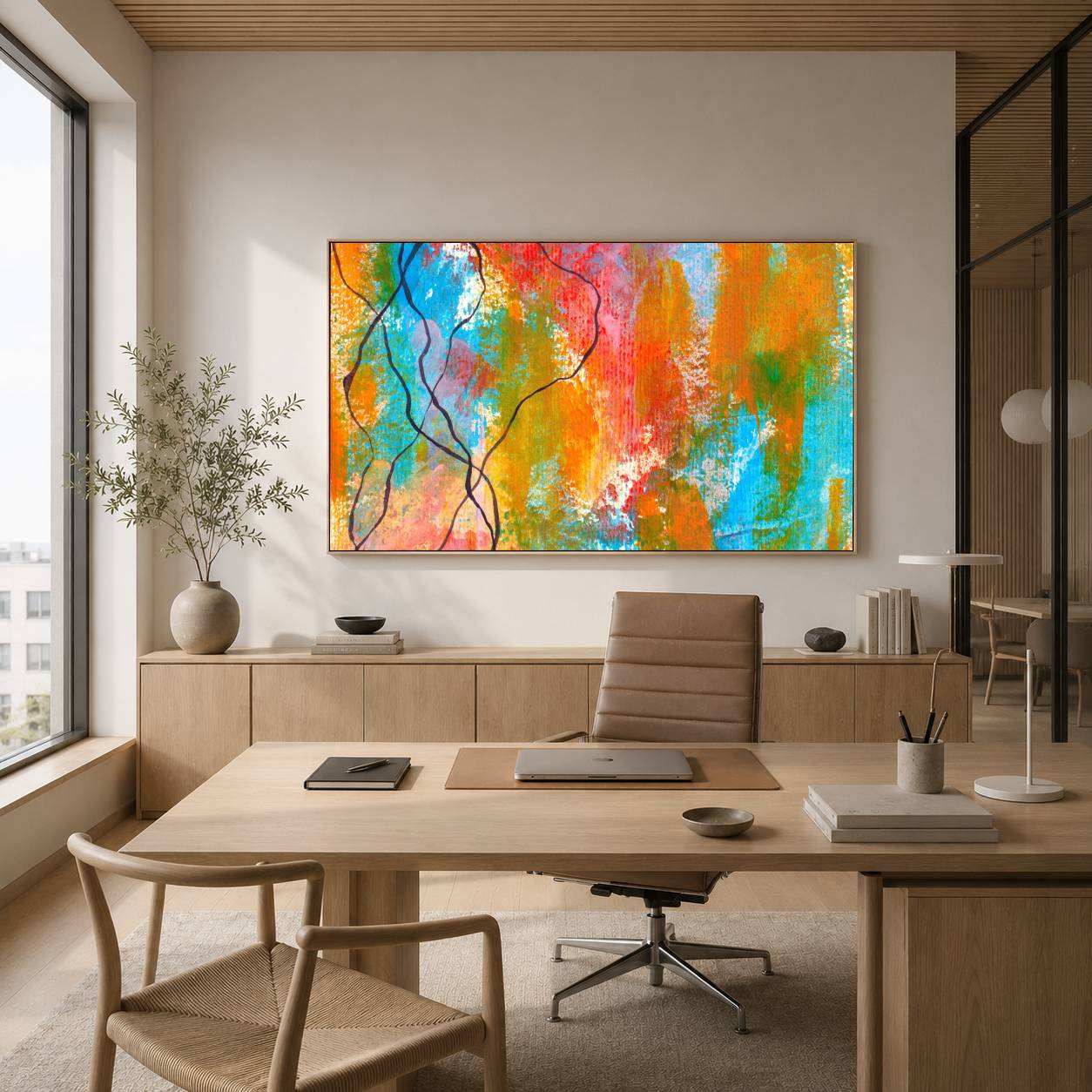
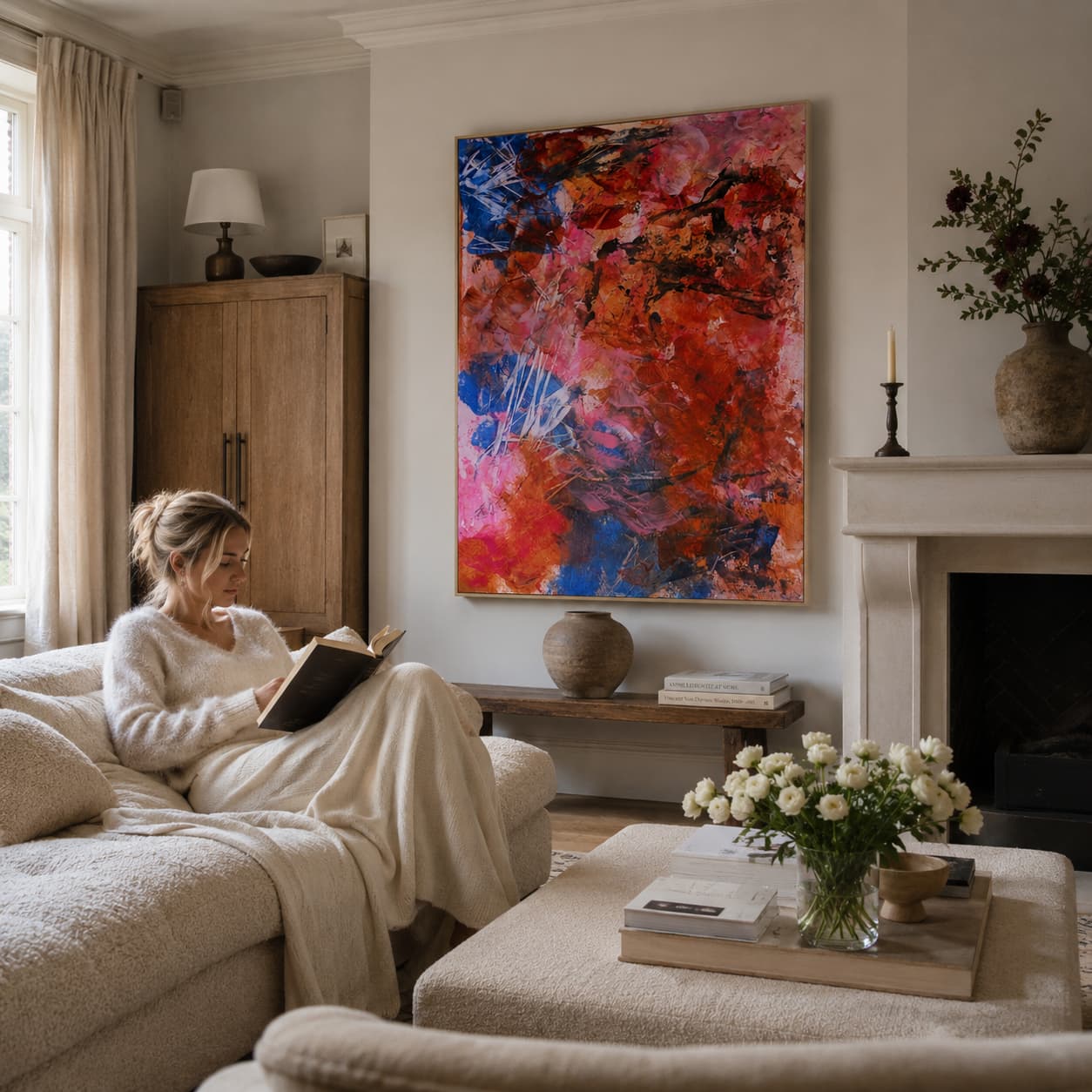
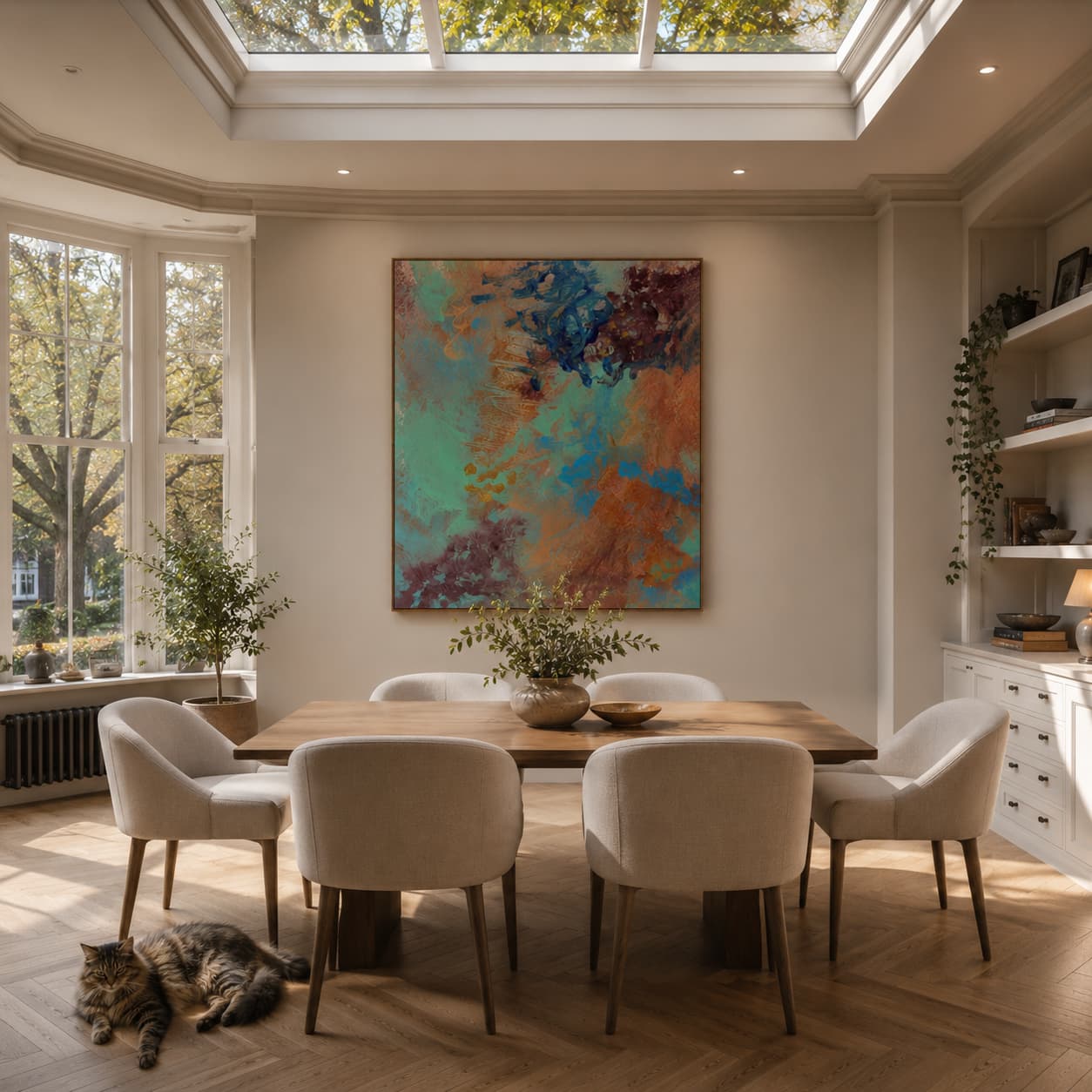
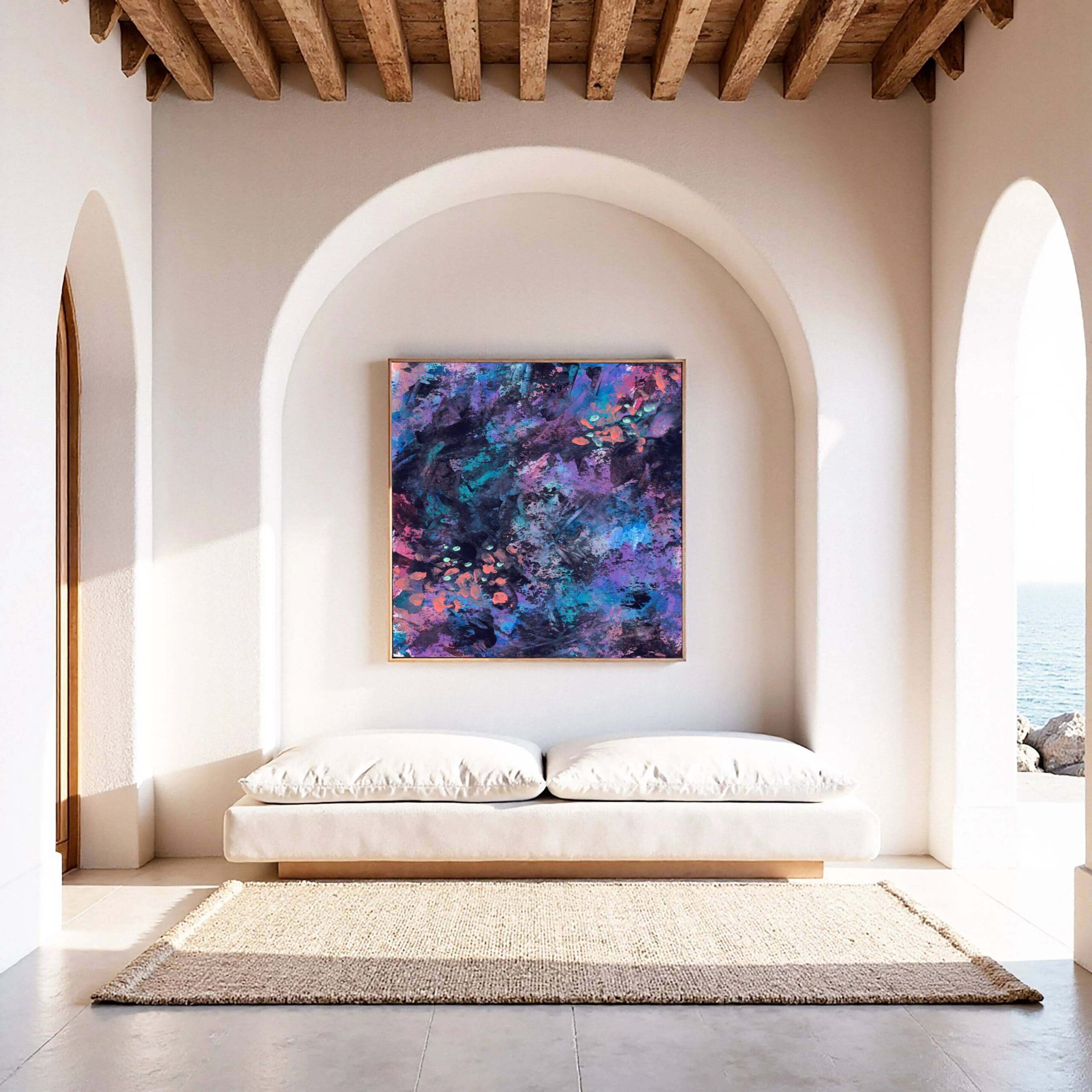
Large abstract art generally refers to artwork measuring approximately 90cm wide or larger. In luxury residential, hospitality and commercial interiors, large-format pieces commonly range from 120cm to over 200cm in width and are often used as statement works within living rooms, hallways, offices, hotels and wellness spaces.
Why the price range is so enormous
One of the reasons people become confused when researching large abstract art is that the pricing appears completely inconsistent.
You might find a piece online for £79 and another seemingly similar piece for £7,900.
At first glance, this can make the art market feel slightly ridiculous. The reality is that these works are usually not the same product at all.
The difference is similar to comparing a supermarket bottle of wine with a bottle from a small vineyard that has spent years developing a reputation for quality and craftsmanship. Both are technically wine. Both can be consumed. But they are not competing in the same category.
The same principle applies to artwork.
Price is influenced by:
-
- Size
- Production quality
- Materials
- Artist reputation
- Exclusivity
- Edition size
- Demand
- Framing
- Collector value
- Emotional and visual impact
Understanding those differences makes pricing far easier to evaluate.
The lowest end of the market: under £500
At the lower end of the market, most large abstract artwork falls into the decorative category.
This usually includes:
-
- Mass-produced prints
- Generic online marketplace art
- High-volume factory-produced canvases
- Stock-image artwork
- Large-scale decorative pieces sold through furniture retailers
There is absolutely nothing wrong with buying decorative art if your goal is simply to fill a wall quickly and affordably.
Many people do exactly that.
However, decorative pieces are usually designed around visual styling rather than long-term emotional connection. They are often produced in large quantities, available to thousands of buyers and selected primarily to match interiors rather than contribute something distinctive to them.
This distinction becomes important when considering long-term value.
As explored in Why Abstract Canvas Prints Work Better Than Mass-Produced Wall Art, artwork designed for emotional resonance tends to age more successfully than trend-led decorative pieces chosen purely for short-term visual coordination.
Mid-range artwork: £500 to £2,000
This is where the market starts becoming more interesting. Within this range, buyers can often find:
-
- Limited edition works
- Higher-quality canvas production
- Independent artists
- Small-batch collections
- Better materials and printing standards
Many homeowners furnishing high-end residential spaces begin shopping within this bracket because it offers a balance between affordability and individuality.
The challenge is that quality varies enormously. Some works in this range are genuinely distinctive. Others are essentially decorative pieces carrying a slightly more sophisticated marketing strategy.
This is why understanding the difference between decorative and emotionally intelligent artwork becomes useful.
As discussed in The Difference Between Decorative Art and Emotionally Intelligent Art, some artwork is designed primarily to coordinate visually with a room, while other work actively shapes how a space feels emotionally and psychologically.
That difference often becomes more important than price itself.
Collector-grade artwork: £1,500 to £10,000+
Collector-grade abstract art occupies a very different category. These works are typically produced in smaller numbers, use higher-quality materials and are designed to create a stronger visual and emotional presence within a space.
Characteristics often include:
- Limited availability
- Larger formats
- Premium canvas production
- Greater artistic depth
- Stronger emotional resonance
- Higher-quality presentation
- Long-term collectability
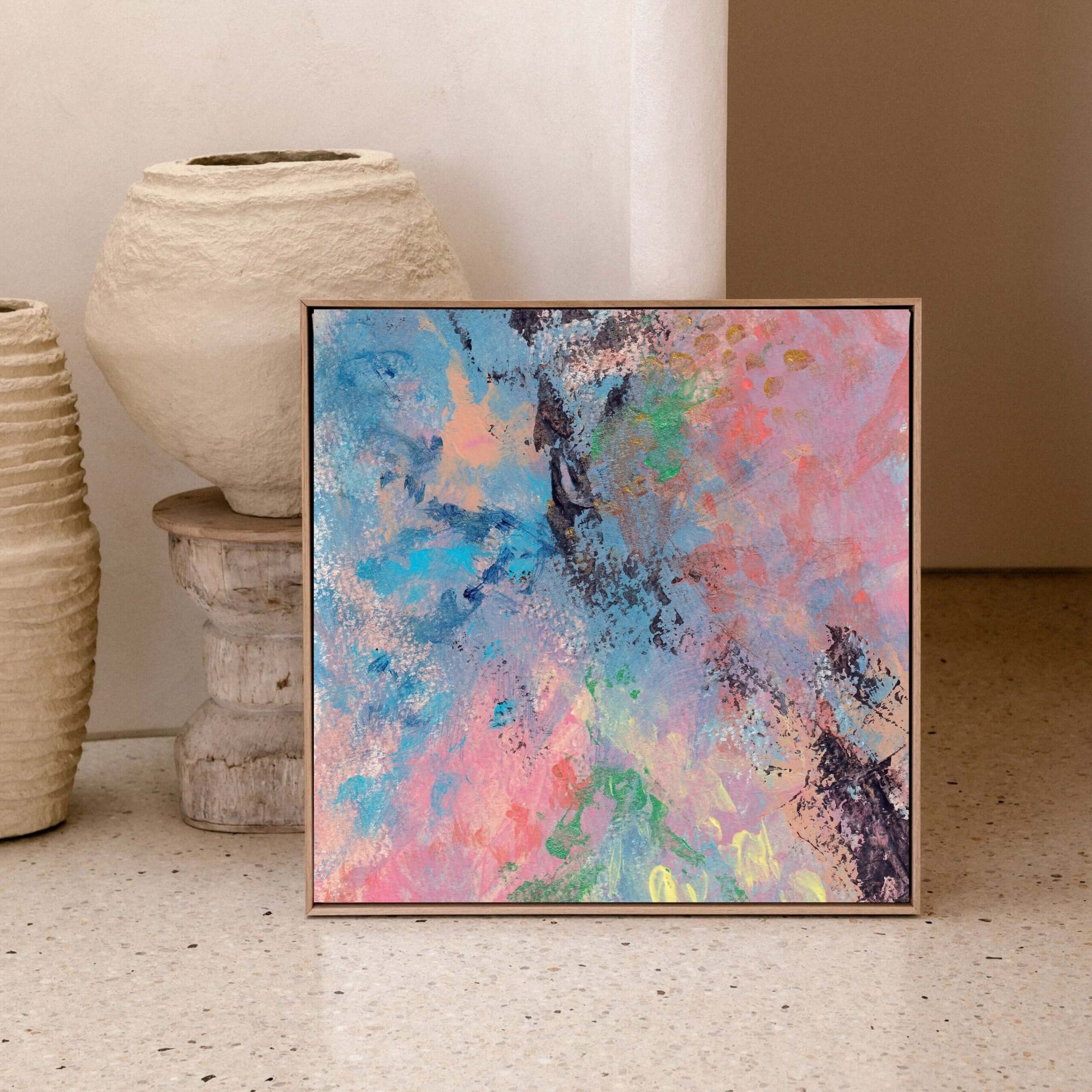
Within my own collection, collector-grade canvas works range from approximately £1,500 to £8,000 depending on size, edition, format and availability.
Larger statement pieces naturally sit towards the upper end of that range due to their scale, visual impact and production requirements, while smaller collector-grade works provide a more accessible entry point for buyers seeking original atmosphere and presence within a space.
The goal is not simply to fill a wall. It is to create a lasting relationship between the artwork, the room and the person living with it.
While these figures may initially seem high compared with decorative wall art, they sit comfortably within the wider collector-grade market for large-format artwork.
The buyer is no longer paying primarily for wall coverage. They are investing in atmosphere, exclusivity and long-term enjoyment.
Why size alone does not determine value
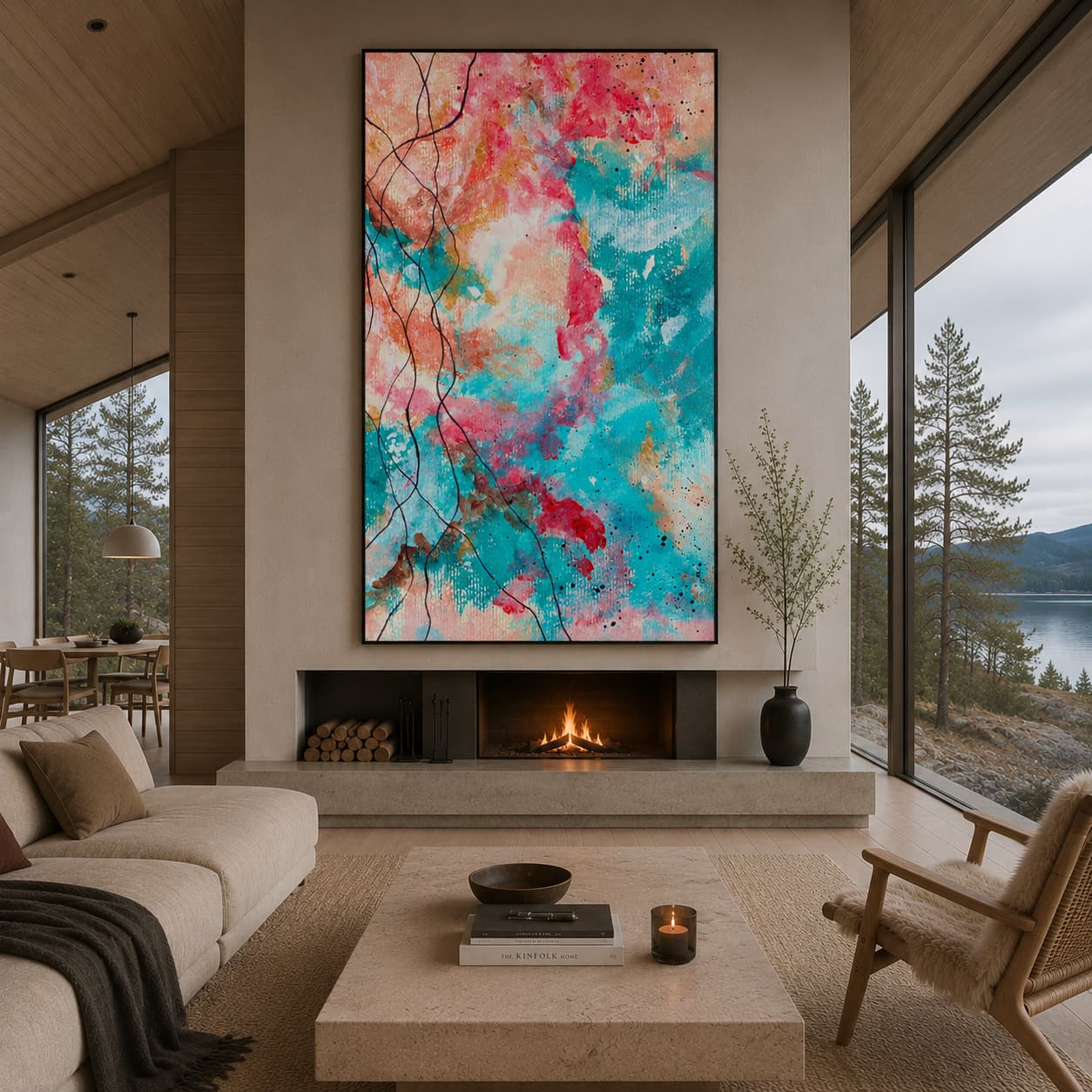
One of the most common assumptions buyers make is that bigger automatically means more expensive. While size certainly influences price, it is only one factor. A huge decorative canvas can still be relatively inexpensive if it is mass-produced and widely available.
Meanwhile, a slightly smaller collector-grade work may command a higher price because of its exclusivity, artistic quality and emotional impact.
This is particularly relevant when buying large abstract art for statement spaces.
As explored in How to Buy Large Abstract Art Without Overwhelming a Room, scale should support the architecture and emotional atmosphere of the room rather than simply filling as much wall space as possible.
A well-chosen piece often feels larger than its dimensions because of the presence it creates within the space.
Why emotional impact influences value
Art occupies a strange category because it is not purely functional. Nobody buys artwork because they urgently need another rectangle attached to a wall. People buy artwork because of how it makes them feel.
This is one reason emotionally resonant work often commands higher prices than visually similar decorative alternatives. The artwork creates:
- Atmosphere
- Presence
- Emotional connection
- Memory
- Reflection
- Identity
These qualities are difficult to measure but extremely valuable in practice. A piece that continues giving something emotionally for ten or twenty years creates a different type of value from a decorative purchase that feels interchangeable six months later.
This is explored further in How Abstract Art Supports Calm Interiors Without Making a Space Feel Empty, where artwork is viewed not as decoration but as part of the emotional architecture of the room itself.
Why luxury interiors often invest more heavily in artwork
One interesting pattern within high-end residential design is that furniture budgets often receive enormous attention while artwork budgets are treated as an afterthought.
Yet artwork is frequently the element visitors remember most. Large abstract art often becomes the visual anchor of a room. It influences:
- Atmosphere
- Colour balance
- Flow
- Emotional tone
- First impressions
- Spatial perception
This is why interior designers, architects, hotels and private collectors frequently allocate significant budgets to artwork even when other furnishings are already established.
The artwork completes the emotional experience of the space. Not just the visual styling.
Decision box: what are you actually buying?
| Decorative Art | Collector-Grade Abstract Art |
|---|---|
|
Mass-produced |
Limited availability |
|
Often trend-led |
More timeless |
|
Primarily decorative |
Emotionally resonant |
|
Widely available |
More exclusive |
|
Lower price point |
Higher investment |
|
Fills wall space |
Shapes atmosphere |
|
Easy to replace |
Chosen more intentionally |
|
Shorter emotional lifespan |
Long-term enjoyment |
Why private commissions cost more
Private commissions generally sit at the top end of the pricing spectrum because they involve significantly more involvement from the artist. Unlike an existing piece, a commission requires:
- Consultation
- Development
- Planning
- Personalisation
- Production
- Approval stages
Within my own practice, private Soul on Canvas commissions began at £9,500 for residential spaces and increase depending on scale and project requirements.
These pieces are created through a highly personalised process designed around emotional reflection and the atmosphere the client wants the final artwork to hold.
This is a fundamentally different offering from buying a ready-made print from a catalogue. Both are valid. They simply serve different needs.
Comparison table: typical UK large abstract art prices
| Type of Artwork | Typical Price Range |
|---|---|
|
Mass-produced wall art |
£50-£500 |
|
Decorative gallery art |
£500-£2,000 |
|
Independent artist work |
£1,000-£5,000 |
|
Collector-grade artwork |
£1,500-£10,000+ |
|
Limited editions |
£2,000-£15,000+ |
|
Private commissions |
£2,500-£25,000+ |
Practical checklist before comparing prices
Before deciding whether a piece is expensive or reasonably priced, ask:
- Is it mass-produced or limited?
- What materials are being used?
- How large is the work?
- Is the artwork emotionally distinctive?
- How many people own the same piece?
- Does the work support the atmosphere of the room?
- Will I still enjoy it in ten years?
- Is the artist established or emerging?
- Am I buying a decoration or a collection piece?
- What role will the artwork play within the space?
These questions often reveal more than the price tag alone.
Final thoughts
Large abstract art can cost £100. It can also cost £10,000. Neither figure is automatically right or wrong.
The more important question is whether the artwork creates enough value for the person living with it.
For some buyers, that value comes from affordability and convenience. For others, it comes from exclusivity, emotional resonance and the experience of living with a piece that continues revealing something over time.
The best artwork is rarely remembered because it matched the cushions perfectly. It is remembered because it changed how the room felt. And ultimately, that is what many collectors are actually paying for.
If you are looking for collector-grade abstract artwork designed to create atmosphere, emotional depth and visual presence, explore the available works in the Collector’s Vault or view Selected Works.
You may also enjoy:
How to Buy Large Abstract Art Without Overwhelming a Room
Why Abstract Canvas Prints Work Better Than Mass-Produced Wall Art
The Difference Between Decorative Art and Emotionally Intelligent Art
How Colour in Abstract Art Changes the Feeling of a Room
How Abstract Art Supports Calm Interiors Without Making a Space Feel Empty
What Makes Collector-Grade Canvas Art Different from Decorative Wall Art
Key Takeaway
The cost of large abstract art is influenced far more by quality, exclusivity, emotional impact and production standards than by size alone.
Frequently Asked Questions
Large abstract art can range from under £100 for mass-produced pieces to over £20,000 for collector-grade works and commissions.
Price is influenced by exclusivity, materials, artist reputation, production quality, scale and collector demand.
Not necessarily. The value depends on your goals, whether that is decoration, emotional resonance, collecting or investment.
Most large wall art begins around 90cm wide, with statement pieces often exceeding 120cm or more.
Collectors are often paying for rarity, artistic depth, emotional impact and long-term enjoyment rather than simple decoration.
Generally, smaller editions tend to hold more value because fewer copies exist.
Some artwork appreciates over time, although buyers should primarily purchase work they genuinely want to live with.
For a quality collector-grade piece, a budget between £1,500 and £5,000 is common, with larger and more exclusive works often costing more.
Usually, yes. Commissions involve consultation, development and a more personalised creation process.
Collector-grade art is generally more exclusive, emotionally resonant and intentionally created, while decorative art is often produced primarily for styling and visual coordination.