
How Much Should You Spend on Art?
TL;DR
There is no correct amount to spend on art.
Some people spend £200 and find a piece they love for the next decade. Others spend £5,000 and never quite connect with what they bought. The question is not whether a piece is expensive. The question is whether it creates enough value in your life to justify the cost.
Good artwork is not measured solely by price. It is measured by how often you notice it, how it changes a room and whether it still means something to you long after the excitement of the purchase has faded.
The Question Most People Are Actually Asking
When people ask how much they should spend on art, they are usually asking something slightly different.
What they really mean is: “How do I know if a piece is worth it?”
That is a much more interesting question. Nobody asks how much they should spend on a kettle because the value is obvious. It boils water. Job done.
Art is different because it sits in a strange category. It is neither purely practical nor purely decorative. It occupies space in your home, but its real job is often emotional.
It changes the atmosphere. It changes how a room feels. Sometimes it changes how you feel.
That is why pricing art is so difficult. The value is rarely just in the object itself.
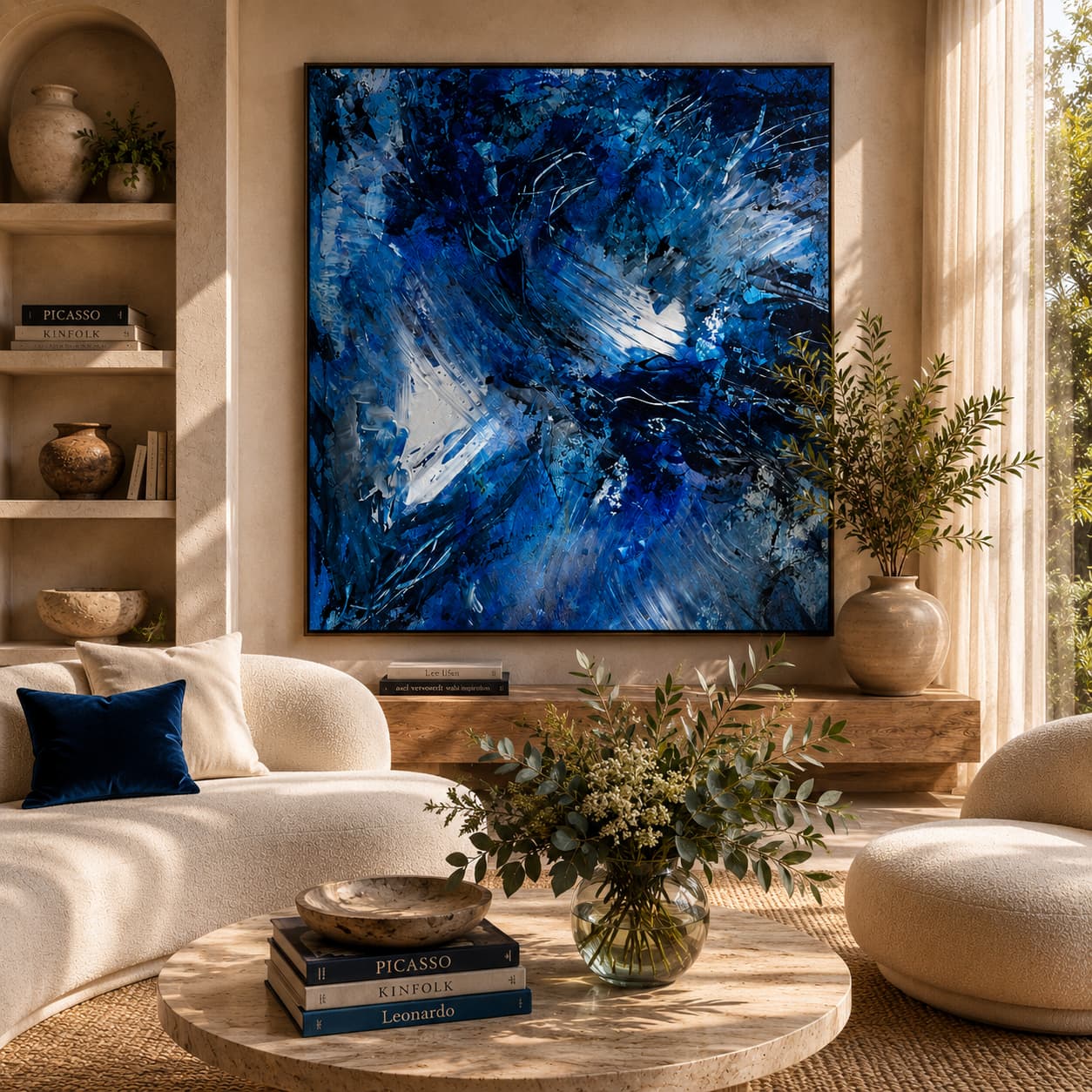
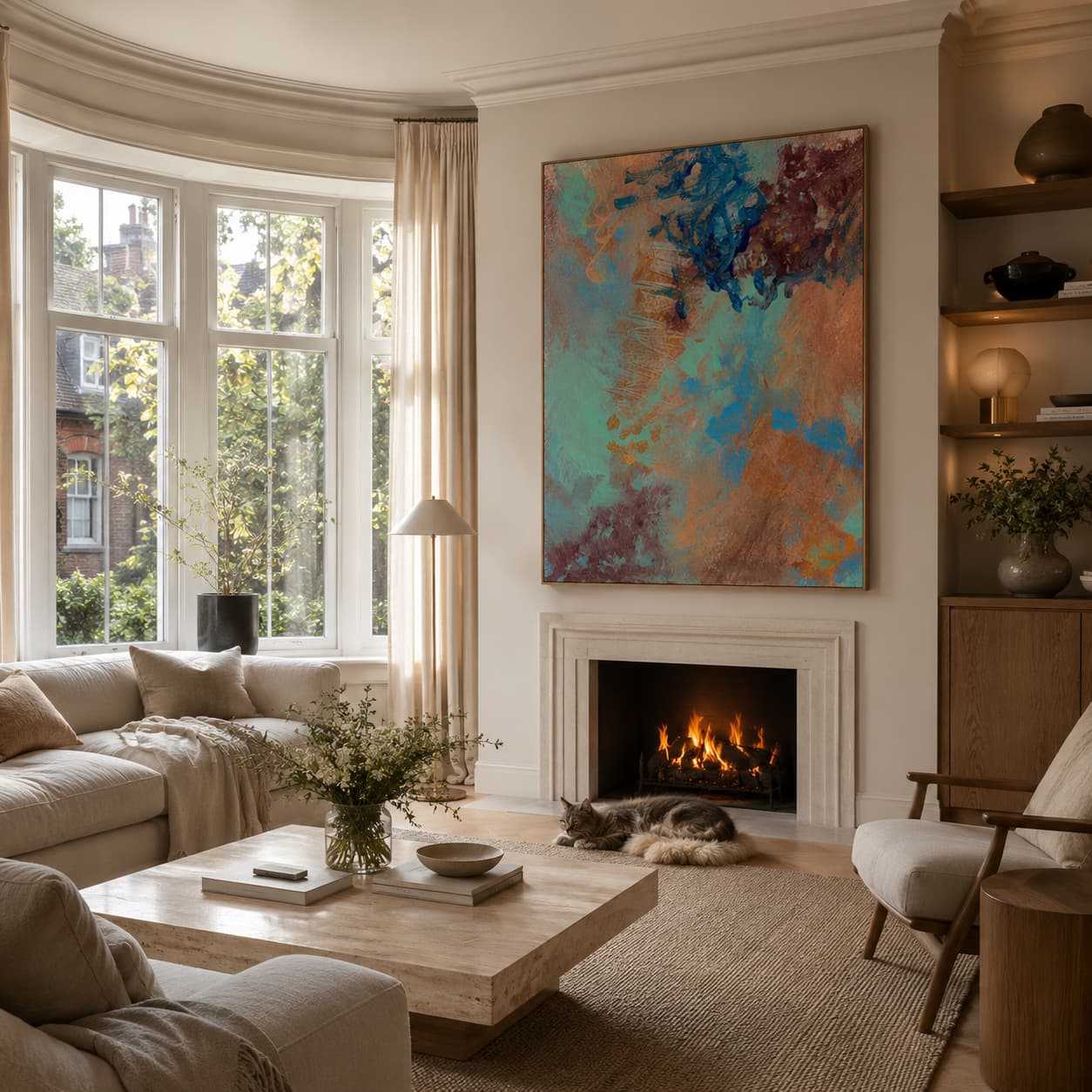
Why Art Feels Expensive
A lot of people experience mild sticker shock when they first start looking at original artwork or collector-grade canvas prints.
They might happily spend £3,000 on a sofa, £6,000 on a kitchen renovation or £1,500 on a weekend away, then suddenly look at a piece of art and think:
“Wait. How much?”
Part of this happens because we are used to understanding the purpose of most purchases. We know what a sofa does. We know what a television does. We know what a washing machine does.
Art feels harder to justify because its value is less obvious. The irony is that artwork often stays in our lives far longer than many of the things we spend far more money on.
A holiday creates memories for a few weeks. A phone lasts a few years. A good piece of art can remain part of your home for decades.
The Cheapest Art Is Not Always the Best Value
This is where people often get caught out. Imagine two scenarios.
In the first, you spend £150 on a large decorative print because it fills a wall. In the second, you spend £2,000 on a piece you genuinely connect with.
Five years later, the £150 print is in storage, donated to a charity shop or sitting behind a wardrobe because you got bored with it. The £2,000 piece is still hanging where you originally placed it.
Which one was actually a better value?
The answer has very little to do with the original price.
Value is not measured by how little something costs. Value is measured by how much it gives back over time. This is one reason I often tell people to stop asking whether a piece is expensive and start asking whether they would miss it if they walked away.
What Most First-Time Buyers Get Wrong
One of the biggest mistakes people make is setting a budget before they understand what they want.
They decide they have £500 to spend. Then they start looking for art.
What usually happens is that they spend weeks comparing prices, styles, sizes and websites until they become completely overwhelmed.
A better approach is often to start with the space. Ask yourself:
-
- What does the room need?
- What atmosphere are you trying to create?
- What do you want to feel when you walk in?
Those questions often reveal more than a budget ever will.
As discussed in How to Buy Art When You Don’t Know Anything About Art, emotional connection usually matters far more than technical knowledge.
The same is true when setting a budget.
The Difference Between Decorative Art and Artwork You Live With
This is where things become interesting. Some art exists primarily to coordinate with a room. There is nothing wrong with that.
A beautifully styled interior can absolutely benefit from decorative artwork. But there is another category of work that operates differently. It becomes part of the atmosphere of the home. It feels less like an accessory and more like a presence.
People often notice this difference without having language for it.
They find themselves repeatedly looking at a piece. They notice new things in it. They continue thinking about it.
Months later, it still feels interesting.
As explored in The Difference Between Decorative Art and Emotionally Intelligent Art, that relationship often becomes far more important than whether the artwork perfectly matches the curtains.
Why Bigger Budgets Do Not Guarantee Better Choices
One of the stranger assumptions in the art world is that spending more automatically leads to better decisions.
It doesn’t.
I’ve seen people buy expensive artwork because they thought they were supposed to. I’ve seen people buy affordable artwork because they genuinely loved it.
Guess which group usually seems happier.
The amount you spend matters far less than the reason you spend it.
If the purchase is driven by status, trends or the desire to impress other people, satisfaction tends to disappear quickly. If the purchase is driven by a genuine connection, the relationship often lasts much longer.
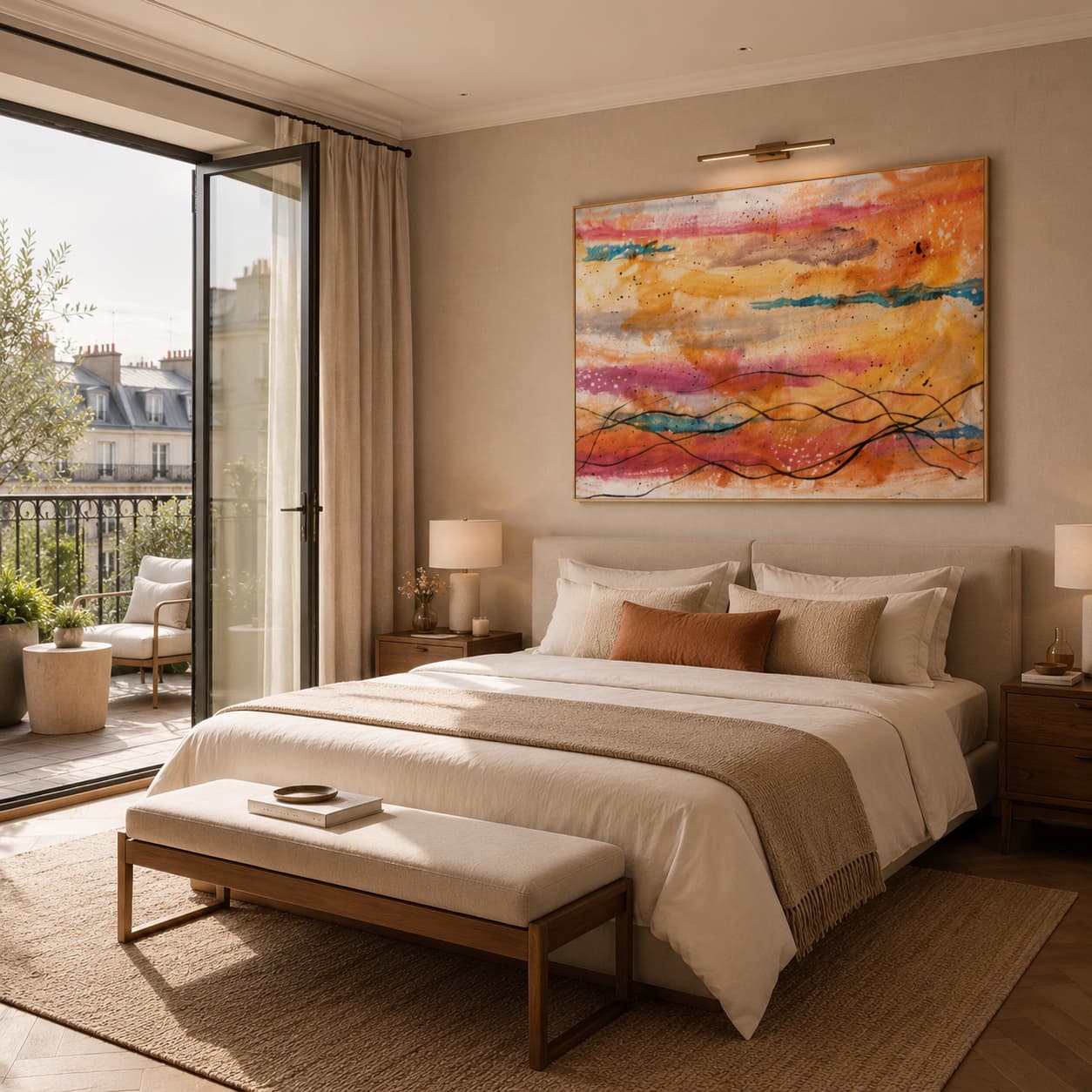
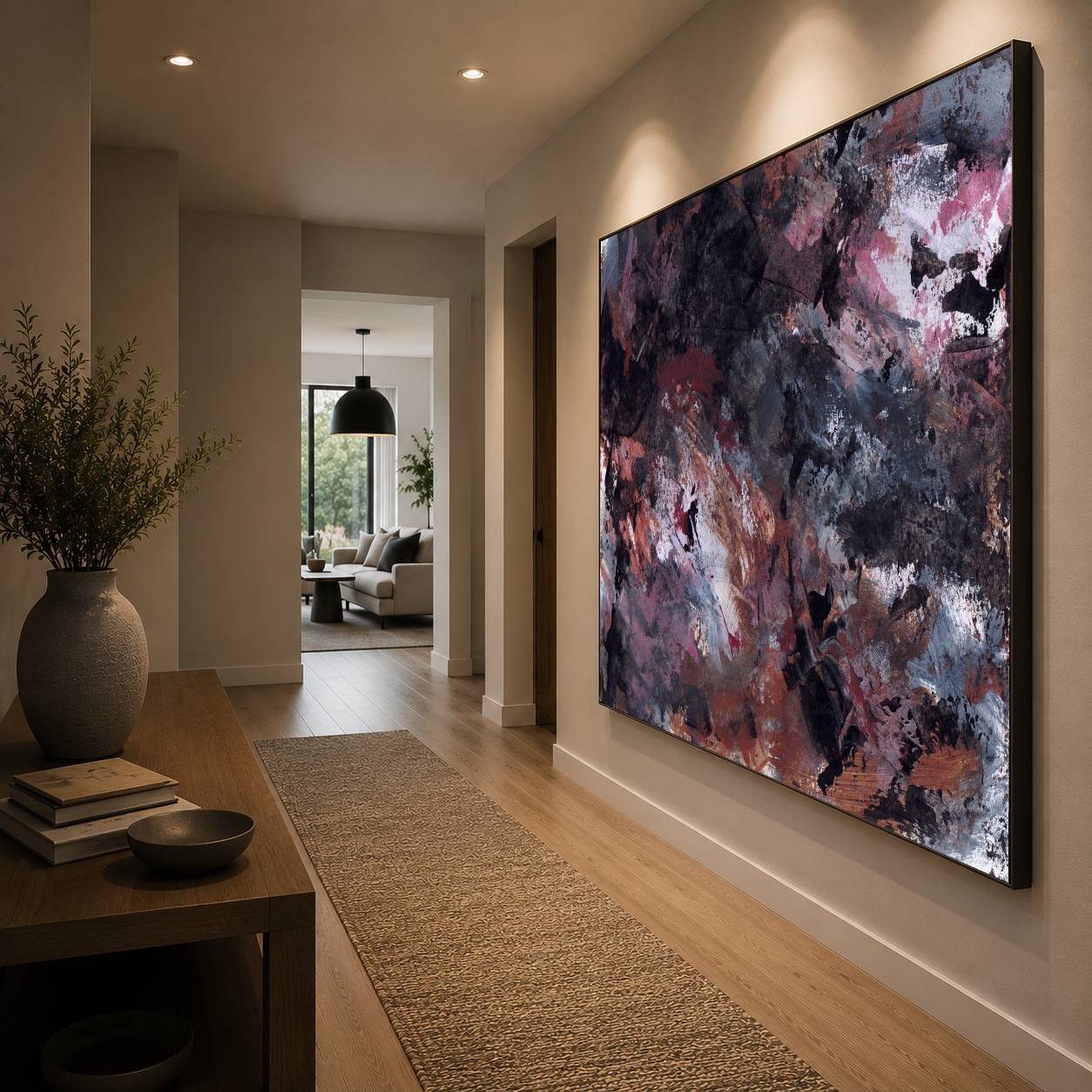
What Art Actually Costs
A lot of buyers want at least some sense of the landscape before they start looking.
Broadly speaking, you will encounter something like this:
| Type of Artwork | Typical Range |
|---|---|
|
Mass-produced wall art |
£50-£500 |
|
Decorative gallery pieces |
£500-£2,000 |
|
Independent artist work |
£1,000-£5,000 |
|
Collector-grade artwork |
£1,500-£10,000+ |
|
Private commissions |
£2,500-£25,000+ |
|
It feels personal |
It feels generic |
|
You would still like it next year |
You only like it because it is fashionable |
These numbers overlap because the art world is not particularly tidy.
The important thing is understanding that these categories are not competing directly with one another.
Comparing a mass-produced print with a collector-grade artwork is a bit like comparing a supermarket birthday cake with one made by a specialist baker.
Both are technically cake. They are serving different purposes.
Why Size Changes Everything
One thing buyers consistently underestimate is scale. A small artwork can look surprisingly expensive until you place it next to a large piece and understand the difference in impact.
This is particularly true in larger homes, open-plan spaces and properties with high ceilings.
Large artwork often creates more calm than multiple smaller pieces because it gives the eye somewhere to settle.
As explored in How to Buy Large Abstract Art Without Overwhelming a Room, scale has a profound effect on how a space feels.
This is one reason larger works naturally command higher prices. They do more.


Should You Think of Art as an Investment?
The honest answer is probably not. At least not initially. Some artwork does increase in value. Some doesn’t.
The people who seem happiest with their purchases are usually the ones who buy because they love the work, not because they hope it will outperform a savings account.
If the piece appreciates in value later, wonderful. If it doesn’t, you still spent years living with something that improved your environment.
That is hardly a disaster.
A Better Way to Think About Budget
Instead of asking: “How much should I spend?” Try asking: “How important is art in my life?”
For some people, artwork is the final detail. For others, it is one of the defining features of the home.
Neither approach is wrong. But the answer will influence your budget more honestly than any percentage formula ever could.
Questions Worth Asking Before You Buy
Before setting a budget, ask yourself:
-
- Would I still want this piece next year?
- Does it change how the room feels?
- Am I buying it because I love it or because it matches?
- Can I imagine living with it for years?
- Does it feel distinctive?
- Do I keep coming back to it?
- Am I excited by it or simply satisfied with it?
The answers are often surprisingly revealing.

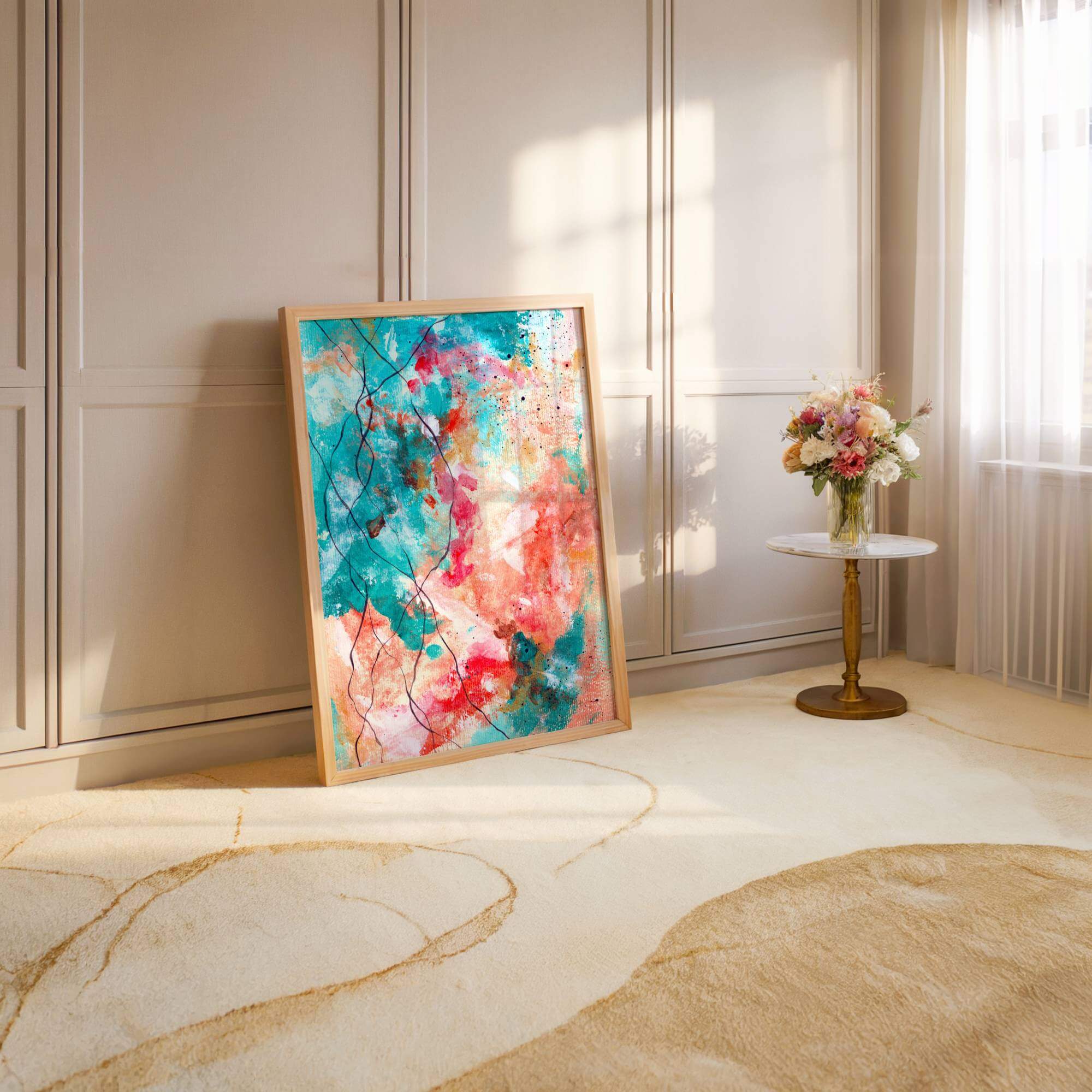
Final thoughts
The truth is that nobody can tell you exactly how much you should spend on art. There is no universal formula. No secret collector’s rulebook. No percentage of your mortgage payment that magically unlocks good taste.
What matters is finding artwork that earns its place in your life.
Artwork that you continue noticing. Artwork that improves a room. Artwork that creates something difficult to measure but impossible to ignore.
The best purchases are rarely defined by the number attached to them. They are defined by what happens afterwards.
Years later, when the artwork is still hanging where you put it, and you still find yourself looking at it, the original price often becomes the least interesting part of the story.
Related Reading
The Ultimate Guide To Integrating Abstract Art Into Your Home Décor
What to Know Before Buying Your First Collector-Grade Canvas Print
The Ultimate Guide to Curating Personalised Wall Art for Mindful Spaces
Collector-Grade Canvas Art: The Definitive Guide
How to Buy Art When You Don’t Know Anything About Art
How Much Should You Expect to Pay for Large Abstract Art?
Canvas Prints vs Original Paintings: What’s the Difference?
The Difference Between Decorative Art and Emotionally Intelligent Art
Why Abstract Canvas Prints Work Better Than Mass-Produced Wall Art
How Abstract Art Supports Calm Interiors Without Making a Space Feel Empty
Key Takeaway
The best art purchase is rarely the cheapest piece you can find or the most expensive piece you can afford. It is the piece you genuinely want to live with.
Frequently Asked Questions
Whatever feels comfortable. Focus on finding a piece you genuinely connect with rather than chasing a specific budget.
No. Price and quality are related, but they are not the same thing.
Most people are better served buying artwork they genuinely enjoy living with rather than focusing primarily on future value.
Collector-grade artwork commonly starts around £1,500 and can exceed £10,000 depending on size, rarity and artist profile.
Factors include size, materials, exclusivity, production quality, artist reputation and demand.
Often, yes. Large pieces can have a significant impact on atmosphere and spatial balance.
Connection. A piece you genuinely love will almost always provide more long-term value than one chosen purely because it was affordable.
Absolutely. Price alone does not determine quality or emotional impact.