
How Much Walking Do Desk Workers Need? A Realistic Guide for People Who Sit All Day
TL;DR
Desk workers don’t necessarily need 10,000 steps a day, but they do need regular movement throughout the working day. The biggest issue isn’t a lack of exercise. It’s spending long periods sitting without interruption. A realistic goal for many desk workers is 7,000 to 10,000 daily steps combined with regular movement breaks throughout the day.
How much walking do desk workers need? A realistic guide for people who sit all day
If you work at a desk, you’ve probably experienced this strange contradiction. You can exercise regularly, go to the gym, eat relatively well and still feel stiff, heavy and surprisingly exhausted by the end of the day.
By 4 pm, your shoulders are creeping towards your ears, your hips feel tight, your lower back is becoming increasingly vocal, and your concentration seems to have quietly packed its bags and gone home without telling anybody.
Then you look at your smartwatch and realise you’ve only managed 3,200 steps all day. Immediately, the guilt arrives.
“I need to walk more.” “I should have gone for a run.” “I need to be more disciplined.”
For many desk workers, the conversation quickly turns into a battle against themselves when it doesn’t need to.
The problem isn’t usually laziness. It certainly isn’t a lack of discipline. More often than not, it’s the simple reality that modern working life has been built around sitting.
The average office worker can easily spend eight, nine or even ten hours sitting every day. Add commuting onto that, plus an evening spent watching television, reading or scrolling through your phone, and suddenly you’ve accumulated a tremendous amount of inactivity without really noticing.
Walking, therefore, becomes less about burning calories and far more about giving your body something it desperately craves: variety.

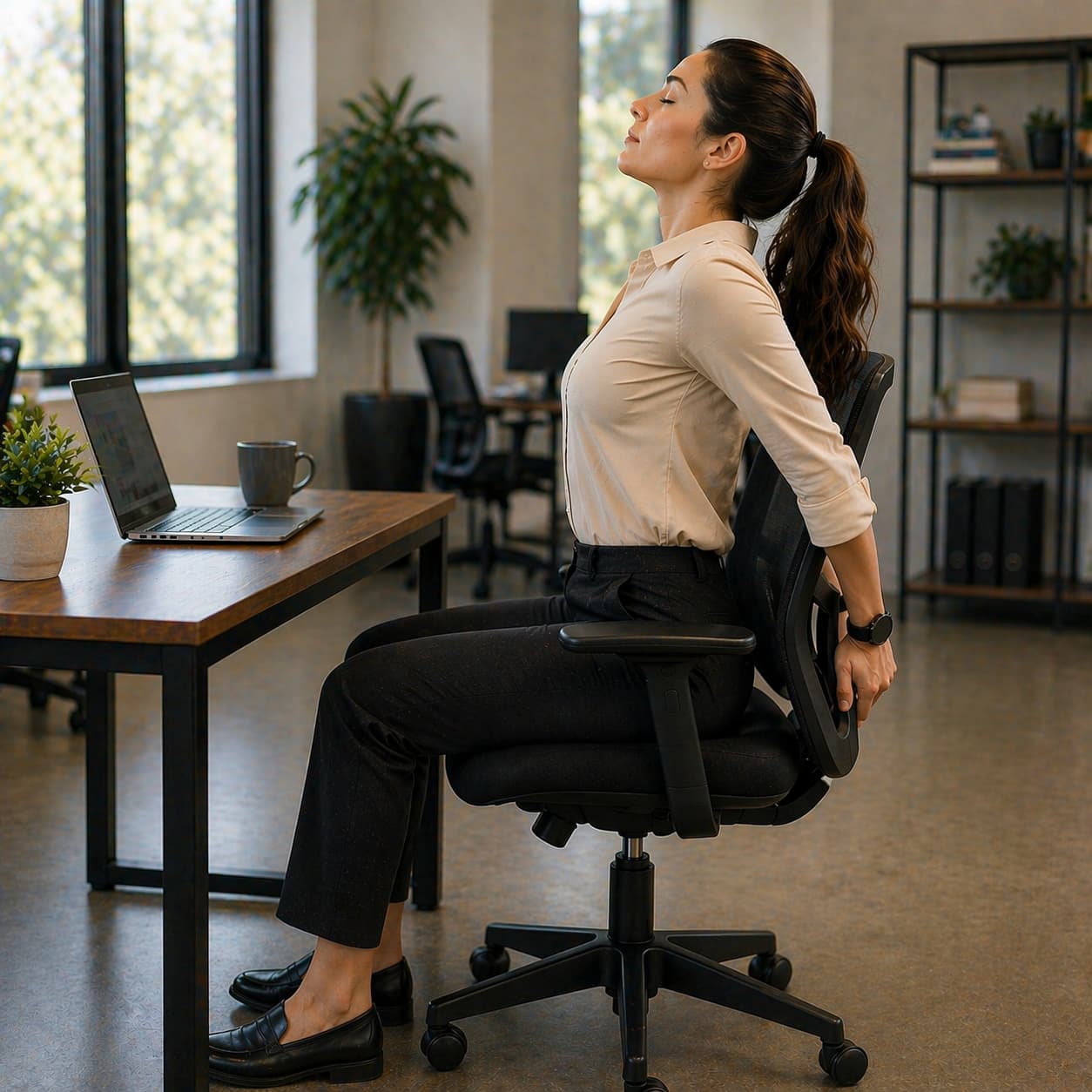
The question isn't how much walking you need. It's how much sitting you're doing.
This is the first thing that needs reframing because the internet has become slightly obsessed with step counts. Ten thousand steps has somehow become the universal gold standard, and many people feel they’ve failed if they don’t reach it every day. The reality is considerably more nuanced than that.
A teacher who spends six hours walking around classrooms has very different movement needs compared to somebody who spends eight hours at a desk attending virtual meetings.
Likewise, a retail worker, nurse or yoga teacher will naturally accumulate far more incidental movement throughout the day than somebody whose entire job happens through a laptop.
Instead of asking whether you’ve reached a certain number, it can be more helpful to ask a different question altogether. How many hours have I spent sitting without interruption?
That one question often reveals much more than a step count ever could.
The human body was never designed to remain in one position for hours at a time. Sitting itself isn’t the villain. In fact, sitting is wonderfully comfortable and absolutely fine in moderation. The problem arises when we ask our bodies to stay still for extended periods without giving them opportunities to move in between.
This is where desk workers often begin to feel the consequences.
What actually happens to your body when you sit all day?
Most people don’t suddenly wake up one day unable to move. The changes are much more subtle.
You begin noticing that your hips feel stiff when you stand up after a long meeting. Your shoulders gradually become more rounded. Your neck starts carrying more tension than it used to. By the evening, your energy levels feel strangely depleted despite the fact that you haven’t exactly been climbing mountains all day.
This often confuses people because sitting doesn’t feel physically demanding. The irony is that prolonged sitting can actually be incredibly tiring.
Your muscles are still working. They’re simply working in very repetitive, static ways. Your hip flexors remain shortened for long periods. Your gluteal muscles become less active. Your upper back often works overtime trying to support a forward head posture. Meanwhile, your circulation isn’t receiving the same assistance it would normally get from regular movement.
None of this means your body is falling apart. It simply means your body is asking for more variation.
Human bodies are incredibly adaptable, but they adapt to whatever we repeatedly ask them to do. If we repeatedly ask them to sit for eight hours every day, they’ll adapt to sitting. Unfortunately, that adaptation doesn’t always feel particularly pleasant.
Is 10,000 steps actually necessary?
This answer may disappoint some people. Not really.
The famous 10,000-step target didn’t originate from a medical recommendation. It was part of a Japanese marketing campaign from the 1960s that eventually became embedded in public consciousness.
That doesn’t mean it’s a bad target. In fact, for many people, it’s an excellent one. It simply isn’t magical.
Many studies have shown health benefits at lower step counts, too, particularly in the 7,000 to 8,000-step range.
The problem is that desk workers often approach this entirely backwards. They remain seated for most of the day and then panic at 7 pm because they still have 6,000 steps left to achieve.
This creates an all-or-nothing relationship with movement that quickly becomes unsustainable. Movement shouldn’t feel like punishment for sitting all day. It should simply become a normal part of your day.
What is a realistic walking target for desk workers?
For most desk workers, this is a far more practical framework. If you’re currently averaging around 3,000 steps a day, don’t suddenly decide that tomorrow you’ll hit 15,000. That’s a brilliant way to make yourself miserable by Thursday.
Instead, gradually build towards these ranges.
5,000 to 6,000 steps is a good starting point for people who are extremely sedentary. 7,000 to 10,000 steps is a realistic target for many desk workers and will already provide substantial benefits when combined with regular movement breaks.
More than 10,000 steps can be wonderful if you genuinely enjoy walking, but it’s not compulsory, and it certainly isn’t a badge of honour.
The real objective isn’t a number. It’s reducing the amount of uninterrupted sitting throughout your day. That’s where the magic happens.
Why one gym session doesn't cancel out eight hours of sitting
This is one of the biggest misconceptions I see, and it’s incredibly common among people who are otherwise quite active.
Perhaps you go to the gym three or four times a week. Maybe you run, attend Pilates classes or enjoy cycling at weekends. You might even be fitter than most people around you, yet somehow you still feel stiff and uncomfortable by the end of the working day.
That’s because exercise and prolonged sitting are two separate conversations.
Exercise is incredibly beneficial. Please don’t interpret this as a reason to stop going to the gym. However, your body doesn’t view a 45-minute workout as a free pass to remain stationary for the next nine hours.
The body responds particularly well to regular movement exposure throughout the day. In many ways, consistency matters more than intensity when we’re talking about desk-based lifestyles.
Imagine watering a plant once a week with a huge bucket of water versus giving it small amounts regularly. The huge bucket doesn’t necessarily compensate for six days of neglect.
Movement works similarly.
The gym remains enormously important for strength, cardiovascular health and long-term wellbeing, but it works best when combined with a generally active lifestyle rather than acting as a rescue mission for prolonged sitting.
Why desk workers often feel exhausted despite not being physically active
This one frustrates a lot of people because they start doubting themselves. How can somebody feel so tired when they’ve been sitting down all day?
The answer is that fatigue doesn’t only come from physical exertion.
-
- Decision-making is tiring.
- Concentration is tiring.
- Constant notifications are tiring.
- Screen exposure is tiring.
- Remaining in the same position for hours is tiring.
Mental and physical systems don’t operate independently from one another. They constantly influence each other.
Think about the end of a busy office day. Your brain is overloaded, your shoulders are tight, your jaw is clenched, and your eyes are tired. It’s no surprise that you collapse onto the sofa afterwards because your entire system has been working hard all day.
This is also why movement often feels so good.
Walking isn’t simply an exercise. It interrupts the constant stream of information your brain is processing. It creates a small reset button.
Ten minutes outdoors between meetings can feel disproportionately helpful compared to the actual amount of exercise involved. Sometimes it’s not about fitness at all. It’s about giving your body and brain a different experience.
The easiest way to increase your walking without overhauling your life
This is where people often overcomplicate things. They think movement requires a dedicated hour, a gym membership, expensive clothing and a perfect routine. It doesn’t.
The easiest strategy is to stop thinking about walking as a separate activity and start weaving it into things you’re already doing.
For example:
-
- Instead of checking your phone immediately after lunch, spend ten minutes walking outside.
- Instead of taking every phone call sitting down, stand up and walk around.
- Instead of waiting until 7 pm to achieve all your movement, spread it throughout the day.
Tiny adjustments often create surprisingly large results. If you walked for five minutes four times throughout the working day, you’d already accumulated twenty minutes of additional movement. Suddenly, reaching 7,000 steps no longer feels impossible.

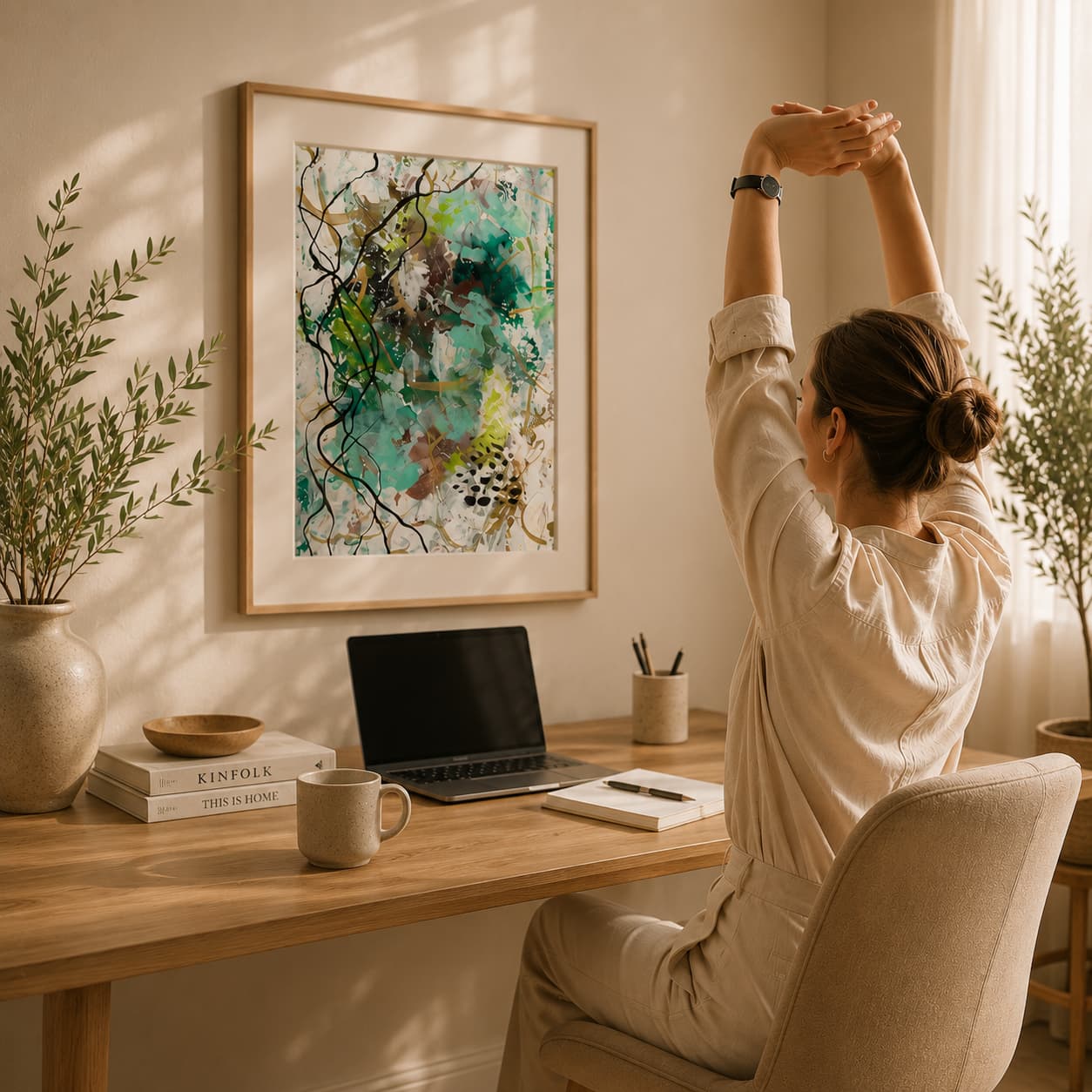
A realistic framework for a typical office worker
Let’s imagine a fairly standard working day. You start work at 9 am and finish at 5 pm. Here’s how movement could naturally fit into your day.
Before work
Take a ten-minute walk before sitting down at your desk. If you commute, park slightly further away or get off public transport one stop earlier.
Mid-morning
Take five minutes to refill your water bottle, walk around the office or simply go outside for some fresh air.
Lunch
Aim for a fifteen-minute walk after eating rather than immediately returning to your screen.
Mid-afternoon
Take another five-minute movement break, particularly if you notice your concentration beginning to dip.
After work
Go for a twenty-minute walk before dinner or after eating.
Without dramatically changing your life, you’ve accumulated almost an hour of walking. This approach is often far more sustainable than attempting one enormous exercise session at the end of an already exhausting day.
Working from home presents a different challenge
Many people assume working from home automatically means healthier habits. Sometimes the opposite happens.
When people commute, they often accumulate movement without realising it. Walking to the train station, climbing stairs, moving between meeting rooms and leaving the office for lunch all contribute to daily activity levels.
Working from home can accidentally remove all of those opportunities. It’s entirely possible to wake up, walk five metres to your desk and barely move again until the evening.
If you work from home regularly, movement needs to become intentional. That doesn’t mean setting alarms every twenty minutes. That would drive most people mad.
It simply means becoming aware of how easy it is to unintentionally eliminate movement from your day.
Simple signs you probably need more movement
You don’t need a smartwatch to tell you. Your body usually does a very good job of communicating. You might benefit from more movement if:
-
- Your hips feel stiff when you stand up.
- Your lower back feels uncomfortable after long meetings.
- Your neck feels increasingly tight throughout the day.
- You regularly experience afternoon energy crashes.
- You feel mentally foggy despite sleeping reasonably well.
- You feel strangely tired after doing very little physical activity.
None of these automatically indicates that something is wrong. They’re often gentle reminders that your body needs more variation.
What employers can do differently
This isn’t entirely an individual problem. Modern workplaces have quietly normalised prolonged sitting. The responsibility shouldn’t fall solely on employees trying to undo eight hours of sitting by themselves.
Healthy workplaces don’t necessarily install treadmills or force everyone into mandatory exercise classes. In fact, that’s usually a terrible idea.
The best workplaces simply make movement easier.
That might include encouraging walking meetings, allowing genuine breaks between meetings, creating opportunities for people to leave their desks and integrating practical movement sessions into the working week.
The goal isn’t to turn an office into a gym. The goal is to make movement feel normal again.
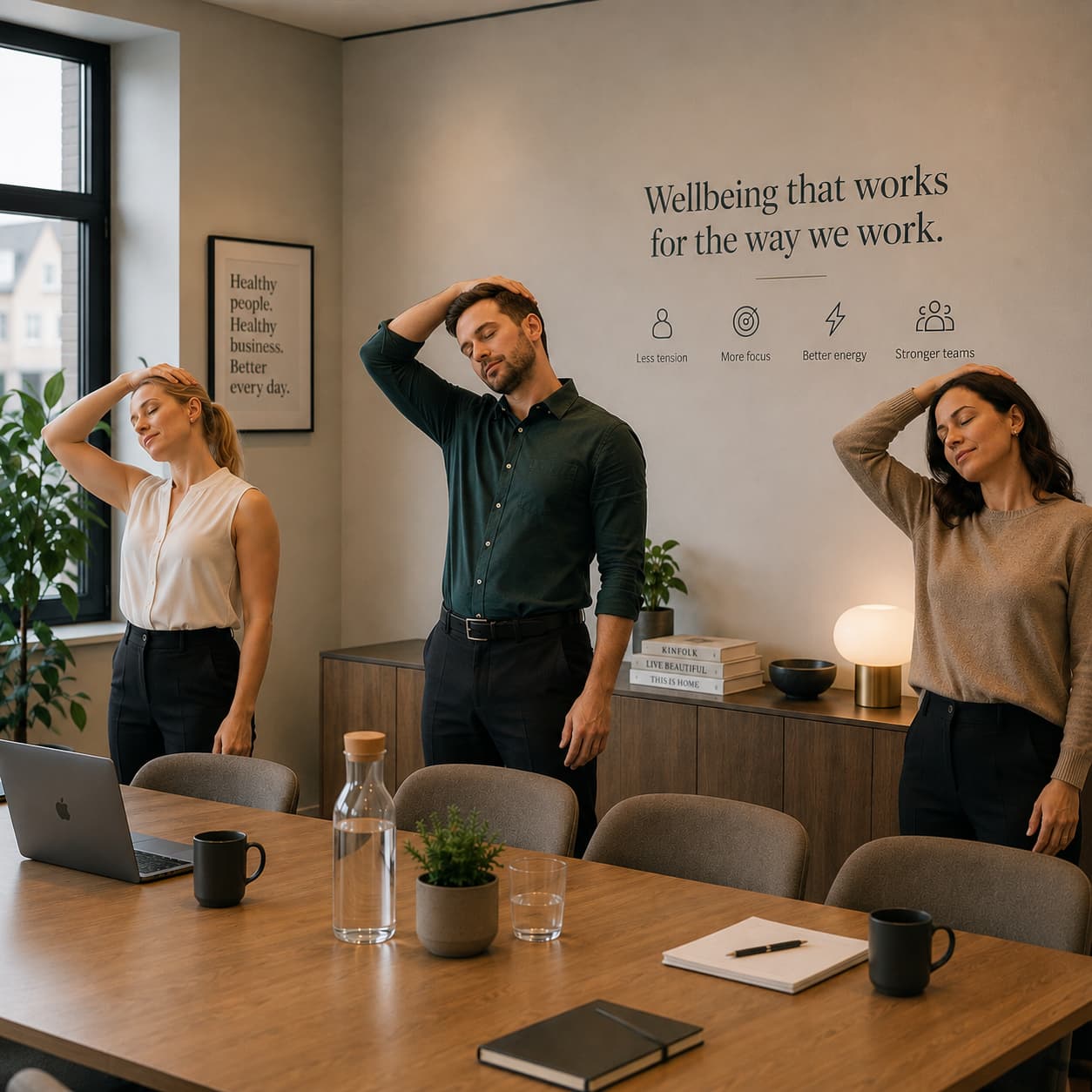
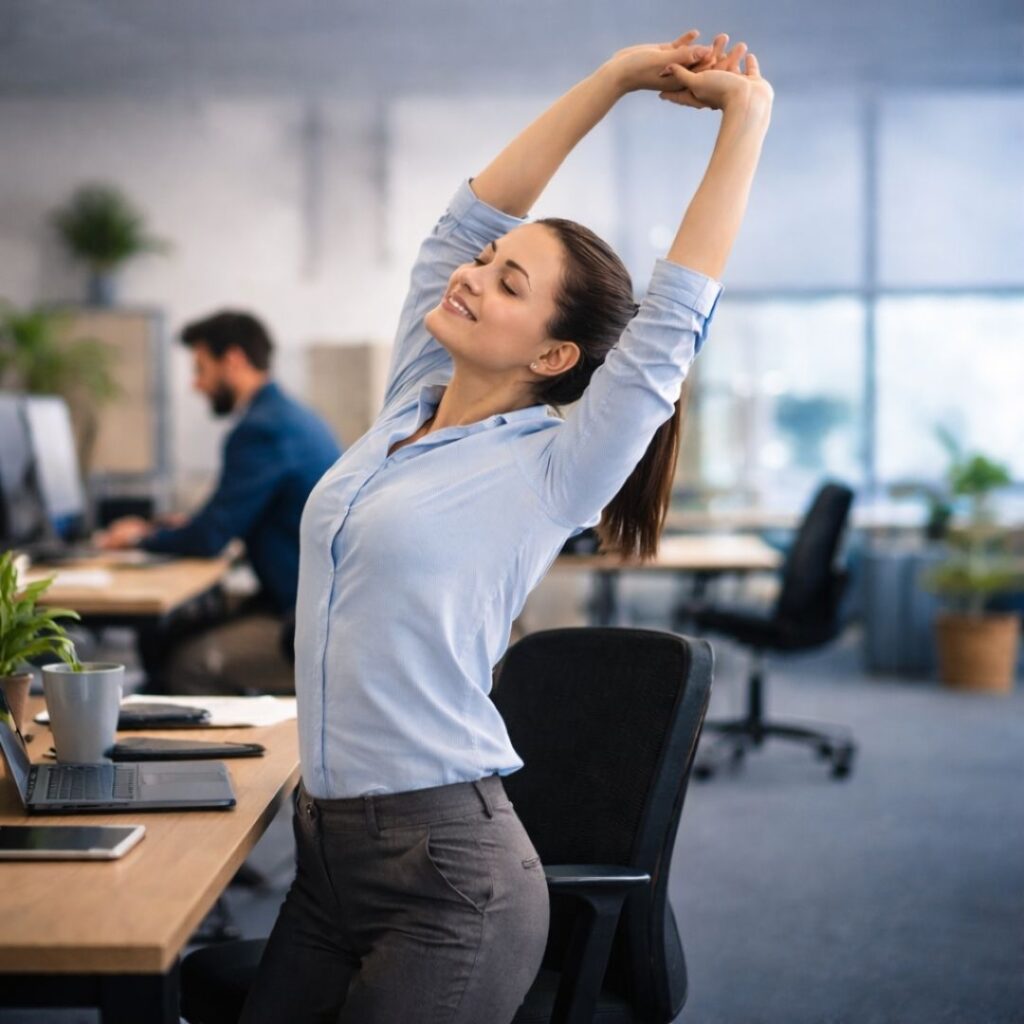
Could your workplace support movement better?
If you’re reading this and quietly thinking, “Actually, our whole team could probably benefit from this”, you might not be wrong.
Many workplaces are filled with people who feel tired, stiff and mentally drained, but nobody talks about the physical demands of sitting all day because it doesn’t seem serious enough.
The reality is that these small issues gradually accumulate over time.
People become less comfortable, less energised and more disconnected from their own bodies.
If your organisation is already investing in wellbeing, movement deserves a place within that conversation.
Not because everybody needs another fitness challenge, but because human bodies were never designed to remain attached to office chairs all day.
If you think your colleagues, HR team or manager would benefit from reading this article, send it to them. Sometimes change starts with a simple conversation.
Conclusion
Desk workers don’t necessarily need more discipline. Most don’t need another app, another challenge or another impossible target to fail by Wednesday afternoon. They simply need more opportunities to move.
Walking is one of the most accessible tools we have because it doesn’t require experience, expensive equipment or a complete lifestyle overhaul.
The real shift happens when we stop asking, “How many steps have I done?” and start asking, “How much have I moved today?”
Because they’re very different questions.
Movement isn’t something that should happen for one hour before work or after work. Ideally, it should be quietly threaded throughout the entire day.
That’s ultimately what your body is asking for.
Not perfection. Not an arbitrary number on a watch. Just a little more variety than sitting in the same chair for eight hours straight.
You might want to read these articles:
Key takeaway
Most desk workers don’t have an exercise problem. They have a prolonged sitting problem.
Frequently Asked Questions
No. While 10,000 steps is a useful target for some people, many health benefits occur well before that. For many desk workers, 7,000 to 10,000 steps combined with regular movement breaks is a realistic goal.
Ideally, try to break up sitting every 30 to 60 minutes with short periods of movement.
Yes. Prolonged sitting can contribute to physical stiffness, mental fatigue and reduced energy levels throughout the day.
No. Exercise is incredibly beneficial, but it doesn’t completely offset spending the rest of the day sitting.
Attach walking to activities you already do, such as lunch breaks, phone calls or short breaks between meetings.
It can be. Many people unknowingly remove lots of incidental movement from their day when they stop commuting.
Absolutely. Workplace cultures that support movement make it easier for employees to build healthier habits.
Yes. Regular movement breaks can help improve energy, focus and overall wellbeing throughout the working day.
Sit Happens is a movement-based workplace wellbeing programme designed specifically for desk-based teams to support posture, movement, nervous system regulation and physical wellbeing.