
Stillness in the Home: How Emotionally Intelligent Art Creates Inner Sanctuary
We’re burnt out. Even the places meant to soothe us, our homes, can become sites of tension and emotional noise. As an artist, I’ve walked into spaces so curated they couldn’t breathe. I’ve spoken with collectors who said, “I don’t want something beautiful. I want something that helps me feel safe.” And I understood exactly what they meant.
Because in the end, we don’t want more. We want room to be.
This is where emotionally intelligent art meets stillness. Not as a design choice, but as a form of recovery. A form of quiet rebellion against performance and perfection. A way to create an emotional sanctuary, not just style.
In this article, we’re going deeper. Past the soft lighting and expensive textures. Into the heart of stillness. Into what makes a space truly hold you, and how art, when created and placed with presence, can change everything.
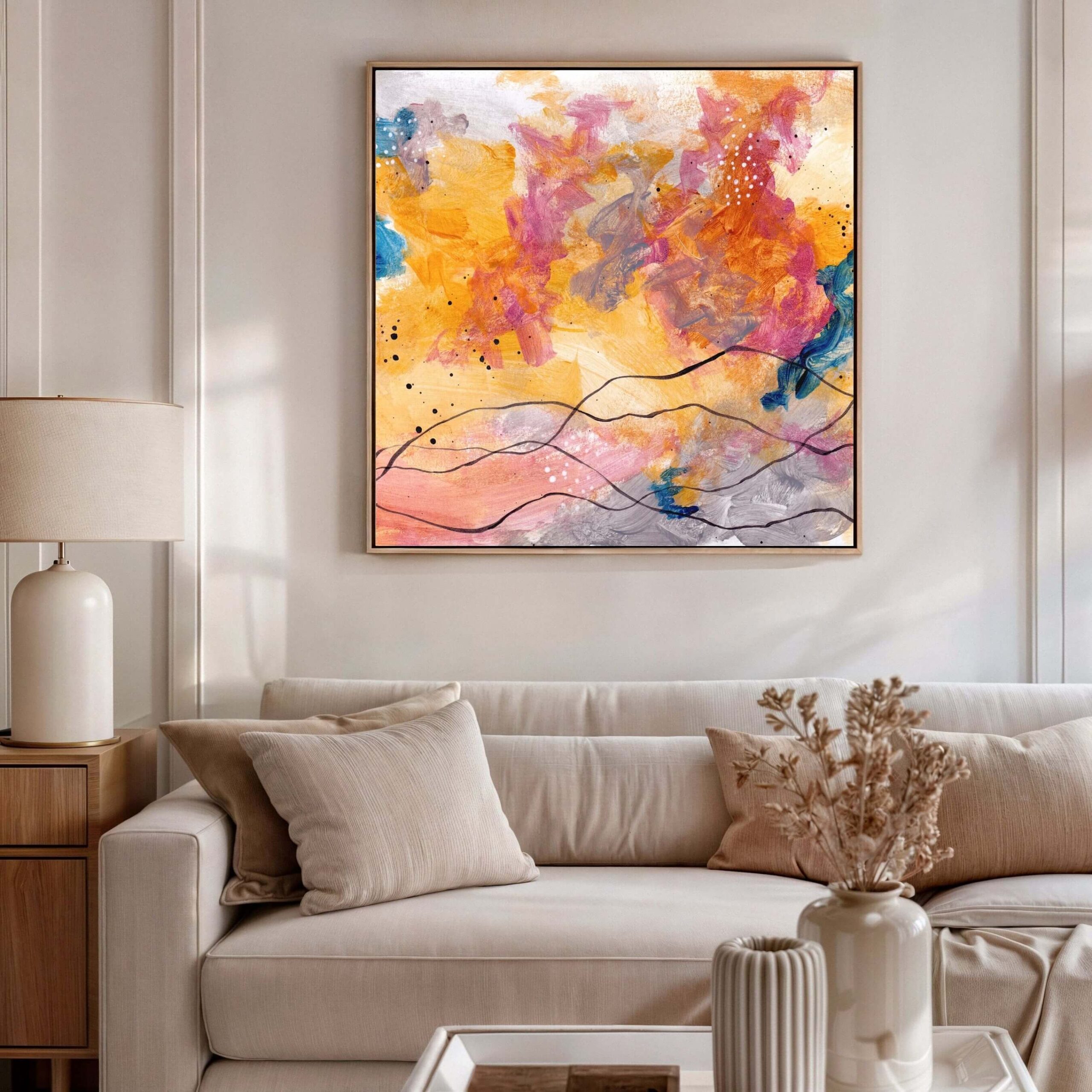
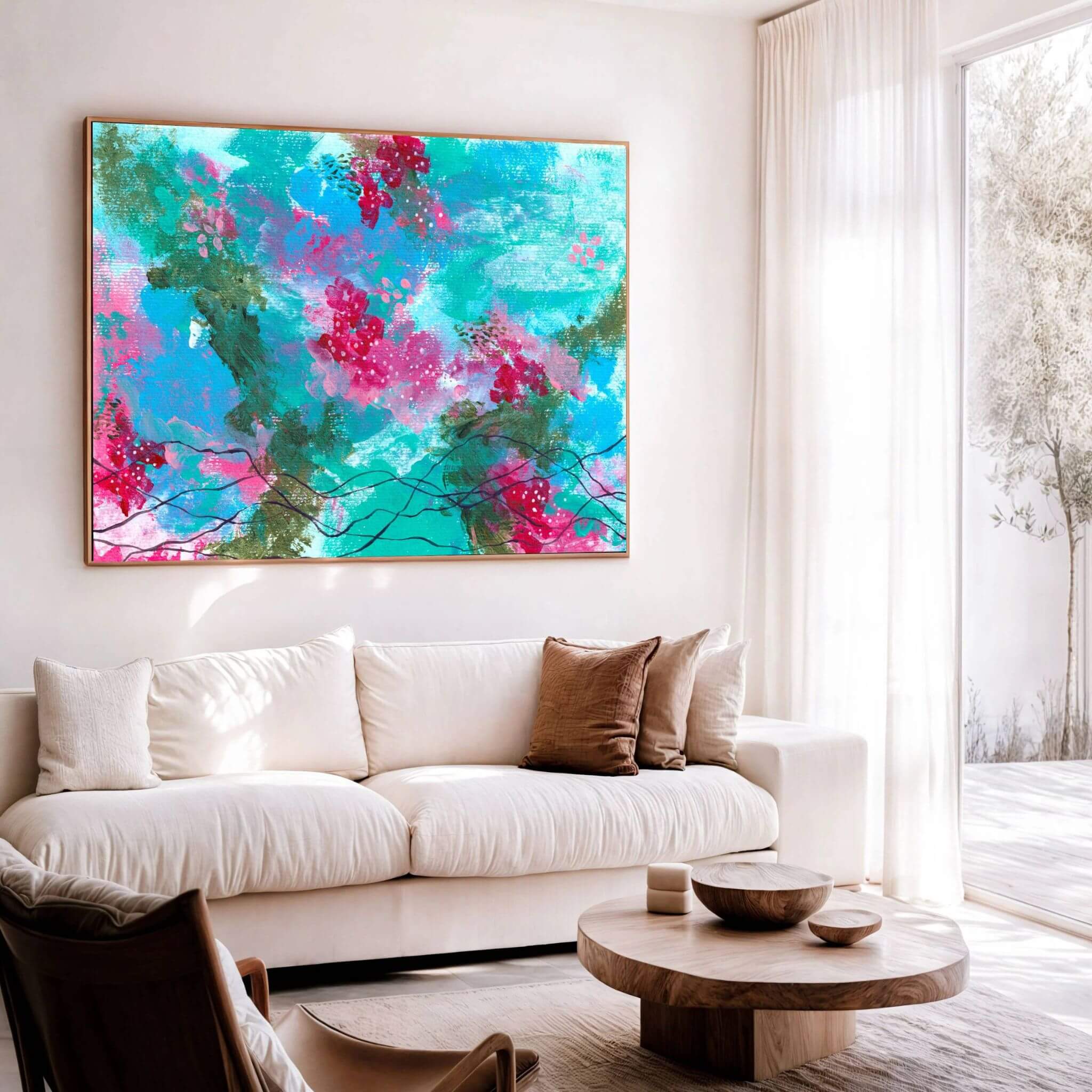
TL;DR: Why Emotionally Intelligent Art Changes the Feeling of a Home
A calm home isn’t created by furniture, lighting, or expensive finishes alone. The emotional tone of a space is shaped by what lives on the walls and how it makes you feel when you enter the room. Emotionally intelligent art brings weight, presence, and quiet stability into a space. Instead of decorating the room, it anchors it. When art is chosen for how it feels rather than how it matches, the atmosphere of the home changes. The space becomes somewhere you can actually exhale.
What Emotionally Intelligent Art Actually Means
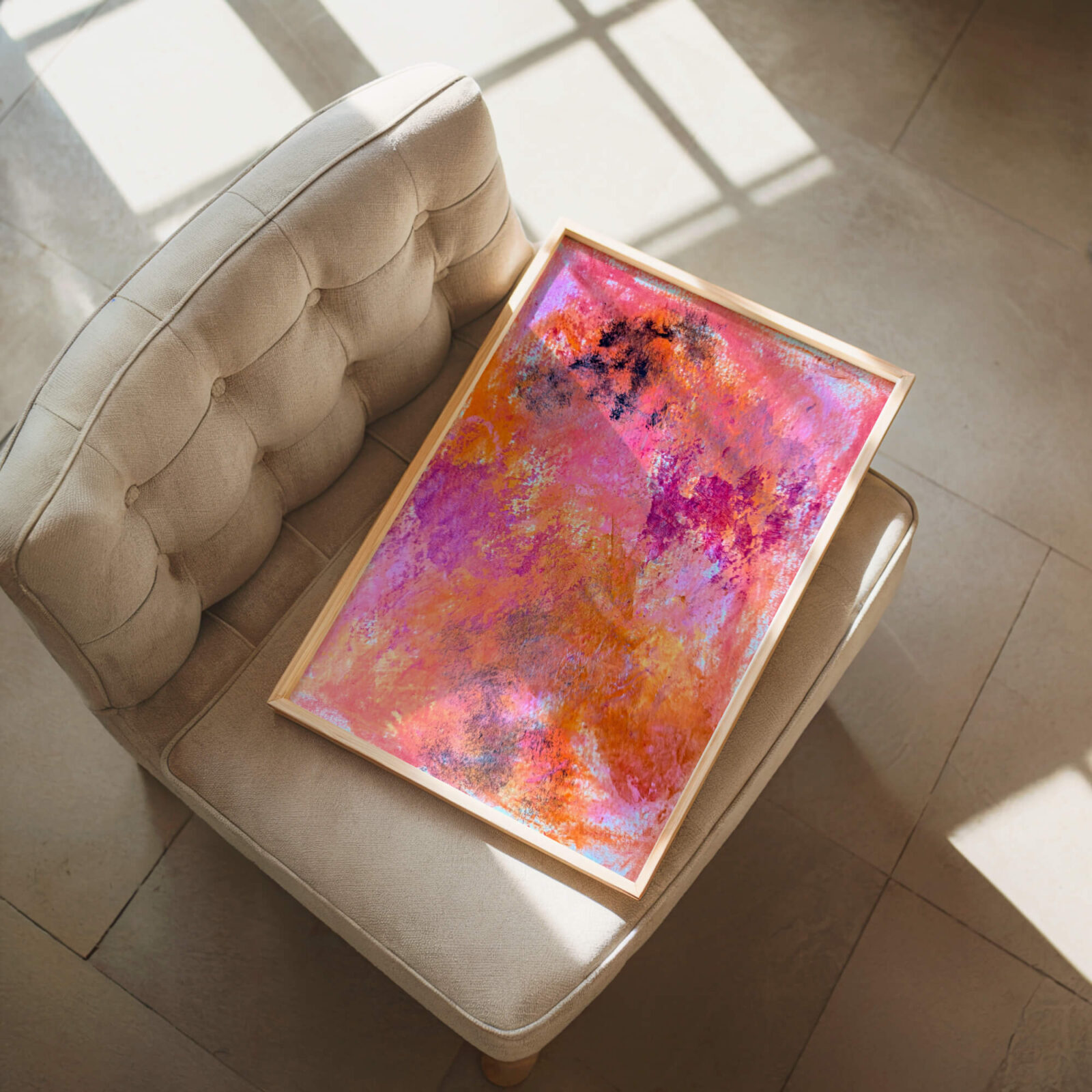
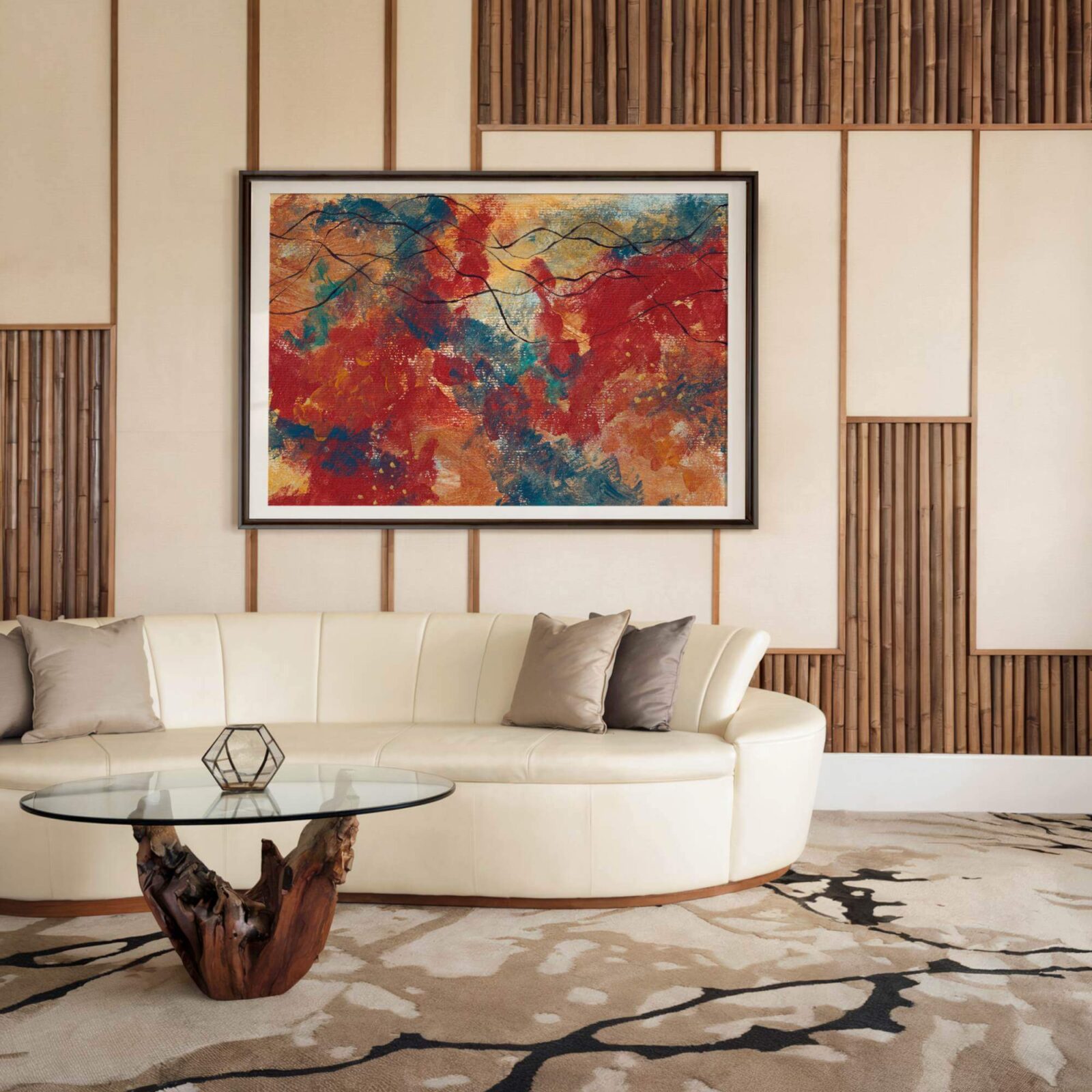
Emotionally intelligent art is artwork created with emotional depth rather than decorative intention. It isn’t there to fill a wall or complete a colour palette. It exists to hold presence in a space.
In practical terms, this means the artwork affects how a room feels. It can slow visual noise, create a point of emotional grounding, and allow the atmosphere of the space to settle. People often describe this kind of work as calming or reflective, but what they are really responding to is the sense that the piece carries emotional weight.
When art has that quality, it stops behaving like decoration and starts acting more like an anchor in the room.
The Design Flaw No One Talks About: Homes That Exhaust Us
Let’s name it. Many so-called luxury spaces are exhausting.
They’re visually crowded, acoustically overstimulating, and emotionally void. Even when the marble is polished and the candles are expensive, you can walk in and feel disoriented. Unsettled. On guard.
Why? Because too often, these spaces are built to impress rather than support. Designed to perform, not to protect.
And we bring that performance into our homes. Through Pinterest boards. Through echo chambers of trends. Through curated aesthetics that leave no room for us.
An emotionally intelligent home, by contrast, is designed for recovery, not reaction. Stillness isn’t the absence of life, it’s the restoration of it.
We design for energy and flow, but rarely for pause. And yet it’s in the pause that healing begins.
Stillness in design means creating a visual and emotional exhale. It’s not about being empty. It’s about being intentional. It’s the feeling of finally arriving home, not to a showpiece, but to a space that knows how to hold you.
What Emotionally Intelligent Art Actually Does in a Room
Emotionally intelligent art doesn’t explain. It doesn’t decorate. It doesn’t shout for attention.
It holds.
It meets you where you are, without demanding you be anything other than that. It becomes an anchor in a space, not to dominate it, but to make it feel safe enough for you to show up fully and quietly in your own emotional truth.
In homes designed around stillness, emotionally intelligent art grounds the room with emotional weight. It evokes calm without cliché. It brings texture and subtle movement that mirrors natural rhythms. It reflects the inner state of the collector, not the outer trend. This is part of what I explore in Why Emotionally Intelligent Interiors Always Include Art, where the role of art moves far beyond decoration.
My collectors often say they’re not buying a painting. They’re buying a feeling. A mirror. A sanctuary.
They’re not wrong.
The artwork becomes less of a statement and more of a presence. Something that lives with you. Breathing in the room. Waiting, not watching.
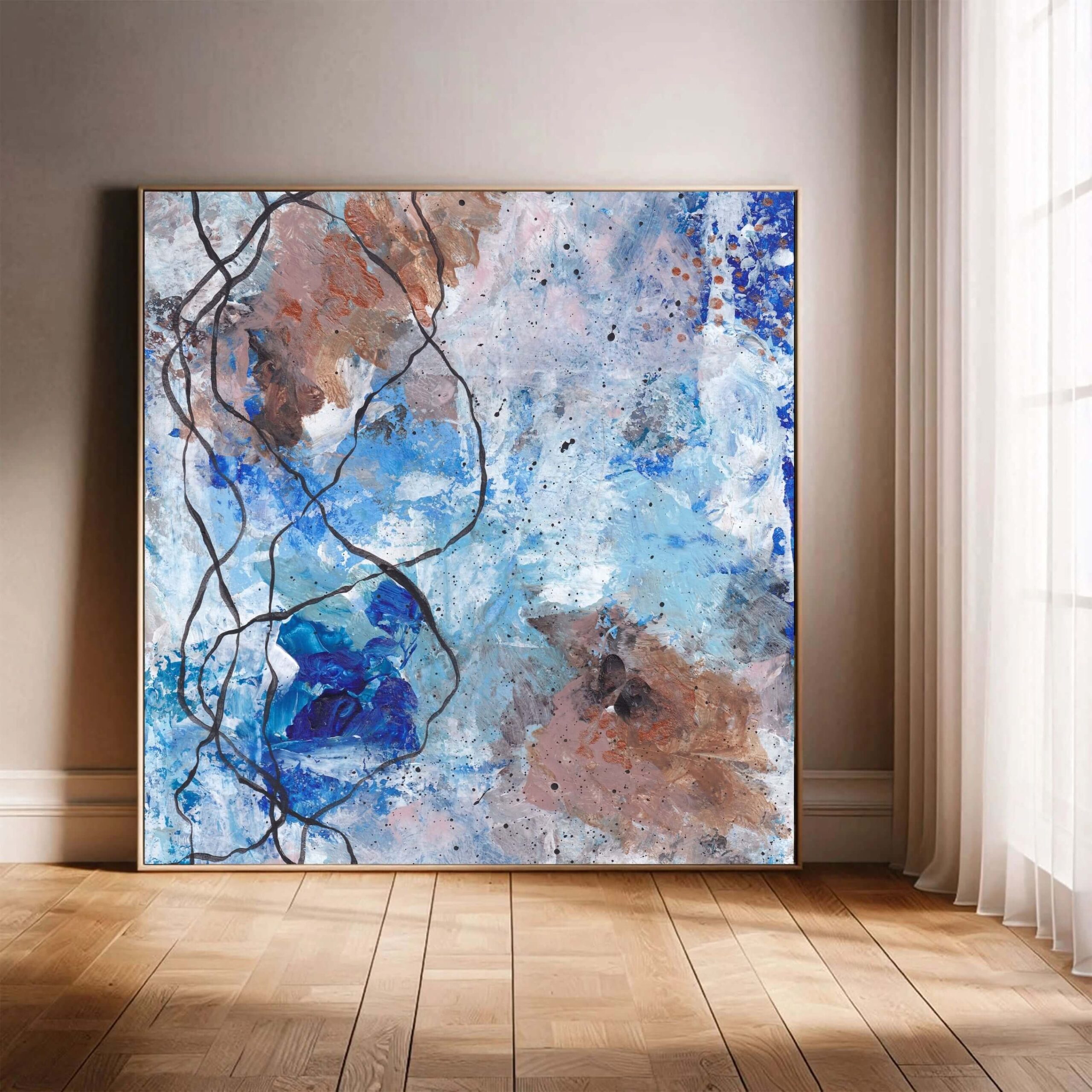
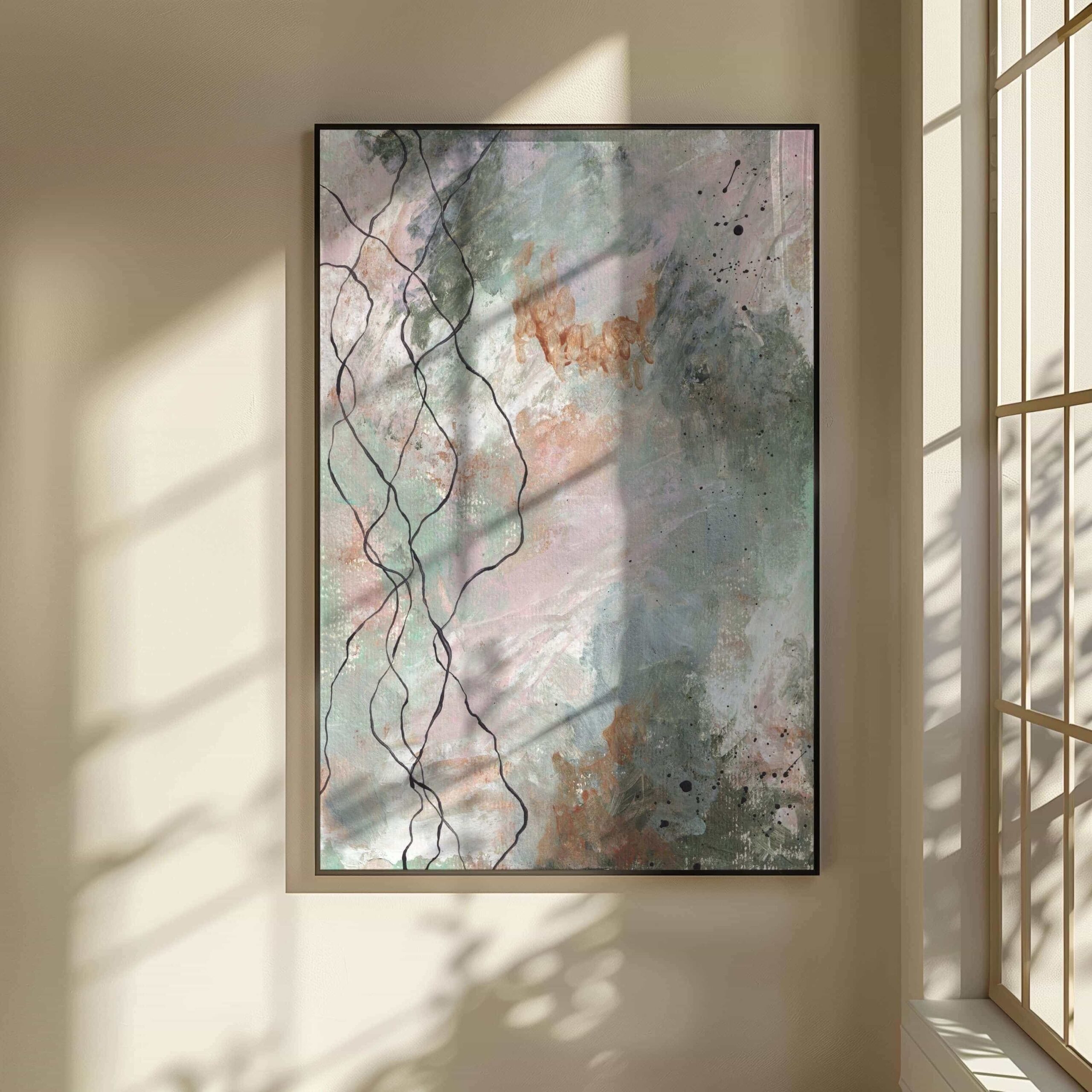
The Nervous System Responds to Art, Whether We Like It or Not
Let’s get honest. Your nervous system reacts the moment you enter a space. It doesn’t care if the rug was expensive or if the wall colour is trending this season. It cares whether you feel safe. Whether you can soften.
Stillness in home design works because it’s not just aesthetic. It’s somatic. It affects how your body feels in the space, not just how your eyes respond.
Art that is jagged, chaotic, or performative can heighten tension in a room. Even if it’s beautiful. Even if it’s valuable. What we want in a healing environment is art that supports nervous system regulation. That holds emotional resonance without activating stress. I’ve written more about this in The Healing Power of Abstract Art in Luxury Spaces, because the body responds to a space long before the mind starts explaining it.
The right canvas can do this, not by being tame or bland, but by being deeply present. Stillness in art has nothing to do with inaction. It’s about unshakeable emotional depth. The kind that doesn’t need to prove anything to earn its place.
When the art settles your nervous system, the room becomes more than space. It becomes refuge.
Stillness Is Not Static, It’s Active Emotional Presence
Stillness often gets mistaken for stasis. But anyone who’s lived through grief, growth, or burnout knows how hard stillness can be to access. It’s not about being passive. It’s about being so present that your body no longer feels the need to brace.
In a healing home, stillness shows up through thoughtful composition. Through intentional placement of sensory elements. Through textures that invite touch and artwork that doesn’t tell a story but holds space for yours.
Abstract art is especially powerful in this context. Without figures or literal meaning, it allows for personal interpretation. It becomes a gentle mirror. A silent companion. A witness. That is also why abstract art creates presence in luxury interiors so effectively. It doesn’t need to explain itself in order to change the room.
Art that doesn’t resolve becomes a place where your own feelings are finally allowed to breathe. That’s what emotionally intelligent art does. It meets you in the middle of your uncertainty and says, “You don’t have to be finished to be worthy of beauty.”
How to Introduce More Stillness Into Your Home With Art
You don’t need to redesign your entire house to change how a space feels. Often the shift begins with how art is chosen and where it is placed.
A few simple adjustments can make a big difference.
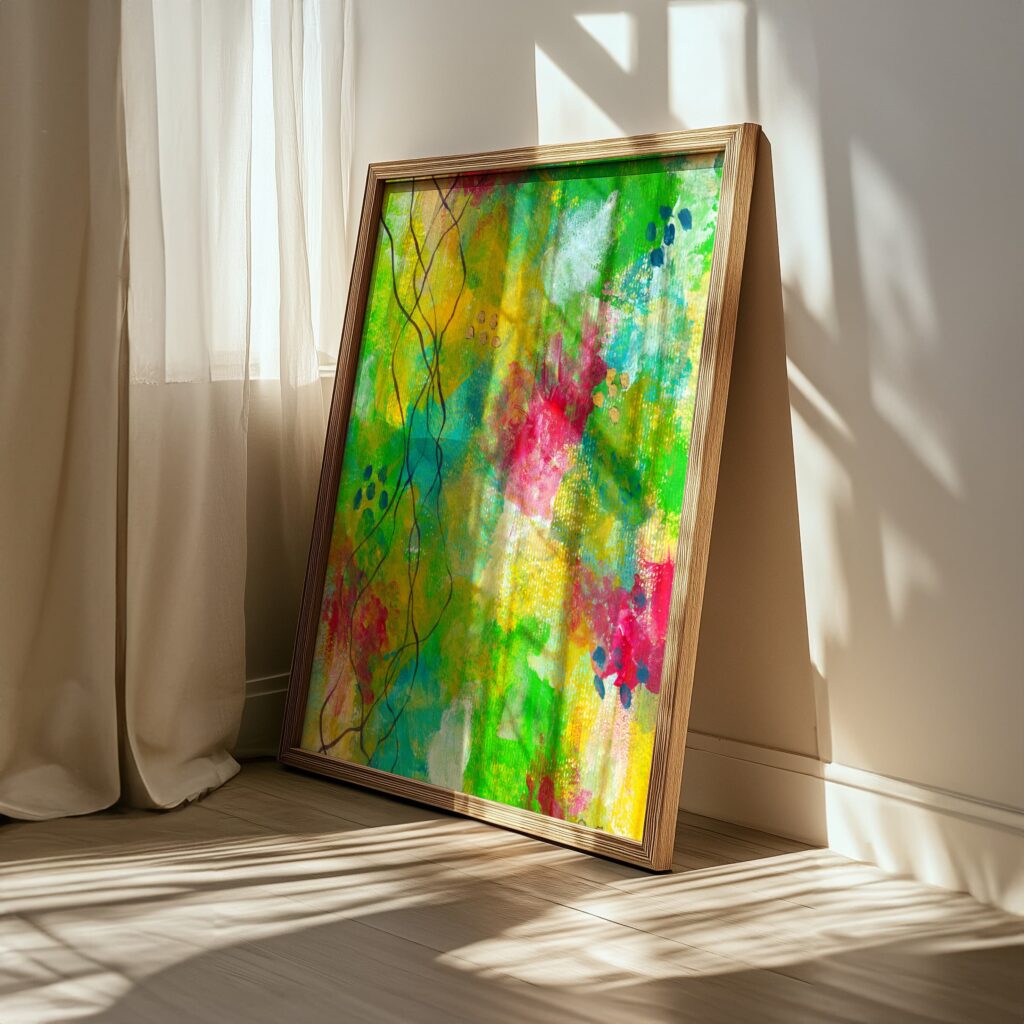
Choose one piece that anchors the room
Instead of filling every wall, start with one artwork that naturally draws the eye and gives the space a centre.
Pay attention to your physical reaction
If a piece makes you slow down when you look at it, that’s usually a good sign. Art that works emotionally often reveals itself quietly rather than immediately. For first-time buyers, this becomes much clearer once you understand what to know before buying your first collector-grade canvas print.
Give the artwork breathing room
Stillness disappears when too many visual elements compete for attention. Leave space around the piece so the eye can settle.
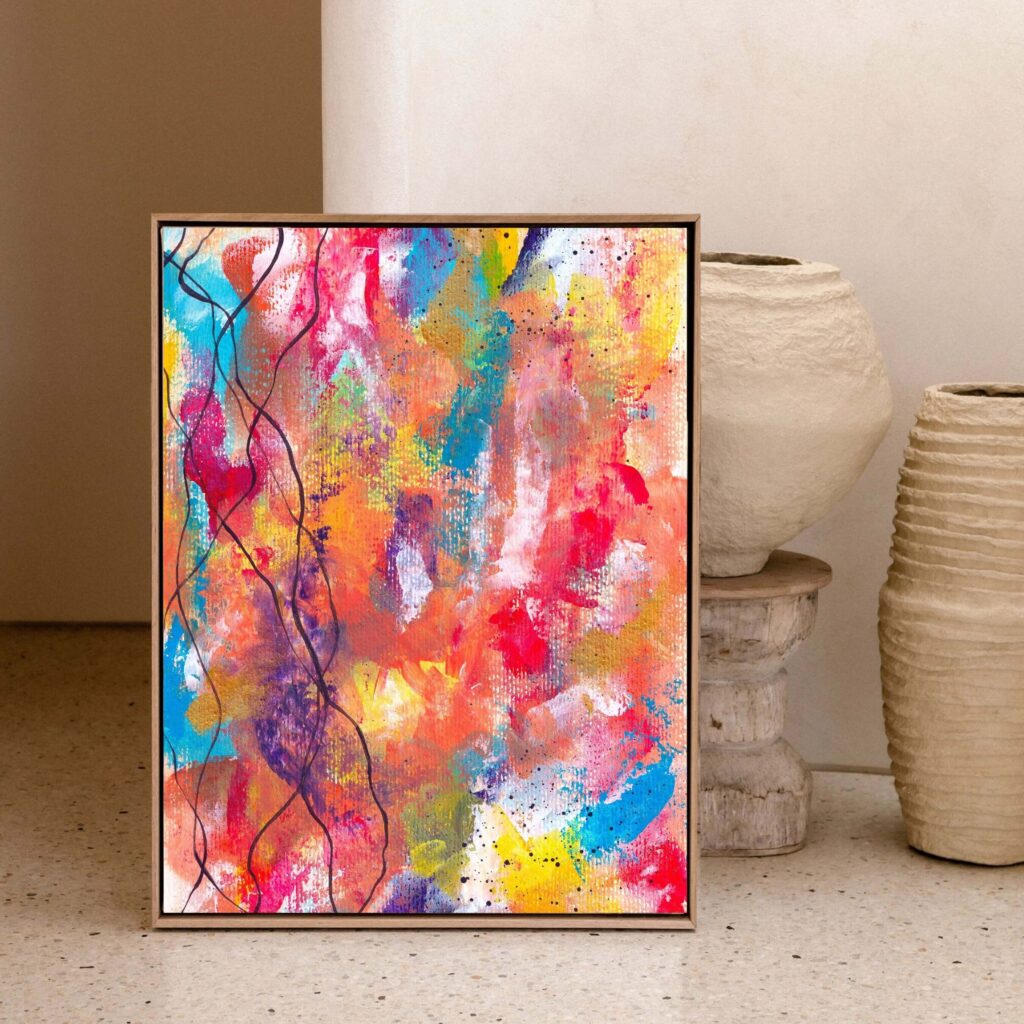
Think about atmosphere, not just colour
Soft transitions, layered surfaces, and organic movement tend to create a calmer visual environment than harsh contrasts.
Live with the work over time
The relationship with a meaningful piece of art deepens slowly. The longer it stays in the room, the more the space begins to organise itself around it.
Why Quiet Luxury Is Emotional, Not Just Aesthetic
The luxury world is shifting. Slowly. But deeply.
Where once luxury meant visual proof of wealth, now it’s starting to mean emotional intelligence. Presence. Weight. Meaning.
Quiet luxury isn’t about being beige and safe. It’s about being rooted and unshakable. In art, it shows up in pieces that don’t age with trends. In work that doesn’t look expensive, but feels essential.
Some of the strongest work people respond to is not the loudest or the most performative. It is the work that holds. The work that stays steady in a room. The work that reveals itself over time rather than shouting for attention. That is the difference between art chosen for status and art chosen for presence.
When you live with work that was born in stillness, you invite that same quality into your space. Into your body. Into your relationships. That is luxury. Not the loud kind. The lasting kind.
The Emotional Architecture of Sanctuary
Let’s take it further. Sanctuary isn’t built from materials. It’s built from feeling.
You can fill a space with stone and light and rare finishes and still feel hollow inside it. Or you can curate a room with art that was made during someone’s emotional reckoning, and suddenly the space breathes.
The difference? Emotional architecture. The invisible structures that shape how a room holds you. Stillness becomes a beam. Presence becomes the foundation. Art becomes insulation against the external noise of the world.
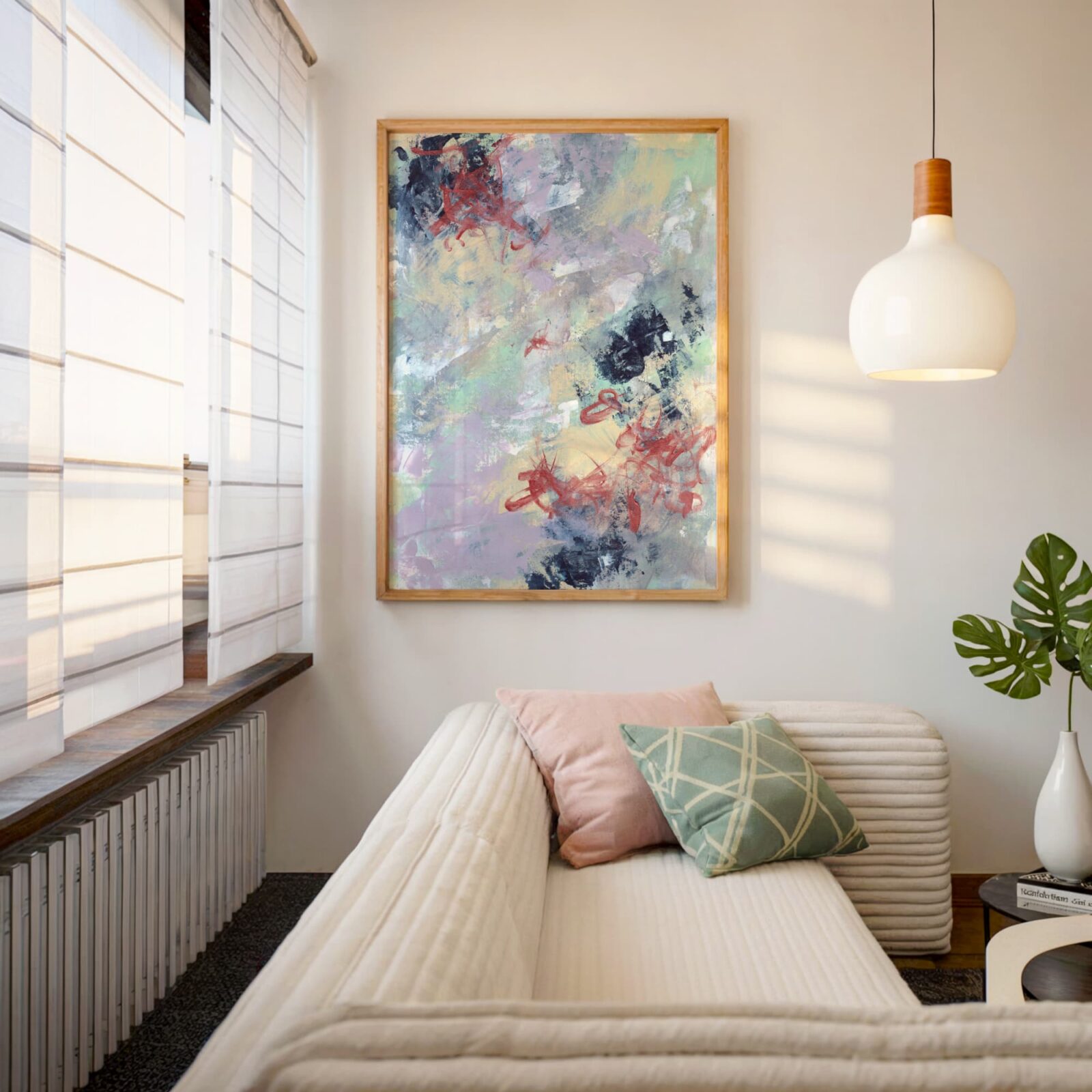
When art is chosen not just for how it looks but for how it feels, it begins to shape everything around it. Light changes. Silence deepens. Thought slows.
Sanctuary is not aesthetic. It’s emotional infrastructure. And emotionally intelligent art is one of the rare elements that can’t be faked, templated, or mass-produced. It’s made from the inside out. It is also why emotionally intelligent collectors buy art without a sales pitch. They are responding to something deeper than presentation.
Decorative Art vs Emotionally Resonant Art
| Decorative Art | Emotionally Intelligent Art |
|---|---|
|
Chosen to match furniture or colour palettes |
Chosen for emotional resonance |
|
Often follows design trends |
Tends to remain meaningful over time |
|
Primarily visual decoration |
Acts as an emotional anchor in the room |
|
Easily replaced |
Lived with for many years |
Art That Lives With You, Not Just Near You
Here’s what most people get wrong about art: they think it’s separate. A visual flourish. A conversation starter. Something to fill the walls.
But art doesn’t live over there. It lives with you. It watches. It absorbs. It becomes part of your atmosphere.
Emotionally intelligent abstract art is especially well suited to this. Because it’s not didactic. It’s not demanding. It doesn’t dominate the room or dictate your response. It holds steady. Quietly. Consistently.
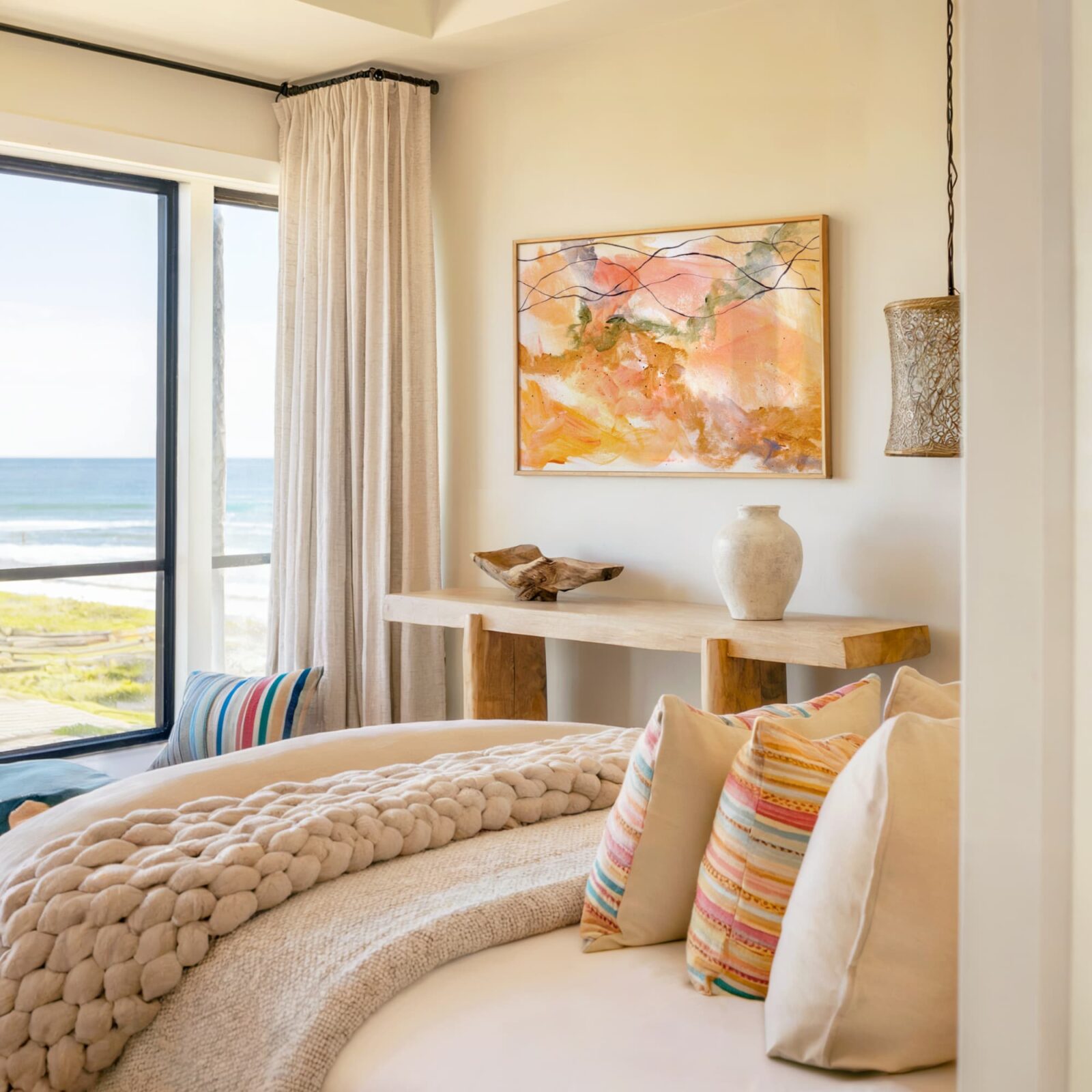
When chosen with intention, the right piece can become an emotional co-regulator. A kind of visual breath. A presence you can lean on. And the more time you spend with it, the more it gives back.
That’s what sanctuary looks like. Not sterile. Not curated. But lived-in and quietly alive.
How to Create Stillness Without Sterility
Let’s be clear: stillness is not minimalism. Stillness is not a trend. It’s not white walls and sparse furniture and one sad cactus in the corner.
Stillness is richness without chaos. It’s presence without performance.
To create it, begin with feeling. Not from. Ask: What does my body need to relax here? What textures invite me to stay? What colours let me exhale? Then let the answers guide you. Choose one artwork that anchors this feeling. Don’t overfill. Don’t overexplain.
Let the space breathe. Let the art breathe. Let yourself breathe.
Conclusion
You don’t need a space that performs for others. You need one that holds you, even on the days you unravel. That’s what emotionally intelligent art makes possible. It’s not there to impress. It’s there to bear witness.
Stillness in the home isn’t a style. It’s a strategy for living. A philosophy of care. A quiet kind of emotional defiance.
If you want to go deeper into the philosophy behind this, you can also read Stillness Is a Weapon, where I explore stillness not as decoration or retreat, but as a way of living and relating to space more truthfully.
Stillness is a choice. Art can hold it. And your home deserves nothing less.
Frequently Asked Questions
Emotionally intelligent art is artwork that carries emotional depth and presence rather than simply acting as decoration. Instead of matching a colour scheme or following trends, it influences how a space feels and how people experience the room.
Yes. Visual environments affect how the nervous system responds to a space. Certain artworks create calm and grounding, while others stimulate tension or visual noise. The right piece can quietly reshape the emotional tone of a room.
Abstract art leaves space for personal interpretation. Without a fixed story or subject, the viewer can project their own thoughts and emotions into the piece. This openness often makes abstract work feel more reflective and less mentally demanding.
Pay attention to how your body reacts when you look at it. If you feel yourself slowing down or becoming more attentive, that usually means the piece carries presence. Art that works well in a home often reveals itself over time rather than making an immediate statement.
Not really. Trends come and go quickly, but emotionally resonant work tends to remain meaningful for decades because it isn’t tied to fashion. It becomes part of the emotional landscape of the space.
No. Stillness doesn’t mean blandness. A piece can be rich in colour and texture while still feeling grounded. What matters is the emotional stability of the composition, not how quiet the palette appears.
Artwork often works best where the eye naturally rests when you enter the room. A single well-placed piece can act as a visual anchor and reduce the feeling of visual clutter.
Some pieces are created to provoke or energise rather than settle. That can work well in galleries or public spaces, but in a home environment it may create subtle tension over time. The goal in a sanctuary space is art that holds presence without constantly demanding attention.