
Why Emotion Is The Ultimate Luxury
Luxury means different things at different stages of life.
For many, it begins as a pursuit of visible success. The house. The car. The watch. The objects others recognise. But eventually, for those who have moved beyond the surface of status, luxury becomes something far quieter.
It becomes about what allows you to breathe.
What allows you to feel.
And what remains once there is no longer any need to prove anything.
The collectors I work with are not looking for more objects. Accumulation no longer satisfies them. They are looking for something that allows them to exist fully, privately, without explanation.
They are not buying art to fill walls.
They are creating spaces that hold them.
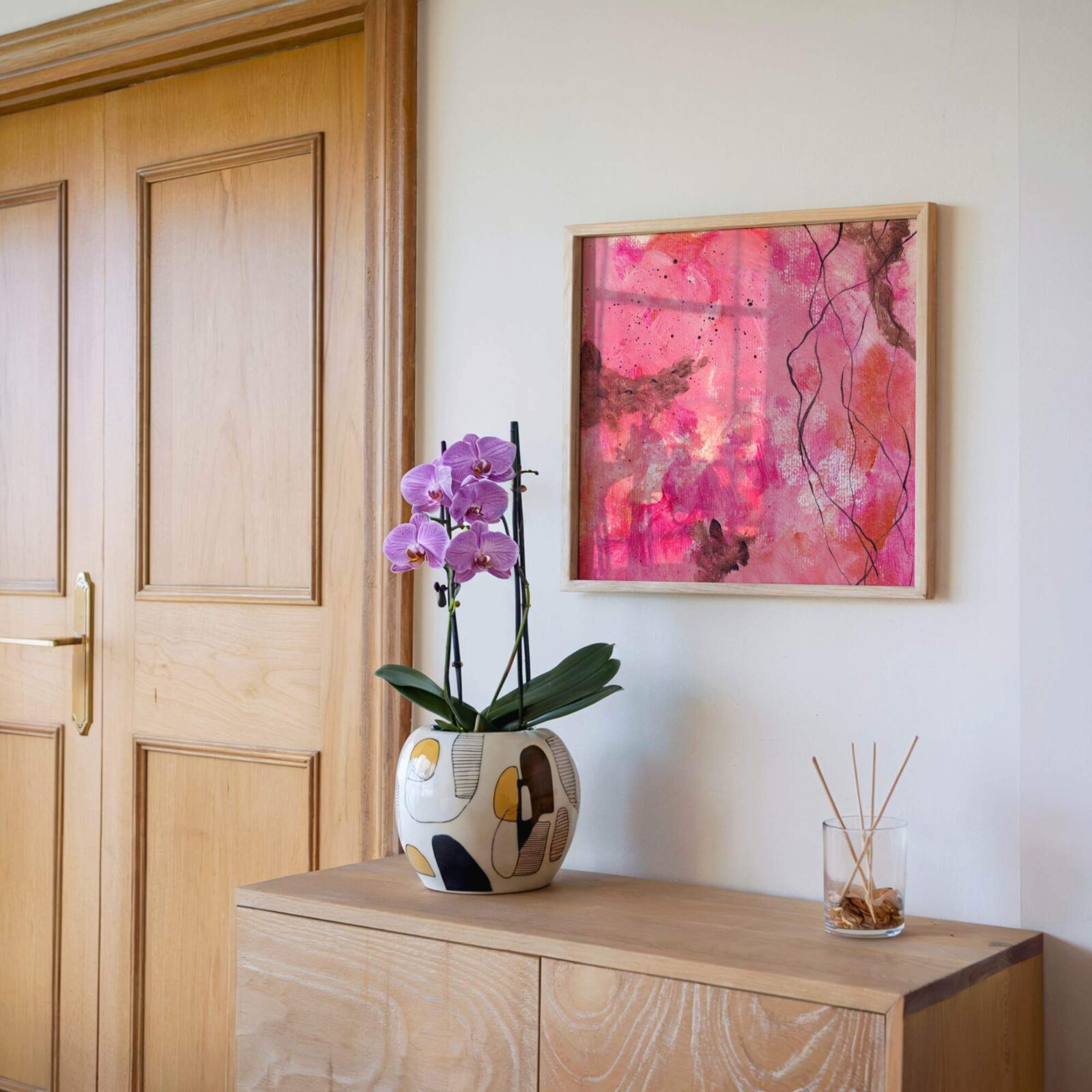
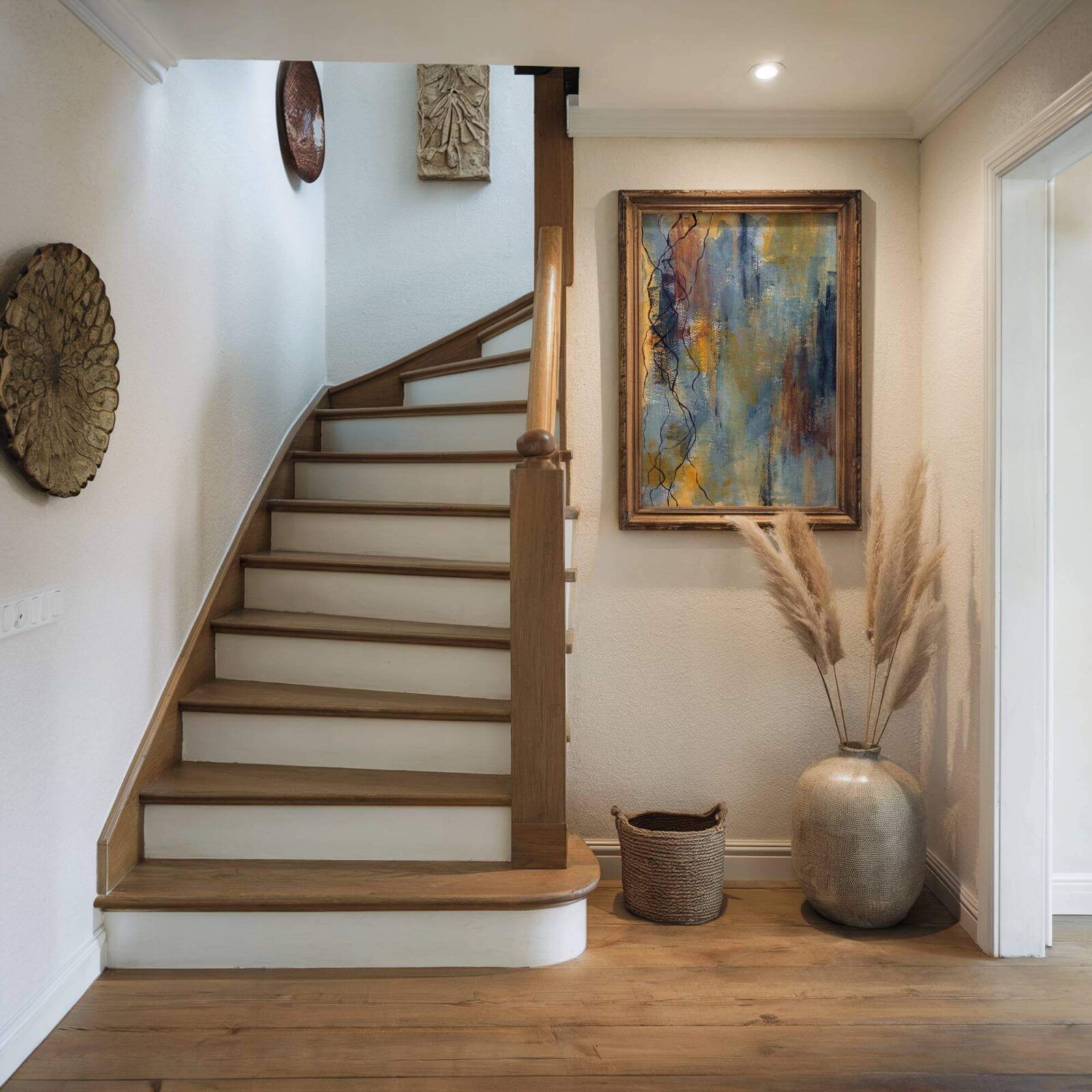
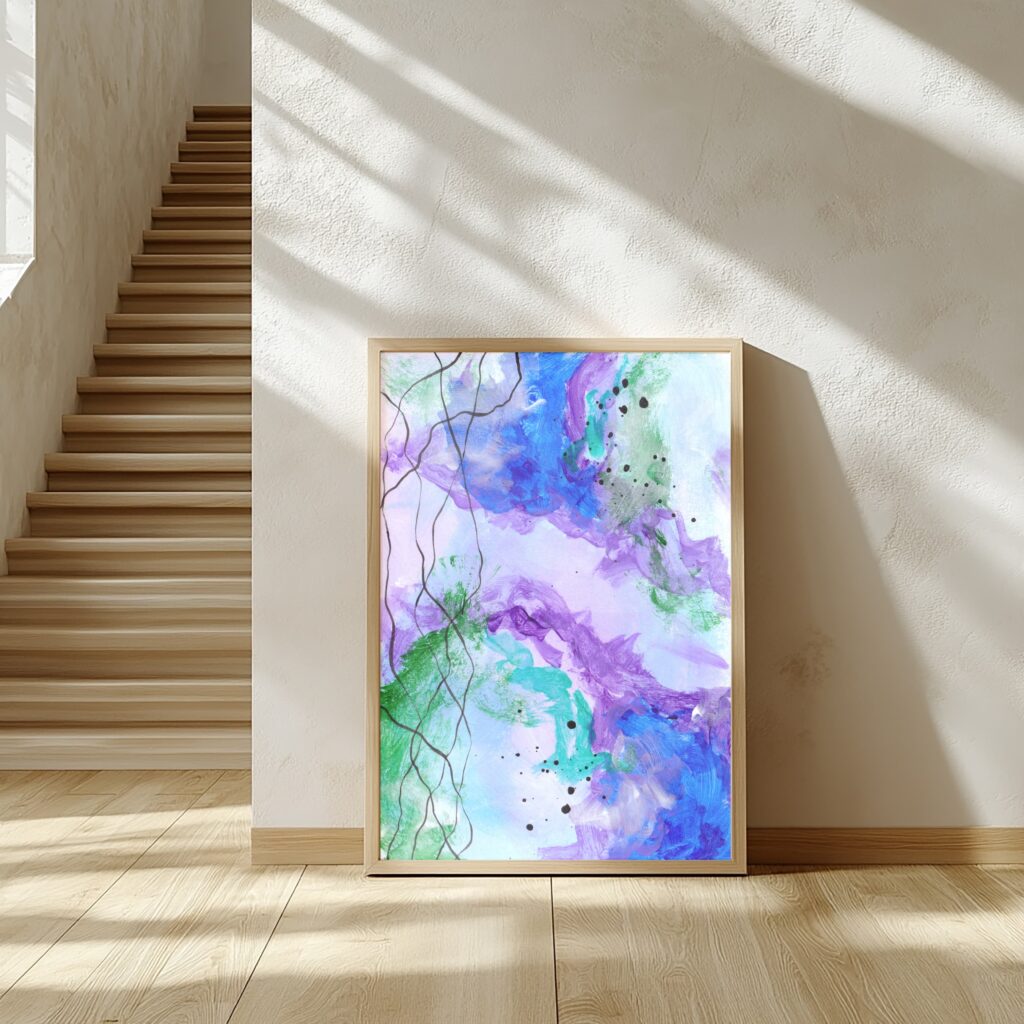
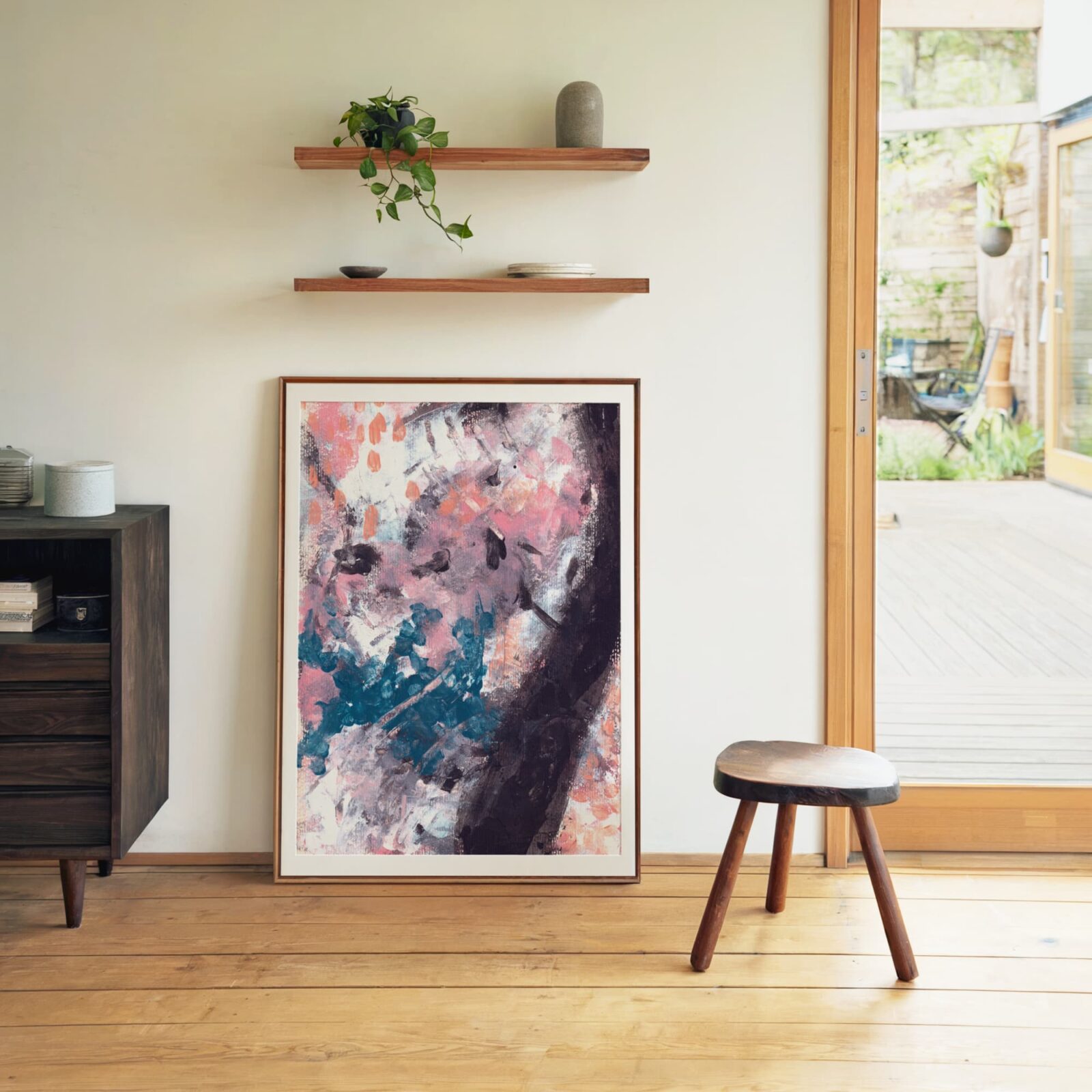
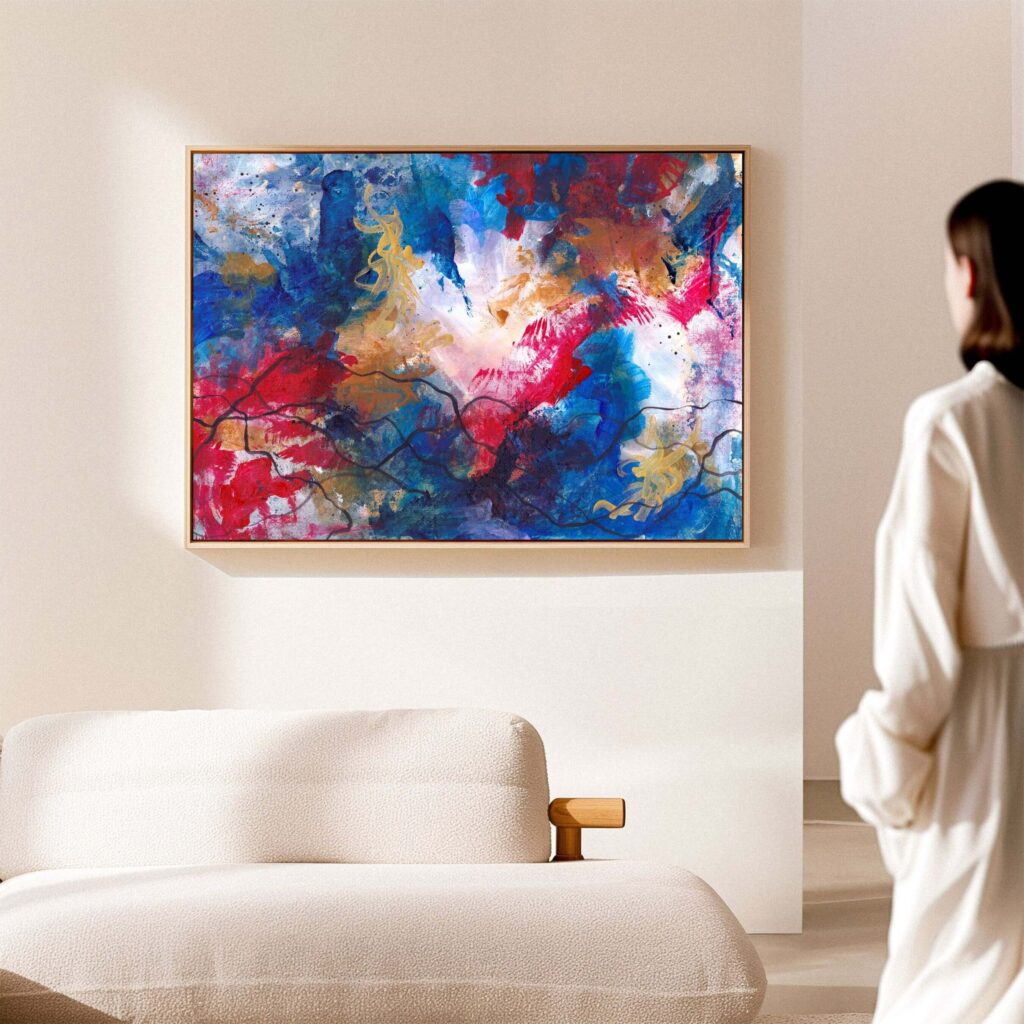
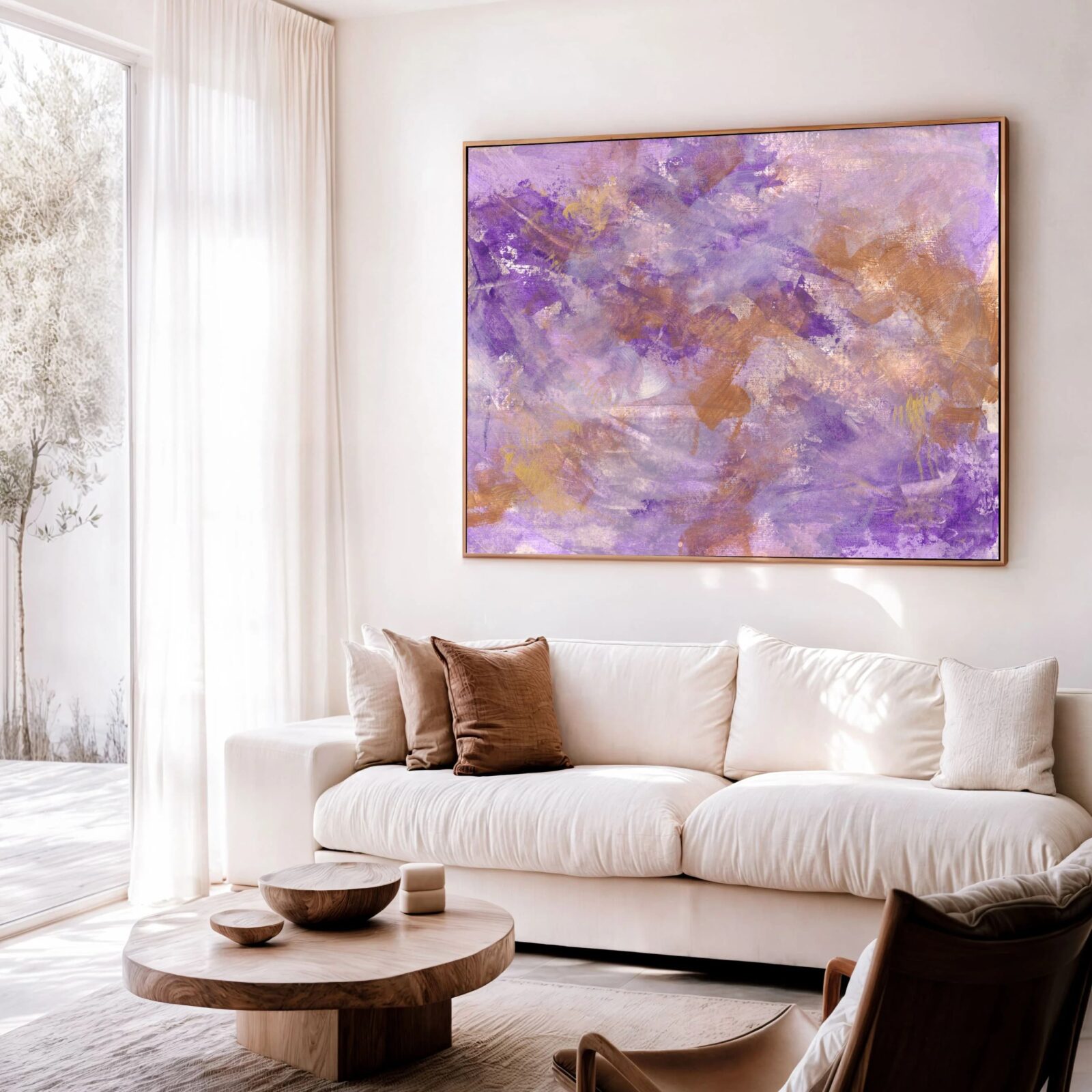
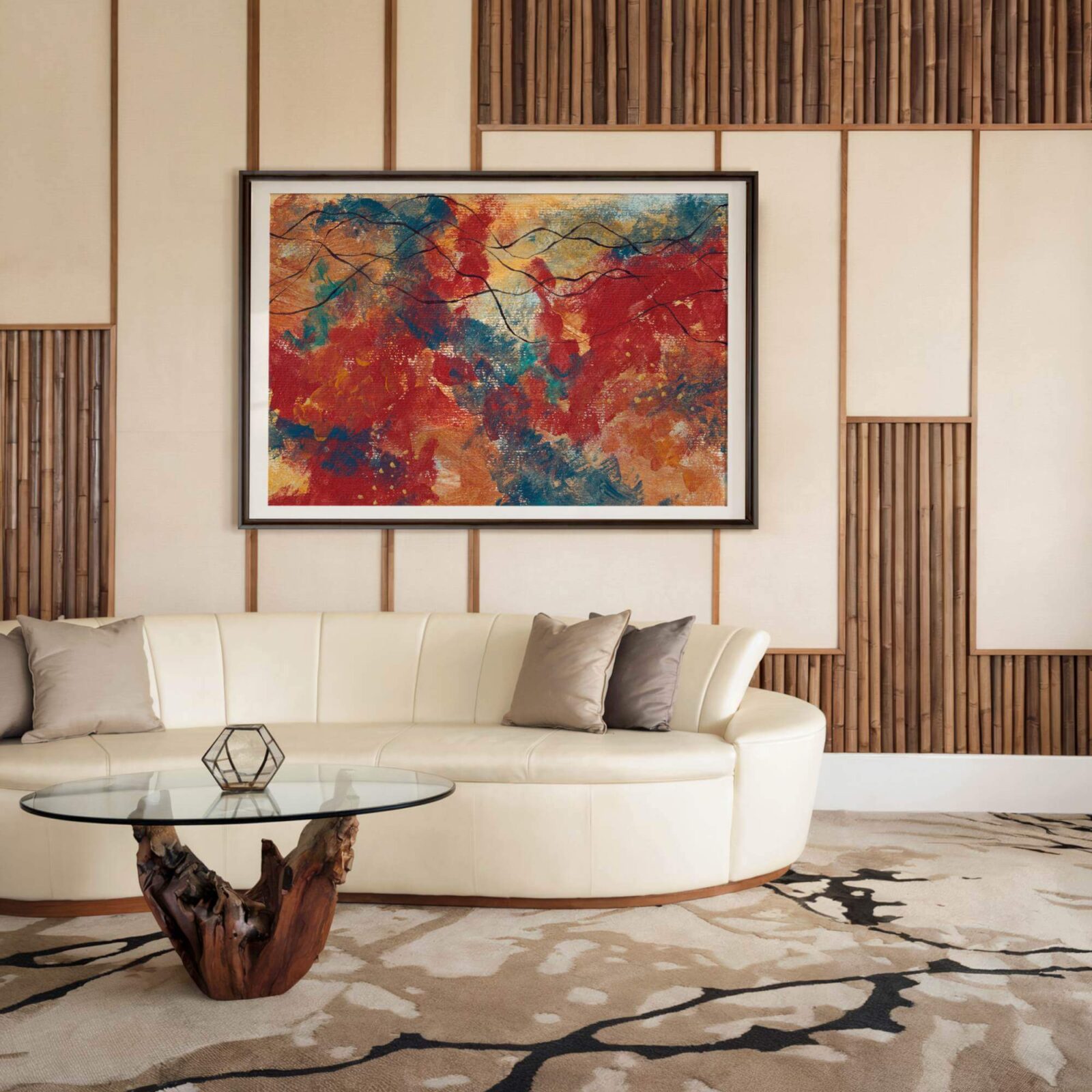
For many of them, transforming your home with art becomes part of that process, because the work does not decorate the room; it alters how the room feels when they are alone inside it.
In that world, emotion has become the rarest luxury of all.
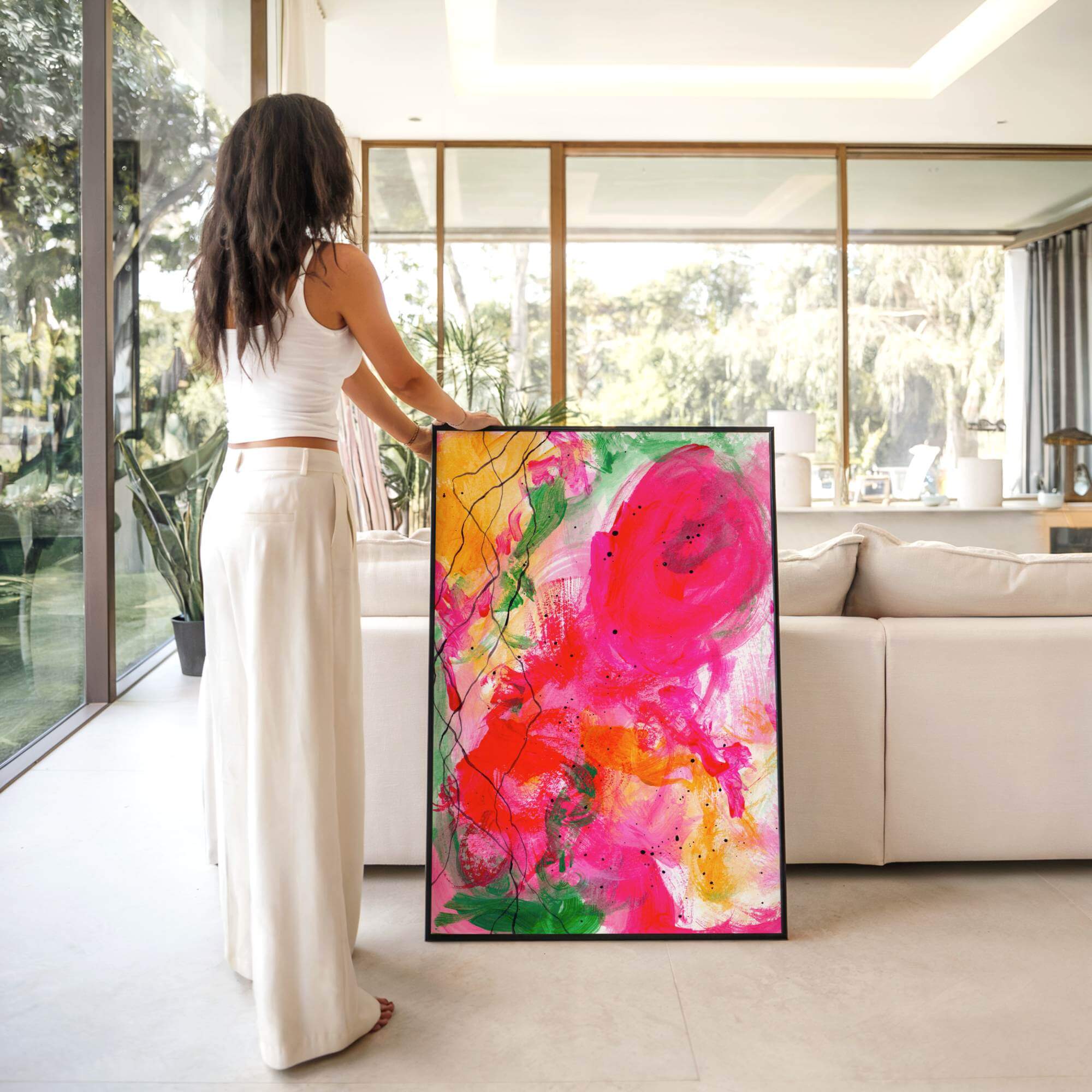
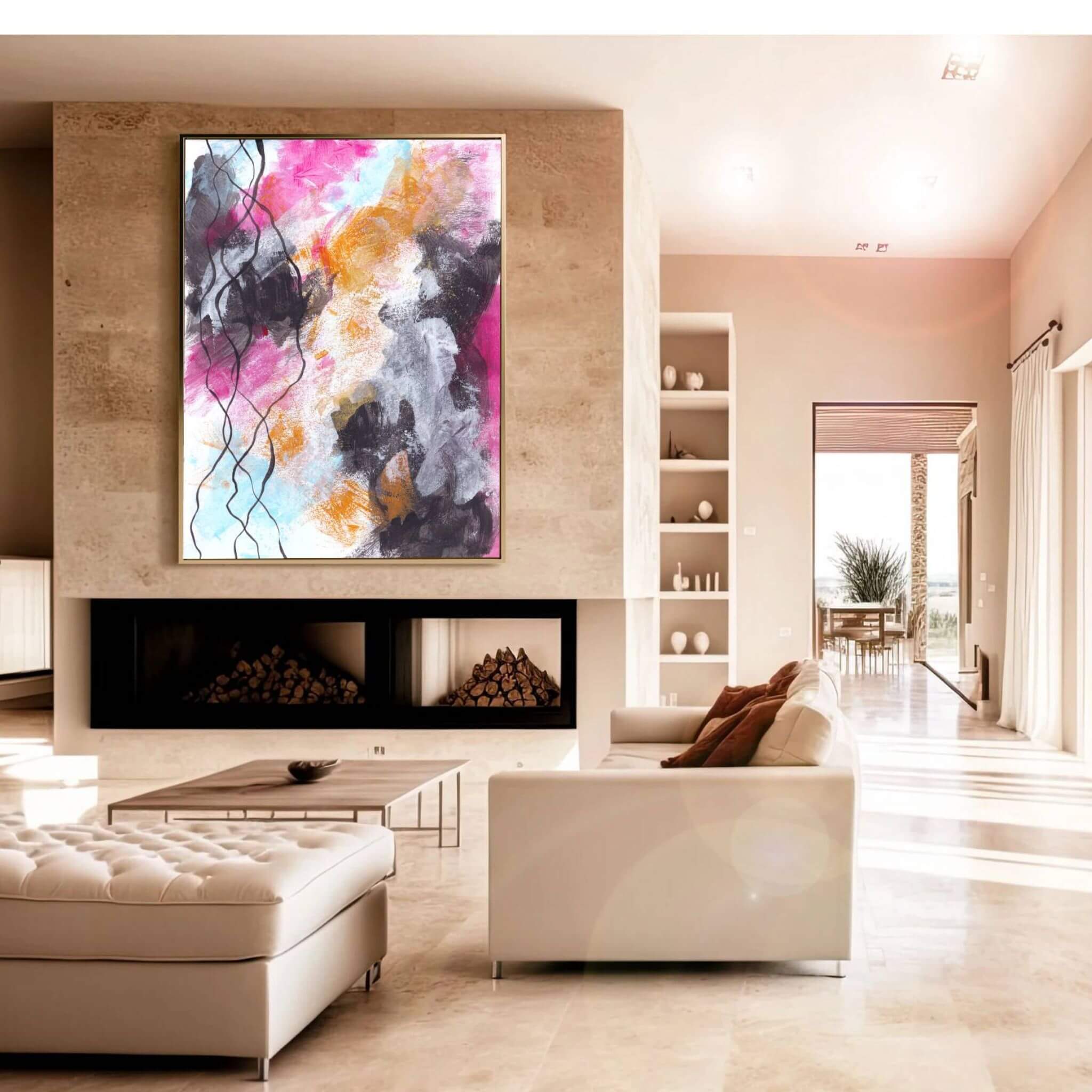
From Display to Presence
Luxury is still often marketed as something external. Exclusive access. Limited editions. Rare materials.
All of those things still exist, but they now serve a different purpose. They mark entry into a tier. They allow others to see that you have arrived somewhere.
But the people drawn to my work are not chasing arrival.
They have already arrived.
They are no longer interested in collecting objects that demonstrate wealth. They are interested in something fewer people speak about: how a space feels when no one is watching. How it holds them emotionally. What it reflects back to them in moments of stillness.
They are collecting for themselves, not for approval.
This shift from display to presence is where luxury quietly changes its meaning.
Emotional Luxury Is the Final Layer of Wealth
Most luxury markets operate on a familiar scale. Craftsmanship. Scarcity. Exclusivity. Each tier adds refinement, but all remain tethered to visible outcomes.
Emotional luxury moves differently.
It cannot be manufactured.
It cannot be explained through product descriptions.
It does not announce itself.
It lives in how something meets you privately.
How it allows you to feel something you could not name before.
How it anchors you back into your own emotional world.
This is the layer that cannot be replicated, no matter how much money is involved.
And this is where my work lives.
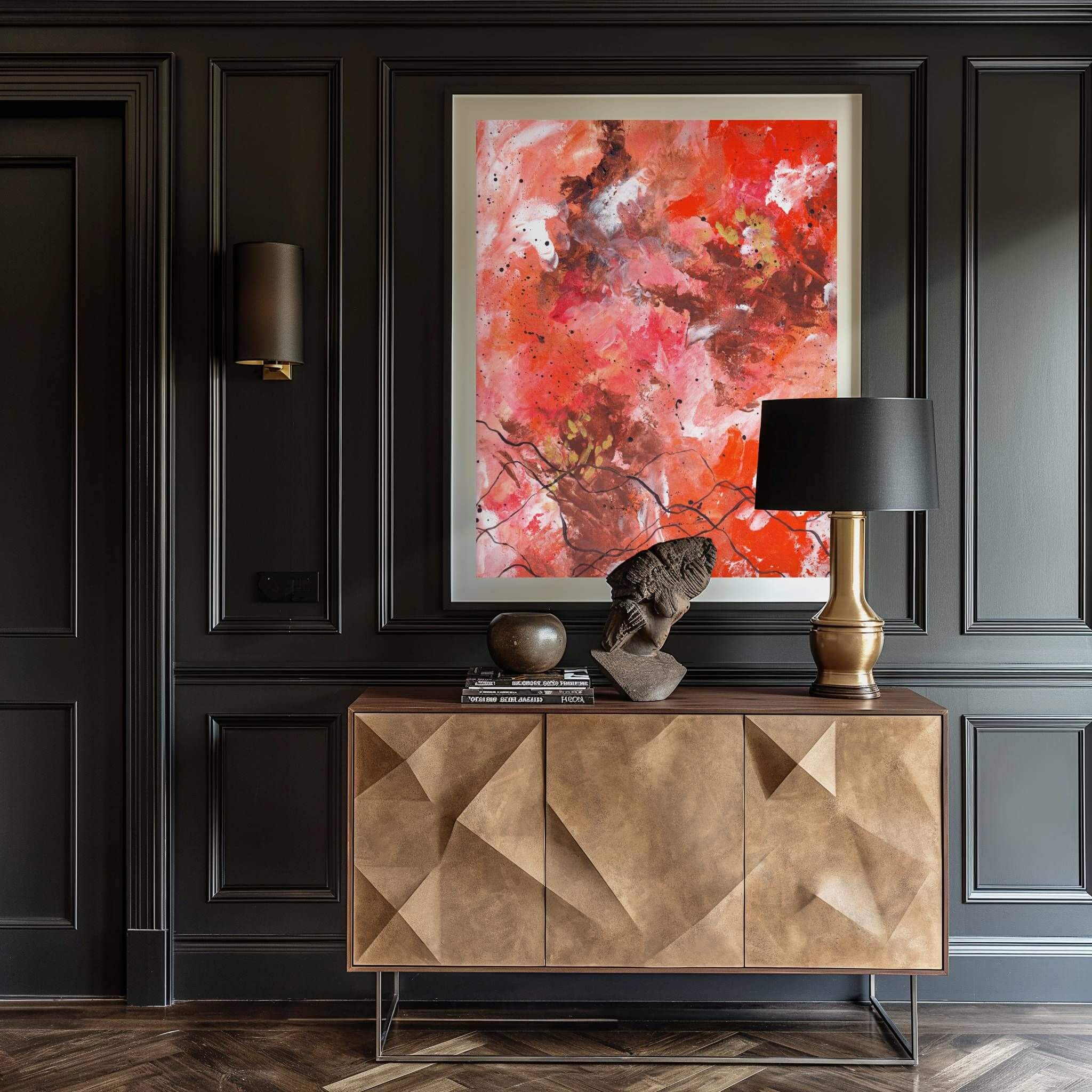

Why the Work Is Not Decorative
From the outside, it may appear simple. Abstract art on canvas.
But what my collectors acquire is not decoration.
The work does not exist to fill space.
It does not exist to match colour palettes.
It does not exist to perform inside a design scheme.
If you are curious what separates decorative canvas from work built to endure structurally as well as emotionally, I explain the material and production standards in this guide to collector-grade canvas art.
It exists to hold.
Each piece carries something private.
A memory not often spoken aloud.
A grief that remains present even after healing.
A personal chapter that shaped who someone has become.
This is why my collectors rarely ask what a piece means. They feel it before language arrives. The work speaks directly to something internal, bypassing explanation altogether.
Emotional Anchoring and the Role of Art
Living with art that holds emotional weight is often misunderstood.
People imagine admiration. Conversation. Visual impact.
That is not the experience my collectors describe.
Instead, the work becomes part of the emotional landscape they occupy every day. Some days it feels grounding. Other days it reflects something sharper. The work does not change, but life does, and the relationship deepens as the collector evolves.
The art is not there to demand attention.
It is there to meet them where they are.
This is what emotional anchoring actually looks like. The work becomes a steady presence, absorbing nothing, asking nothing, but holding space consistently over time.
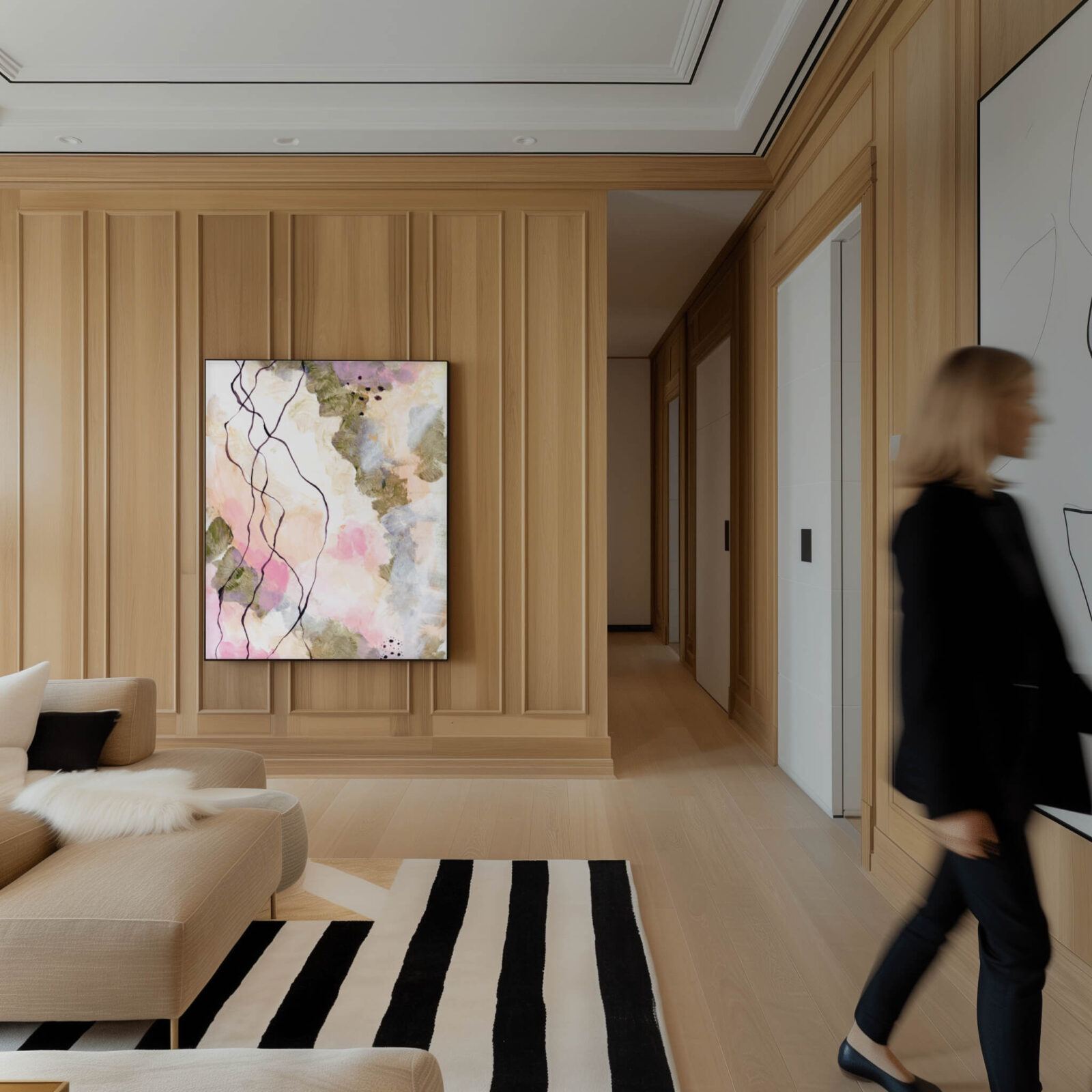
Luxury Beyond Aesthetic
As wealth increases, the spaces my collectors build do not become louder.
They become quieter.
These are not rooms designed for performance. They are sanctuaries constructed to protect emotional presence. There is no need to impress inside them.
The work becomes part of that sanctuary. It reflects truth without explanation. It allows breathing without demand. It holds stillness without emptiness.
In a world engineered for distraction, this kind of emotional anchoring has become profoundly rare.
What Cannot Be Replicated
There will always be attempts to measure value through process.
How long did it take.
What materials were used.
How large is the canvas.
But emotional work resists measurement.
You are not paying for time or pigment.
You are paying for the space it opens inside your life.
This is why emotional luxury never feels transactional. The value lies in what the work holds for you, not in what was required to physically make it.
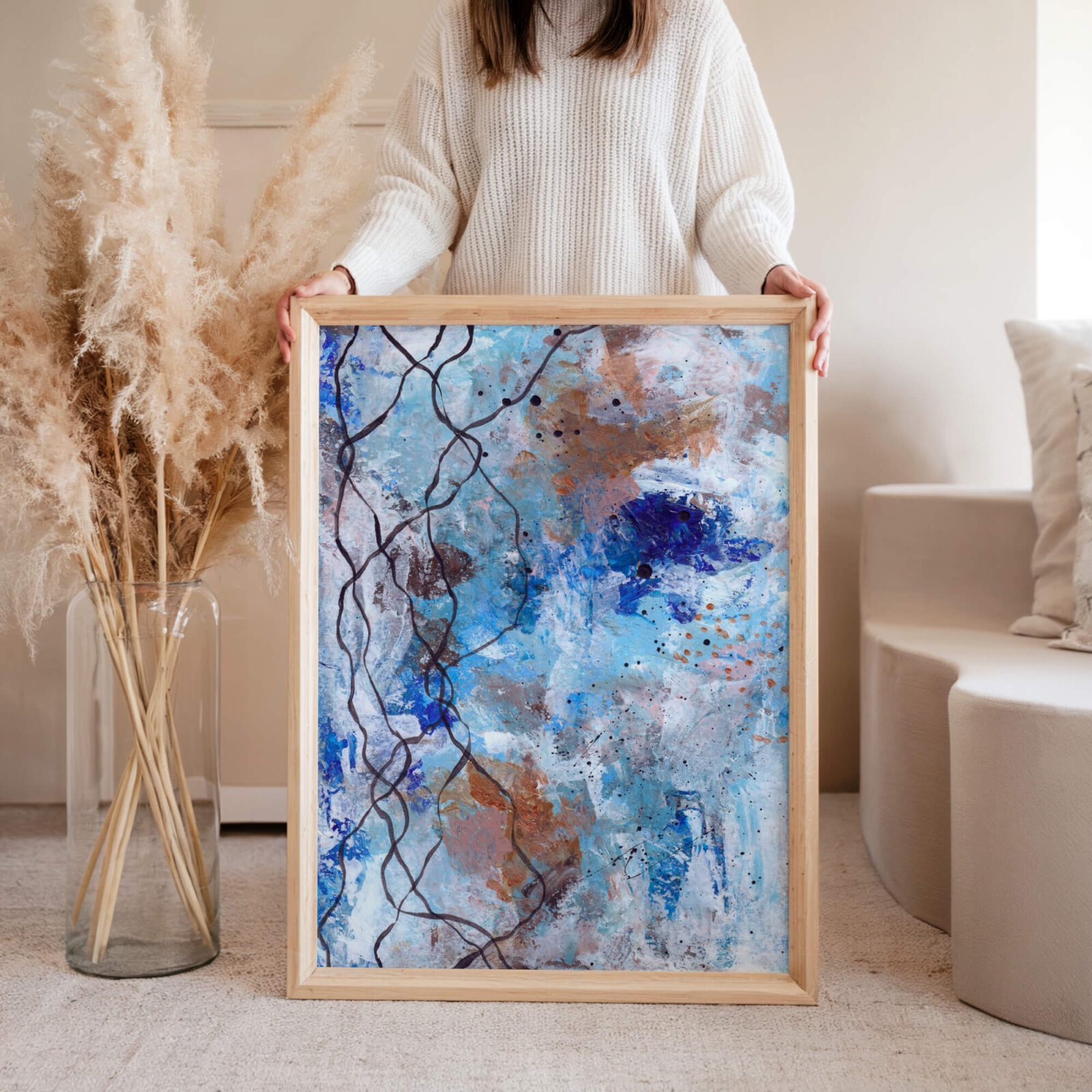
You are not acquiring an object.
You are entering a private relationship with something that mirrors your own story.
The Relationship Between Work and Collector
When I create for a collector, we are not engaging in a typical commission process.
My role is to protect emotional integrity. I do not require full narratives or polished explanations. Often fragments are enough. A few words. A sensation. A truth that does not need to be unpacked.
That space is carried through the work itself.
The result is not a portrait of someone’s life, but a reflection of its emotional weight. And once the work enters their space, it belongs to them in a way no one else will ever fully understand.
The Rarest Collectors
The people drawn to my work share something specific.
They do not need to be convinced.
They do not need to be sold to.
They recognise the work before they understand why.
They have lived enough to know what they carry. They are no longer looking to add. They are looking for something that allows them to hold space for what already exists.
And when they feel it, the decision is immediate. Not rushed. Immediate.
Stillness as the Highest Form of Luxury
The more time I spend inside these spaces, the clearer one thing becomes.
Stillness is the most valued currency at this level.
Not silence. Stillness.
Silence can feel empty. Stillness feels held. It allows breath, memory, recovery, and reflection to coexist without pressure.
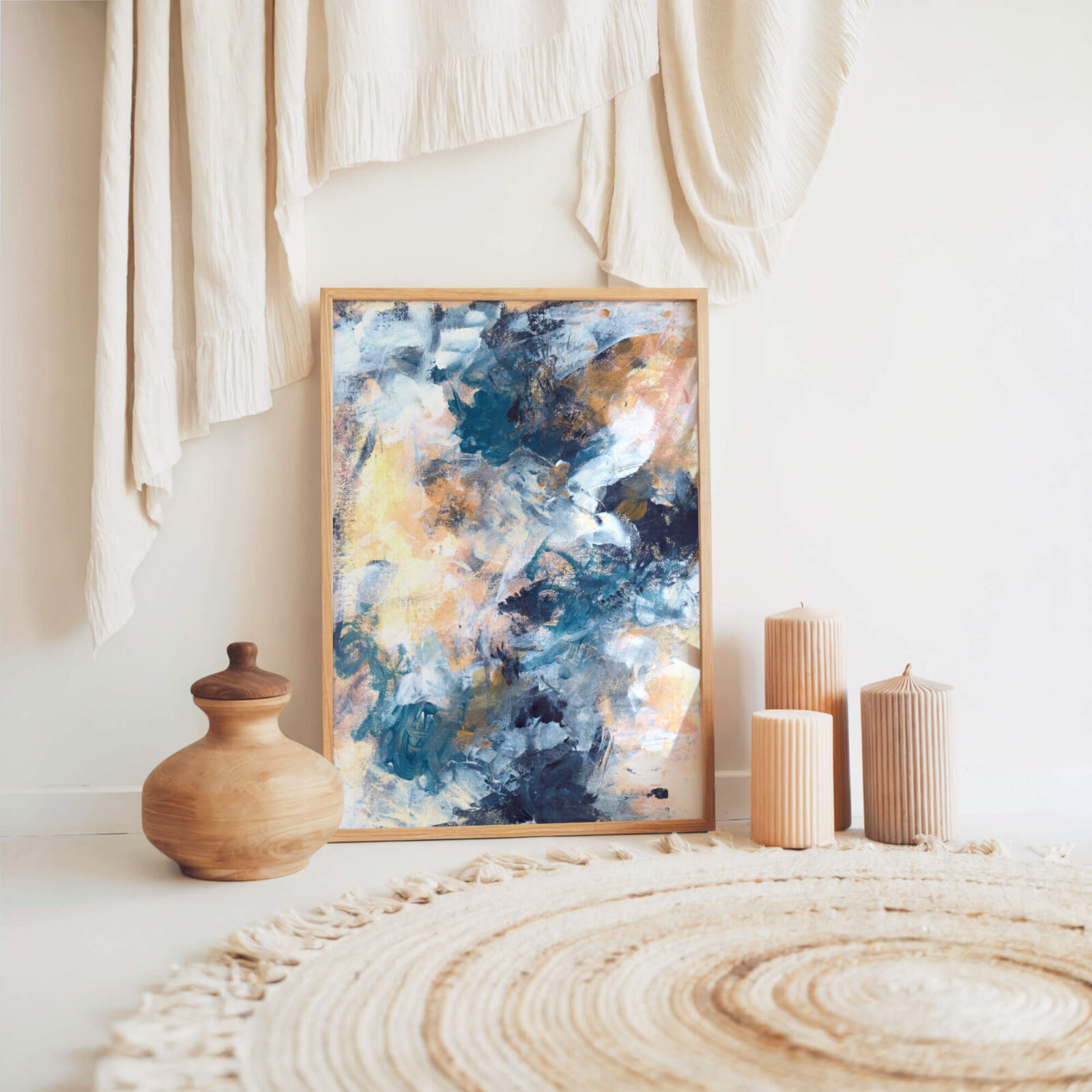
In rooms designed around stillness, the work does not compete with architecture or furnishings. It integrates into the emotional rhythm of the space itself.
The art stops functioning as an object. it becomes a presence.
The Luxury No One Talks About
The collectors who enter my world are not building collections to be admired.
They are building spaces where they can live with their full story. Spaces that acknowledge what they carry without asking them to perform for anyone.
This is not luxury as most people understand it.
This is emotional sovereignty.
It is private, deliberate, and entirely personal.
And that is why so few ever speak about it.
Because the deepest forms of luxury are often the quietest.
Emotional Luxury as Private Legacy
In many ways, my work becomes part of a personal legacy for each collector.
Not a legacy designed for admiration.
A legacy designed for living.
The work holds emotional threads long after acquisition. It remains present as life continues to unfold. It becomes part of the collector’s internal landscape, quietly, faithfully, without performance.
This is what emotional luxury ultimately offers.
The permission to live with what you carry, without apology.
Why My Work Was Never Meant For Everyone
There has never been a moment in my practice where I wanted my work to appeal to everyone.
Not because of elitism.
But because emotional depth does not operate at scale.
The work I create speaks only to those who recognise what they are carrying. It does not announce itself. It does not persuade. It does not explain itself into relevance.
Collectors who need to analyse, justify, or rationalise rarely belong here. This is not work designed to impress the eye or perform for an audience. It is work that meets you emotionally, even when you cannot yet articulate why.
That recognition happens quietly. In the body first. Long before the mind catches up.
This is why my collectors often describe the decision as immediate rather than considered. They do not weigh the work. They feel it. And in that moment, they know whether it belongs with them or not.
There is no argument involved. No convincing. No performance.
That is how emotionally intelligent art behaves. It does not chase. It waits.
Emotional Resonance Cannot Be Scaled
There is a reason emotionally resonant work resists mass appeal.
Depth requires slowness.
Presence requires attention.
And emotional truth cannot be replicated on demand.
This is why emotionally intelligent art often exists outside trends. It does not multiply easily. It does not bend to algorithms. It does not perform well when rushed.
The work gains its power not through repetition, but through specificity. Through responding to a particular emotional frequency at a particular moment in time. That moment cannot be recreated for thousands of people at once.
What can be reproduced is the surface. Pattern. Style.
What cannot be reproduced is resonance.
This is the quiet divide between art that decorates and art that holds. One fills space. The other becomes part of someone’s internal architecture. And that kind of relationship is always singular.
Conclusion
The highest form of luxury is not found in objects.
It is not found in accumulation.
It is not found in recognition.
It is found in what holds you quietly, privately, and fully.
In what allows you to breathe.
In what reflects your internal world without demanding anything in return.
Emotion is the luxury few speak about. It cannot be mass-produced. It cannot be bought casually. It can only be created through presence, intention, and trust.
For the collectors who recognise it, it is the only kind of luxury worth living with.