
How to Buy Art When You Don’t Know Anything About Art
TL;DR
You do not need an art degree, a design qualification or a frighteningly expensive pair of glasses to buy good art.
Most people who buy art are not professional collectors. They are simply people who want their home, office or personal space to feel better. The best artwork purchases rarely begin with expert knowledge. They begin with curiosity, connection and a willingness to trust your own response.
If a piece continues drawing you back, makes you feel something and fits the space you are creating, you are already paying attention to many of the things that matter most.
Art collecting is not reserved for experts. It is for anyone willing to look.
Definition: what does it mean to buy art?
Buying art simply means purchasing a piece of creative work because you want to live with it, experience it or collect it. While some people buy art as an investment, most people buy art because it changes how a room feels and because they enjoy having it in their lives.
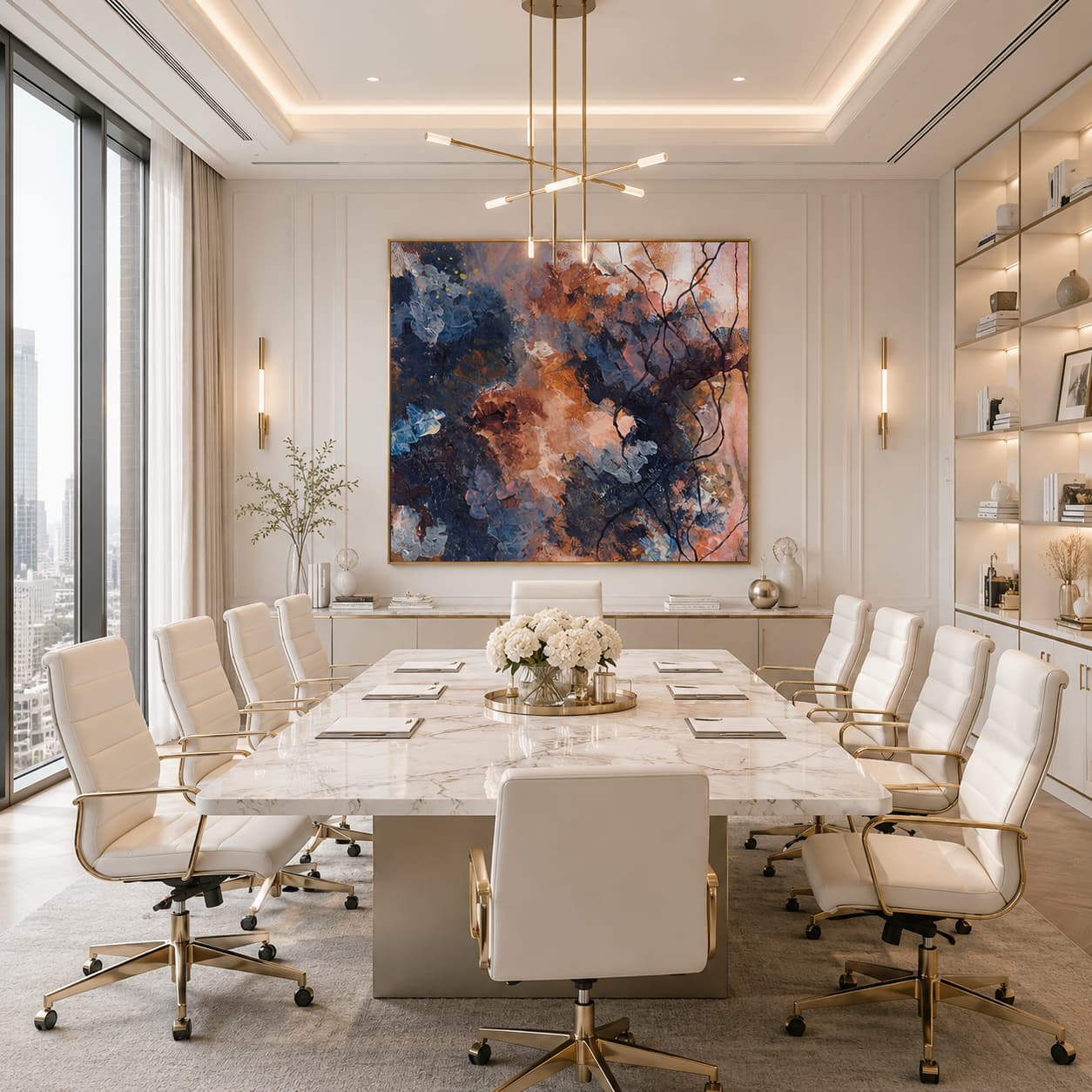

Why people think art is more complicated than it actually is
The art world has done an extraordinary job of convincing ordinary people that they need specialist knowledge before they are allowed through the front door.
People assume they need to understand art history. Know which movements came before which movements. Recognise obscure references. Memorise the names of famous artists.
Speak confidently about composition while holding a glass of something expensive and looking mildly disappointed with humanity. The result is that many people delay buying artwork for years because they feel unqualified.
Meanwhile, they happily buy furniture, books, clothes, holidays and houses without feeling the need to become industry experts first.
Art somehow gets treated differently.
The reality is that most collectors start exactly where everyone else starts. They see something. They feel something. They become curious. Everything else comes later.
As explored in What Happens When You Buy Art Without a Sales Pitch, the strongest art purchases are often driven by emotional connection rather than technical expertise.
The first thing to understand: you are buying for yourself
This sounds obvious. It often is not. Many first-time buyers spend more time worrying about whether other people will approve of their choice than whether they actually like the artwork themselves. They ask:
-
- “Is this good art?”
- “Would a collector buy this?”
- “Is this fashionable?”
- “What would an interior designer choose?”
These questions are understandable, but they often distract from the most important one.
Do you want to live with it?
Because ultimately, you are the person walking past it every day. You are the person drinking coffee beneath it. You are the person who will see it on difficult days, ordinary days and good days. The opinions of strangers matter far less than people think.
If a piece creates a genuine response, that is worth paying attention to.
Why emotional connection matters more than expertise
One of the most common myths in art collecting is that knowledgeable buyers make purely rational decisions. They don’t. Experienced collectors often develop strong emotional responses to artwork, too.
The difference is that they have learned to trust those responses. A piece may create:
-
- Calm
- Curiosity
- Energy
- Reflection
- Comfort
- Nostalgia
- Excitement
- Stillness
These reactions matter. In many ways, they are the entire point.
As discussed in The Difference Between Decorative Art and Emotionally Intelligent Art, some artwork exists primarily to coordinate visually with a room, while other work changes how a room feels emotionally.
Understanding that distinction is often more useful than understanding art jargon.
Why you don't need to understand everything immediately
People often approach art as though it were an exam. They stand in front of a piece searching desperately for the correct answer.
What does it mean? What am I supposed to see? Am I missing something important?
Sometimes there is a clear answer. Sometimes there isn’t.
Abstract art, in particular, often works differently. Rather than telling you exactly what to think, it creates space for interpretation, reflection and emotional response.
That uncertainty can feel uncomfortable initially. Over time, many collectors discover it is actually one of the reasons abstract work remains interesting for years.
As explored in The Psychology of Living With Abstract Art Over Time, people often notice different things in the same artwork months or even years after bringing it home.
Good art tends to grow with familiarity rather than becoming exhausted by it.
Why buying art is not the same as decorating
Artwork and decoration overlap. They are not identical.
Decoration focuses primarily on visual coordination. Art can certainly do that too, but it often contributes something deeper.
-
- It influences the atmosphere.
- Changes energy.
- Creates presence.
- Shapes emotional experience.
This is one reason people sometimes struggle when choosing artwork purely based on matching colours. A piece may technically coordinate with the room while contributing very little emotionally. Another piece may transform the atmosphere entirely despite not matching every cushion perfectly.
As discussed in How Abstract Art Supports Calm Interiors Without Making a Space Feel Empty, artwork often functions as emotional architecture rather than simple decoration.
The room feels different because the artwork is there.
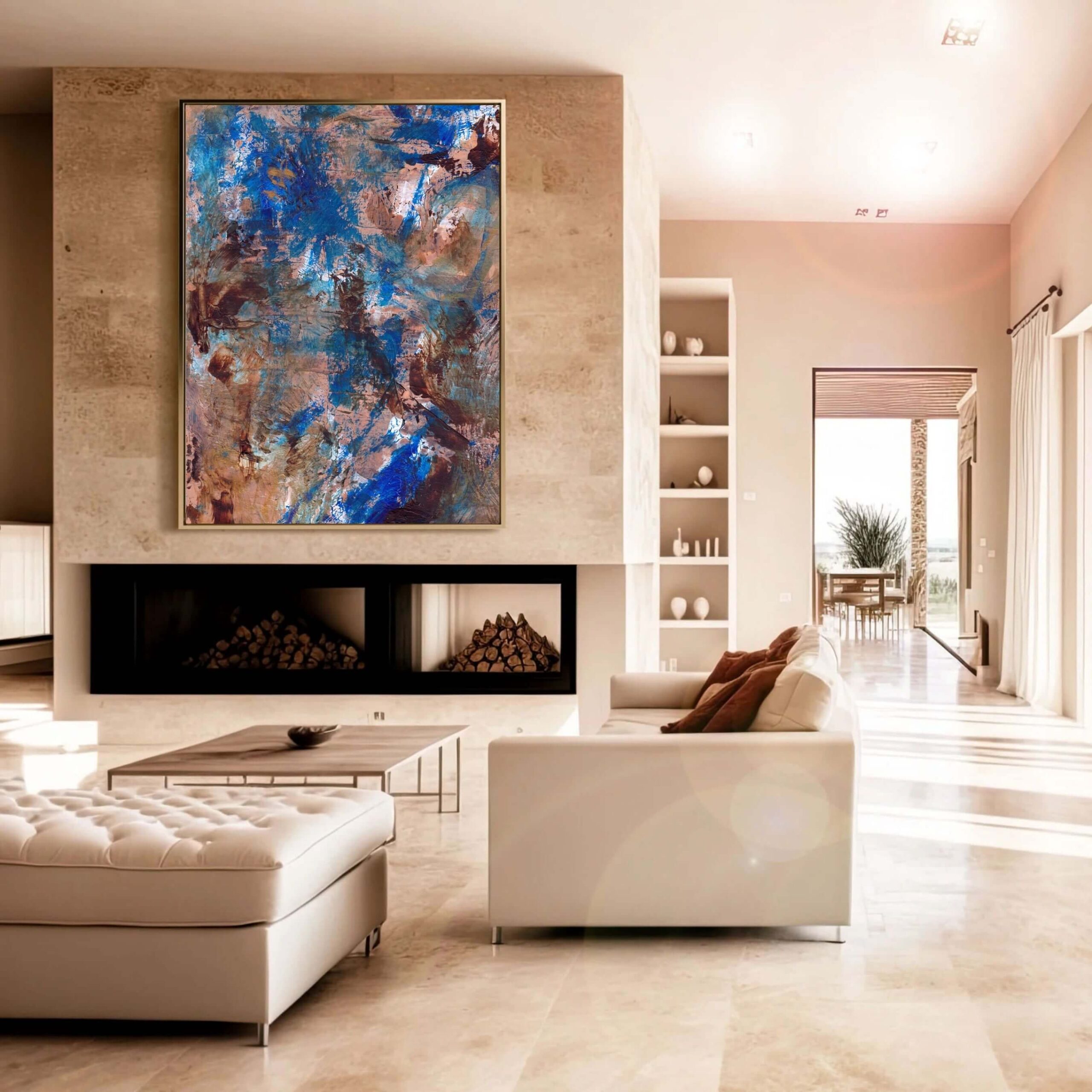
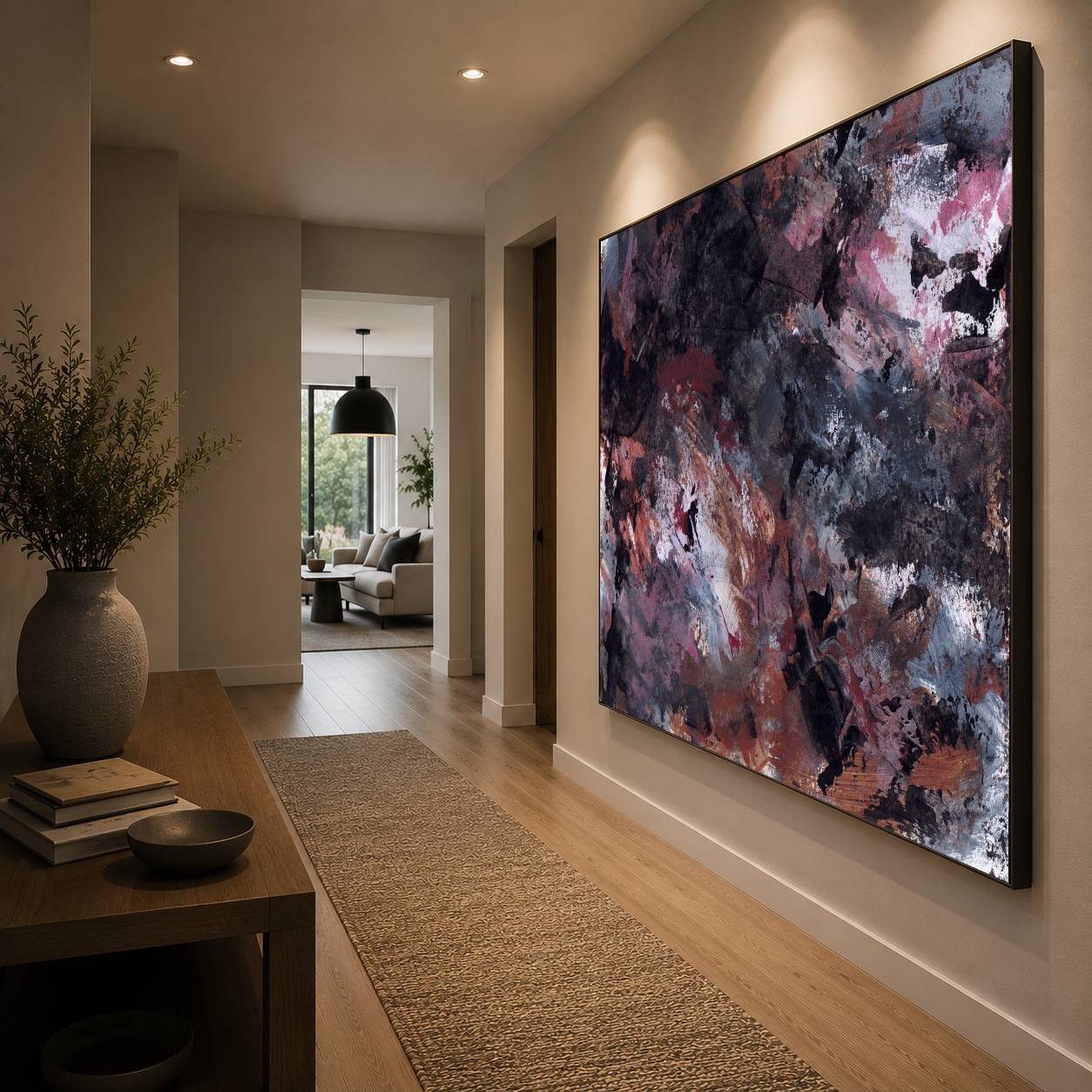
Why size matters more than most beginners realise
Many first-time buyers focus entirely on the artwork itself and forget about scale. This often leads to one of the most common collecting mistakes.
Buying artwork that is far too small. A beautiful piece can disappear completely if the scale is wrong for the room.
The artwork may not be the problem. The proportions are.
This is particularly common in hallways, living rooms and open-plan spaces where larger pieces frequently create stronger visual balance.
As explored in How to Buy Large Abstract Art Without Overwhelming a Room, bigger artwork often creates more calm rather than more visual noise because it reduces fragmentation and helps organise the space.
When considering a piece, always think about where it will live. The room matters as much as the artwork itself.
Why price alone tells you very little
Many new buyers assume expensive automatically means better. It doesn’t. Similarly, cheap does not automatically mean bad. Price reflects many things:
-
- Size
- Production quality
- Artist reputation
- Materials
- Exclusivity
- Demand
- Availability
The challenge is understanding what you are actually buying.
A £200 decorative print and a £4,000 collector-grade canvas may look superficially similar online while offering completely different experiences over time.
This is why How Much Should You Expect to Pay for Large Abstract Art? is such an important question. Understanding value matters far more than simply understanding price.
Decision box: signs you may have found the right artwork
| Good signs | Warning signs |
|---|---|
|
You keep returning to it |
You only like it because others do |
|
It creates an emotional response |
You feel pressured to buy |
|
You can imagine living with it |
You are choosing purely on trend |
|
It suits the atmosphere you want |
It only matches the sofa |
|
You notice details repeatedly |
It already feels boring |
|
It feels personal |
It feels generic |
|
You would still like it next year |
You only like it because it is fashionable |
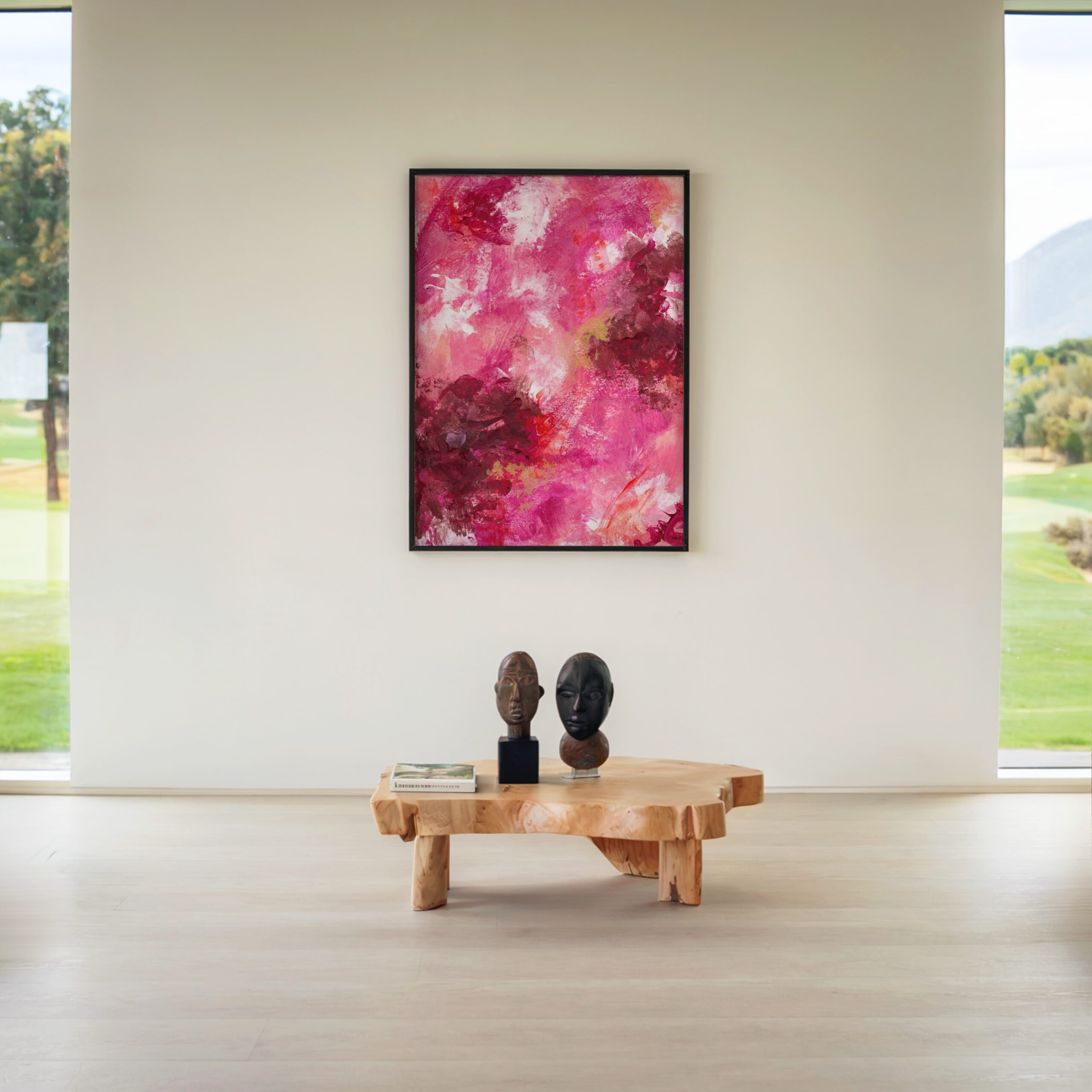
Why you should trust your instincts more
The longer people spend around art, the more they realise that certainty is overrated.
Many collectors have bought pieces they were completely convinced about and later sold. Others have bought work impulsively and loved it for decades.
Art is not mathematics. It is not about arriving at the correct answer. It is about finding work that continues giving something back over time.
If you find yourself repeatedly thinking about a piece, revisiting it or imagining it in your home, those instincts are worth listening to.
You may not have the vocabulary yet. You already have the response. That matters more.
Why abstract art can be intimidating initially
Many people feel more comfortable buying landscapes, portraits or photography because the subject matter feels familiar.
Abstract art removes some of that certainty. There is no obvious tree. No obvious face. No obvious narrative. That can initially feel intimidating.
However, it also creates freedom.
Instead of being told exactly what to see, viewers can develop a more personal relationship with the work. The artwork becomes less about recognition and more about atmosphere, feeling and interpretation.
As explored in How Colour in Abstract Art Changes the Feeling of a Room, abstract work often influences a space emotionally in ways that highly literal imagery cannot.
That is one reason abstract art has become so popular in contemporary interiors.
Why you do not need to become a collector overnight
One artwork is enough. You do not need a collection immediately. You do not need a strategy. You do not need a grand plan. Many collectors begin with a single piece that simply felt right.
Everything else follows later.
In fact, buying more slowly often leads to better decisions because each purchase has time to reveal what you genuinely enjoy living with.
Art collecting is not a race. It is a relationship.
Comparison table: beginner myths vs reality
| Myth | Reality |
|---|---|
|
You need an art degree |
You don’t |
|
You must understand art history |
Helpful, but not required |
|
Expensive means better |
Not necessarily |
|
Only wealthy people buy art |
Many collectors start modestly |
|
Abstract art must be understood |
It can simply be experienced |
|
Good art matches décor |
Good art shapes atmosphere |
|
Experts always agree |
They often don’t |
|
There is a correct choice |
There usually isn’t |
Practical checklist before buying artwork
Before making a purchase, ask yourself:
-
- Do I genuinely like this piece?
- Would I still enjoy it in five years?
- Does it suit the atmosphere I want?
- Is the scale right for the room?
- Do I keep returning to it?
- Am I buying because I love it or because I think I should?
- Does it create an emotional response?
- Can I imagine living with it daily?
- Does it feel distinctive?
- Am I excited to see it again?
If most answers are yes, you are probably much closer to making a good decision than you think.
Final thoughts
You do not need permission to buy art. You do not need qualifications. You do not need specialist knowledge. You certainly do not need to understand every gallery conversation taking place within a twenty-mile radius. You simply need curiosity, honesty and enough confidence to trust your own response.
The best art purchases rarely happen because somebody mastered a technical checklist. They happen because a piece continues calling someone back.
Because it creates something difficult to explain. Because the room feels better with it than without it.
And ultimately, that is how most collections begin. Not with expertise. With connection.
If you’re exploring abstract art for the first time, you may also enjoy:
The Difference Between Decorative Art and Emotionally Intelligent Art
How Much Should You Expect to Pay for Large Abstract Art?
How Abstract Art Supports Calm Interiors Without Making a Space Feel Empty
How Colour in Abstract Art Changes the Feeling of a Room
Why Abstract Canvas Prints Work Better Than Mass-Produced Wall Art
You can also explore available works through the Collector’s Vault.
Key Takeaway
The biggest mistake new buyers make is assuming they need to know everything about art before they are allowed to buy it. In reality, most great art purchases begin with feeling something long before understanding everything.
Frequently Asked Questions
No. Most people begin collecting art long before they develop any formal knowledge about it.
A useful starting point is whether it creates a genuine response and continues holding your attention over time.
Not necessarily. It simply requires trusting your own response rather than looking for obvious subject matter.
Not perfectly. Artwork should support the atmosphere of the space rather than functioning purely as colour coordination.
Whatever feels comfortable. There is no universal minimum budget.
Some artwork appreciates in value, but most people should buy art because they enjoy living with it.
The correct size depends on the space. Many people actually buy artwork that is too small.
Often because of the atmosphere, emotion and visual experience it creates rather than recognisable subject matter.
Buying artwork based entirely on trends or other people’s opinions rather than their own response.
Absolutely. Every collection begins with a single artwork.