
The Psychology of Living With Abstract Art Over Time
Introduction: The Relationship Doesn’t Happen on Day One
Most people think they are choosing a piece of art. They’re not.
They’re choosing something they are going to live with, move past, ignore, return to, and quietly register every single day without realising how often it’s happening. And yet the decision is usually made in a moment, based on how something looks under gallery lighting or on a screen that flattens everything into something far easier to judge than it actually is.
That moment matters, but it is not the whole story.
Because the real experience of art begins after it has been placed in a space and left alone. Not styled, not adjusted, not reconsidered every few days, but lived with in a way that allows it to become part of the environment rather than something separate from it.
And this is where most people misjudge what they are buying. They assume the impact of the work will stay the same. It doesn’t.
It changes, not dramatically, but steadily, and in ways that are easy to miss if you are not paying attention.
TLDR
The psychology of living with abstract art is not about initial reaction, but about how the relationship develops over time. Strong pieces do not lose relevance; they integrate into the space, reduce visual effort, and continue to feel present without demanding attention. The longer you live with them, the more they stabilise how the environment feels.
The First Phase: Immediate Reaction Is Often Misleading
The initial response to abstract work is usually based on clarity.
Do I like it.
Do I understand it.
Does it fit.
Those are natural questions, but they are also shallow ones, because they are built around a need for resolution that abstract work does not always provide immediately.
In fact, the pieces that hold over time are often the ones that don’t fully resolve on the first encounter. There is something slightly open about them, something that doesn’t give everything away at once.
At the beginning, that can feel uncertain.
You might notice the colour first, or the scale, or how it sits against the wall, but the work itself remains slightly out of reach. It doesn’t offer a fixed meaning or a clear narrative that you can file away and move on from.
And that’s the point.
Because once something is fully understood, it stops asking anything from you. It becomes static. Abstract work resists that. It stays open, and because it stays open, your relationship with it has somewhere to go.
What Happens After a Few Weeks: The Work Stops Being an Object
After the initial period, something shifts, and it is usually so subtle that most people don’t consciously register it.
You stop looking at the work directly.
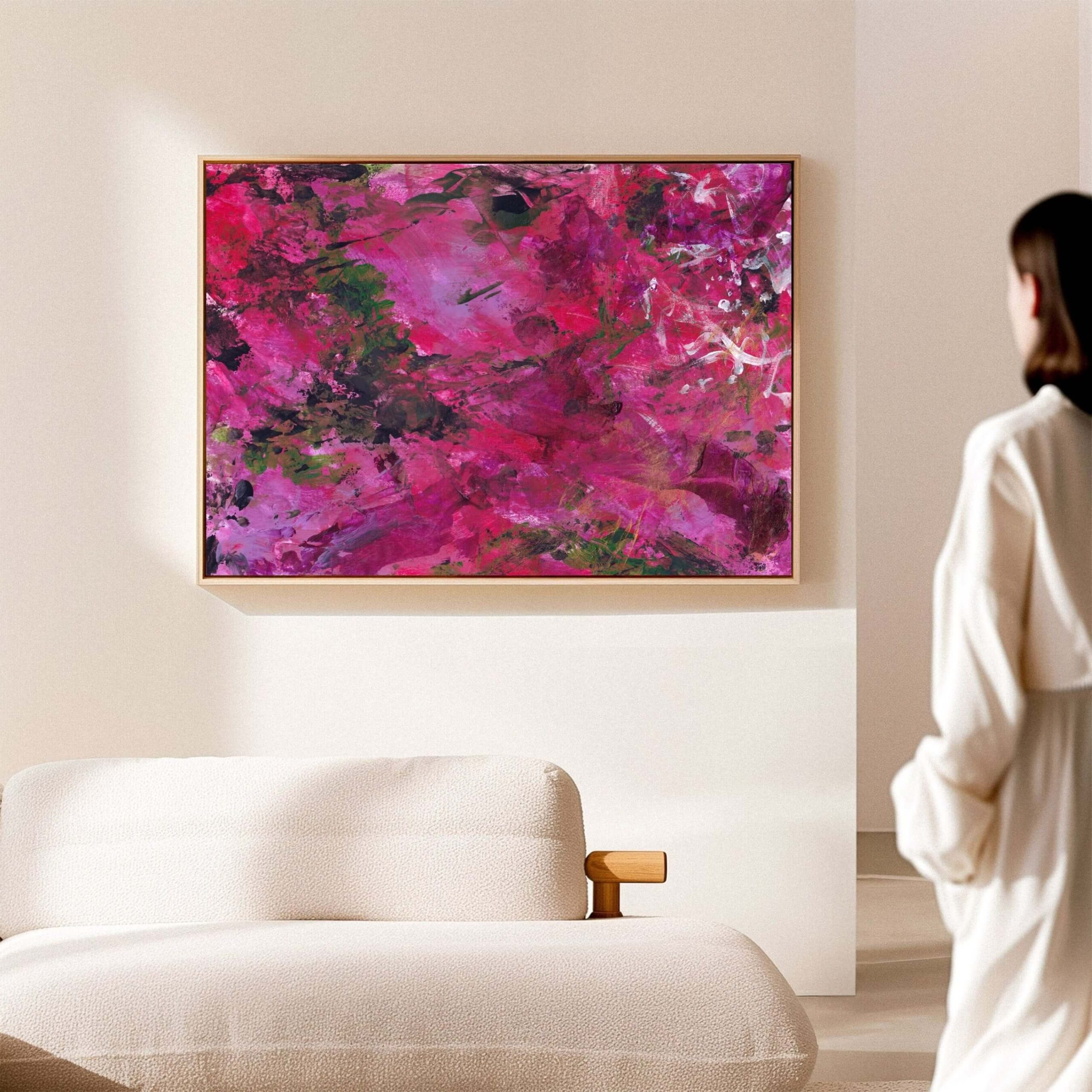
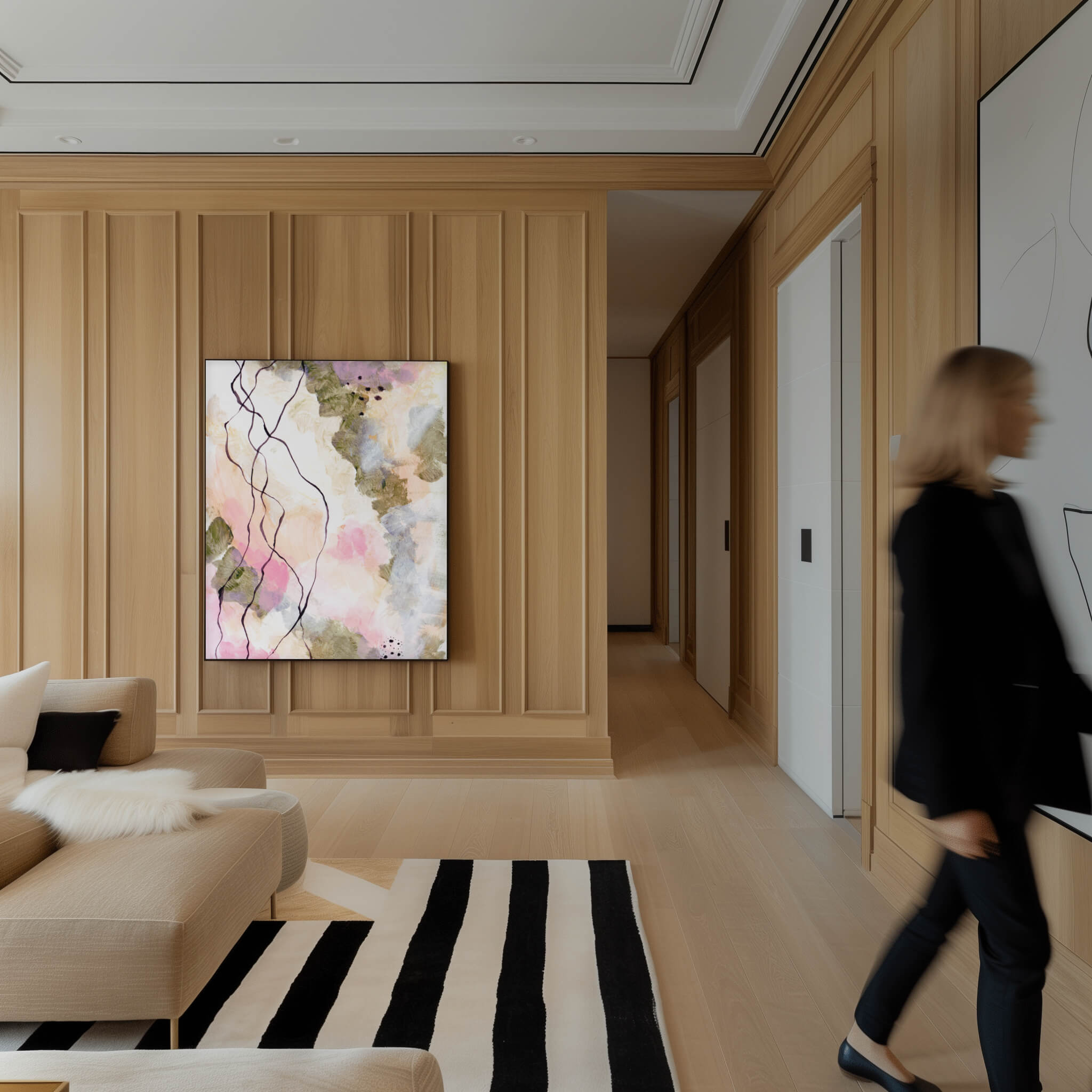
Not because it has lost interest, but because it has stopped behaving like a separate object in the room. It becomes part of the space itself, something your peripheral vision absorbs rather than something you actively analyse.
This is where the psychological role of the work begins to deepen.
The brain is no longer trying to interpret it. Instead, it starts using it as part of the environment it is constantly mapping. The artwork becomes one of the visual anchors that helps the space feel coherent, even if you are not thinking about it in those terms.
This is similar to how you experience architecture.
You don’t walk into a room and consciously analyse every line and proportion, but your body registers immediately whether it feels balanced, tense, open, or contained.
Abstract art, when it is right for the space, starts to function in the same way.
The Role of Familiarity: Why the Work Becomes Calmer Over Time
There is a common concern that people will get bored with abstract art because it does not change. In reality, the opposite tends to happen.
As familiarity builds, the work becomes easier to live with, not because it becomes invisible, but because it requires less effort to process. The brain no longer treats it as new information that needs to be understood, which reduces the subtle cognitive load that comes with constantly encountering something unfamiliar.
You see this in other areas as well.
Spaces that feel chaotic often contain too many competing elements, too many things asking for attention at the same time. Over time, that creates low-level fatigue because the brain never fully settles. When a piece of art integrates properly into a space, it does the opposite.
It reduces the amount of visual effort required to be in the room. That reduction is not dramatic, but it accumulates. And over time, it changes how the space feels to live in.
Why Some Work Deepens While Other Work Fades
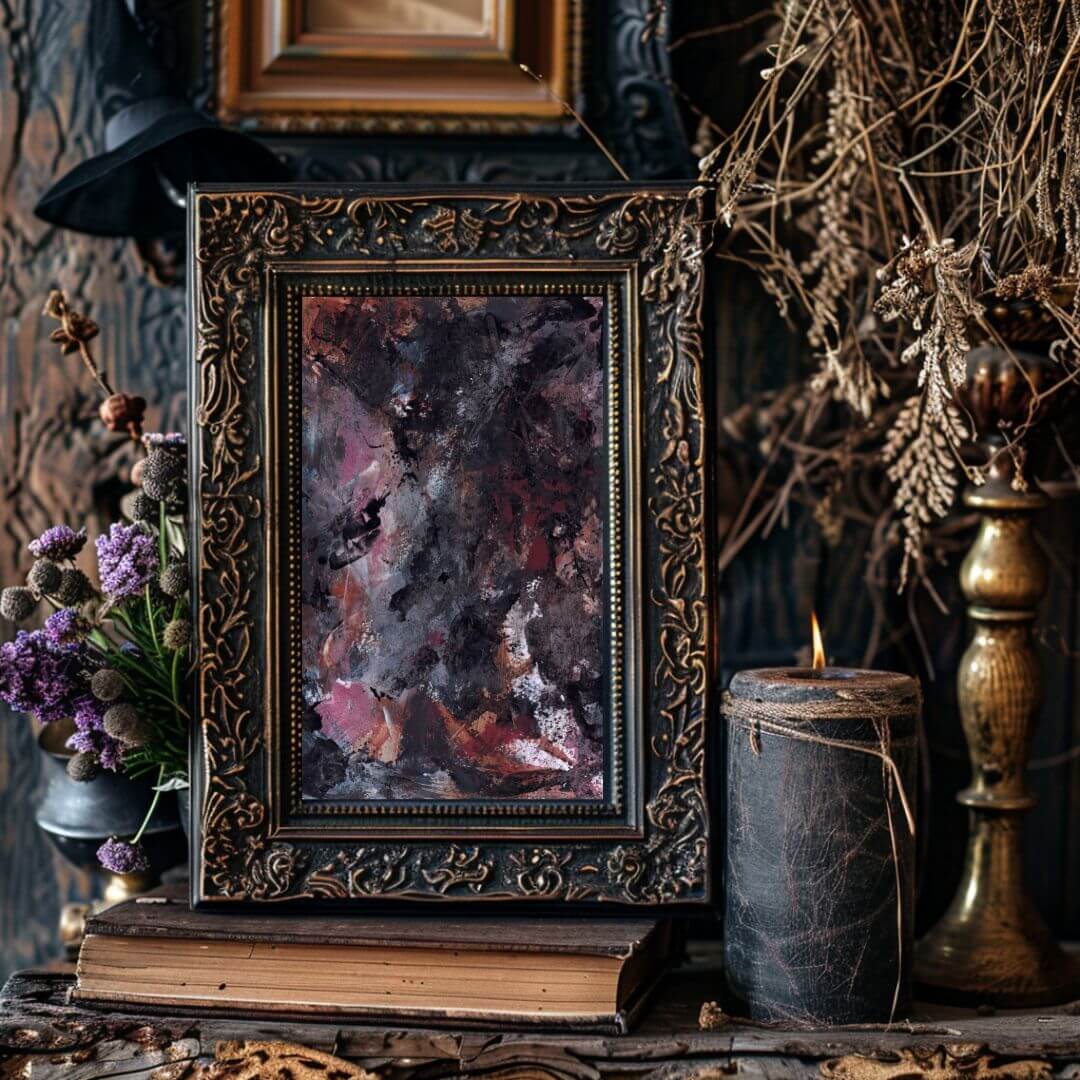
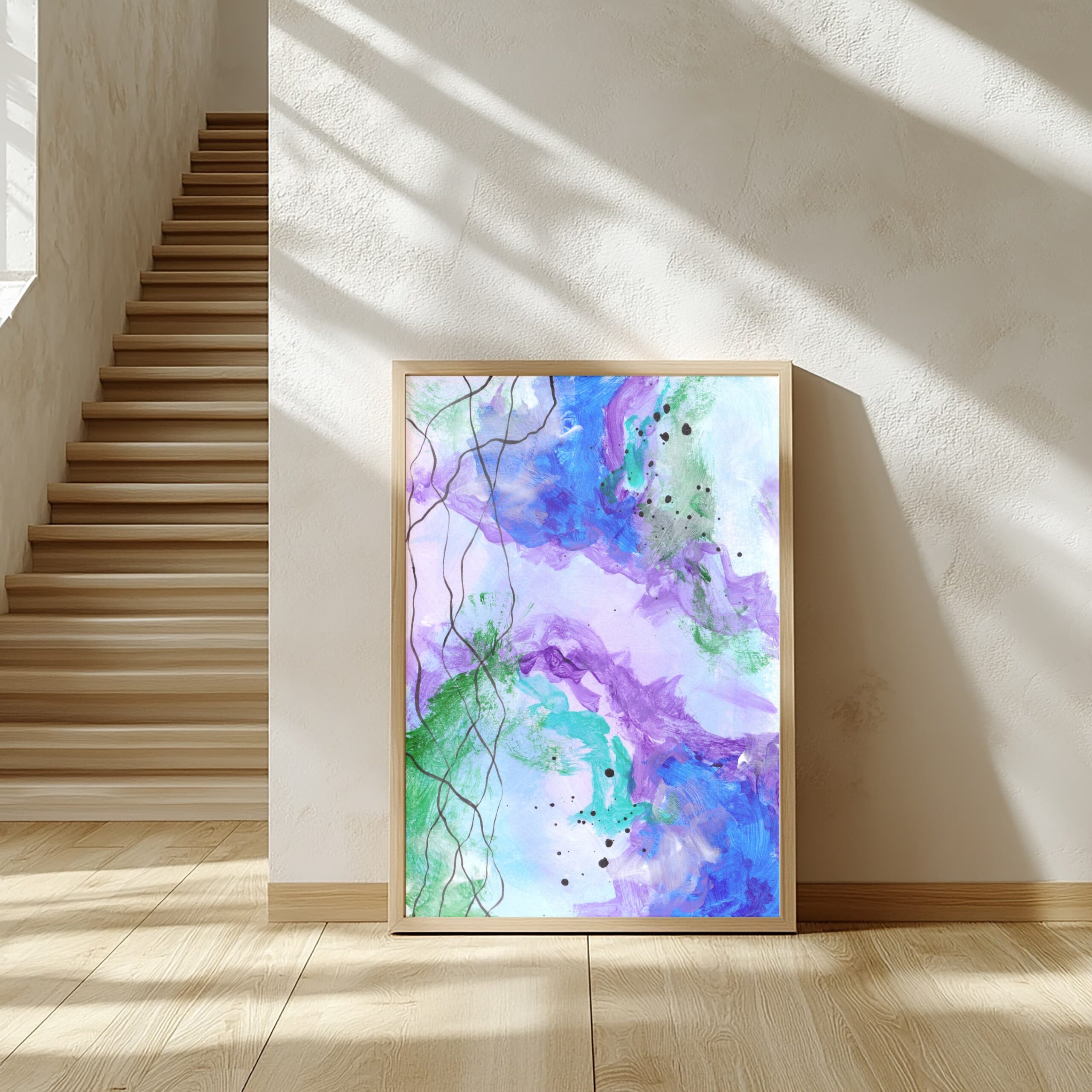
Not all artwork holds in the same way. Some pieces lose relevance quickly. They become background. You stop seeing them almost entirely, not because they are subtle, but because they no longer contribute anything meaningful to how the space is experienced.
This often happens with work that is chosen purely for aesthetic compatibility. It matches the colours. It fits the style. It fills the wall. But it doesn’t hold presence.
Without presence, the brain stops registering it as something worth processing, and it fades.
Other work does the opposite. It becomes quieter, but not weaker. It integrates without disappearing. You might not look at it directly every day, but you feel its absence immediately if it is removed.
That is the difference between something that decorates a space and something that stabilises it. And that difference becomes more obvious the longer you live with it.
This difference between work that fades and work that holds is often overlooked when people are deciding what to buy, even though it directly shapes how satisfying the space will feel over time. It’s something I break down more practically in how to buy canvas art, where the focus shifts from what looks good initially to what actually lasts.
Attention, Fatigue, and Why the Environment Matters More Than You Think
Most people underestimate how much their environment affects their mental state, particularly in spaces they spend a lot of time in.
Attention is not constant. It fluctuates throughout the day, influenced by both internal factors and external conditions. When the environment is visually fragmented or unresolved, the brain has to work harder to process it, even if that effort remains in the background.
Over time, that contributes to fatigue.
This is not the kind of fatigue you notice immediately, but the kind that builds gradually, where concentration becomes more difficult and the desire to disengage increases.
Workplaces have started to recognise this.
Fatigue is now understood not just as a result of workload, but as a physiological state influenced by the environment, affecting focus, decision-making, and performance.
The same principle applies at home.
When artwork contributes to coherence rather than fragmentation, it reduces the amount of effort required to exist in the space. It gives the eye somewhere to rest, which in turn allows attention to stabilise.
That is not a dramatic effect. But it is a consistent one.
The Long-Term Relationship: Why Meaning Is Not Fixed
One of the defining characteristics of abstract work is that it does not carry a fixed meaning.
That is often misunderstood as a limitation. In reality, it is the reason the work can sustain a relationship over time.
Because the meaning is not fixed, it shifts depending on your state, your attention, and even the time of day. The same piece can feel different in the morning than it does in the evening, not because it has changed, but because you have.
This keeps the work alive. It prevents it from becoming something you have already “solved.”
And that ongoing openness is what allows it to remain relevant long after the initial decision to bring it into your space.
How This Connects to Choosing the Right Work in the First Place
Understanding how abstract art is experienced over time changes how you choose it.
Instead of focusing only on immediate reaction, you start to consider whether the work has enough depth to sustain attention beyond the first impression.
You look for:
- presence without force
- openness without confusion
- scale that supports the space rather than competing with it
This aligns closely with how scale affects the way a space feels overall, which is explored in more detail here: https://vikithorbjorn.art/how-scale-influences-emotional-safety-in-a-space/
It also connects to how art integrates into a space rather than sitting on top of it, which is covered in: https://vikithorbjorn.art/the-ultimate-guide-to-integrating-abstract-art-into-your-home-decor/
And ultimately, it reframes the decision entirely.
You are not choosing something to look at.
You are choosing something to live with.
Why the Work Starts to Disappear (and Why That’s a Good Sign)
At some point, the work will stop standing out.
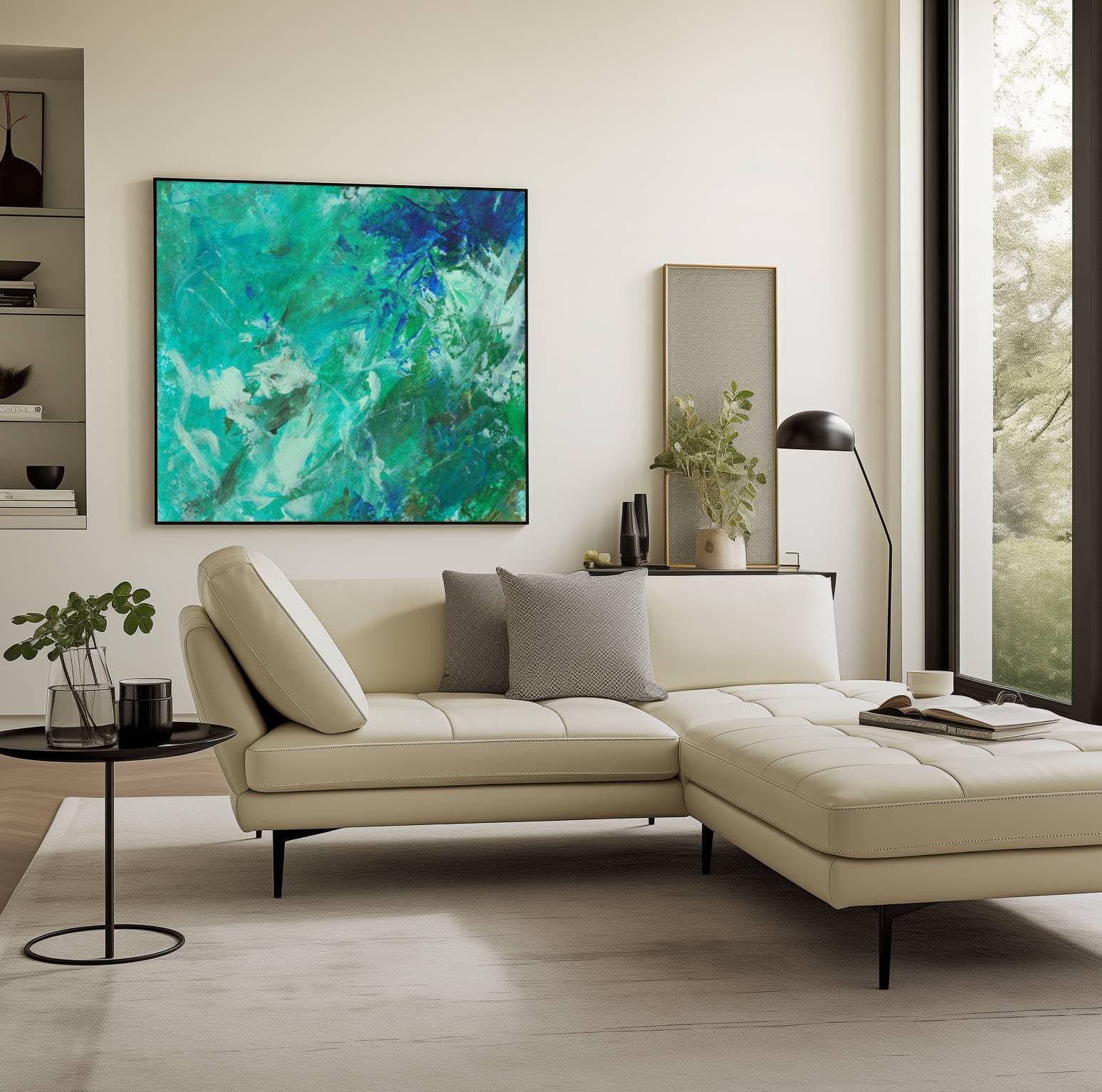
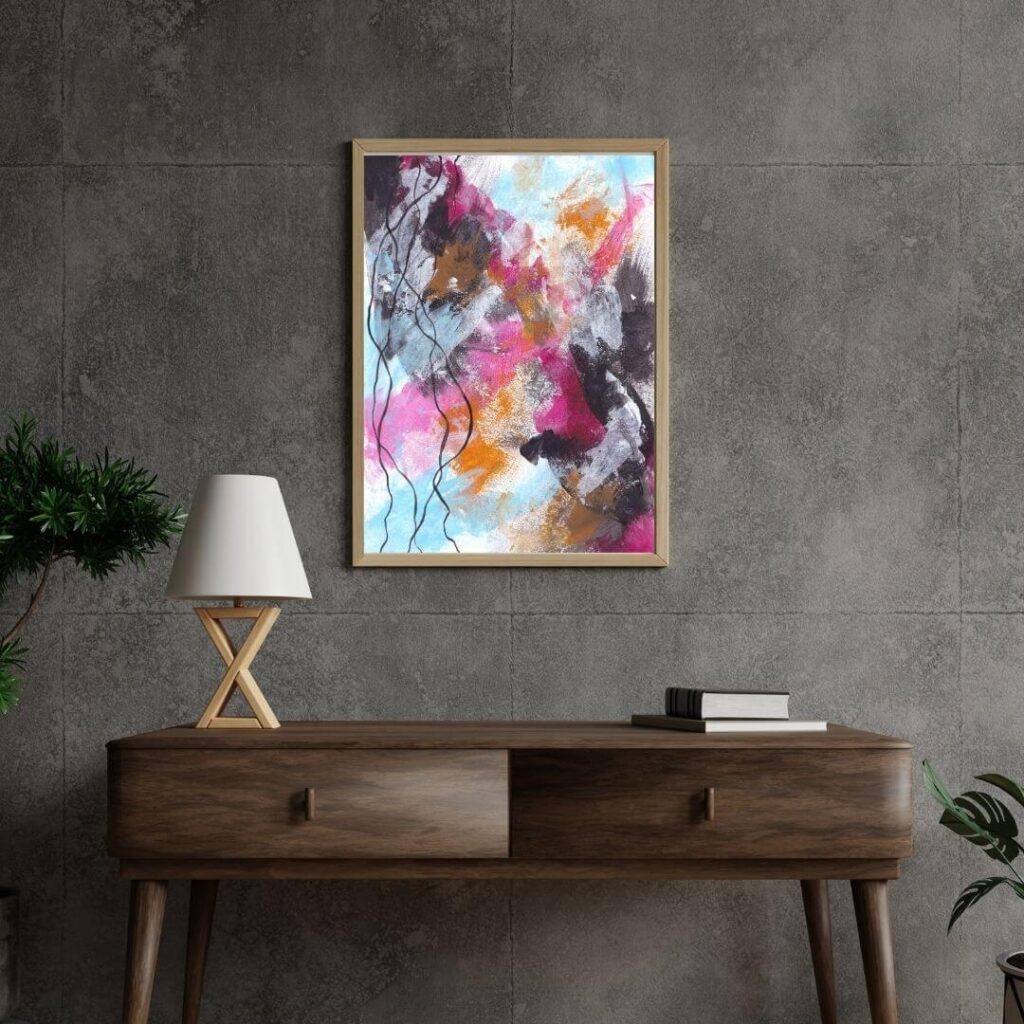
Not because it has lost impact, and not because it has become less interesting, but because it has stopped behaving like something separate from the space. It no longer interrupts your attention or asks to be looked at directly. Instead, it sits in the background of your awareness in a way that feels stable rather than absent.
This is often the moment people misinterpret.
They assume they’ve become used to it, or worse, that it has lost its relevance. But what has actually happened is more precise than that. The work has integrated. It has moved from being an object you notice to part of the environment you experience.
The difference matters.
Something that fades because it lacks presence becomes invisible in a way that feels empty. Something that integrates becomes quiet in a way that feels complete. You don’t actively look at it every day, but if it were removed, the space would immediately feel off, even if you couldn’t explain why.
That is the point where the work is doing its job.
It is no longer competing for attention. It is holding the space instead.
When a Piece Doesn’t Hold: What You Start to Notice Over Time
The opposite experience is just as important, because it explains why so many spaces never quite settle, even when they are visually “finished.”
When a piece doesn’t hold, the symptoms show up slowly.
You start to move past it without ever really registering it. Your attention drifts elsewhere in the room. Other elements begin to feel more dominant, not because they are stronger, but because the artwork is not contributing enough to balance them.
Over time, the wall feels flat again.
Not empty, but unresolved.
This is where people often assume they need to change something else. They adjust furniture, swap accessories, rethink the layout, when in reality the issue sits exactly where it always did.
The artwork never carried enough presence to stabilise the space.
This is also why simply adding more pieces rarely solves the problem. Multiple smaller works tend to increase fragmentation rather than reduce it, creating more points of attention without giving the eye a place to rest.
If you’ve ever had a space that looked good but never quite felt right, this is usually where the problem sits.
And once you see it, it’s difficult to unsee.
Conclusion: The Work Becomes Part of How the Space Feels
The experience of abstract art is not fixed at the point of purchase. It unfolds over time.
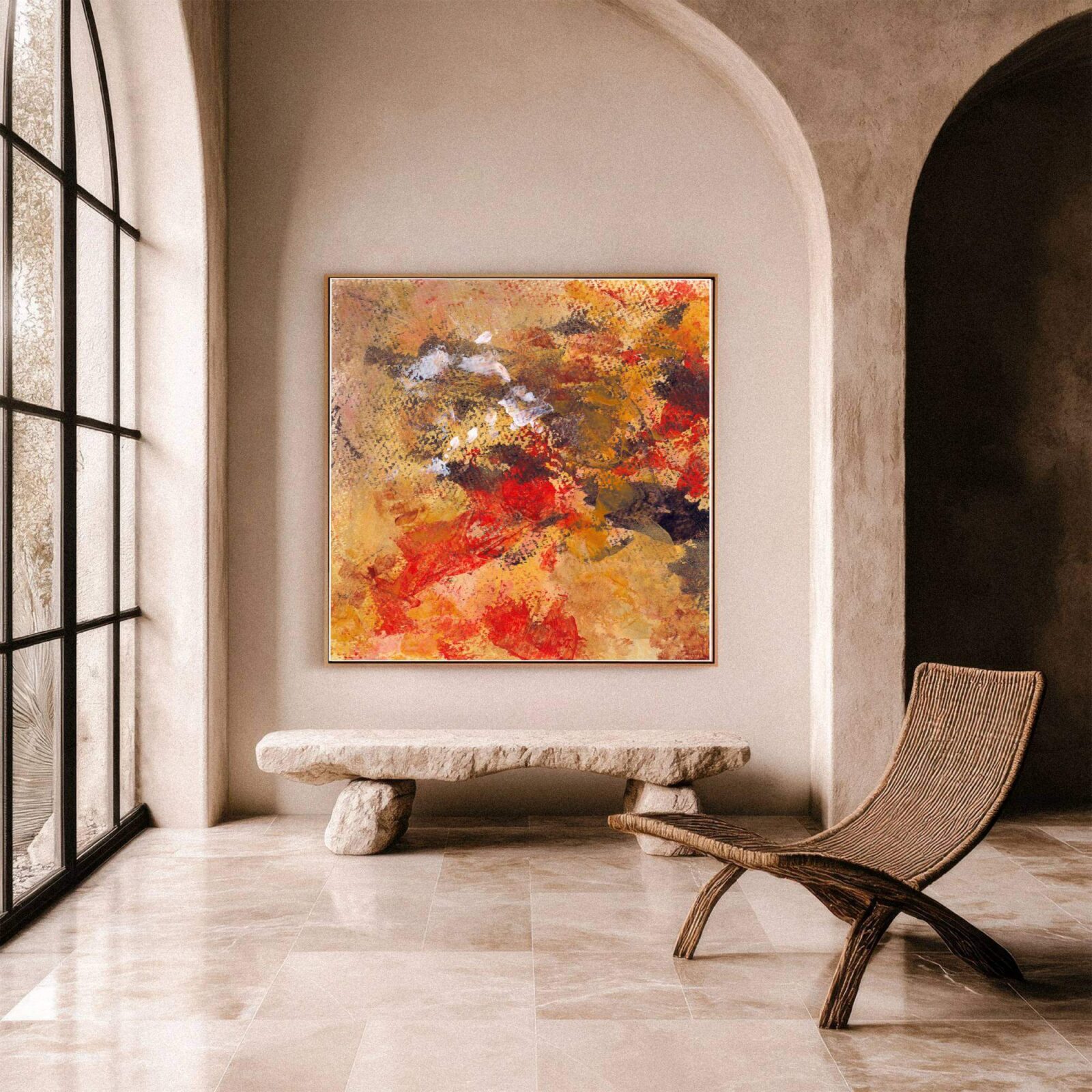
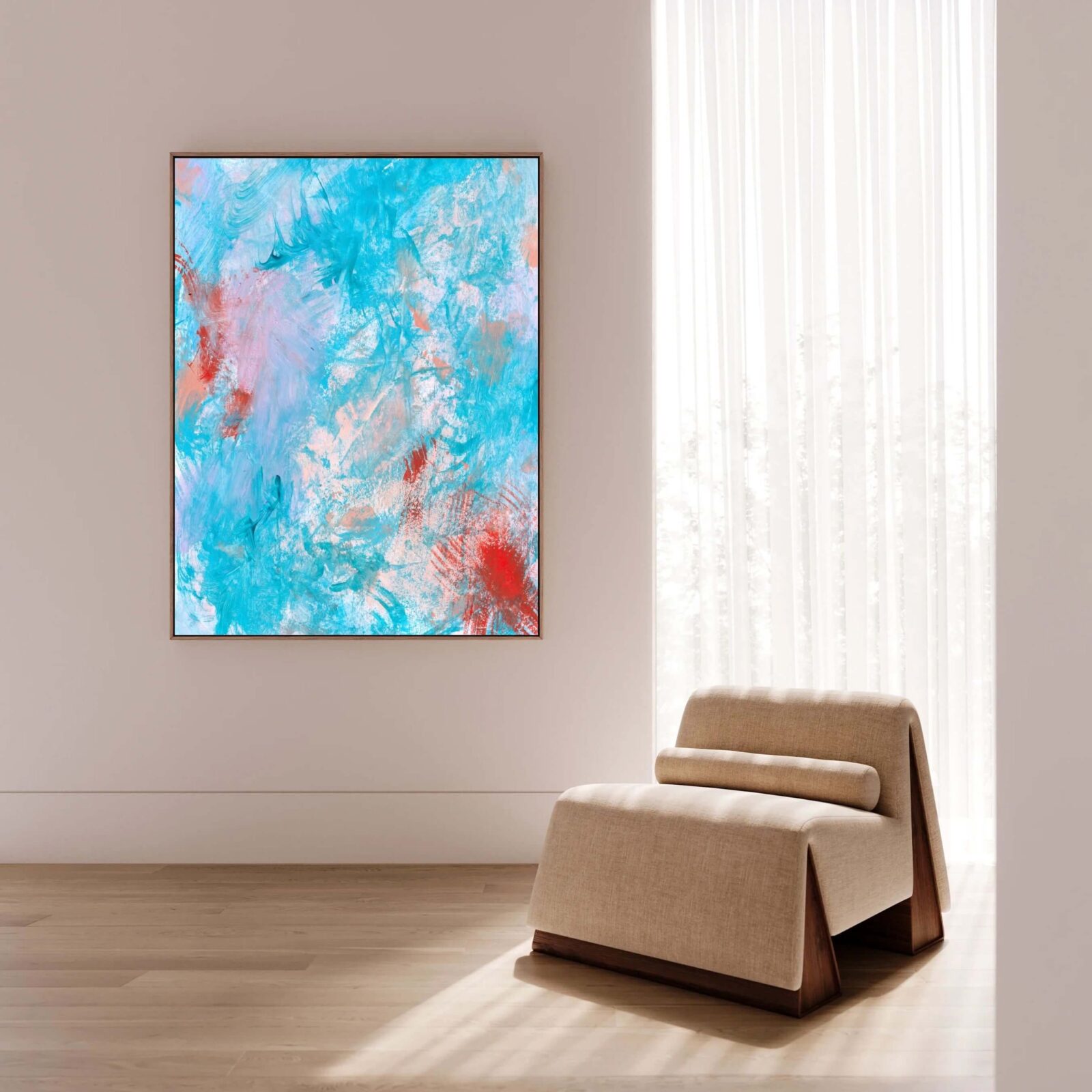
What begins as an object gradually becomes part of the environment, influencing how the space is perceived without needing constant attention. The work becomes quieter, but not weaker, and its role shifts from something you observe to something that supports the overall coherence of the room.
That shift is where its value sits.
Not in how it looks on day one, but in how it continues to function long after the initial decision has been made. The space feels more stable. Attention settles more easily.
And the work, without asking for it, becomes part of how you exist within that environment.
If you’re at the stage where you’re trying to find a piece that actually holds over time rather than just fitting the space visually, you can request a private catalogue here.
Key Takeaway
You are not choosing something to look at. You are choosing something that will quietly shape how your space feels every single day.
Frequently Asked Questions About Art Scale and Emotional Impact
Less often than expected. Work with depth tends to integrate rather than lose relevance.
Because it lacks presence and does not contribute to the structure of the space.
Yes. It influences visual coherence, which affects how the brain processes the environment.
Because familiarity reduces cognitive effort and allows a deeper relationship to form.
Yes. In fact, that often indicates the work has more depth.
Usually a few weeks, but the relationship continues to evolve beyond that.
Yes. Larger works tend to integrate more effectively into the space.
Presence, balance, and the ability to hold attention without forcing it.