
How to Create a Home That Feels Personal Instead of Generic
TL;DR
Creating a personal home has surprisingly little to do with following interior design trends. In fact, the more closely a home follows whatever is fashionable at the time, the more likely it is to feel interchangeable. Homes with real character evolve gradually. They reflect the people who live there through thoughtful decisions, meaningful objects and artwork chosen because it resonated, not because it matched the sofa.
How to Create a Home That Feels Personal Instead of Generic
Walk through a luxury furniture showroom and you’ll see dozens of beautifully designed rooms.
The lighting is perfect. The colours work effortlessly together. Every sofa is positioned at exactly the right angle, every accessory has been carefully placed and every rug sits beneath the furniture with mathematical precision. On paper, they’re flawless.
Now try remembering one of them tomorrow. Most people can’t.
It’s not because the rooms aren’t beautiful. It’s because they’re designed to appeal to almost everyone. They aren’t trying to tell a story. They’re trying to avoid putting anybody off.
That’s exactly what a showroom should do. It’s also the opposite of what a home should do.
A home isn’t a display. It isn’t trying to convince strangers that you have good taste. At least, it shouldn’t be. A home is one of the few places in life where you’re under no obligation to appeal to anybody else. It’s where your habits, interests, memories and values quietly become part of the space around you. That’s why the homes people remember aren’t always the most expensive or the most fashionable. They’re the ones that feel unmistakably connected to the people living there.
I think that’s an important distinction because we’ve reached a point where good taste is surprisingly easy to buy. If you have enough money and a decent internet connection, you can order an entire room that looks as though it belongs in an interiors magazine. What’s much harder to buy is individuality.
That’s something you have to create.
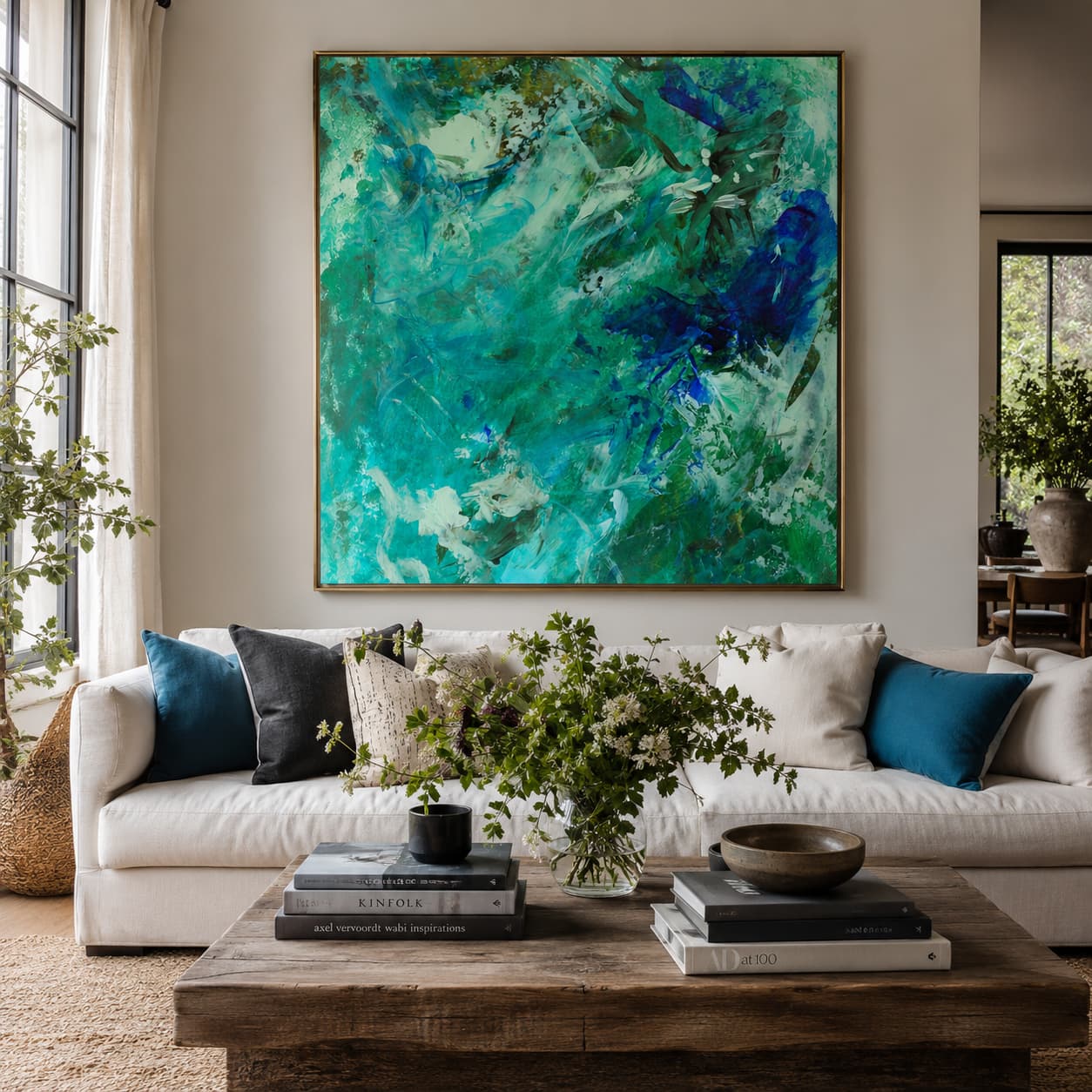
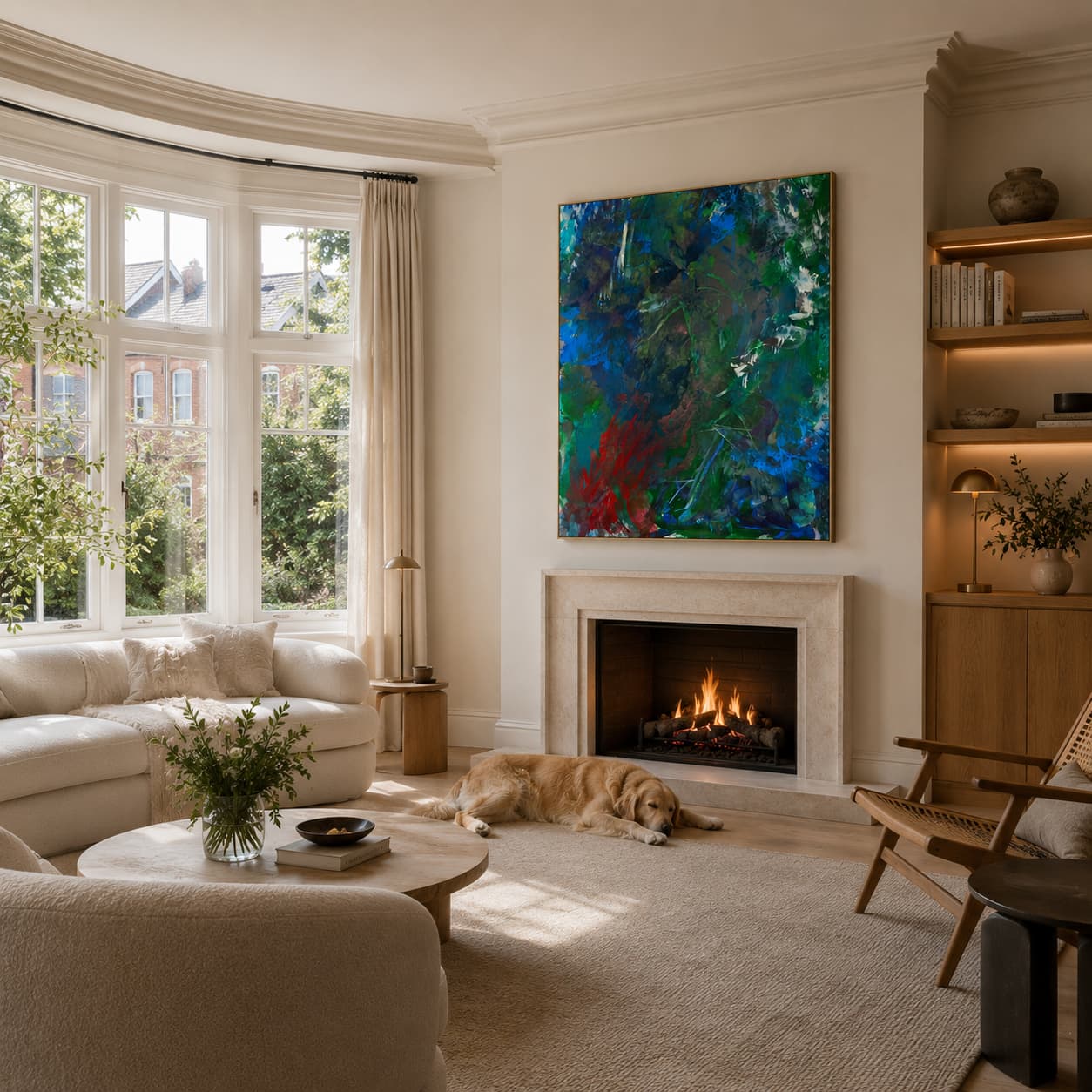
Why We All End Up Making the Same Decisions
I don’t think people deliberately create generic homes. In fact, most of us are trying to do exactly the opposite. We spend hours researching paint colours, comparing sofas, saving inspiration on Pinterest and wondering whether oak looks better than walnut.
The problem is that we’re all looking in the same places.
Open almost any interiors magazine and you’ll notice familiar patterns. Scroll through Instagram and the same colours, furniture styles and layouts appear over and over again. Even when the homes belong to different people in different countries, they often feel strangely similar because they’re all drawing from the same visual language.
There’s nothing wrong with taking inspiration from good design. Every artist, architect and designer has done exactly that throughout history. The trouble starts when inspiration quietly becomes imitation. Without noticing, we stop making decisions based on what genuinely moves us and start making decisions based on what we’ve seen repeated often enough to believe it’s the “right” choice.
Psychologists call this the mere exposure effect. The more often we’re exposed to something, the more familiar and attractive it becomes. It’s one of the reasons trends spread so quickly. Familiarity feels safe.
Unfortunately, safe rarely creates memorable spaces.
A room with personality usually contains at least a few decisions that wouldn’t have made sense to anybody else. That’s precisely why they matter.
A House Becomes a Home Long Before It's Finished
One of the expressions I dislike most in interior design is “We’ve finally finished the house.”
Finished for whom?
Unless you’re planning to sell it tomorrow, I don’t think a home should ever really be finished. It should keep changing because the people living in it keep changing. We discover new artists, travel to different places, celebrate milestones, inherit furniture, replace things that no longer fit our lives and occasionally fall in love with an object we never knew we wanted until we saw it.
That’s how homes develop character.
Not through one enormous shopping trip, but through years of editing, collecting and occasionally changing your mind.
Some of the most interesting homes I’ve visited contain objects from completely different periods of their owners’ lives. A contemporary painting might hang above a dining table that’s been in the family for forty years. Modern architecture might sit comfortably alongside handmade ceramics collected during holidays abroad. None of it looks forced because none of it was chosen to satisfy somebody else’s idea of good taste.
It was chosen because the owners wanted to live with it.
I think that’s a far better reason to buy anything.
Why Personal Homes Feel Collected Rather Than Decorated
I sometimes think we’ve forgotten the difference between decorating a room and building a home.
Decorating usually starts with a checklist. You need a sofa, a rug, a coffee table, something for the walls and perhaps a few accessories to stop the shelves looking empty. There’s nothing wrong with approaching it that way because every home needs the practical basics. The problem is that, once everything on the list has been ticked off, many people expect the room to suddenly develop personality.
It rarely does.
Personality doesn’t arrive with the final delivery van. It develops gradually, often in ways you can’t plan. A painting might remind you of somewhere you’ve travelled. A ceramic bowl might become your favourite object simply because you found it on an ordinary Saturday when you weren’t looking for anything at all. Even books tell stories about the people living in a house. Not because they’re colour-coordinated, but because they’ve been read, re-read and kept for reasons that matter.
When I walk into a home, those are the details I’m interested in. They tell me far more than whether the kitchen is on trend or the sofa came from the right designer. They’re clues about the people who live there, and that’s what gives a house warmth. You don’t need dozens of them, but you do need enough that the house couldn’t simply belong to the next family who move in.
That’s why I think the best homes feel collected rather than decorated. They’ve been assembled over time instead of completed against a shopping list.
Why Artwork Carries More Emotional Weight Than Almost Anything Else
Every object in your home has a role to play.
A dining table brings people together. A bed gives you somewhere to sleep. A wardrobe keeps clothes out of sight. Their purpose is obvious.
Artwork is different because it doesn’t solve a practical problem. Nobody needs a painting in the same way they need a chair. If you buy artwork, you’re making a decision that’s almost entirely emotional.
I think that’s exactly what gives it so much power.
Because it isn’t constrained by function, artwork has the freedom to influence something far less tangible. It shapes atmosphere. It changes the pace of a room. It affects where your eye rests when you walk through the door and, over time, it becomes woven into your daily experience almost without you noticing.
I’ve often found that people underestimate how much this matters. They’ll spend months choosing flooring because they’ll walk on it every day, yet they’ll treat artwork as something to think about once everything else has been finished. Personally, I’d argue the opposite. Flooring becomes invisible remarkably quickly because it’s doing its job quietly beneath your feet. Artwork keeps asking for your attention. Not in an overwhelming way, but in subtle moments. Morning light catches a texture you hadn’t noticed before. An evening lamp brings out colours that disappear during the day. Six months later you suddenly see something in the painting that had escaped you completely.
Furniture very rarely rewards you like that.
Good artwork keeps unfolding.
That’s one of the reasons I never think of paintings as decoration. Decoration tends to answer the question, “What can I put here?” Art answers a much more interesting one: “What do I want to keep living with?”
The Mistake I See Most Often
If there’s one decorating mistake I see more than any other, it isn’t choosing the wrong colour or buying the wrong furniture. It’s making every decision too quickly.
There’s an understandable excitement when you move into a new house. You want it to feel complete, so you buy everything within a few months. By Christmas, every wall has something hanging on it, every shelf has been filled and every room looks presentable.
The strange thing is that many of those same people start changing things again within a year or two.
Not because the furniture has worn out. Because they realise they built the house around the pressure to finish it rather than around how they actually wanted to live.
I’ve always preferred a wall to stay empty than to hang something on it simply because I feel I ought to. Empty space isn’t failure. Sometimes it’s patience.
I’d much rather wait six months for the painting that makes me stop in my tracks than fill the space this weekend with something I’ll stop noticing by next month.
I think that’s true of most meaningful purchases. The things we value for years are rarely impulse buys. They tend to be the things we return to repeatedly before finally deciding, “Yes, that’s the one.”
Why I Created the Collector's Vault
The Collector’s Vault grew from exactly that way of thinking.
I wasn’t interested in creating another online gallery filled with hundreds of interchangeable designs where the hardest decision is choosing between beige number twenty-three and beige number twenty-four. There are already plenty of places to buy decorative wall art.
What interested me was creating a collection of work for people who wanted their homes to feel more individual.
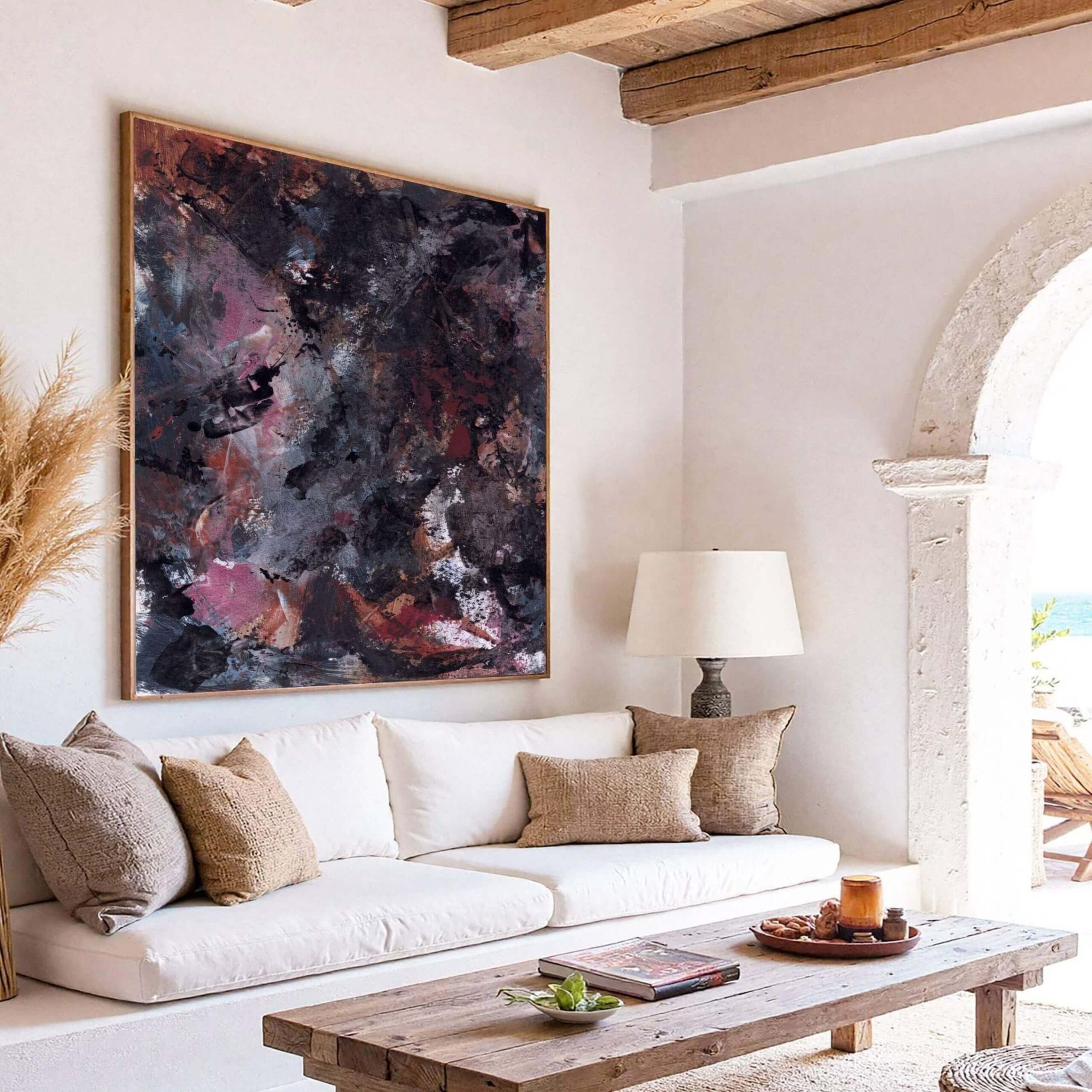
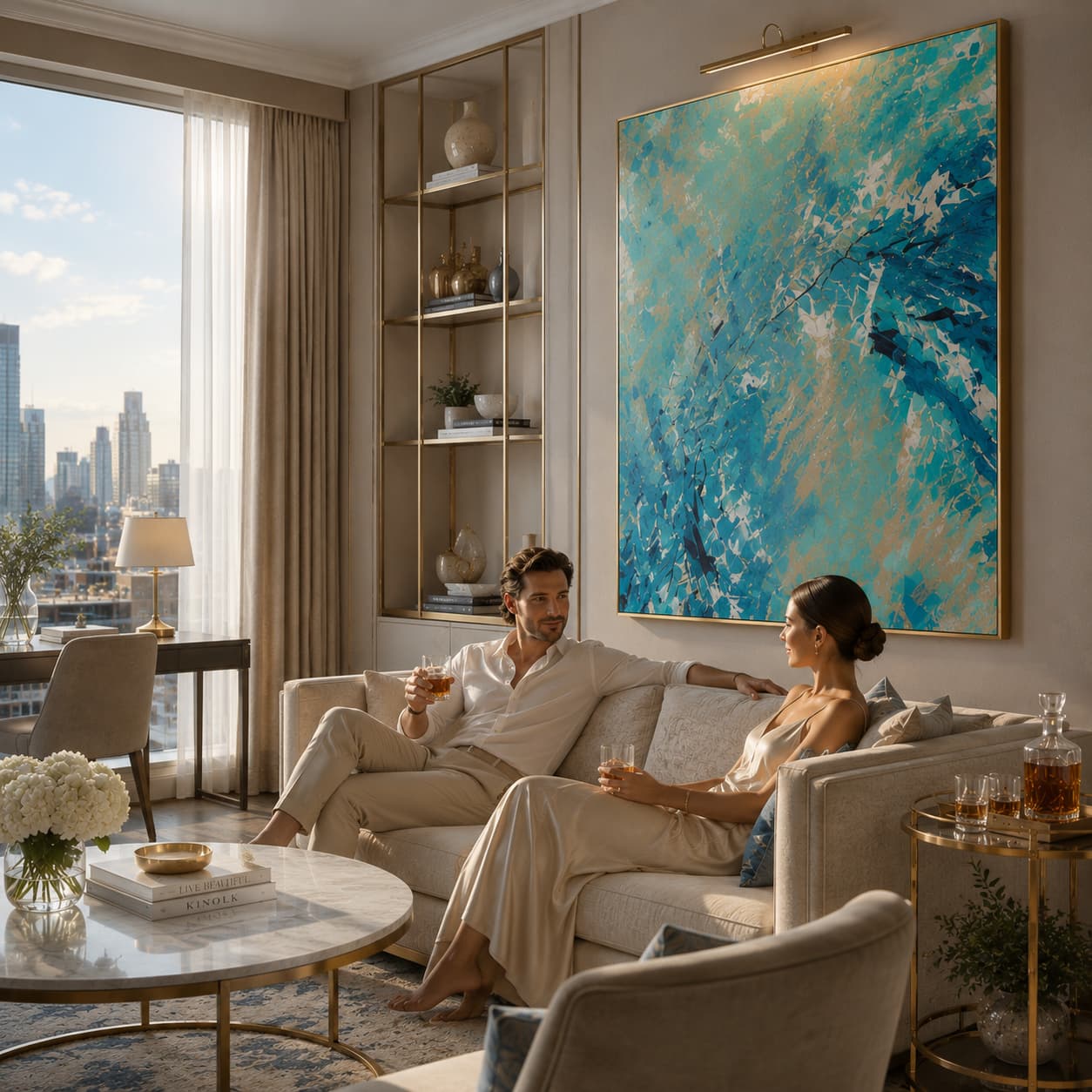
Every piece in the Vault begins as one of my original abstract paintings. From there, it’s professionally produced as a museum-quality canvas in sizes that allow the artwork to become a genuine focal point rather than a decorative afterthought. That part matters because scale changes how artwork is experienced. A painting that quietly disappears above a sofa can’t shape a room in the same way as one that’s given the space it deserves.
More importantly, I want people to choose a piece because they feel something when they look at it, not because it fills a gap on the wall. Those are two very different reasons for buying art, and I think they lead to very different homes.
Some collectors spend weeks returning to the same painting before making a decision. I actually like that. If a piece stays in your mind long after you’ve closed the browser, it’s probably telling you something. I’d much rather somebody bought one painting they genuinely connected with than three they happened to need by the weekend.
That’s also why I don’t think of the Vault as a catalogue. I think of it as a collection. There’s an important difference. Catalogues encourage browsing. Collections encourage choosing.
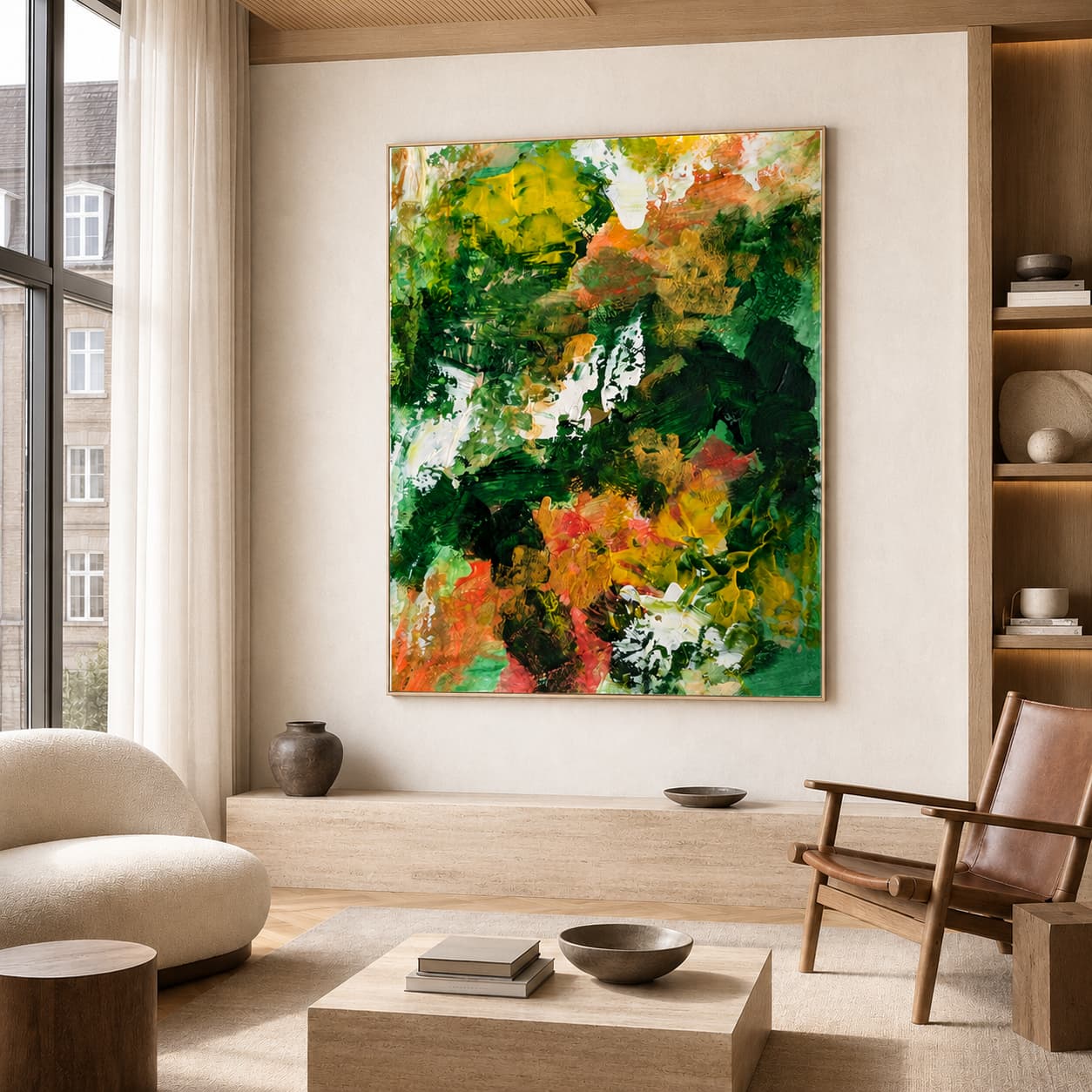
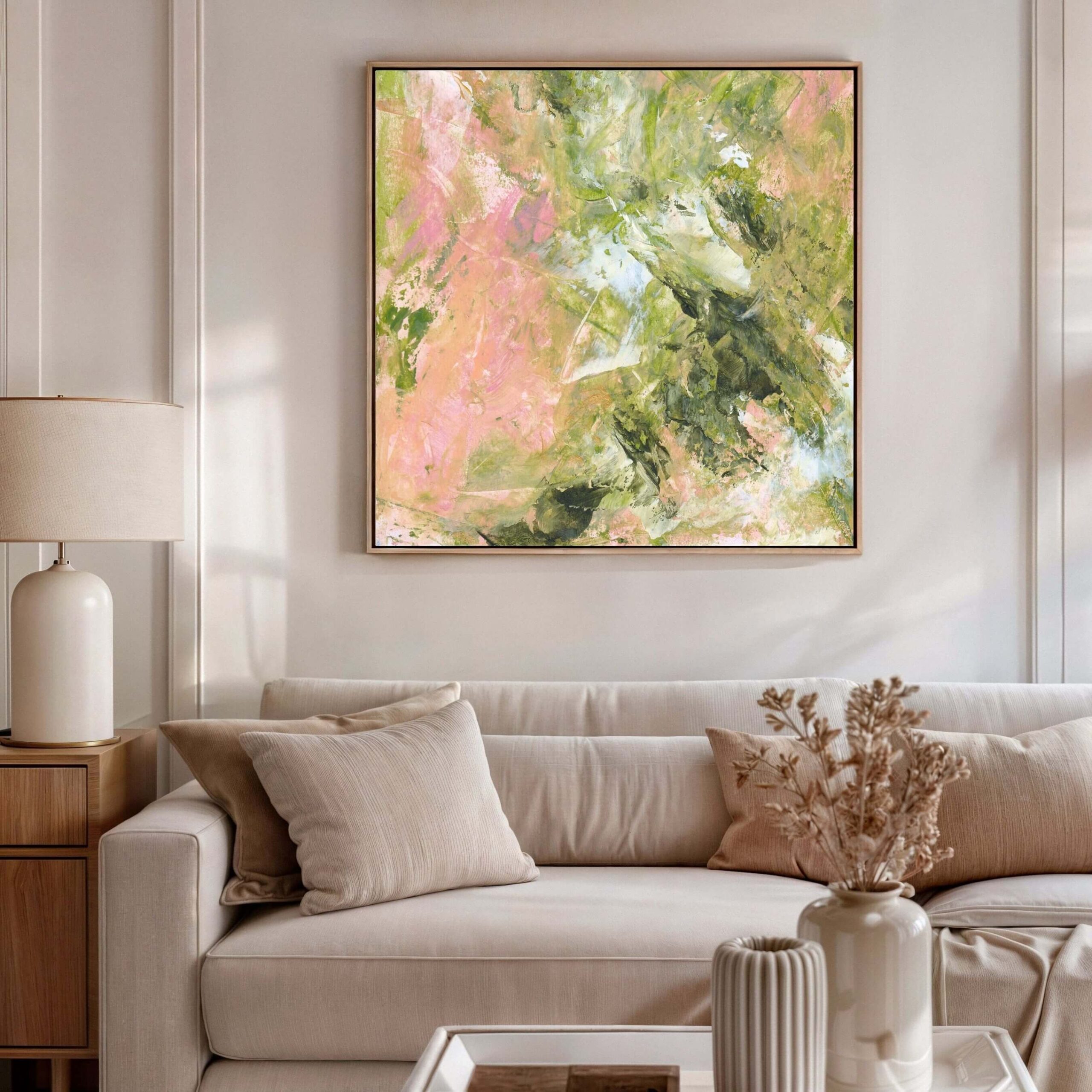
Your Home Should Tell Your Story, Not Somebody Else's
There’s a question I think is worth asking before buying anything significant for your home.
If I saw this in ten other houses, would I still want it?
It’s a surprisingly uncomfortable question because it forces you to separate genuine taste from familiarity.
Sometimes the answer will still be yes, and that’s absolutely fine. Good design becomes popular for a reason. The problem isn’t owning something that’s fashionable. The problem is buying it because it’s fashionable. Those are two completely different motivations, even if the end result looks identical.
I’ve always believed that the most personal homes contain at least a few decisions that don’t need anybody else’s approval. They aren’t trying to impress visitors or prove that the owners understand the latest interior design trends. They simply reflect what the people living there genuinely enjoy waking up to every morning.
That’s one of the reasons artwork often becomes such a revealing part of a home. Nobody accidentally ends up with a large abstract painting on the wall. It’s a deliberate decision. It says something about curiosity, confidence and the willingness to choose something because it resonates rather than because it’s expected.
You don’t need every object in your home to make that statement. One or two are often enough.
Why Trends Fade but Identity Doesn't
Interior design has always been influenced by trends, and it always will be. Colours change. Materials come and go. One decade everybody wants polished chrome, the next it’s brushed brass. Grey gives way to beige, beige gives way to olive green, and eventually something else takes its place.
There’s nothing wrong with enjoying those shifts. They keep design interesting.
The difficulty comes when trends become the foundation of a home instead of a layer within it.
A room built entirely around today’s fashion often feels dated surprisingly quickly because its identity depends on something constantly moving. A room built around the people who live there tends to age much more gracefully. You might repaint the walls, replace the curtains or update the lighting, but the overall feeling remains recognisable because it wasn’t dependent on one particular colour palette in the first place.
That’s another reason I encourage people to think carefully about artwork. Good art doesn’t need replacing every time the paint colour changes. It becomes one of the constants in the room, quietly surviving countless smaller decisions around it.
In many homes, the artwork outlasts the sofa, the dining table and sometimes even the house itself.
That’s quite a responsibility for something often treated as an afterthought.
A Home Should Reveal Something About the People Who Live There
I don’t think visitors should walk into your home and immediately notice how expensive everything is.
I’d much rather they left feeling as though they’d learnt something about you.
Perhaps they discover that you love colour, even though the rest of the room is understated. Perhaps they notice shelves filled with books on architecture, gardening or travel. Perhaps they find themselves standing in front of one painting for several minutes because it keeps drawing them back.
Those moments are what give a home depth. They’re also the things people remember.
Years later, nobody says, “They had excellent scatter cushions.” They say, “Do you remember that incredible painting in the living room?” or “I’ve never forgotten how calm that house felt.”
Those aren’t comments about decoration. They’re comments about atmosphere.
Atmosphere is much harder to create than a well-coordinated room, but it’s also far more rewarding because it continues to shape your experience every single day. You don’t stop benefiting from a home that feels calm, welcoming or inspiring simply because you’ve lived there for five years. If anything, those qualities become even more valuable over time.
Five Questions to Ask Before You Buy Anything for Your Home
Whenever I’m choosing artwork, either for my own home or helping a collector, I come back to the same handful of questions. Interestingly, I think they apply just as well to almost every meaningful purchase you’ll make for your home.
1. Would I still love this if it disappeared from social media tomorrow?
That’s a useful way of separating genuine taste from outside influence. If the answer changes once trends disappear, it’s probably worth waiting.
2. Am I buying this because it fills a gap or because it adds something meaningful?
Those are very different reasons to spend money. Filling a gap is easy. Finding something that genuinely enriches a room usually takes longer.
3. Will this still feel relevant to my life in five or ten years?
Nobody can predict the future perfectly, but it’s worth asking whether you’re responding to a passing trend or making a decision you’ll continue to appreciate long after fashions have changed.
4. Does this contribute to the atmosphere I want to create?
Every object influences how a room feels. Some create calm, others create energy, and some simply create visual noise. Thinking about atmosphere rather than decoration often leads to much better decisions.
5. If somebody asked why I chose this, would I have an answer beyond “I liked the look of it”?
Sometimes “I liked the look of it” is enough. More often, the objects we treasure most have richer stories attached to them. They remind us of somewhere, mark an important chapter in life or simply refuse to leave our thoughts until we finally bring them home.
Those are usually the purchases that stay with us.
Conclusion
Creating a home that feels personal isn’t about rejecting good design or deliberately avoiding trends. It’s about recognising that beautiful rooms and meaningful rooms aren’t always the same thing.
The homes that stay with us rarely do so because every detail was perfectly coordinated. They stay with us because they reveal something about the people living there. They contain decisions that couldn’t have been made for anybody else. They feel collected rather than assembled, lived in rather than staged.
That’s why I believe artwork deserves a much bigger role in the conversation than it’s often given. It isn’t simply another decorative layer added once the furniture has been chosen. In many homes, it’s the object that quietly brings everything together and gives the space its identity.
If you’re looking for artwork that does exactly that, take a look at the Collector’s Vault. Every piece begins as one of my original abstract paintings and is produced as a museum-quality canvas for people who want more than something to fill an empty wall. They want a home that feels unmistakably their own.
Continue reading
-
- How Much Should You Spend on Art?
- Buying Art Online: What to Look For
- Canvas Prints vs Original Paintings: What’s the Difference?
- How Large Should Artwork Be Above a Sofa? Complete Guide
- What Makes Collector-Grade Canvas Art Different from Decorative Wall Art?
- How to Buy Large Abstract Art Without Overwhelming a Room
- Browse The Collector’s Vault
Key Takeaway
A memorable home isn’t built by asking, “What should I buy next?” It’s built by asking, “Does this belong in my life?” That single shift in thinking changes almost every decorating decision that follows.
Frequently Asked Questions
Start by choosing fewer things with more meaning. Rather than filling every empty space, focus on objects that reflect your interests, experiences and personality. Artwork, books, collected pieces and furniture with a story often contribute far more character than simply following the latest interior design trends.
Many homes feel generic because they’re built around trends rather than the people who live in them. When every decision is based on what’s currently fashionable, homes naturally begin to look similar. Personality comes from making thoughtful choices that reflect your own life and taste.
Yes. Unlike furniture, artwork isn’t chosen for its practical function. It creates atmosphere, becomes a focal point and often reflects the personality of the homeowner more clearly than almost any other object in the room.
Experienced interior designers usually begin with the feeling they want a space to create rather than individual products. They think about light, proportion, materials, colour, texture and artwork as one complete experience rather than a collection of separate purchases.
Not necessarily. The most successful interiors usually aim for harmony rather than perfect matching. Artwork should contribute to the atmosphere of a room rather than simply repeating the colours already found in the furniture.
For most people, it happens gradually. Homes with genuine character tend to evolve over years as meaningful objects, artwork and memories naturally become part of the space. Trying to complete everything at once often produces interiors that feel polished but impersonal.
If you’re looking for collector-grade abstract canvas artwork designed for modern interiors, you can browse The Collector’s Vault, where every piece is available in large formats created specifically for statement walls and spacious living areas.