
What Makes Collector-Grade Canvas Art Different from Decorative Wall Art
TL;DR
Collector-grade canvas art is not just “better wall art.” It is a different category of object.
Decorative wall art is usually chosen to finish a room, fill a blank space, match a palette, or make a wall look less abandoned. There is nothing wrong with that. Sometimes, a room just needs something decent above the console table so it stops looking like a waiting area.
Collector-grade canvas art does something else.
It carries authorship, material quality, emotional presence, scale, and a relationship to the artist’s wider body of work. It is not chosen because it behaves nicely with the cushions. It is chosen because it changes the atmosphere of the room.
If you are beginning to understand the difference between decorative art and serious canvas work, start with the broader guide here: Collector-Grade Canvas Art Guide.
Definition: what is collector-grade canvas art?
Collector-grade canvas art is canvas-based artwork or canvas print created with artistic intention, professional production standards, emotional depth, and long-term presence in mind. It is usually connected to an artist’s wider practice and made to be lived with, not simply used as a styling accessory. Unlike decorative wall art, collector-grade canvas art is not primarily designed to match a room. It is chosen because it brings something meaningful into it.

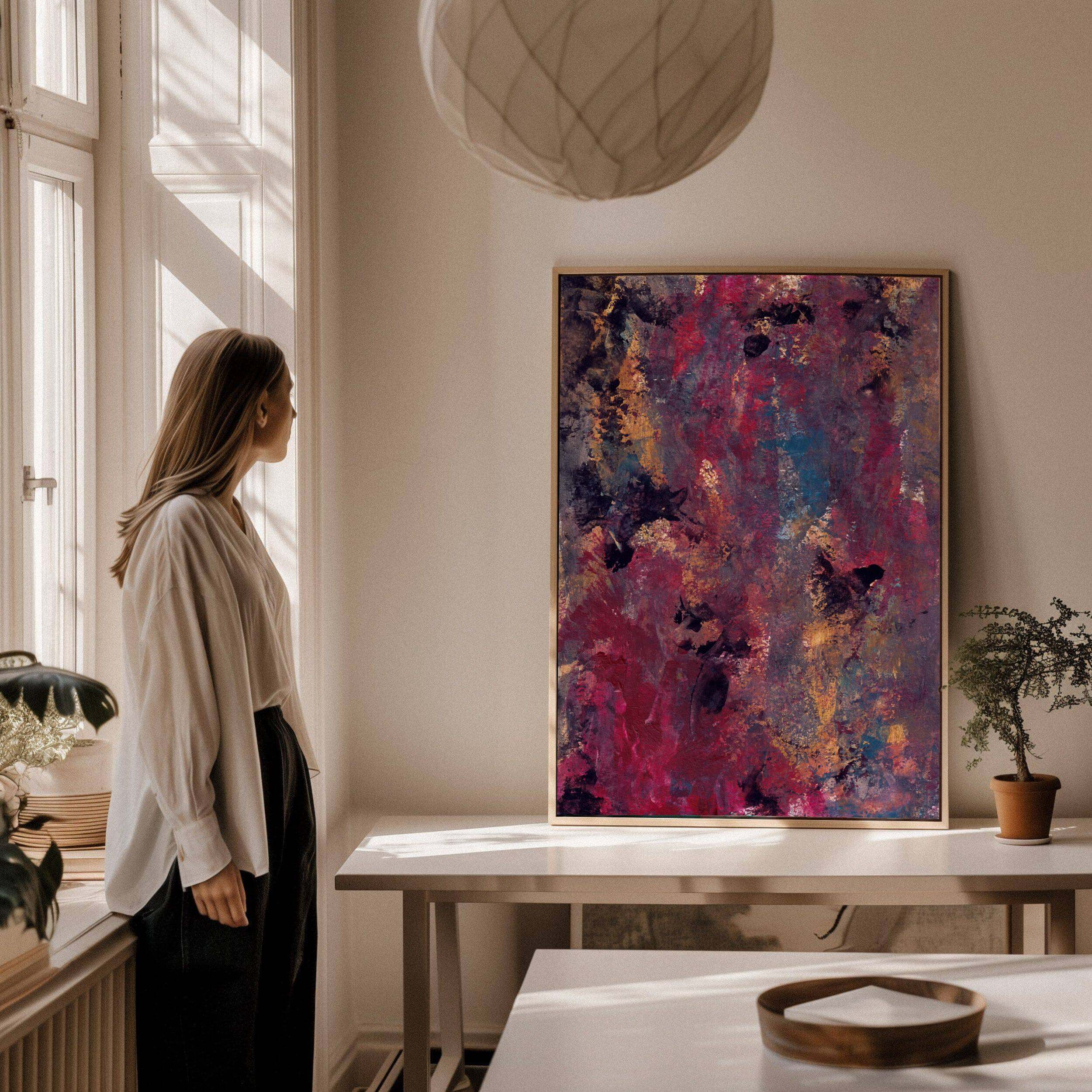
Why this distinction matters
A lot of people use the word “art” to describe wildly different things.
An original painting. A limited edition print. A poster. A mass-produced canvas from a homeware shop. A framed quote in a hallway. A beige abstract thing that looks like someone sneezed softly onto textured paper and called it Stillness No. 4.
Technically, all of these might sit under the broad umbrella of “wall art.” But they are not doing the same job.
Decorative wall art is usually about surface completion. It makes a room look more finished. It adds colour, shape, softness, pattern, or a visual pause. It can be useful, especially in temporary spaces, rented homes, spare rooms, or areas where you want something pleasant without making a major investment.
Collector-grade canvas art asks for a different kind of attention.
It is not there because the wall was empty and everyone panicked. It is there because the work has enough presence to become part of the emotional structure of the room. It brings authorship. It brings atmosphere. It brings a relationship between the artist, the collector, the space, and the person living with it.
That sounds grand, but it is actually very practical.
You know the difference when you feel it. Decorative wall art often makes you think, “That looks nice there.”
Collector-grade canvas art makes the room feel altered. Quieter. Stronger. Warmer. More grounded. More alive. Sometimes more confronting. Sometimes more intimate. Sometimes, just more honest.
That is why the distinction matters, especially if you are buying art for a home you care about, not just styling a room for a photograph.
If you are at the stage of choosing canvas art for your own space, the practical buying guide here may help too: How to Buy Canvas Art.
Decorative wall art usually starts with the room
Decorative wall art tends to begin with the question: what will look good here?
That is not a terrible question. It is just a limited one.
The room has a colour palette. The sofa has a tone. The wall has a gap. The shelves need balance. The whole thing needs something to stop it looking like nobody lives there except a very tidy ghost.
So people look for art that fits.
Something with the right colours. The right size. The right mood. The right level of harmlessness. Not too loud. Not too strange. Not too personal. Not too expensive. Something that says, “I have taste,” without making anyone ask follow-up questions.
Decorative wall art is often designed for exactly that.
It is made to be easy to place. Easy to buy. Easy to match. Easy to replace. It follows interiors trends because that is how the market works. Soft neutrals. Botanical prints. line drawings. Muted landscapes. Minimal shapes. Abstracts that feel vaguely sophisticated but not specific enough to disturb anyone.
Again, this is not a crime.
But it is different from collecting.
Collector-grade canvas art does not begin with the room in the same way. It begins with the work. The artist’s language. The marks. The colour decisions. The scale. The tension. The emotional weather. The reason the piece exists in the first place.
The room still matters, obviously. Nobody is suggesting you hang something that visually punches the dining table in the face and call it integrity. But the artwork is not there to obey the room. It is there to meet it.
That is the first difference.
Decorative wall art fits in. Collector-grade canvas art enters into a relationship.
Collector-grade canvas art carries authorship
Authorship is one of the easiest ways to understand the difference.
Decorative wall art often feels anonymous. Even when there is a name attached, the work may still feel product-led rather than practice-led. It has been created to satisfy a market, a trend, a colour story, or a category.
Collector-grade canvas art feels like it came from somewhere.
It belongs to an artist’s wider body of work. It carries decisions that were made through practice, not simply through trend analysis. The colours are not there because sage green is having a moment. The composition is not there because a buying team decided arches were still safe. The surface, rhythm, tension, softness, movement, and scale all come from a visual language that has been developed over time.
This is especially important with abstract canvas art.
Abstract work can be deeply powerful, but it can also be very easily flattened into décor if there is no authorship behind it. A decorative abstract might look pleasant for a season. A collector-grade abstract has more internal life. It holds contradiction. It has movement. It has quiet decisions. It does not reveal itself all at once.
That is what you are collecting.
Not just the image.
The language behind the image.
This is why the context around the artist matters. If you are looking at canvas art seriously, spend time with the artist’s wider work, their writing, their selected pieces, and the way the work sits together. You can see examples of that broader practice here: Selected Works.
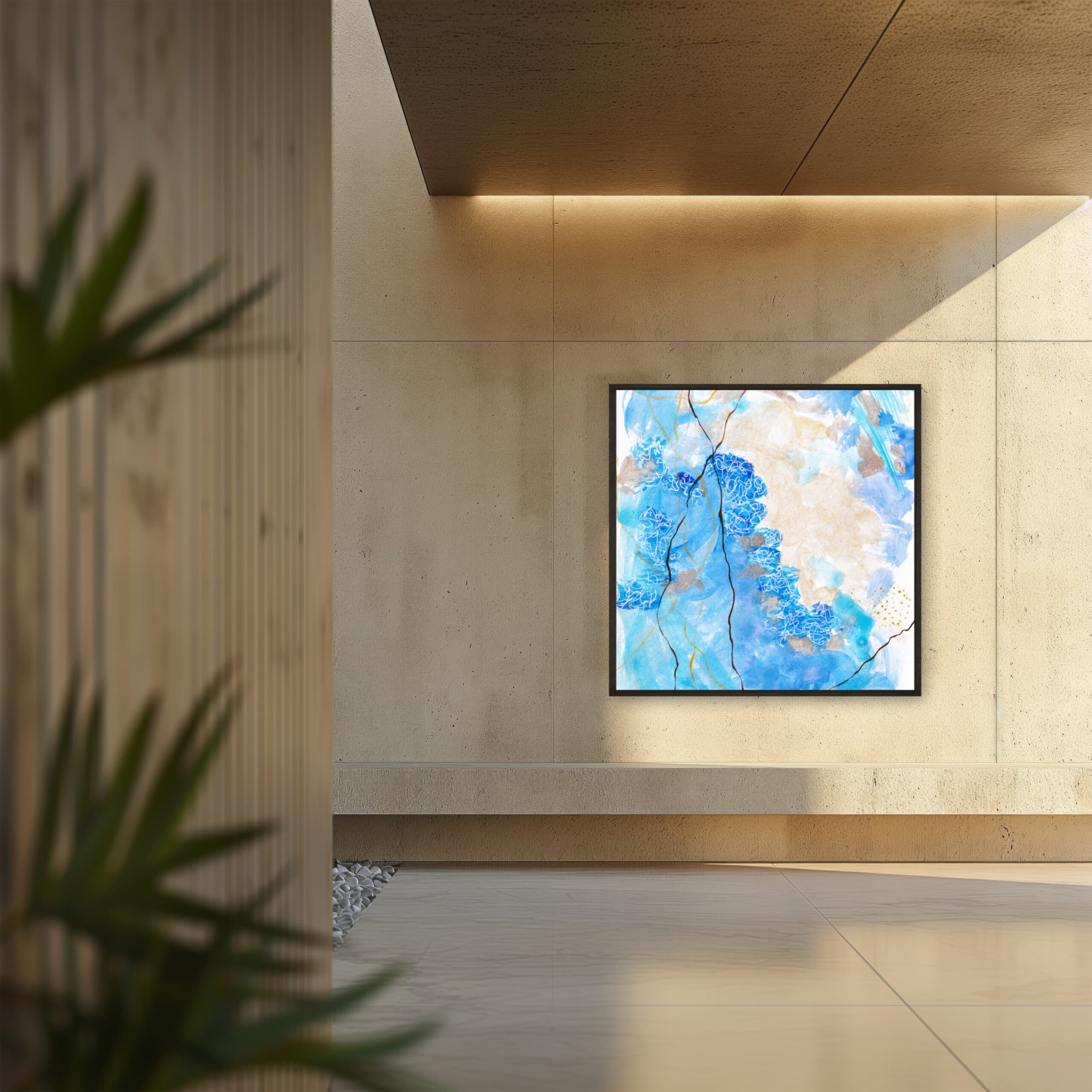

Decorative wall art is often about matching. Collector-grade art is about resonance.
Matching is easy to understand.
The rug has rust tones, so the print has rust tones. The room is calm and neutral, so the art is calm and neutral. The cushions have a bit of blue, so the wall art has a bit of blue. Everyone nods. Nobody gets hurt.
Matching can work, but it is not the same as resonance.
Resonance is deeper.
A work resonates when it feels right in the room and right to the person living with it. It might echo the palette, but it does not need to match perfectly. It might bring contrast. It might add weight. It might create stillness. It might introduce movement into a room that feels too controlled. It might soften a space that feels too sharp. It might make a polished room feel more human.
Decorative wall art often asks, “Does this go?”
Collector-grade canvas art asks, “Does this matter here?”
That question changes the purchase.
Because a piece can match beautifully and still feel dead. We have all seen those interiors where everything coordinates perfectly and somehow the room has the emotional temperature of a hotel corridor. Nothing is wrong, exactly. It just does not feel lived in. It does not feel held. It does not feel like anyone has risked a genuine preference.
Collector-grade canvas art brings that risk back in.
Not chaos. Not clashing for the sake of it. Not “statement piece” nonsense where the statement appears to be “I own a large thing.”
Actual presence. The kind that makes a room feel chosen rather than assembled.
Material quality is not a detail. It is part of the work.
With canvas art, production quality matters enormously.
A weak print can drain the life out of a strong image. The colour can flatten. The depth can disappear. The blacks can go dull. The surface can feel cheap. The canvas can sag or warp. The whole thing can look acceptable online and then arrive with the emotional authority of a damp menu.
This matters even more with large canvas art.
At small sizes, poor production can sometimes hide. At larger scale, it becomes very obvious. The surface has to hold. The colour has to carry. The structure has to feel substantial. The work has to feel like an object, not just an image stretched over a frame because someone found a wholesale supplier and a dream.
Collector-grade canvas art should be produced with respect for the artwork.
That means careful reproduction, strong materials, proper scale, considered finishing, and a physical presence that supports the image. It should not feel flimsy. It should not feel disposable. It should not look like it is apologising for itself.
This is not snobbery.
It is basic respect for the work.
If an artwork depends on subtle colour shifts, texture, movement, softness, depth, or layered composition, the production has to protect those qualities. Otherwise, you are not really buying the work. You are buying a flattened echo of it.
For a deeper look at what to consider before buying canvas art, including quality, scale, and placement, use this guide: How to Buy Canvas Art.
Collector-grade canvas art has visual depth
One of the problems with a lot of decorative wall art is that it gives everything away immediately.
You see it once and you understand it. Neutral shape. Soft colour. Pleasant composition. Done. It has done its job. It has made the wall less empty and the room more coordinated.
Collector-grade canvas art tends to have more visual depth.
It should work from across the room, but it should also reward closer looking. There should be something to return to. A colour relationship you did not notice at first. A movement across the surface. A strange tension between calm and energy. A softness that changes with light. A detail that catches you on a Tuesday morning when you are half-awake and trying to remember why you walked into the room.
That repeated discovery matters.
Art in a home is not seen once. It is lived with.
You pass it when you are tired. You see it in morning light. You catch it at night. You notice it when guests are there, when the house is quiet, when your mood has shifted, when the season changes, when the furniture moves, when life has done whatever life is doing this week.
Decorative art can become invisible very quickly.
Collector-grade canvas art has enough depth to keep meeting you.
That does not mean it has to be visually busy. Some of the strongest work is quiet. But quiet is not the same as empty. A quiet artwork can still have depth, tension, and emotional intelligence. It can still hold the room without shouting across it like an insecure chandelier.
Emotional presence is the real difference
The biggest difference is not price. It is not size. It is not whether the work is abstract, figurative, framed, unframed, original, printed, limited, or large enough to make delivery mildly dramatic.
The biggest difference is emotional presence. Decorative wall art often creates a look. Collector-grade canvas art creates a feeling.
That feeling does not have to be sentimental. It does not have to be moody. It does not have to come with a tragic artist statement and a lot of fog. Emotional presence simply means the work affects the atmosphere. It changes how the space feels when you enter it.
A collector-grade canvas might make a room feel calmer. Or more expansive. Or more grounded. Or more intimate. Or more awake. It might bring softness into a hard-edged space. It might bring depth into a neutral room. It might bring a sense of stillness into a home that otherwise feels busy and overfilled.
This is why art should not be treated as the last accessory.
In a considered interior, art is not the final sprinkle. It is often the thing that gives the room its emotional centre. Without it, the room may look finished but feel thin. With the right work, the whole space can settle.
That is the kind of difference collector-grade canvas art can make.
Comparison table: collector-grade canvas art vs decorative wall art
| Feature | Decorative wall art | Collector-grade canvas art |
|---|---|---|
|
Main purpose |
To fill, finish, or decorate a space |
To bring presence, meaning, and atmosphere |
|
Starting point |
The room, trend, palette, or styling need |
The artist’s practice and the work itself |
|
Authorship |
Often anonymous or product-led |
Connected to a real artist and wider body of work |
|
Emotional effect |
Usually pleasant or mood-based |
Deeper, more personal, and longer-lasting |
|
Material quality |
Varies widely and may be basic |
Professional production and considered finish |
|
Scale |
Often standardised for convenience |
Chosen for presence, proportion, and impact |
|
Relationship to trends |
Often trend-led |
Can outlast interiors trends |
|
Viewer experience |
Quick visual effect |
Repeated discovery over time |
|
Role in the room |
Supports the décor |
Shapes the atmosphere |
|
Best for |
Quick styling or temporary spaces |
Considered homes, collectors, and emotionally resonant interiors |
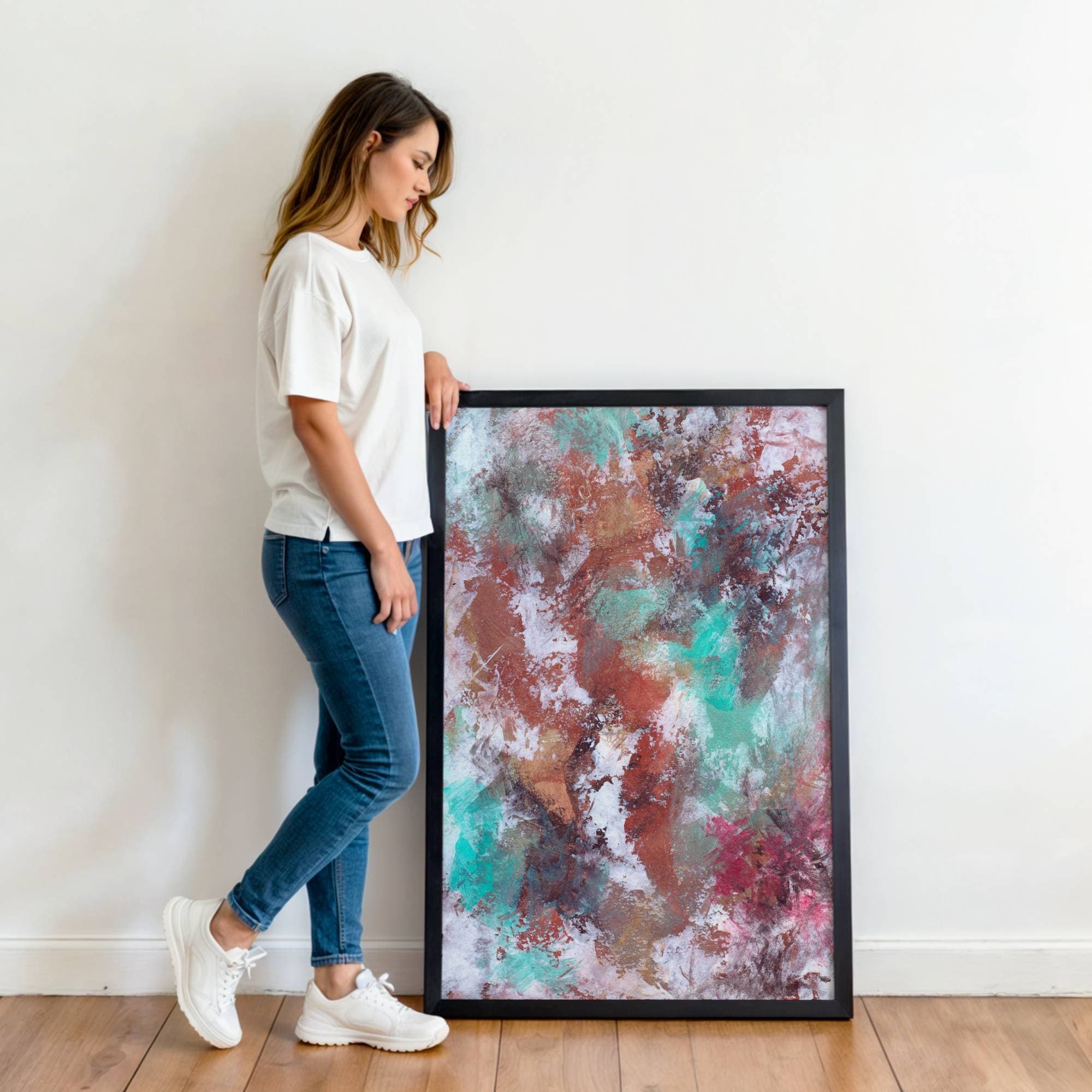
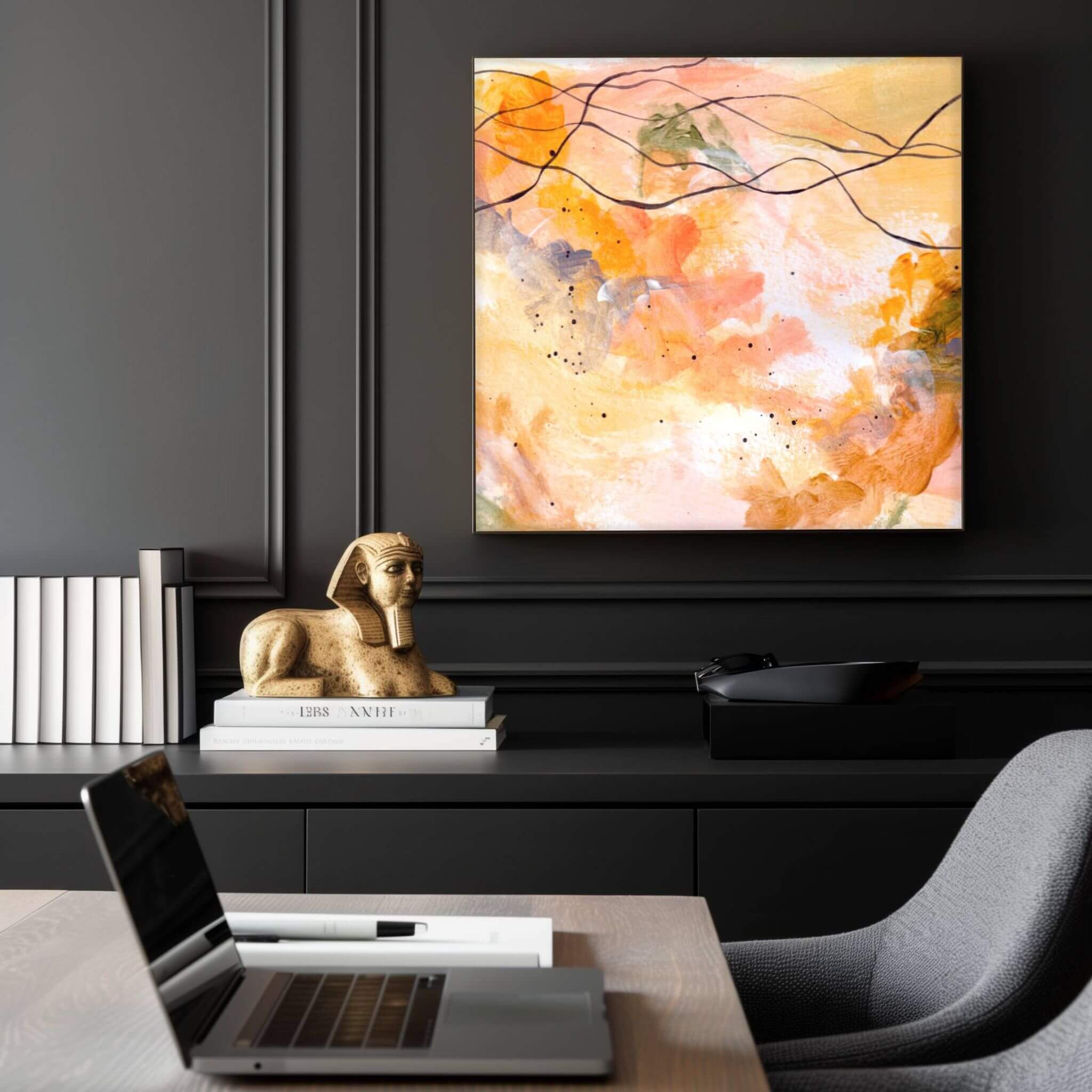
Scale changes everything
Scale is one of the places where the difference becomes obvious.
Decorative wall art is often sized for convenience. Standard frames. Standard prints. Standard gaps above standard furniture. Easy to buy, easy to ship, easy to swap out when the room changes.
Collector-grade canvas art treats scale as part of the experience.
A large canvas print can create a centre of gravity in a room. It can hold a wall without needing a cluster of smaller pieces around it. It can make a modern interior feel more grounded, especially where there are high ceilings, open-plan spaces, large neutral walls, or minimal furniture.
But scale only works when the artwork has enough depth to support it.
A weak image made large does not become powerful. It becomes loudly weak. Like someone putting a microphone in front of a beige thought.
Collector-grade canvas art needs scale, composition, colour, and surface to work together. The piece should feel intentional at its size. It should not look enlarged purely to create impact. It should have enough internal structure to hold attention from a distance and enough detail or atmosphere to reward looking up close.
This is why large canvas prints can work so beautifully in modern interiors when they are chosen properly. They do not just cover wall space. They anchor the room.
If you want more on this specifically, you can link this article to your large canvas print piece once published, because the two naturally support each other.
Decorative wall art follows trends. Collector-grade canvas art survives redecorating
Decorative wall art often belongs to a moment.
That moment might be beautiful. It might work perfectly for a while. But because it is usually trend-led, it can date quickly. The colour palette shifts. The room changes. The print that once felt current starts to feel like evidence.
Collector-grade canvas art has a better chance of surviving those changes because it is not dependent on one interiors trend.
It can move with you.
A strong piece can live in different rooms, against different wall colours, beside different furniture, through different versions of your life. It may change in how you experience it, but it does not become irrelevant just because the internet has decided warm minimalism is over and we are all meant to be doing something else now.
That is one of the quiet signs of stronger art.
You can redecorate around it.
You do not need to replace it because the cushions have changed.
Collector-grade canvas art becomes part of the home’s identity, not just part of one styling phase. That does not mean it must be expensive for the sake of being expensive. It means the work has enough substance to keep belonging.
That is a different kind of value.
Collector-grade canvas art is not always louder
People often assume serious art has to dominate a room. It does not.
Collector-grade canvas art can be quiet. It can be soft. It can be restrained. It can sit in a room with enormous calm and still have more presence than a huge decorative piece shouting in three colours and a metallic finish.
Presence is not volume.
A quiet artwork can hold a room because it has depth, proportion, and emotional intelligence. It does not need to scream. It does not need to announce itself as “a statement.” In fact, the phrase “statement piece” has done a lot of damage and should probably be made to sit quietly and think about what it has done.
The best collector-grade canvas art often has a slower authority.
You may not understand it all at once. You may not even notice everything it is doing immediately. But the room feels different with it there. More complete. More balanced. More alive. More yours.
That is the thing.
Decorative wall art often wants to be liked quickly. Collector-grade canvas art can afford to be known slowly.
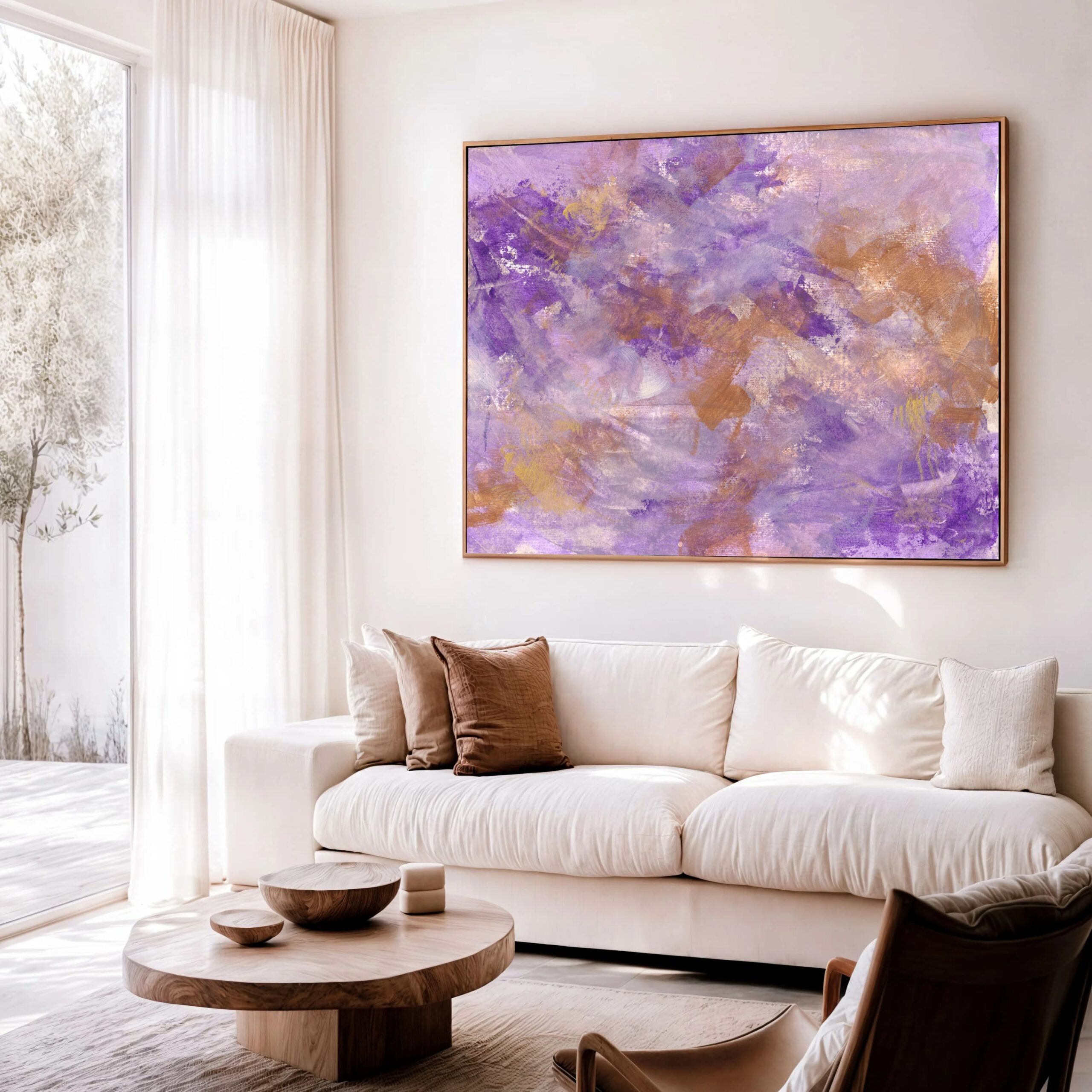
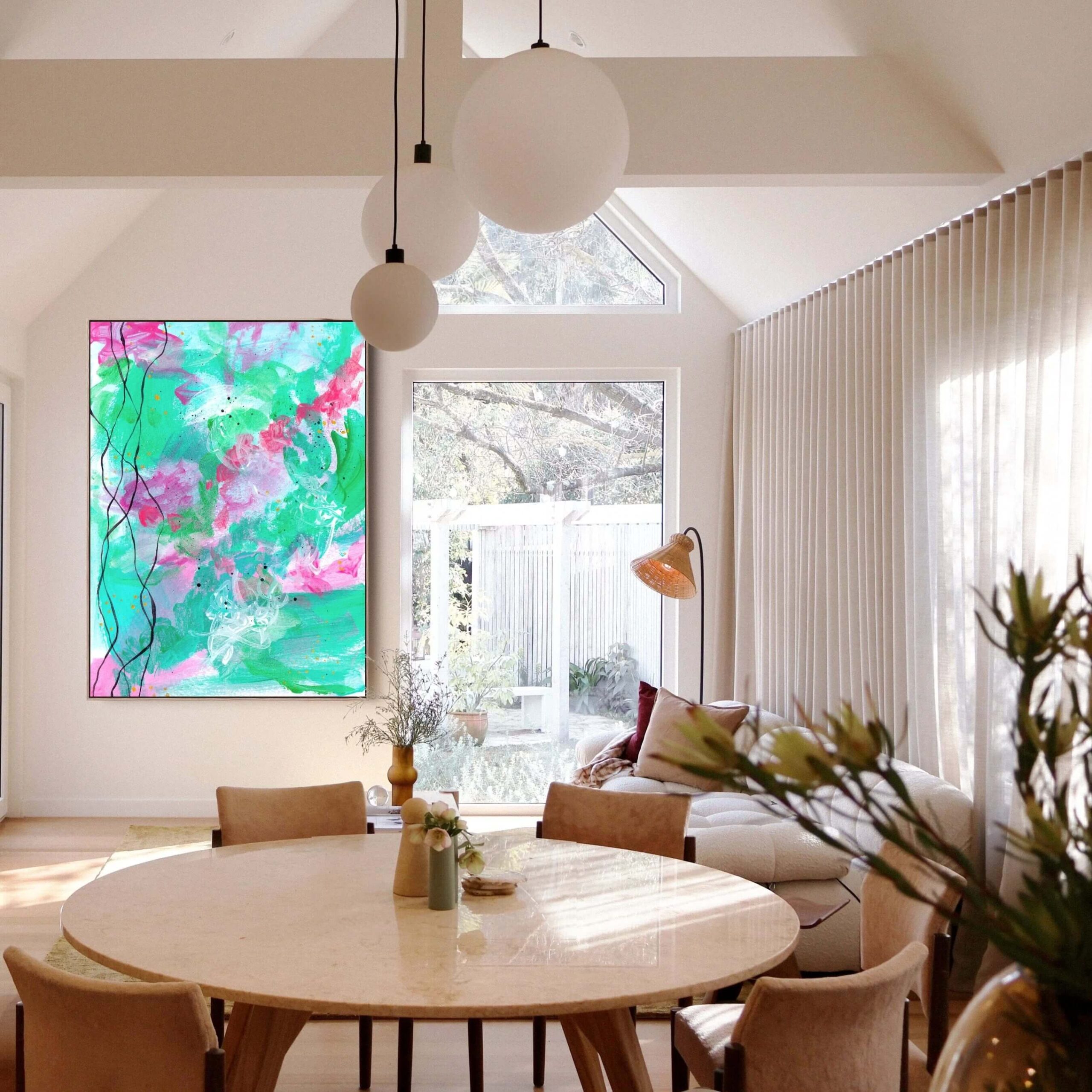
When decorative wall art is enough
There are times when decorative wall art is absolutely enough.
A temporary rental. A spare room. A hallway you do not want to overthink. A child’s bedroom that will change in two years. A quick refresh. A low-budget update. A space where you simply need something pleasant and affordable.
Fine. Sensible. No drama.
Not every wall needs a collector-grade artwork. Not every room needs emotional depth hanging over the sideboard like a very expensive truth bomb.
The problem starts when decorative wall art is expected to do the work of serious art.
If you want a room to feel deeply personal, grounded, considered, calm, luxurious, intimate, or emotionally complete, decorative wall art may not be enough. It can finish the surface, but it may not change the feeling.
Collector-grade canvas art is worth considering when the room matters to you beyond appearance.
When you want to live with the work.
When you want the piece to keep offering something back.
When you want the room to feel less styled and more inhabited.
That is when the difference becomes worth paying attention to.
How to recognise collector-grade canvas art
You do not need to become an art-world person to recognise stronger work.
Thank God.
You do not need to wear black, say “liminal” in public, or pretend to enjoy gallery wine. You just need to look properly and ask better questions.
Start here:
-
- Does the work feel like it came from a real artist’s practice?
- Does it hold your attention beyond the first glance?
- Does it have visual depth, even if it is quiet?
- Does the material quality support the image?
- Does the scale feel intentional?
- Does it change the atmosphere of the room?
- Would you still want to live with it if you redecorated?
- Are you choosing it because it resonates, or because the wall is annoying you?
- Does it feel like presence rather than filler?
- Does it belong to a wider body of work?
That last question matters because collector-grade art rarely feels isolated. It usually connects to a wider practice, even when each piece stands on its own.
If you want to explore available work in that context, start with Selected Works or the private Collector’s Vault.


Why collector-grade canvas prints can still be serious art
Some people still assume that a canvas print is automatically less serious than an original.
That is too simplistic.
A poor canvas print is poor, obviously. A mass-produced decorative canvas with weak reproduction and no real authorship is not suddenly collector-grade because someone used the word “premium” in the product description. We are not falling for that nonsense.
But a collector-grade canvas print can absolutely be serious when it comes from an artist’s own body of work, is produced with high-quality materials, is presented at a considered scale, and carries the visual and emotional language of the practice.
The question is not simply “Is it a print?”
The better question is: does it have integrity?
Does the reproduction honour the work? Does the canvas quality hold the image properly? Does the scale make sense? Is the piece connected to the artist’s wider practice? Does it feel emotionally and visually alive in person? Does it have long-term presence?
If yes, then the work can belong in a serious interior and a serious collection. The real divide is not original versus print. It is disposable versus considered. That distinction is far more useful.
For more on buying serious canvas work without getting lost in art-world fog, read How to Buy Canvas Art.
Why collector-grade canvas art suits considered interiors
Considered interiors are not necessarily huge, expensive, or professionally designed.
A considered interior is simply a space where choices have been made with care. The room has a rhythm. The materials speak to each other. The lighting matters. The furniture has breathing room. The objects feel chosen rather than accumulated in a panic.
Collector-grade canvas art belongs in that kind of room because it can meet the level of care already present.
It can bring warmth to minimal spaces. Depth to neutral rooms. Movement to still interiors. Calm to busy homes. A human mark to polished architecture. Emotional texture to rooms that might otherwise feel too perfect.
This is especially true in modern interiors, where there may be fewer objects and more visual space. When a room is pared back, the art has nowhere to hide. It either carries the space or it does not.
Collector-grade canvas art can carry it.
That is why it works so well in homes where the aim is not simply to decorate, but to create a room that feels settled, intelligent, and quietly alive.
If your interest is specifically in collecting rather than general decorating, the Art Collecting page is the better next step.
The private catalogue model
One of the reasons collector-grade canvas art often feels different is that it is not always presented like ordinary online décor.
Decorative wall art is usually built for quick browsing. Scroll, click, choose size, add to basket, done. Convenient, yes. Deeply romantic, no.
Collector-grade work often benefits from a slower process.
A private catalogue allows the work to be seen in a more considered way. It gives the collector space to look, compare, return, and understand how the pieces relate to each other. It also protects the work from being treated like disposable content in an endless shopping grid.
That slower experience matters because buying collector-grade art is not the same as buying a lamp.
A lamp can be useful and lovely, obviously. Big fan of being able to see things. But art asks for a different kind of decision. You are choosing something that will live with you, affect the room, and become part of your daily visual world.
That deserves more than a rushed scroll.
If you want access to the private catalogue, you can request it here: Request the Private Catalogue.
Why quality matters more at large scale
| Question | Why it matters |
|---|---|
|
Does the work feel authored? |
Strong art carries the presence of a real practice, not just a product category |
|
Does it hold your attention beyond first glance? |
Collector-grade work should reward repeated looking |
|
Is the production quality strong? |
Poor materials can flatten even a strong image |
|
Does the scale feel intentional? |
Scale affects how the work holds the room |
|
Does it change the atmosphere? |
Art should deepen the space, not just fill it |
|
Does it relate to the room without obeying it? |
Strong art creates harmony without becoming decorative wallpaper |
|
Would you still want it after redecorating? |
Collector-grade art should outlast styling trends |
|
Does it feel emotionally resonant? |
Long-term art needs more than surface appeal |
|
Is it connected to a wider body of work? |
Context gives the piece depth and collecting value |
|
Are you choosing presence, not filler? |
This is the real distinction |
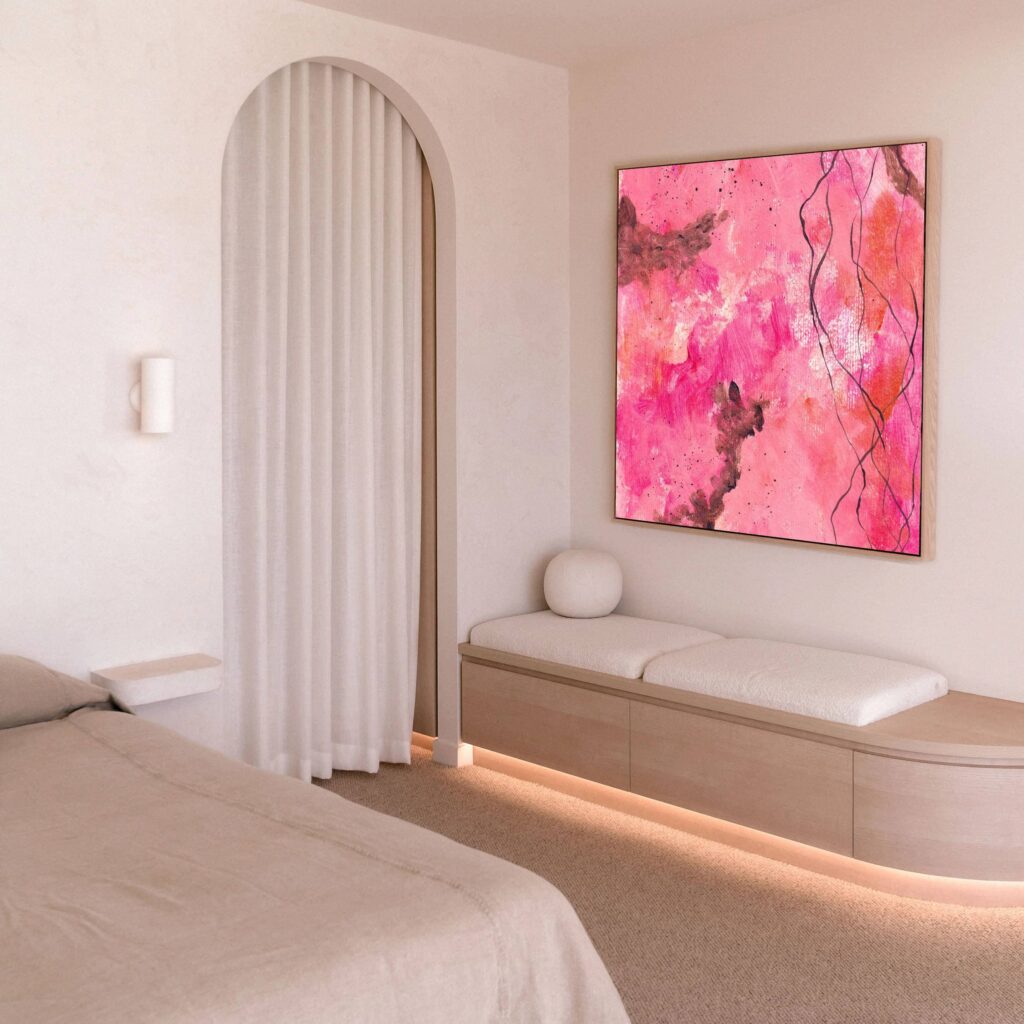

Final thoughts: the difference is presence
The difference between collector-grade canvas art and decorative wall art is not just price, size, or where it was bought.
It is presence.
Decorative wall art can make a room look finished. Collector-grade canvas art can make a room feel changed. It carries authorship, material quality, emotional depth, scale, and a relationship to the artist’s wider body of work. It is chosen not only because it fits, but because it means something.
That does not make decorative art wrong. It simply makes it different.
If you need a quick visual solution, decorative wall art may be enough. If you want a room to feel more grounded, personal, intelligent, and emotionally complete, collector-grade canvas art offers something deeper.
The best collector-grade canvas art does not just sit on the wall. It holds the room. And once you have felt that difference, it becomes very hard to unfeel it.
If you are considering collector-grade canvas art for your home, start with the main guide, then explore the available work in context.
Start here: Collector-Grade Canvas Art Guide
Then explore: Selected Works
For private access: Request the Private Catalogue
Key Takeaway
The difference between collector-grade canvas art and decorative wall art is presence. Decorative wall art fills a space. Collector-grade canvas art holds a space. It has stronger authorship, better production quality, deeper emotional resonance, and more long-term value in the way it lives with you.
Frequently Asked Questions
Collector-grade canvas art is canvas-based artwork or canvas print created with artistic intention, strong production quality, and long-term presence. It is connected to an artist’s wider practice and chosen for more than decoration. It should feel like a piece you can live with for years, not something bought because a wall looked empty.
Decorative wall art is usually chosen to match a room, fill a space, or complete a look. Collector-grade canvas art is chosen because it has authorship, quality, emotional resonance, and presence. Decorative art supports the room. Collector-grade art changes the way the room feels.
No. Decorative wall art can be perfectly useful. It works well for temporary spaces, rentals, spare rooms, quick updates, or lower-investment areas. It only becomes a problem when you expect it to bring the depth, presence, and long-term meaning of serious artwork.
Yes. A canvas print can be collector-grade when it comes from an artist’s own work, is produced with high-quality materials, has strong colour reproduction, and belongs to a wider artistic practice. The question is not whether it is a print. The question is whether it has integrity.
No. Originals can be collector-grade, but so can high-quality canvas prints when they are created and produced with care. A serious print can still carry the artist’s visual language, emotional depth, and presence, especially when the production quality is strong.
Material quality affects how the artwork looks, feels, and lasts. Weak canvas, poor colour reproduction, thin surfaces, and cheap finishing can make even a strong image feel flat. Collector-grade canvas art should feel substantial and visually alive.
Usually, yes, because the price reflects more than an image. It reflects the artist’s practice, the production quality, the scale, the materials, and the long-term presence of the work. You are not just buying something to cover a wall. You are buying something to live with.
Ask whether the work still holds your attention after the first glance. Does it feel emotionally resonant? Is it produced well? Does it connect to a real artistic practice? Would you still want it if the room changed? If the answer is yes, it may be worth collecting.
It should relate to the room, but it does not need to match perfectly. Art that matches too neatly can become decorative and flat. Strong collector-grade art often brings contrast, depth, or emotional tension, which is what makes the room feel more alive.
You can begin with the Collector-Grade Canvas Art Guide, explore Selected Works, or request access to the private catalogue here: Request the Private Catalogue.