fbpx

Large Abstract Art for Offices: What Buyers Should Know Before Purchasing
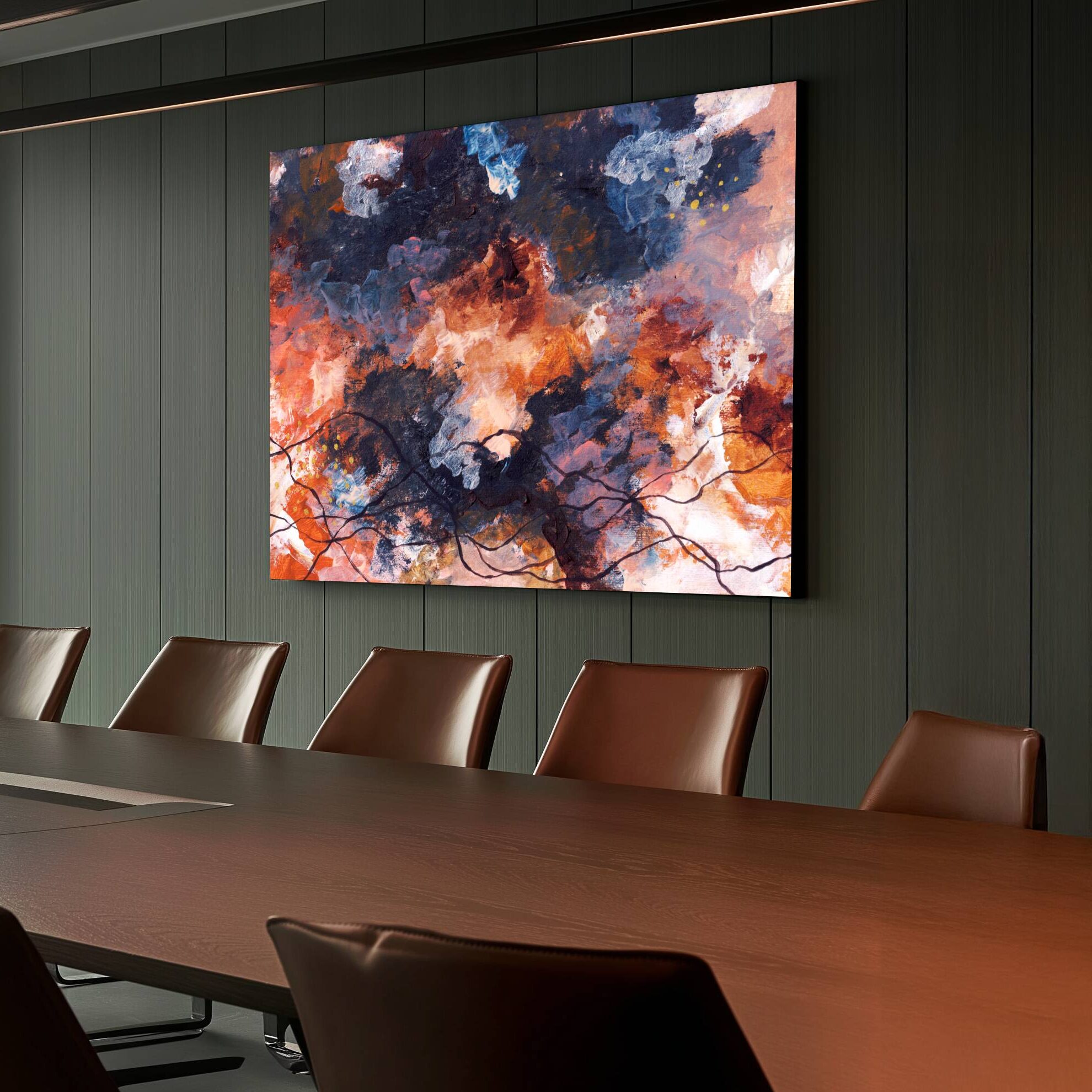
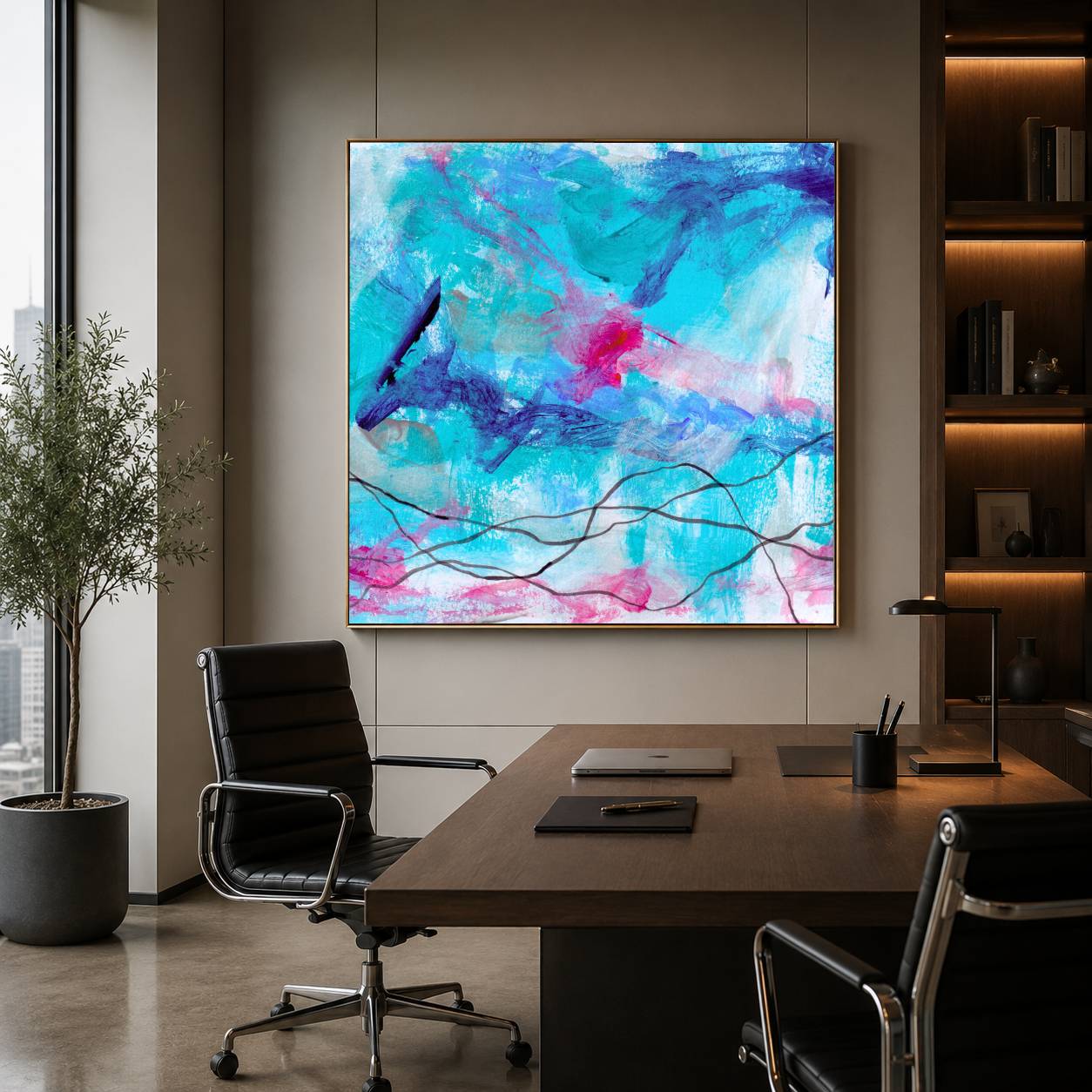
Most office art is chosen at the very end of a design project, often when budgets are already tight and deadlines are already close. A designer or office manager is asked to “find something large for that wall,” and within a few days a print is ordered online, installed quickly, and forgotten. Technically the wall is filled. Practically, nothing meaningful has changed in how the space feels.
 
Large abstract art works differently when it is selected intentionally. Instead of acting as decoration, it becomes part of the spatial architecture of the office. It influences how people experience arrival areas, how long clients feel comfortable staying in waiting spaces, how meeting rooms feel during long discussions, and even how employees perceive the tone of their working environment. Because of that, purchasing large-scale abstract art for offices requires a different mindset from buying decorative prints for domestic interiors.
 
This guide explains what serious buyers, designers, and workplace decision-makers should evaluate before purchasing large abstract artworks for professional environments.

Offices Experience Art at a Different Scale Than Homes

Residential interiors train people to think in relatively small proportions. A living-room painting that feels substantial at home may look insignificant in an office lobby with a five-metre wall height. Many organisations underestimate how dramatically architectural scale changes visual balance.
 
When artwork is too small, walls appear unfinished regardless of how expensive the interior fit-out is. When artwork is correctly scaled, the same space suddenly feels complete, structured, and visually intentional. The difference is not subtle. It changes how the entire environment is perceived.
 
This is why experienced designers often choose one strong large-scale piece rather than multiple small decorative elements. A single work at the right scale usually carries more visual authority than a scattered arrangement of smaller prints.

Abstract Art Works Especially Well in Professional Environments

 
Representational imagery can create unintended narrative tension in workplaces. Landscapes, portraits, or symbolic images may resonate with some viewers while distracting others. Abstract work tends to operate differently. It shapes atmosphere rather than telling a specific story, allowing people to engage with the space without being pulled into a fixed interpretation.
 
Colour relationships, movement, texture, and compositional rhythm influence emotional tone subtly but consistently. Calm compositions can soften highly technical environments. Dynamic pieces can energise collaborative zones. Balanced works can stabilise visually busy architectural interiors.
 
A deeper discussion of how artwork influences workspace experience can be explored here: https://vikithorbjorn.art/art-for-mindful-office-spaces/

Size Should Be Determined by the Wall, Not by What Is Convenient to Buy

A common purchasing error is selecting artwork based on what is currently available rather than what the wall actually requires. Buyers often discover a piece they like and then attempt to make the space fit the artwork instead of choosing work that is proportionate to the architecture.
 
As a rough orientation:
    • Reception areas often require works exceeding 140-180 cm in width
    • Executive offices benefit from pieces scaled relative to desk width or primary wall dimensions
    • Long corridors typically require coordinated large works spaced rhythmically, rather than smaller decorative frames
Visual mockups, scaled previews, or simple taped wall outlines can help decision-makers understand how the final installation will feel before committing to purchase.

Production Quality Matters More in Offices Than Many Buyers Expect

Office artworks are exposed to consistent lighting, cleaning routines, and long-term public visibility. Materials that look acceptable in a residential setting may deteriorate quickly in commercial environments. Buyers should confirm:
    • archival-grade production methods
    • surface protection suitable for professional interiors
    • mounting systems appropriate for large-format installations
    • durability under consistent lighting exposure
Canvas-based large-scale works are frequently selected because they minimise reflective glare and maintain visual clarity under varied lighting conditions, particularly in meeting rooms and reception areas.

Colour Matching to Branding Is Usually Overrated
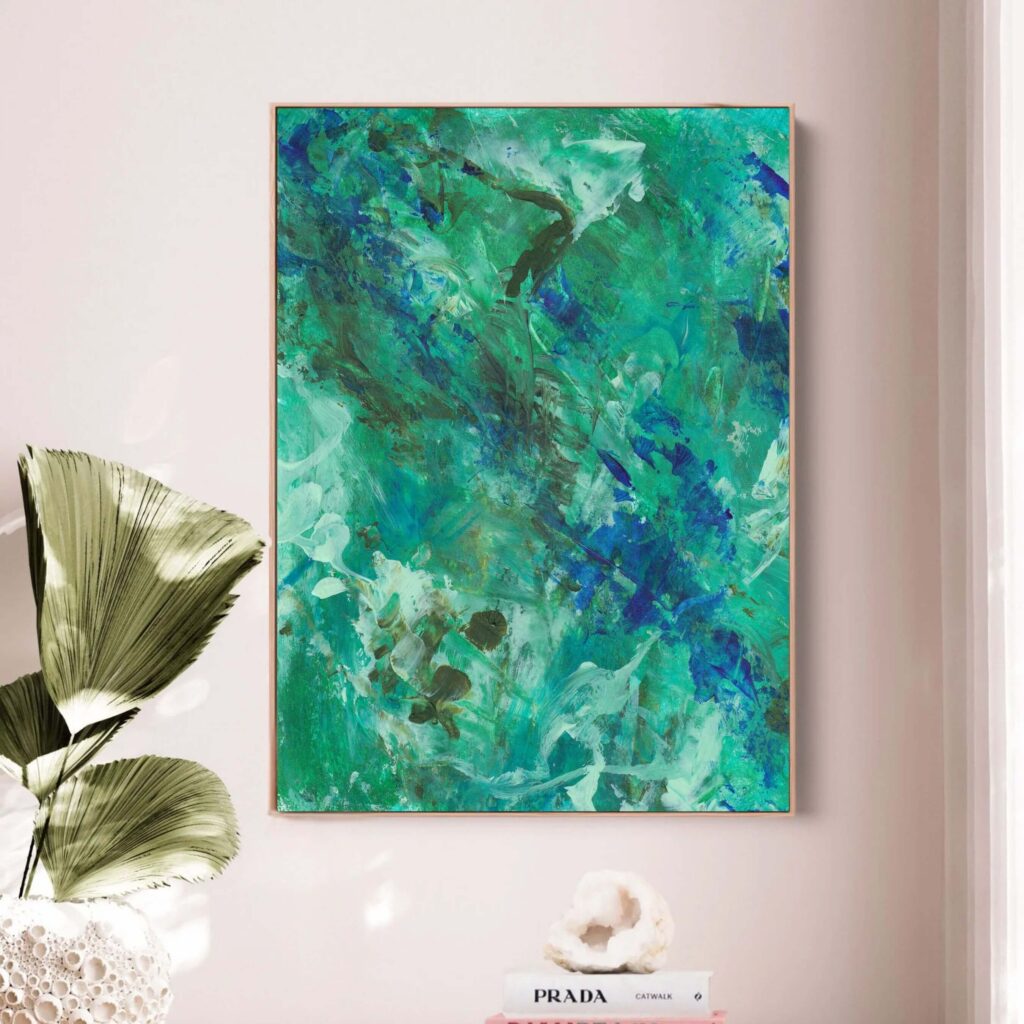
Many organisations initially assume that artwork should match corporate colours exactly. In practice, overly literal colour matching often makes the artwork feel like branded décor rather than an integrated design element. Offices evolve, branding shifts, and interiors are redesigned. Artwork chosen purely for colour alignment often becomes outdated quickly.
 
A more effective approach is to select work that reflects the organisation’s broader identity: calm precision, innovation, grounded professionalism, or creative energy. This approach allows the artwork to remain relevant even as interior details change over time.
abstract canvas painting with layered texture

Viewing Distance Changes How Large Art Should Be Selected

Large abstract works are rarely viewed from only one distance. Reception pieces are often seen first from across the room and then from close proximity. Strong large-scale works maintain visual coherence at both distances. From afar, they establish overall compositional presence. Up close, they reveal layering, texture, and visual depth that sustains long-term interest.
 
This dual-distance experience is particularly important in workplaces where employees encounter the same artwork daily. Pieces that only function visually from one distance tend to lose impact over time.

Large Office Artwork Is an Infrastructure Decision, Not a Decorative Purchase

In many commercial interiors, artwork functions as a structural visual anchor. It stabilises open spaces, creates focal points, and guides spatial flow. Because of this, the cost of large artwork should be evaluated within the broader interior investment rather than compared directly to decorative retail prints.
 
Organisations sourcing through private studio catalogues or artist-direct channels often gain access to larger formats, controlled availability, and scale-specific recommendations that standard décor retailers cannot provide.
 
If you want to explore large collector-grade abstract works designed for long-term placement, the current private catalogue can be viewed here: https://vikithorbjorn.art/collectors-vault

Installation Planning Is Part of the Artwork Decision

Large artworks do not exist independently from their installation context. Lighting direction, wall materials, ceiling height, and surrounding furniture influence how the piece is perceived. In many cases, planning installation at the same time as artwork selection produces far stronger results than treating installation as a final logistical step.
 
Professional installation is often recommended for oversized works to ensure alignment, structural safety, and long-term stability. Once installed correctly, large abstract works often remain in place for many years, quietly shaping the identity of the space.

Long-Term Relevance Is the Most Overlooked Factor

Some offices redesign interiors every few years. Many do not. Artwork selected purely for short-term trends often ages quickly, while works chosen for compositional strength and emotional neutrality tend to remain visually relevant across changing design cycles.
 
Large abstract works with strong structural composition, balanced colour relationships, and architectural presence usually integrate successfully into evolving interior environments. This is one reason why many corporate buyers increasingly favour abstract work over trend-driven decorative imagery.

What Most Office Buyers Realise Too Late
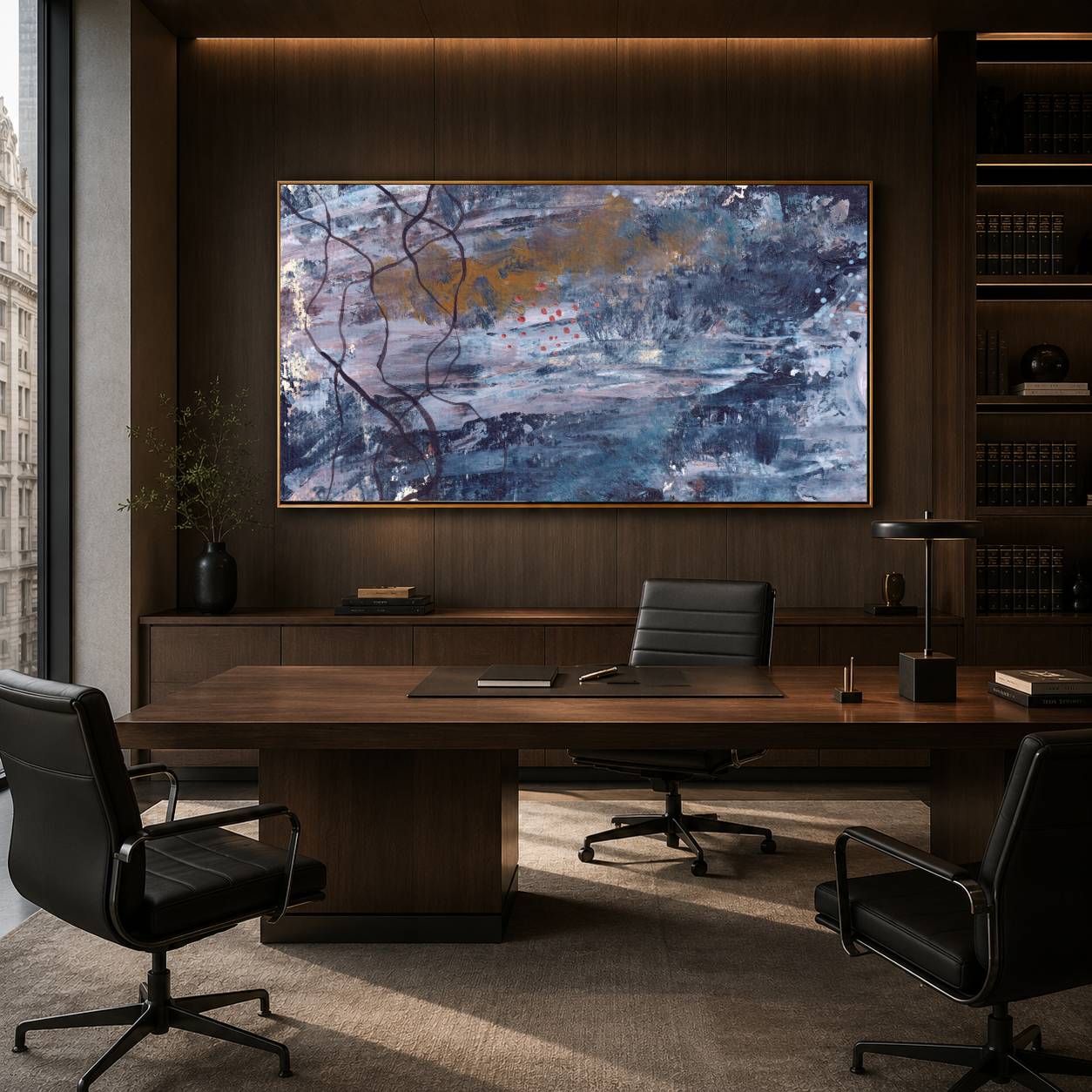
Almost every office that buys artwork for the first time makes the same discovery after installation: the piece they thought was “large” suddenly looks smaller once it is on the wall.
 
Architectural scale changes perception dramatically. A 100 cm canvas that feels substantial in a home can disappear entirely on a three-metre reception wall. That is why experienced designers start with the wall, not the artwork. They measure the surface first, determine what visual presence is needed, and only then begin looking at available works.
 
The second discovery tends to be about atmosphere. Offices often assume artwork is decorative until the right piece is installed. Then something shifts. Waiting areas feel calmer, meeting rooms feel more grounded, and the environment suddenly looks more intentional. Nothing structural has changed, yet the space feels finished in a way it did not before.
 
This is the difference between artwork chosen to fill space and artwork chosen to shape it.

The Quiet Difference Between Decorative Prints and Collector-Grade Works

Decorative prints are designed to match interiors quickly. They are made to work almost anywhere and to be replaced easily when the design changes. There is nothing wrong with that approach, but it serves a different purpose from collector-grade studio work.
 
Collector-grade works are usually created as part of an ongoing artistic practice and released in controlled catalogue availability rather than open décor distribution. For offices, this means the work does not start appearing in multiple unrelated interiors over time. It also means scale options are often more flexible, allowing the artwork to be matched properly to the architectural context instead of forcing the space to adapt to retail sizing.
 
Organisations that want their interiors to feel distinctive usually begin sourcing through private catalogues or directly from artists rather than retail décor platforms.
 
If you want to see examples of large-scale works created for long-term placement, you can browse the private studio catalogue here.

How to Know If a Piece Is Actually Right for the Wall

There is a simple test that designers use: step back to the farthest point from which the artwork will be seen. If the piece still holds visual presence at that distance, the scale is usually correct. If it begins to fade into the architecture, it is almost always too small.
 
Another useful check is proportion. When the artwork visually aligns with major architectural lines, the width of a desk, the centre of a seating arrangement, the rhythm of corridor spacing, the entire environment feels more structured. When proportions are off, the room can feel slightly unsettled, even if people cannot explain why.
 
Large abstract works are particularly effective because they maintain compositional clarity from a distance while revealing depth and layering when viewed up close. That dual experience is what allows them to remain visually engaging over time.

Commissioned vs Ready Catalogue Works

Offices often assume that commissioned artwork is the only way to obtain large-scale pieces, but in practice many organisations choose catalogue works for simplicity and installation speed. Catalogue works allow immediate selection, predictable production timelines, and easier coordination across multiple locations.
 
Commissioned works are typically selected when a space has very specific architectural requirements or when the organisation wants a site-specific piece designed around a flagship location. Both approaches are common. The best choice usually depends on timeline, scale requirements, and how central the artwork is to the overall interior design.

Why the Right Piece Rarely Needs Replacing

When artwork is chosen for colour trends, it tends to age quickly. When it is chosen for compositional strength and spatial fit, it often remains visually relevant for years, even through interior redesigns. Furniture changes, lighting updates, and branding adjustments happen regularly in office environments, yet well-selected large abstract works usually continue to anchor the space without feeling outdated.
 
That longevity is one of the reasons many organisations treat large artwork as part of the architectural investment rather than a decorative afterthought.

A Practical Starting Point for Buyers

If you are evaluating artwork for an office environment, begin with three simple steps:
    • Measure the wall before looking at artwork.
    • Determine the viewing distance and lighting conditions.
    • Choose work based on spatial presence rather than colour matching alone.
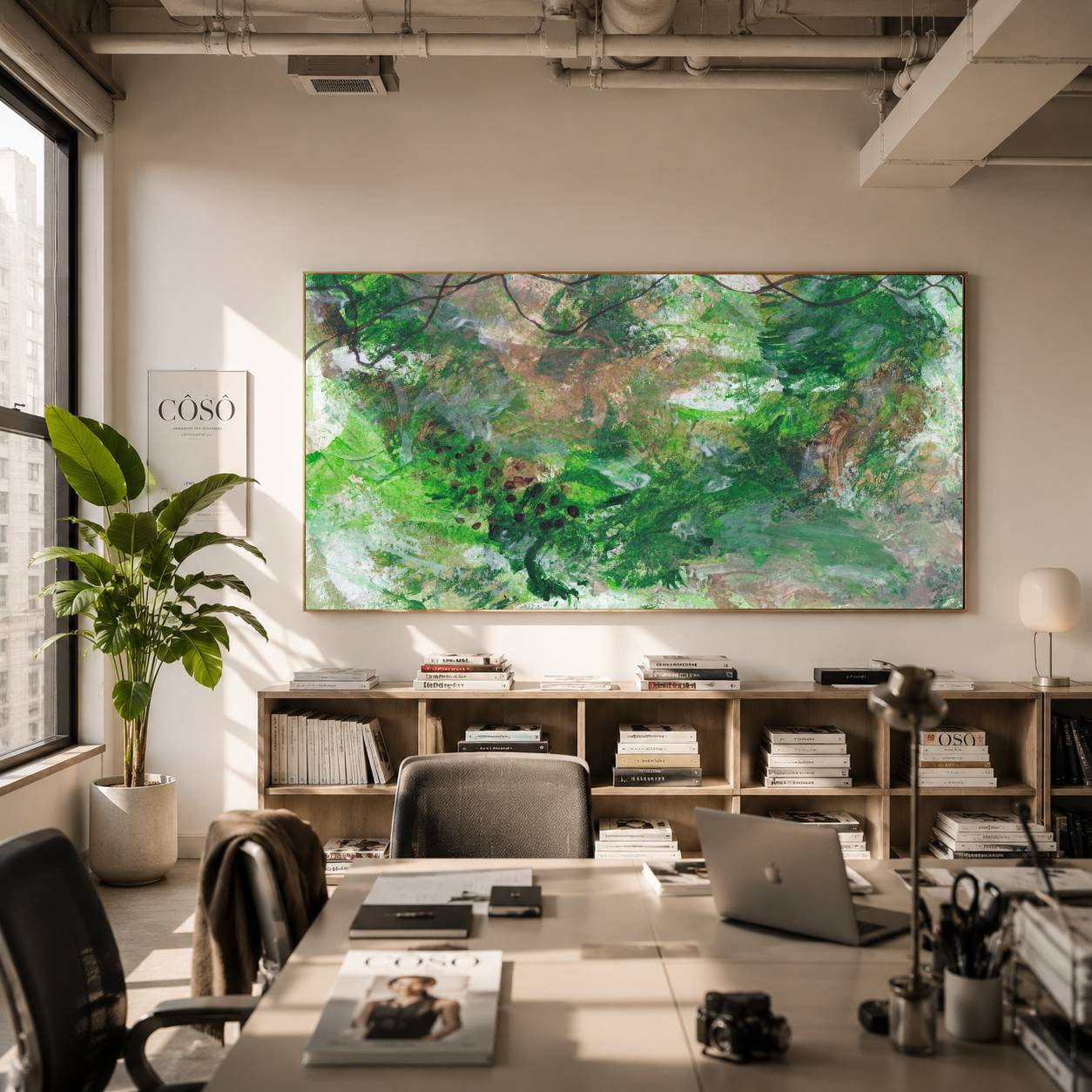
Once those three elements are clear, selecting the actual piece becomes far easier and far more successful.
 
For organisations sourcing large-scale abstract works designed specifically for professional interiors, the current available catalogue can be viewed here.
abstract canvas painting with layered texture

Questions Office Buyers Often Ask

How long does it take for art to fully settle into a space?

Larger than most buyers initially expect. In reception areas especially, pieces often need to exceed typical retail sizes to hold presence against architectural scale.

Is it better to install one large artwork or several smaller pieces?

In many offices, one well-scaled piece creates stronger visual clarity than multiple smaller decorative works.

Does office artwork need to match corporate colours?

Not necessarily. Artwork that reflects the atmosphere or tone of the organisation usually remains relevant longer than exact palette matches.

How long do companies typically keep large artworks installed?

Many installations remain in place for years, particularly when chosen for architectural fit rather than short-term design trends.

Is commissioning always necessary for large installations?

No. Many offices install large catalogue works that already exist in appropriate formats and scale options.

Does large abstract office art need special lighting?

Not always, but lighting can significantly improve how the work reads in the space. Even simple directional lighting or consistent wall illumination helps large pieces maintain depth and colour balance, especially in reception areas or boardrooms where first impressions matter.

Should offices rotate artwork regularly or keep the same piece long-term?

Most organisations keep large-scale works installed for long periods. When a piece is selected for architectural fit rather than short-term design trends, it usually continues to work well even as furniture, branding elements, or layouts evolve around it.

Where can buyers see examples suitable for office environments?

Available large-scale catalogue works can be explored here: https://vikithorbjorn.art/collectors-vault