
How Transforming Your Home With Art Changes the Way You Live
There is a difference between decorating a room and altering how a space feels when you enter it.
Most interiors are arranged for visual cohesion. Fewer are curated for emotional impact.
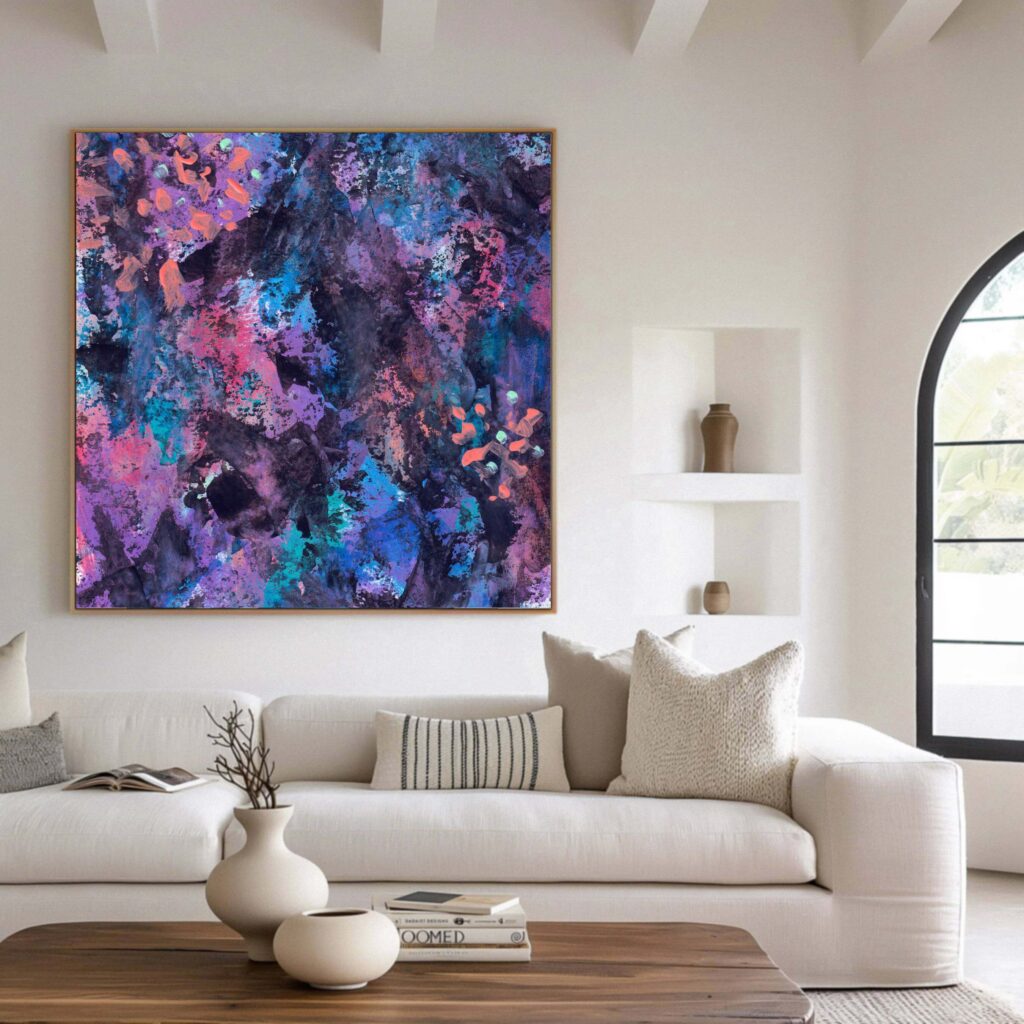
When abstract art is chosen deliberately, it does not merely fill a wall. It changes the psychological temperature of a space. It alters how light interacts with colour. It influences posture, attention, and mood in ways that are subtle but persistent.
Transforming your home with art is not about trend or surface styling. It is about shaping the emotional atmosphere you live inside every day.
If you are unfamiliar with how abstract art operates beyond decoration, How to Understand Abstract Art: A Luxury Collector’s Guide offers a foundational perspective on visual language and emotional response.
This article expands further. We will explore how colour, structure, spatial proportion, and energy influence lived experience, and how abstract art can support a more grounded and expansive way of living.
TL;DR
Transforming your home with abstract art shapes emotional atmosphere, spatial balance, and cognitive tone. Scale, placement, and compositional depth determine whether art merely decorates or truly defines a room.
Why Transforming Your Home With Art Is Psychological, Not Decorative
Walls are not neutral.
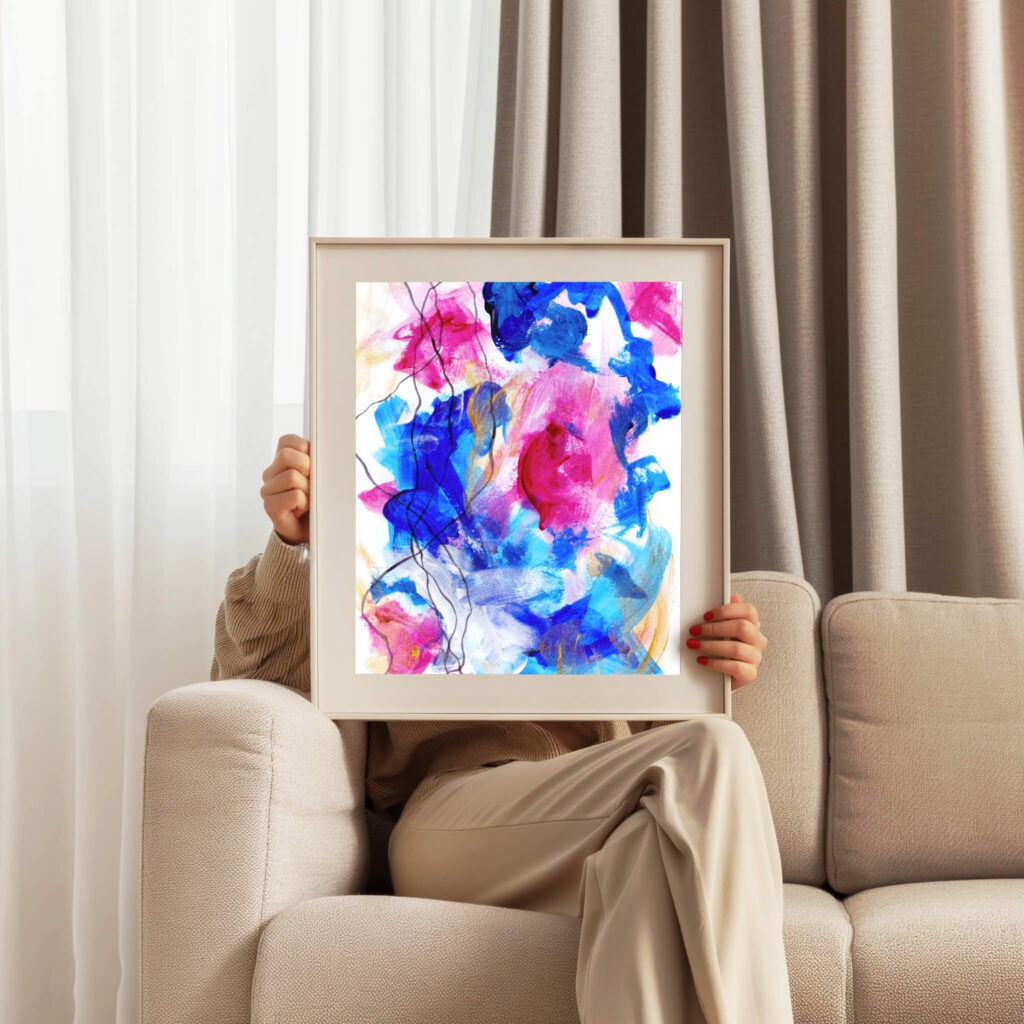
Large surfaces influence perception. Empty expanses can feel sterile. Overcrowded walls can feel oppressive. The right artwork creates calibration.
When you transform your home with art, you are adjusting:
- Visual rhythm
- Emotional tone
- Spatial balance
- Light reflection
- Cognitive load
Abstract art, in particular, invites interpretation rather than dictating meaning. This creates an open psychological field inside the room. You are not told what to think. You are invited to feel.
That subtle invitation changes how a space is inhabited.
The Role of Colour in Emotional Atmosphere
Colour influences nervous system response. This is not mystical. It is physiological.
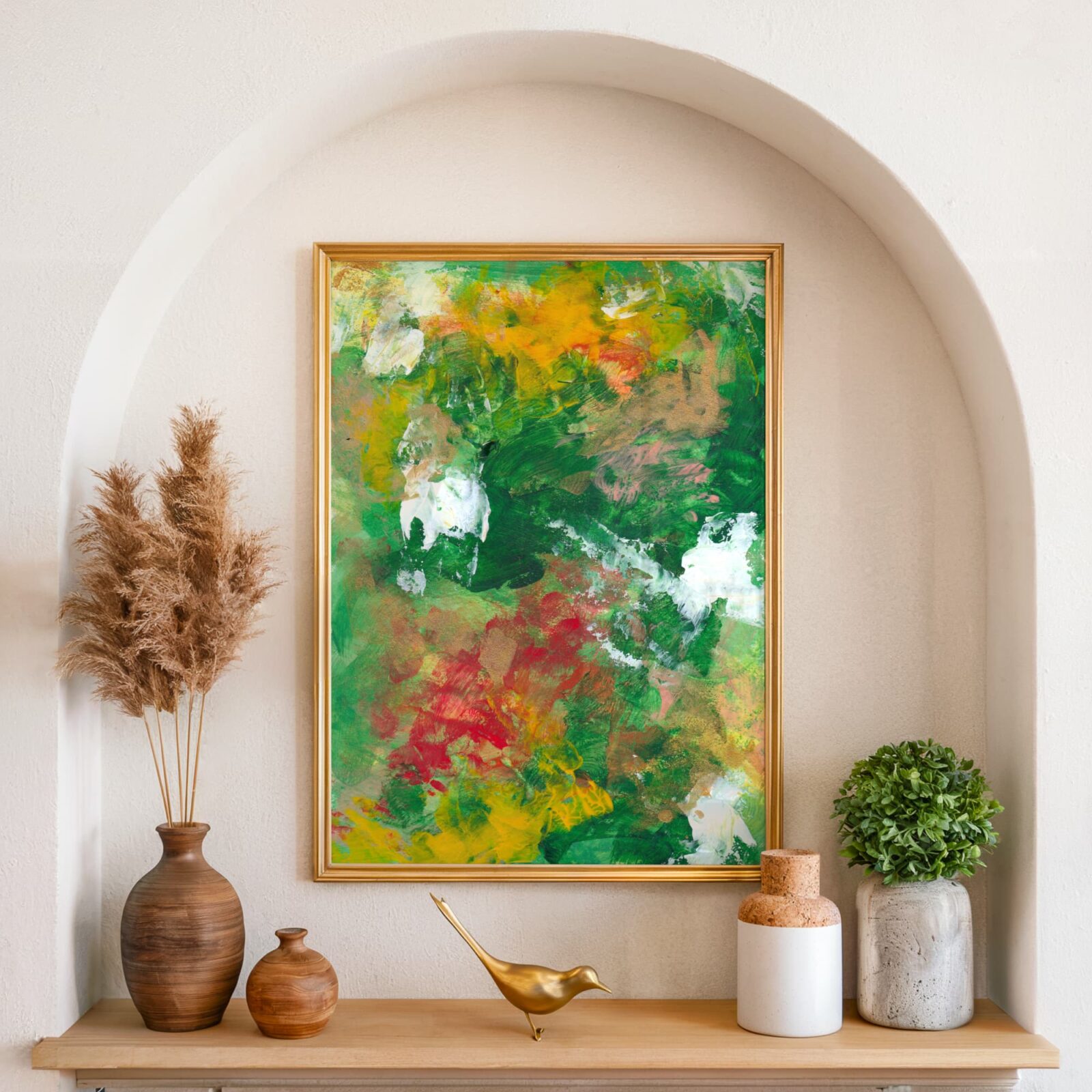
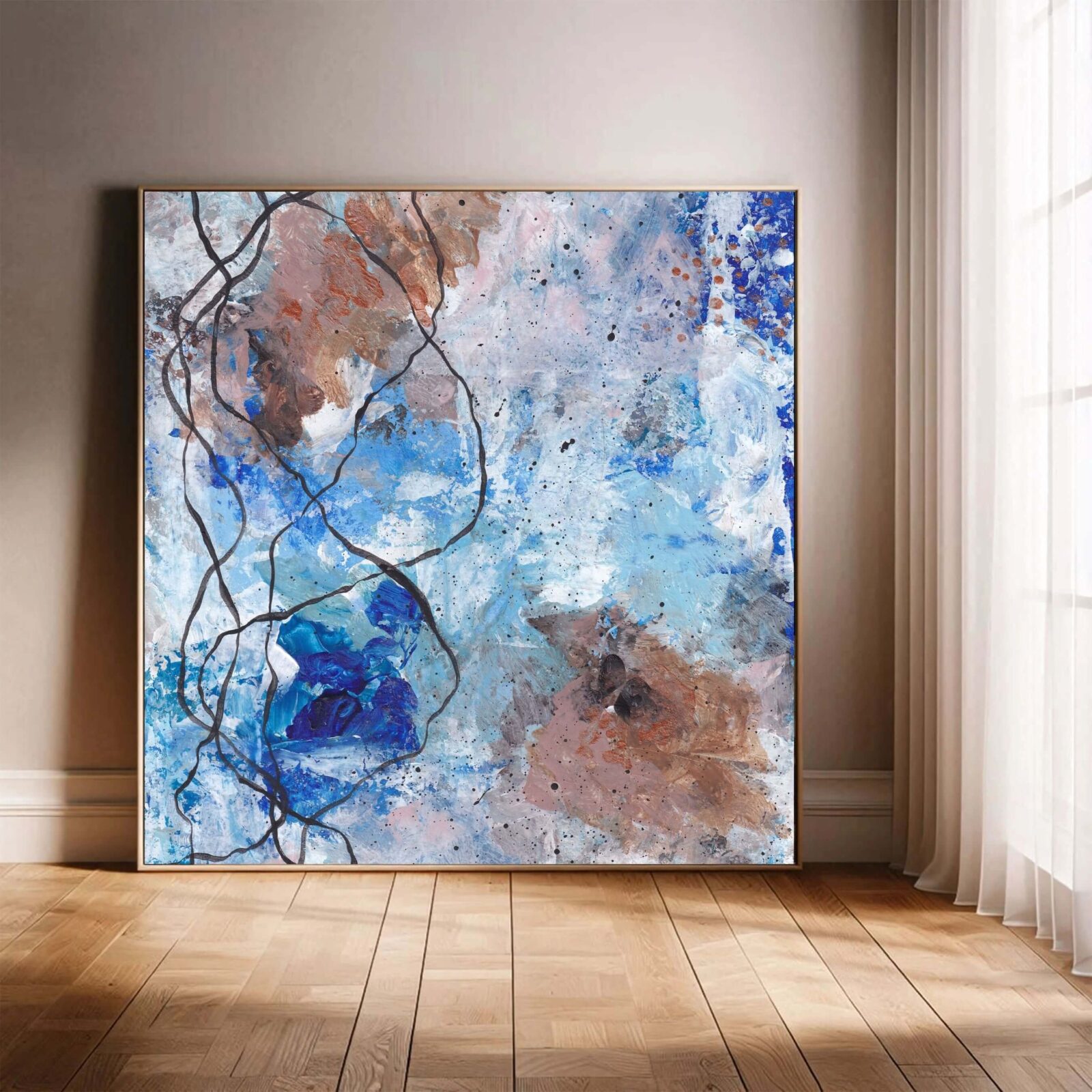
Deep blues can slow visual intensity and support calm focus. Earth tones ground attention. Layered neutrals create spaciousness. Bold tonal contrast stimulates alertness.
However, the impact of colour in abstract art is rarely about single pigments. It is about composition and restraint.
A controlled field of muted colour can create sophistication and quiet authority in a living room. A more dynamic composition can elevate a workspace where creative momentum is required.
If you are considering how colour functions inside high-end interiors specifically, Why Emotion Is the Ultimate Luxury explores how emotional response influences long-term value in art acquisition.
Colour is not chosen for brightness. It is chosen for resonance.
Shape, Composition and the Sense of Stability
Form matters.
Structured geometric composition introduces order. Organic gestures introduce movement. Negative space introduces breath.
When transforming your home with art, consider whether the room requires grounding or activation.
Large architectural spaces often benefit from compositional clarity. Smaller intimate spaces may benefit from fluid form.
Balance in abstract art is rarely symmetrical. It is relational.
This is why scale becomes critical. An undersized piece can diminish presence. An oversized piece can overwhelm.
For a deeper exploration of proportion and collector decisions, What to Know Before Buying Your First Collector-Grade Canvas Print explains how scale influences perceived authority.
Art does not simply sit on a wall. It defines spatial hierarchy.
Energy and Spatial Flow
Every room carries momentum. Some feel stagnant. Some feel over-stimulated. Abstract art alters directional flow through:
-
- Line orientation
- Tonal movement
- Light absorption
- Textural density
A piece with lateral movement can widen perceived space. Vertical energy can elevate a room with low ceilings. Subtle layering can slow visual scanning and encourage stillness.
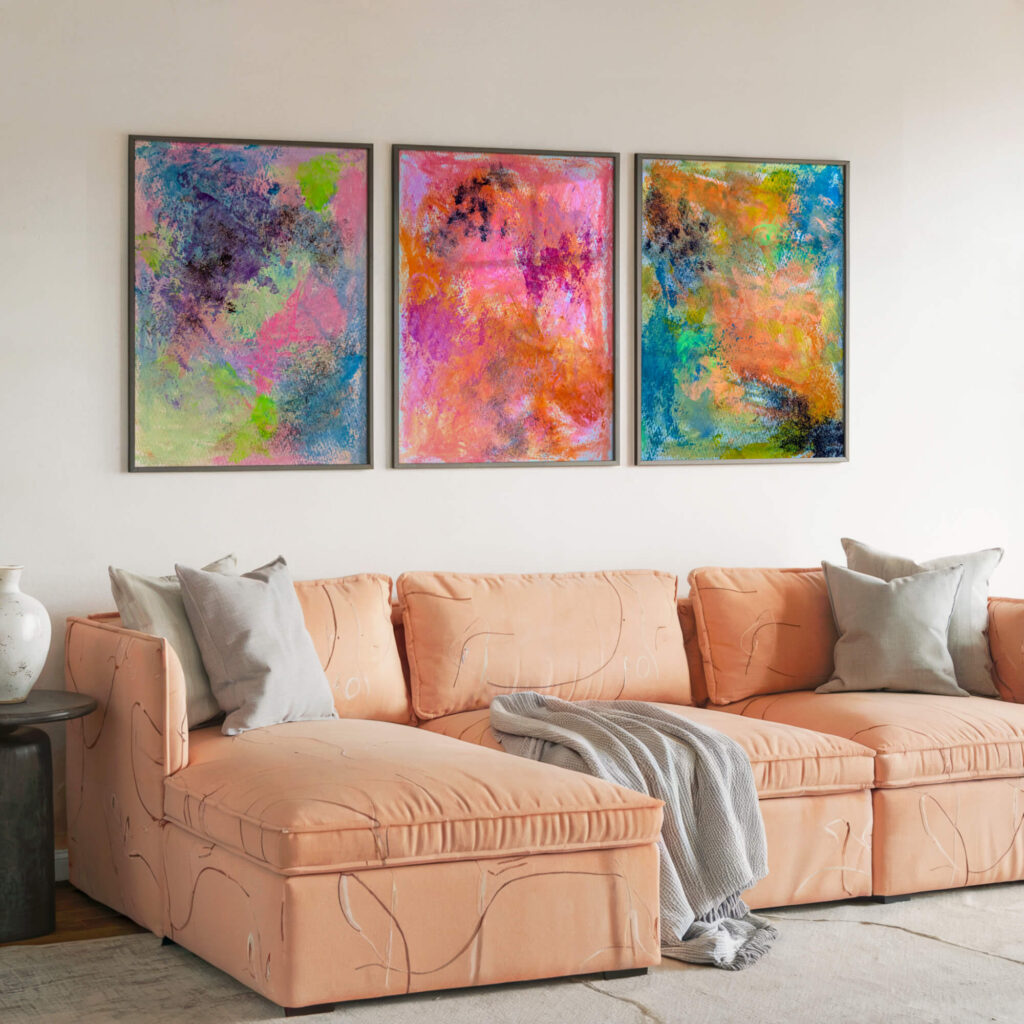
This is particularly relevant in open-plan homes where one artwork must anchor multiple zones simultaneously.
Energy is not conceptual. It is spatial design through visual language.
Abundance as Psychological Spaciousness
An abundant life is not defined by accumulation. It is defined by internal capacity.
When a home feels intentional rather than cluttered, cognitive friction reduces. When walls hold depth rather than generic decoration, the environment feels considered.
Abstract art contributes to abundance by:
-
- Creating visual depth
- Encouraging reflective pause
- Supporting identity expression
- Reinforcing intentional living
- A well-chosen piece becomes a daily recalibration point.
Collectors often describe returning to the same artwork and noticing something new each time. That evolving dialogue creates richness inside ordinary routine.
If you are exploring acquisition beyond surface aesthetics, Why Discerning Collectors Choose Private Art Catalogues Instead of Galleries explains how private curation deepens personal alignment.
Abundance is cultivated through coherence, not excess.
The Difference Between Decorative Art and Transformative Art
Decorative art fills space. Transformative art defines it. The difference lies in intention. Decorative pieces are often chosen for colour matching alone. Transformative pieces are chosen because they hold psychological weight.
When transforming your home with art, ask:
-
- Does this piece anchor the room?
- Does it elevate how the space feels?
- Will it hold relevance five years from now?
- Does it align with how I want to live?
If the answer is yes, you are not decorating. You are curating.
Placement and Proportion: Where Abundance Becomes Visible
Even the strongest artwork can collapse in impact if it is positioned without consideration for proportion, sightline, and surrounding spatial pressure.
Abstract art does not float independently of architecture. It interacts with ceiling height, window placement, furniture mass, and circulation routes. If it is hung too high, it disconnects from human scale. If it is squeezed between competing objects, its presence fractures.
Centre at eye level is a starting principle, not a rigid rule. In rooms with high ceilings, the relationship between artwork and surrounding void becomes more important than strict measurements. Negative space is not emptiness. It is breathing room. It allows the composition to hold authority.
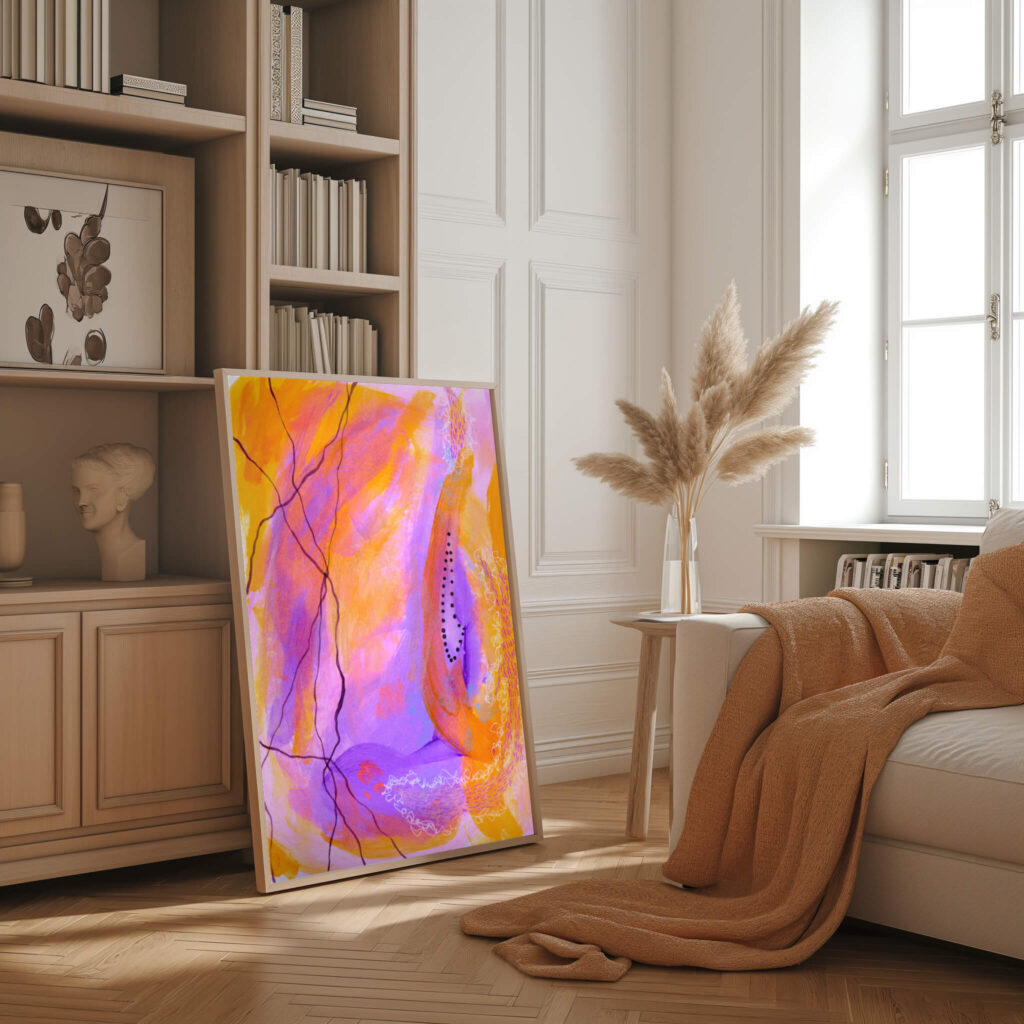
Large-scale canvas prints tend to create greater transformation because they establish visual hierarchy instantly. When a single decisive piece anchors a wall, the room reads as intentional rather than assembled. Clusters of smaller works often dilute impact unless they are curated with precision.
For collectors considering acquisition at scale, the private works available through The Collector’s Vault reflect this philosophy of presence over multiplicity. One resolved piece with compositional depth will do more for a room than several tentative additions purchased to “fill space.”
Abundance becomes visible when restraint is exercised.
Scale as a Psychological Statement
Scale is rarely neutral.
An undersized artwork can make a generous room feel hesitant. An oversized work, when chosen correctly, can stabilise a large space and reduce visual noise.
When transforming your home with art, ask whether the piece feels proportionate not only to the wall, but to the emotional ambition of the room. If you want the space to feel grounded and confident, the artwork must carry that same weight.
In serious collecting, scale is not about impressing guests. It is about committing to presence.
This is explored more directly in What to Know Before Buying Your First Collector-Grade Canvas Print, where proportion, authority, and long-term coherence are discussed beyond surface aesthetics.
A room that feels abundant is rarely crowded. It is decisive.
How Abstract Art Influences Work and Focus
In workspaces, abstract art affects cognition in ways that are more complex than decorative styling ever could.
Literal imagery directs interpretation immediately. Abstract art slows it down. That pause matters.
A composition with depth and layered tonality holds attention without exhausting it. The eye can travel without being forced toward a narrative conclusion. This supports sustained focus in environments that demand concentration.
In contrast, overly busy or illustrative imagery can compete with thought.
Colour temperature, negative space, and gestural direction influence how long the eye lingers and how quickly it moves. In executive interiors and serious home offices, abstract art is often prioritised precisely because it introduces atmosphere without distraction.
If your workspace requires analytical clarity, muted tonal fields and restrained movement often support that goal. If creative expansion is needed, dynamic compositions with directional energy may be more appropriate.
Your environment reinforces your cognitive habits, whether you notice it or not.
Emotional Regulation Through Visual Anchors
In fast-paced households or high-demand professional environments, visual anchors play a stabilising role.
A strong abstract artwork can become a fixed point within fluctuating daily activity. Something constant. Something that does not demand reaction but offers quiet continuity.
Unlike screens, art does not pulse, scroll, or notify. It holds steady.
Over time, this steadiness influences nervous system response. Returning visually to the same composition each day creates familiarity and grounding.
Collectors often describe how certain works become part of their emotional architecture. They do not consciously analyse the piece each time they pass it. Yet its presence subtly recalibrates the room.
This is one of the reasons discerning buyers often prefer curated acquisitions over impulsive décor decisions, a distinction explored in Why Discerning Collectors Choose Private Art Catalogues Instead of Galleries.
Art that anchors space supports internal steadiness.
The Difference Between Filling Space and Defining It
There is a practical distinction between selecting art to complete a colour scheme and selecting art to define a room’s identity.
Filling space is reactive. Defining space is strategic.
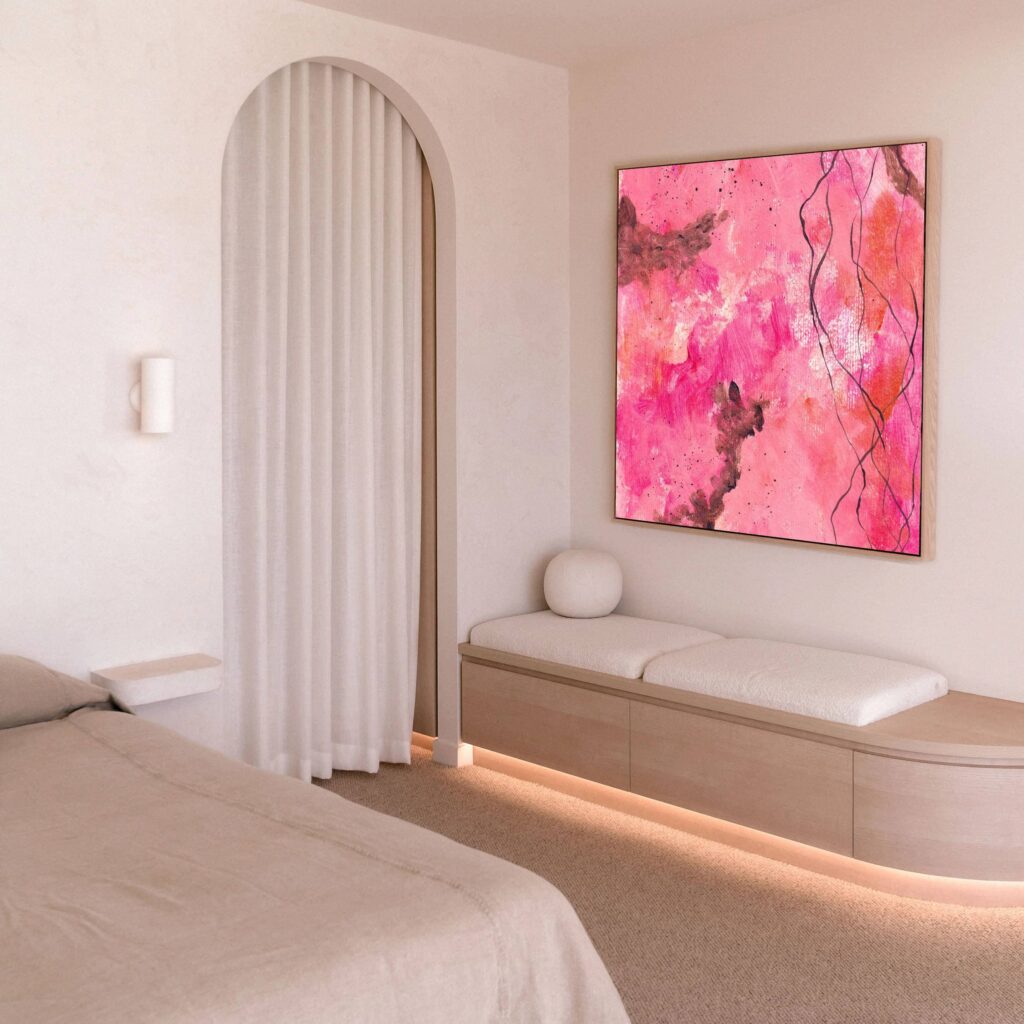
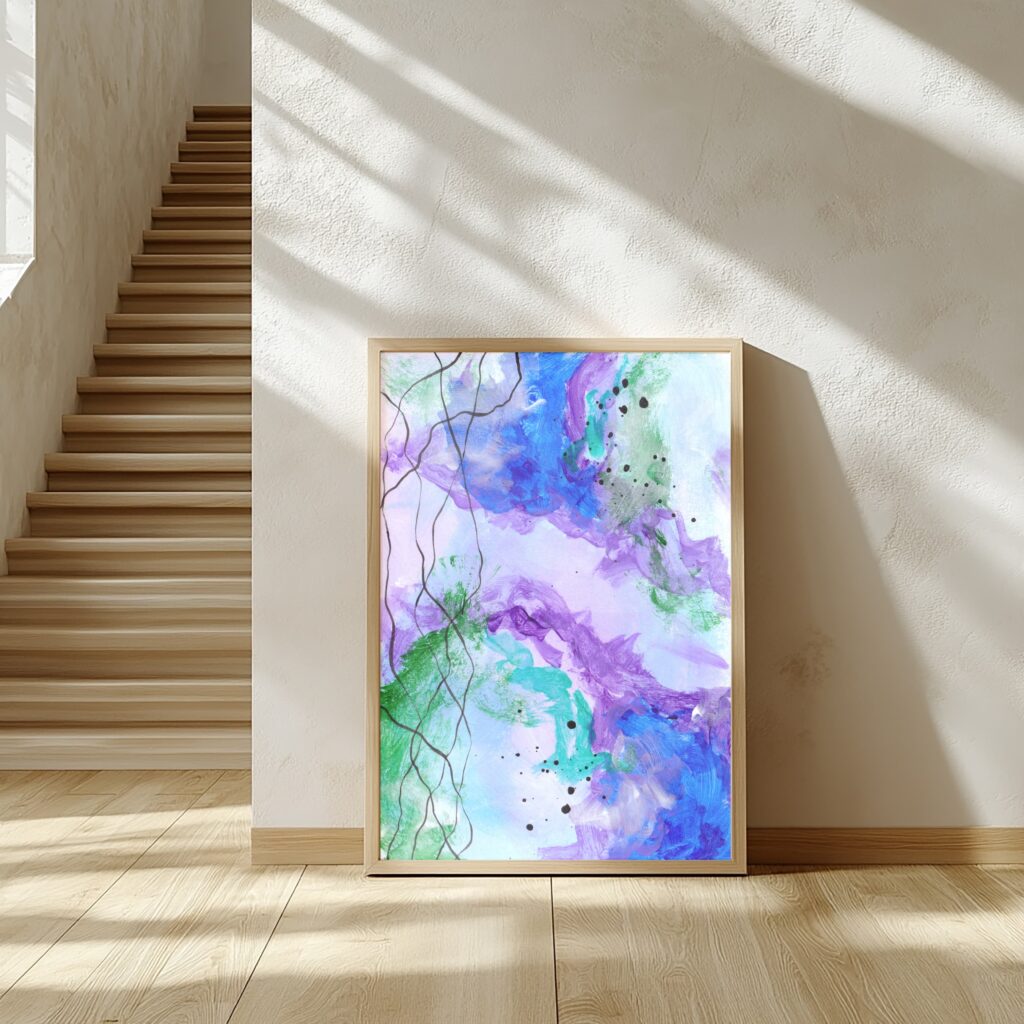
When you choose abstract art that aligns with the architectural lines and emotional intention of a room, it becomes part of the structure rather than an afterthought. The artwork begins to shape how furniture is arranged, how light is used, and how the room is entered.
This is especially important in open-plan interiors, where one strong piece can unify multiple functional zones.
If the goal is transformation rather than decoration, the artwork must carry structural authority.
If you want to understand what “structural authority” looks like in real-world production terms, this guide to collector-grade canvas art explains the standards clearly.
How to Choose Abstract Art for a More Abundant Home
Practical decisions still matter.
-
- Define the emotional tone of the room before browsing.
- Choose scale before obsessing over colour.
- Prioritise resonance over trend.
- Invest in quality rather than accumulation.
- Avoid overcrowding walls in an attempt to signal personality.
- Abundance is not achieved through quantity. It is achieved through coherence.
When assessing value beyond decorative appeal, How Collector-Grade Canvas Prints Are Priced (And What Determines Value) clarifies what separates serious acquisition from casual purchase. Pricing reflects scale, discipline, and artistic language consistency, not just surface aesthetics.
Transformation requires commitment. Hesitation rarely produces presence.
Conclusion
Transforming your home with abstract art is not an indulgence. It is a structural decision about how you want to live.
Colour influences emotional tone. Composition shapes visual rhythm. Scale establishes authority. Placement determines whether a piece holds or collapses.
When chosen deliberately, abstract art becomes part of the psychological infrastructure of a home.
Abundance is not excess. It is the alignment between space and identity. Art can reinforce that alignment daily, quietly, and without announcement.
Key Takeaway
If you want your home to feel abundant rather than assembled, choose art that establishes presence and proportion. One decisive piece placed correctly will transform a room more effectively than multiple decorative additions.
FAQs
Yes. Colour temperature, compositional density, and scale affect visual processing and nervous system response, subtly influencing how a room feels over time.
If it continues to feel coherent after repeated viewing and does not rely solely on trend-based colour or novelty, it is more likely to hold relevance.
Not universally, but in rooms with sufficient architectural space, larger works often establish stronger visual authority than clusters of smaller pieces.
Exact matching is unnecessary. Harmony of tone and proportion is more important than colour duplication.
Indirectly, yes. High-quality art elevates the perceived sophistication of a space, influencing overall impression.
Start with emotional response and spatial proportion. Then explore structured acquisition frameworks before committing.