
Why Do Some Homes Feel Instantly Calm?
TL;DR
Calm homes are rarely the result of one expensive purchase or one particular style. They’re usually created through intentional decisions that reduce visual noise, support the nervous system and reflect the people living there. The homes we remember are often the homes that allow us to relax without demanding anything in return.
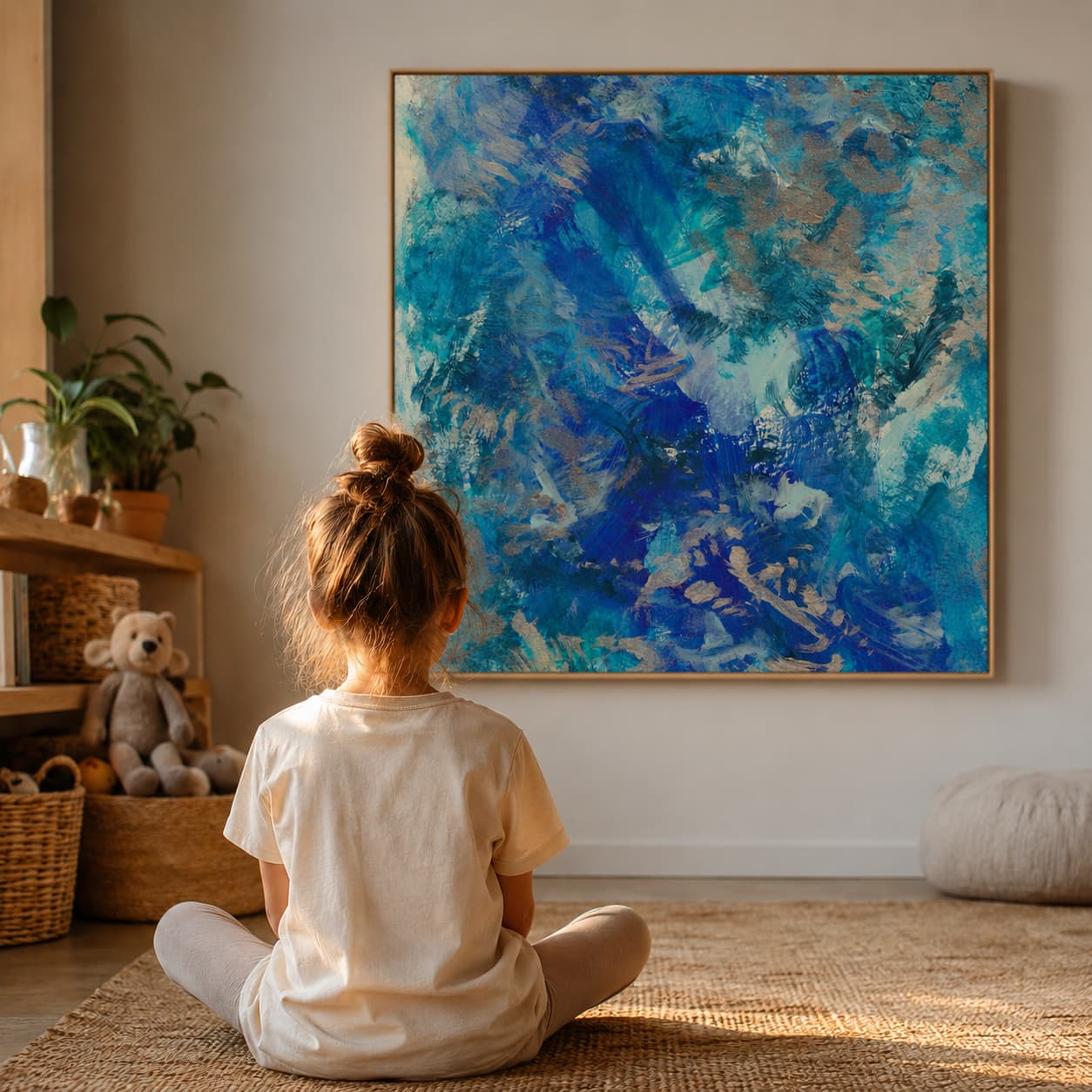
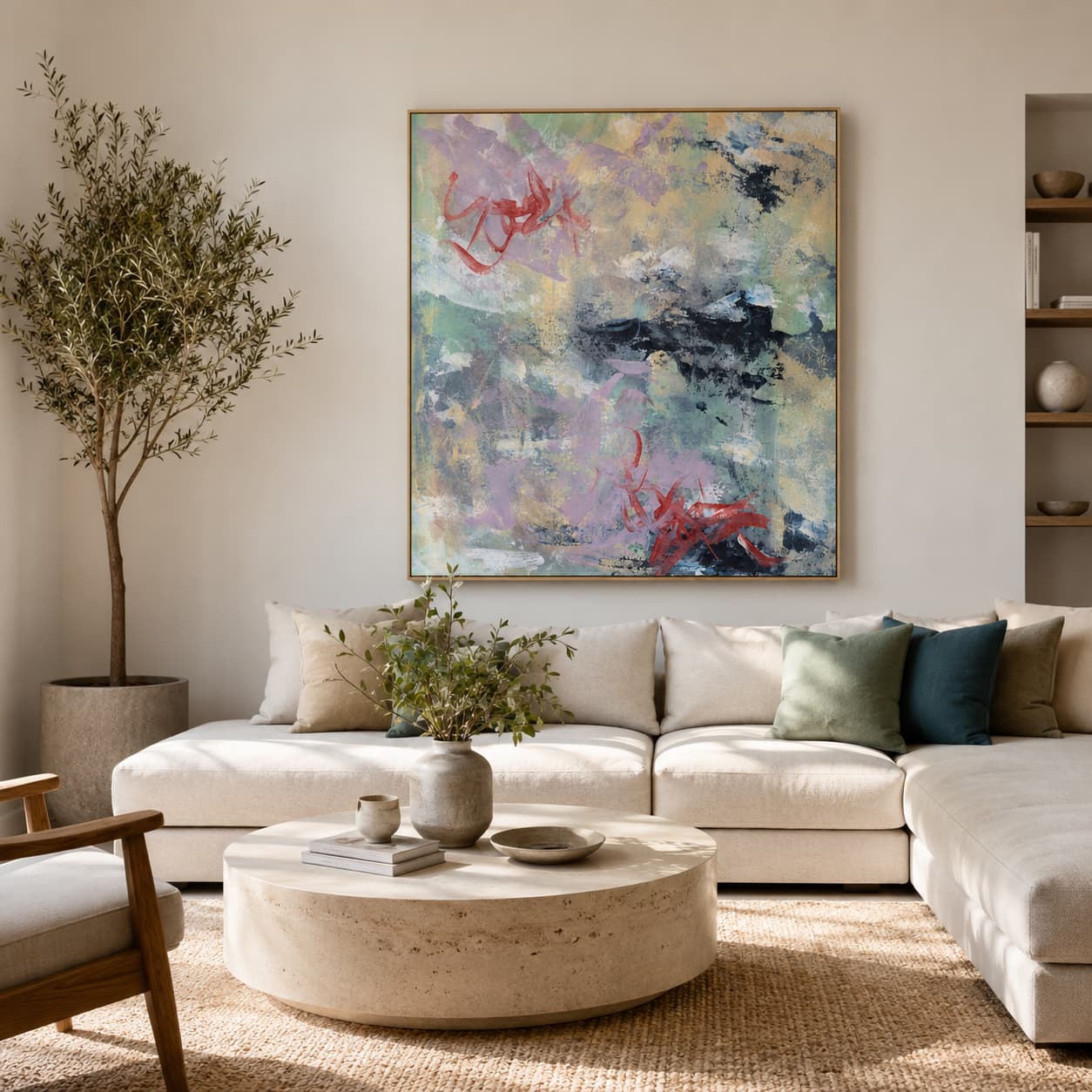
Calm homes are rarely accidental
There is a common misconception that calm homes belong to a particular aesthetic. People often imagine neutral colours, minimalist furniture and perfectly organised shelves, but that isn’t actually what creates calm. In fact, some minimalist homes can feel surprisingly cold, while some colourful, layered interiors can feel deeply relaxing.
The difference is that calm is not a style. It’s an experience.
When people walk into a home and immediately exhale, they’re usually responding to dozens of small decisions working together rather than one grand design choice. Their eyes know where to settle, the room feels intentional and there is a sense that the people living there have built an environment around how they want to feel rather than how they want to be perceived.
This is also where many people accidentally make decorating much harder than it needs to be. They spend enormous amounts of time deciding what a room should look like while spending very little time thinking about how that room should support their daily lives.
Those are two entirely different conversations.
One creates beautiful photographs. The other creates a beautiful experience.
Your nervous system notices far more than you realise
One of the reasons some homes instantly feel calm is because our brains are constantly processing information, even when we’re not consciously paying attention.
Every object, colour, texture and shape requires a tiny amount of energy to process. Individually, those demands are insignificant, but collectively they can have a surprisingly large impact on how we experience a space.
This is partly why some rooms can feel exhausting despite being beautifully designed. There is simply too much happening at once.
Every shelf is filled. Every corner has an object. Every surface contains another decorative layer. Nothing is particularly wrong, but everything is competing for attention simultaneously.
Now imagine walking into a room where the opposite is true.
There is still personality and warmth, but there is also space for your eyes to rest. Certain areas have intentionally been left alone and the room isn’t asking you to admire every single thing at the same time.
Without consciously realising it, your nervous system relaxes.
That’s often the feeling people describe when they say a room feels calm.
Calm homes are designed from the inside out
One of the biggest shifts people can make is moving away from designing their home from the outside in. Social media has accidentally taught many of us to start with aesthetics. We see an image we love and then attempt to recreate it inside our own home. We buy similar furniture, similar colours and similar accessories, only to discover that the room doesn’t quite feel the same.
That’s because we’re recreating somebody else’s environment rather than creating our own.
Calm homes are often built differently. Instead of asking, “What style do I want?” homeowners ask, “How do I want to feel here?” The answers become much more useful. You might discover that you want your home to feel:
- Grounded
- Spacious
- Elegant
- Warm
- Quiet
- Sophisticated
- Comfortable
Once you know that, your decisions become much easier because every object either supports that feeling or distracts from it.
Calm homes understand the power of restraint
Restraint is one of the most underrated forms of luxury.
This might sound odd because we’re often encouraged to keep improving our homes. There’s always another decorative object, another trend or another item that promises to elevate the space.
Eventually, rooms can become overworked.
This doesn’t happen because people have bad taste. It happens because they’re trying too hard to create a beautiful environment.
Ironically, calm often appears when we stop adding.
Some of the most elegant homes are not filled with extraordinary objects. They’re filled with intentional ones.
The room doesn’t need to prove anything. It simply exists. That confidence is often what people are responding to without realising it.
Visual breathing space changes everything
There is a reason why the phrase visual breathing space resonates with so many people.
Humans need moments of pause. We need places where our eyes can settle, and our brains don’t have to work so hard.
Unfortunately, many expensive homes accidentally become visually exhausting because every available area has been optimised. The result is a room that may be beautiful but feels strangely overwhelming after prolonged periods of time.
Visual breathing space is often the thing that transforms a room.
This doesn’t mean creating a sparse environment or embracing minimalism if that isn’t your style. It simply means allowing certain elements to stand out rather than forcing everything to compete equally.
The eye needs somewhere to land.
Without that, a room can start feeling chaotic despite all the money invested in it.
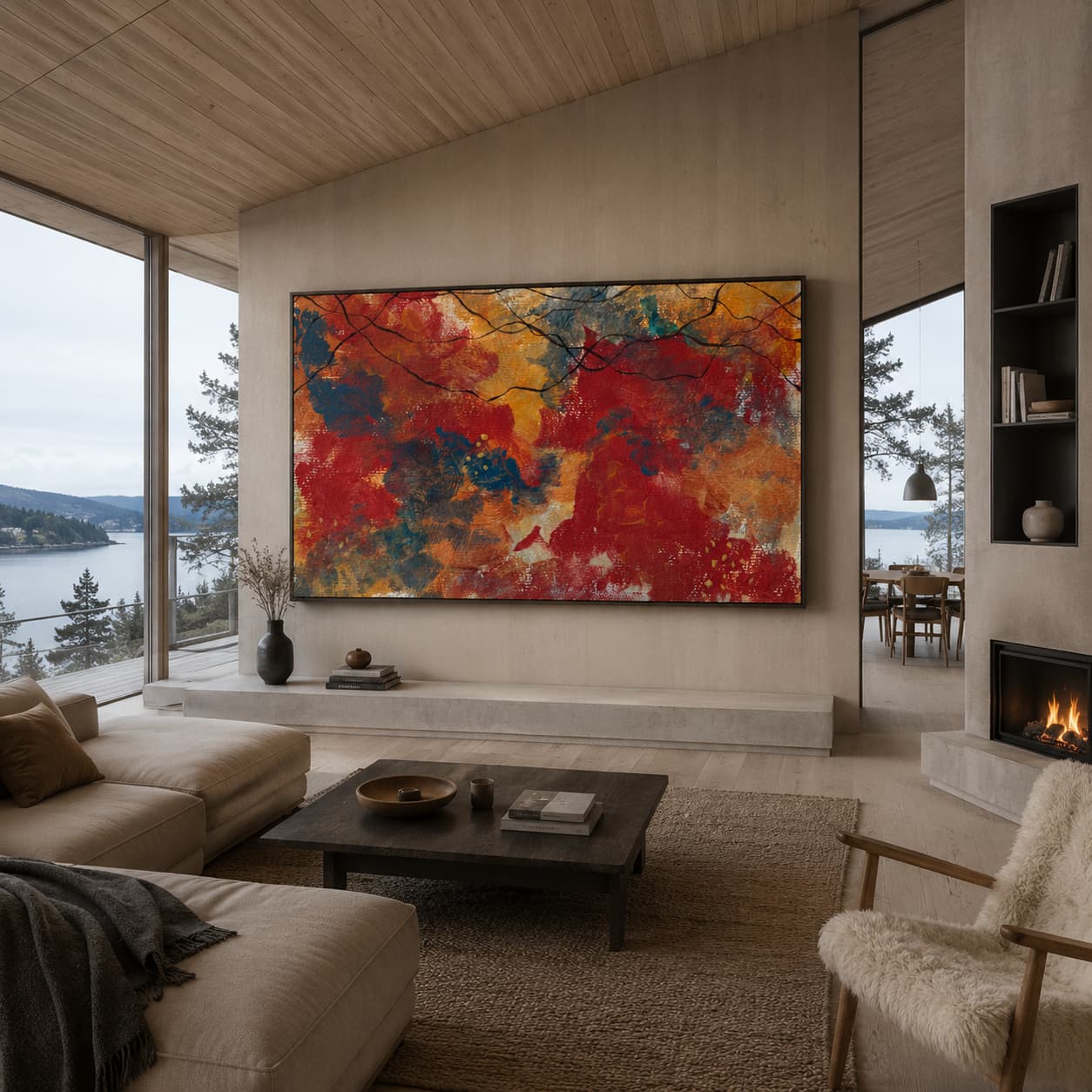
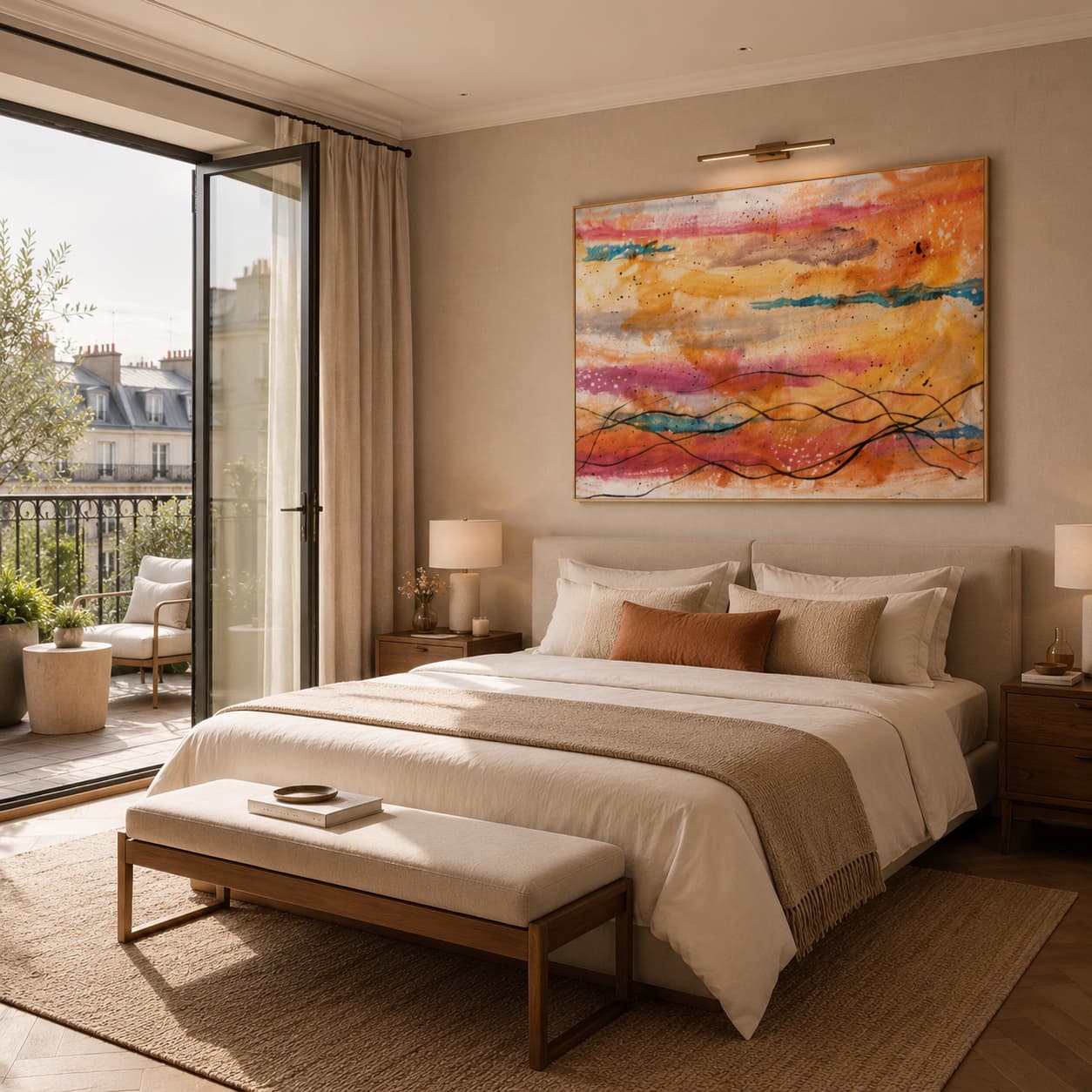
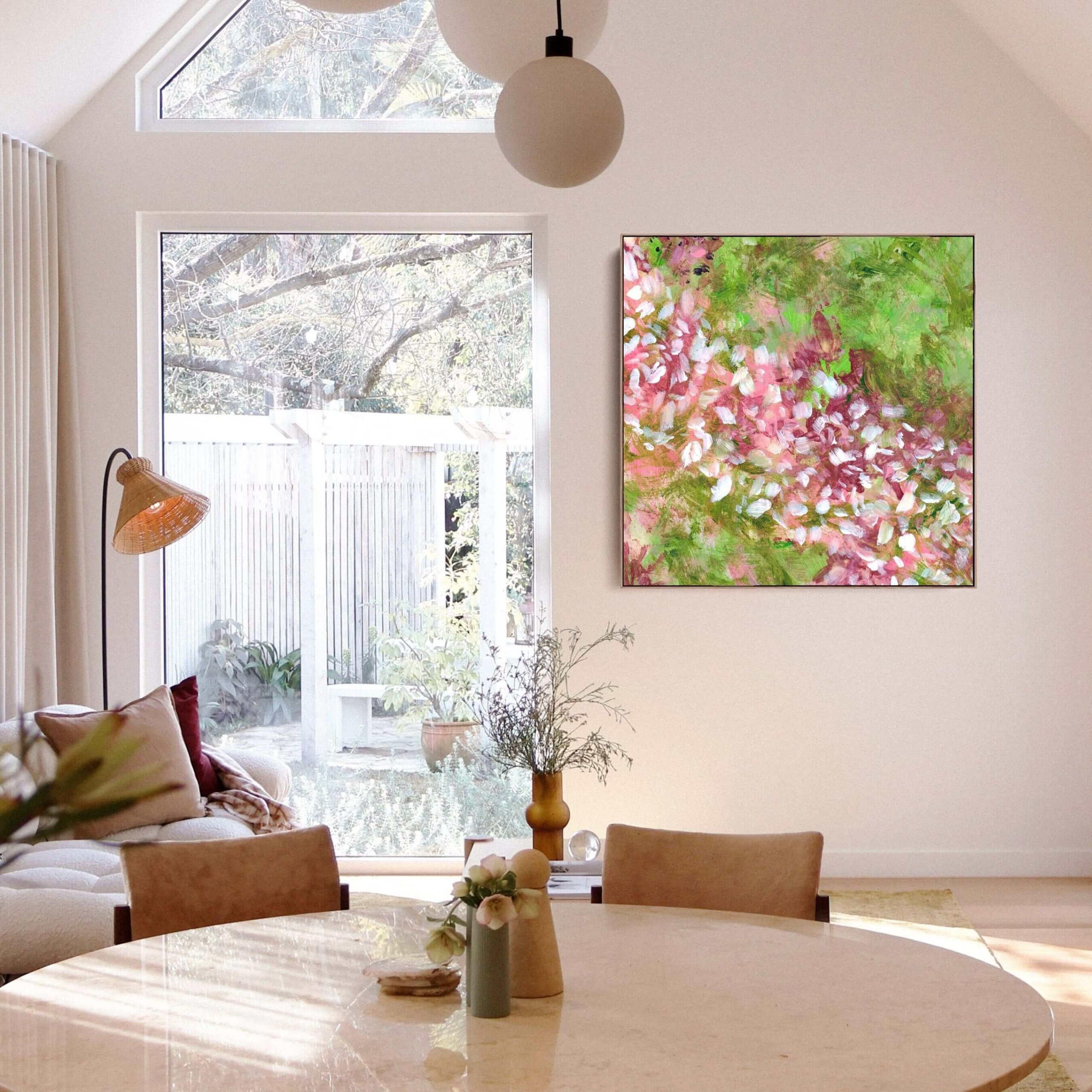
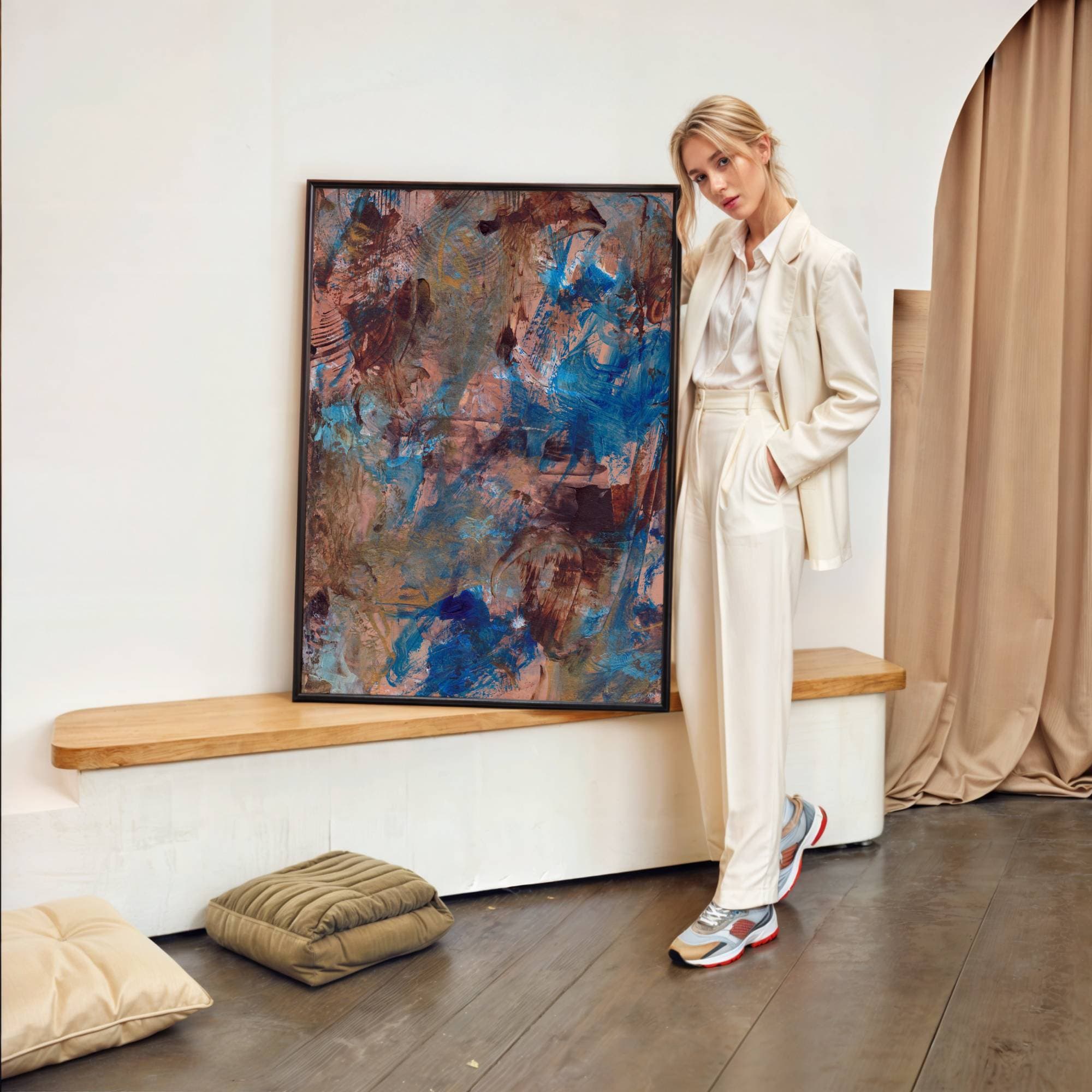
Artwork often becomes the emotional anchor
Interestingly, artwork is often one of the last things people choose. The kitchen is installed first. The furniture comes next. Then lighting. Then accessories.
Artwork is often postponed until later.
The irony is that artwork is frequently one of the things that stops a room feeling incomplete in the first place.
At its best, artwork isn’t simply decoration. It becomes an emotional anchor. It gives a room identity and quietly tells you something about the people living there.
Without anchors, expensive interiors can become anonymous. They may be beautiful, but they could belong to absolutely anybody.
This is one reason why The Ultimate Guide to Integrating Abstract Art into Your Home Décor is such an important conversation. Artwork doesn’t need to match the cushions. It needs to support the atmosphere you’re trying to create.
Similarly, Designing Serene Spaces With Abstract Art explores how calm is often intentionally built rather than accidentally discovered.
Calm homes tell a story without shouting about it
One of the biggest differences between a calm home and a generic home is that calm homes often have a quiet sense of identity.
They don’t need to announce themselves. They simply feel authentic. You begin noticing small details that feel intentional rather than performative. Nothing seems random, but nothing seems forced either.
This is often what people mean when they say a house has soul. It’s not necessarily because the room is unique. It’s because the room reflects the people inside it. The question every room eventually answers is:
- Who lives here? Not literally. Emotionally.
- What matters to these people?
- What do they value?
- What helps them slow down?
The answers are often much more interesting than any design trend.
A calm home doesn't mean a perfect home
Perhaps this is the most reassuring thing of all. Calm homes are not perfect homes.
There will still be books left out. There will still be everyday objects and signs that people actually live there.
Perfection is not the goal. In fact, perfection often creates the opposite effect. It can make spaces feel sterile and untouchable.
The homes people remember are rarely the homes that looked flawless. They’re usually the homes that feel welcoming.
There is a huge difference between those two things. One impresses people. The other supports them.
Calm homes are built slowly, not finished quickly
Perhaps one of the biggest misconceptions is that calm can be created in a single weekend or at the end of a renovation project. We often treat our homes as something we eventually complete, as though one final purchase will suddenly unlock the feeling we’ve been chasing all along.
In reality, calm homes are usually built gradually over time.
They evolve as the people living inside them evolve too. A home that supported you five years ago may no longer support your current lifestyle, and that’s perfectly normal. Our routines change, our priorities shift and our relationship with our surroundings changes alongside them.
This is why the calmest homes often don’t look as though they have been designed all at once. They have been edited, adjusted and refined over months and years rather than assembled in a rush.
The homeowners have slowly learnt what deserves space and what doesn’t. They have discovered which objects genuinely add value to their lives and which ones simply create more visual noise. More importantly, they have become comfortable with the idea that homes don’t need to be finished to feel complete.
That distinction matters enormously.
Many people spend years chasing an imaginary end point where their home will finally be perfect. Ironically, that mindset often creates frustration because homes are living environments rather than completed projects. There will always be something else to improve, another trend to follow or another item to buy.
The goal therefore isn’t to finish your home. The goal is to create an environment that continues supporting you as life changes around you.
When you shift your perspective in that way, decorating suddenly becomes much simpler. You stop asking yourself whether your home looks impressive enough and start asking whether it feels supportive enough.
That small change in thinking is often where calm begins.
Conclusion
When people ask why some homes feel instantly calm, they’re often expecting a decorating formula.
There isn’t one.
Calm is created through hundreds of tiny decisions that quietly support one another over time. It comes from understanding your own nervous system, creating visual breathing space and designing a home around your life rather than around trends.
Most importantly, calm homes understand one simple truth.
A house is not a project to finish.
It’s an environment that should make living inside it feel easier.
Explore the Collector’s Vault: https://vikithorbjorn.art/collectors-vault/
Request the private catalogue: https://vikithorbjorn.art/request-private-catalogue/
Read the Collector-Grade Canvas Art Guide: https://vikithorbjorn.art/collector-grade-canvas-art-guide/
Related reading
Key Takeaway
Calm is not an interior design style. It’s an experience.
Frequently Asked Questions
No. Minimalism is an aesthetic choice, while calm is an experience. A home can be colourful and layered while still feeling deeply relaxing.
Usually because there is too much visual information competing for attention at the same time.
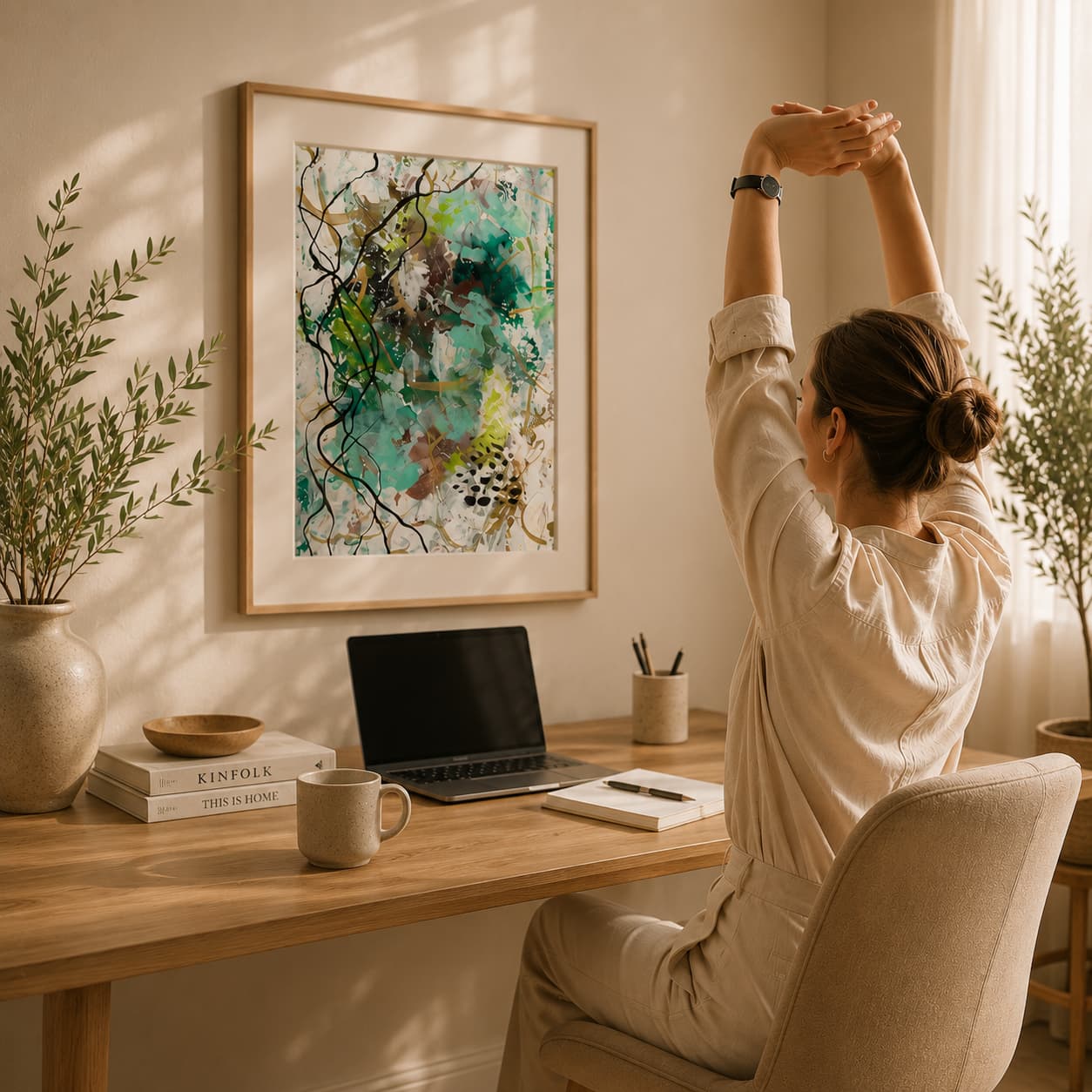
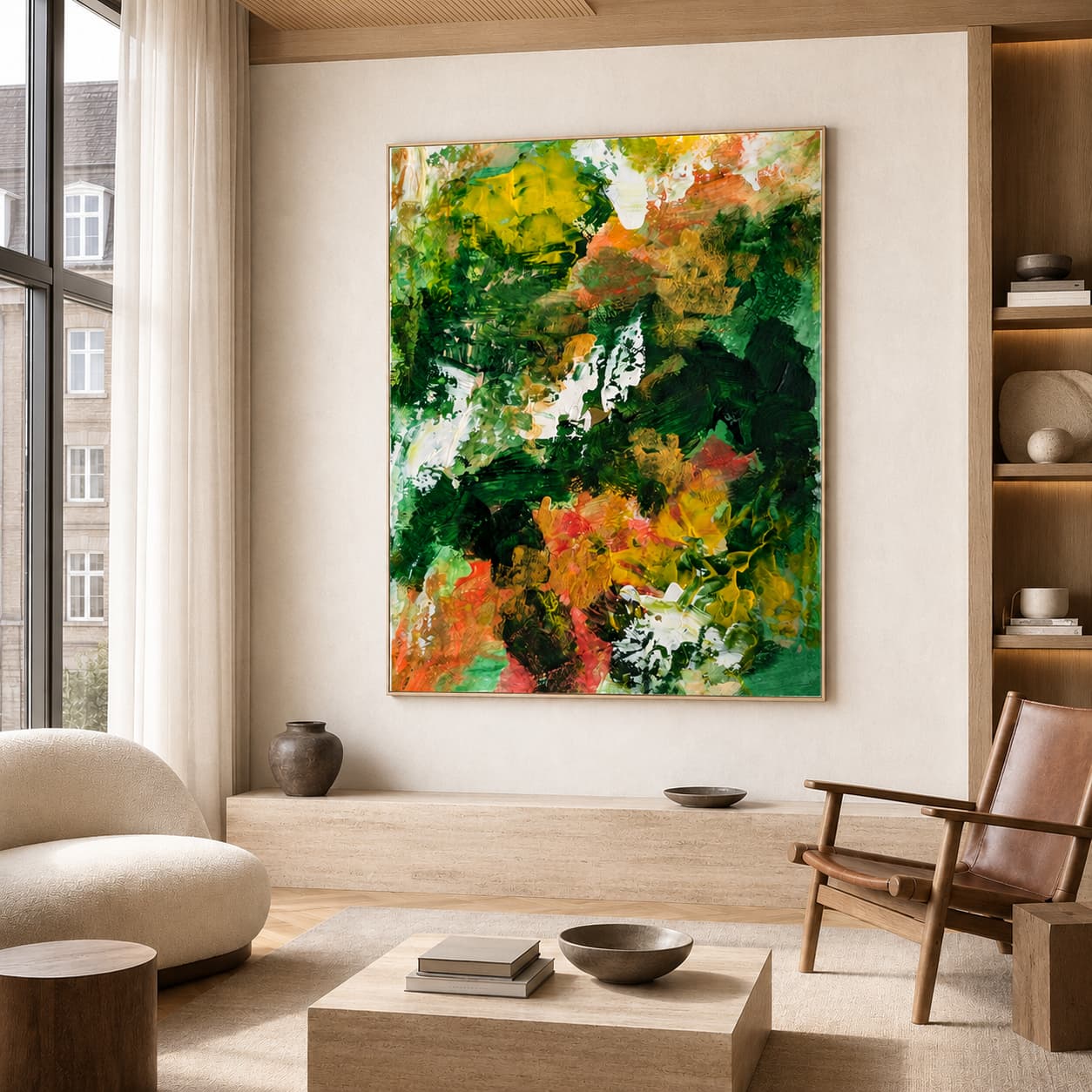
Yes. Large artwork can create visual focus and act as an emotional anchor within a room.
There is no universal answer. Calm often comes from balance and consistency rather than one specific colour.
Because they’re intentionally designed around atmosphere and experience rather than simply decoration.
It’s allowing enough empty or quieter areas within a room so your eyes and brain can rest.
Start by removing rather than adding. Edit objects, create breathing space and focus on how you want each room to feel.
Designing entirely for appearance rather than for the people who will live in the space every day.