
Why Workplace Wellbeing Needs Physical Practice, Not Just Advice
TL;DR
Most workplace wellbeing strategies still rely too heavily on information while neglecting physical regulation. Employees are constantly told to manage stress, prioritise wellbeing and improve resilience, yet many workplaces continue keeping people physically static, cognitively overloaded and disconnected from their bodies for most of the day.
Advice can increase awareness, but awareness alone rarely changes how someone physically feels during work. Physical practice does.
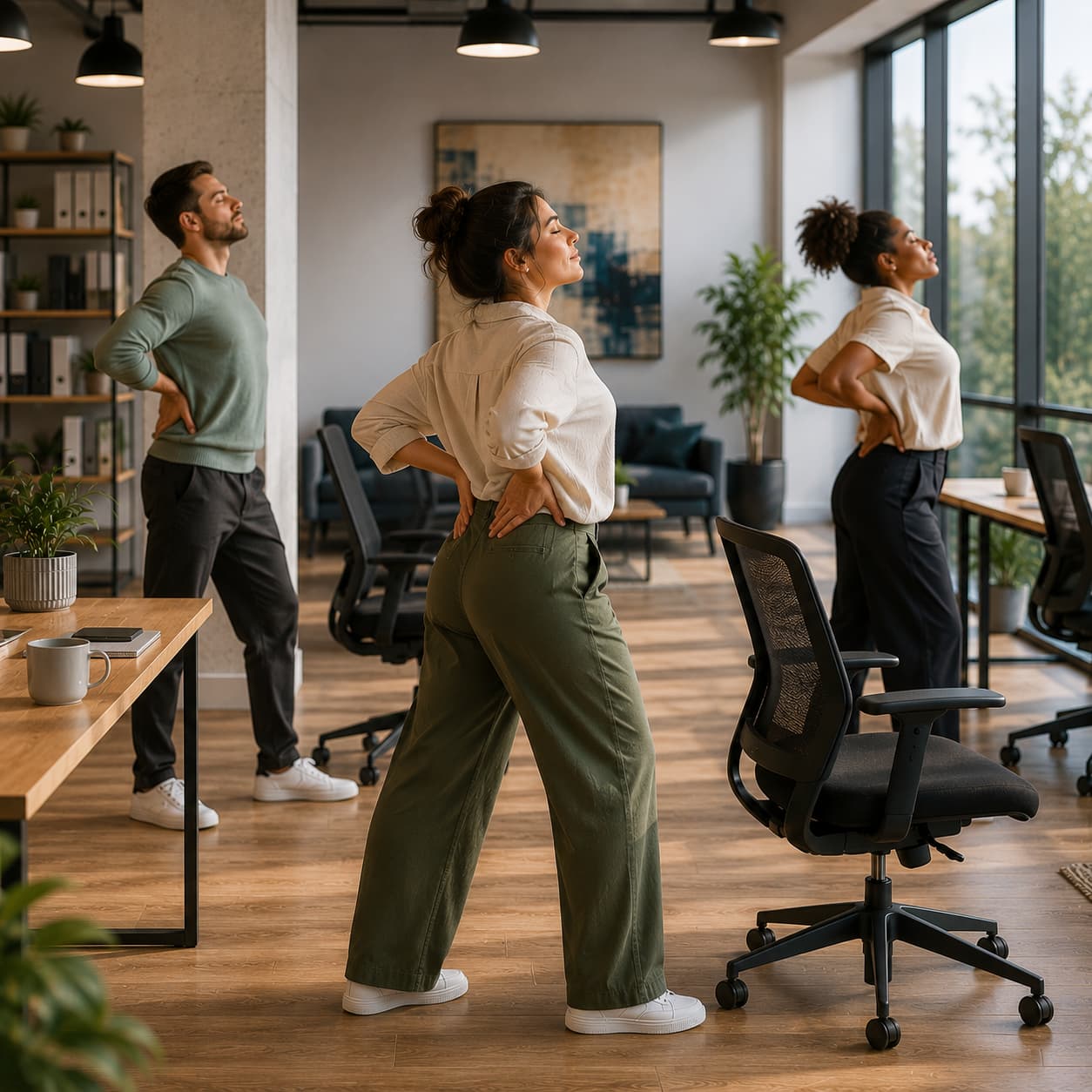
Movement, breathing, posture variation, mobility and nervous system regulation help employees experience wellbeing directly instead of simply consuming more wellbeing content while remaining exhausted underneath it all.
The workplaces seeing the strongest long-term results are usually the ones recognising that wellbeing is not only psychological or motivational. It is physiological too.
For movement-focused workplace wellbeing support, explore Sit Happens or read How Sit Happens Helps Teams Reduce Stiffness, Fatigue and Brain Fog.
Definition: what is physical practice in workplace wellbeing?
Physical practice within workplace wellbeing refers to practical body-based approaches that support employees through movement, posture variation, breathing, mobility, nervous system regulation and physical awareness. Unlike purely informational wellbeing strategies, physical practice allows employees to experience regulation and stress reduction directly through the body itself rather than only through education or awareness campaigns.
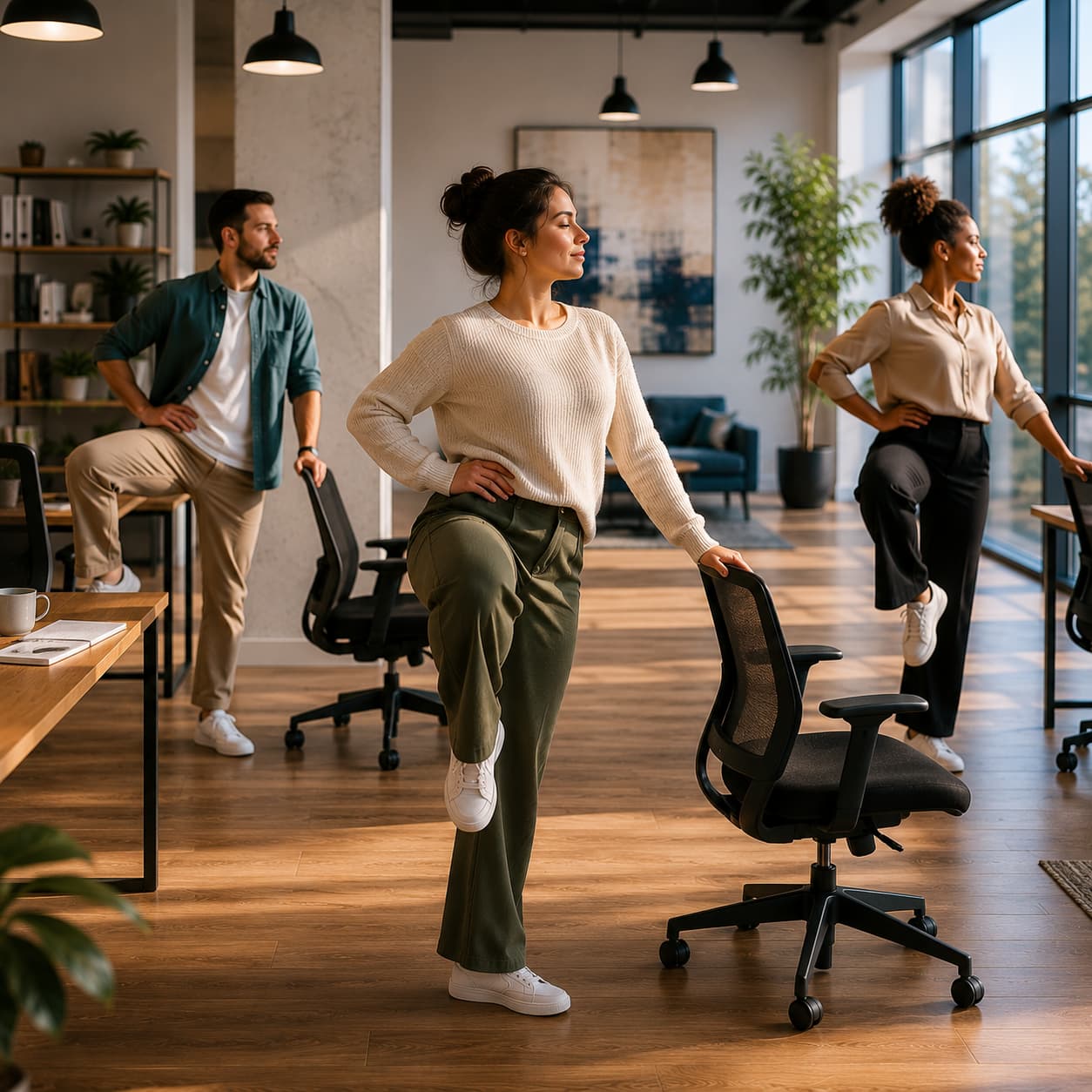
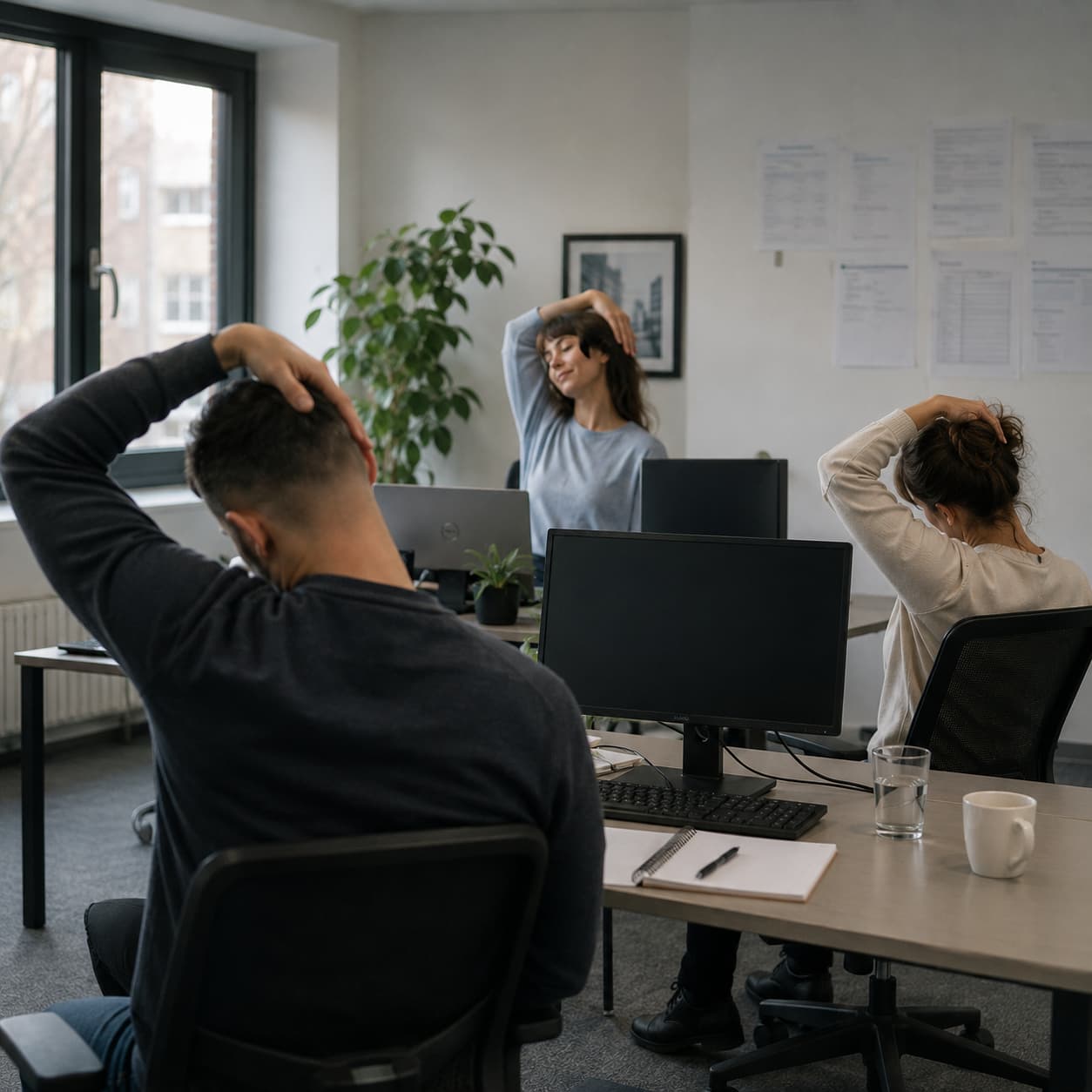
Why so much workplace wellbeing still feels emotionally disconnected from real working life
A great deal of workplace wellbeing content sounds supportive on paper while feeling strangely detached from how employees actually experience modern work inside their bodies.
People are encouraged to manage stress while sitting almost motionless for hours. They are reminded to prioritise balance while moving directly from one meeting into another without enough physical transition to let the nervous system reset properly. They are told to “look after themselves” while remaining cognitively switched on all day inside environments that quietly reward over-responsiveness, prolonged sitting and constant availability.
Then organisations wonder why the wellbeing strategy has not dramatically improved morale, energy or burnout levels.
The issue is not necessarily lack of information.
Most employees already know stress matters. They understand that movement helps. They know sleep is important. They know posture affects the body. They know burnout exists. Many workers have consumed enough wellbeing advice at this point to accidentally qualify for an honorary psychology degree while eating lunch at their desk beside thirty-seven unread Teams notifications.
The deeper issue is that awareness alone does not regulate the nervous system.
Physical experience does. And that distinction changes everything.
Because someone can intellectually understand wellbeing while still feeling physically exhausted, tense and emotionally overloaded almost every single day.
Why the body cannot be separated from workplace wellbeing anymore
Modern workplace wellbeing often focuses heavily on mental and emotional support while quietly treating the body as secondary, despite the fact that stress itself is deeply physical.
- Stress changes breathing patterns.
- Stress changes posture.
- Stress changes muscle tension.
- Stress changes attention, movement quality, digestion, sleep, emotional regulation and physical energy throughout the day. Employees may appear physically inactive while their nervous systems remain under constant low-level activation for hours at a time.
That creates consequences that workplaces can see everywhere once they start looking properly.
- People become physically braced without noticing.
- Breathing becomes shallower.
- Necks tighten.
- Shoulders rise.
- Movement decreases.
- Concentration becomes harder to sustain.
- Fatigue appears earlier in the day.
- Employees feel mentally overwhelmed while simultaneously disconnected from their bodies entirely.
This is why wellbeing initiatives that focus only on awareness, motivational messaging or resilience training often struggle to create meaningful long-term change. The body itself is still carrying the workload physically, even when nobody is talking about it directly.
Employees do not simply think stress. They embody it.
And if wellbeing support never addresses the physical side of modern work, organisations eventually end up trying to solve physiological overload using increasingly polished PDF documents and wellness webinars with titles like “Thriving Through Uncertainty” while everyone quietly dies inside beside the office fruit bowl.
Why awareness alone rarely changes how employees feel
Information does not automatically become embodiment. That is one of the biggest problems with purely advice-based wellbeing strategies.
Someone can fully understand the importance of movement, boundaries, posture, rest and stress management while still remaining physically dysregulated most of the week because the nervous system responds far more strongly to repeated physical experience than abstract knowledge alone.
People often continue sitting in physically draining positions despite knowing movement would help. They continue holding tension unconsciously despite understanding stress intellectually. Entire organisations discuss wellbeing constantly while maintaining working structures that physically overload employees every single day.
Awareness matters. But practice changes patterns.
That is why physical workplace wellbeing support tends to create more sustainable results. Employees are not simply told what regulation should feel like theoretically. They begin experiencing it physically through breathing, posture variation, movement and nervous system shifts that happen inside the body itself.
Once someone physically experiences the difference between being constantly braced and genuinely regulated, their relationship with stress and work often changes far more meaningfully than it would through information alone.
Because ultimately, the nervous system does not care how many inspirational infographics someone has read on LinkedIn before 9am.
It responds to physical state.
Why desk-based work creates a strange form of physical exhaustion
Desk work creates an unusual contradiction because people can spend most of the day sitting down while still feeling profoundly physically depleted by evening.
That confusion makes sense because many employees unconsciously associate physical fatigue with obvious physical labour. If someone has been carrying boxes all day, physical tiredness feels logical. Sitting at a laptop should theoretically feel easier.
Except the body does not experience desk work as “rest.”
The nervous system remains active continuously. Attention stays narrowed for long periods. The eyes remain fixed forward. The arms repeat tiny movements constantly. Breathing becomes restricted. The spine stays relatively static. Cognitive demand remains high while physical movement decreases dramatically.
The body starts carrying stress internally while appearing externally still.
This is one reason desk-based fatigue often feels strangely heavy and difficult to explain. Employees are mentally overloaded but physically under-moved at the same time. They feel tired yet restless simultaneously. Their muscles feel tense despite limited physical activity. Concentration drops because the nervous system has been processing cognitive demand without enough physical transition or release.
This is explored further in Why Desk-Based Teams Need Movement Before More Wellbeing Advice, where the relationship between physical stagnation and workplace fatigue becomes much clearer.
Because most employees do not need more advice about stress in the middle of the workday.
They need their bodies to stop feeling trapped inside the same position for eight straight hours while answering emails that could probably have died peacefully as shorter conversations.
Why movement changes emotional state so effectively
Movement works powerfully within workplace wellbeing because it changes physiology directly rather than asking employees to simply “think differently” while remaining physically unchanged.
- Breathing shifts.
- Circulation improves.
- Visual focus changes.
- Muscular tension softens.
- The spine regains movement.
- The nervous system receives updated sensory information that the body is no longer trapped inside prolonged physical stillness.
This often creates emotional shifts surprisingly quickly because emotional regulation and physical regulation are deeply connected whether workplaces acknowledge that openly or not.
Employees frequently report feeling calmer, clearer, lighter or more mentally focused after relatively small amounts of movement. Not because movement magically erases workload, but because the body processes stress differently once physical stagnation decreases.
Importantly, this does not require turning workplaces into fitness environments.
That misconception causes problems repeatedly. Employees who already feel overstimulated rarely need aggressive lunchtime bootcamps, forced enthusiasm or mandatory corporate burpees performed beside a whiteboard while somebody in HR tries desperately to appear relatable in activewear.
Most people benefit far more from grounded physical regulation.
- Breathing.
- Mobility.
- Walking.
- Posture variation.
- Movement transitions throughout the day.
This is one reason How to Reduce Desk Stiffness Without Turning Work Into a Fitness Class resonates with so many employees and employers alike. The goal is not workplace athletic performance.
The goal is to help people feel physically human again while they work.
Why employees become disconnected from their bodies during modern work
Many desk workers spend most of the day cognitively active while remaining physically absent from themselves.
- They stop noticing tension until it becomes pain.
- They stop noticing shallow breathing until anxiety spikes.
- They stop noticing fatigue until they collapse at the end of the day feeling strangely empty despite technically “only sitting.”
This disconnect develops gradually because modern work trains attention outward constantly. Employees focus on tasks, deadlines, communication, performance and responsiveness while physical awareness slowly disappears into the background unless discomfort becomes impossible to ignore.
Physical practice interrupts that disconnect.
Movement reintroduces awareness gradually and practically. Employees begin noticing posture patterns, breathing habits, muscular tension and nervous system shifts earlier rather than waiting until overwhelm becomes unavoidable.
That awareness matters because regulation becomes far easier once the body stops being treated like a silent transportation device carrying the brain between meetings.
The body communicates constantly during work. Most workplaces simply train people to override those signals repeatedly until exhaustion becomes normalised.
Decision box: what actually improves workplace wellbeing long term?
| Workplace wellbeing approach | Long-term effectiveness |
|---|---|
|
Practical movement support |
High |
|
Nervous system regulation |
High |
|
Walking and posture variation |
High |
|
Sustainable workload culture |
High |
|
Breath-led movement sessions |
High |
|
One-off motivational talks |
Limited |
|
Passive wellbeing emails |
Limited |
|
Generic resilience advice |
Limited |
|
Performative wellness campaigns |
Usually weak |
|
Forced workplace fitness culture |
Often counterproductive |

Why nervous system regulation matters more than most workplaces realise
Many employees are not simply tired. They are physiologically overloaded.
There is a difference between ordinary fatigue and nervous system dysregulation. Tiredness usually improves relatively predictably with rest. Dysregulation feels more complicated. People feel simultaneously exhausted and wired. Concentration becomes harder. Emotional resilience decreases. Physical tension accumulates more rapidly. Small problems begin feeling disproportionately overwhelming because the nervous system never fully settles.
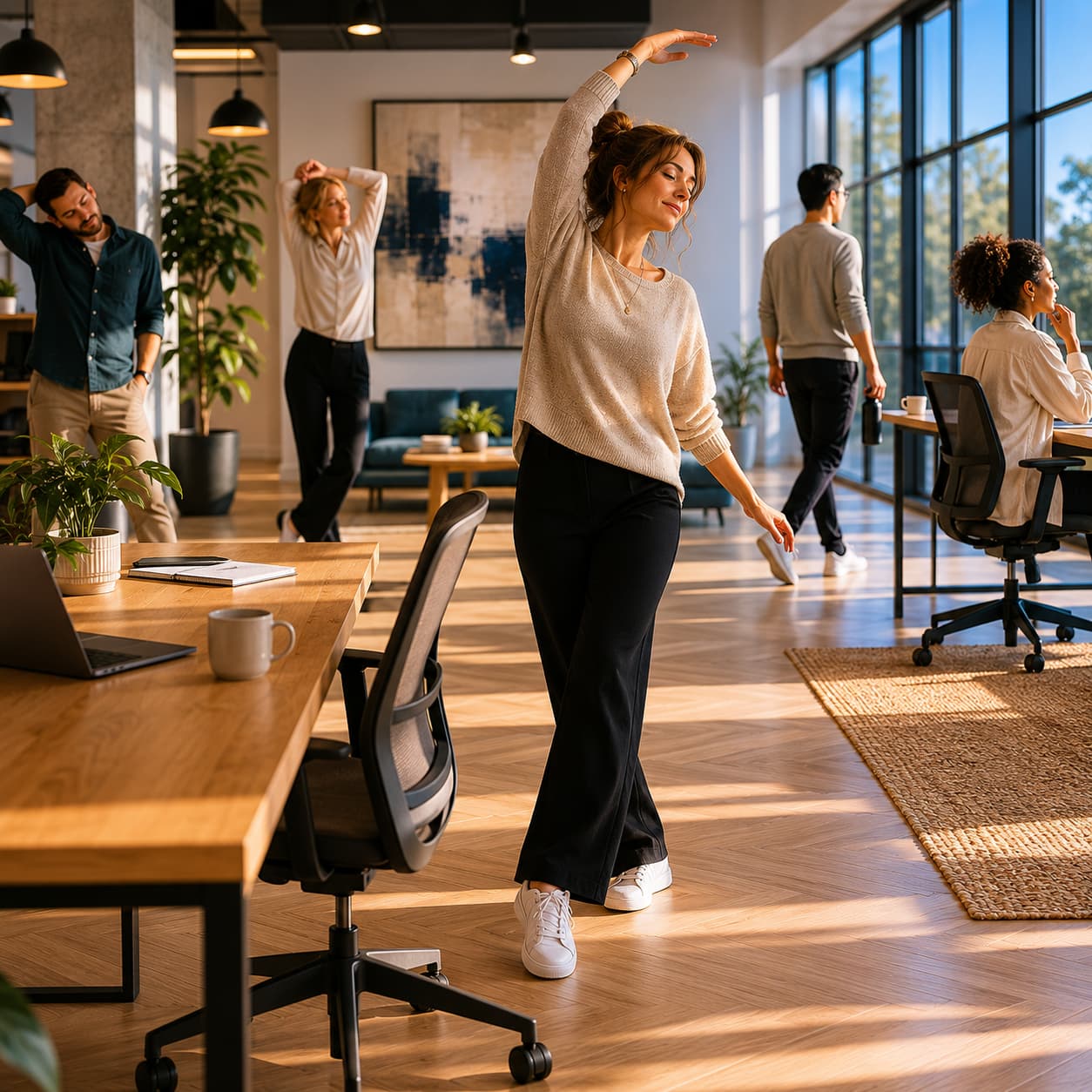
Movement helps regulate the nervous system because movement signals transition and safety to the body.
- Breathing deepens.
- Visual attention broadens.
- Muscles stop bracing as intensely.
- The body receives evidence that it can soften slightly rather than remaining constantly prepared for pressure.
This is why calm movement often works better in the workplace wellbeing than highly stimulating exercise. Many employees already feel overstimulated enough by modern working life. What they lack is regulation, not intensity.
Real wellbeing support therefore becomes less about “boosting productivity” through wellness branding and more about helping employees experience genuine physical steadiness during the working day itself.
And honestly, employees can usually tell the difference immediately.
Why workplace culture shapes physical wellbeing too
Wellbeing is never purely individual. It is environmental too.
Employees move differently depending on workplace culture. In some workplaces, standing up, walking briefly or stretching feels normal and accepted. In others, physical movement feels strangely guilty, awkward or vaguely suspicious, as if someone standing up for two minutes might accidentally trigger an emergency shareholder meeting.
That matters enormously because behaviour follows culture more than intention.
If workplaces silently reward physical self-neglect through constant sitting, endless back-to-back meetings and unrealistic responsiveness expectations, wellbeing initiatives usually remain superficial, no matter how beautifully branded they become.
Healthy workplace cultures normalise movement naturally.
Not performatively. Not theatrically. Practically.
People can walk between meetings. Breathe properly. Reset posture. Move occasionally. Function like living organisms rather than emotionally exhausted office furniture slowly merging with ergonomic chairs.
That cultural shift often matters more than another inspirational wellbeing campaign ever will.
Why sustainable wellbeing should feel grounded rather than performative
One reason employees sometimes resist workplace wellbeing initiatives is that the programmes feel disconnected from reality.
The language becomes inflated. The advice becomes generic. The delivery feels performative. Meanwhile, employees are still overloaded, physically static and emotionally exhausted underneath the branding exercise.
Sustainable workplace wellbeing feels different because it acknowledges how people actually work and how bodies actually respond to prolonged stress.
It understands that nervous systems need regulation, not just awareness. It recognises that movement matters because employees are physical beings, not floating productivity software disguised in business-casual clothing. It creates support that feels usable rather than aspirational.
This is why movement-based workplace wellbeing often creates stronger engagement. Employees feel the difference directly instead of merely being told what wellbeing should theoretically look like.
The body understands experience far faster than it understands corporate messaging.
Comparison table: advice-based wellbeing vs physical wellbeing practice
| Advice-based wellbeing | Physical wellbeing practice |
|---|---|
|
Primarily informational |
Experiential and embodied |
|
Raises awareness |
Changes physical state |
|
Often passive |
Actively regulates the body |
|
Easy to ignore under stress |
Felt immediately |
|
Usually cognitive |
Neurological and physical |
|
Temporary motivation spikes |
Sustainable regulation support |
|
Often disconnected from work reality |
Integrated into real working life |
|
Focuses on understanding |
Focuses on experience |
|
Frequently performative |
Practical and grounded |
|
Easier to forget |
Easier to sustain |
Final thoughts: employees do not just think stress, they physically carry it
Modern workplace wellbeing cannot remain purely informational while employees themselves are increasingly physically overloaded, mentally fragmented and disconnected from their bodies throughout the working day.
Advice matters. Awareness matters. Mental health support matters enormously. But physical regulation matters too. The body needs participation in wellbeing, not just the mind.
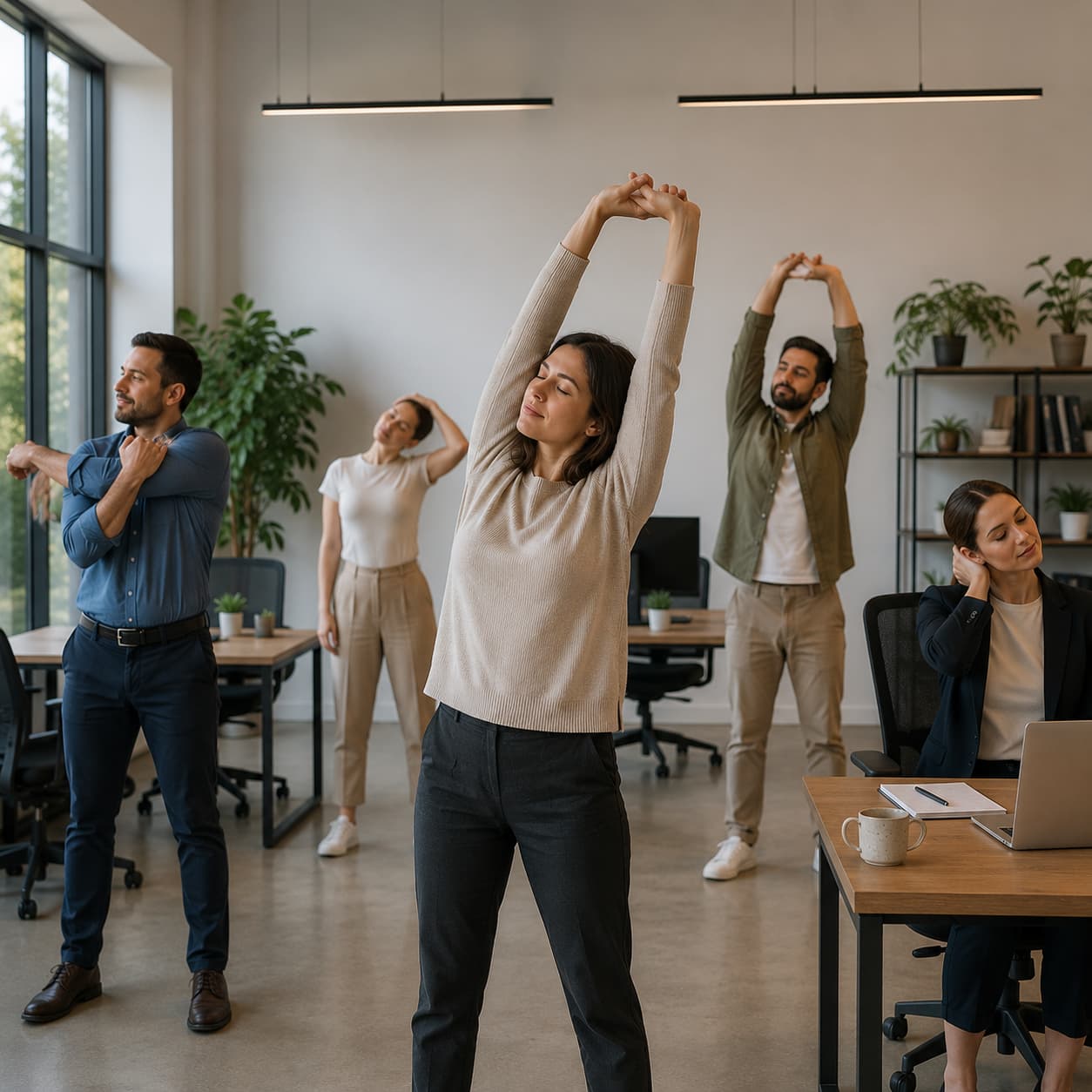
Movement, breathing, posture variation and nervous system regulation help employees experience steadiness directly rather than simply reading about it in another beautifully branded document while slowly calcifying at their desk.
Because ultimately, people do not become well through information alone. They become well through repeated experiences of safety, regulation, movement and physical support that the nervous system can actually feel.
And honestly, most workplaces need far more of that and far fewer inspirational wellbeing slides with stock photography of suspiciously relaxed people laughing near salad.
If your organisation wants workplace wellbeing support grounded in practical movement, nervous system regulation and real working life, explore Sit Happens.
You can also read:
How Sit Happens Helps Teams Reduce Stiffness, Fatigue and Brain Fog
Why Desk-Based Teams Need Movement Before More Wellbeing Advice
Workplace Movement Sessions in Nottingham: What Local Employers Need to Know
How to Reduce Desk Stiffness Without Turning Work Into a Fitness Class
Key takeaway
Workplace wellbeing becomes significantly more effective when employees physically experience regulation, movement and nervous system support instead of only receiving advice about stress management. Practical movement and physical awareness help the body process workload differently, which often creates more meaningful and sustainable change than information alone.
Frequently Asked Questions
Workplace wellbeing refers to strategies and support systems that help employees maintain better physical, emotional and mental health while working.
Physical wellbeing affects energy, posture, concentration, nervous system regulation and stress levels throughout the working day.
Many wellbeing programmes focus heavily on awareness and advice without addressing physical regulation, workload structure or nervous system support.
Movement helps reduce physical tension, improve circulation, regulate breathing and support nervous system balance, which can improve focus and emotional resilience.
Nervous system regulation refers to helping the body shift out of prolonged stress activation through movement, breathing and physical recovery strategies.
Not necessarily. Many employees benefit more from practical movement support, posture variation and calming physical regulation than intense exercise sessions.
Desk work creates sustained cognitive demand combined with physical stillness, which often leads to nervous system overload and accumulated muscular tension.
Sit Happens is a workplace movement programme designed to help desk-based teams reduce stiffness, fatigue and brain fog through practical movement and nervous system support.
Yes. Movement helps regulate breathing, posture and nervous system activation, all of which influence how stress is experienced physically.
Sustainable workplace wellbeing usually combines realistic workload culture, practical physical support, nervous system regulation and movement habits employees can maintain consistently.