
How to Choose Art for a Living Room
TL;DR
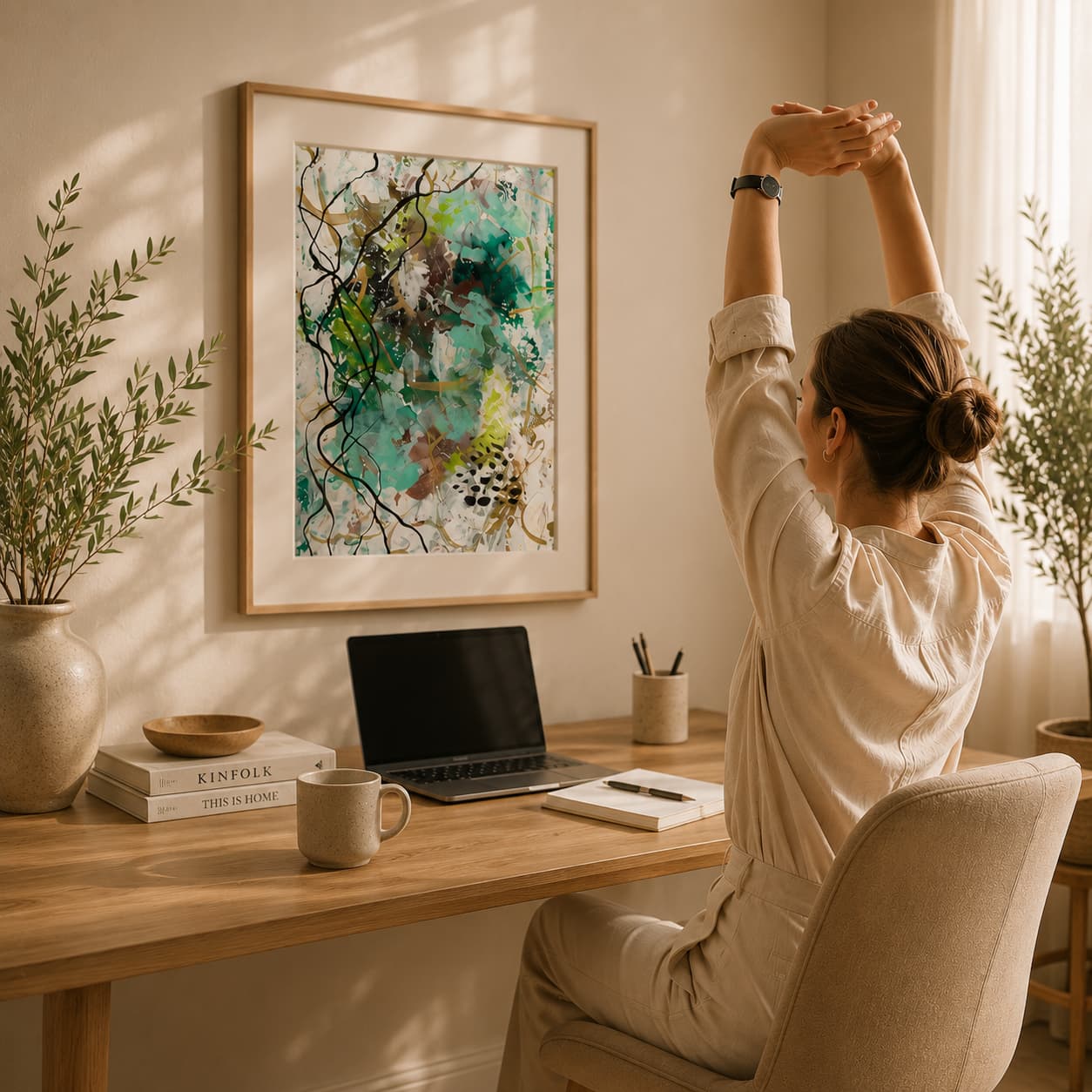
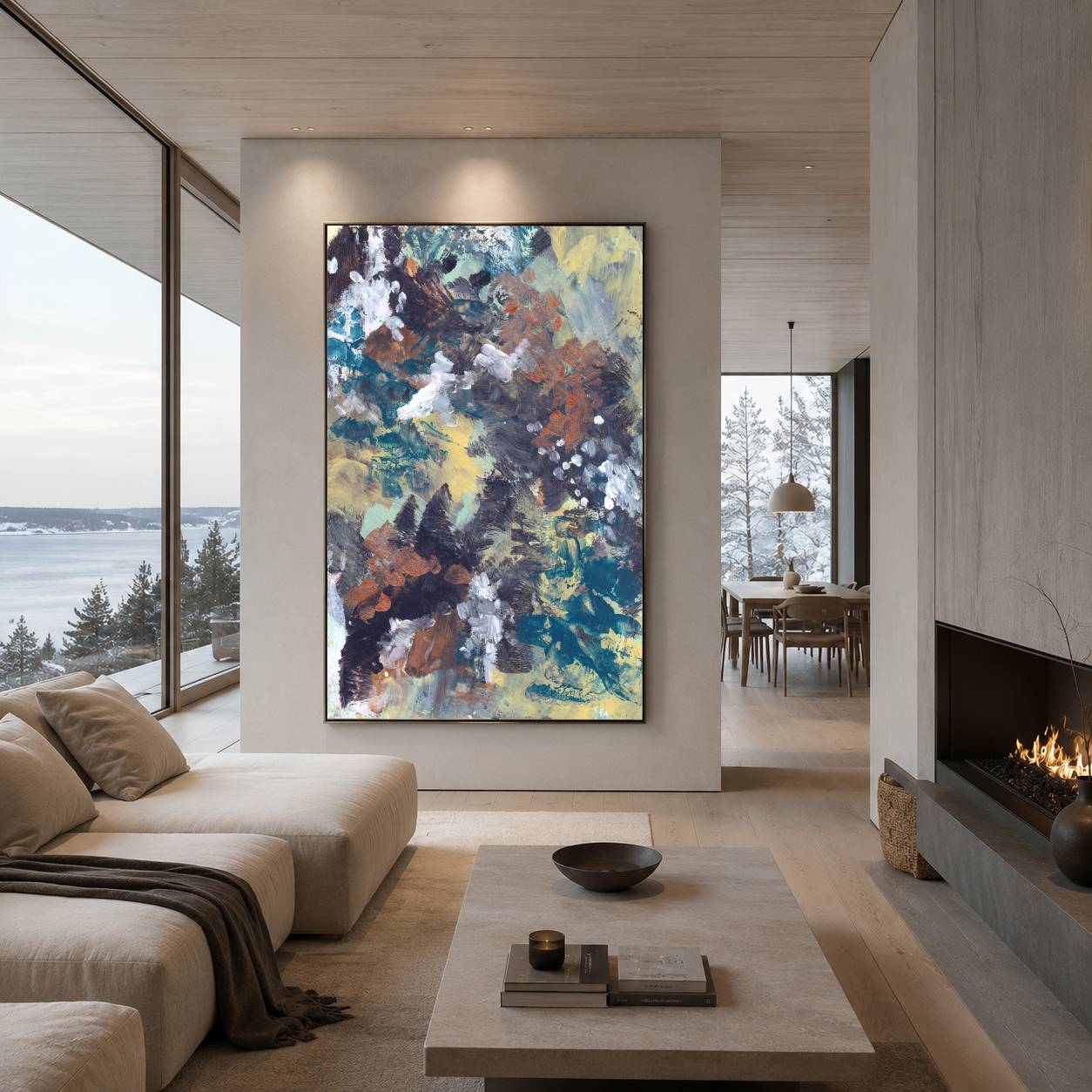
Most people choose artwork for their living room by matching colours. The better approach is to choose artwork based on the feeling you want the room to create. The strongest living rooms aren’t designed around trends. They’re designed around how people want to live, gather, rest and connect.
Introduction
Most people don’t struggle to choose furniture. They struggle to choose art. A sofa feels practical. A coffee table feels practical. Lighting feels practical.
Artwork feels personal. That’s why otherwise confident homeowners can spend months choosing flooring, paint colours and furniture, then stare at a blank wall for two years, wondering what should go there.
The problem is rarely a lack of options. The problem is that most advice about choosing art starts in the wrong place.
You’ll be told to match colours. Match styles. Match trends. Match your cushions. Match your rug. And before long, the artwork becomes an accessory. Something decorative. Something that fills a space.
The strongest living rooms rarely work that way. The rooms people remember are usually built around feeling rather than coordination. When you walk into those spaces, something feels settled.
Not because everything matches. Because everything belongs. Artwork often plays a bigger role in creating that feeling than anything else in the room.
Why The Living Room Is Different From Every Other Room
The living room has the hardest job in the house.
Bedrooms are primarily private. Kitchens are functional. Bathrooms are practical. The living room has to do everything.
It’s where people gather. It’s where people recover after work. It’s where conversations happen. It’s where guests form first impressions. It’s where families spend ordinary evenings.
A living room isn’t a showroom. It’s a container for everyday life.
That changes how artwork should be chosen.
The goal isn’t simply to make the room look complete. The goal is to help the room feel the way you want your life to feel inside it.
Start With The Atmosphere, Not The Artwork
One of the biggest mistakes people make is immediately searching for art. Before looking at artwork, ask:
-
- How do I want this room to feel?
- Calm?
- Warm?
- Energetic?
- Creative?
- Grounded?
- Sophisticated?
- Playful?
The answer matters because artwork influences atmosphere more than most people realise.
A room filled with cool greys and highly structured geometric artwork creates a completely different experience from a room containing soft textures and expressive abstract work.
Neither is right. Neither is wrong. They’re simply creating different emotional environments.
The most successful artwork choices happen when the atmosphere comes first. The artwork becomes part of a larger emotional decision rather than a decorating decision.
Why Matching Colours Is Usually Bad Advice
Matching colours sounds sensible. Sometimes it works. Often, it creates forgettable rooms.
When artwork perfectly matches everything around it, it can disappear. Nothing creates tension. Nothing creates interest. Nothing captures attention. The room becomes visually polite.
The strongest interiors often contain some contrast. An artwork can echo colours already present in the room while introducing something unexpected.
A warm neutral room may benefit from deeper tones. A darker room may benefit from softness. A highly structured room may benefit from expressive artwork.
The goal is conversation rather than duplication.
Artwork should contribute something to the room, not simply repeat what’s already there.
Consider The Wall's Job Before Choosing The Artwork
Not every wall is trying to achieve the same thing.
A wall above a sofa behaves differently from a wall opposite a sofa. A wall seen immediately upon entering the room has a different purpose from a wall tucked into a reading corner.
Before choosing artwork, consider what role that particular wall plays within the room.
Some walls are focal points. Some walls create balance. Some walls soften architecture. Some walls help guide the eye through the space. This matters because people often buy artwork first and only afterwards try to figure out where it belongs.
The better approach is the opposite.
Understand what the wall needs, then choose artwork that fulfils that purpose.
A large blank wall behind a sofa often benefits from a confident statement piece. A smaller wall beside shelving may work better with something quieter.
The artwork should respond to the architecture rather than fight it.
Size Matters More Than Most People Realise
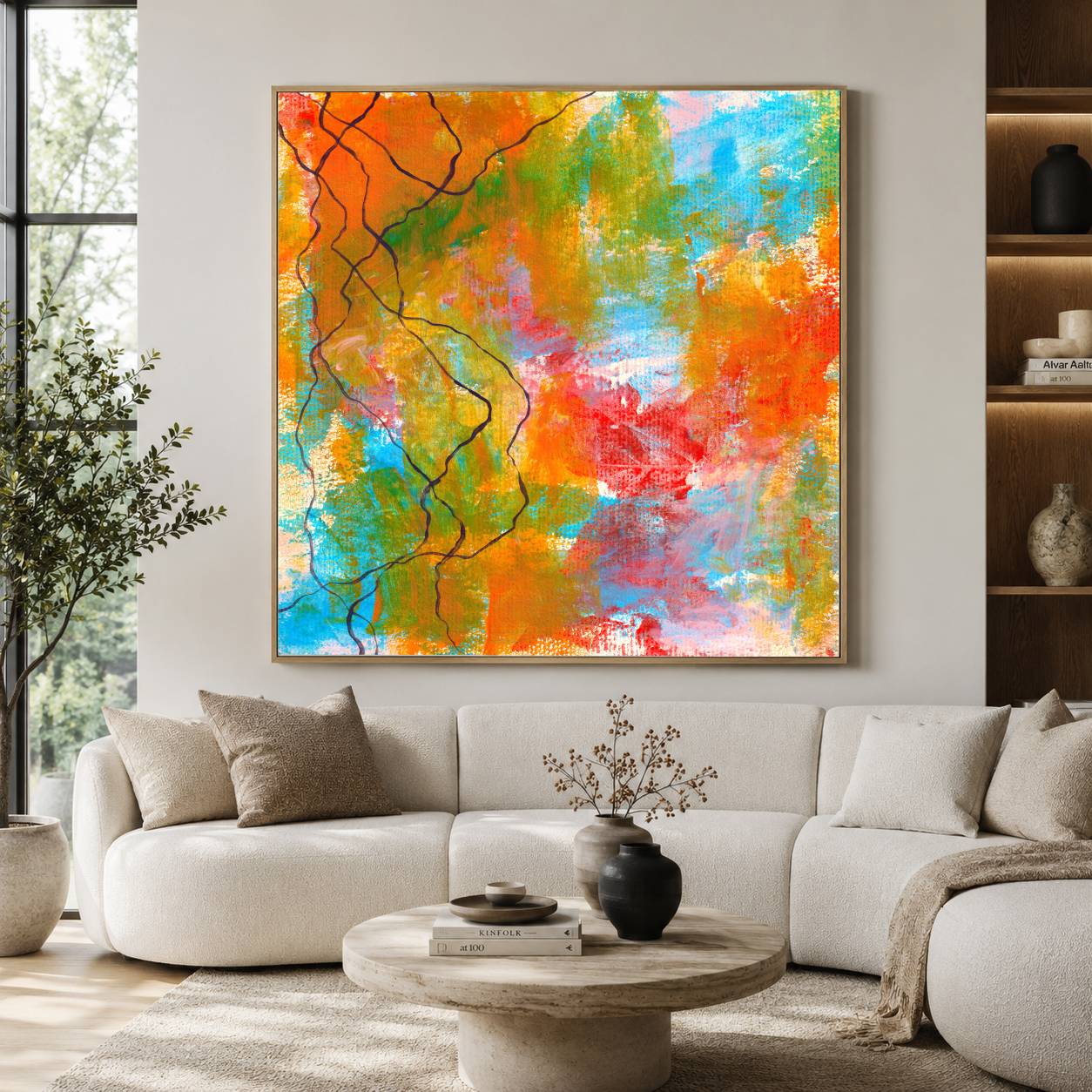
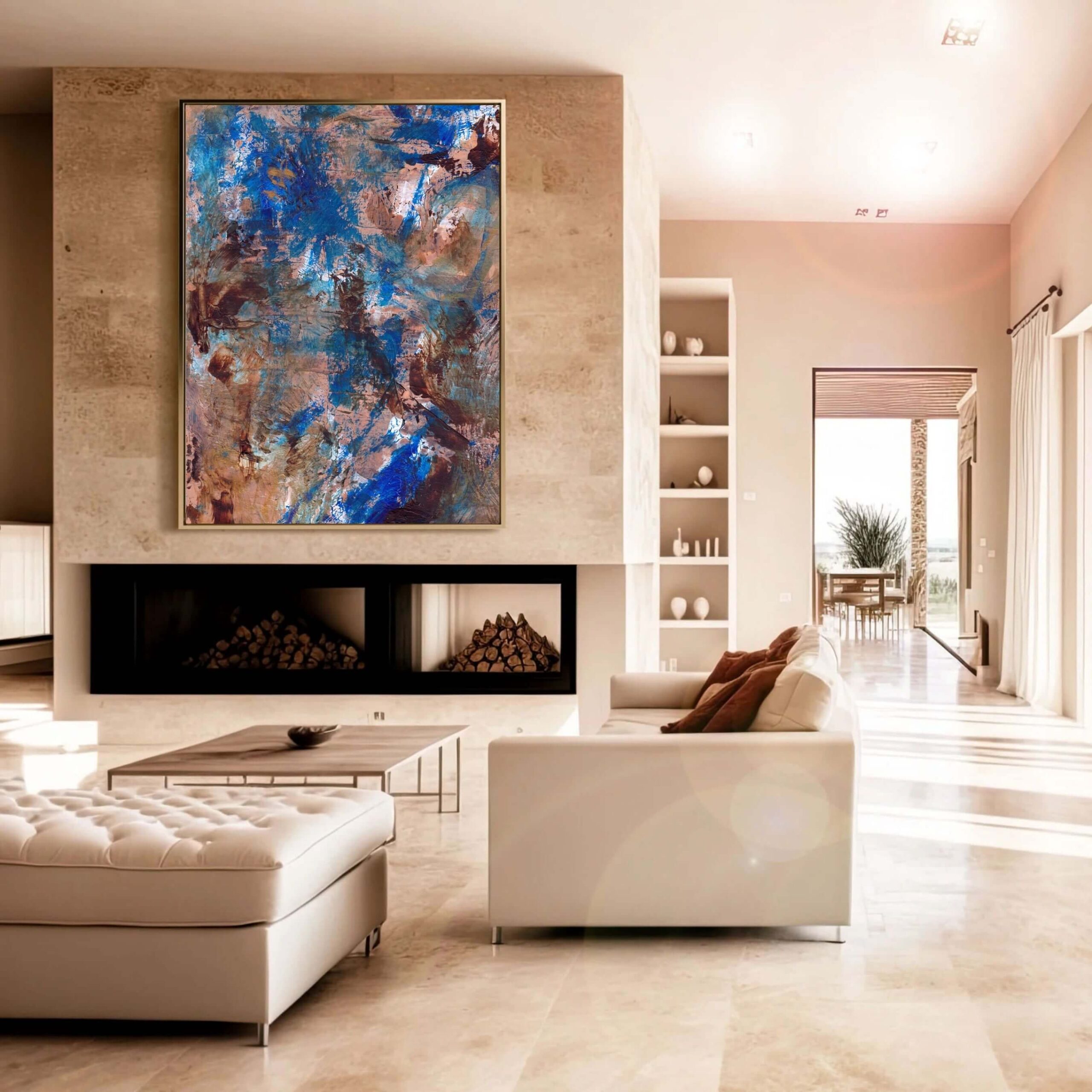
If there is one mistake that appears more often than almost any other, it is buying artwork that is too small. People worry about overwhelming a room. But what usually happens is the opposite, and the artwork becomes visually lost.
A large wall containing a small piece of art can feel disconnected. The eye notices the empty space rather than the artwork itself. This is particularly common above sofas.
A substantial wall generally needs substantial artwork. That does not mean every piece needs to dominate the room. It means the scale should feel intentional.
When artwork is correctly sized, the room feels balanced. When it is too small, even beautiful artwork can look hesitant.
Many people are surprised by how much larger they can comfortably go once they see artwork installed in a real space.
Choose Artwork You Want To Keep Looking At
This sounds obvious. It isn’t.
People often choose artwork based on what they think they should like. They choose pieces that suit a trend. Pieces that match a Pinterest board. Pieces that fit a design style.
The problem is that living rooms are not viewed once. They’re viewed every day. You’ll walk past the artwork hundreds or thousands of times.
-
- You’ll see it during stressful days.
- You’ll see it during celebrations.
- You’ll see it when you’re tired.
- You’ll see it when friends visit.
- You’ll see it when nobody visits.
The relationship between artwork and owner is longer than most decorating decisions. That relationship matters.
The best living room artwork tends to reward repeated viewing.
Something reveals itself over time. A colour. A texture. A memory. A feeling.
The piece continues giving something back long after the purchase.
Abstract Art Works Because It Leaves Room For The Viewer
One reason abstract art remains popular in living rooms is that it doesn’t tell people exactly what to think.
A landscape is a landscape. A portrait is a portrait.
Abstract work creates more space for interpretation. People bring their own experiences into it. And it can feel very different on different days. And that’s the flexibility, which makes it particularly well-suited to spaces where people spend a great deal of time.
It becomes part of the atmosphere rather than a literal statement.
This is also why abstract artwork often ages well.
It doesn’t depend on a specific trend or subject matter. It can continue feeling relevant even as furniture, colours and decorative details change around it.

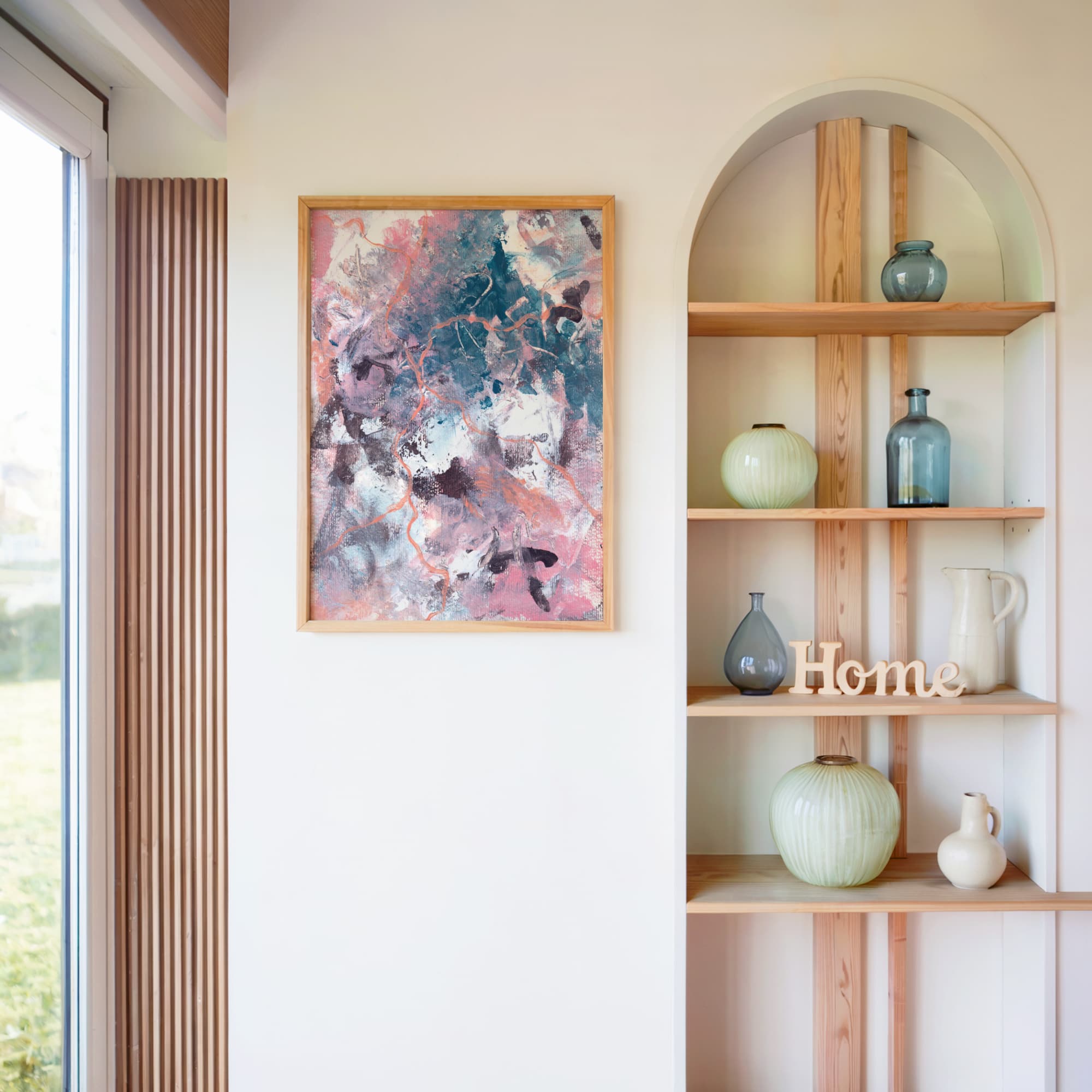
Think About Emotional Weight
Every artwork carries emotional weight.
Some pieces feel energetic. Some feel quiet. Some feel dramatic. Some feel contemplative. The emotional tone of a piece influences the room, whether people consciously notice it or not.
Imagine returning home after a difficult day. What feeling would you rather encounter?
Aggression? Noise? Tension? Or calm?
That answer will be different for everyone.
The point is not that living rooms should always feel peaceful. The point is that the emotional tone should be chosen intentionally.
Artwork contributes to that emotional tone more than almost any decorative object.
Don't Buy Artwork To Impress Other People
This may be the fastest route to buyer’s remorse. Many people unconsciously choose artwork based on how they think it will be perceived.
-
- Will guests understand it?
- Will people think it’s sophisticated?
- Will it look expensive?
- Will it appear impressive?
The problem is that guests visit occasionally. You live there. The artwork should support your relationship with your home. Not your relationship with somebody else’s opinion.
Interestingly, the homes that feel most memorable are often the ones where people have clearly chosen things they genuinely love. Not because they’re fashionable. Not because they’re expensive. Because they mean something. Authenticity is surprisingly visible in a space. People may not always be able to explain it.
But they can usually feel it.
One Strong Piece Often Outperforms Multiple Weak Ones
There is a temptation to fill walls, but sometimes less works better.
A single substantial piece can create clarity. Multiple smaller pieces can create visual noise if they lack connection. That doesn’t mean gallery walls are wrong. Some gallery walls are brilliant.
But they require intention. Without a clear relationship between the pieces, they can begin to feel cluttered.
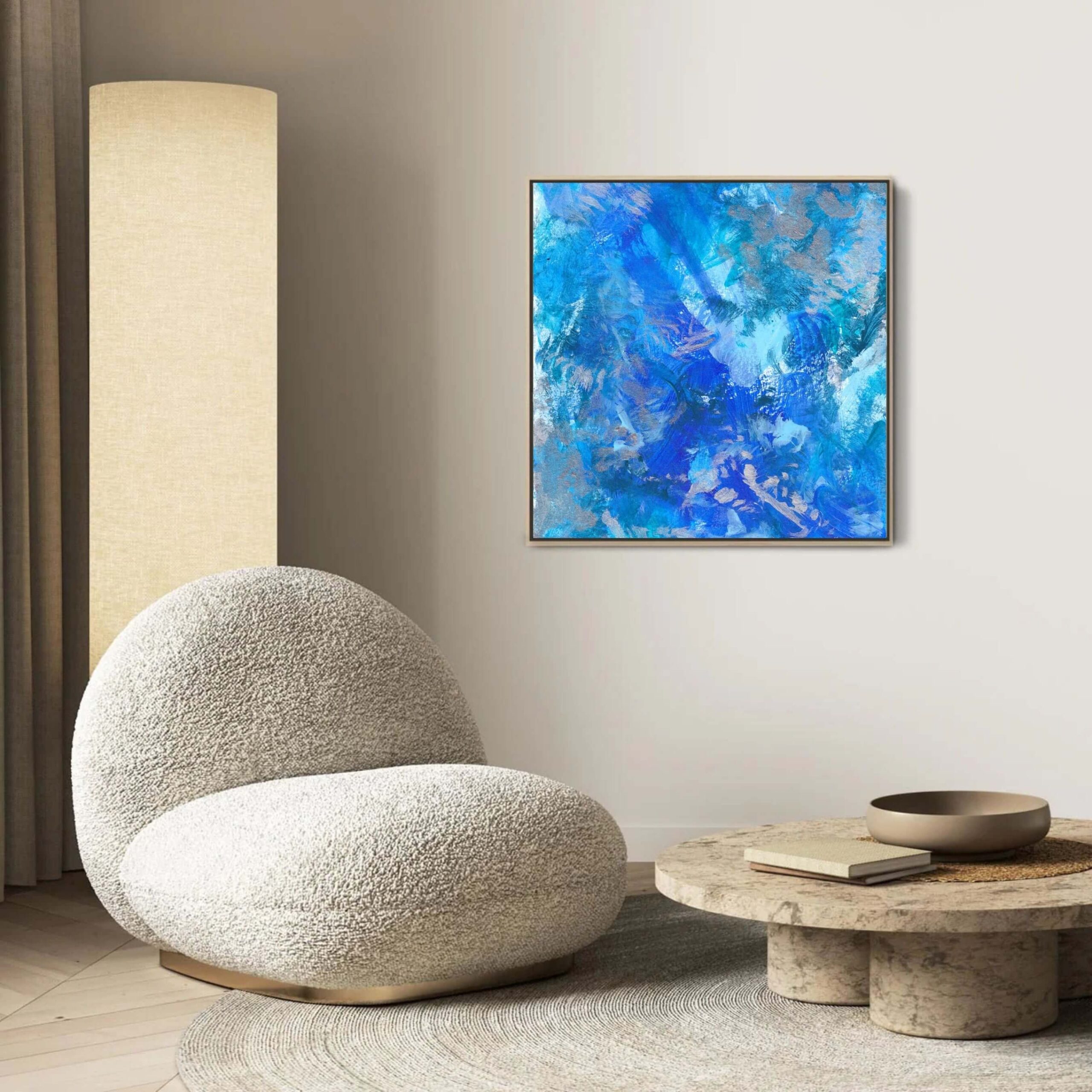
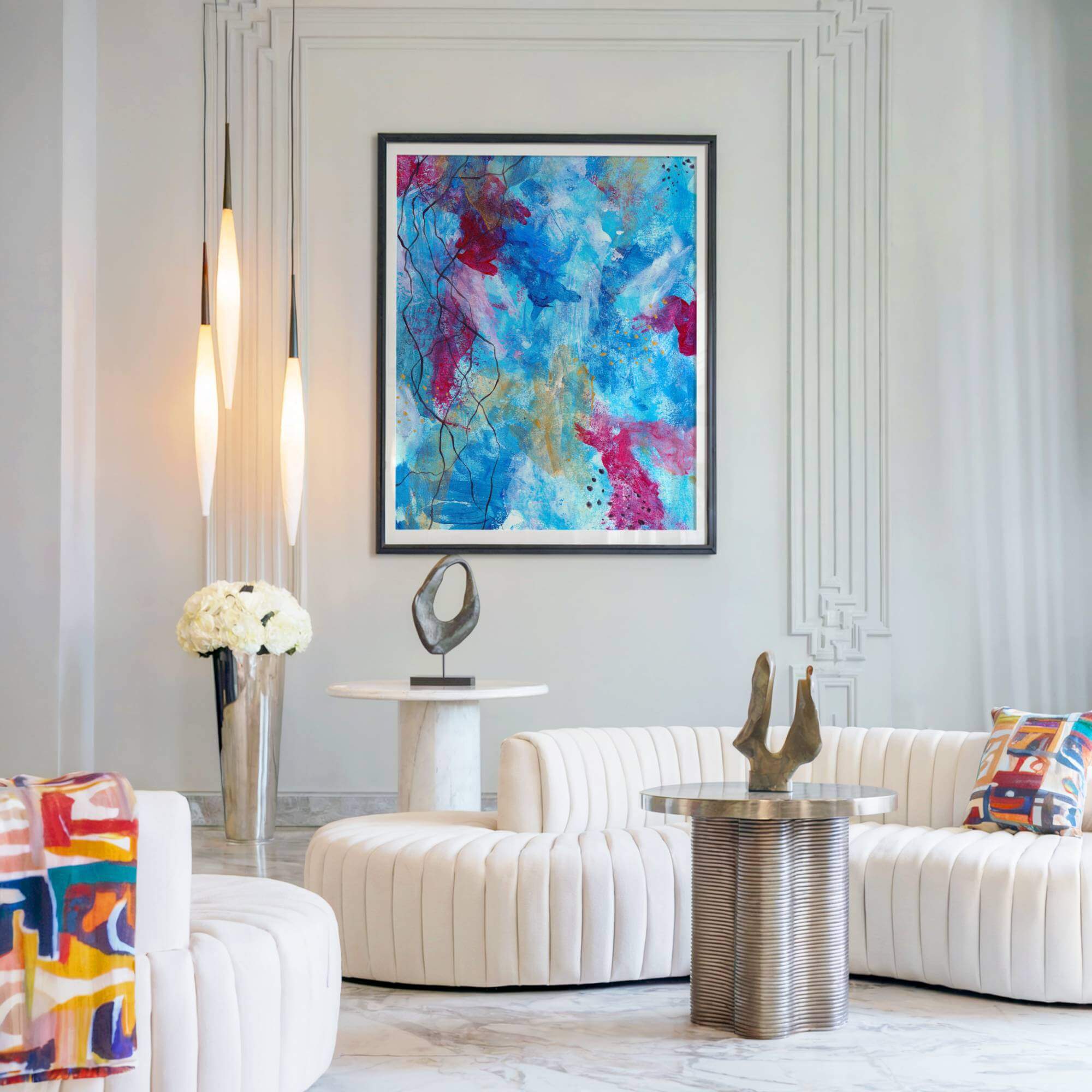
A single artwork often allows the room to breathe. It gives the eye somewhere to rest. It creates a centre of gravity.
For many living rooms, that simplicity creates a stronger result than trying to cover every available surface.
Your Living Room Doesn't Need To Look Like A Magazine
This may be the most important point in the entire article.
Magazine homes are photographed. Real homes are lived in. And those are not the same thing.
A room can be beautiful without being perfect. A room can be sophisticated without looking staged. A room can be luxurious without looking expensive.
The best living rooms often contain evidence of life. Books. Memories. Objects collected over time. Artwork chosen because it resonates rather than because it fits a trend forecast.
The goal is not to create a room that photographs well. The goal is to create a room you enjoy inhabiting. Those priorities often lead to different decisions.
How To Know You've Found The Right Piece
People often expect certainty. A dramatic moment. A lightning strike. Sometimes that happens. Often it doesn’t.
More commonly, the right artwork creates a quieter response.
You keep returning to it. You compare other options against it. You imagine it in the room. You stop searching quite so aggressively.
Something settles.
The decision begins feeling less like shopping and more like recognition. That doesn’t mean the artwork must be profound. It simply means it feels right for the space and right for the life being lived inside it.
The strongest art purchases often feel less like acquiring an object and more like finding something that was missing.
Conclusion
Choosing art for a living room isn’t really about matching colours, following trends or filling empty walls.
It’s about creating atmosphere. It’s about deciding how you want the room to feel when people gather, rest, talk, read, celebrate and simply exist within it.
The most successful living rooms are rarely the ones that follow every design rule perfectly.
They’re the ones that feel personal. They’re the ones where the artwork contributes something meaningful to the experience of being there. Long after people forget the sofa, the rug or the paint colour, they often remember how the room felt.
Artwork has a remarkable ability to shape that feeling. Choose the piece that helps create the life you want to live inside the room, not simply the room you want people to admire.
Explore the Collector’s Vault: https://vikithorbjorn.art/collectors-vault/
Request the private catalogue: https://vikithorbjorn.art/request-private-catalogue/
Read the Collector-Grade Canvas Art Guide: https://vikithorbjorn.art/collector-grade-canvas-art-guide/
Key Takeaway
The best artwork for a living room isn’t the piece that matches the cushions. It’s the piece that changes how the room feels when you walk into it.
Frequently Asked Questions
Start by deciding how you want the room to feel. Artwork should support the atmosphere you want to create rather than simply matching colours or furniture.
The size depends on the wall and furniture placement, but most people choose artwork that is too small. Larger pieces often create better balance and impact.
Not necessarily. Artwork can complement existing colours without directly matching them. Contrast often creates more interesting interiors.
Yes. Abstract art works particularly well because it allows for personal interpretation and can adapt to changing interiors over time.
There is no fixed number. Some rooms benefit from a single statement piece while others work well with multiple carefully selected artworks.
The best colours depend on the atmosphere you want to create. Soft neutrals often feel calming, while stronger colours can create energy and focus.
No. The value of artwork is not determined solely by price. Connection, craftsmanship, scale and emotional impact all matter.
Yes. Thoughtfully chosen artwork often creates more impact than many decorative accessories and can significantly elevate the overall feeling of a space.