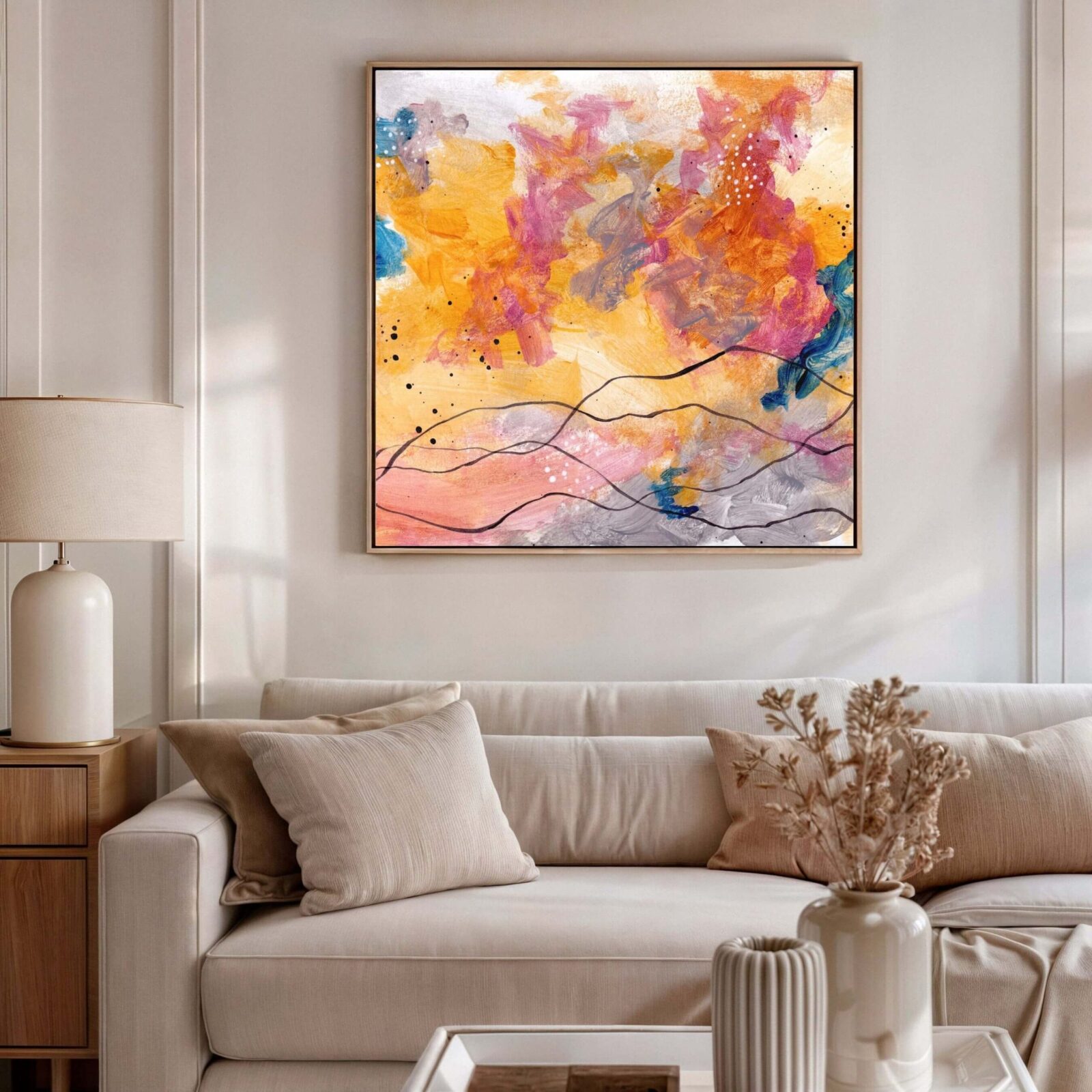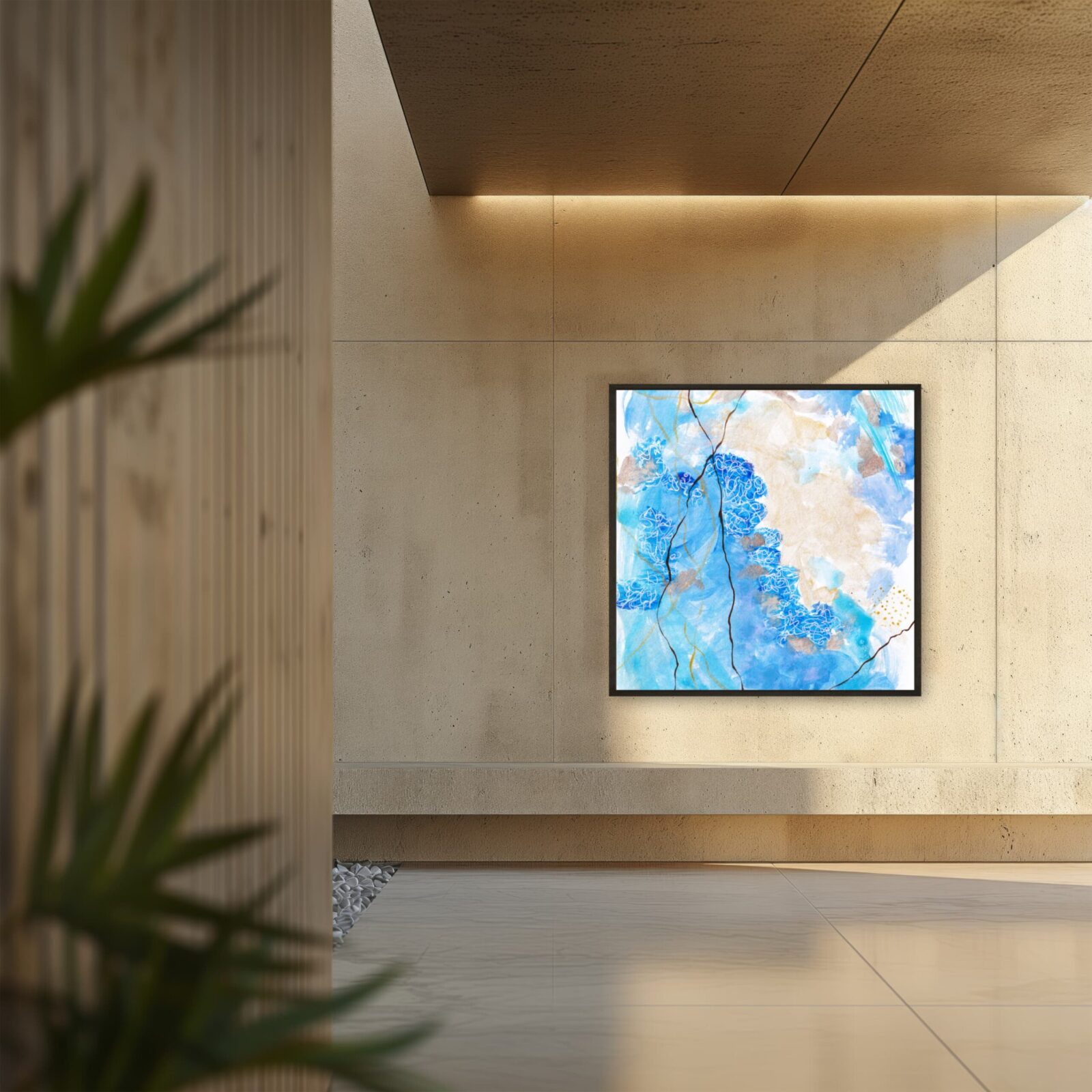
What Happens After the Art Is Hung

Most conversations about art end too early.
 
They stop at the moment of installation. The delivery arrives. The piece is lifted, aligned, levelled. Someone steps back and says it looks good. A photograph is taken. Sometimes it’s shared. Then the attention moves on.
 
But that moment is not the point of the work. It’s barely the beginning.
 
What actually matters happens afterwards. Days later. Weeks later. On ordinary mornings. On tired evenings. In the moments when no one is looking at the wall on purpose, but the body is still responding to what’s there.
 
This is the part that never shows up in galleries or listings. And it’s the only part serious collectors care about.

The First Few Days: Visual Acclimatisation

When a new piece enters a space, the eye does most of the work at first.
 
You notice colour. Scale. Contrast. How it sits against the wall, the furniture, the light. The mind is busy placing it. Is it centred? Does it belong? Does it change the room visually?
 
This phase is short-lived.
 
The eye adapts quickly. What felt striking on day one starts to recede. That’s not failure. That’s exactly what should happen with work that’s meant to be lived with.
 
Art that only works when it’s being actively looked at tends to exhaust itself early. It relies on novelty. Once the visual system settles, there’s nothing left for the body to respond to.
 
Collector-grade work behaves differently. As the eye relaxes, something else takes over.

The Shift From Looking to Living

After the visual noise drops, the body becomes the primary listener.
 
You stop registering the work as an object and start experiencing it as part of the environment. It enters peripheral awareness. It starts working in the background, the same way light, temperature, or sound does.
 
This is where emotionally intelligent art earns its place.
 
The room begins to feel different. Not dramatically. Not in a way you can easily point to. But the space settles. Movement through it slows slightly. The nervous system has fewer sharp edges to react to.
 
This is often when collectors say something like, “I don’t notice it all the time, but I feel it if it’s not there.”
 
That’s not poetic language. It’s accurate.

Why Decorative Art Stops Here

Most decorative art doesn’t survive this transition.
 
Once the initial visual interest fades, it becomes inert. It fills space but doesn’t participate in it. The room returns to its baseline state, just with something on the wall.
 
This is why people quietly replace pieces every few years without really knowing why. Nothing was wrong with the work. It just stopped doing anything.
 
Decorative art is designed to be seen. Emotionally intelligent art is designed to be lived with.
 
If you want to understand how this difference shows up in materials, process, and longevity, this guide breaks it down clearly: What to Know Before Buying Your First Collector-Grade Canvas Print

The Weeks That Follow: Regulation, Not Reaction

As time passes, the work begins to regulate the space rather than react within it.
 
In homes, this often shows up subtly. A bedroom feels easier to settle into. A living space feels less restless at night. A hallway becomes a pause rather than a passage.
 
In offices or studios, the effect is more functional. Attention holds longer. Thinking feels less brittle. There’s less low-level agitation in the body while working.
 
This isn’t because the art is “calming” in a generic sense. It’s because the work carries coherence. The body recognises that coherence and mirrors it.
 
Art that has been made slowly, with restraint and intention, carries a different internal rhythm. Over time, the room entrains to that rhythm.

The Role of Material Presence Over Time
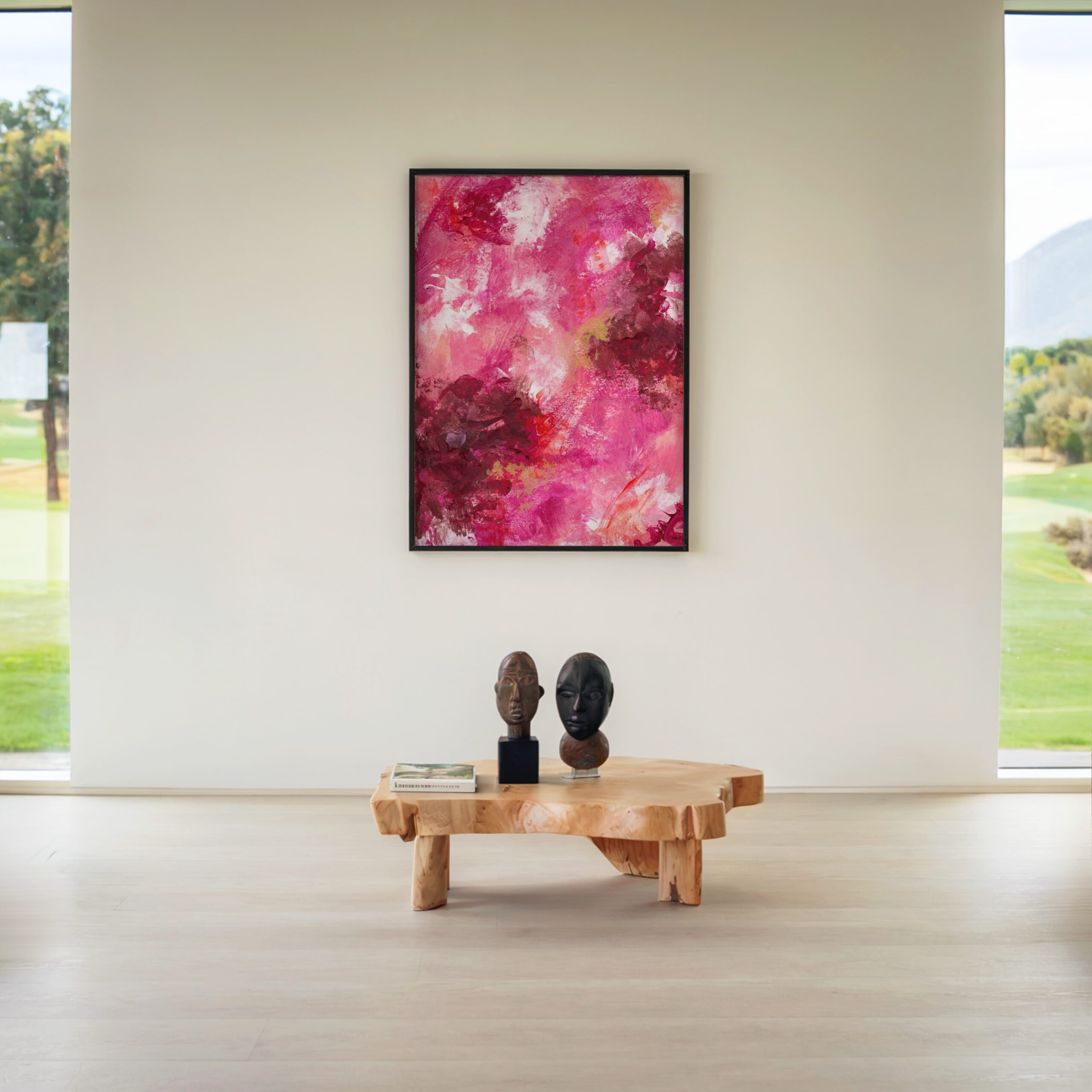
Longevity isn’t just about emotional resonance. It’s physical.
 
Canvas behaves differently to paper over years of exposure. It has dimensional stability. It holds tension. It doesn’t buckle or curl. Pigment sits within the surface rather than on top of it.
 
These things matter because degradation creates noise. A piece that starts to warp, fade, or discolour slowly pulls attention back to itself. The body registers something as off, even if the mind can’t name it.
 
Collector-grade canvas prints are designed to disappear into the space, not demand maintenance or vigilance. Their job is to hold, not to age visibly.
 
This is one of the reasons all of my released works live within a private archive rather than open retail. The Collector’s Vault exists to house pieces that are built for long-term presence, not trend cycles. Collector’s Vault
 
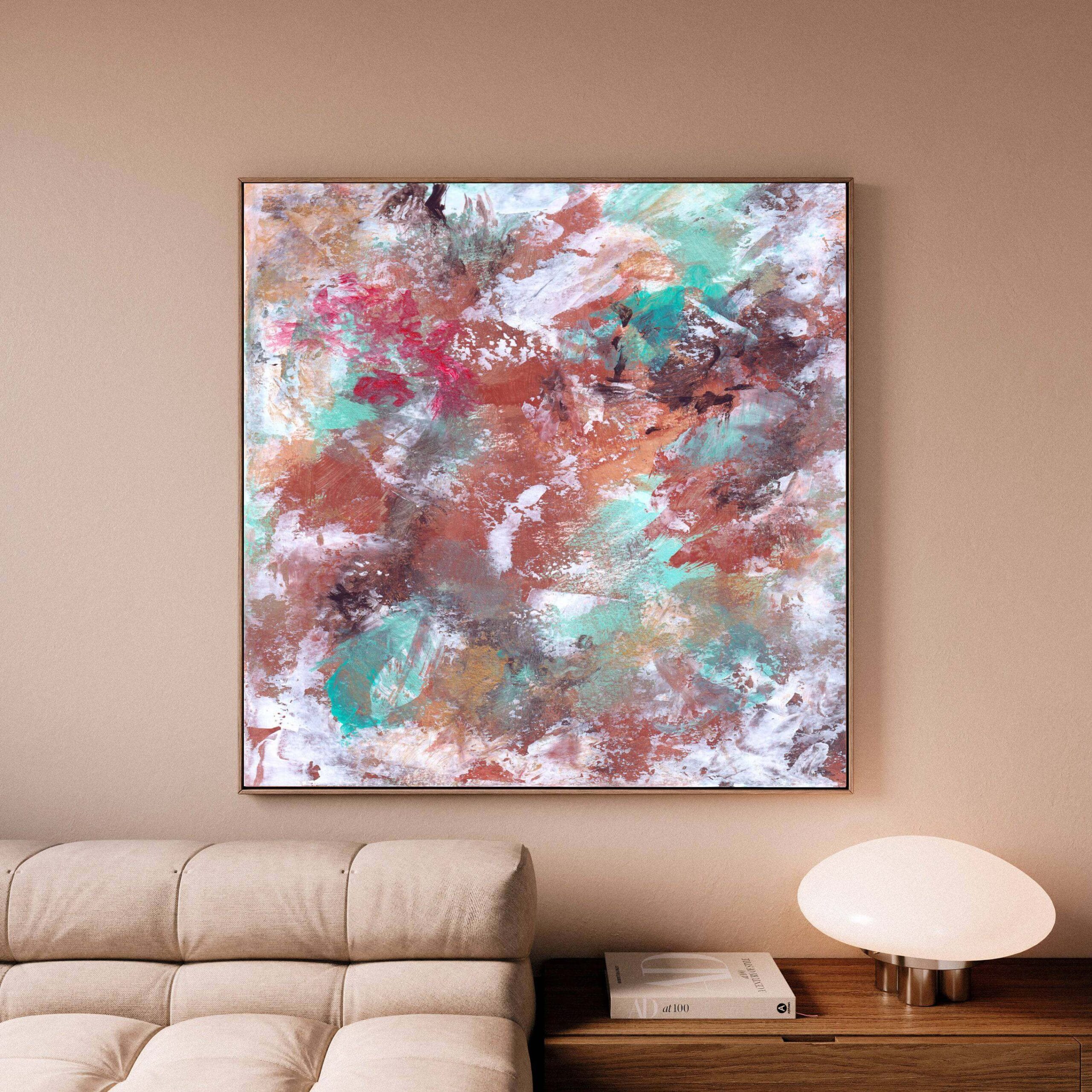
abstract canvas painting with layered texture

When the Work Becomes Part of Daily Rhythm

The real test of a piece isn’t how it looks when you show it to someone else. It’s how it behaves when you’re alone.
 
Collectors often describe a moment, usually unplanned, when they realise the work has integrated fully. They catch themselves standing in front of it without thinking. Or noticing that their breathing changes slightly when they enter the room.
 
This is the point at which the work stops being art-as-object and becomes art-as-environment.
 
You don’t “engage” with it anymore. You coexist with it.
 
That’s the relationship emotionally intelligent collectors are actually buying.

Why This Is the Only Metric That Lasts

Markets fluctuate. Trends rotate. Even personal taste evolves.
 
But the body’s response to a space is consistent. If a piece supports regulation, grounding, and clarity, it will continue to earn its place long after other criteria lose relevance.
 
This is why emotionally intelligent collectors rarely regret their choices, even when their homes change, their careers shift, or their lives look very different years later.
 
The work adapts because it was never about a moment.

What Happens When the Art Is Removed

There’s a simple way to tell whether a piece has been doing real work.
 
Remove it.
 
Collectors who’ve lived with a piece for a while often notice the absence immediately. The room feels flatter. Less held. Slightly louder. Not visually empty, but emotionally thinner.
 
This isn’t sentimentality. It’s feedback.
 
When art has become part of the nervous system of a space, its absence registers the same way the removal of good lighting or sound dampening would.

Choosing Art With the After in Mind

If you only buy art for how it looks on installation day, you’re buying the wrong part of the experience.
 
The real questions are quieter:
    • Will this still feel right when I stop noticing it visually?
    • Will it support the function of this room over time?
    • Will it age without asking for attention?
These are the questions emotionally intelligent collectors ask, even if they don’t articulate them explicitly.
 
They’re choosing for the after.

When Life Changes, the Work Reveals Itself Differently
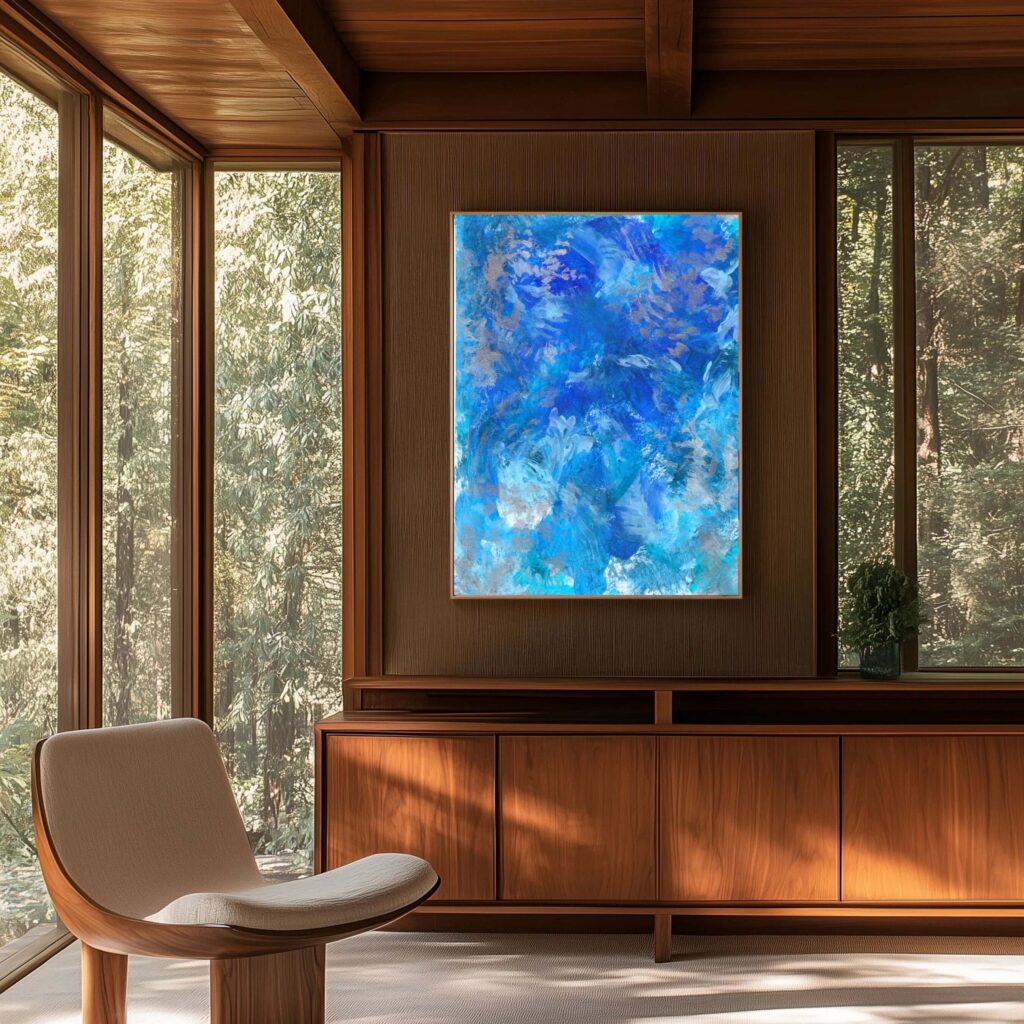
One of the quiet truths about living with art is that it does not stay the same, even though it physically does.
 
As your life shifts, the work shifts with you.
 
Collectors often assume they need to replace pieces when circumstances change. New home. New job. New phase. In reality, emotionally intelligent work tends to reveal different aspects of itself instead. A piece that once felt grounding during a period of stress may later feel like companionship. Something that held grief may soften into steadiness once that grief loosens its grip.
 
This is not because the art is sentimental. It’s because it was never literal.
 
Work that is built from presence rather than narrative has room to move with you. It does not insist on being understood in one fixed way. It does not trap you in the emotional state you were in when you bought it. It adapts because it was never trying to explain anything in the first place.
 
This is why collectors who buy well rarely feel the need to “refresh” their walls. The work ages alongside them. Not nostalgically, but intelligently.

The Difference Between Ownership and Relationship

There is a point, usually months in, where something subtle but important happens.
 
The language changes.
 
Collectors stop saying “my artwork” and start referring to “the room” or “the space” as if the piece were part of the architecture rather than an object they own. The work becomes integrated enough that it no longer feels separate.
 
This is the difference between ownership and relationship.
 
Ownership is transactional. You buy, you place, you possess. Relationship is reciprocal. The work gives something back. It holds. It steadies. It participates in the daily life of the space.
 
This is also why emotionally intelligent collectors tend to buy fewer pieces over time, not more. Once you understand what a real relationship with a work feels like, surface acquisitions lose their appeal. You become more selective. Quieter. Harder to impress.
 
The wall stops being a display surface and starts being a place of support.

Closing Reflection

The moment the art is hung is the least important part of the process.
 
What matters is what happens afterwards. When the room stops performing. When the body starts listening. When the work becomes something you live with rather than look at.
 
That’s where emotionally intelligent art proves itself.
 
And that’s why the after is the only part worth buying for.
 
If you want to explore pieces created with that after in mind, the Collector’s Vault is open quietly, by request.

Frequently Asked Questions

How long does it take for art to fully settle into a space?

Usually a few weeks. Visual novelty fades first. Emotional integration follows once the body has time to respond without stimulation.

Why does some art feel tiring over time?

Because it relies on contrast, noise, or impact to function. Once the eye adapts, the body is left with unresolved stimulation.

Does size affect how art works long-term?

Yes, but not in a simple way. Scale needs to match the emotional capacity of the room, not dominate it.

Is this why people replace art every few years?

Often, yes. The work didn’t fail aesthetically. It just stopped doing anything emotionally.

Can prints really have this kind of presence?

Absolutely, when produced at collector-grade. Material quality and process matter far more than whether a piece is labelled “original.”

Why does canvas matter more than paper long-term?

Canvas holds tension and pigment differently. It remains stable and visually quiet over decades, which supports presence.

Does emotionally intelligent art have to be subtle?

No. It has to be coherent. Bold work can still regulate if it carries internal restraint.

How do I know if a piece will work long-term?

Spend time with it. If it keeps drawing you back quietly, without effort, it’s doing the right work.