
Why Do Some Rooms Feel Empty Even When They’re Finished?
TL;DR
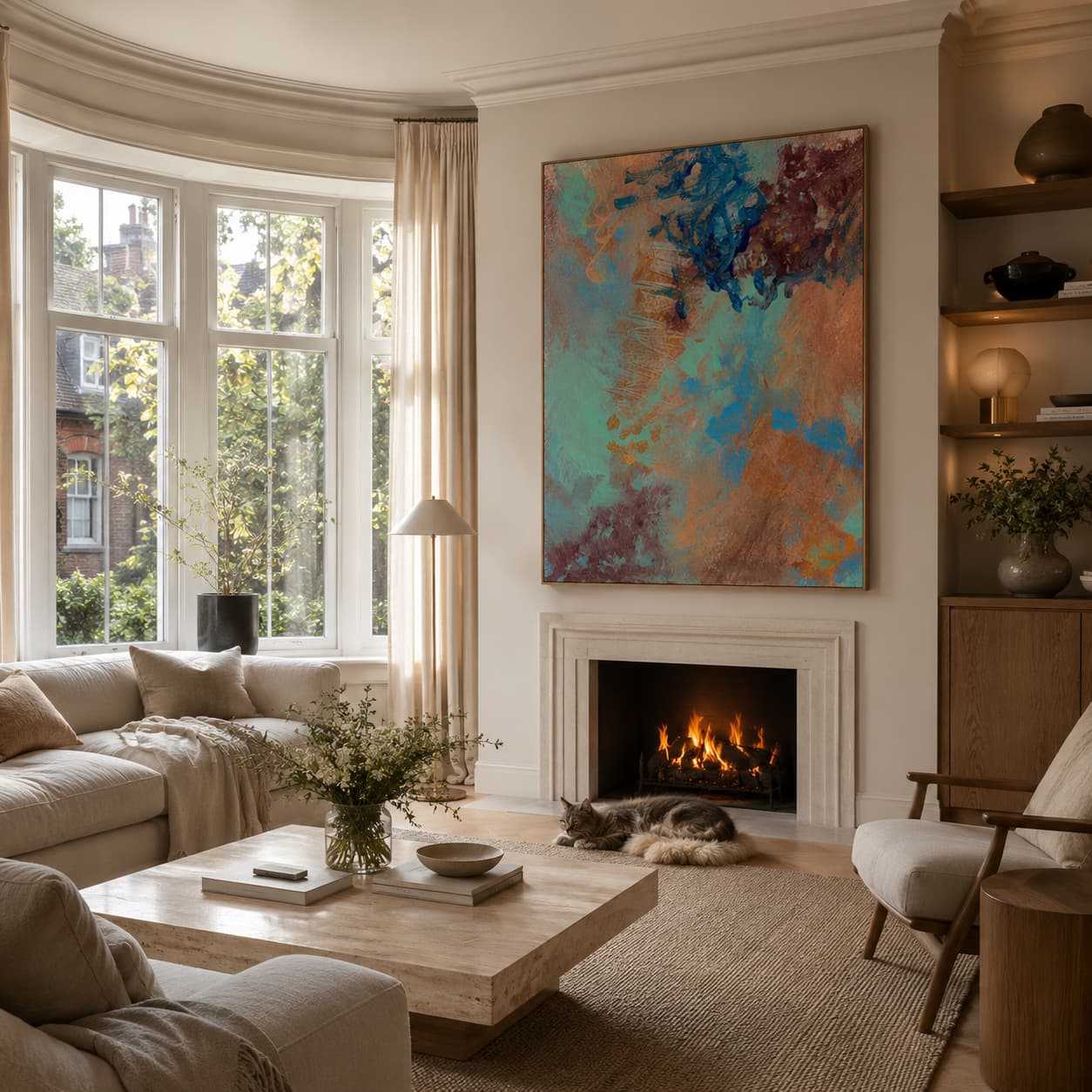
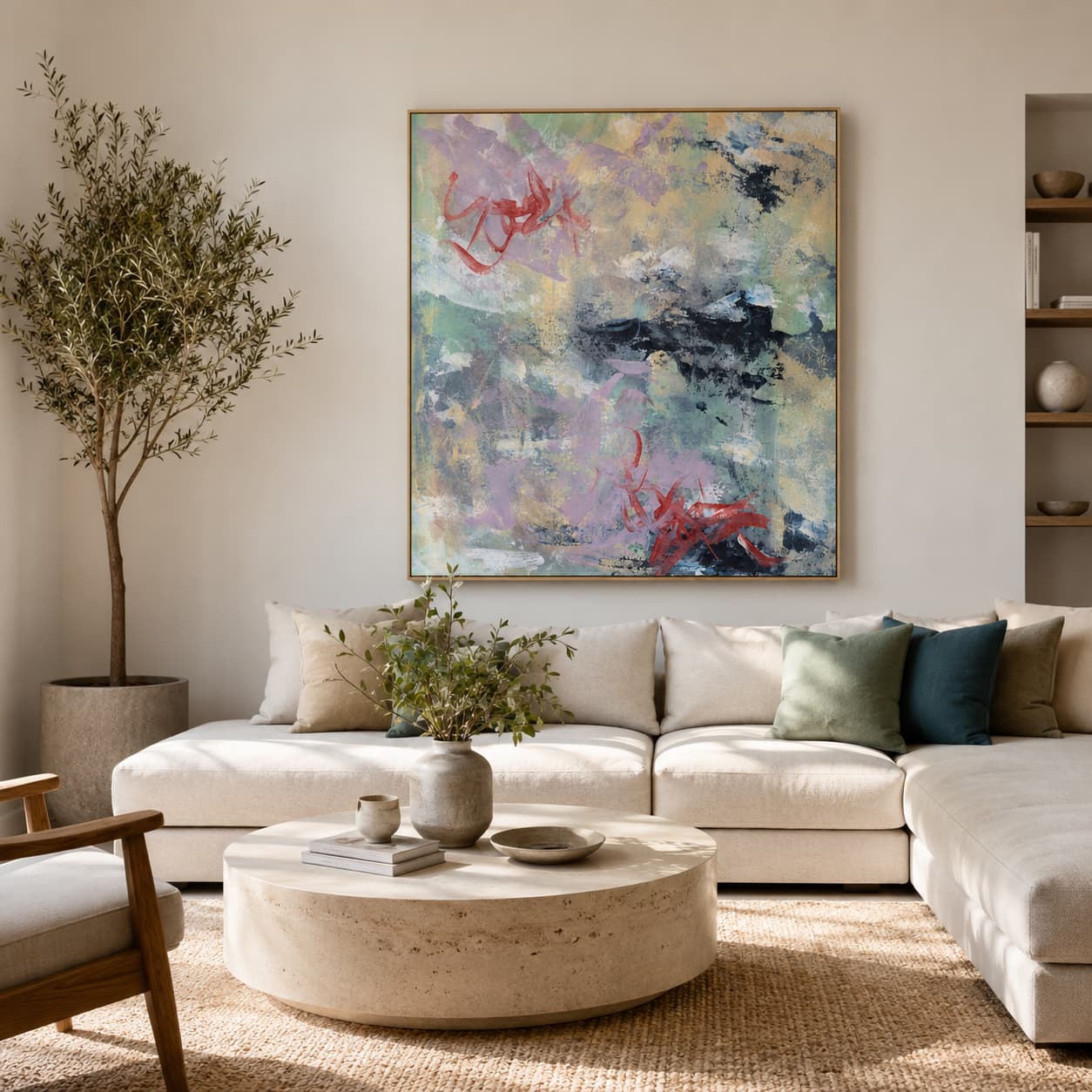
Rooms rarely feel empty because they’re missing more furniture. More often, they’re missing personality, visual balance, emotional anchors and elements that create a sense of identity. Thoughtfully chosen artwork is often the piece that transforms a technically finished room into a space that genuinely feels complete.
Introduction
Have you ever walked into a room and thought, “I don’t understand it. Everything is here, but something still feels off”?
The sofa is there. The rug is there. The coffee table has been carefully chosen. The walls have been painted. The lighting is perfectly adequate. You may have even invested a significant amount of money into the entire space.
And yet, every time you walk into the room, there’s a nagging feeling that something is missing.
This is incredibly common.
In fact, it’s one of the reasons people continue buying cushions, lamps, decorative objects and blankets that they don’t particularly need. They’re trying to fix a feeling rather than solve a practical problem.
The difficulty is that the solution often isn’t another object.
Many people accidentally approach interior design like a checklist. Sofa? Tick. Dining table? Tick. Curtains? Tick. Lighting? Tick. Once every practical element has been added, they expect the room to magically come alive.
Sometimes it does. Often it doesn’t.
That’s because rooms don’t become memorable through functionality alone. They become memorable when they begin to communicate something about the people who live there.
This is where many technically beautiful spaces quietly fall short.
The room isn't empty. It's emotionally neutral.
I think this is one of the biggest misconceptions. People assume an empty-feeling room is literally empty. Most of the time, it isn’t. In fact, it’s often the opposite. Some rooms contain lots of beautiful things, but still somehow feel impersonal.
This happens because our brains aren’t simply processing objects. They’re processing the atmosphere. When you walk into a room, you’re subconsciously asking dozens of questions.
-
- Does this space feel balanced?
- Does it feel calm?
- Does it feel warm?
- Does it feel intentional?
- Does it feel personal?
- Does it feel lived in?
When every object in a room serves a purely practical purpose, the environment can start to feel slightly transactional. It’s functioning perfectly well, but it isn’t necessarily saying anything about the people who live there.
Think about hotel rooms for a moment. Even beautiful hotel rooms can sometimes feel anonymous. They contain everything you need, but they don’t necessarily tell you anything about the person occupying them.
Homes need something different. Homes need identity.
Beautiful furniture isn't always enough
Furniture creates function. It doesn’t automatically create personality. This is an important distinction because many people assume expensive furniture will eventually make a room feel complete. Sometimes it helps, but rarely by itself.
We’ve all seen beautiful homes online that somehow feel sterile. The furniture is expensive. The styling is immaculate. Everything is perfectly coordinated.
And yet the room feels slightly untouchable. Almost like a showroom.
That’s because perfection isn’t what makes people emotionally connect to spaces. Character does.
The most inviting rooms often contain a subtle tension between practicality and personality. They function beautifully, but they also tell a story.
Sometimes that’s through artwork. Sometimes it’s through books, collected objects, unusual textures or a meaningful combination of colours.
The common denominator is always the same. The room stops looking assembled and starts looking inhabited.
Why people often buy more furniture when they actually need less
This is one of the biggest traps modern interiors create. We become convinced that emptiness must be solved by adding more things.
Another side table. Another lamp. Another decorative bowl. Another vase. Another blanket draped over the sofa that nobody actually uses.
Before long, you’ve spent hundreds, sometimes thousands, of pounds trying to solve a problem that isn’t responding to more objects. The irony is that many empty-feeling rooms aren’t under-designed. They’re often over-designed.
Everything is trying so hard to work together that nothing is allowed to have a personality.
If every cushion perfectly matches the rug, every accessory matches the curtains, and every decorative object has been purchased from the same shop at the same time, the room can begin to feel slightly generic.
Beautiful, perhaps. But generic. Rooms don’t become memorable because everything matches. They become memorable because they have focal points.
Something needs to gently interrupt the perfection. Something needs to anchor the room.
Most rooms are missing an emotional anchor
I genuinely think this is one of the most overlooked concepts in interior design. Every successful room has something that quietly holds it together.
An emotional anchor isn’t necessarily the biggest object in the room, nor is it the most expensive.
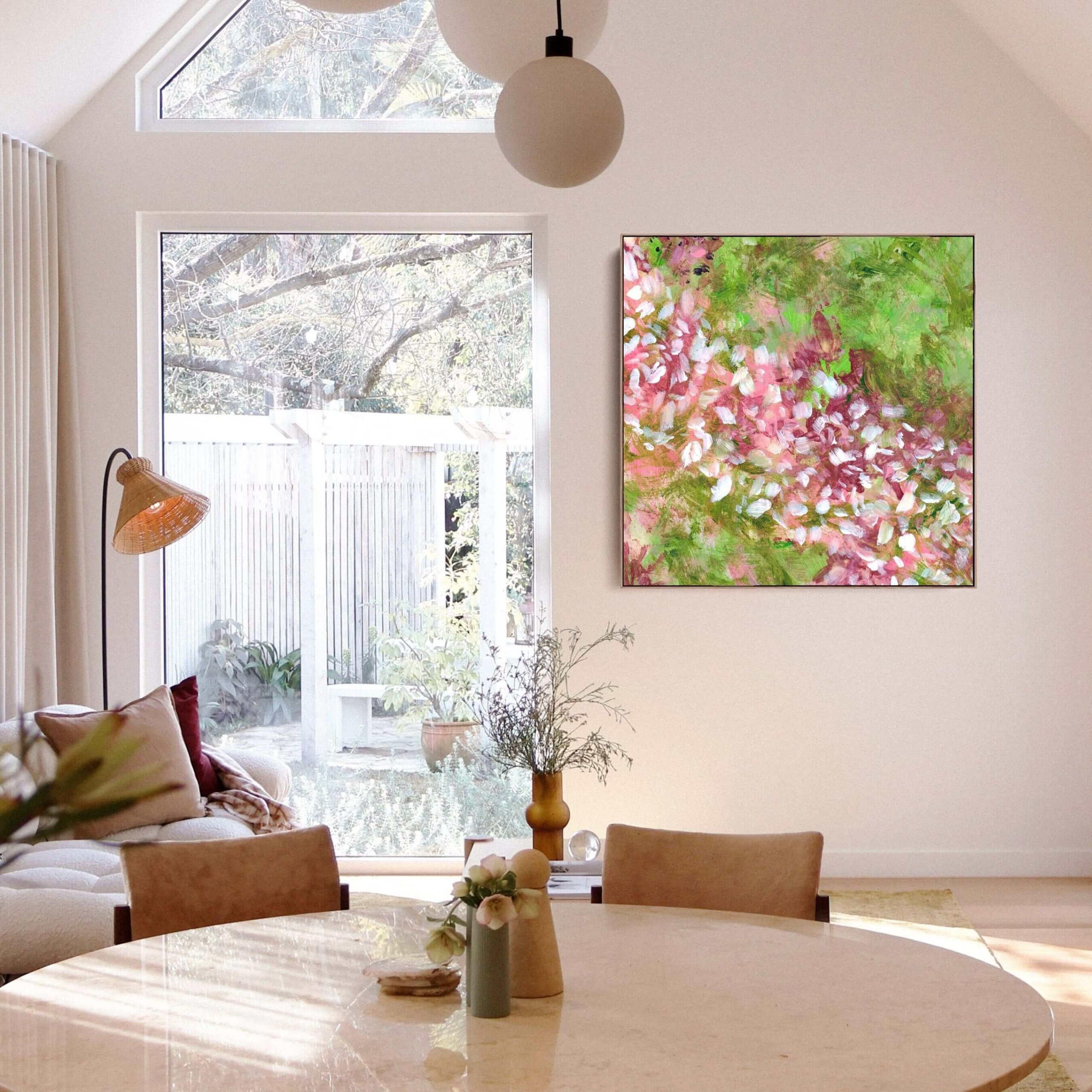
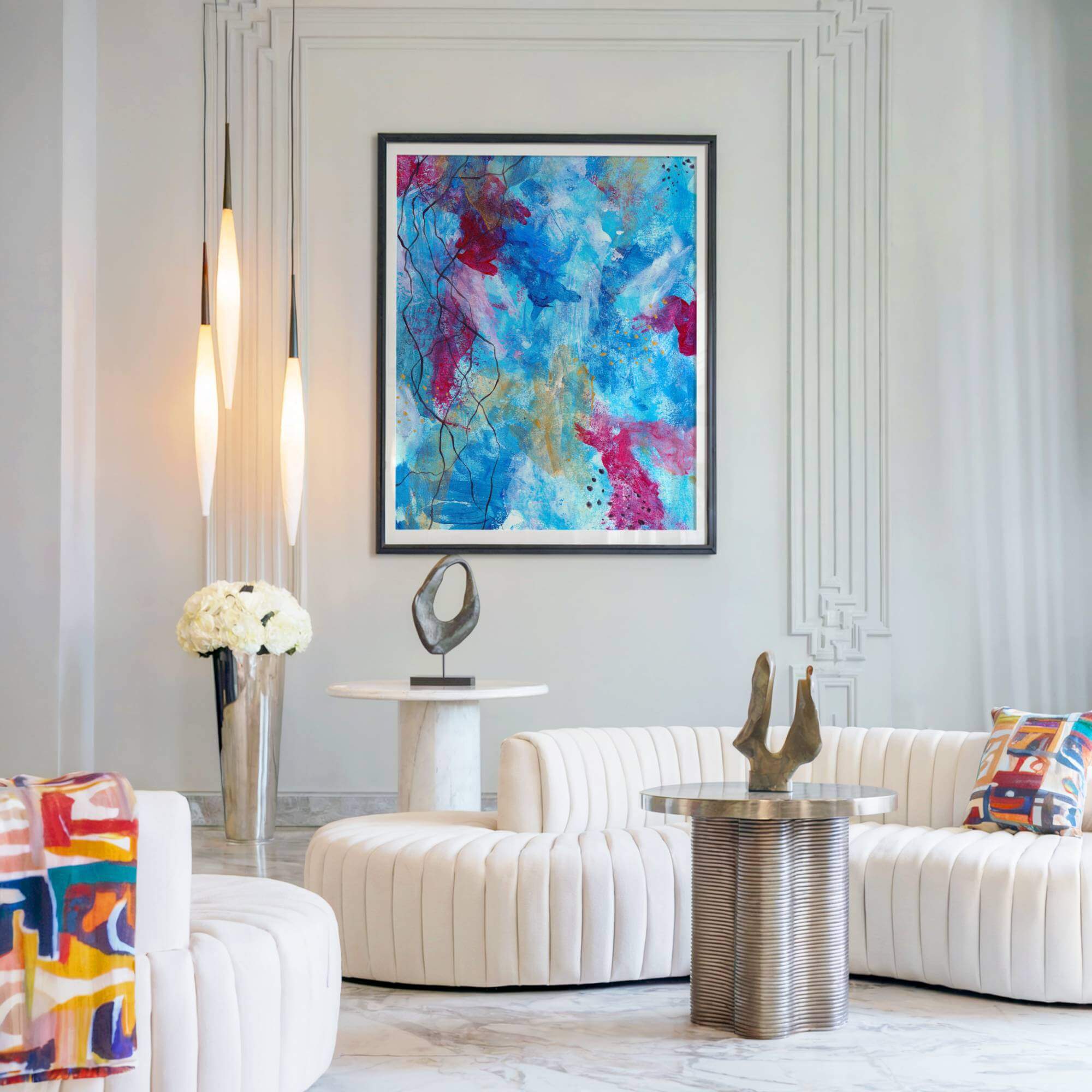
It’s simply the thing your eye naturally returns to. It’s the thing that creates a sense of presence. Sometimes it’s an oversized artwork. Sometimes it’s a statement fireplace. Sometimes it’s a large window overlooking a garden.
The point is that something needs to create gravity within the space.
Without that, your eye simply bounces around the room looking for somewhere to settle.
This is often why people stand in their finished room and still feel slightly dissatisfied without understanding why. Nothing is actually leading the experience. Everything has equal importance.
Humans don’t particularly enjoy that visually. Our brains naturally seek hierarchy and balance.
Empty walls are often a symptom rather than the actual problem
Let’s talk about walls for a moment because they’re frequently blamed.
People often say, “I think I need something on that wall.” Usually they’re right, but not always for the reasons they think.
An empty wall doesn’t automatically mean a room is unfinished. Minimalist spaces prove that perfectly well. The question isn’t whether the wall is empty. The question is whether the room feels balanced.
Sometimes one oversized piece of art is all that’s missing. Sometimes it’s scale. Sometimes it’s lighting. Sometimes it’s simply that every object in the room exists below eye level, and the space feels visually heavy at the bottom and disconnected at the top.
Large walls naturally attract attention because they’re one of the biggest surfaces within a room. When they’re left entirely blank, they can sometimes make a space feel unfinished, particularly in open-plan homes or rooms with high ceilings.
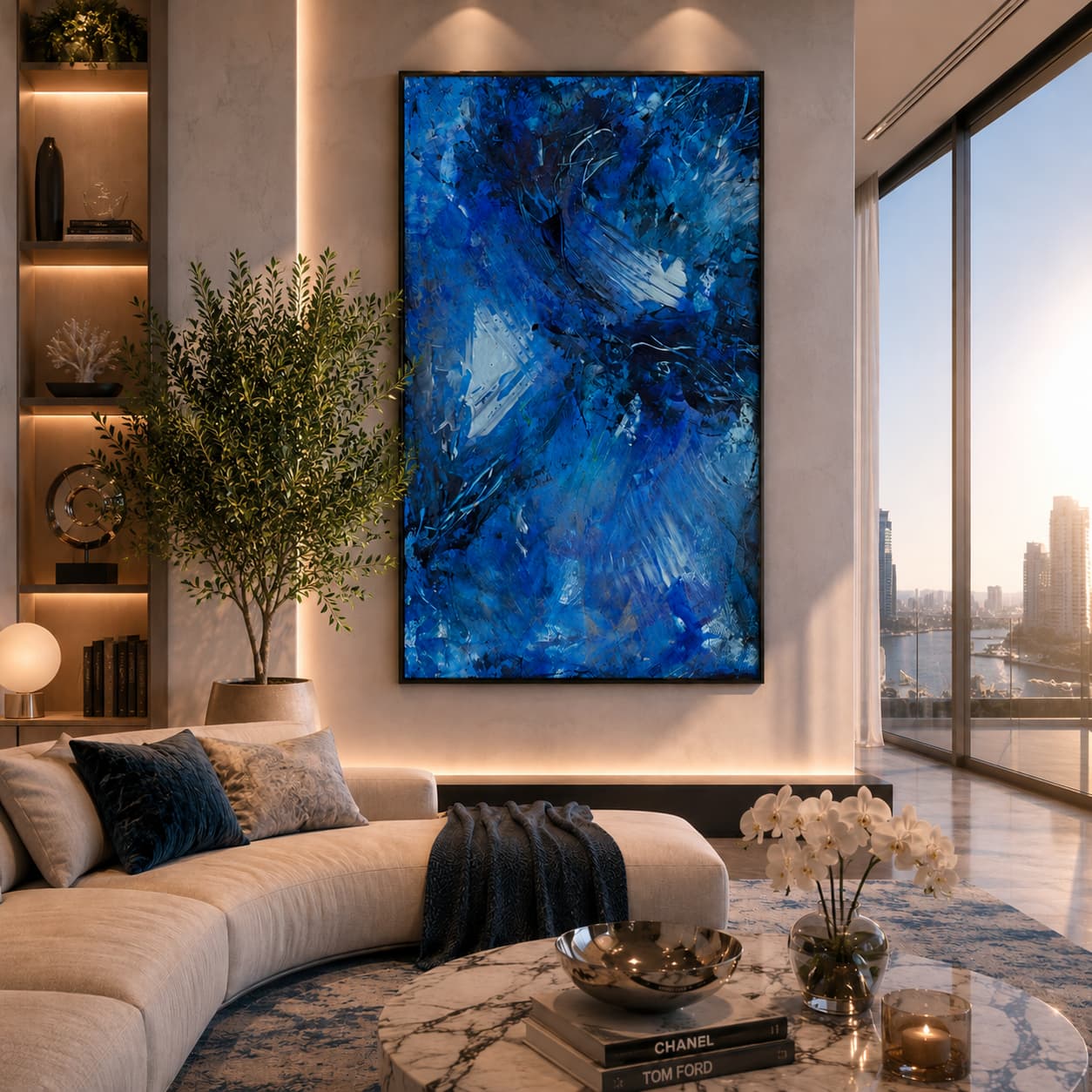
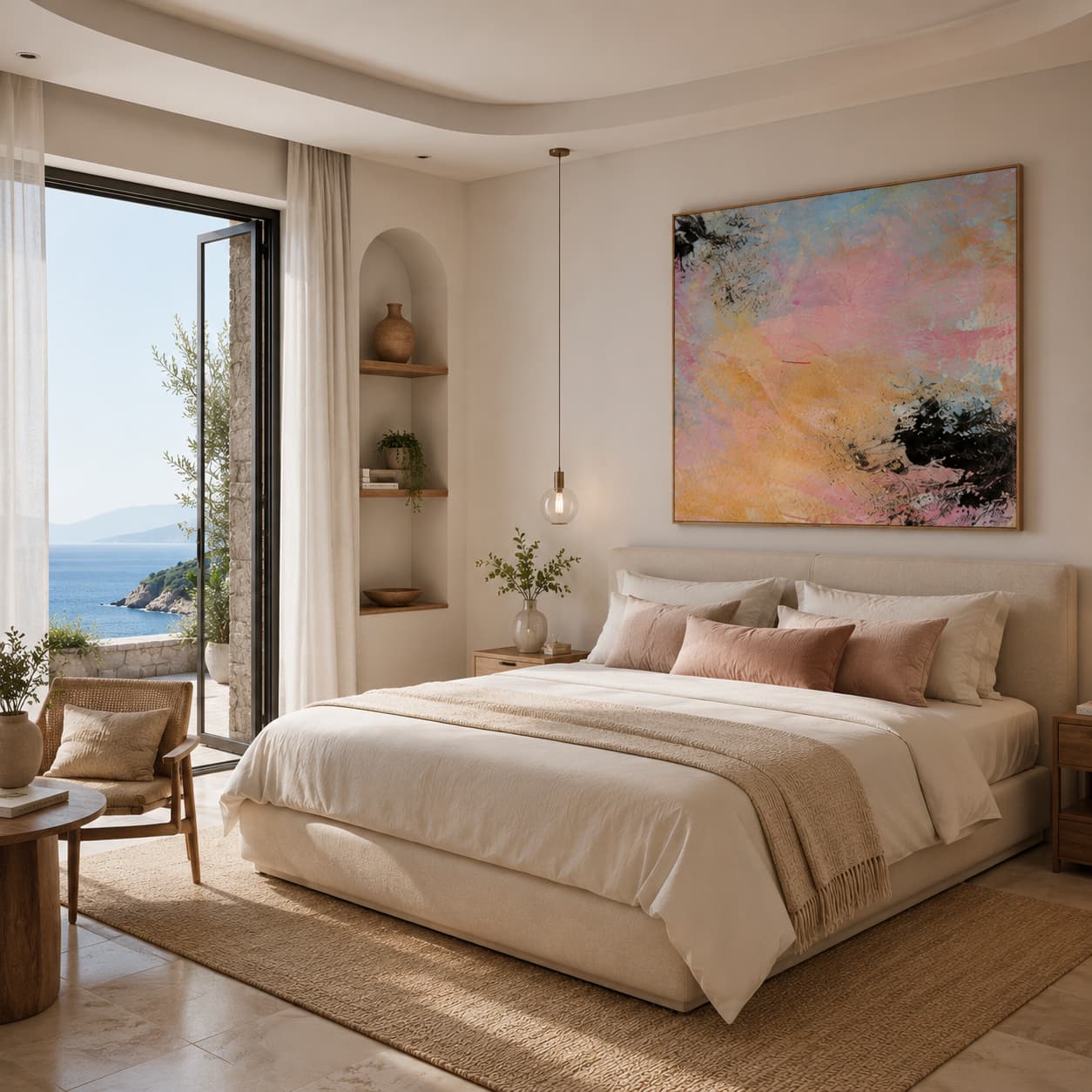
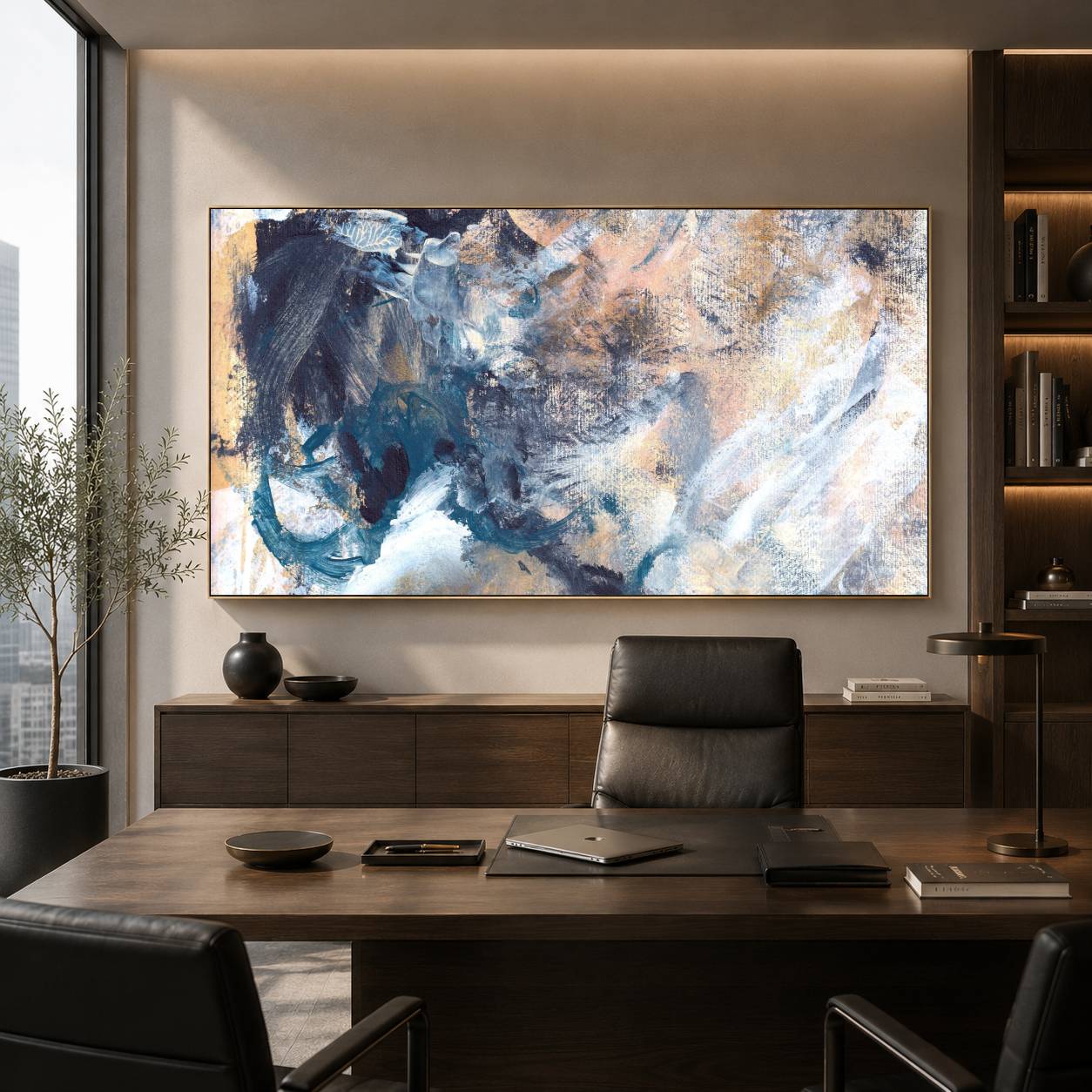
This is also why oversized artwork has become increasingly popular. Not because people suddenly need giant pictures. Because larger spaces require larger visual anchors.
This is something I talk about in How to Buy Large Wall Art Without Overwhelming a Room and How Artwork Scale Shapes Emotional Balance in Interior Spaces.
Size matters far more than people initially realise.
Why artwork often becomes the missing piece
I’m obviously biased because I’m an artist, but I also think this is objectively true.
Artwork occupies a very unusual position within a room because it doesn’t need to perform a practical function. Your sofa has a job. Your dining table has a job. Your kitchen island has a job.
Artwork doesn’t.
That’s precisely why it matters. It’s one of the few things in a room that exists purely to influence how a space feels.
-
- It creates atmosphere.
- It creates identity.
- It creates conversation.
- It softens architecture.
- It introduces emotion into environments that would otherwise remain purely functional.
This is also why artwork shouldn’t be treated as an afterthought.
Many people leave it until the very end. The furniture budget gets allocated first. The lighting gets allocated first. Then, if anything remains, they start thinking about art.
Personally, I think it’s the wrong way around.
Artwork often has a disproportionate impact compared to its physical size because it changes the experience of the room itself.
If you’ve ever walked into a room and thought, “Everything is here, but something still feels unfinished”, you’re certainly not alone. It’s one of the most common reasons people eventually start exploring artwork, because it often provides the visual and emotional anchor that many spaces are quietly missing.
The difference between a decorated room and a lived-in room
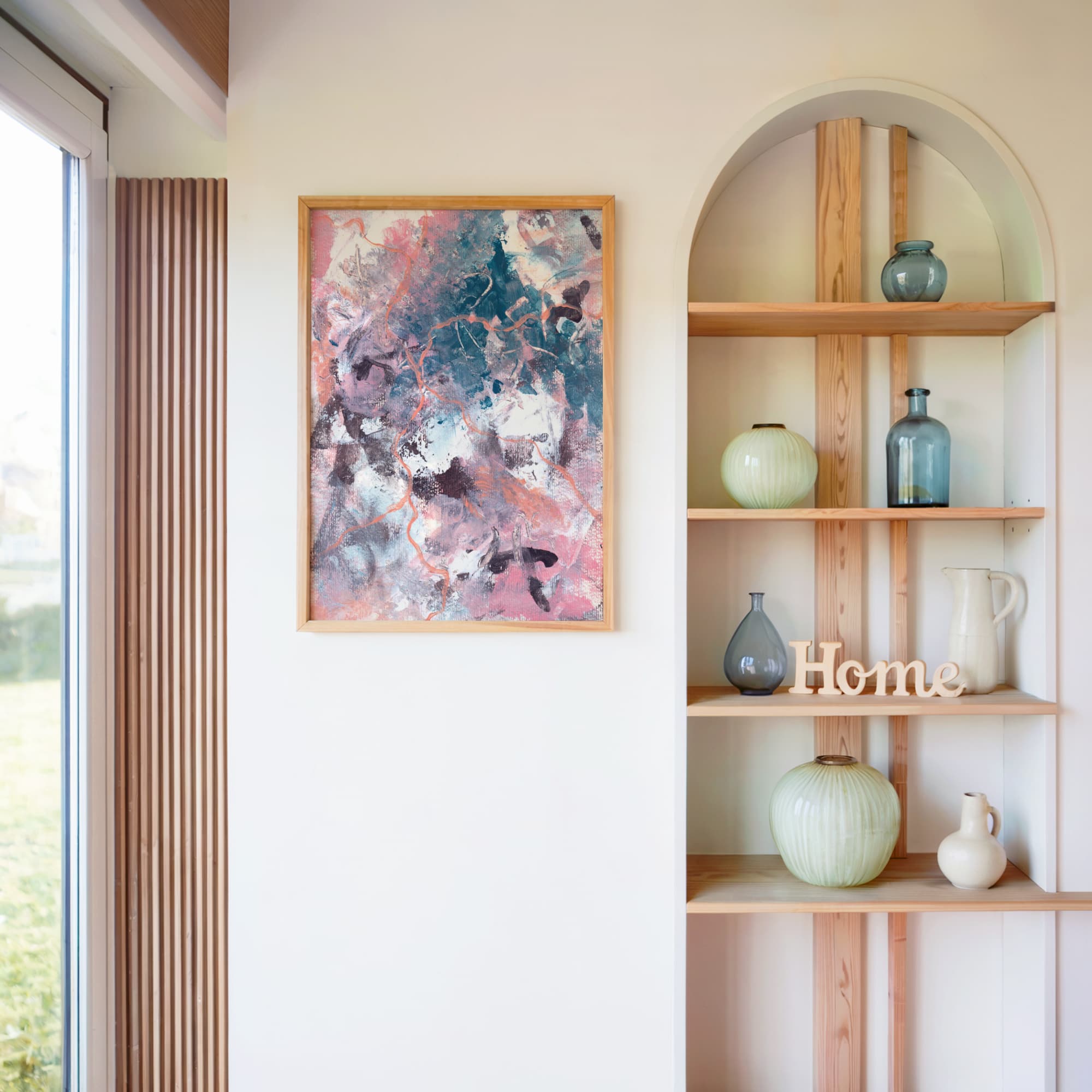
This distinction is subtle but important. Decorated rooms can look beautiful. Lived-in rooms feel beautiful.
Decorated rooms often follow trends. Lived-in rooms reflect people.
Decorated rooms may impress visitors. Lived-in rooms tend to comfort the people who actually spend time there every day.
I’m not suggesting your house should become chaotic or cluttered. Quite the opposite.
The most successful interiors usually have a remarkable sense of restraint. The difference is that the restraint feels intentional rather than sterile. When people walk into these homes, they don’t necessarily say, “That’s a beautiful lamp.”
Instead, they say something much more interesting. “This place feels lovely.”
That’s the goal. Not to create admiration for individual objects, but to create a feeling people struggle to explain.
Why emotionally intelligent homes are becoming more desirable
I think we’re witnessing a quiet shift. For years, homes became increasingly performative.
Everything needed to be Instagrammable. Everything needed to look expensive. Everything needed to signal success.
Now, many people are becoming exhausted by that approach. They’re beginning to ask a different question. How do I want to feel in my own home? That’s a much more useful question than, “What is everybody else doing?”
Emotionally intelligent homes prioritise comfort, calm, individuality and longevity over trends.
The goal isn’t to create a room that photographs beautifully once. The goal is to create a room you still enjoy five years later.
That’s a very different design brief altogether.
This is also why articles such as Why Emotionally Intelligent Interiors Always Include Art, Designing Spaces That Breathe: Why Emotionally Intelligent Art Matters and How to Choose Abstract Art for a Calm, Considered Home have become increasingly relevant.
People aren’t necessarily buying more objects anymore. They’re searching for deeper connections to the spaces they already have.
How to know what your room is actually missing
Before buying anything, ask yourself these questions.
-
- What is my eye naturally drawn towards when I enter the room?
- Does this room say anything about the people who live here?
- Am I trying to solve emptiness with more objects?
- Does the room feel balanced?
- Would removing three decorative items actually improve it?
- Does the room contain an emotional anchor?
Very often, the answer becomes obvious surprisingly quickly.
If your room feels finished but still feels empty
Sometimes the answer isn’t another piece of furniture.
Sometimes it’s one carefully chosen piece that quietly changes the entire atmosphere of a room.
If you’re beginning to explore artwork, my Collector’s Vault is a private catalogue of collector-grade canvas prints created from my archive. Each piece is designed to create presence, emotional depth and a stronger sense of identity within a space.
You don’t need twenty new objects.
Sometimes you simply need one piece that finally gives the room something meaningful to say.
If you’re nervous about scale, Why Large Canvas Prints Work So Well in Modern Interiors explores why oversized pieces often work better than people initially expect.
Conclusion
Rooms rarely feel empty because they’re missing another cushion. More often, they’re missing identity.
A home doesn’t become complete because every surface is occupied. It becomes complete when the people living there begin to recognise themselves inside it.
Sometimes that’s achieved through thoughtful artwork. Sometimes it’s achieved through colour, scale or careful restraint. Most of the time, it’s a combination of all three.
The goal was never to fill every corner.
The goal was always to create a place that feels unmistakably yours.
Key Takeaway
A room doesn’t feel complete when every surface is filled. It feels complete when it reflects the people living inside it.
Frequently Asked Questions
Rooms often feel empty because they’re missing personality, visual balance and emotional anchors rather than practical items.
Yes. Thoughtfully chosen artwork often creates identity and balance within a room.
Usually not. Adding more objects can sometimes increase visual clutter without solving the underlying issue.
Because expensive furniture doesn’t automatically create personality. Rooms also need warmth, identity and emotional connection.
It’s a visual element that quietly grounds the room and naturally draws your attention, helping the space feel balanced and intentional.
Not necessarily, but most rooms benefit from having a visual element that creates identity and presence.