
How Artwork Scale Shapes Emotional Balance in Interior Spaces
Introduction: Most Spaces Don’t Feel Off by Accident
When a space feels unsettled, people rarely blame the artwork.
They adjust furniture, change colours, move things around, and sometimes redo entire sections of a room without ever questioning whether the problem sits exactly where they’ve already made a decision they considered final.
Artwork is often treated as something that either works or doesn’t on a purely visual level. It matches or it clashes, it fills a wall or it leaves it empty, it feels “right” or it doesn’t. What gets missed is that scale is not just a visual choice, it is a structural one, and once it is wrong, everything around it has to work harder to compensate.
Emotional balance in a space is not created through decoration, but through how the environment is processed by the body. The eye moves, attention settles or drifts, and the nervous system responds accordingly. When scale is misjudged, that process becomes inefficient, even if nothing looks obviously incorrect.
This is why two spaces with similar furniture, similar colour palettes, and similar layouts can feel completely different to sit in.
One holds. The other doesn’t.
And more often than not, the difference sits in the scale of what is on the walls.
TLDR
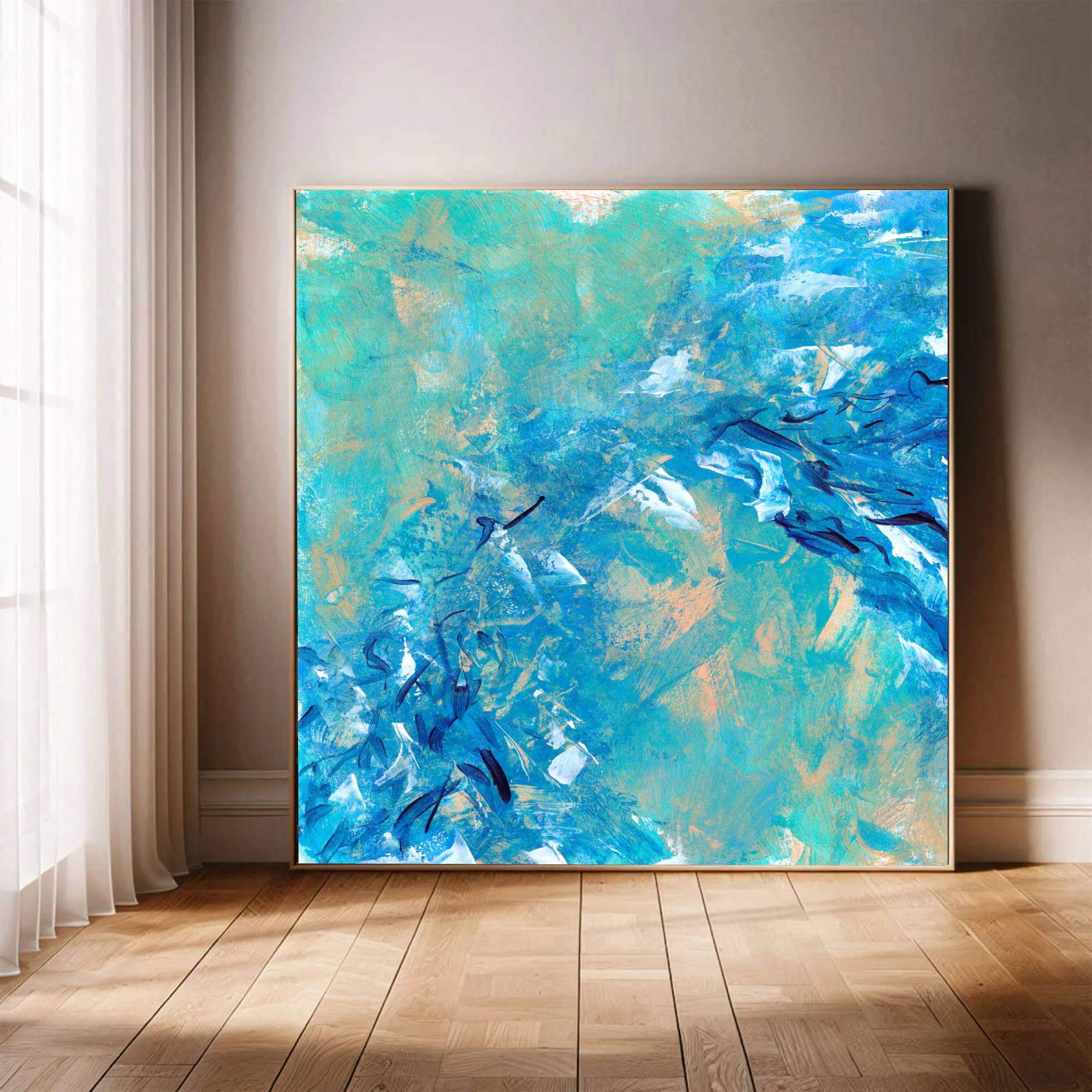
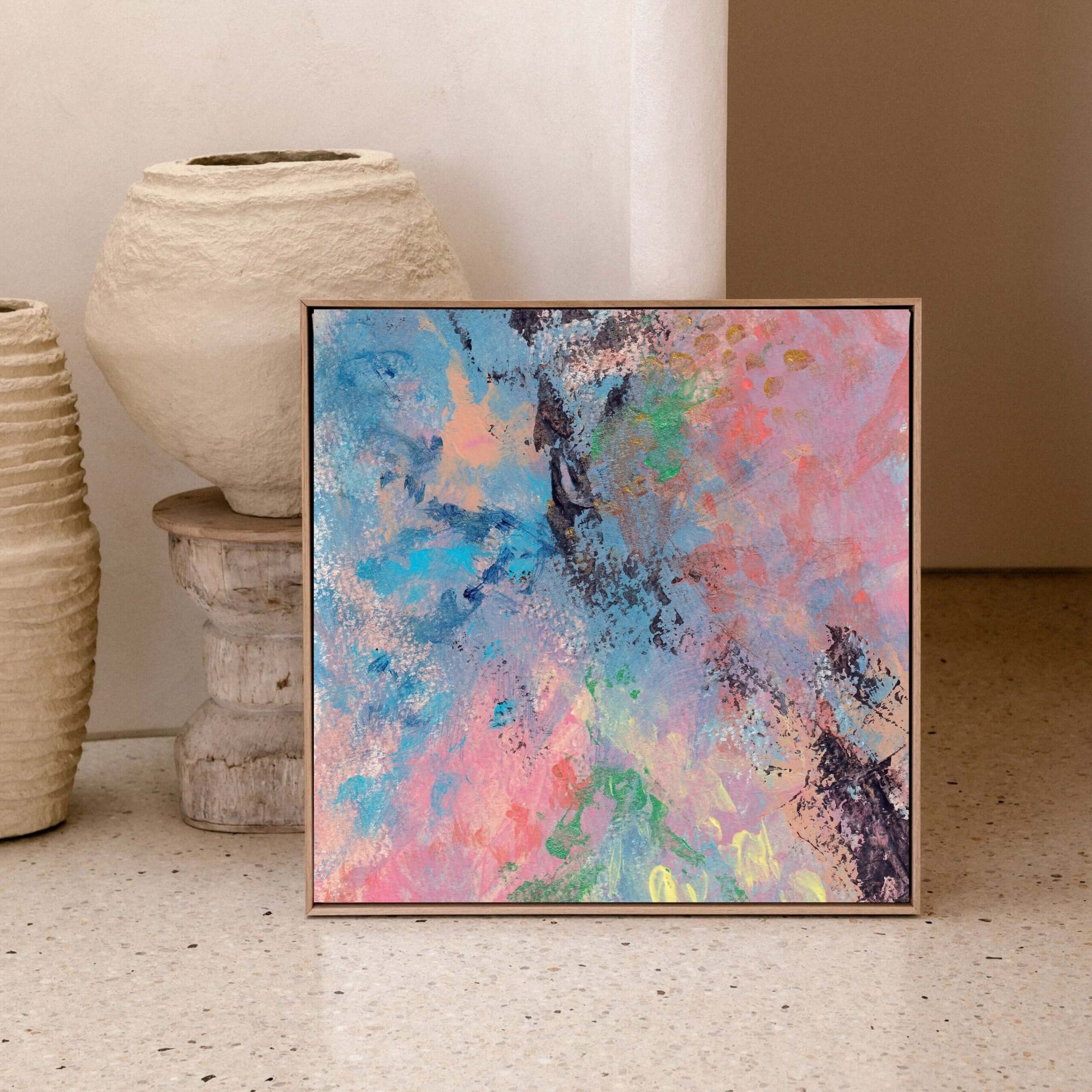
Artwork scale directly shapes emotional balance in interior spaces. When the scale is too small, the eye continues to scan, and the space feels unresolved. When scale is correct, the artwork anchors the environment, reduces visual effort, and allows attention to settle, making the space feel stable and complete.
What “Emotional Balance” Actually Means in a Space
Emotional balance is not a vague or abstract concept, even though it is often described that way.
It is the point at which a space no longer asks for constant adjustment from the person inside it. The eye is not pulled in multiple directions without resolution, attention does not fragment unnecessarily, and the body is not subtly preparing to move or correct something that feels slightly off.
This does not mean the space is minimal, quiet, or empty.
It means it is coherent.
Coherence is what allows the brain to process an environment efficiently. When elements relate to each other in a way that makes sense visually, the system settles. When they do not, even in small ways, the system stays active.
Artwork plays a larger role in this than most people realise, because it often becomes the dominant visual element in a room without being treated as such. It occupies space, carries weight, and interacts with everything else, but is frequently chosen last and scaled based on what feels comfortable rather than what is structurally required.
That gap between comfort and necessity is where imbalance begins.
Why Scale Is the Hidden Variable Most People Miss
Scale is rarely discussed with the same clarity as colour, style, or placement, even though it influences all three.
Most people choose artwork by looking at the wall it will sit on, rather than the space it needs to resolve. A piece might technically fill a wall and still feel disconnected from the room, because the wall is not the only thing the eye is responding to. The entire visual field is in play, especially in larger or open-plan environments.
When scale is too small, the artwork fails to anchor anything. It becomes one element among many, and the eye continues to move across the room, searching for a point of rest. That constant movement is not consciously noticed, but it contributes to a subtle sense of restlessness.
When scale is correct, the opposite happens.
The artwork introduces a point of stability. It gives the space a centre of gravity that allows everything else to organise around it. The eye lands without effort, and once it lands, attention follows.
This is explored in more detail in how scale affects the way a space feels.
The principle is simple. Scale determines whether the space resolves or remains slightly open-ended.
The Relationship Between Scale and Visual Weight
Not all large artwork feels heavy, and not all small artwork feels light.
Visual weight is not only about size, but about how that size interacts with the surrounding space. However, scale is the primary factor that determines whether that weight is sufficient to stabilise the environment.
A piece that is too small for its context does not just appear smaller, it appears irrelevant. It fails to engage with the proportions of the room, which means it cannot contribute meaningfully to how the space is experienced.
A piece that is correctly scaled, on the other hand, does not dominate in the way people often fear. Instead, it aligns with the room. It feels proportionate, even if it is large, because it matches the visual demands of the environment.
This is why larger works often feel calmer. They remove the need for the eye to keep searching.
How the Eye Moves Through a Space (and Why Scale Interrupts or Supports It)
The eye is constantly scanning.
It moves across surfaces, edges, and objects, building a mental map of the environment in real time. This process is efficient when there are clear points of reference, and inefficient when there are too many competing elements or none strong enough to anchor attention.
Artwork plays a critical role in this process.
When scaled correctly, it acts as a visual anchor that allows the eye to pause. That pause reduces the overall movement required to process the space, which in turn reduces cognitive load.
When scaled incorrectly, the opposite happens.
The artwork becomes another point in the scan, rather than the point that resolves it. The eye moves past it as quickly as it moves past everything else, and the environment remains visually active in a way that never quite settles.
Over time, this contributes to fatigue.
Not dramatic fatigue, but the kind that builds gradually, where a space feels less comfortable to remain in for long periods without an obvious reason.

Why Underscaled Artwork Creates Subtle Tension
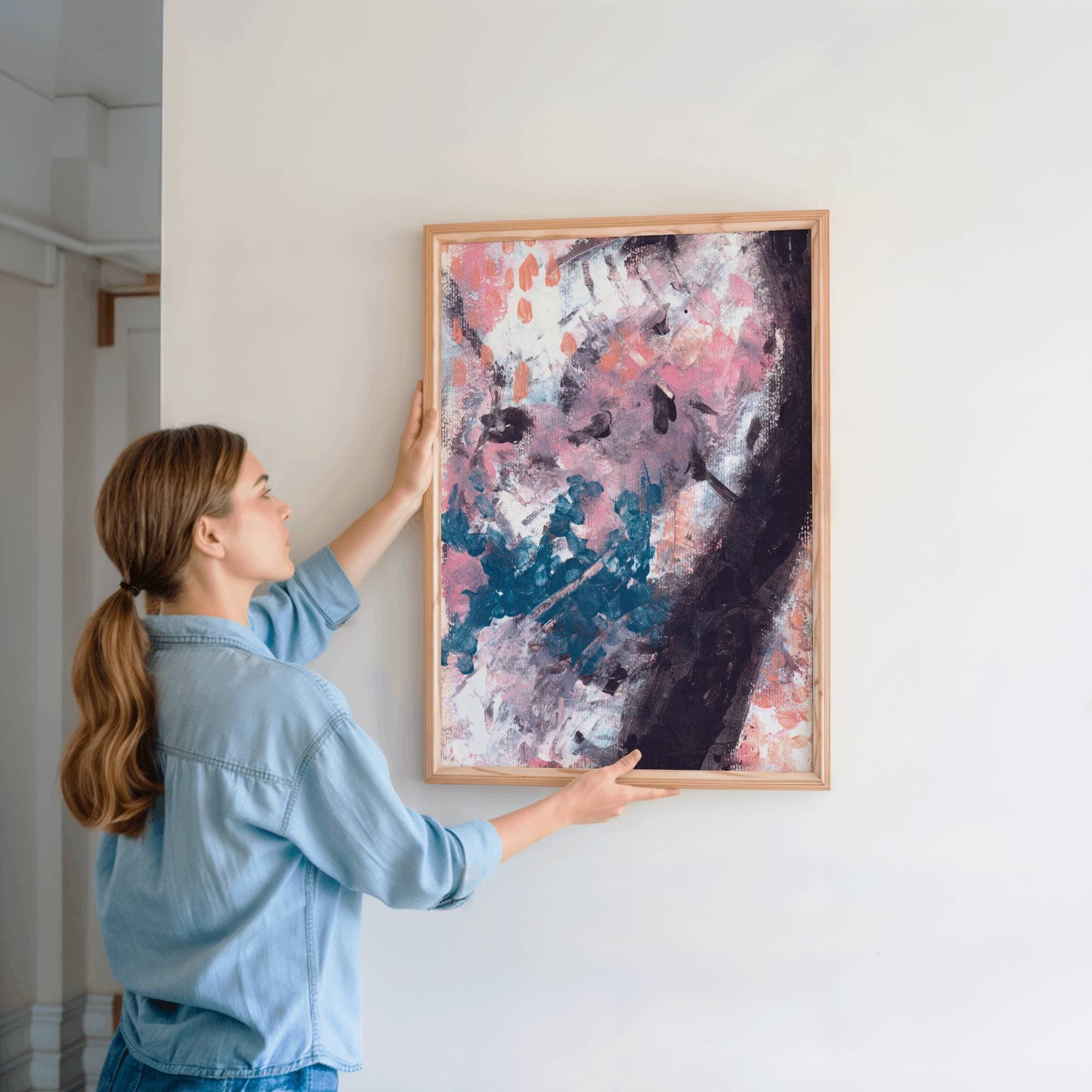
Underscaling is the most common mistake, and it is almost always done intentionally.
People choose smaller pieces because they feel safer. They are easier to place, easier to replace, and less likely to feel overwhelming at first glance. The decision is made to avoid risk, but the result is often a space that never quite resolves.
A smaller piece does not carry enough presence to hold part of the room in place. It leaves the surrounding space visually unsupported, which means other elements have to compensate.
Furniture appears less grounded. Walls feel longer. The room loses a sense of containment.
This creates tension.
Not tension that is obvious or uncomfortable in a dramatic way, but tension that keeps the system slightly active. The space never fully settles, and neither does the person inside it.
Why Larger Artwork Often Feels Calmer, Not Louder
There is a common assumption that larger artwork will dominate a space and make it feel overwhelming.
This is only true when the work itself is visually chaotic or poorly placed.
When the work is restrained and the scale is appropriate, larger pieces tend to feel calmer because they resolve the visual field more effectively. They reduce fragmentation, provide a clear focal point, and allow the rest of the space to breathe around them.
This connects to the broader idea of how abstract art integrates into a space.
It is not the size alone that creates calm, but the relationship between size and structure.
When that relationship is right, the space feels complete.
Scale in Different Types of Interior Spaces
Scale behaves differently depending on the environment, but the underlying principle remains the same.
In open-plan spaces, larger works are often necessary because the visual field is wide and continuous. Without sufficient scale, the artwork cannot anchor the space effectively, and the environment remains visually loose.
In smaller rooms, scale still matters, but it functions differently. A single larger piece can often create more stability than multiple smaller ones, because it reduces fragmentation and simplifies the visual experience.
In transitional spaces, such as hallways or entry areas, scale can be used to guide movement. A well-placed piece can slow the pace of movement through the space, creating a moment of pause that would not exist otherwise.
In each case, the question is the same.
What does the space need in order to feel resolved?
Minimalism, Restraint, and the Role of Scale
Minimalist or restrained artwork is often associated with calm environments, but that calm is not created by simplicity alone.
It is created by clarity.
When scale is combined with restraint, the result is a piece that holds presence without overwhelming the space. The eye is drawn to it, but not pulled into analysis. It becomes a stable reference point rather than a source of stimulation.
This is why emotionally intelligent interiors tend to rely on fewer, larger, and more considered pieces rather than multiple smaller ones.
The goal is not to reduce what is in the space, but to ensure that what is there functions properly.
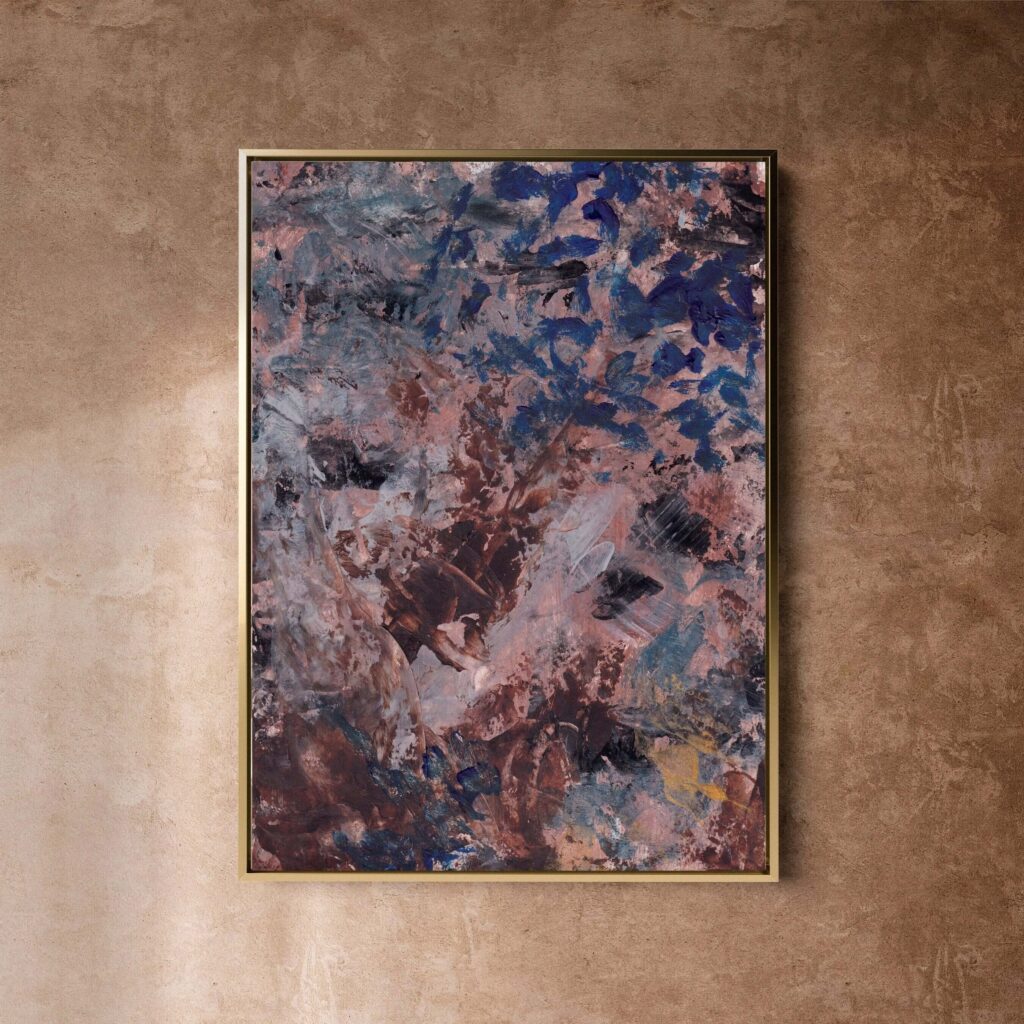
How Scale Shapes the Long-Term Experience of a Space
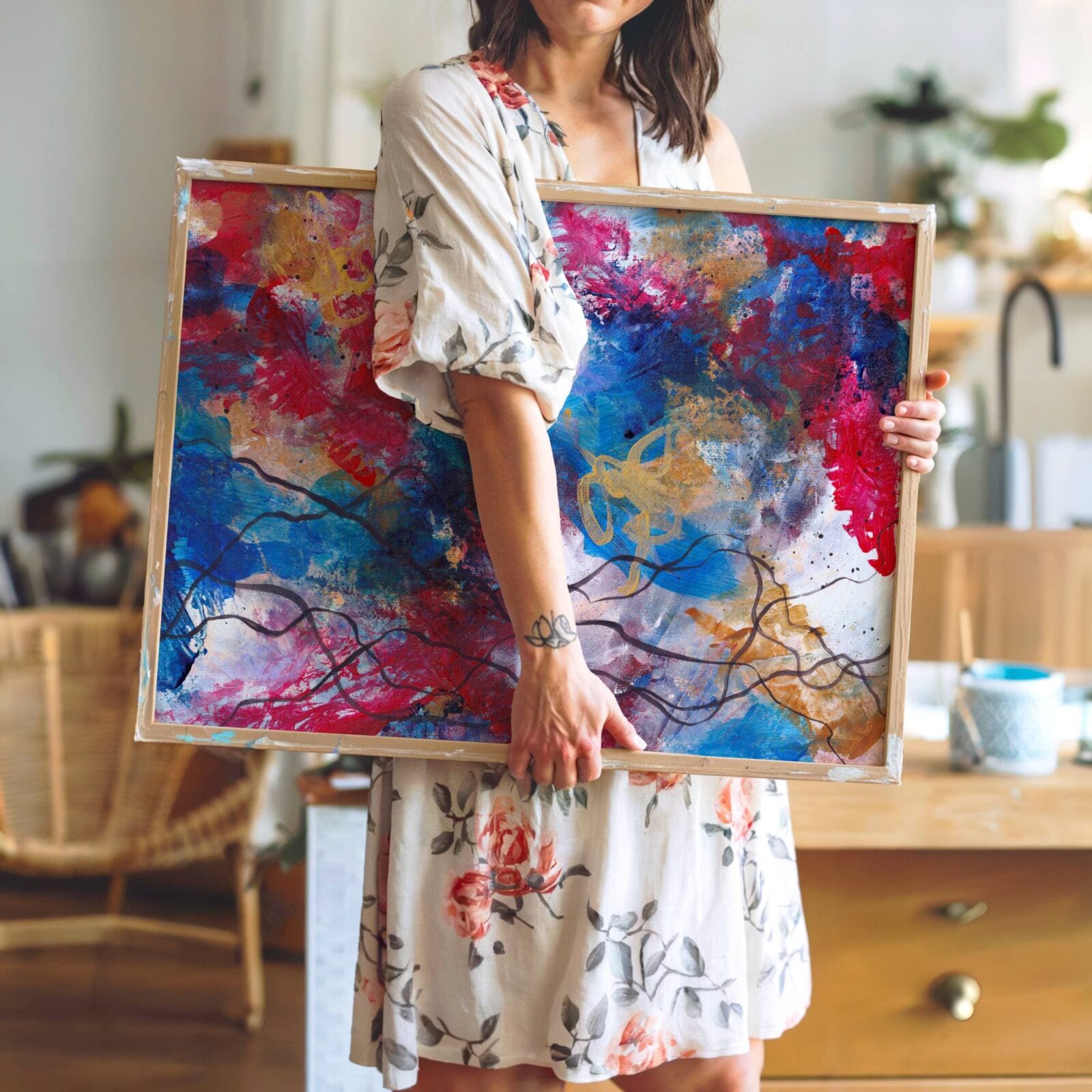
Scale does not just affect first impressions. It shapes how a space is experienced over time.
Artwork that is correctly scaled tends to integrate into the environment in a way that feels stable and consistent. It does not lose relevance, but it also does not demand constant attention. It becomes part of how the space feels rather than something that is continually evaluated.
Artwork that is underscaled often fades in a different way.
It does not integrate. It becomes irrelevant. The eye stops registering it as meaningful, and the space remains visually unresolved.
This difference becomes more noticeable the longer you live with it.
It is explored further in how the relationship with abstract art develops over time in this article: The Psychology of Living With Abstract Art Over Time.
How to Choose the Right Scale Without Guessing
Choosing the right scale is less about measurement and more about perception. Instead of starting with the wall, start with the space.
Look for where the environment feels slightly unresolved. Not empty, not unfinished, but lacking a point of stability. That is where scale needs to be introduced.
From there, consider whether the piece has enough presence to hold that area without forcing attention. It should feel proportionate to the space, not just the surface it occupies.
Avoid compensating with multiple smaller works.
That rarely resolves the issue and often increases fragmentation. If the piece feels slightly larger than expected, it is often closer to correct than something that feels immediately comfortable.
Conclusion: Scale Is What Allows a Space to Hold
Emotional balance in an interior space is not created by adding more elements, but by ensuring that the elements that are present are doing their job properly.
Artwork scale is one of the most influential factors in that process, because it determines whether the space resolves or remains slightly open-ended. When scale is correct, the environment stabilises. The eye settles, attention becomes easier to sustain, and the overall experience of the space shifts without needing dramatic changes.
When scale is wrong, everything else has to compensate.
And most of the time, it can’t.
Key Takeaway
Scale is not a stylistic choice. It is the factor that determines whether a space holds or remains unsettled.
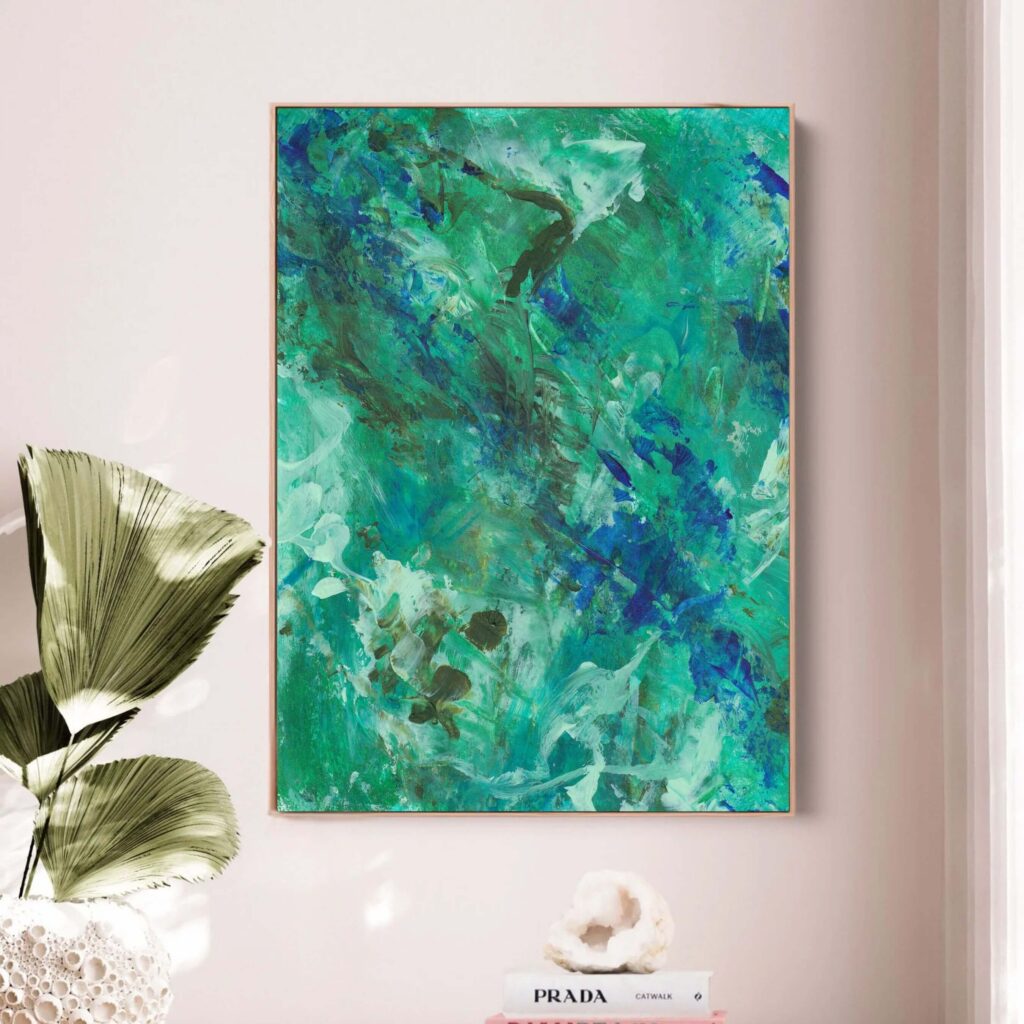
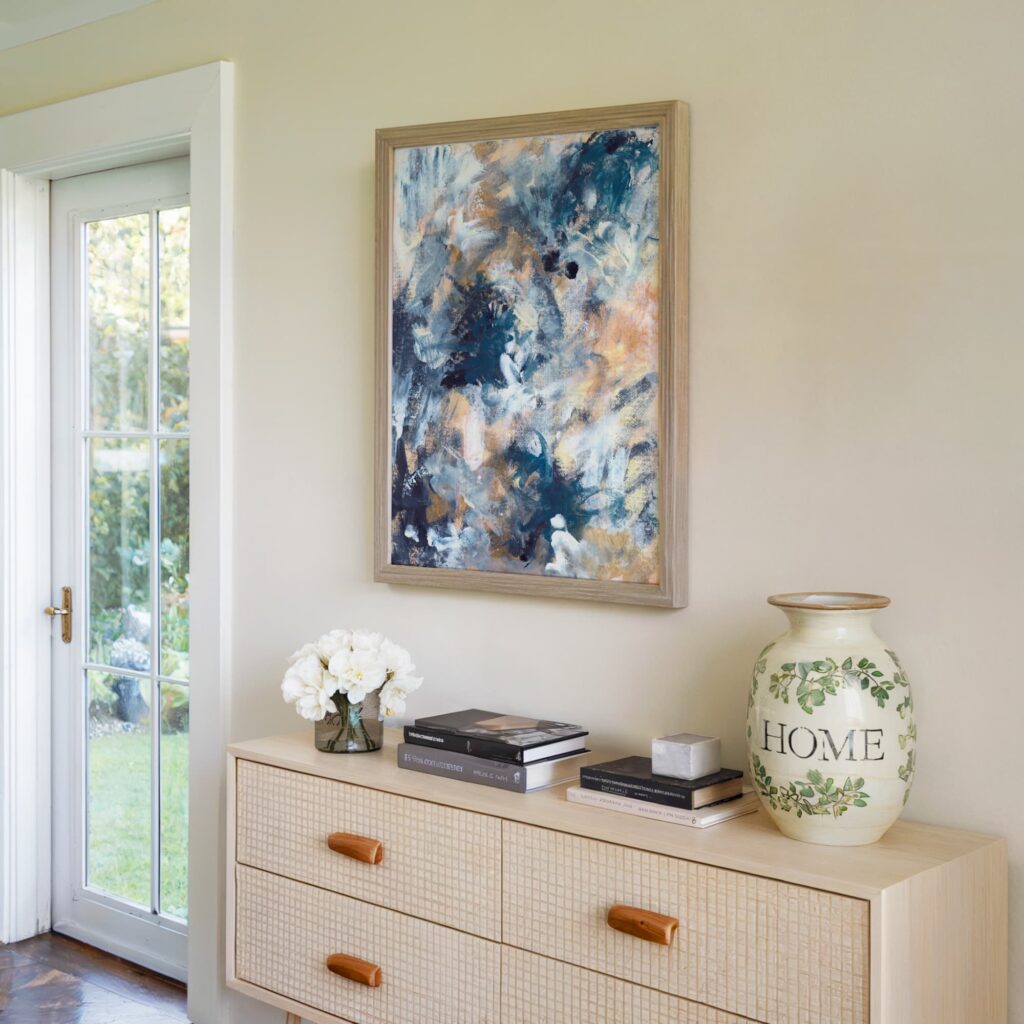
Frequently Asked Questions About Art Scale and Emotional Impact
Because it influences how the eye moves and where attention settles.
Not always, but underscaling is far more common than overscaling.
Only when used intentionally, but it rarely provides enough visual weight on its own.
Because they reduce visual fragmentation and provide a clear anchor.
Yes, a single larger piece can often create more stability than multiple small ones.
Choosing artwork based on wall size instead of the space as a whole.
If the space feels settled and attention no longer drifts unnecessarily.
In many cases, yes, because it directly affects visual structure.