
The Psychology of Living With Abstract Art Over Time
Most conversations about abstract art focus on the moment of purchase. The decision. The installation. The first emotional reaction.
Almost none focus on what happens after.
Living with abstract art is not a static experience. It is psychological, environmental and relational. The longer a piece remains in your space, the more it stops being something you “look at” and becomes something you live alongside.
That transition is where the real story begins.

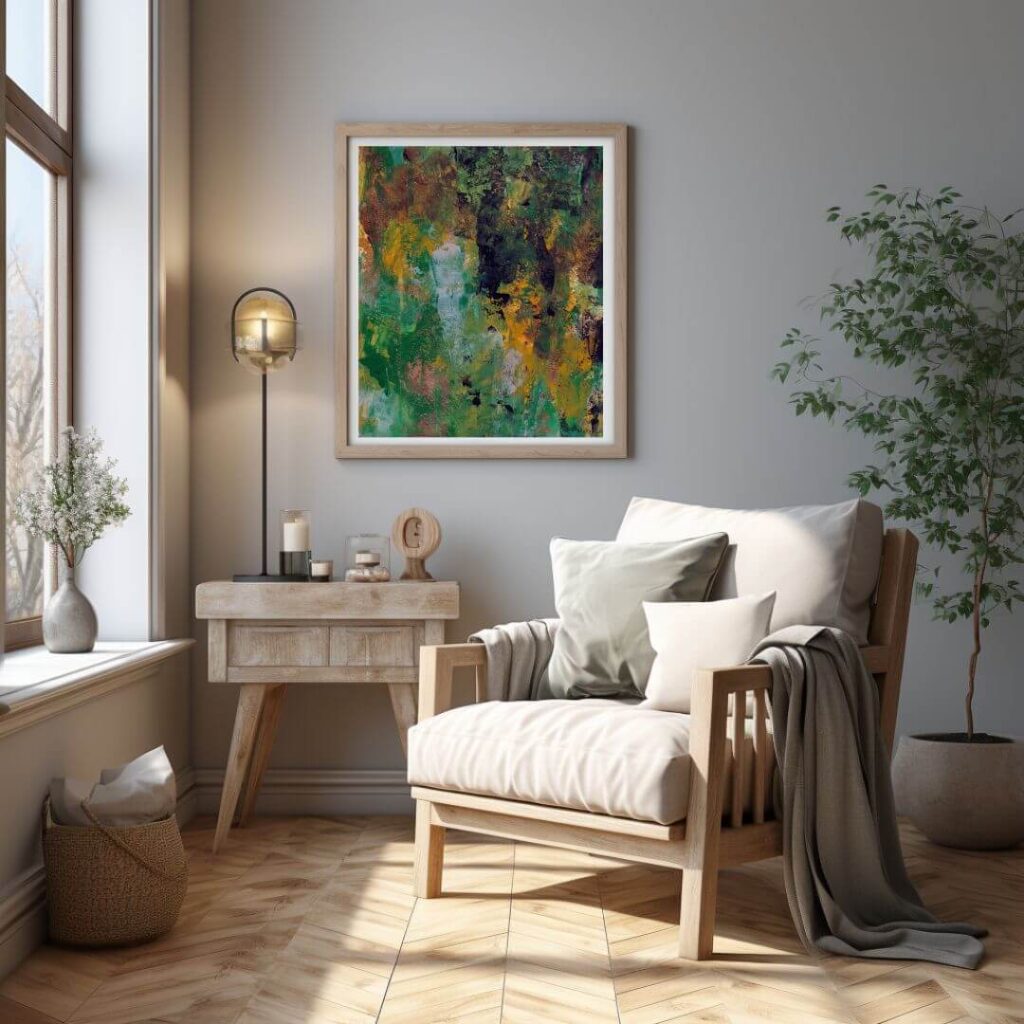
Definition: What Does “Living With Abstract Art” Actually Mean?
Living with abstract art refers to the long-term psychological and environmental relationship between an artwork and its owner. Unlike decorative art that is rotated frequently, abstract art chosen for permanence becomes integrated into daily perception, emotional memory and spatial identity.
Owning abstract art over time involves adaptation, projection, normalisation and attachment. It is less about first impressions and more about sustained presence.
That distinction matters.
First Impressions vs Long-Term Integration
The first response to abstract art is usually emotional and immediate. You either feel drawn to it or uncertain about it. Colour contrast, scale and composition register quickly.
However, novelty drives that intensity.
Once novelty fades, something more subtle begins. The work either settles naturally into your environment or it starts to irritate.
This is the early integration phase.
Living with abstract art means allowing it to move beyond that initial reaction and observing whether it continues to feel aligned once the dramatic response has softened.
How Abstract Art Changes Over Time
Abstract art does not change physically, but your perception of it does.
Seasonal light alters tonal depth. Emotional states influence interpretation. A piece that once felt energetic may later feel grounding. A muted composition may feel calm during one period and contemplative during another.
This fluid interpretation is part of the psychology of abstract art. Because there is no fixed narrative, the work adapts to the viewer rather than dictating meaning.
For a deeper exploration of how abstract form communicates beyond narrative, see The Emotional Language of Abstract Art.
Owning abstract art over time means accepting that interpretation will shift without assuming that inconsistency is failure.
Decorative Art vs Long-Term Abstract Ownership
It helps to be honest about intention.
| Factor | Decorative Rotation | Living With Abstract Art |
|---|---|---|
|
Purpose |
Refresh aesthetics |
Establish permanence |
|
Emotional Depth |
Surface-level |
Evolves over time |
|
Attachment |
Replaceable |
Accumulative |
|
Reaction Pattern |
Trend-driven |
Stability-driven |
|
Longevity |
Short to medium |
Multi-year |
Neither category is morally superior. They serve different psychological goals. If you prefer frequent change, living long-term with abstract art may feel restrictive. If you value continuity, frequent rotation may feel shallow.
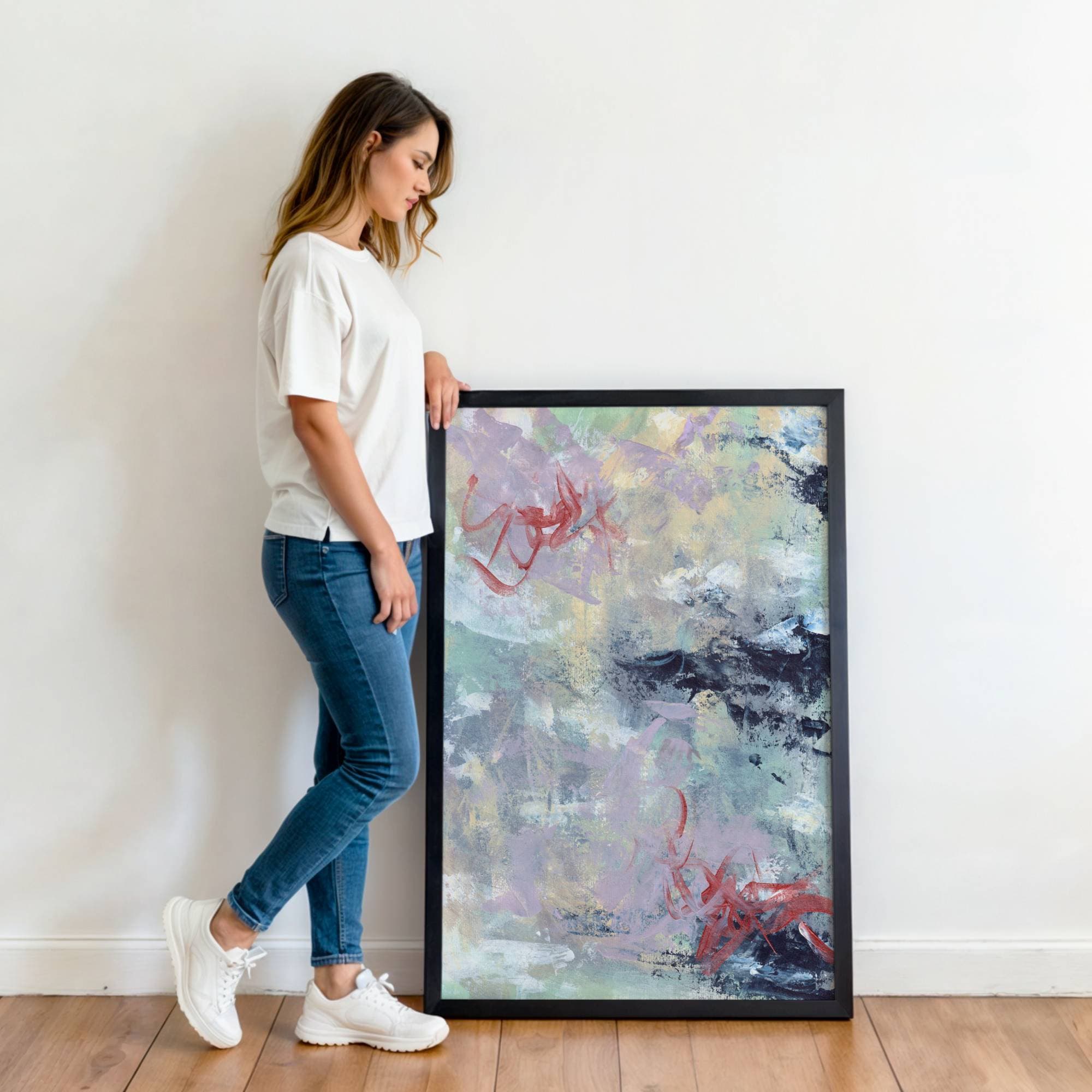
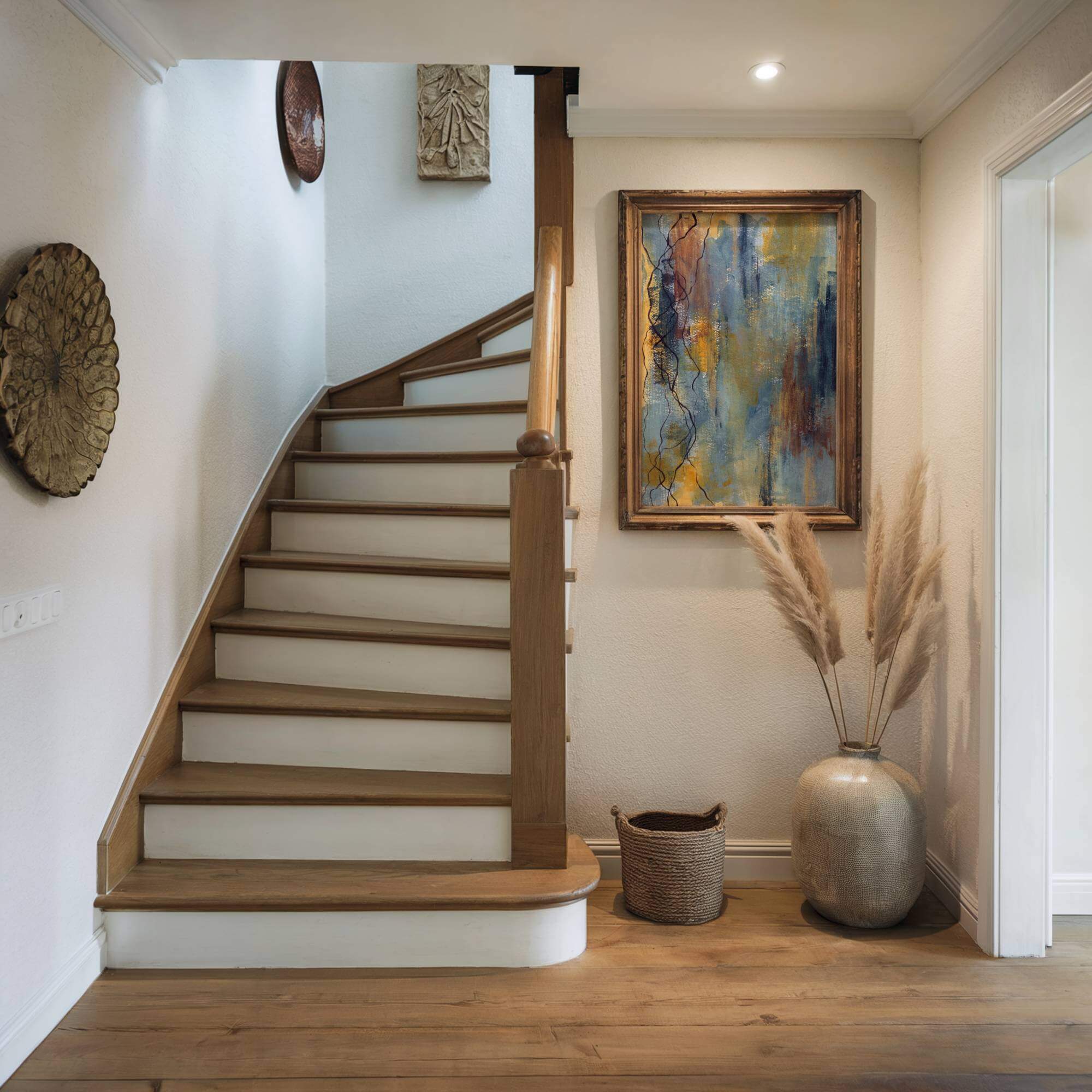
The Normalisation Phase
After several weeks, the artwork stops feeling dramatic. It becomes part of the visual baseline.
Some collectors interpret this as diminished impact. In reality, it signals integration. The nervous system has absorbed the presence of the work.
It no longer demands attention. It holds space.
That quiet holding is often more valuable than the original intensity.
Emotional Projection and Memory
Abstract art in the home accumulates association. It is present during conversations, celebrations, arguments, quiet evenings and difficult days. Because abstract work lacks a fixed narrative, it absorbs personal projection. Over time, it becomes entangled with lived experience.
This is where emotional impact deepens, not through novelty, but through memory layering. Removing a long-held piece often feels like removing a witness.
This long-term emotional layering is closely related to what I describe in The Experience of Stillness: What My Collectors Are Actually Buying.
Decision: Is This a Piece You Can Live With?
Before acquiring abstract art, the better question is not “Do I love it immediately?”
It is:
Can I live with this when the intensity fades?
To test this, ask yourself:
-
- Does it feel stable rather than shocking?
- Would I still want it in a quieter mood?
- Does it feel anchored to my space or floating above it?
- Can I imagine it here next year?
If the answer to those questions is uncertain, pause. Abstract art chosen for long-term living should feel steady, not performative.
When the Artwork Stops Being “Art” and Starts Being Structure
There is a quiet turning point that most people do not notice.
At some stage, the painting stops feeling like something you bought. It stops feeling like an object you are evaluating. It becomes structural.
You don’t consciously look at it anymore, but it is still doing something. It shapes how the room feels when you enter. It influences where you place furniture. It affects how the space breathes.
This is when abstract art moves beyond decoration.
Living with abstract art over time means it becomes part of the architecture of perception. If you remove it suddenly, the room feels strangely hollow, even if nothing else has changed.
That absence tells you how integrated it had become.
The Difference Between Drama and Depth
A lot of people confuse impact with longevity.
High-drama work gives you a sharp reaction. Strong contrast. Immediate intensity. It photographs well. It performs well on social media.
Depth behaves differently.
Depth is quieter. It unfolds slowly. It does not exhaust itself in the first viewing.
When you live with abstract art long-term, depth becomes more valuable than drama. Drama fades once the nervous system acclimatises. Depth expands.
If a piece still offers nuance after months, if you still notice new tonal shifts or compositional relationships when the light changes, that is depth at work.
And depth is what survives time.
If you’re evaluating whether a piece is built for endurance rather than impact, read How to Buy Collector-Grade Canvas Art.
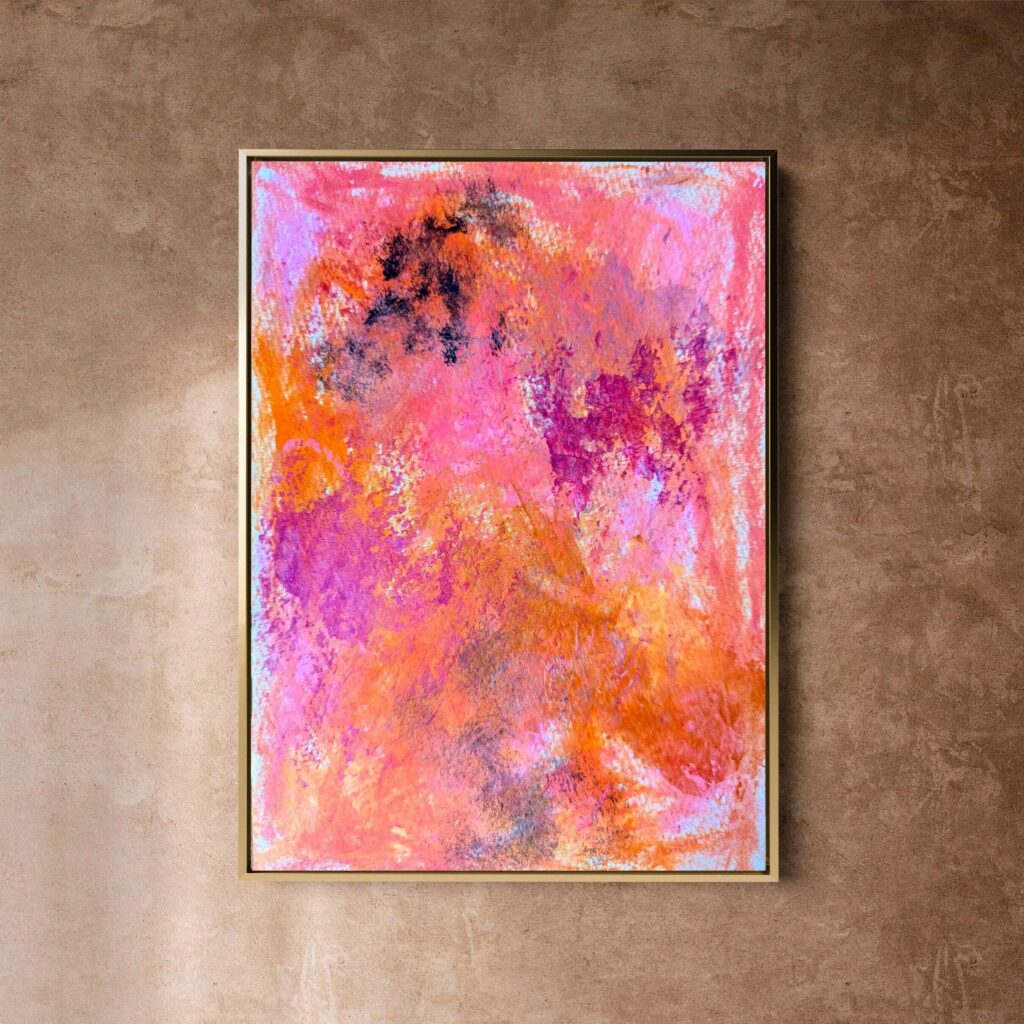
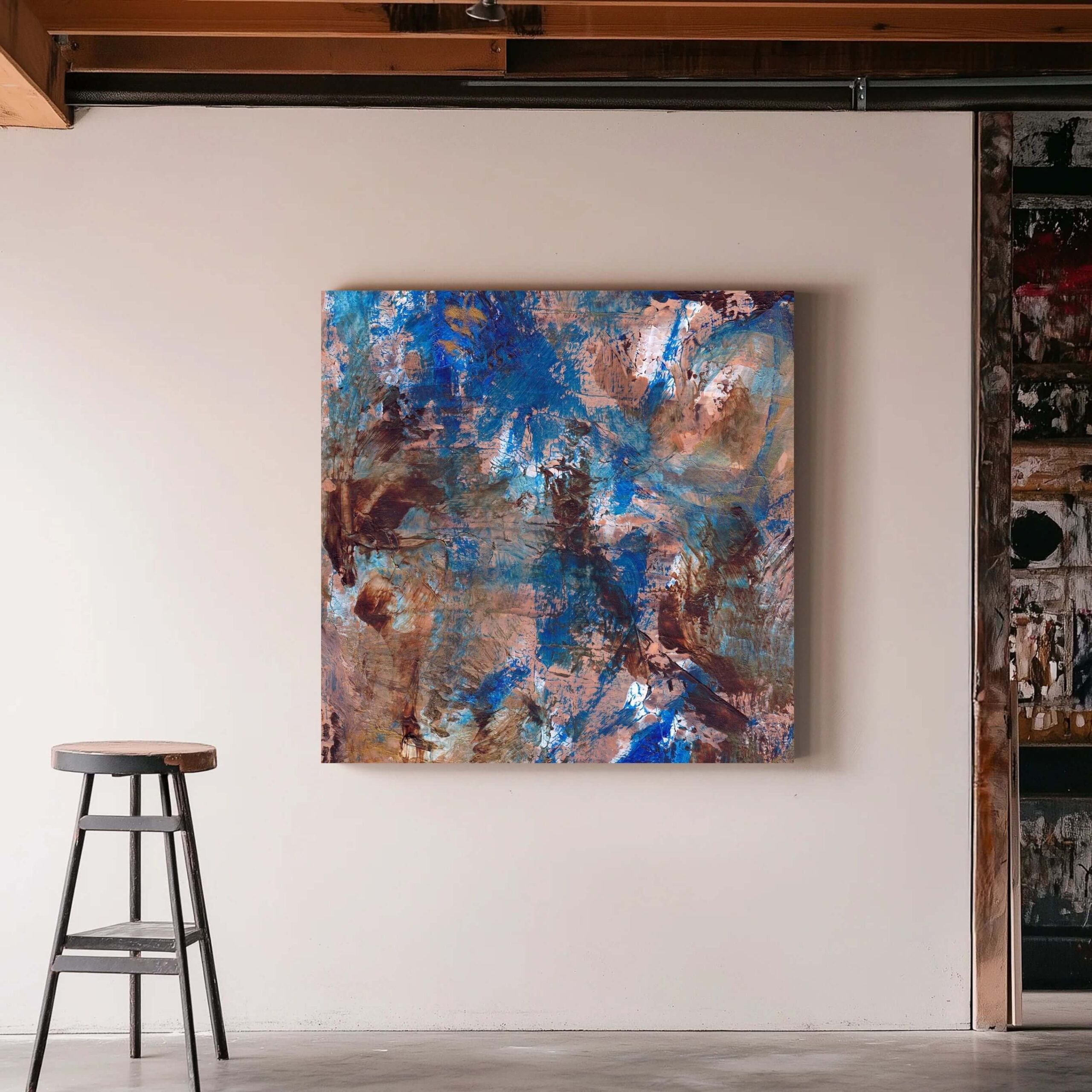
What Happens When You Change, But the Art Doesn’t
Here is something no one talks about. You will change faster than the painting does.
Life events happen. Work shifts. Relationships evolve. Your internal world moves. The artwork remains physically the same. Sometimes that stability is grounding. Sometimes it is confronting.
Owning abstract art over time means occasionally revisiting it from a new version of yourself. A painting that once felt expansive might later feel restrained. One that felt calm may later feel too quiet.
This does not automatically mean it is wrong for you. It means you are in a different phase.
The important question is whether the piece still holds integrity in that new phase, or whether it now feels misaligned at a deeper level.
That distinction requires honesty.
The Subtle Role of Repetition
You see your artwork daily. Often multiple times.
Repetition does something powerful psychologically. It builds familiarity without analysis. It reduces visual noise. It stabilises perception.
In a world that constantly introduces new images, repeated exposure to a single, stable composition creates a counterbalance. It becomes an anchor.
Living with abstract art over time means the work becomes less about “interpretation” and more about presence. You do not need to decode it every day. It simply exists with you.
That constancy has weight.
When Guests See It Differently Than You Do
An interesting moment happens when someone new enters your home and reacts strongly to a piece you have stopped consciously noticing.
They see boldness. Or tension. Or something you no longer register because it has become normal.
This can be reassuring or unsettling.
Living with abstract art means your relationship with it will not match everyone else’s. Over time, your perception softens. You see layers they miss, and you stop seeing elements they focus on.
That divergence is healthy. It means the work has moved from public statement to private relationship.
The Risk of Buying for Explanation
One of the biggest long-term mistakes collectors make is buying work that requires explanation.
If you feel compelled to justify a painting constantly, to explain its meaning to guests, to defend its complexity, you may not feel fully at ease with it yourself.
Living with abstract art over time should not require a script. The strongest pieces do not need defending. They simply hold.
If you find yourself performing intellectual gymnastics to validate the purchase, that friction rarely disappears with time. It often grows.
Buy what feels steady, not what feels impressive.
This idea is expanded further in Why Emotionally Intelligent Collectors Buy Art Without a Sales Pitch.
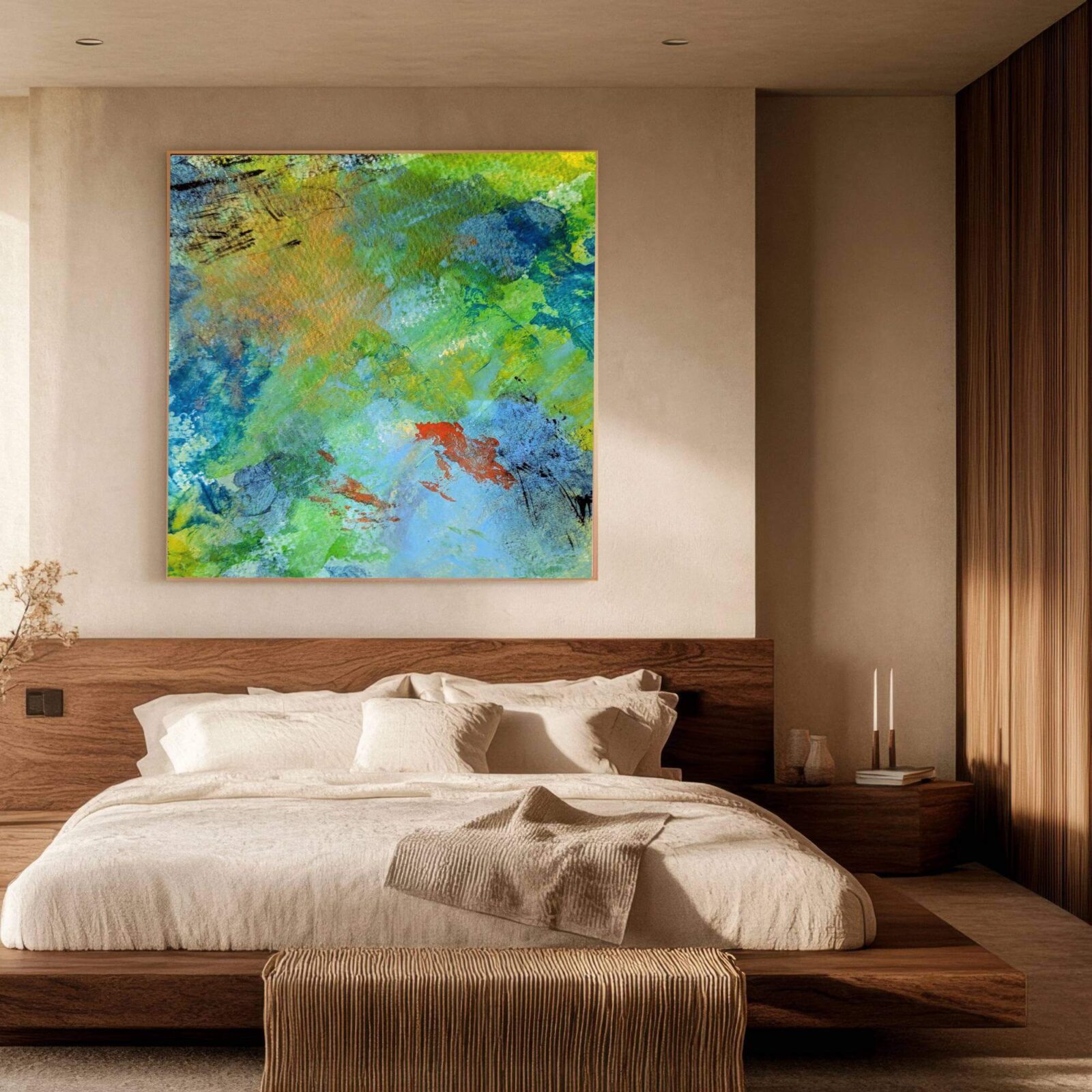
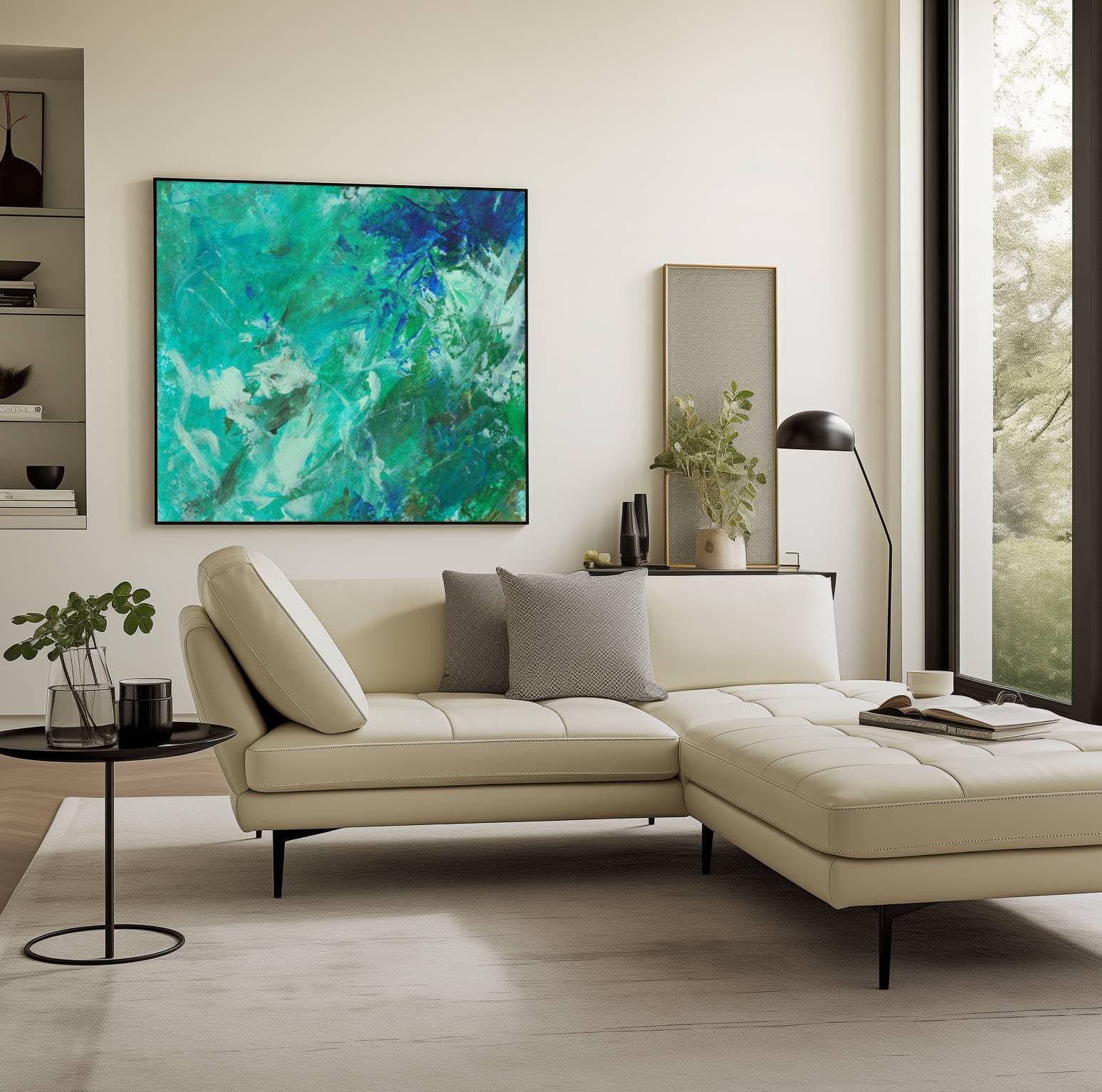
Permanence as a Psychological Choice
Choosing to live long-term with abstract art is a decision about permanence in a culture built on rotation. If you’re considering scale and longevity in more practical terms, see Collector-Grade Canvas Art: The Definitive Guide. It is easier to change cushions than to live with ambiguity. It is easier to swap prints than to commit to scale.
But permanence builds identity.
When you live with a piece for years, it becomes part of your internal landscape. It witnesses chapters of your life. It holds continuity when other things shift.
That continuity is not decorative. It is grounding.
Owning abstract art over time is not about refusing change. It is about choosing where stability matters.
When It Is Time to Let a Piece Go
Not all art is meant to stay forever.
Sometimes the relationship runs its course. The piece may still be strong, but you have moved beyond what it represents for you. It no longer feels integrated.
There is no failure in that.
The psychology of living with abstract art includes recognising when attachment has shifted. The key difference between trend-rotation and conscious release is reflection.
If you release a piece because you are bored, that is surface. If you release it because your internal world has genuinely changed, that is evolution.
Knowing the difference is maturity.
There isn’t a single right place to buy large abstract canvas prints in the UK. If you’re specifically researching options, you may also find Where to Buy Collector-Grade Abstract Canvas Prints in the UK useful. There’s just the one that matches what you’re actually looking for.
Some people want something bold and affordable that changes the energy of a room quickly. That’s completely reasonable.
Others want fewer pieces, chosen more carefully, with tighter production control and clearer authorship. That’s reasonable too.
The difference isn’t about status. It’s about permanence.
If you know you’ll want to swap it in two years, buy accordingly. If you want something that settles into the room and stays, pay attention to edition size, materials, and how it’s produced.
That’s it.
You don’t need drama. You don’t need a grand narrative about collecting. You just need to be clear about your own intention before you click buy.
Final Thoughts
Living with abstract art is not about maintaining excitement. It is about building a relationship with something that does not explain itself.
Over time, the work either integrates into your psychological and spatial world, or it remains external.
The pieces worth keeping are rarely the loudest on day one. They are the ones that remain steady when you stop trying to interpret them.
If you are exploring collector-grade abstract art intended for long-term presence rather than seasonal rotation, take time to imagine not just the first reaction, but the third year.
That is the real test.
Frequently Asked Questions
Not usually. What fades is novelty, not depth. If a piece feels empty after the initial reaction disappears, it may not have been aligned to begin with.
Most people move through an adjustment phase within the first few weeks. Integration often feels natural after that.
Because abstract art allows projection. Mood, light and environment influence perception.
Larger pieces shape spatial identity more strongly, but when chosen well, they often feel more stable over time.
Long-term pieces tend to anchor the room rather than match it. Matching often leads to shorter lifespan.
For practical integration advice, see The Ultimate Guide to Integrating Abstract Art Into Your Home Décor.
If it still feels steady after novelty fades, you likely chose well.
While not therapeutic in itself, stable visual anchors can create subtle regulation in domestic spaces.
Yes. Doubt often reflects adjustment, not misalignment.