
5 Ways Abstract Art Can Boost Your Mental Health & Well-Being
Mental health is talked about constantly, yet experienced very privately. We discuss it in headlines, frameworks, and hashtags, but the day-to-day reality of caring for our inner world often gets flattened into advice and productivity disguised as wellness.
Meditate more. Journal better. Optimise your morning routine. Track your mood. Somewhere along the way, healing became another thing to do well.
But emotional wellbeing does not always respond to effort. Sometimes it responds to safety. To permission. To stillness.
And this is where abstract art quietly enters the picture.
Abstract art does not instruct you. It does not diagnose, correct, or prescribe. It does not ask you to name your feelings or make sense of them. It simply exists, offering presence rather than answers.
In a world that constantly demands explanation, this matters.
What follows is not a metaphorical case for art-as-healing. It is a grounded exploration of how abstract art supports mental and emotional wellbeing in lived, embodied ways, and why the spaces we inhabit play a much bigger role in our psychological health than we are taught to acknowledge.
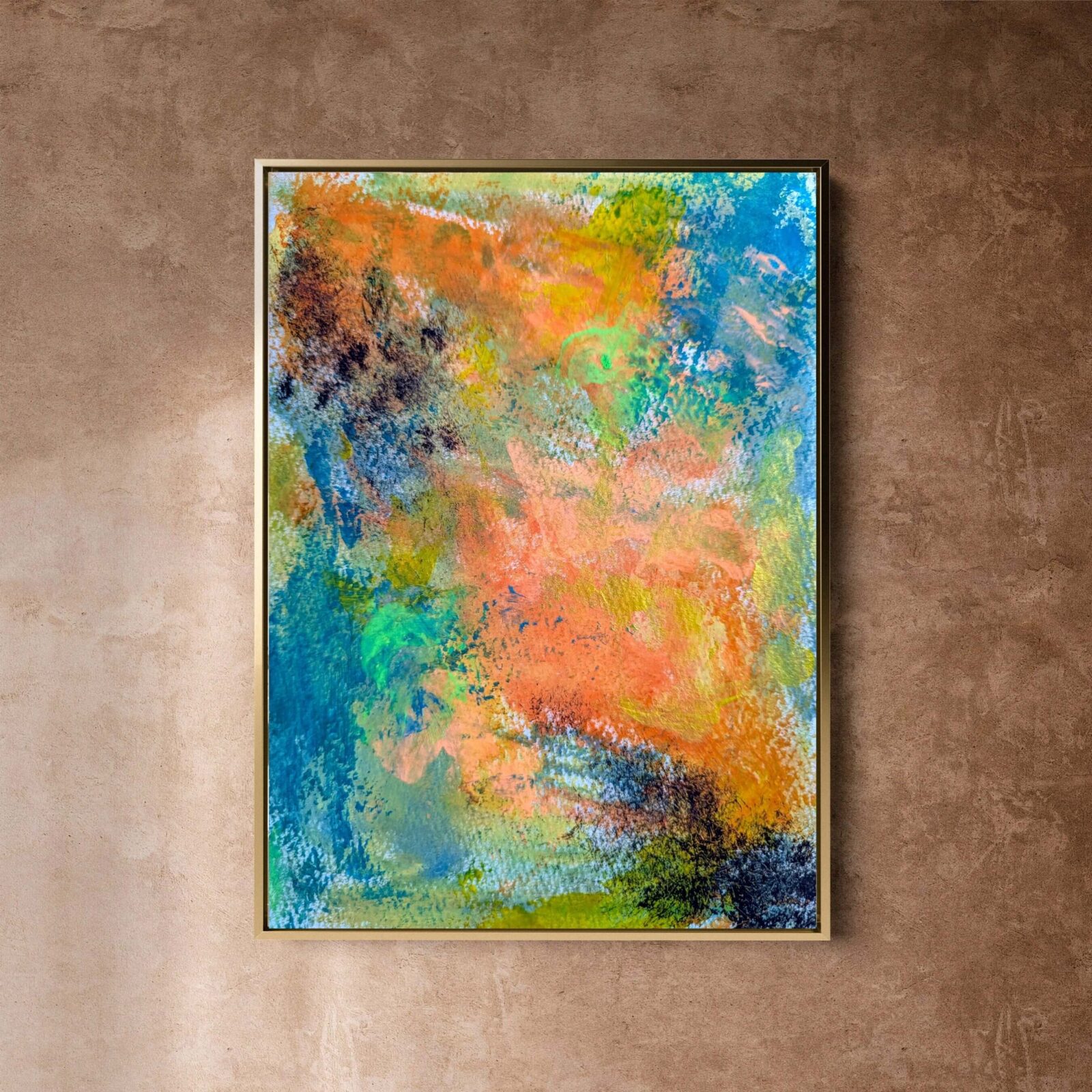
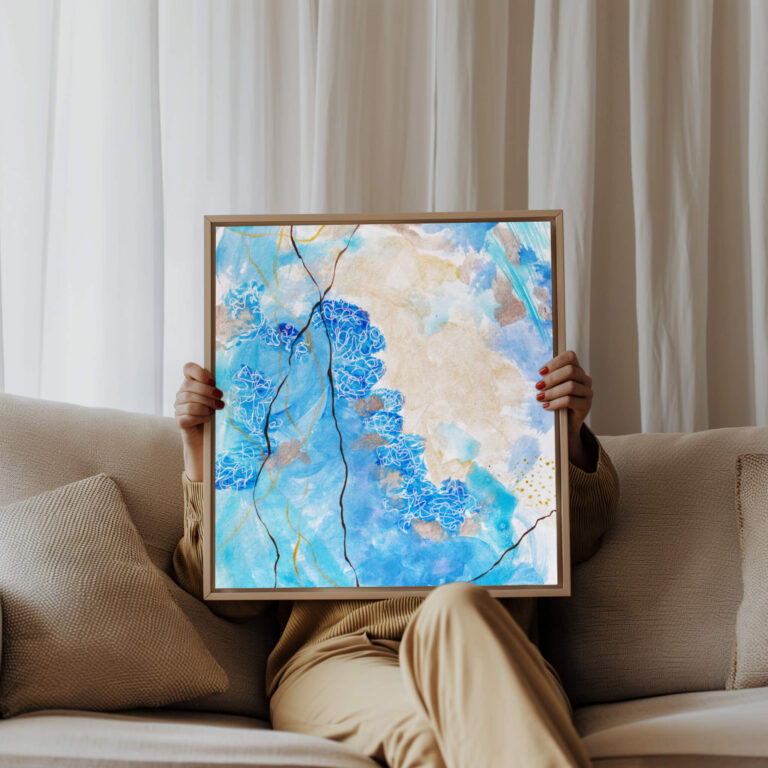
Abstract Art as a Regulating Presence, Not a Performance
Before looking at specific benefits, it is worth understanding why abstract art functions differently from most visual input we consume.
Figurative imagery gives the brain work to do. Identify the subject. Read the scene. Assess meaning. Even when the image is beautiful, the mind stays active.
Abstract art removes that demand.
There is no object to label, no narrative to follow, no conclusion to reach. This reduction in cognitive load allows the nervous system to soften rather than stay alert. The body receives fewer signals that it needs to stay switched on.
This is why emotionally intelligent interiors consistently rely on abstraction. Not because it is fashionable, but because it regulates. You can read more about it here: Why Emotionally Intelligent Interiors Always Include Art
Abstract art is not passive decoration. It is an atmospheric influence. One that works quietly, over time, without requiring participation.
It Creates a Visual Pause in a World That Never Stops
Mental clutter has become an accepted background condition. Screens, notifications, visual noise, constant input. Even our homes, supposedly places of rest, are often designed to stimulate rather than soothe.
Abstract art interrupts this pattern, but gently.
When you look at an abstract piece, the eye is not pulled into detail or narrative. It slows. It wanders. It rests. This visual pause has a direct effect on mental state.
Research in neuroaesthetics shows that engaging with non-representational art can reduce cortisol levels and support parasympathetic nervous system activation. In simple terms, it helps the body move out of stress mode.
This is not about believing art will calm you. It is about how the brain processes ambiguity versus instruction.
In this way, abstract art functions much like a visual exhale. You do not consciously decide to relax. You simply stop bracing.
Unlike guided practices, this requires no effort. The art meets you exactly as you are.
It Allows Emotional Expression Without Language or Explanation
Not all emotions want words. Many arrive before we understand them. Some never become articulate at all.
Abstract art creates a safe container for this.
Because it does not depict specific scenes or emotions, it allows viewers to project their own inner state without feeling confronted or analysed. You are free to respond without justification.
This is one reason abstract forms are widely used in therapeutic and trauma-informed environments. They bypass the analytical mind and speak directly to felt experience.
A certain colour combination may evoke grief. A dense lower composition might mirror exhaustion. A sudden softness may bring relief. None of this needs to be named to be effective.
This capacity to engage emotion without demanding coherence is especially important for people experiencing burnout, anxiety, loss, or emotional numbness. It creates permission to feel without having to perform insight.
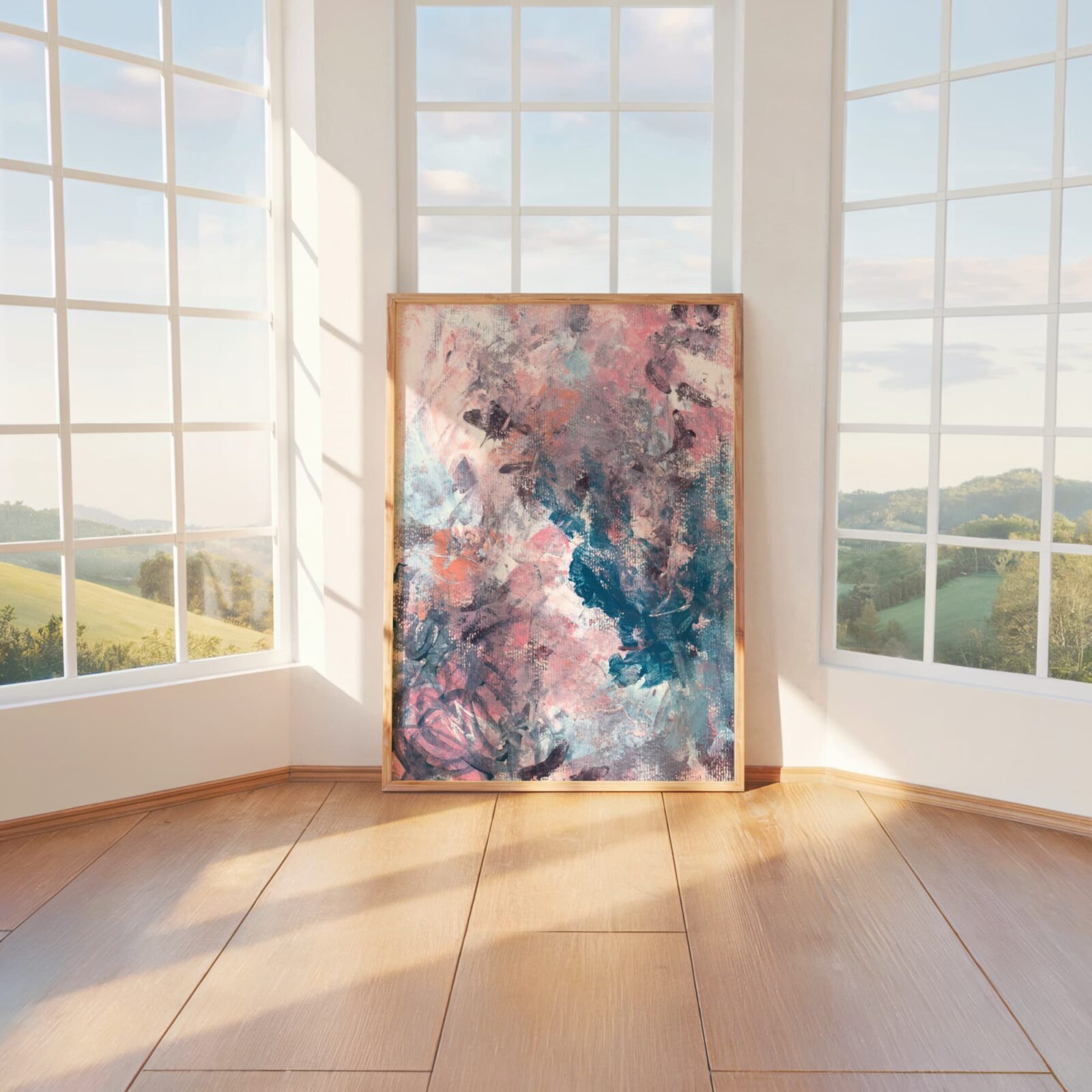
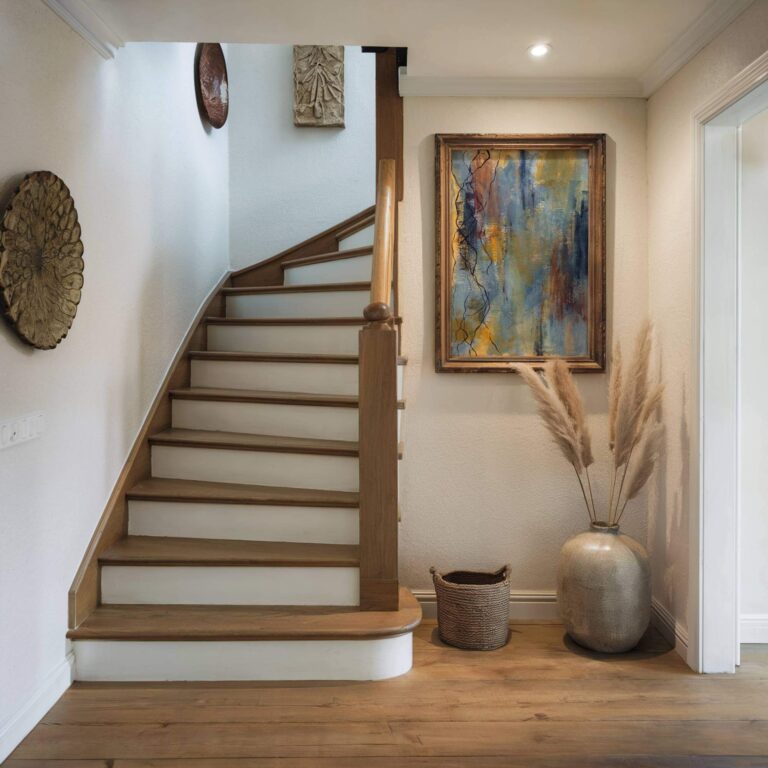
It Strengthens Presence Without Forcing Stillness
Presence is often framed as something we must achieve. Focus harder. Clear the mind. Stay with the breath.
For many people, especially those living in high-output or high-responsibility lives, this framing creates more tension, not less.
Abstract art offers a different route.
Standing in front of a strong abstract piece draws attention naturally. Not through instruction, but through resonance. The mind becomes occupied in noticing rather than planning. Texture, rhythm, negative space, weight.
This shift moves awareness out of rumination and into perception.
Over time, this repeated return to visual presence supports nervous system regulation. It is the same principle behind using art in workspaces to reduce cognitive fatigue and support focus. Read about it here: What Chronic Sitting Does to the Nervous System (And Why Teams Feel Fried by Midday)
Presence becomes something you enter, not something you force.
It Builds Emotional Resilience Through Ambiguity
Mental wellbeing is not just about calm. It is also about adaptability.
Abstract art trains the capacity to sit with uncertainty. There is no right interpretation. No correct answer. Meaning shifts depending on your internal state.
This flexibility strengthens emotional resilience. It supports the ability to tolerate ambiguity, complexity, and nuance without rushing to closure.
In everyday life, this translates to healthier responses to stress, change, and emotional challenge. The nervous system learns that not everything needs resolution to be safe.
This is one of the least discussed yet most powerful psychological benefits of living with abstract art.
So What Does this Mean for Your Life?
It means that art is not a luxury extra. It’s a necessity, especially if you are someone who values presence, depth, and emotional intelligence.
Abstract art doesn’t fix you. It doesn’t promise to cure. But it does hold space for you to come home to yourself. Quietly. Without fuss. Without needing to perform healing.
It helps you soften. Breathe. Notice. And in a world obsessed with more, more speed, more output, more answers, that kind of stillness is radical.
It is also, as it turns out, incredibly good for you.
If you’re ready to explore what this might look like in your own space, you’re welcome to start here, quietly, in your own time: Legacy Thread
It Reconnects You With the Body
Mental health is inseparable from the body. Thought patterns live in breath, posture, muscle tension.
Abstract art engages this somatic layer directly.
Because the response is sensory rather than narrative, it is often felt physically before it is understood intellectually. A loosening. A settling. A subtle release.
This embodied response is why abstract art can feel grounding rather than distracting. It invites awareness without instruction.
Unlike many body-based practices, it does not ask you to move, breathe a certain way, or lie down. It simply asks you to look. To feel what happens.
That simplicity is part of its power.
Art as Part of an Emotional Ecosystem
Abstract art does not claim to cure mental health conditions. But it does shape the emotional climate you live within.
The spaces we inhabit either keep us in a state of low-level alertness or allow us to settle. Art plays a central role in that distinction.
This is why collectors who prioritise emotional wellbeing choose art differently. They are not looking for statement pieces or trend alignment. They are looking for resonance, longevity, and presence.
Read about it here: Why Emotionally Intelligent Collectors Buy Art Without a Sales Pitch
When chosen with intention, abstract art becomes part of an ecosystem of care. Quiet. Consistent. Available every day.
Living With Abstract Art That Supports Wellbeing
Scale matters. Material matters. Restraint matters.
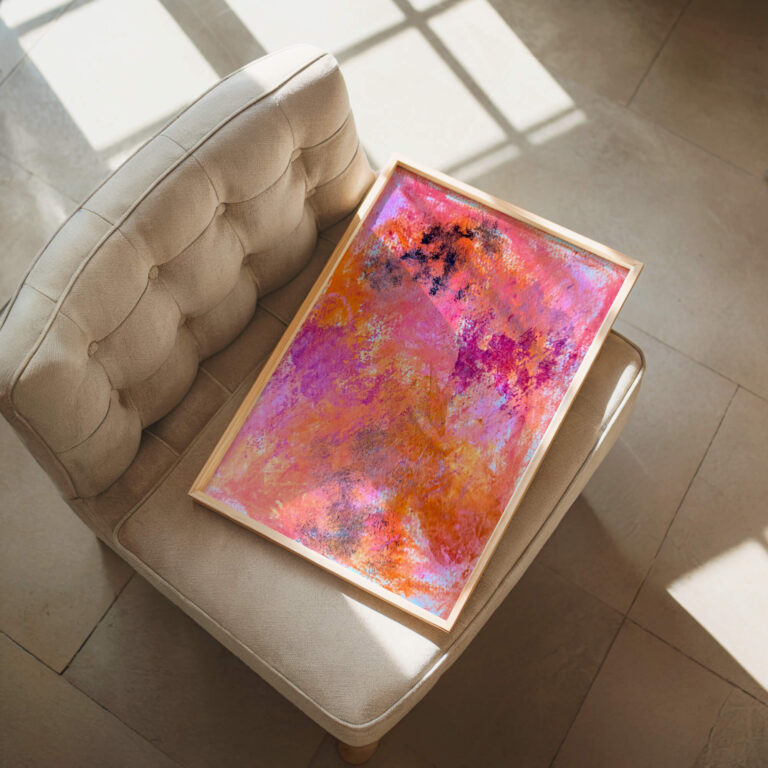
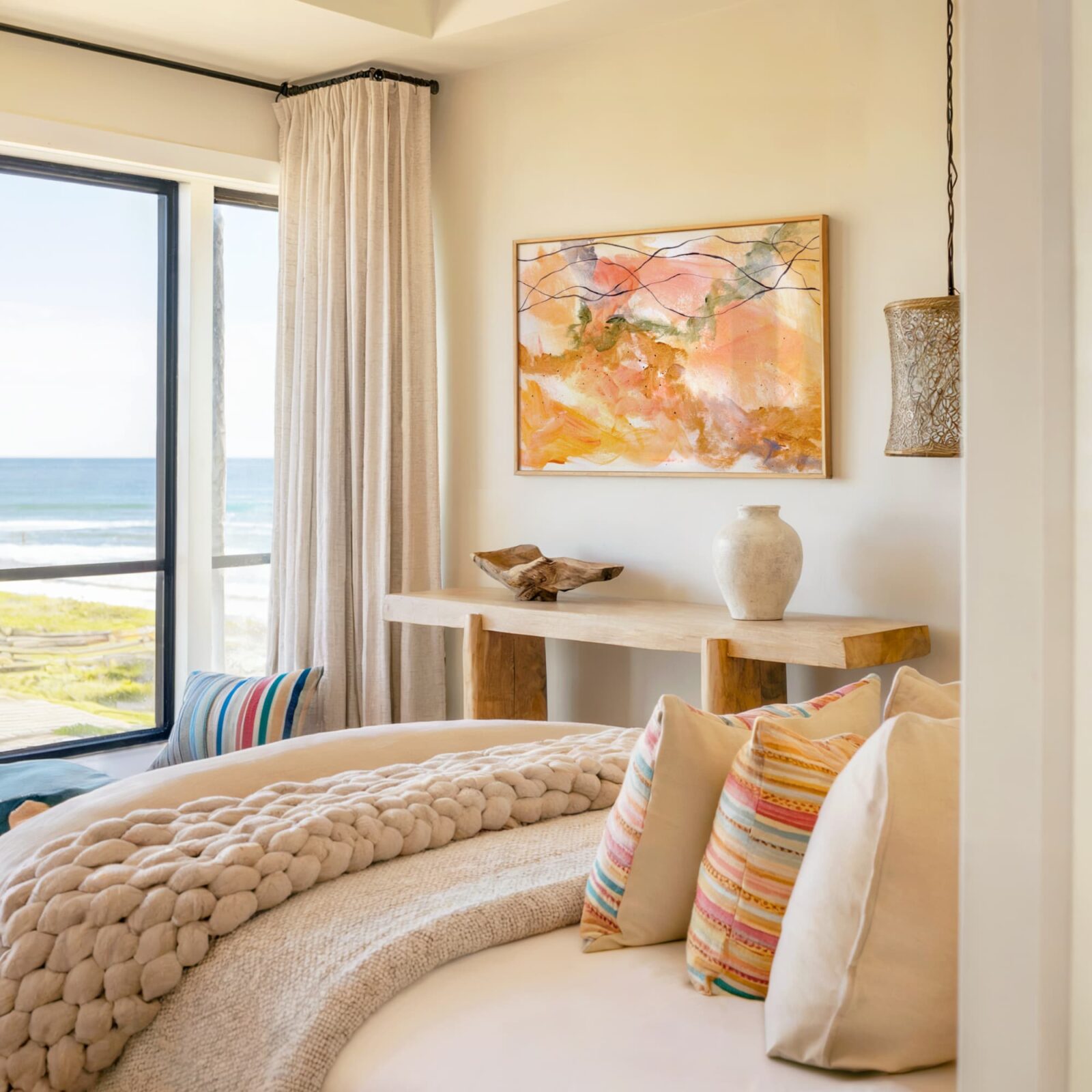
One well-chosen piece can do more for a space than multiple decorative elements. It creates visual breathing room. It anchors the emotional tone of the room.
This is especially true when the work is produced with longevity and material integrity in mind. Art that ages well continues to support rather than degrade over time.
You can read about it here: How Long Should a High-Quality Art Print Actually Last?
If you would like to explore abstract works created with emotional presence and long-term living in mind, you can view the current private catalogue here:
https://vikithorbjorn.art/collectors-vault/
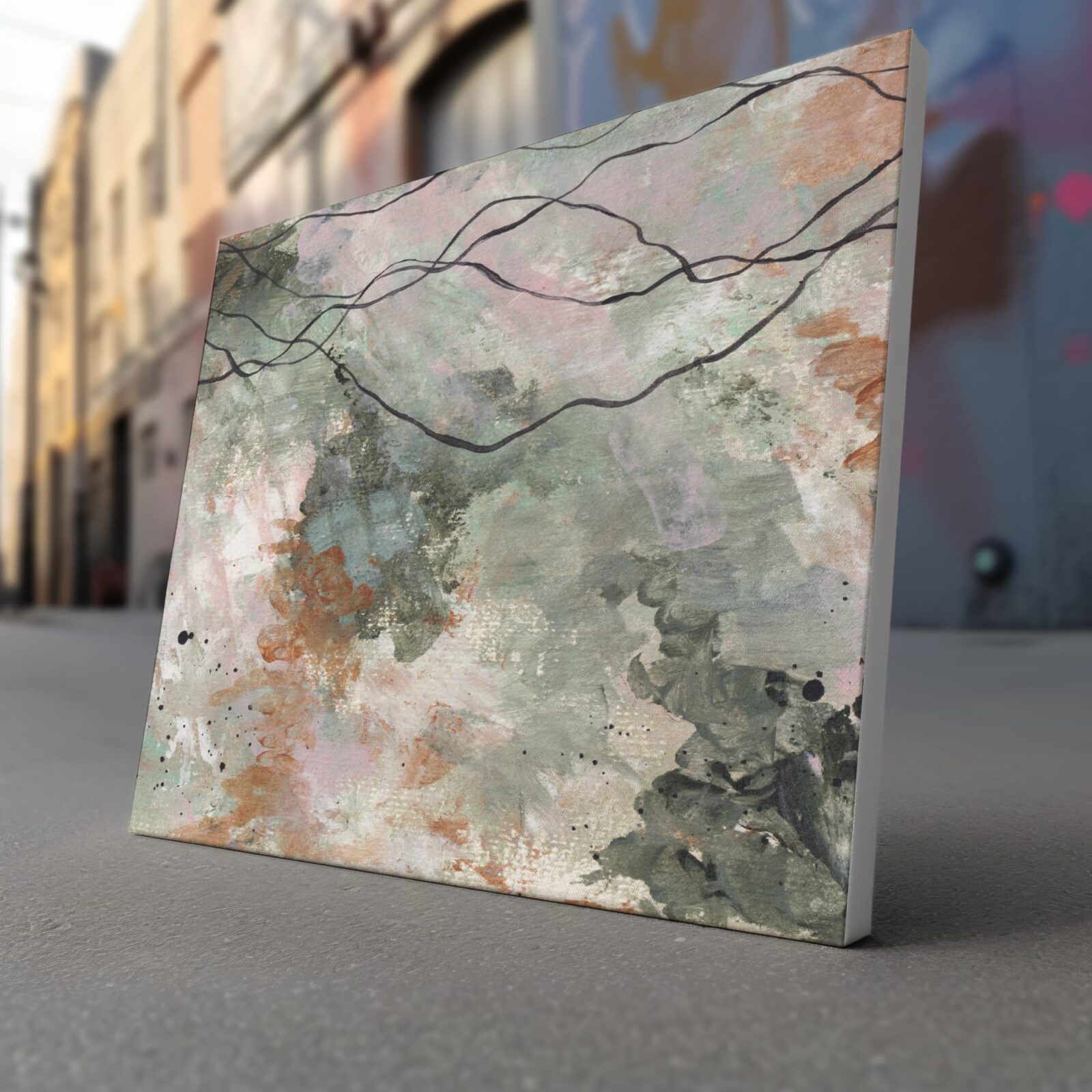
These are canvas editions drawn from my archive, produced to hold space rather than perform, and intended to live quietly with their owners over many years.
It Becomes Part of Your Recovery Ritual
Whether you’re navigating grief, burnout, depression, or quiet disconnection, healing doesn’t always come in big breakthroughs. Often, it arrives in small, consistent moments of care.
Abstract art can become part of that rhythm. A visual touchstone. A daily reminder that beauty still exists. That you still feel. That your inner world still has room to expand.
Some people keep a favourite piece by the front door. Others place it across from their bed. Some light a candle before sitting with it. These small, intimate rituals matter. They mark time differently. They turn survival into sacredness.
In that way, the art doesn’t just hang on your wall. It becomes part of your recovery. A visual companion in your healing process.
It Makes Sillness Feel Safe Again
For many people, especially high achievers, trauma survivors, or those living in constant motion, stillness doesn’t feel relaxing. It feels threatening. Unfamiliar. Vulnerable.
Abstract art helps rewrite that relationship.
Because it gives your eyes something to engage with, it creates a bridge. You’re still being present. But you’re not doing nothing. You’re looking. Feeling. Being. That’s a very different kind of stillness. One that feels anchored rather than exposed.
Over time, this changes how you experience quiet. It no longer feels like absence or punishment. It starts to feel like nourishment.
And once you begin to experience stillness as a resource, everything in your life softens, your nervous system, your relationships, your sleep, your creative thinking. Stillness becomes a strength, not a liability.
Mental Health is Not Just Clinical. It’s Cultural. Emotional. Spatial.
We often treat mental wellbeing as something to manage with medication, therapy, or self-help books, and those are all valid. But what if the space you live in, the art you look at, and the feelings you allow also play a central role?
Abstract art isn’t a magic solution. But it is a gateway. To emotion. To presence. To healing. And when chosen intentionally, it becomes more than décor. It becomes part of your ecosystem of care.
You don’t need to understand abstract art to feel its impact. You don’t need to explain it to benefit. You just need to let it in. To stand in front of it. To feel what you feel. And let that be enough.
If you’re creating a space that nurtures your emotional health, not just your productivity or appearance, let your art be part of that. Let it meet you where you are.
The pieces don’t shout. They don’t sell. They wait. Just like healing does.
Frequently Asked Questions About Abstract Art and Mental Health
Abstract art won’t replace therapy, medication, or support systems. But it can absolutely support mental health in quieter, everyday ways. The way you respond to your environment affects how safe your nervous system feels. Abstract art reduces visual demand, slows the eye, and creates emotional spaciousness. Over time, that contributes to lower stress, better regulation, and a greater sense of internal calm.
Most people don’t notice this happening. They just realise they feel steadier in certain rooms.
Figurative art asks the brain to work. It wants you to identify what you’re seeing, understand the scene, and often interpret meaning. Even when it’s beautiful, the mind stays active.
Abstract art removes that instruction. There’s nothing to label or solve. The brain can stop scanning and start settling. That reduction in cognitive effort is what many people experience as calm.
For many people, yes. Especially when anxiety is driven by constant mental stimulation or overthinking. Abstract art doesn’t compete for attention. It gives the nervous system something neutral and steady to rest on.
This doesn’t mean anxiety disappears. But it often softens. Breathing slows. The body drops out of high alert more easily. And that shift matters.
Not all abstract art is calming. Highly chaotic compositions, sharp contrasts, or aggressive mark-making can increase alertness rather than reduce it.
Art that supports wellbeing usually has:
- A limited or harmonious colour palette
- Space for the eye to move slowly
- Balance between movement and stillness
- Depth without visual noise
The key is how the work makes your body feel, not how impressive it looks.
They do, but not in a simplistic way. Soft blues, greens, earth tones, muted neutrals, and low-contrast palettes tend to support nervous system regulation. They feel safer to the body.
That said, personal response matters more than colour theory. A colour that grounds one person might agitate another. Always trust your own reaction first.
Yes, more than most people realise. Art that is too small can create visual tension because the eye keeps searching for something to land on.
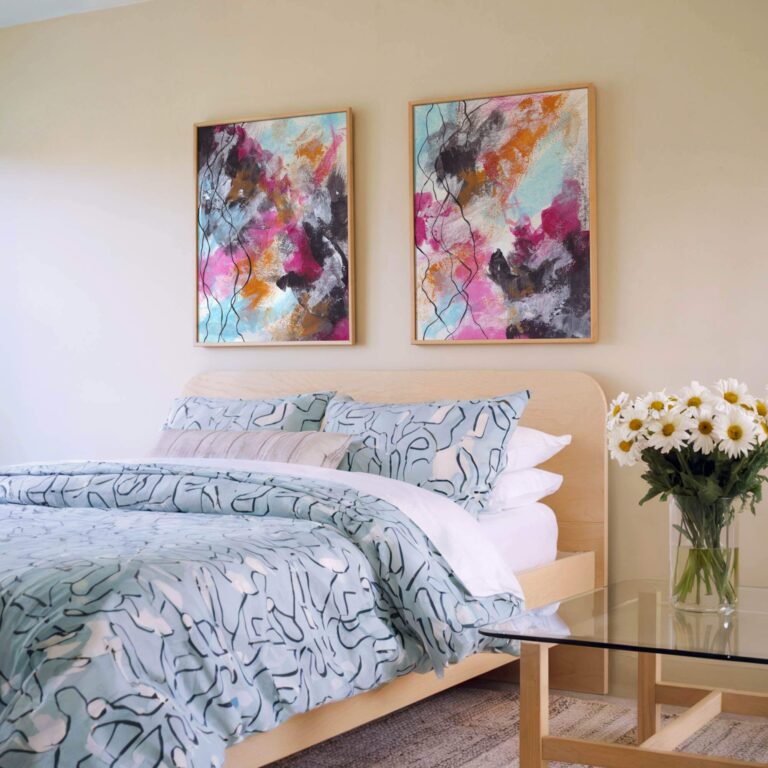
Larger pieces often feel more stabilising. They give the room a visual anchor and reduce fragmentation. One well-sized piece usually creates more calm than several smaller ones competing for attention.
Places where you naturally pause, not places you rush through. Living rooms, bedrooms, entryways, quiet corners, or anywhere you tend to stop, sit, or breathe.
The goal isn’t constant exposure. It’s meaningful contact. A piece you pass without noticing does very little. A piece you regularly stop in front of can become a quiet anchor.
Pay attention to your body, not your thoughts. If you feel your shoulders drop, your breathing soften, or your attention slow, that’s a good sign.
The right piece often grows with you. It doesn’t give everything away immediately. It continues to feel relevant even as your emotional state changes. That longevity is usually a better indicator than instant attraction.