
Abstract Art for Office Energy and Focus
In the modern workspace, aesthetics are not a luxury. They’re a form of infrastructure. The environments we create are either working with us or against us. And far too often, they drain energy instead of restoring it.
Most offices are designed for function, not feeling. Blank walls, overhead lighting, and furniture picked for price, not presence. The result? Fatigue, friction, and a quiet loss of motivation.
But when your space is emotionally aligned, when it reflects the energy you actually need, your output changes. You feel sharper, lighter, more creative. Abstract art can help you build that kind of space. Not as decoration. As direction.
This guide walks through how abstract art transforms workspaces into environments that fuel focus, balance energy, and protect your mental clarity. Whether you’re styling a corner office or a kitchen table, these principles will hold.
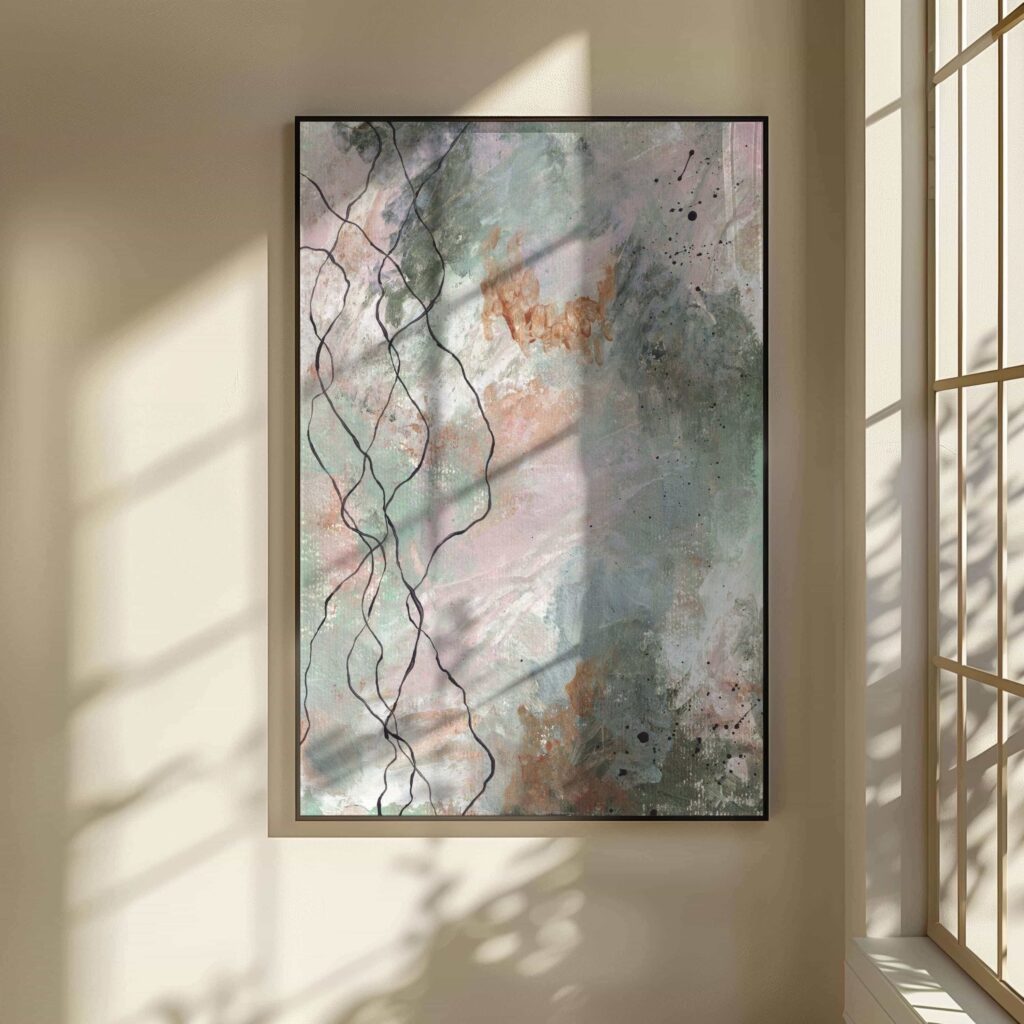
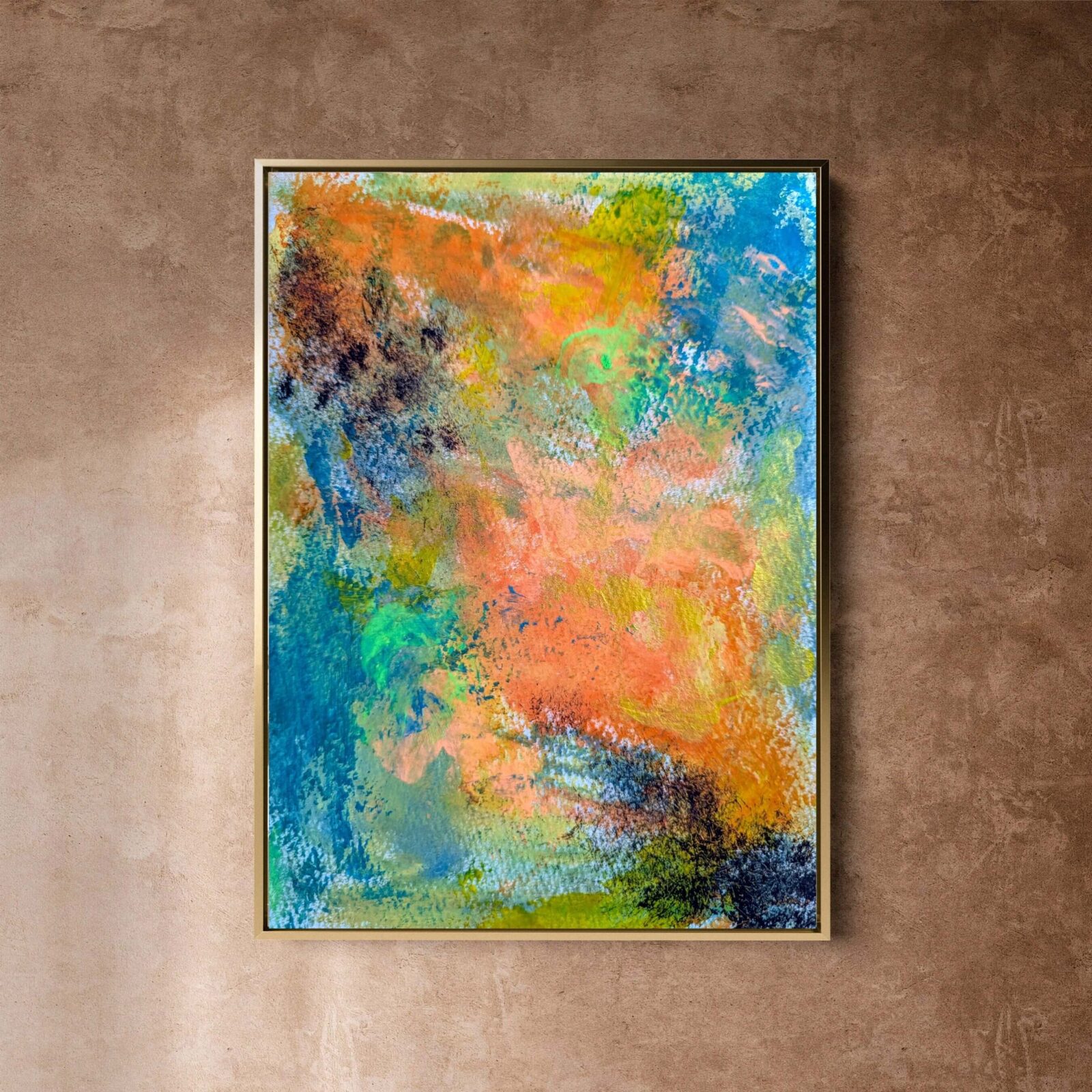
Why Office Energy Matters (and Why Most Offices Get It Wrong)
We spend thousands of hours working each year. And yet the spaces we work in are often visually dead. They don’t support our nervous systems. They don’t stimulate imagination. They don’t anchor presence.
That’s a problem, especially when you’re expected to be creative, focused, or emotionally available on demand.
Energy is a design issue. When the room feels off, people disengage. Deadlines are harder. Decisions get slower. Meetings feel heavier. You can’t push through that with caffeine. You need an environment that does some of the lifting for you.
What Abstract Art Actually Does in a Workspace
Abstract art isn’t about meaning. It’s about movement. It doesn’t show you something; it lets you feel something. That’s its power.
1. It shapes mood without stealing focus
Abstract art gives your eyes somewhere to rest that isn’t your inbox. It keeps your attention soft, not scattered. It helps the room hold energy without competing with your brain.
2. It meets you where you are
Unlike literal artwork, abstract pieces allow interpretation. They change with your mood. That’s what makes them ideal for a professional space, they don’t dictate emotion, they allow it.
3. It builds atmosphere quietly
The right colours, shapes, and placements can recalibrate a space. A single canvas can soften a hard room, energise a flat one, or balance a space that’s already too loud.
Cognitive Load, Visual Fatigue, and Why Offices Feel Draining
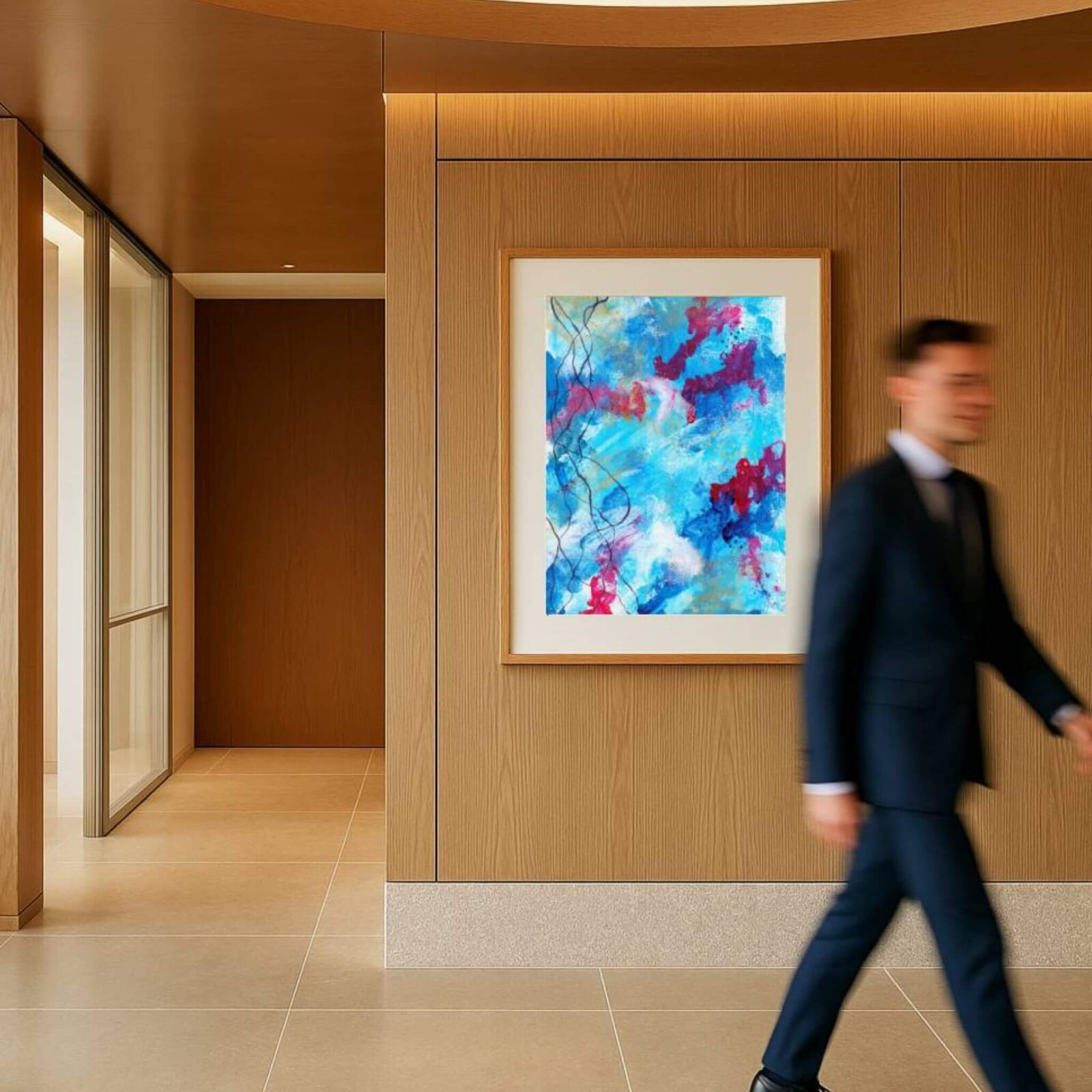
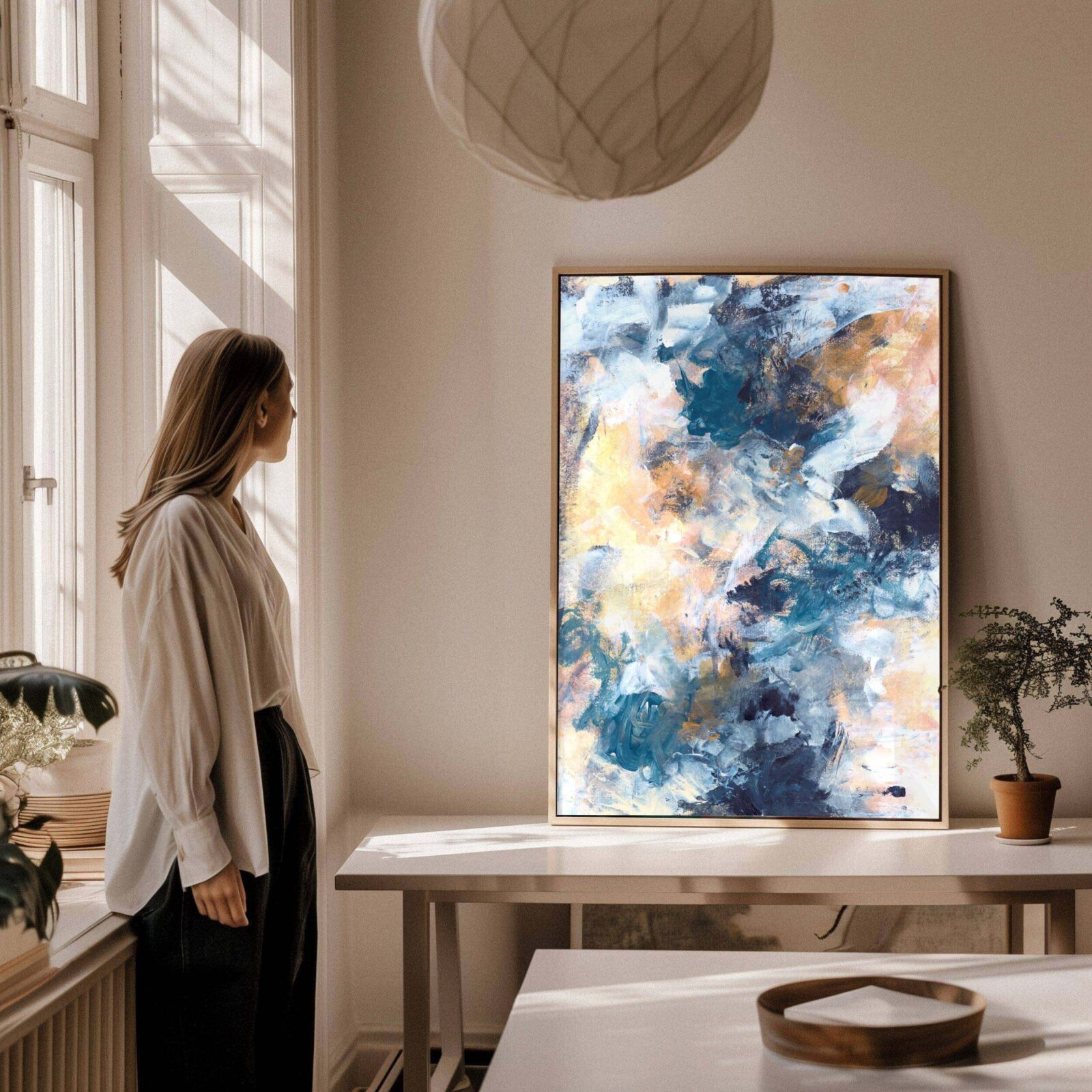
Colour: The Quiet Force Behind Your Focus
Colour in abstract art is not random. It’s a nervous system tool. When you place the right colours where you work, you’re not just changing the room. You’re changing your chemistry.
Red
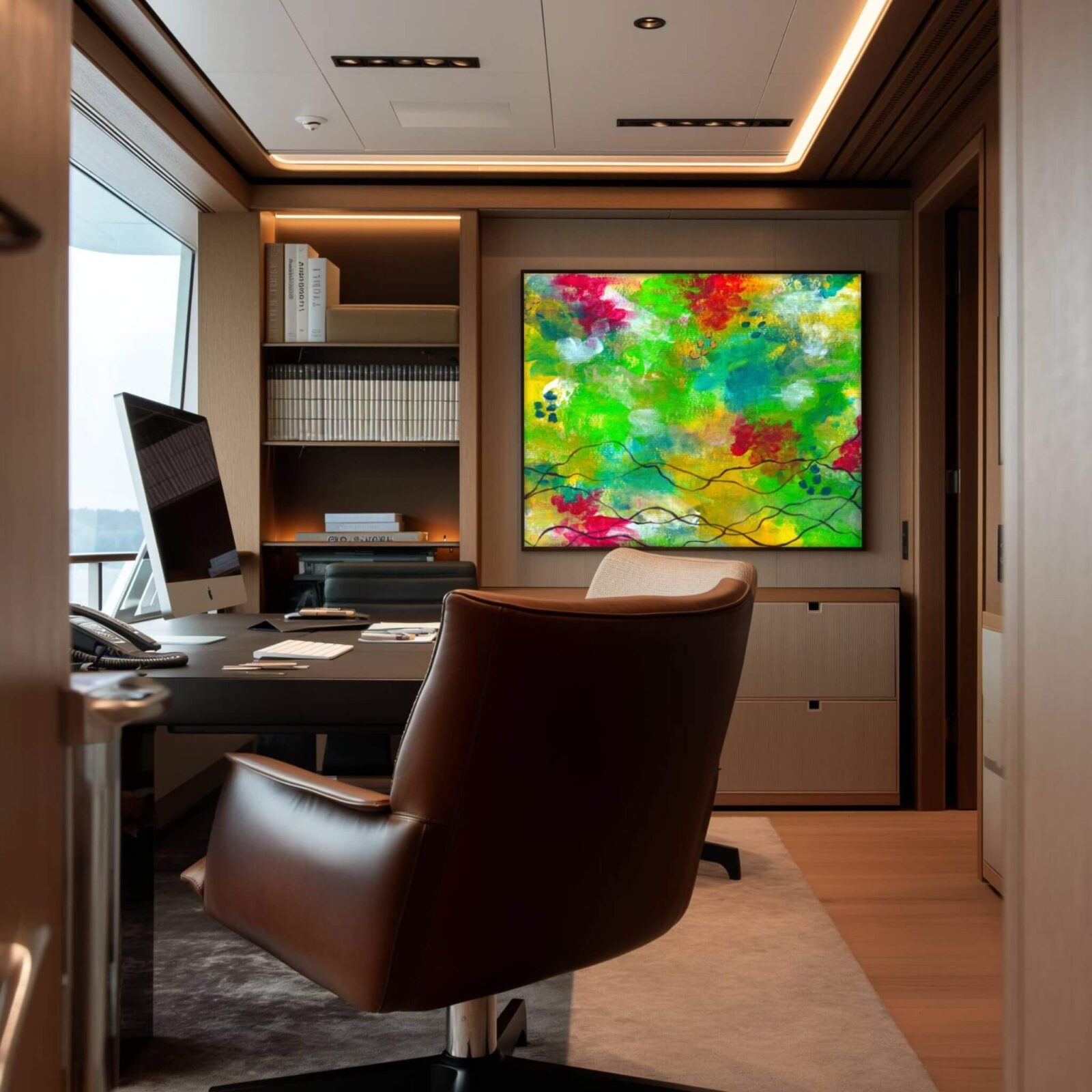
Red is action. It sharpens focus, speeds up thinking, and fuels momentum. Use it in rooms where energy needs to rise, brainstorm spaces, meeting areas, or when tackling heavy workloads.
Yellow
Optimism in colour form. Yellow supports open-minded thinking and helps soften mental fatigue. Ideal for team zones, social areas, or creative planning corners.
Blue
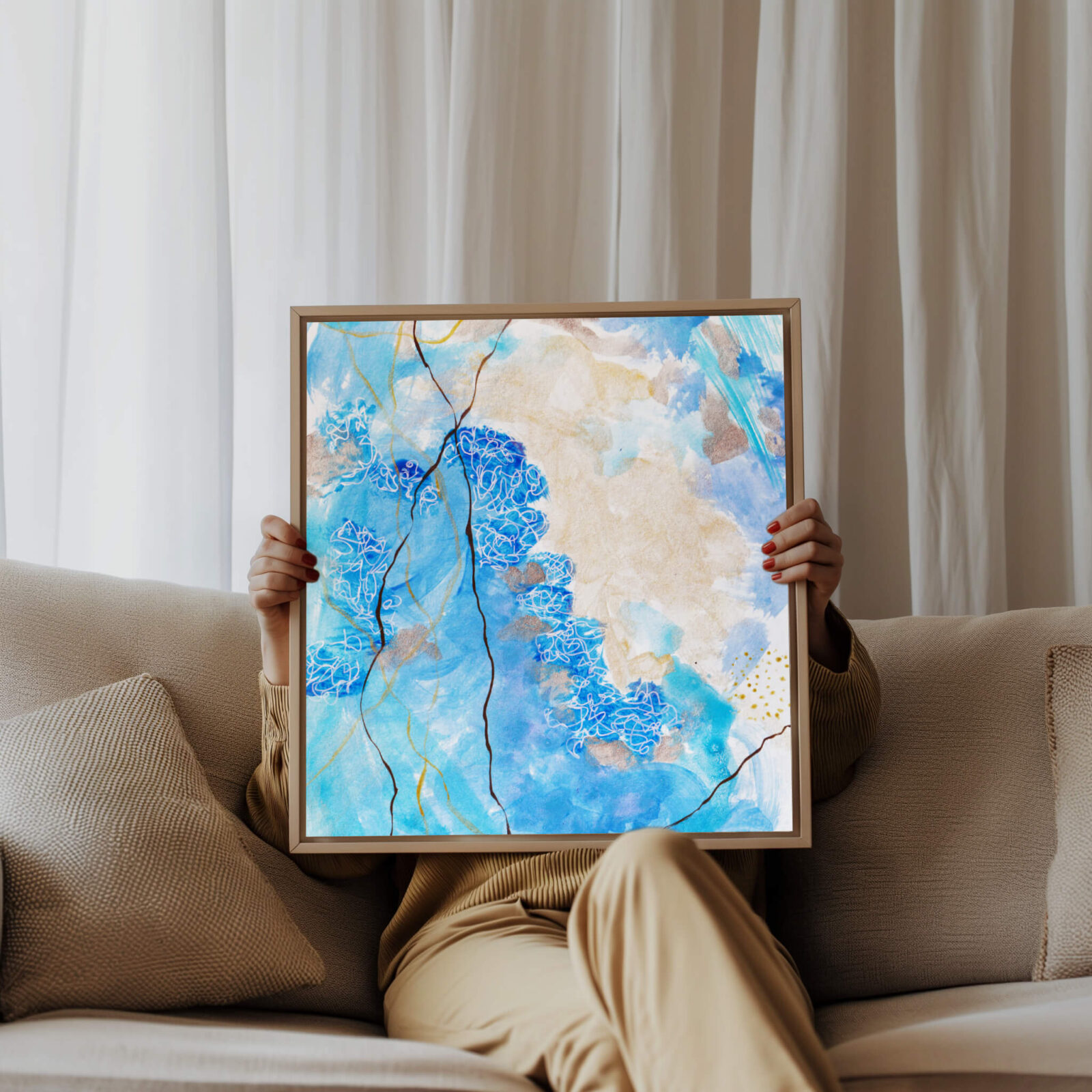
Blue is focus. It calms overstimulation and helps sustain deep work. Use it in solo workspaces, writing rooms, or anywhere you need to feel steady.
Green
Green restores. It brings a sense of continuity and calm. It helps regulate emotional spikes and supports long-term clarity. Good for spaces where decisions are made or long sessions unfold.
Purple
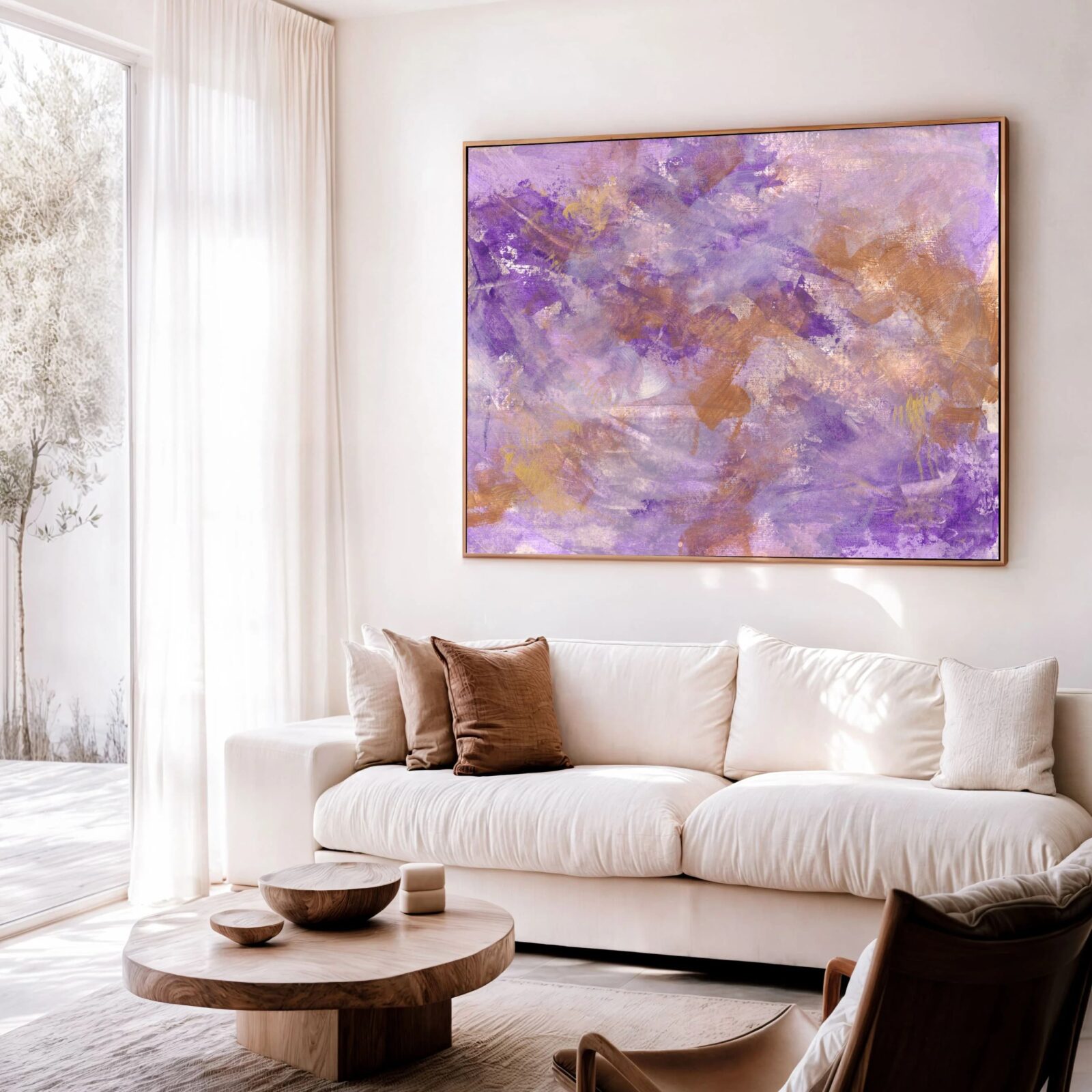
The creative’s companion. Purple sparks imagination and visionary thinking. If you’re inventing, designing, or problem-solving, it can shift your perspective subtly but meaningfully.
Tip
You don’t need to repaint your walls. Even limited-edition prints with controlled colour palettes can tilt the energy of a room in the direction you need.
Shape Language: Geometry, Flow, and the Feeling of Form
Abstract art doesn’t stop at colour. Its shapes hold psychological weight. The balance between order and flow, between tension and release, all play a role in how a space feels.
Geometric shapes
Lines, grids, and symmetry create a sense of order and focus. They’re perfect for analytical roles, financial environments, and anywhere precision matters.
Organic forms
Curves, waves, and asymmetry loosen the grip. They soften tension and open space for new thinking. These are especially useful in creative industries or anywhere flexibility is prized.
Compositional balance
Art that blends both, structure and softness, brings harmony. These pieces support multitasking, switching between roles, or managing dynamic teams.
Where to Place Abstract Art in a Workspace
Knowing what high-end art pieces to choose is one thing. But where and how you place it matters just as much. Bad placement can mute a powerful piece. Strategic placement lets it influence the room.
Behind the desk
Anchor your focus. A calming piece behind your screen creates a supportive backdrop and minimises digital fatigue.
Adjacent to your line of sight
This gives your mind a pause point. Especially useful in long-call or high-concentration workspaces.
Shared spaces
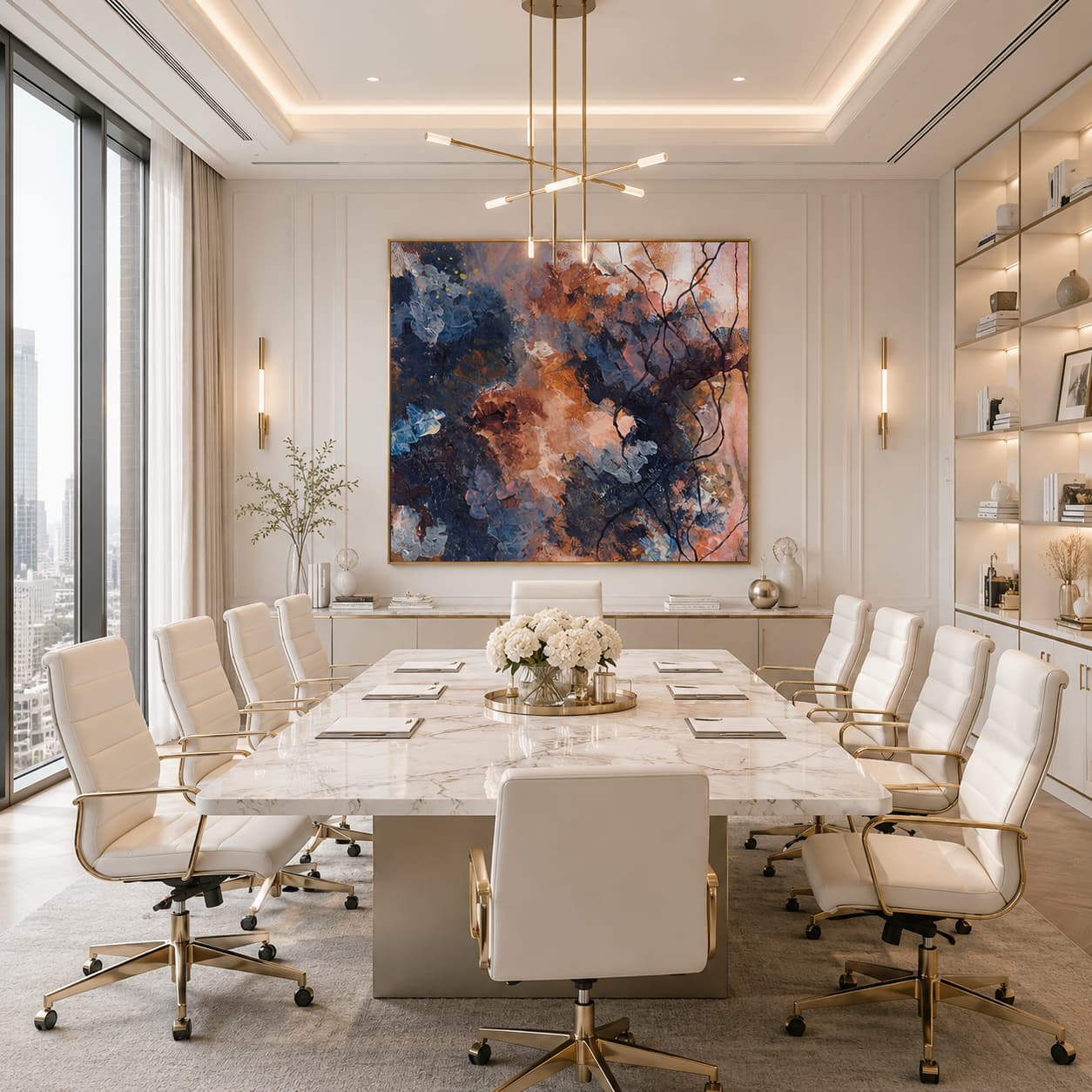
Use energising art in common areas, conference rooms, reception, team spaces. Choose pieces that uplift without being jarring. Balance matters.
Entryways
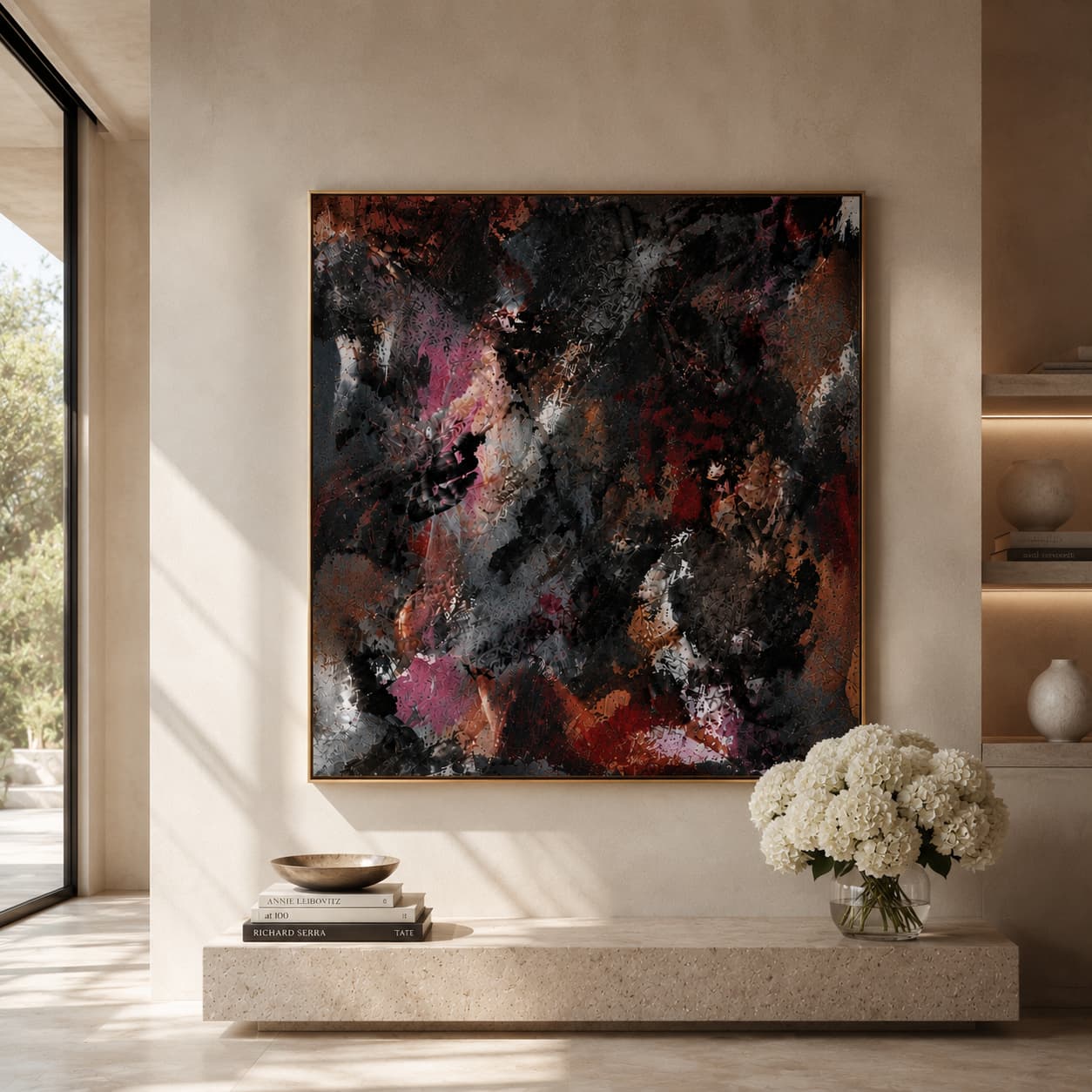
First impressions shape emotional tone. Let the first thing people see be intentional. Something that sets the room’s rhythm, not just its look.
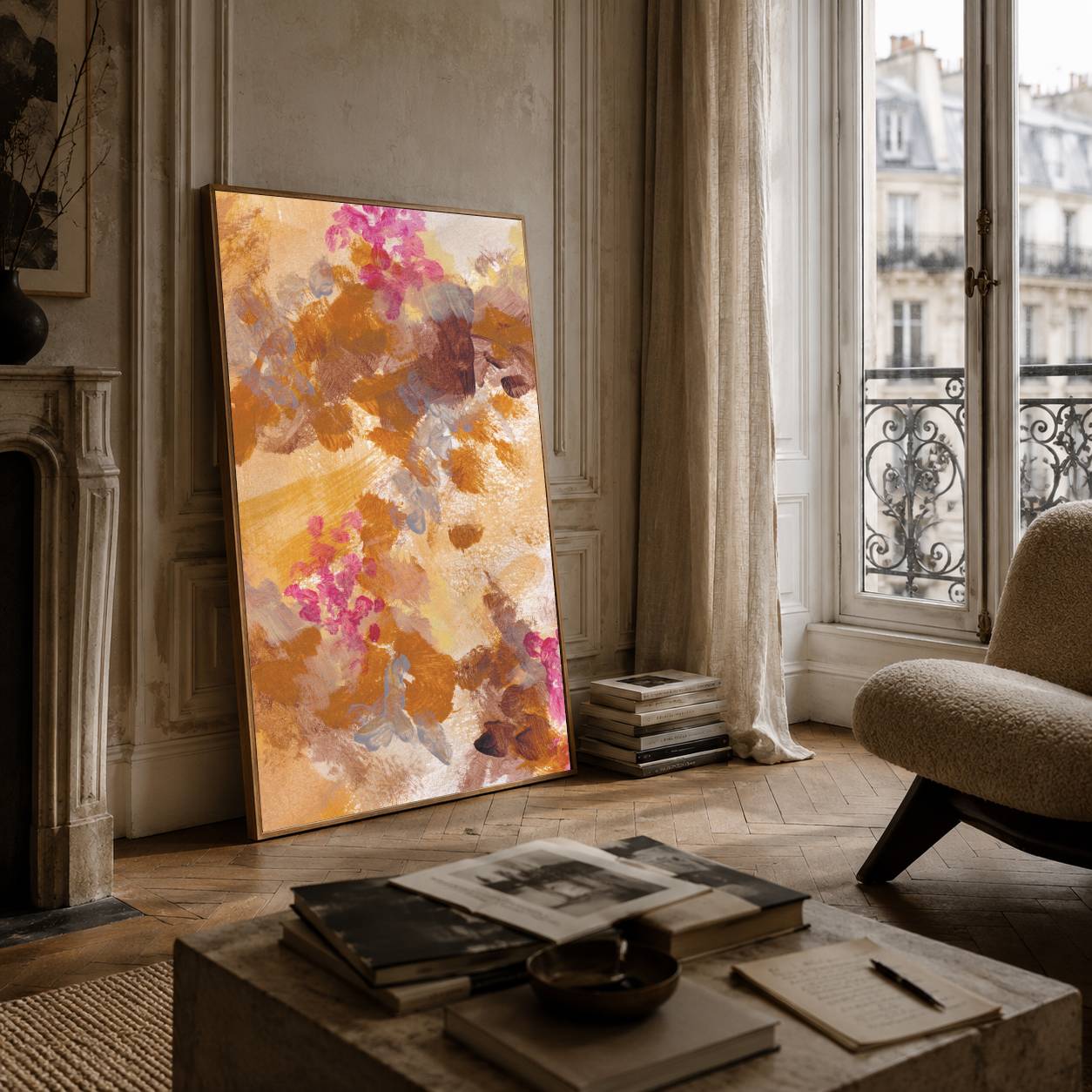
One Statement Piece Versus Visual Clutter at Work
Mental Health at Work: The Invisible Load
Stress in the workplace isn’t always loud. Sometimes it’s ambient. A room that’s too flat, too grey, or too overstimulating chips away at you slowly.
Abstract art supports emotional resilience by giving you quiet, visual cues that remind your body it’s safe. It regulates without commanding. And when stress levels drop, clarity rises.
Looking at art, even for 30 seconds, has been shown to lower cortisol and improve mood. That’s not fluff. That’s biology.
Choosing Art That Works With You
The best piece of art is not the most expensive or the trendiest. It’s the one that meets your energy.
Ask yourself:
What kind of mental state do I need in this room?
Where does my energy naturally dip during the day?
Which colours and shapes make me feel clear, not distracted?
Then:
Choose one statement piece rather than clutter.
Give it space. Art needs breathing room.
Let the art reflect your emotional intention, not your industry’s aesthetic.
If you want a deeper framework for selecting pieces that shape atmosphere rather than simply decorate, this guide on curating personalised wall art for mindful spaces explains how placement, emotional resonance, and spatial intention work together in interior environments.
Conclusion
The most successful workspaces don’t just enable performance. They protect it. When your environment reflects the energy you need, calm, clarity, drive, your work changes. So does your well-being.
Abstract art does more than fill walls. It fills gaps in energy, in emotion, in presence. It invites you to stay focused without force. And that’s what modern work needs.
Frequently Asked Questions About Abstract Art in Workspaces
Often, yes. Figurative art can be distracting because the brain tries to interpret it. Abstract art allows interpretation to stay open, which makes it easier to stay focused on work rather than the image itself. This is why abstract work is often used in calm, minimalist environments rather than highly decorative ones
Less than most people think. One strong, well-placed piece usually works better than several smaller ones. Visual clarity supports mental clarity, especially in high-pressure environments. This same principle applies to stress-free interior spaces more broadly
That depends on the kind of work being done. Blues and greens support focus and regulation, while warmer tones can energise collaborative spaces. The goal isn’t decoration, but supporting the emotional tone the room needs. Colour plays a similar role in meditation and mindfulness spaces, where regulation matters more than stimulation.
It can help lower ambient stress by softening the visual environment. Art doesn’t remove pressure or workload, but it can reduce the background tension created by sterile or overstimulating spaces.
Ideally where it’s visible without dominating attention. Behind a desk, adjacent to your line of sight, or in shared spaces where people naturally pause all work well.
Absolutely. In smaller spaces, art often has more impact, not less. A single piece can define the emotional tone of the entire room, especially when the workspace overlaps with living space. This is why many people start with art when rethinking home environments for wellbeing.
Not exactly. It needs to support how the space is used. Brand alignment matters less than whether the art helps people feel focused, steady, and mentally supported. Art chosen for presence tends to outlast trend-led design choices and holds value over time.
If longevity matters to you, this article explains what to look for.