Why Emotionally Intelligent Interiors Always Include Art
There are spaces that look beautiful and still leave you tense.
You’ve probably been in them. Perfectly styled rooms that photograph well, tick every design box, and somehow make you feel slightly on edge. As if you’re being asked to behave correctly rather than exist comfortably. As if the room is watching you instead of holding you.
Then there are other spaces. Quieter ones. Rooms where nothing is shouting for attention, yet something shifts in your body the moment you enter. Your shoulders drop. Your breath slows. You stop scanning and start arriving.
Those spaces aren’t accidental.
They’re emotionally intelligent.
And they almost always include art.
Not art as decoration. Not art as status. But art as an emotional stabiliser. A presence. Something that does work furniture, lighting, and layout simply cannot do on their own.
Emotionally intelligent interiors understand something very basic and very overlooked: people experience rooms emotionally before they experience them visually. Long before we notice colour palettes or materials, our nervous system has already decided whether a space feels safe, demanding, grounding, or cold.
That decision happens fast. And it’s hard to override.
This is why art matters more than most people realise.
Emotionally Intelligent Interiors Exist Because People Are Tired
The shift toward emotionally intelligent interiors didn’t come from a trend forecast or a design movement. It came from exhaustion.
People are arriving in spaces carrying far more than they used to. Mental load. Sensory fatigue. Constant decision-making. Low-level stress that never fully switches off. Homes, offices, hotels, retreats, studios, even waiting rooms are no longer neutral backdrops. They are places where people are trying to recover something of themselves.
Traditional interiors weren’t built for that.
They were built to impress, to perform, to optimise. Clean lines, sharp contrasts, visual efficiency. All fine on paper. Less fine when you actually have to live inside them.
Emotionally intelligent interiors respond to this mismatch. They stop prioritising how a space looks at first glance and start prioritising how it feels over time. They acknowledge that people don’t want to be stimulated everywhere. They want places where they don’t have to hold themselves together quite so tightly.
Art becomes central at that point, because art is one of the few elements in a room that can meet emotional complexity without trying to resolve it.
Art Does Something the Rest of the Room Can’t
Furniture supports the body. Lighting supports function. Materials affect comfort, acoustics, and temperature.
Art speaks directly to perception and feeling.
It gives the eye somewhere to rest without shutting down. It holds attention gently rather than grabbing it. It allows emotion to move without being named.
Abstract art is especially effective here because it doesn’t tell you what you’re supposed to see. It doesn’t force a narrative. It doesn’t ask you to agree with it. You meet it where you are, not where it wants you to be.
That’s why abstract art is so closely tied to emotional regulation, especially in spaces designed for focus, recovery, or presence. The connection between abstraction, emotion, and nervous system response is explored in more depth here:
In emotionally intelligent interiors, art isn’t chosen to “finish” the room. It’s chosen to stabilise it. Often before the sofa is selected. Sometimes before the walls are painted.
Because once the emotional centre of a space is set, the rest can organise itself around it.
Emotional Safety Is Not Soft. It’s Precise.
There’s a misconception that emotionally intelligent spaces are soft, gentle, or somehow less serious.
They’re not. They’re precise.
They understand restraint. They know when to stop. They don’t confuse calm with emptiness or depth with drama. They don’t rely on excess to prove value.
Art plays a critical role in this precision. A single piece with weight and restraint can ground a room more effectively than layers of expensive finishes. It can absorb visual noise. It can slow the pace of a space without dulling it.
This is why decorative art often fails in emotionally intelligent interiors. Decorative art fills space. It behaves. It stays out of the way.
Art with presence does the opposite. It holds the room together.
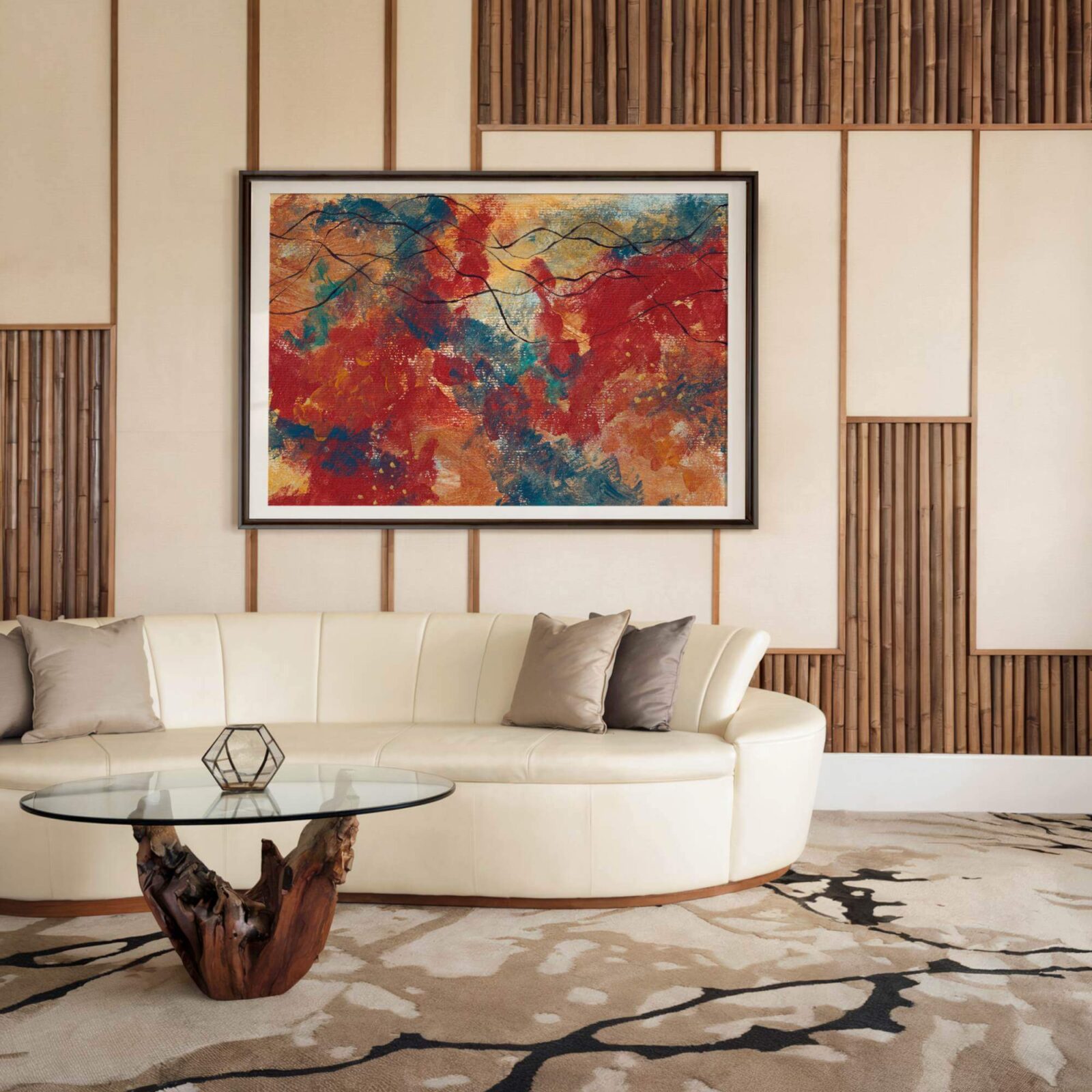
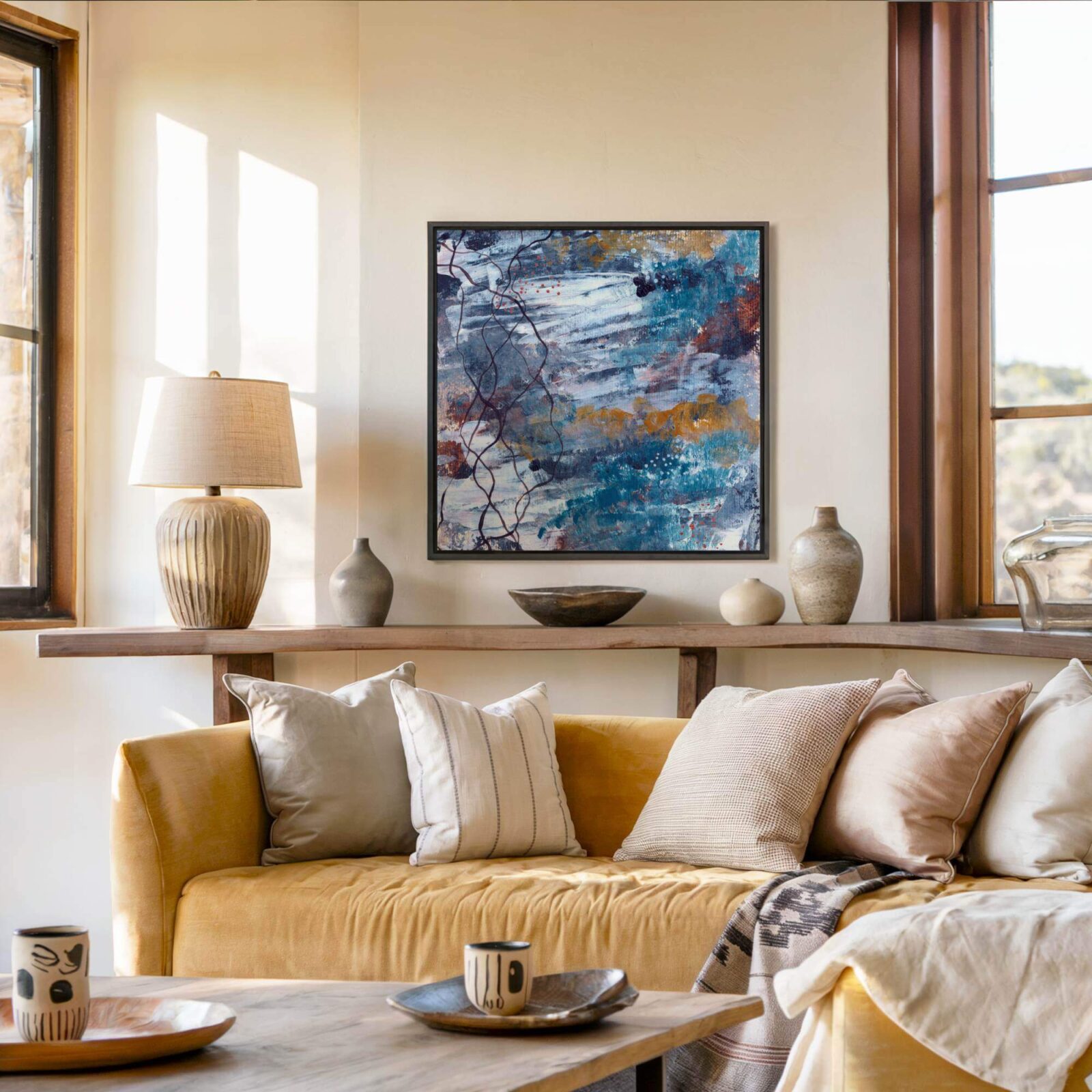
Where Emotionally Intelligent Art Makes the Difference Obvious
You can see the effect most clearly in spaces where people are under pressure, even if they don’t name it as such.
Executive Offices and Leadership Spaces
Leadership environments carry tension by default. Decision-making, responsibility, constant evaluation. Art in these spaces isn’t there to impress visitors. It’s there to support clarity and composure.
The right work softens the constant edge without undermining authority. It creates a sense of steadiness rather than stimulation. This is why emotionally intelligent art works so well in leadership environments: https://vikithorbjorn.art/luxury-art-for-executive-offices/
Luxury Hotels and Retreats
Guests don’t arrive neutral. They arrive overstimulated, tired, distracted, or braced. Emotionally intelligent art gives them somewhere to land.
Not intellectually. Emotionally.
It creates a pause that doesn’t ask them to “relax properly”. It simply allows the body to downshift. This is why atmosphere, not features, defines memorable hospitality: https://vikithorbjorn.art/luxury-art-for-hotels/
Private Homes
Homes carry the emotional residue of daily life. Work stress, relationships, grief, joy, boredom, recovery. Art in these spaces becomes something you live alongside, not something you perform for.
It doesn’t dominate the room. It quietly accompanies it.
This Is What Luxury Actually Looks Like Now
Luxury used to be about accumulation. Now it’s about relief.
The most refined spaces aren’t the ones doing the most. They’re the ones doing the least, intentionally. They don’t demand attention. They don’t try to prove themselves.
Emotionally intelligent interiors understand this shift. They value depth over novelty. Presence over polish. They trust that people will feel the difference without being told.
Art plays a central role in this redefinition of luxury because it is capable of holding feelings over time. Not just on day one. Not just when it’s new. This distinction is explored more fully here: https://vikithorbjorn.art/what-makes-art-truly-luxury/
Why Art Should Never Be Added at the End
One of the most common mistakes in interior design is treating art as an afterthought. Something to “add” once everything else is finished.
In emotionally intelligent interiors, art often comes first.
It sets the emotional register of the room. It informs scale, tone, colour relationships. It creates the psychological centre around which the rest of the space can organise itself.
When art is chosen early, the room feels coherent. When it’s added late, it often feels assembled.
That difference is felt, even if it’s never articulated.
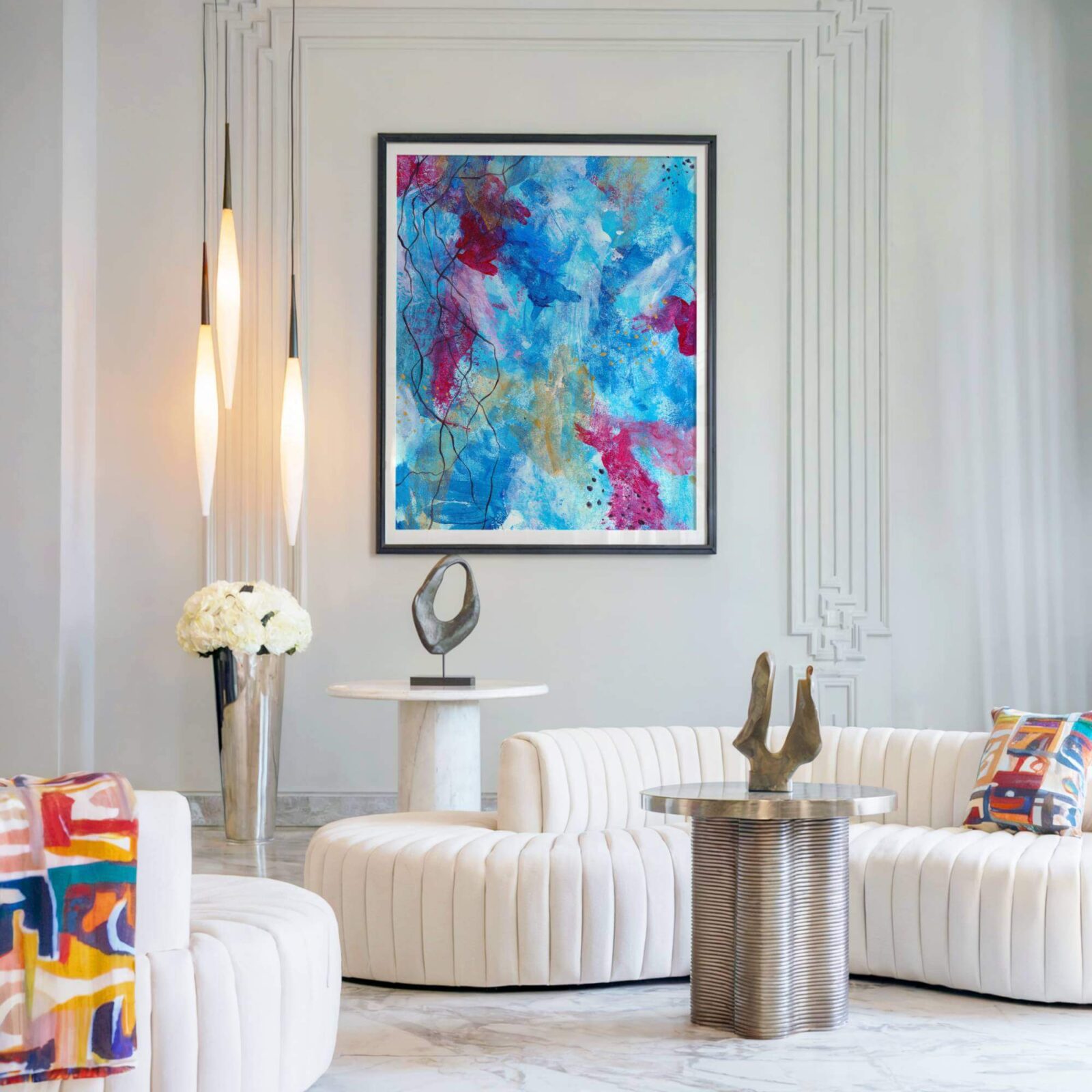
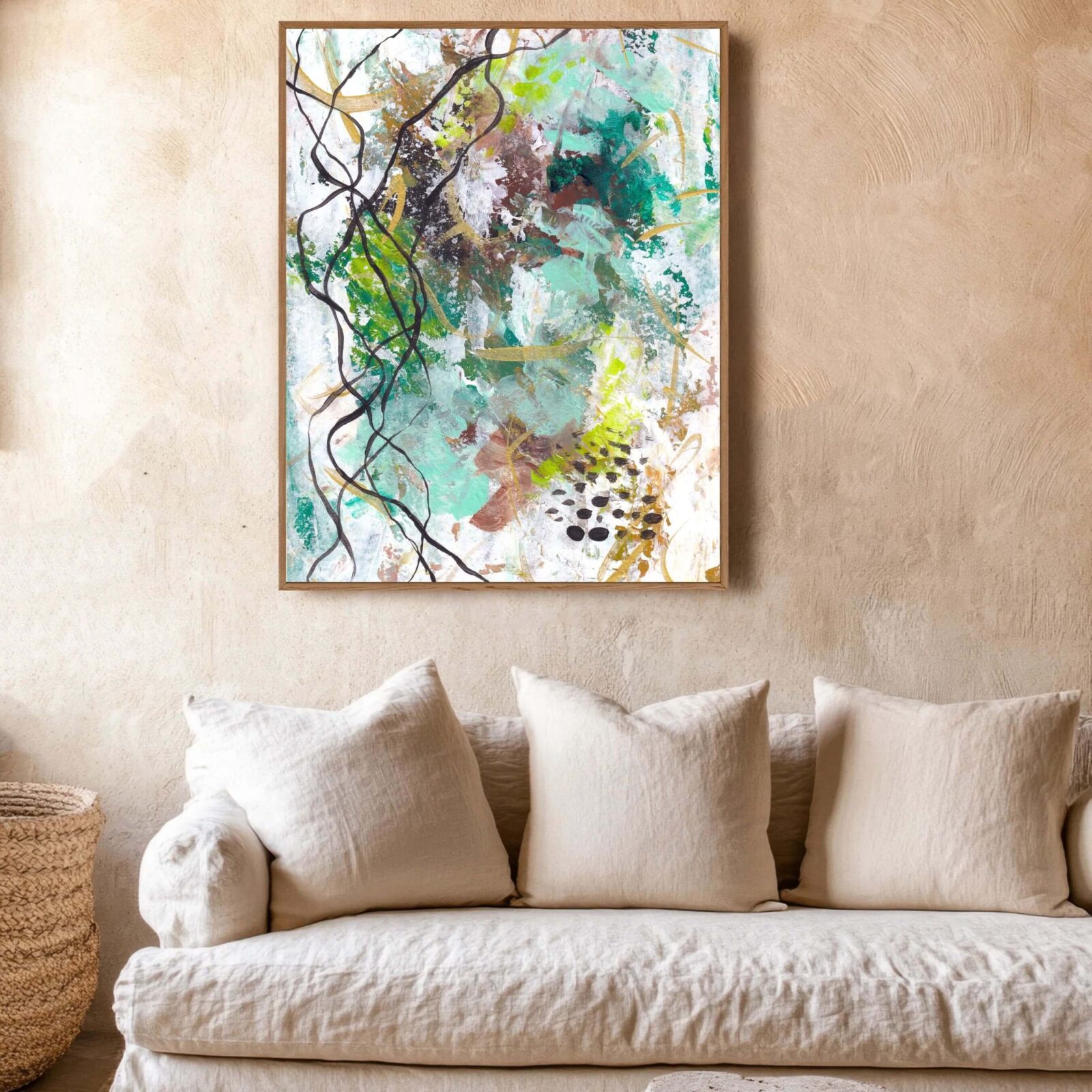
Decorative Art vs Art With Presence
Decorative art is designed to disappear politely.
Art with presence continues to work. It deepens with familiarity. It doesn’t rely on novelty to stay relevant.
This difference becomes especially clear in spaces that are lived in heavily. Offices. Hotels. Homes. Places where art isn’t glanced at once and forgotten, but passed daily.
Longevity, material quality, and production standards matter here. Not as a luxury extra, but as a practical necessity. This is examined in more concrete terms here: https://vikithorbjorn.art/how-long-should-a-high-quality-art-print-last
How Emotionally Intelligent Art Is Actually Chosen
In practice, emotionally intelligent interiors rarely rely on impulse purchases or trend-led sourcing.
Art is usually selected through curation. From an existing body of work. Quietly. With attention to how it will live in the space rather than how it performs on its own.
This avoids visual noise. It creates consistency. It allows art to support the space instead of competing with it.
For many people, this means working from a private archive rather than browsing public catalogues. Art is chosen for how it holds the room emotionally, not how loudly it announces itself.
This is the role of the Collector’s Vault: https://vikithorbjorn.art/collectors-vault/
A Few Things People Usually Ask (And What Actually Matters)
People often want a definition. A checklist. Something they can apply neatly.
That’s usually the first misunderstanding.
Emotionally intelligent interiors aren’t a style, and they’re not something you “add in” once the design is finished. You can’t retrofit emotional intelligence onto a space that was built to perform.
You feel it or you don’t.
Most people also assume this kind of design has to be soft, neutral, or polite. It doesn’t. Some emotionally intelligent spaces are quiet. Others are strong, even confrontational. The difference isn’t volume, it’s whether the space overwhelms or supports the people inside it.
Abstract art comes up a lot in these conversations, usually with a hint of suspicion. As if it’s chosen to be vague or fashionable. In reality, abstraction works because it doesn’t instruct. It doesn’t explain itself. It doesn’t demand agreement. It leaves room, which is exactly what overstimulated environments lack.
Another common mistake is believing that a space can feel emotionally resolved through minimalism alone. Sometimes it can, briefly. But often those rooms end up feeling thin. Calm, but hollow. Art is usually what gives a space emotional weight rather than just visual restraint.
And yes, people often ask whether the art should match the interior. If it matches perfectly, it’s probably a decoration. Spaces that feel alive usually have a little tension in them. Balance is more important than coordination.
What this all comes down to is order.
Art that’s chosen last tends to behave like an accessory. Art that’s chosen early becomes part of the structure of the space, even if you can’t quite say why.
That’s the difference people feel when they walk into a room and immediately soften, versus when they admire it and still feel on edge.
In the End
Emotionally intelligent interiors aren’t louder or cleverer than other spaces. They’re calmer. Steadier. More humane.
In those spaces, art isn’t decoration. It’s infrastructure. It holds emotional tone, creates presence, and allows people to exist without being asked to perform.
When chosen with care, abstract art becomes something people live with rather than look at.
Not because it demands attention.
But because it quietly gives something back.