How Scale Influences Emotional Safety in a Space
Scale is one of the most misunderstood decisions in art and interior design. It is often framed as a matter of proportion, balance, or visual impact. In reality, scale operates at a deeper level. It shapes how a body feels in a space long before taste, style, or narrative register.
 
People respond to scale instinctively. Not because they understand art theory, but because their nervous system reads spatial cues faster than language. A room either allows the body to settle, or it keeps it subtly alert. Art plays a quiet but decisive role in that process.
 
This article explores how the scale of artwork influences emotional safety in a space, why larger work often creates more calm rather than more intensity, and how collectors and designers can think about scale as a form of support rather than a statement.

Emotional Safety Is a Spatial Experience, Not a Concept

Emotional safety is often discussed as something psychological. In lived experience, it is physical first.
 
A space that feels emotionally safe is one where the body does not need to brace. Breathing slows. Vision softens. Attention widens rather than narrows. These responses happen before conscious interpretation.
 
Scale contributes directly to this process. When artwork is too small for a space, the eye works harder to locate it. When work is scattered or undersized, the room remains visually unresolved. The body stays slightly vigilant, even if the décor is tasteful.
 
Larger scale work, when chosen well, reduces this background effort. It gives the eye somewhere to rest and the body permission to stop scanning.
 
This is not about dominance or drama. It is about coherence.

Why Small Art Often Increases Visual Effort

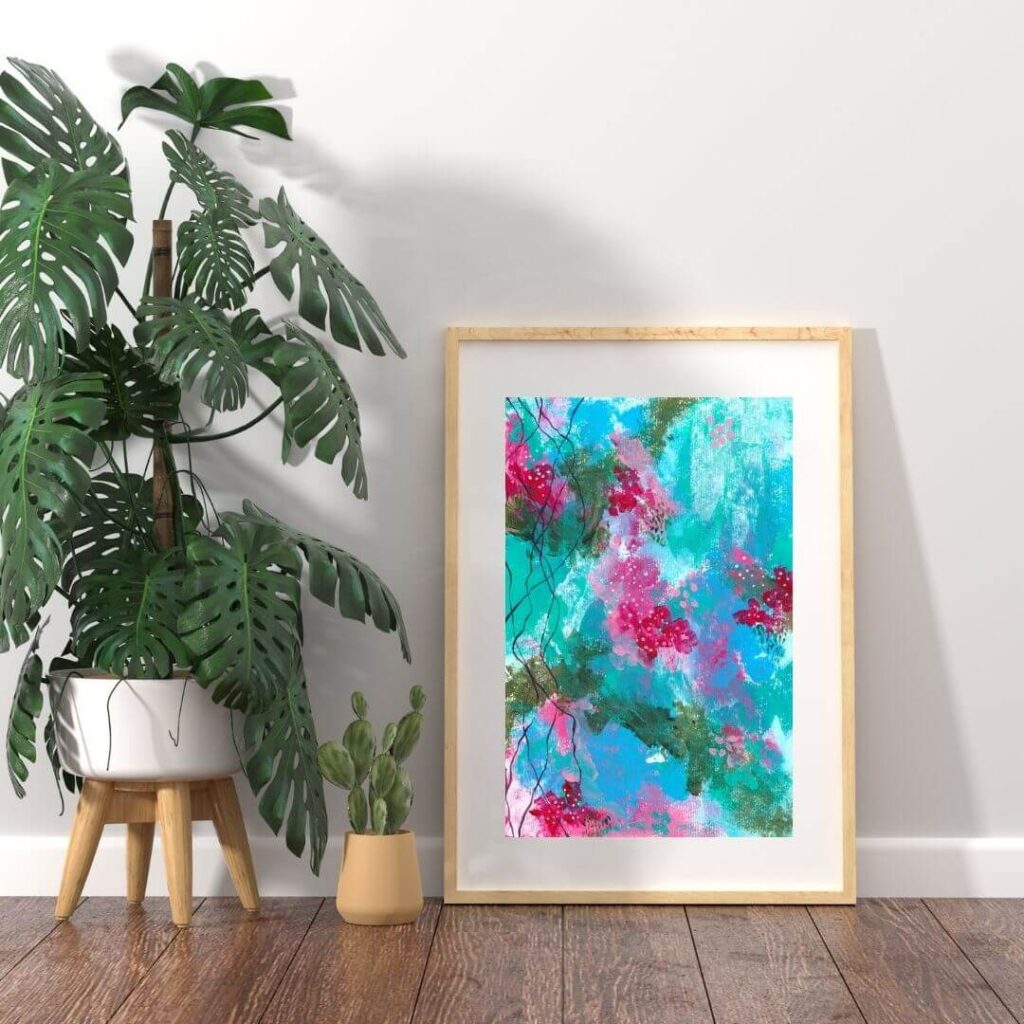
Small artworks are often chosen out of caution. They feel safer to buy, easier to place, and less committal. In large or open spaces, however, small work can create the opposite effect to what is intended.
 
When scale is insufficient, the artwork behaves like visual noise rather than an anchor. The eye keeps moving, searching for resolution. Furniture and architecture are left to do all the emotional work.
 
This is particularly noticeable in modern interiors with clean lines and minimal ornamentation. Without adequate visual weight, the space can feel exposed rather than calm.
 
Many collectors sense this instinctively but misattribute the discomfort to colour, style, or layout. In reality, it is often scale that is missing.
 

Large Scale Art as a Containing Presence

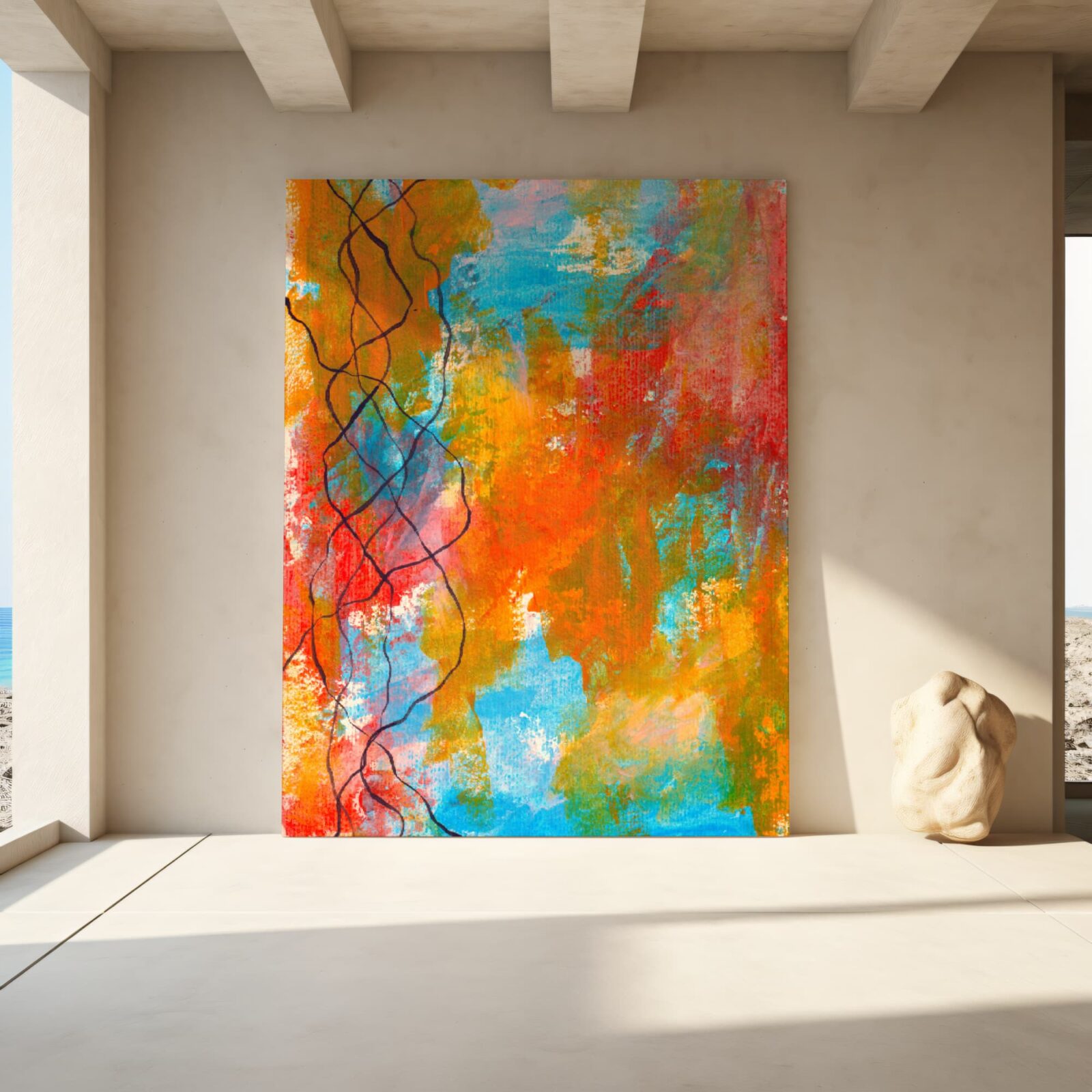
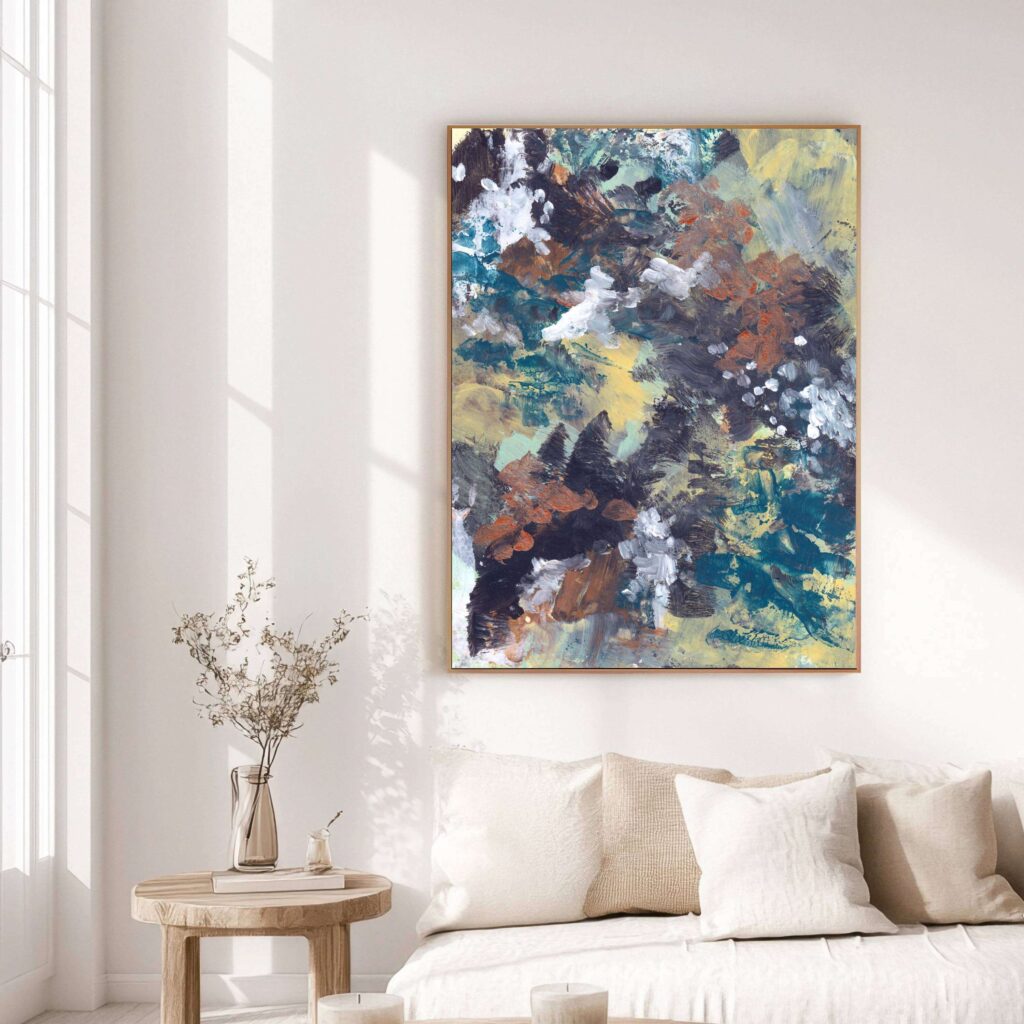
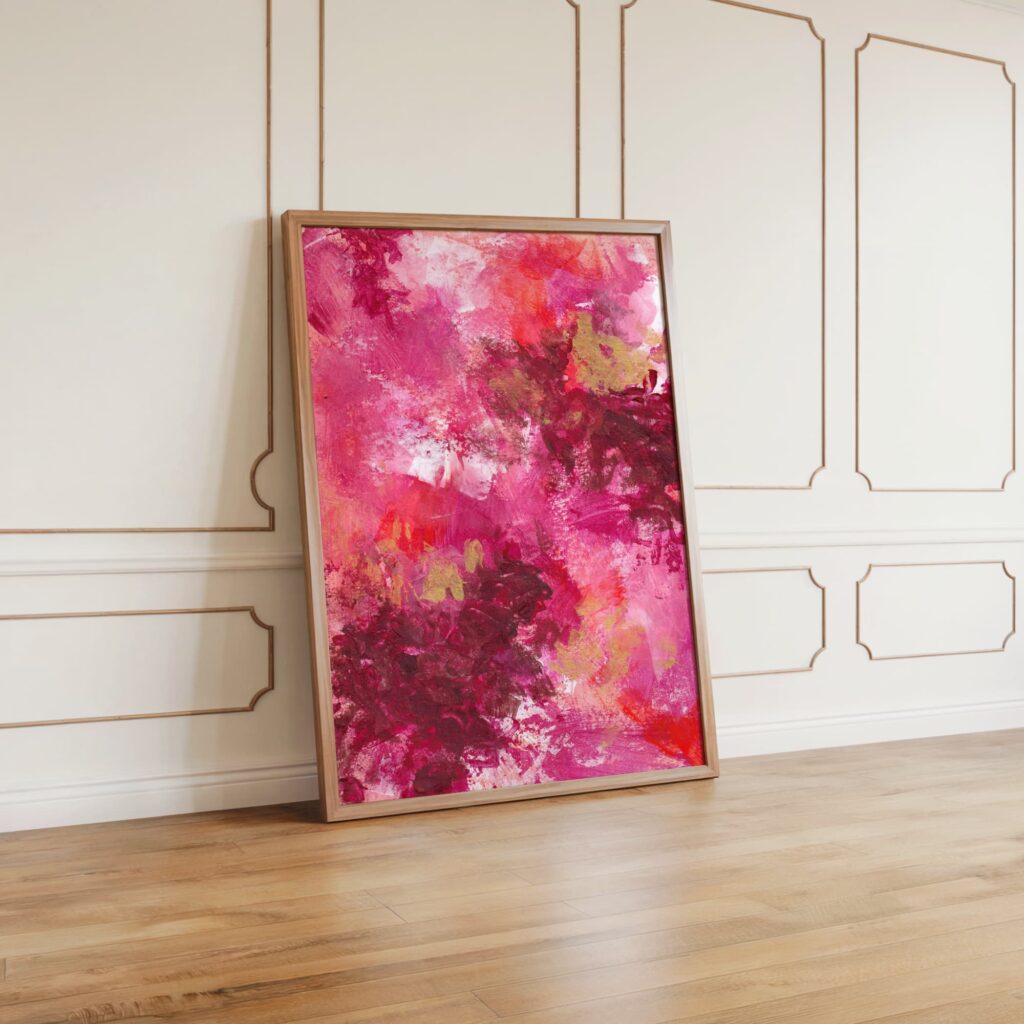
Large scale artwork functions differently. It does not decorate the wall so much as it changes the spatial dynamic of the room.
 
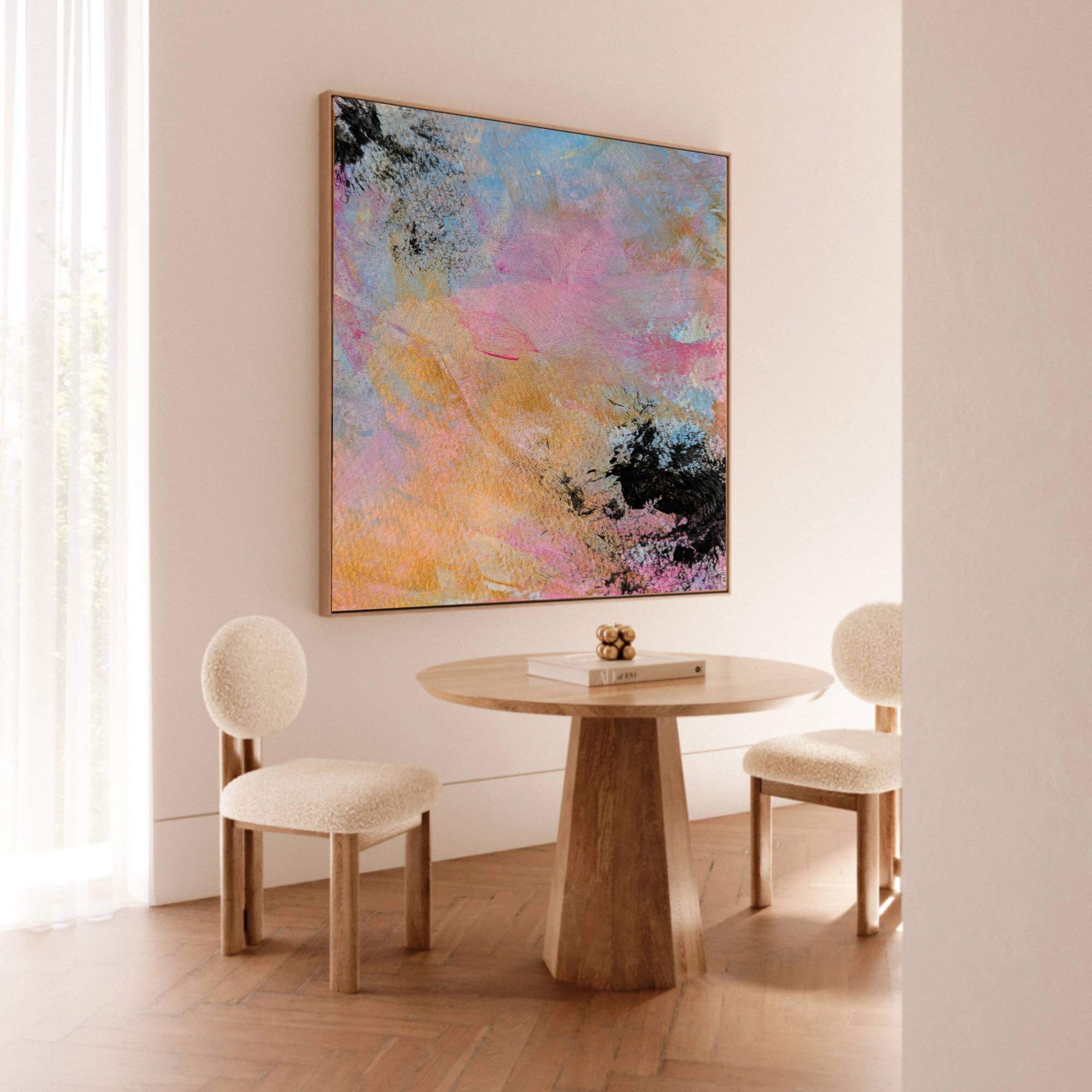
When scale is right, the artwork becomes a containing presence. It gives the room a centre of gravity. This containment is what allows emotional safety to emerge.
 
Importantly, this effect is not dependent on loud colour or aggressive gesture. Many large works are quiet, restrained, even minimal. Their impact comes from occupying enough visual space to stabilise the environment.
 
This is why large abstract works are often described as calming, even when they are not conventionally “soft”. The body reads scale as reassurance. Something substantial is holding the space.

Scale, Stillness, and the Nervous System

Stillness is not created by the absence of stimulus. It is created by the absence of unresolved demand.
 
A room filled with small visual elements can feel busy even if nothing is happening. The nervous system remains subtly engaged, processing fragments rather than settling into presence.
 
Larger scale artwork simplifies the visual field. It reduces fragmentation. The eye no longer needs to dart between multiple points of interest.
 
This is one reason why people often feel calmer in galleries and museums, even when the work is challenging. The scale allows the body to slow down.
 
In domestic or work environments, this effect is often underestimated. Scale is treated as an aesthetic preference rather than a regulatory tool.
 

The Difference Between Statement and Support
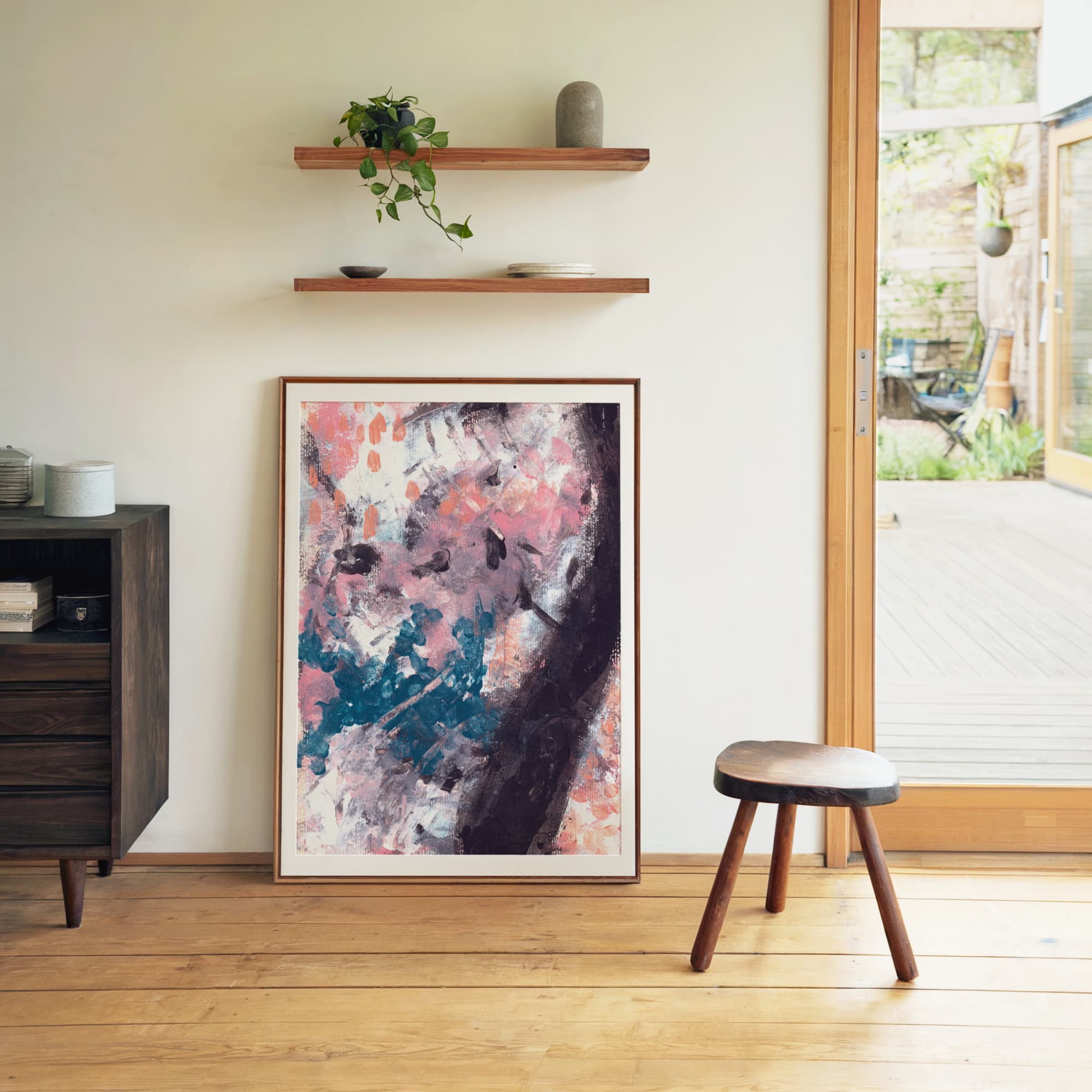
There is a persistent myth that large art is about making a statement. This framing puts people off. It suggests ego, performance, or the need to impress.
 
In practice, the most effective large-scale works do the opposite. They support rather than announce. They hold the room without asking to be explained.
 
Collectors who live with large works often describe them as grounding rather than attention-seeking. Over time, the artwork becomes part of the emotional architecture of the space.
 
This distinction matters. Buying for support leads to very different choices than buying for display.
 
If scale is chosen to stabilise rather than impress, the relationship with the work deepens rather than fades.

How Scale Interacts With Architecture and Furniture

Scale does not exist in isolation. It interacts with ceiling height, wall width, light, and furniture placement.
 
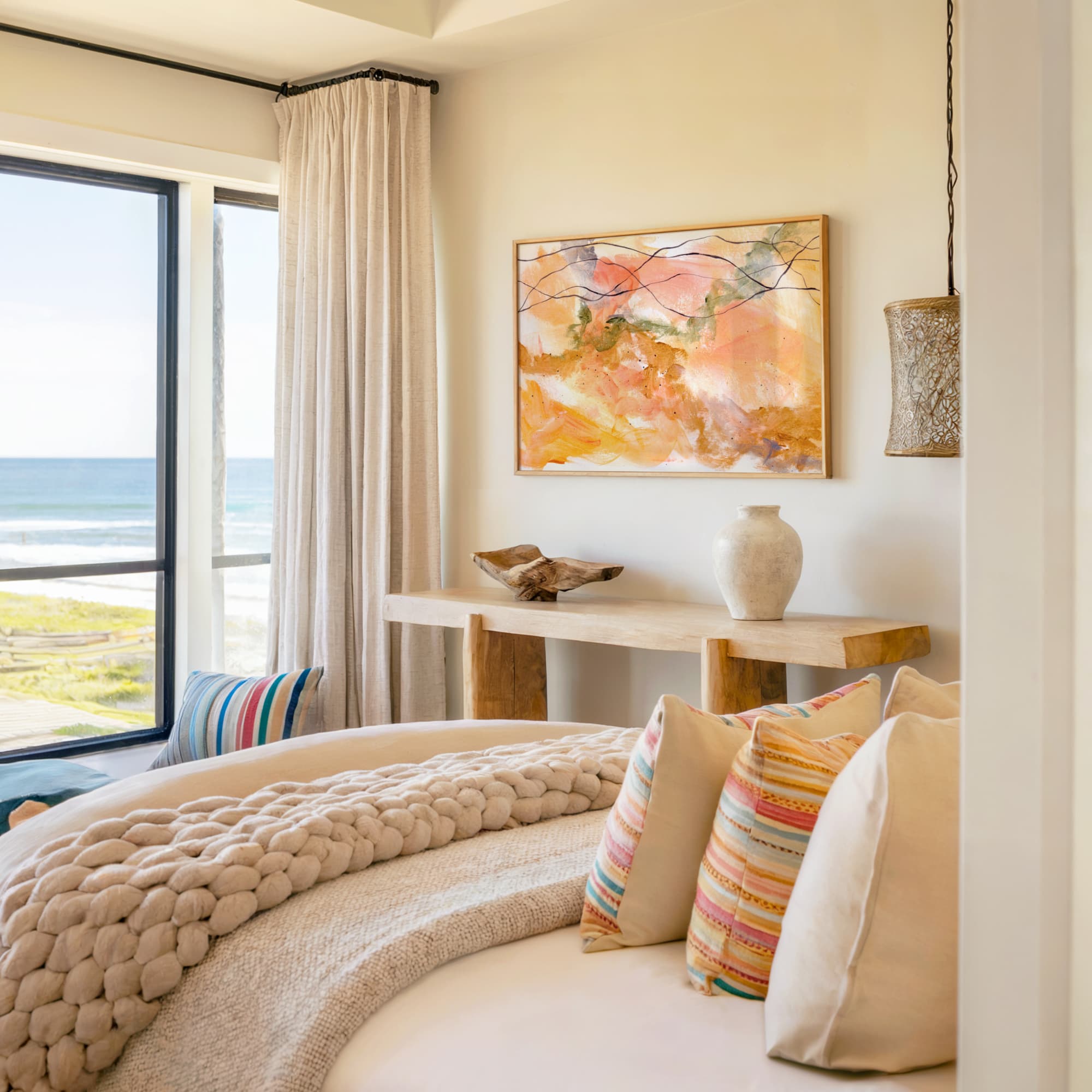
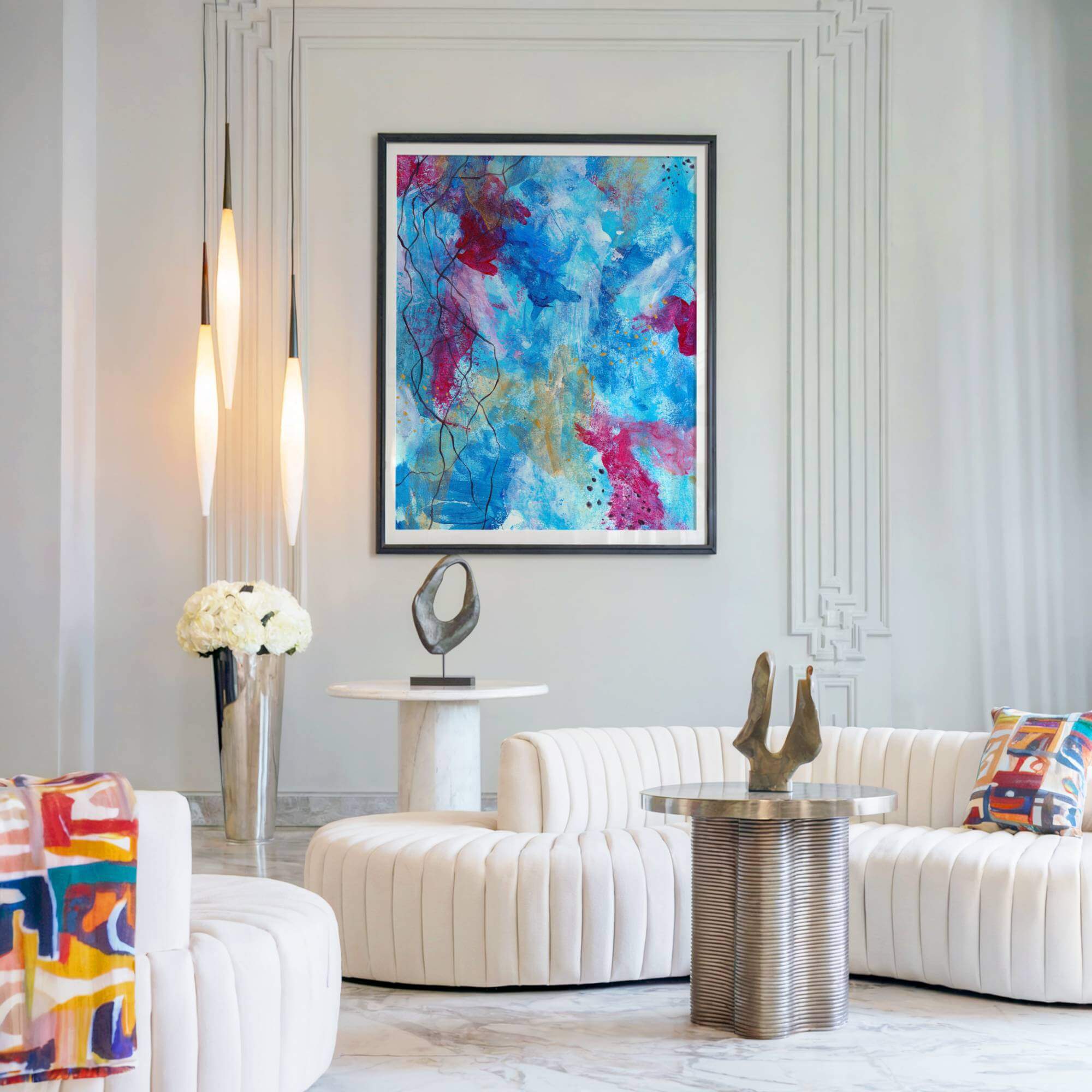
A large work placed behind a sofa or dining table often creates a sense of enclosure. The body reads the area as defined and protected. In contrast, undersized work in the same position can feel tentative.
 
In open-plan spaces, large artworks can zone areas without adding physical barriers. They provide visual containment without blocking movement or light.
 
This is one reason why designers increasingly use large-scale art in hospitality, workplaces, and high-end residential projects. It shapes behaviour without instruction.
 

Why Scale Demands Material Integrity

Scale amplifies everything, including quality.
 
A small print can hide mediocre materials. A large work cannot. Surface, depth, and production integrity become non-negotiable when a piece occupies significant visual territory.
 
This is where museum-grade materials matter. Longevity, colour stability, and surface integrity are not technical details. They are part of emotional safety. A piece that degrades, fades, or warps over time subtly erodes trust in the space.
 
Collectors drawn to large work often understand this intuitively. They are not just buying an image. They are investing in something that will hold presence over years, not months.
 

Choosing Scale Without Overthinking It

Despite its importance, scale does not need to be complicated.
 
A useful starting question is not “What size should I buy?” but “Where does the room currently feel unsupported?”
 
Often, the answer is a wall that feels exposed, a seating area that lacks containment, or a space where the eye never settles.
 
When scale is right, the decision feels relieving rather than stressful. The work belongs. The room exhales.
 
This is why many collectors report that living with large work feels easier than expected. The initial hesitation gives way to a sense of rightness.

Scale and the Collector’s Vault

Within the Collector’s Vault, scale is not treated as an upgrade or luxury add-on. It is a structural choice.
 
Many works in the Vault exist at larger sizes because that is where they function best. The intention is not to overwhelm a space, but to support it.
 
Collectors who are drawn to these works are often responding to a need for containment, presence, and calm rather than decoration.

Living With Scale Over Time

One of the most telling aspects of large-scale art is how it ages in a space.
 
Small, trend-driven pieces often lose relevance quickly. Large, emotionally grounded works tend to deepen. The relationship becomes quieter, more familiar.
 
This longevity is not accidental. It is the result of scale aligning with how bodies inhabit space.
 
Art that supports emotional safety does not demand attention. It earns trust.

Final Thoughts

Scale is not about making a statement. It is about creating conditions.
 
When artwork is scaled appropriately, it supports emotional safety by reducing visual effort, providing containment, and allowing the body to settle into a space.
 
Collectors who understand this do not buy large art to impress. They buy it because it feels right.
 
And when scale is right, everything else in the room has permission to soften.

Frequently Asked Questions About Art Scale and Emotional Impact

Is large art only suitable for large homes?

No. Scale is relative, not absolute. Large artwork can work beautifully in modest spaces when it provides containment rather than clutter. The key is proportion, not square footage.

Can large art feel overwhelming?

It can, if the work is visually aggressive or poorly placed. When scale is paired with restraint and material integrity, large works often feel more calming than small, busy pieces.

Why does small art sometimes feel lost on a wall?

Because the eye looks for visual resolution. When artwork does not occupy enough space to anchor the field of vision, the room remains unsettled, even if the piece itself is beautiful.

Is scale more important than colour or style?

In many cases, yes. Scale determines how the body responds to a space. Colour and style are interpreted after that initial response.

How do I know if a space needs larger work?

If a room feels exposed, visually busy, or difficult to settle into, scale is often part of the issue. Large work can provide grounding without changing anything else.

Does large-scale art need to be abstract?

No, but abstraction often works well at scale because it supports presence without narrative overload. The absence of literal imagery allows the body to relax.

How does scale affect long-term enjoyment of a piece?

Large, well-made works tend to age better emotionally. They integrate into daily life rather than competing for attention. This makes them easier to live with over time.

Is large art a trend?

No. Scale has been used for centuries to create containment and authority in spaces. What changes are styles, not the underlying principle.