
Why Information Alone Doesn’t Change Workplace Wellbeing


Knowledge Doesn’t Override Physiology
Why Awareness Campaigns Plateau So Quickly
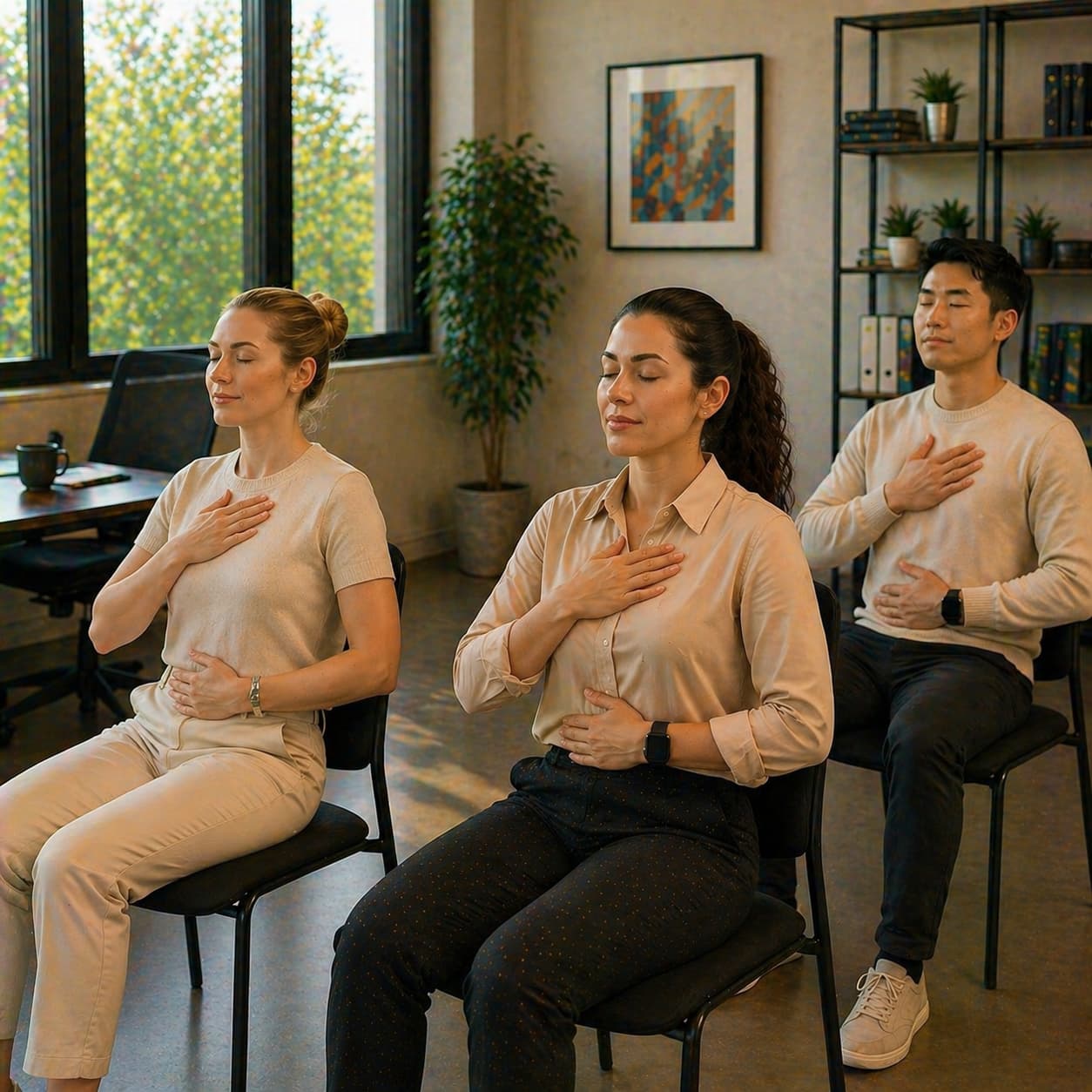
The Body Learns Through Experience, Not Explanation
- You don’t calm a system by explaining calm.
- You don’t restore focus by describing focus.
- You don’t undo chronic tension by pointing it out.


Why “Optional” Wellbeing Never Works
What Actually Creates Change at Work
Where Sit Happens Fits Into This Gap
Information Supports Change, But It Can’t Lead It
The Real Measure of Workplace Wellbeing


Why Organisations Keep Repeating the Same Mistake
When Wellbeing Stops Being Personal and Starts Being Structural
What Sustainable Workplace Wellbeing Actually Looks Like
Conclusion: Why Wellbeing Has to Be Felt, Not Explained

Frequently Asked Questions
Yes, but only after the body experiences change. Education alone doesn’t alter nervous system patterns created by daily work demands.
Because stress responses override conscious intention. When the body is overloaded, it defaults to survival patterns, not good intentions.
Yes. Even brief, well-designed movement interrupts static load and restores nervous system capacity almost immediately.
No. This is basic physiology. Bodies need variation, circulation, and rhythm to function well.
They can be supportive, but they don’t address the physical strain created by prolonged sitting and static posture.
Because they rely on motivation and awareness rather than changing daily physical conditions.
Especially for them. High cognitive load increases the need for physical regulation, not reduces it.
It works with the body first, not motivation. The change is felt, not explained.