
Why Abstract Canvas Prints Work Better Than Mass-Produced Wall Art
TL;DR
Abstract canvas prints work better than mass-produced wall art because they create emotional presence rather than just filling empty space.
Mass-produced wall art is usually designed to be visually safe, trend-led and easy to reproduce at scale. It often solves a decorative problem temporarily but rarely creates depth, atmosphere or long-term connection within a home.
Collector-grade abstract canvas prints work differently. They bring texture, scale, colour, emotional resonance and a stronger architectural presence into a room. They help interiors feel calmer, more layered and more personal without relying on obvious trends or generic styling.
The difference is not just about price.
It is about how the artwork changes the feeling of the space over time.
For collector-grade canvas works, explore Selected Works or request access to the private Collector’s Vault.
Definition: what is mass-produced wall art?
Mass-produced wall art is artwork reproduced in large quantities for broad commercial sale, usually designed around trends, neutral styling and quick decorative appeal. It is often created to fit many interiors rather than respond deeply to one space. Collector-grade abstract canvas prints, by contrast, are typically produced with greater attention to material quality, colour depth, scale, emotional impact and long-term presence within an interior.
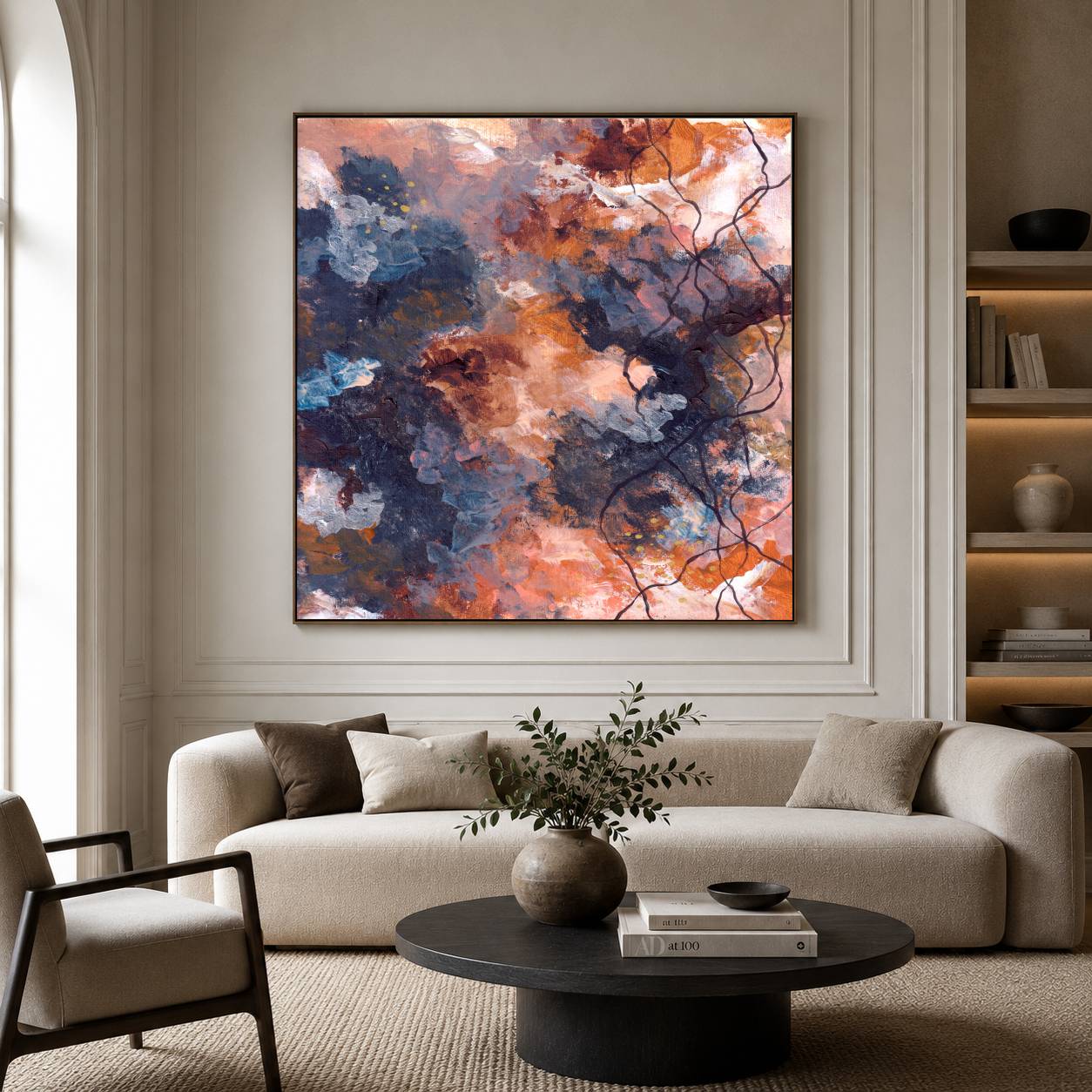
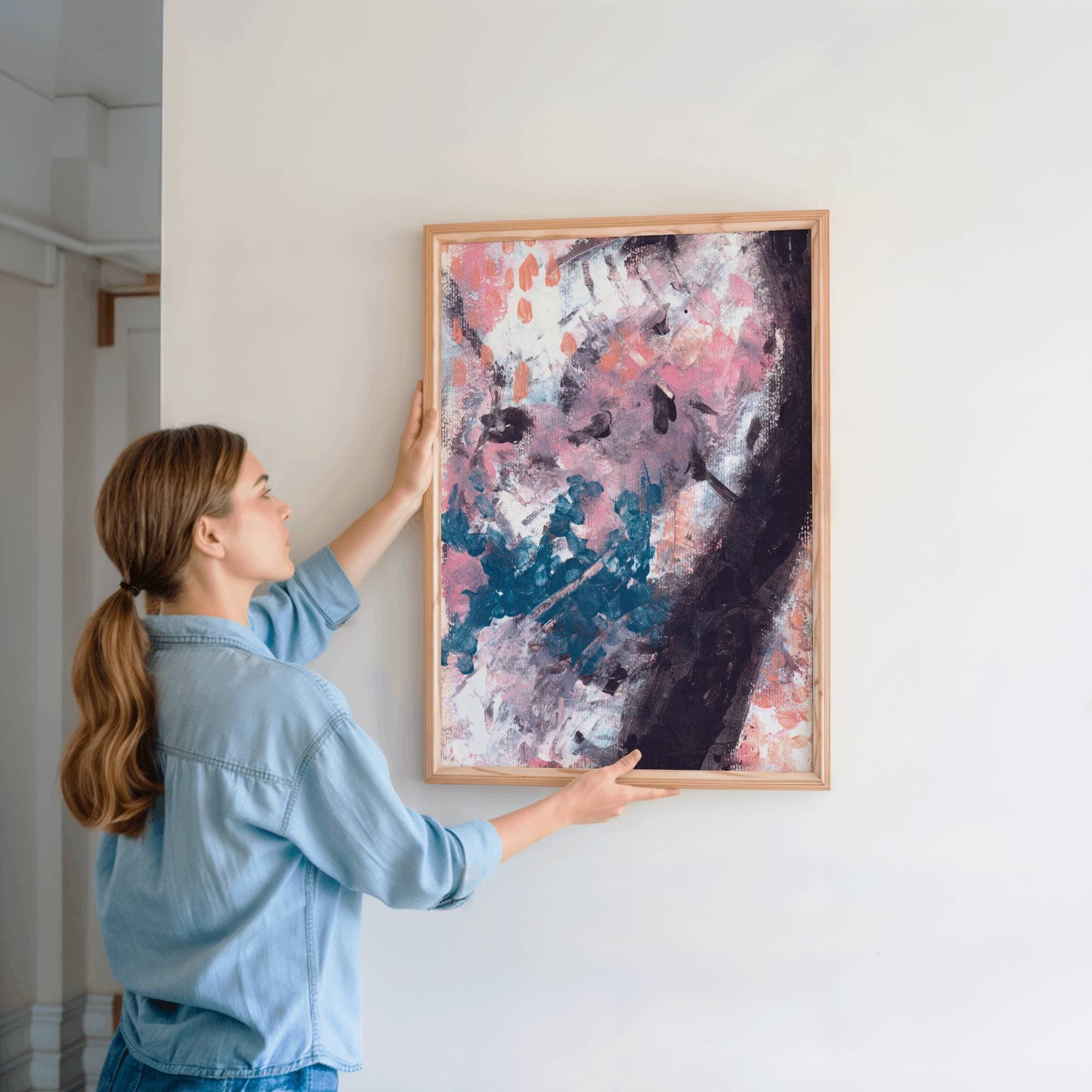
Why so much wall art feels emotionally flat
Most mass-produced wall art is not designed to create emotional depth. It is designed to sell quickly. That changes everything.
When artwork is created for large-scale commercial distribution, the priority is usually broad appeal. The colours need to offend nobody. The composition needs to feel familiar. The mood needs to sit somewhere between “pleasantly neutral” and “inoffensively modern.” The artwork has to work in thousands of homes, hotel rooms, waiting areas and staged interiors without demanding too much attention.
The result is often visually acceptable but emotionally forgettable.
You have probably seen it a hundred times. Beige abstracts with gold streaks. Blurry cityscapes. Motivational typography pretending to be interior design. Grey trees standing bravely in fog for reasons nobody fully understands. Prints chosen because they match the cushions with the emotional intensity of damp cardboard.
None of this means mass-produced art is evil. It just means it usually exists to complete a room visually rather than change how the room feels.
Collector-grade abstract canvas prints work differently because they are not trying to disappear politely into every possible interior. They are chosen for atmosphere, texture, emotional tone, scale and presence. They create a relationship with the room rather than merely coordinating with it.
That distinction matters more than people think. Because most people do not actually want their home to feel “finished.” They want it to feel alive.
Why abstract canvas prints feel more architectural
One of the reasons abstract canvas prints work so well in interiors is that they interact with architecture differently from mass-produced wall art. Canvas has presence.
It behaves more like part of the room rather than something temporarily attached to the wall. This becomes especially noticeable with larger abstract works, where colour, scale and texture begin shaping the atmosphere of the space itself.
A framed mass-market print often sits on the wall as an object. A large abstract canvas can change the room around it.
This is especially true in modern interiors, where clean lines, open layouts and restrained palettes can sometimes feel slightly cold or emotionally flat without something softer and more human to balance them. A textured abstract canvas introduces movement, warmth and visual rhythm into the architecture.
That is one reason large-scale works often feel stronger than smaller decorative prints. As explored in Why Large Canvas Prints Work So Well in Modern Interiors, scale changes how the body experiences a room. A substantial abstract piece can anchor an entire space emotionally, not just visually.
Mass-produced wall art often struggles here because it is usually created around surface styling trends rather than spatial feeling. It may “match” the room, but it rarely transforms it.
And transformation is what people are actually looking for, even if they do not phrase it that way.
The problem with trend-led wall art
Trend-led wall art ages quickly because it is usually tied to whatever aesthetic currently dominates Pinterest, fast interiors or social media styling.
A few years ago, everything was grey. Then beige minimalism. Then abstract arches. Then, line drawings of anonymous women with no faces holding mysterious lemons.
At some point, entire interiors started looking like an exhausted oat milk advert.
The problem with trend-led art is not that trends exist. Trends are normal. The problem is that mass-produced wall art is often built entirely around trend recognition rather than emotional substance. Once the trend passes, the artwork loses most of its impact because there was never much underneath it.
Abstract canvas prints tend to age better when they are chosen for emotional resonance instead of trend compliance.
A collector-grade abstract work can still feel relevant years later because it is connected to atmosphere, memory, scale, texture, stillness, tension, colour or emotional response rather than whatever visual formula happened to sell well that season.
This is especially important in calmer, more considered interiors. In How to Choose Abstract Art for a Calm, Considered Home, the focus is not on matching trends but on shaping emotional tone through colour, scale and presence.
That creates interiors that feel more timeless. Not because they avoid style entirely, but because they are built around feeling rather than fashion cycles.
Why texture changes the entire experience of a room
Texture is one of the biggest differences between collector-grade abstract canvas prints and cheap decorative wall art. Mass-produced prints are often visually flat.
Even when they imitate texture, the surface usually feels synthetic because the artwork has been reproduced quickly and cheaply. The eye registers it differently. The body registers it differently too, even if people cannot immediately explain why.
Canvas behaves differently because it interacts with light and space more naturally.
Texture catches shadows. Layers reveal themselves slowly. Colour shifts slightly throughout the day. Surface depth creates movement inside the artwork, which means the piece keeps giving something back over time rather than delivering its entire personality in three seconds flat.
This matters enormously in modern interiors, especially neutral ones.
A room with clean architecture, restrained colour and simple furniture can feel elegant, but it can also become emotionally cold if everything is too smooth, flat and controlled. Texture interrupts that perfection slightly. It introduces softness and humanity.
This is also why abstract art works beautifully in hallways, landings and transitional spaces. In How to Choose Abstract Art for a Hallway, Landing or Transitional Space, the discussion centres around movement, atmosphere and emotional rhythm within the home. Textural canvas pieces support that beautifully because they reveal themselves gradually as people move through the space.
Mass-produced wall art rarely creates that kind of experience. It is consumed quickly. Then ignored.
Decision box: should you choose abstract canvas prints or mass-produced wall art?
| If you want your interior to feel… | Choose abstract canvas prints | Avoid relying only on mass-produced wall art |
|---|---|---|
|
Calm and emotionally layered |
Yes |
Often visually flat |
|
Personal rather than generic |
Yes |
Usually designed for broad appeal |
|
Architecturally connected |
Yes |
Often sits separately from the room |
|
Timeless rather than trend-led |
Yes |
Trends age quickly |
|
Rich in texture and atmosphere |
Yes |
Often lacks depth |
|
More luxurious and considered |
Yes |
Can feel temporary |
|
Visually soft but emotionally strong |
Yes |
Often decorative only |
|
Memorable and distinctive |
Yes |
Frequently interchangeable |
|
Grounded and mature |
Yes |
Can feel staged or impersonal |
|
Designed around emotional resonance |
Yes |
Usually designed around styling trends |
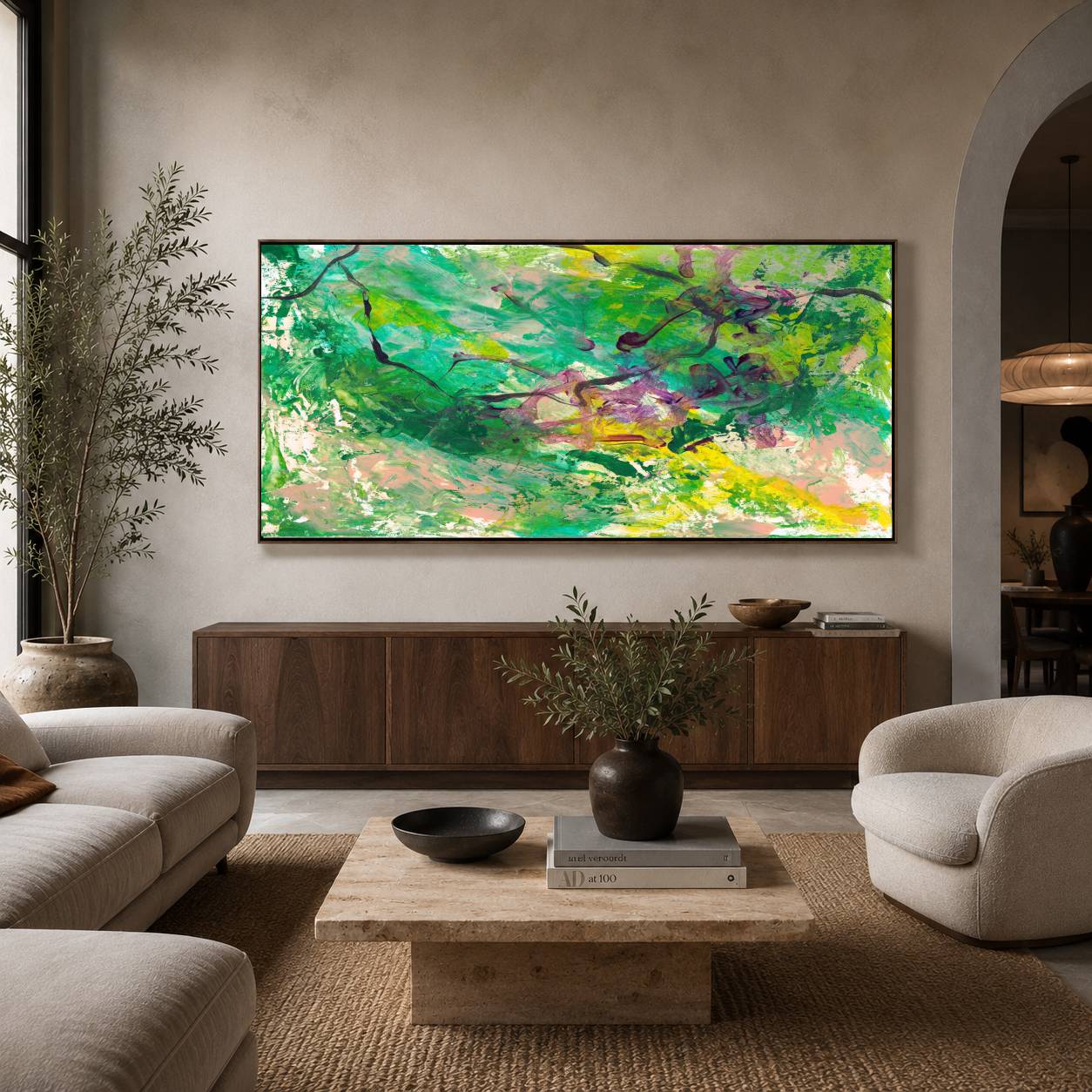
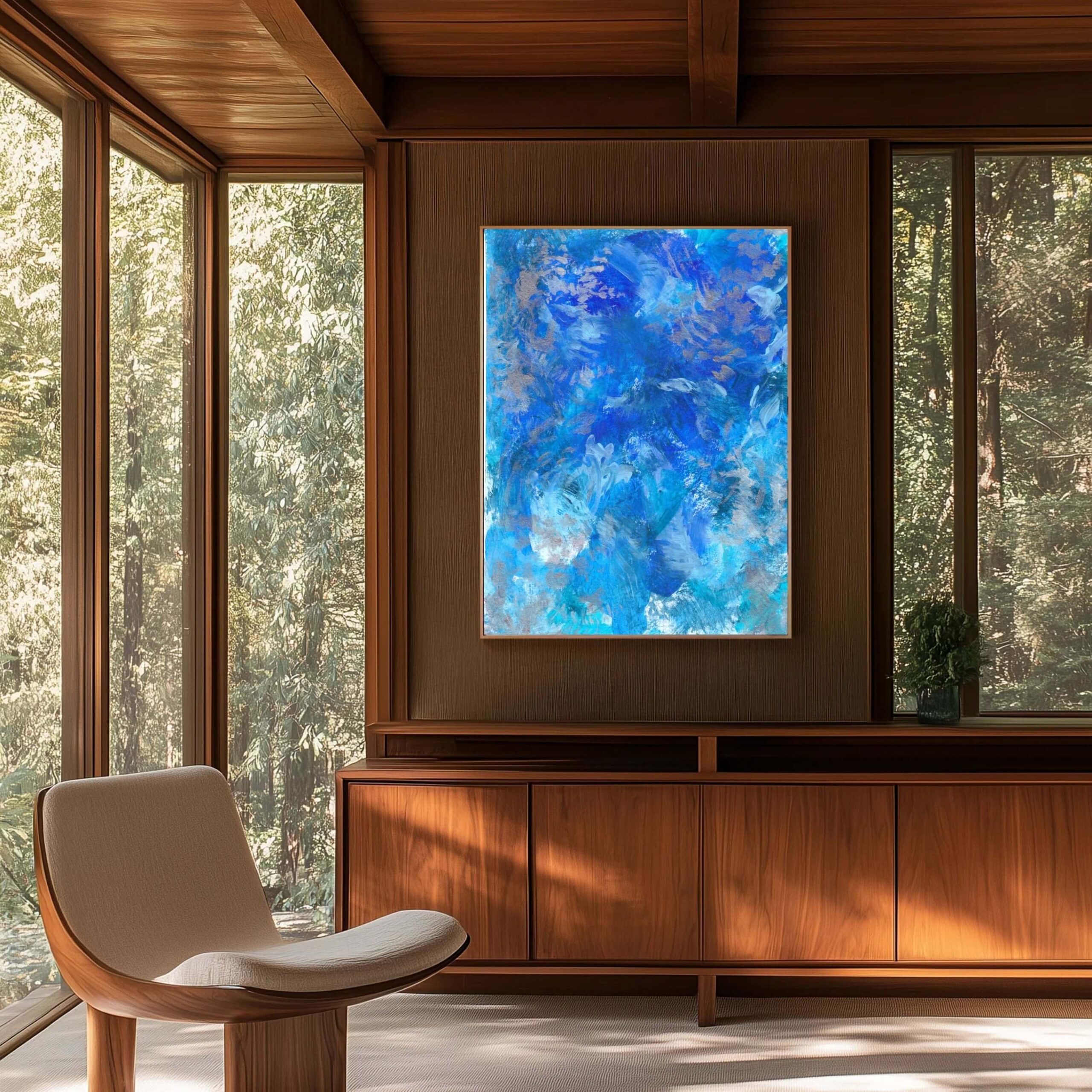
Why abstract art leaves more room for emotional projection
Abstract art works differently from literal imagery because it leaves space for the viewer.
Mass-produced decorative prints often tell you exactly what they are trying to communicate. A beach scene says calm. A mountain says adventure. A fashionable quote says absolutely nothing useful but insists on saying it anyway. Literal imagery can work beautifully in some interiors, but it also closes interpretation very quickly.
Abstract art stays open.
A colour field may feel peaceful to one person and melancholic to another. A textured composition may feel grounding, expansive, restless or reflective depending on mood, memory and environment. That openness creates longer emotional engagement because the artwork continues changing slightly in relationship to the person living with it.
This matters more than people realise.
Homes are emotional spaces. They are not showroom sets frozen in one perfect photograph. People move through grief, recovery, relationships, stress, joy, exhaustion, ambition, healing and boredom inside these spaces. Art that leaves room for emotional interpretation tends to stay relevant through those changes.
Mass-produced wall art often struggles with this because its emotional message is usually immediate and fixed. It gives you the whole sentence instantly. Abstract art gives you fragments. That is often more powerful.
Why collector-grade canvas prints feel more intentional
Intentionality changes how a home feels.
When someone chooses a collector-grade abstract canvas print, the decision is usually slower and more personal. The piece is chosen because of atmosphere, emotional connection, colour relationship, scale, stillness, tension or some unexplainable pull that makes the artwork feel right for the space.
Mass-produced wall art is often chosen to solve a visual problem quickly.
The wall is empty. The room needs colour. The interior feels unfinished. Something needs to go above the sofa before guests arrive and start wondering if the owner escaped halfway through decorating.
Again, there is nothing morally wrong with decorative art. But the emotional energy behind the decision is different. Intentional artwork creates emotional gravity inside a room. People feel that. Even when they cannot articulate it directly.
This becomes especially noticeable in calmer interiors where the artwork carries more emotional responsibility. In How Colour in Abstract Art Changes the Feeling of a Room, colour is discussed not as decoration but as atmosphere. A collector-grade abstract canvas uses colour emotionally rather than purely stylistically.
That distinction changes the entire interior experience.
Why scale matters more than people think
Mass-produced wall art is often undersized for the spaces it is trying to fill.
This happens because commercially produced prints are usually sold in safer, easier-to-ship formats. Smaller pieces are cheaper to produce, easier to frame and less intimidating for buyers. But in real interiors, undersized art often makes the room feel more fragmented and unfinished.
Large abstract canvas prints create cohesion.
They allow the eye to settle. They anchor architecture. They shape movement through the room. They create visual confidence rather than apologising for existing.
This becomes especially powerful in open-plan interiors, modern homes and transitional spaces. A large-scale abstract piece can unify colour, soften architecture and create emotional focus without needing excessive styling around it.
Mass-produced art often compensates for a lack of scale by multiplying itself. Three small prints above the sofa. Six tiny frames in a hallway. A nervous little gallery wall trying desperately to become important through quantity.
Sometimes one substantial piece works better than all of it. Not louder. Clearer.
Why abstract canvas prints often feel calmer
A lot of mass-produced wall art is visually busy. It relies on obvious contrast, heavy trend styling or decorative detail to create a quick impact because it has to compete in fast commercial environments. Online marketplaces, furniture stores and catalogue spreads reward artwork that grabs attention immediately.
But homes are not shops. People live inside them.
Art that shouts too loudly can become tiring over time, especially in bedrooms, living spaces and calmer interiors. Abstract canvas prints often feel calmer because they allow more visual breathing room. The composition may be spacious. The colour relationships may feel softer. The texture may absorb light rather than reflect it harshly.
Calm does not mean boring.
Some of the strongest abstract works feel calm because they are resolved. They do not need to scream for validation every five minutes like an insecure influencer with a ring light.
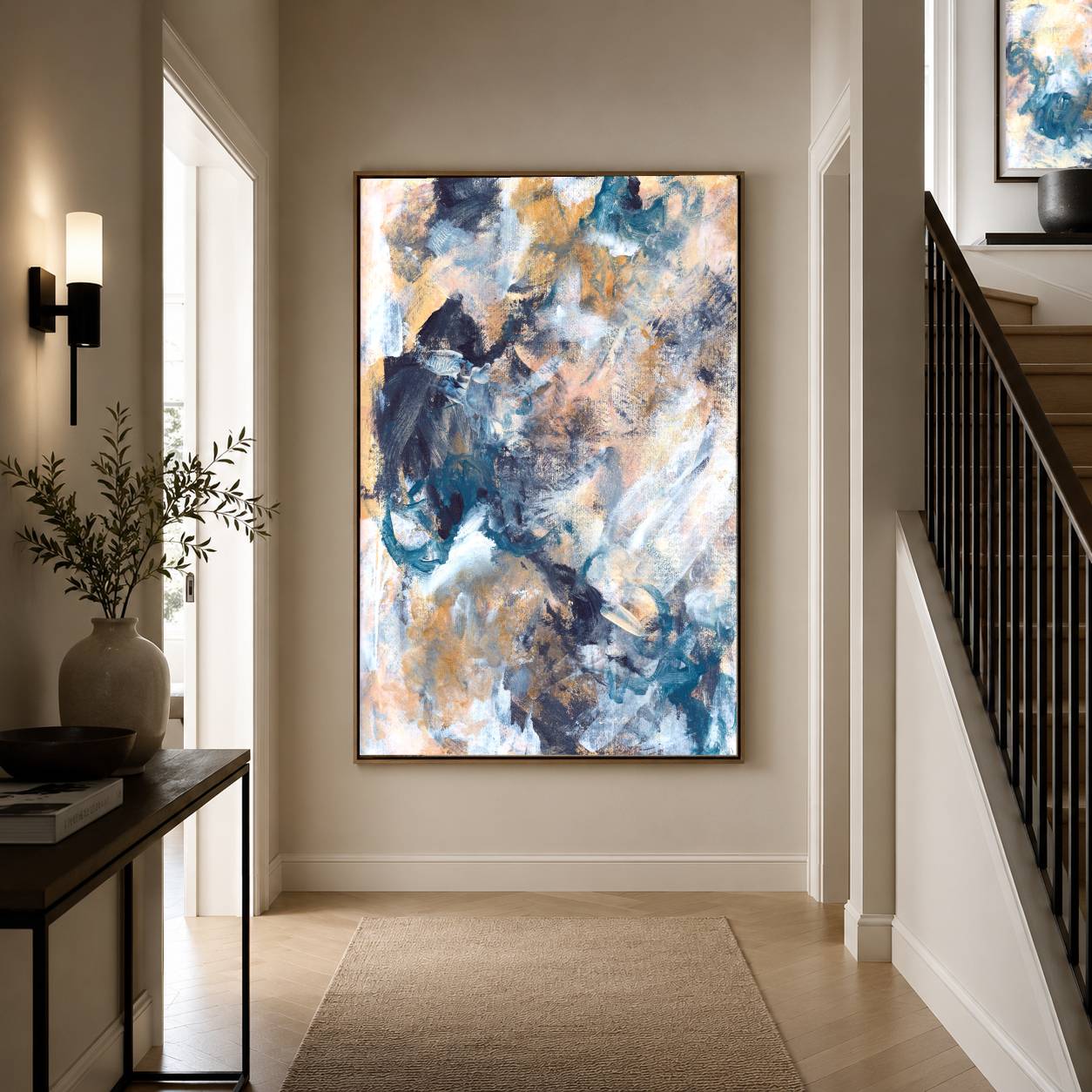
This is particularly important in transitional spaces and restful interiors. A calm abstract piece can completely shift the emotional atmosphere of a hallway, stairwell or bedroom simply by reducing visual noise.
And honestly, most people already have enough noise.
Why canvas works better than glass in many interiors
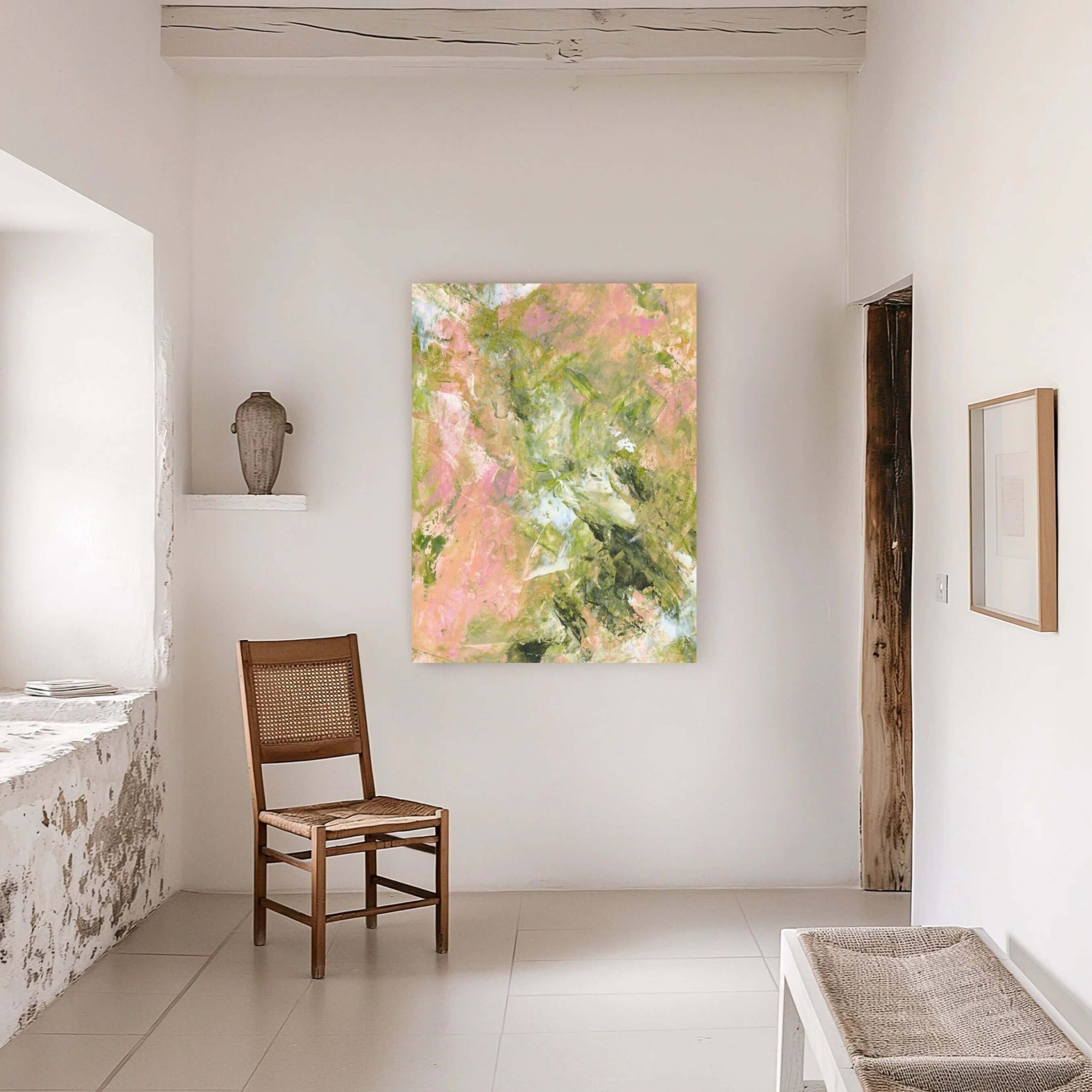
Canvas changes the viewing experience. Glass reflects. Canvas absorbs.
That sounds simple, but it affects how the artwork lives inside a room.
Mass-produced wall art is often printed behind glass, which can create glare, reflection and visual distance. In bright spaces, narrow hallways or rooms with lots of windows, this can become distracting. People end up seeing lamps, ceiling lights and themselves reflected back instead of experiencing the artwork properly.
Canvas feels softer. More integrated. More architectural.
This is one reason collector-grade abstract canvas prints often work so well in modern interiors. They interact with natural light differently and create less visual interruption. The texture also adds depth without needing elaborate framing.
In spaces where atmosphere matters more than decoration, this becomes incredibly valuable.
The artwork feels present rather than protected behind a shiny barrier like a hostage negotiation with the lighting.
Why people often regret buying cheap wall art
People rarely regret buying meaningful artwork. They often regret buying placeholder artwork.
The difference becomes obvious after a few months, when the excitement of “finally putting something on the wall” disappears and the piece either continues giving something emotionally or slowly becomes invisible.
Cheap mass-produced art often becomes invisible. Not because it is offensive. Because it was never chosen deeply enough to sustain attention.
Collector-grade abstract canvas prints usually create longer emotional relationships because they are experienced repeatedly rather than consumed instantly. The texture changes in different light. The mood shifts depending on season, time and emotional state. The artwork becomes woven into the rhythm of the home.
That is why meaningful art often feels more financially worthwhile in the long run.
Not because it is “luxury.” Because it keeps working emotionally.
Comparison table: abstract canvas prints vs mass-produced wall art
| Abstract canvas prints | Mass-produced wall art |
|---|---|
|
Emotionally layered |
Designed for broad appeal |
|
Often textured and architectural |
Usually visually flat |
|
Chosen intentionally |
Often bought quickly |
|
Creates atmosphere |
Primarily decorative |
|
Better scale options |
Frequently undersized |
|
Feels personal |
Often interchangeable |
|
Ages more gracefully |
Strongly trend-dependent |
|
Interacts beautifully with light |
Glass reflections common |
|
Supports calm, considered interiors |
Can feel generic or staged |
|
Builds emotional connection over time |
Often fades into background |
Why emotionally intelligent interiors need better art
An emotionally intelligent interior is not simply a stylish one. It is a space that understands how people actually feel inside it.
These interiors prioritise atmosphere, nervous system response, softness, calm, depth and emotional honesty rather than endless visual performance. They recognise that a home should support the person living there, not merely impress someone visiting for forty minutes with a bottle of wine and opinions about marble.
Art matters enormously in these spaces because artwork shapes emotional tone faster than almost anything else.
Colour changes feeling. Scale changes perception. Texture changes warmth. Presence changes attention.
Mass-produced wall art often struggles in emotionally intelligent interiors because it tends to prioritise decorative coordination over emotional resonance. It fills walls competently but rarely deepens the room.
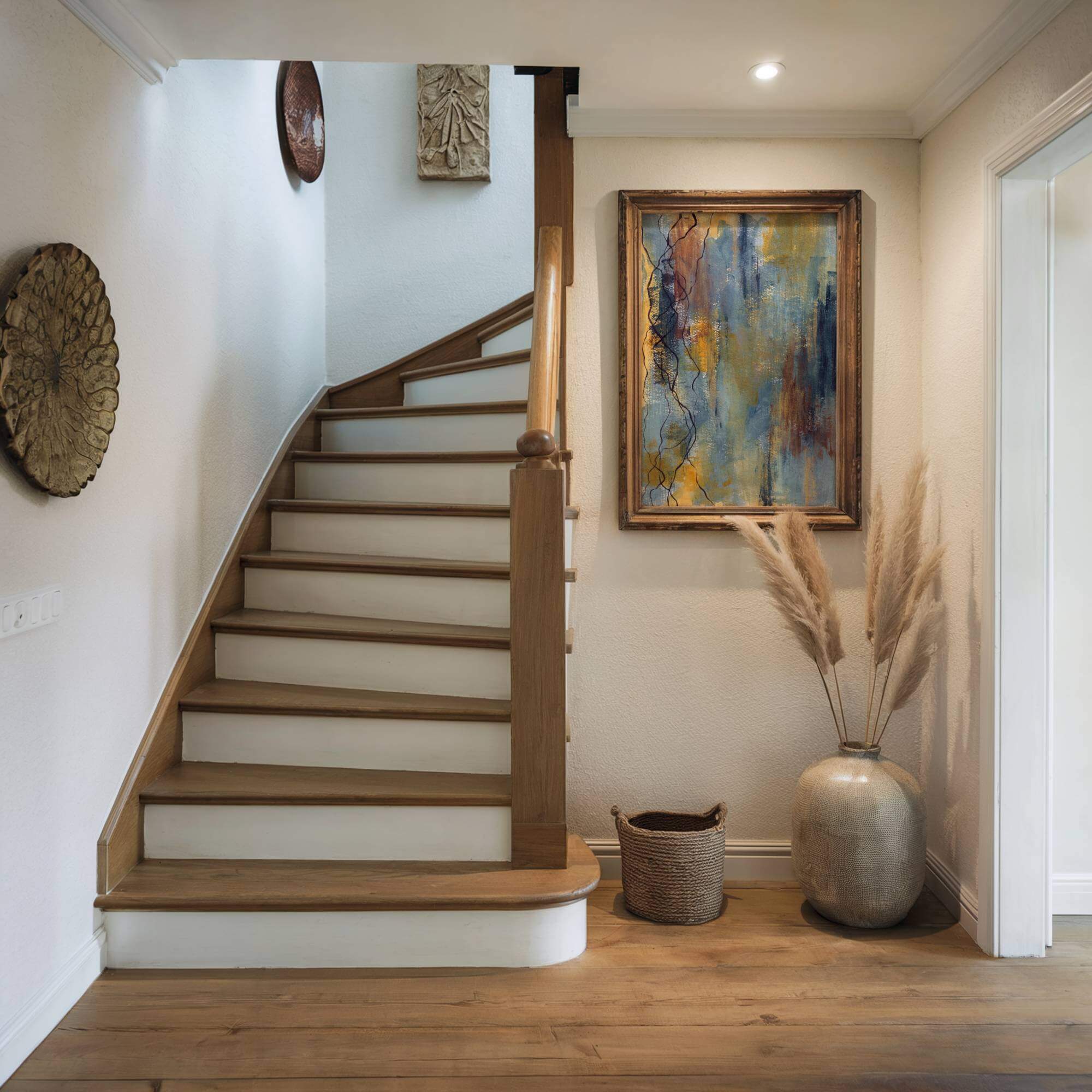
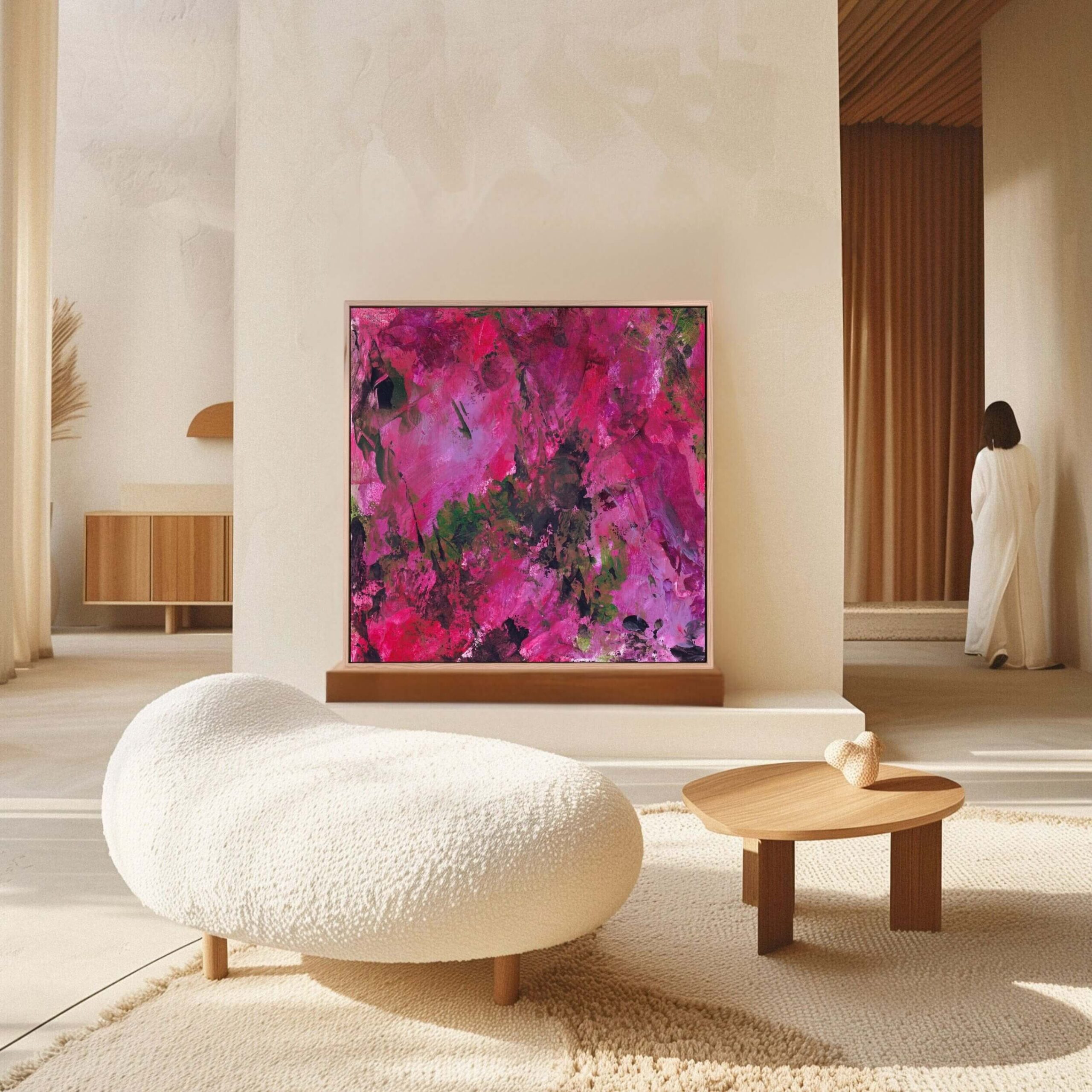
Abstract canvas prints work better because they create space for interpretation, stillness and emotional atmosphere. They allow the room to breathe rather than constantly perform.
That difference becomes more noticeable the longer someone lives with the work.
Why “safe” wall art often feels forgettable
Safe art is not always bad. But safe art often disappears.
Mass-produced wall art is usually designed to avoid a strong reaction because commercial retailers need the piece to suit as many buyers as possible. The result is often pleasant but emotionally neutral work that never fully commits to a mood, tension, colour relationship or point of view.
Collector-grade abstract art usually carries more identity. Not necessarily louder identity. Clearer identity.
A strong abstract canvas piece might feel calm, restrained, layered, expansive, raw, grounded or emotionally charged. It has an internal logic and atmosphere that extends beyond “works with beige.”
That is why people remember it. Not because it screams for attention. Because it actually has something to say. Why the best interiors do not feel over-styled
One of the biggest problems with mass-produced wall art is that it often contributes to interiors feeling staged rather than lived in.
Everything coordinates too perfectly. Nothing surprises the eye. The room becomes visually competent but emotionally empty.
Collector-grade abstract canvas prints often prevent this because they introduce something less predictable into the space. Texture, movement, colour complexity and emotional ambiguity create tension in a good way. The room feels inhabited by a real person rather than assembled entirely from algorithm-approved purchases and “neutral luxe” panic.
The best interiors usually contain some friction.
Not chaos. Just enough unpredictability to feel human. Abstract art brings that beautifully when chosen well. Practical checklist before buying abstract canvas prints
Comparison table: choosing art by space type
| Question | Why it matters |
|---|---|
|
Does the artwork create emotional response? |
Atmosphere matters more than matching |
|
Is the scale strong enough for the room? |
Undersized art weakens interiors |
|
Does the texture feel alive? |
Surface depth changes the experience |
|
Will the piece age beyond current trends? |
Trend-only art often dates quickly |
|
Does the colour support the room emotionally? |
Colour affects nervous system response |
|
Will the artwork work in changing light? |
Canvas interacts beautifully with light |
|
Does the piece feel personal or generic? |
Emotional connection lasts longer |
|
Is the artwork helping the architecture? |
Strong art shapes the room itself |
|
Does the room feel calmer or richer with it? |
The artwork should improve atmosphere |
|
Are you buying it because you love it or because the wall is empty? |
Those are very different decisions |
Final thoughts: the difference is emotional, not just visual
The real difference between abstract canvas prints and mass-produced wall art is not simply material quality or price point.
It is emotional presence. Mass-produced wall art often exists to complete a room visually. Collector-grade abstract canvas prints help complete a room emotionally.
They create atmosphere, softness, texture, stillness, movement, depth and memory inside a space. They shape how the room feels over time rather than delivering one quick decorative hit and fading quietly into the wallpaper of daily life.
That is why meaningful abstract art often lasts longer emotionally than trend-led decorative pieces.
Not because it tries harder. Because it stays open. It keeps giving something back. And honestly, in a world already overloaded with disposable visual noise, that feels increasingly rare.
If you are looking for abstract canvas prints that bring depth, atmosphere and emotional presence into your interior, explore Selected Works or request access to the private Collector’s Vault.
The Vault contains collector-grade canvas works designed for calm, considered interiors that need more than generic decorative wall filler.
Key Takeaway
Abstract canvas prints tend to work better than mass-produced wall art because they create atmosphere, emotional depth and visual presence rather than simply decorating a wall. A well-chosen abstract canvas piece can shape how a room feels, while mass-produced art often fades into the background once the novelty wears off.
Frequently Asked Questions
Abstract canvas prints are often chosen for atmosphere, texture, emotional presence and architectural impact, while mass-produced wall art is usually designed for broad decorative appeal and fast commercial reproduction.
Collector-grade abstract canvas prints often use higher-quality materials, better colour reproduction, stronger scale and richer texture. They also tend to create more emotional and visual depth within an interior.
Canvas prints can work better in many interiors because they reduce glare, feel more integrated with the wall and bring surface texture into the space. Framed prints can still work beautifully, but glass reflections sometimes interrupt the viewing experience.
Mass-produced wall art is usually created to appeal to large audiences and current trends, which can make it feel visually familiar and emotionally neutral over time.
Yes. Abstract canvas prints work especially well in modern interiors because they soften architecture, add emotional warmth and create visual depth without overwhelming minimalist spaces.
Yes. Abstract art can influence the emotional atmosphere of a room through colour, composition, texture and scale. Softer palettes and spacious compositions often create calmer interiors.
Large abstract works help anchor a room visually and emotionally. They create stronger atmosphere, improve spatial balance and often feel more intentional than multiple small decorative prints.
For many people, collector-grade art feels more worthwhile because it creates a longer emotional relationship with the space. Rather than acting as temporary decoration, the artwork becomes part of the atmosphere of the home.
Choose artwork based on emotional response, atmosphere and long-term connection rather than current interior trends. If the piece still feels meaningful without the styling around it, it will usually age better.
Abstract canvas prints work beautifully in living rooms, bedrooms, hallways, stairwells, dining rooms and transitional spaces because they bring atmosphere and visual softness into the architecture of the home.