fbpx

The Hidden Cost of Cheap Art: What to Avoid When Designing a Luxury Space
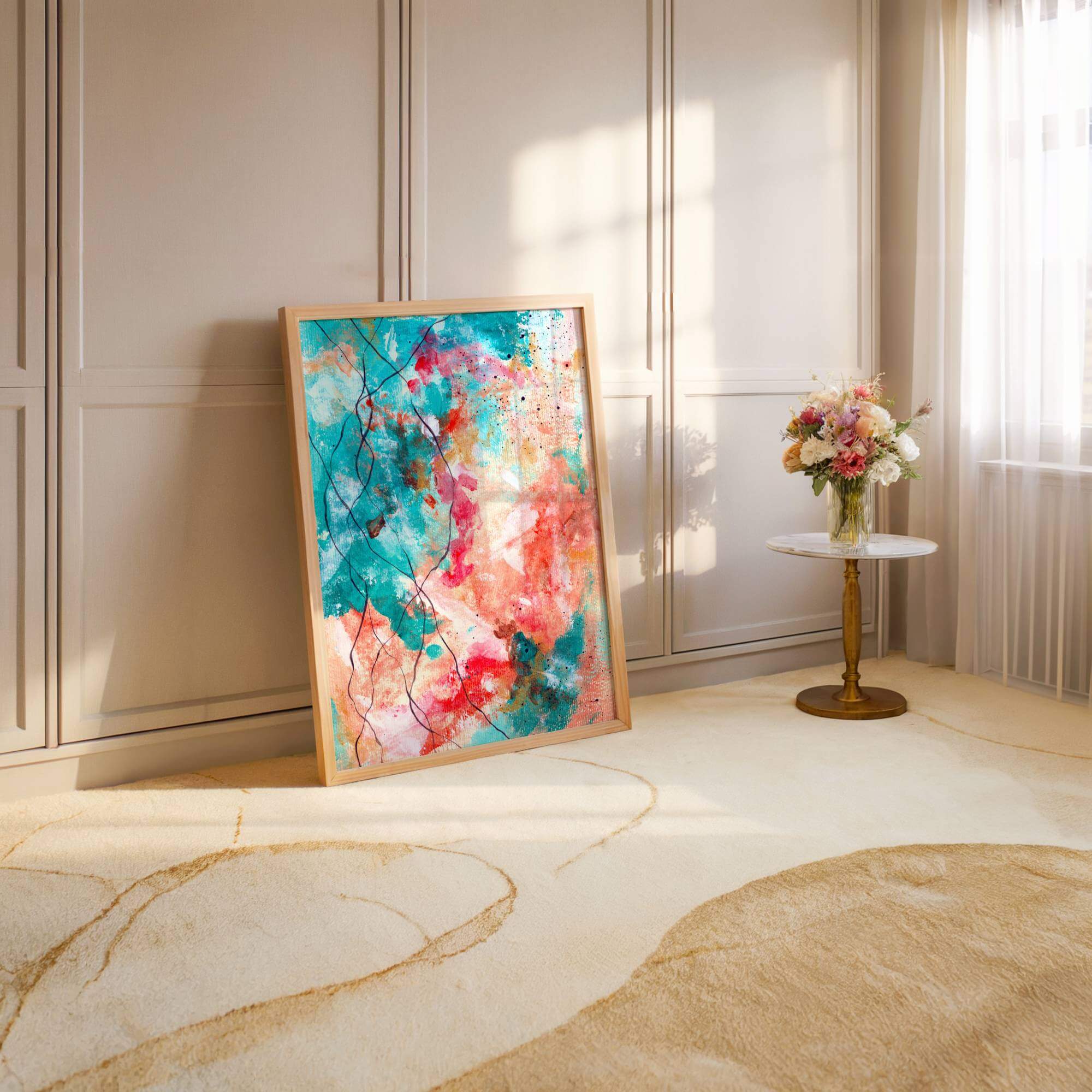
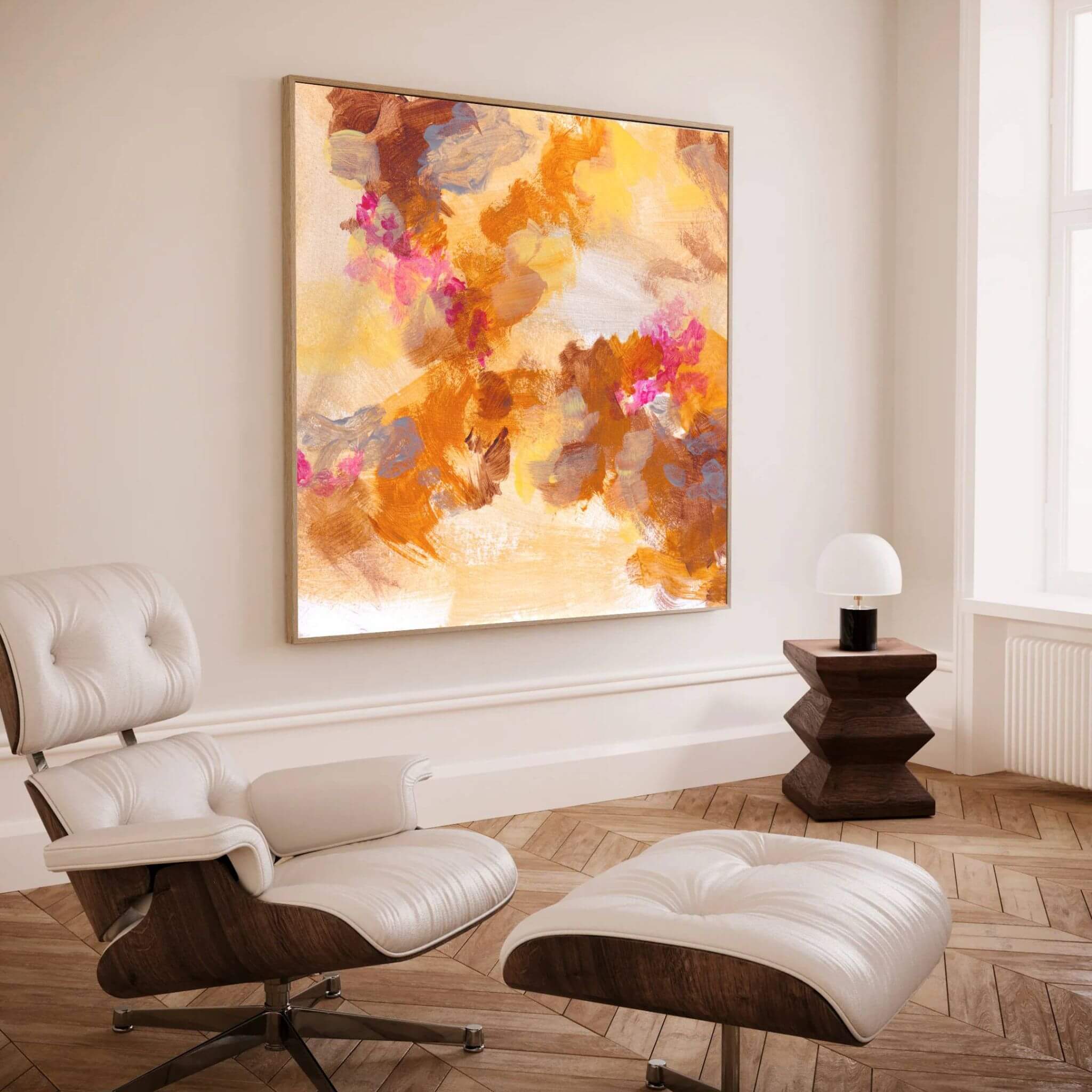
Luxury interiors rarely fail because of architecture, furniture, or finishes. Those decisions are usually made with care, budget, and a long-term view. When something feels off in an otherwise beautiful space, the cause is often quieter and harder to name.
 
More often than not, it is the art.
 
Cheap art does not announce itself as cheap. It blends in. It mimics scale, colour palettes, and current trends well enough to pass at a glance. That is precisely why it is dangerous in luxury environments. It doesn’t clash loudly. It erodes the space slowly.
 
In high-end interiors, cheap art does not simply underperform. It undermines everything around it.
 
This article is not about taste or snobbery. It is about understanding the difference between art that fills a wall and art that holds a space, and why that distinction matters more than ever in luxury design.

Why Art Carries More Emotional Weight Than Any Other Element in a Room

People often assume that the most expensive elements in a room create the strongest impression. Flooring, furniture, lighting, architectural details. These certainly matter, but they are not what the nervous system responds to first.
 
Art sits at eye level. It is encountered immediately and emotionally. Before a guest consciously assesses the quality of a space, their body has already registered whether it feels grounded, coherent, and intentional.
 
Art acts as an emotional signal. This is part of a wider shift away from spectacle and towards presence, which I explore in more depth in my writing on presence over performance in luxury collecting. It tells people what kind of space they have entered and how they are meant to feel inside it.
 
When art lacks depth or presence, the response is subtle but consistent. People describe the space as polished but cold, impressive but impersonal, beautiful but strangely forgettable. They rarely point to the artwork directly, but the artwork is often the source of that disconnect.
 
Luxury art does not decorate a room. It stabilises it.

The Problem With Treating Art as a Styling Accessory

One of the most common mistakes in high-end interiors is treating art as a visual accessory rather than a living element of the space.
 
This usually happens when art is chosen late in the process, once budgets are tight and timelines are compressed. The goal becomes finding something that fits the wall, matches the palette, and photographs well enough to complete the room.
 
When art is selected this way, it becomes interchangeable. It could be swapped with any other similar piece without changing how the space feels. That is the clearest sign that the art is not doing its job.
 
In luxury environments, every element should feel deliberate. Art should not be there to complete a moodboard. It should be there to anchor the experience of the room.

Cheap Art vs Luxury Art: Where the Real Differences Live

The difference between cheap art and luxury art is not simply cost, scale, or abstraction. It is structural, emotional, and experiential.

Authorship and Intent

Cheap art is often anonymous by design. It is produced to meet demand, fill trends, and move quickly through retail channels. There is no sustained relationship between the maker and the work, and therefore no sustained relationship between the work and the space it enters.
 
Luxury art carries authorship. You can sense that decisions were made deliberately, over time, with attention to emotional weight and consequence. That authorship gives the work gravity.
 
Without it, the art floats.

Emotional Presence

Cheap art tends to rely on immediate visual appeal. It looks pleasant, inoffensive, and familiar. Over time, it disappears. The eye stops registering it because there is nothing new to meet.
 
Luxury art continues to register. Not because it is loud, but because it has depth. It changes subtly depending on light, mood, and context. It holds attention without demanding it.
 
This is what presence actually means in practice.
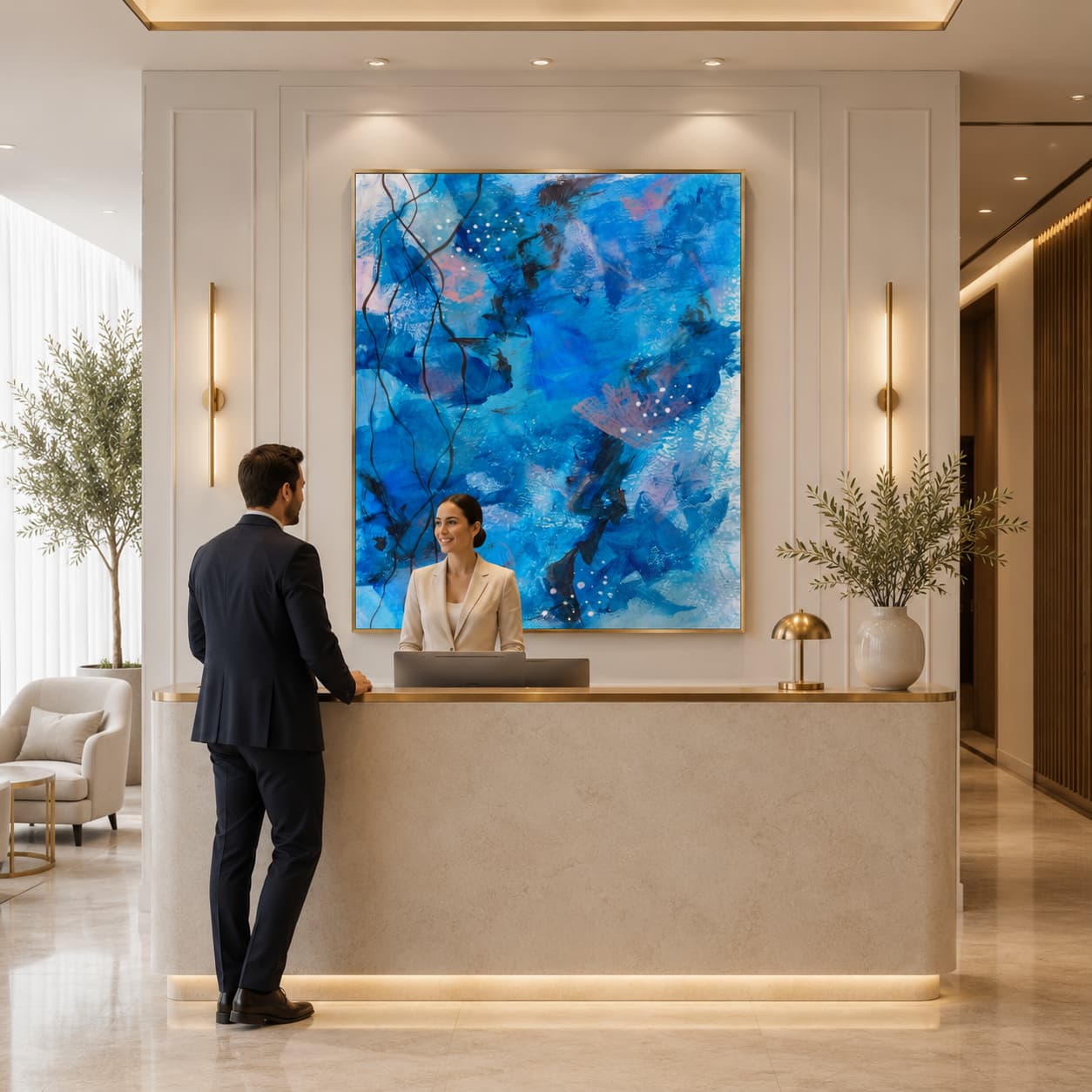
Abstract artwork holding presence in a modern office
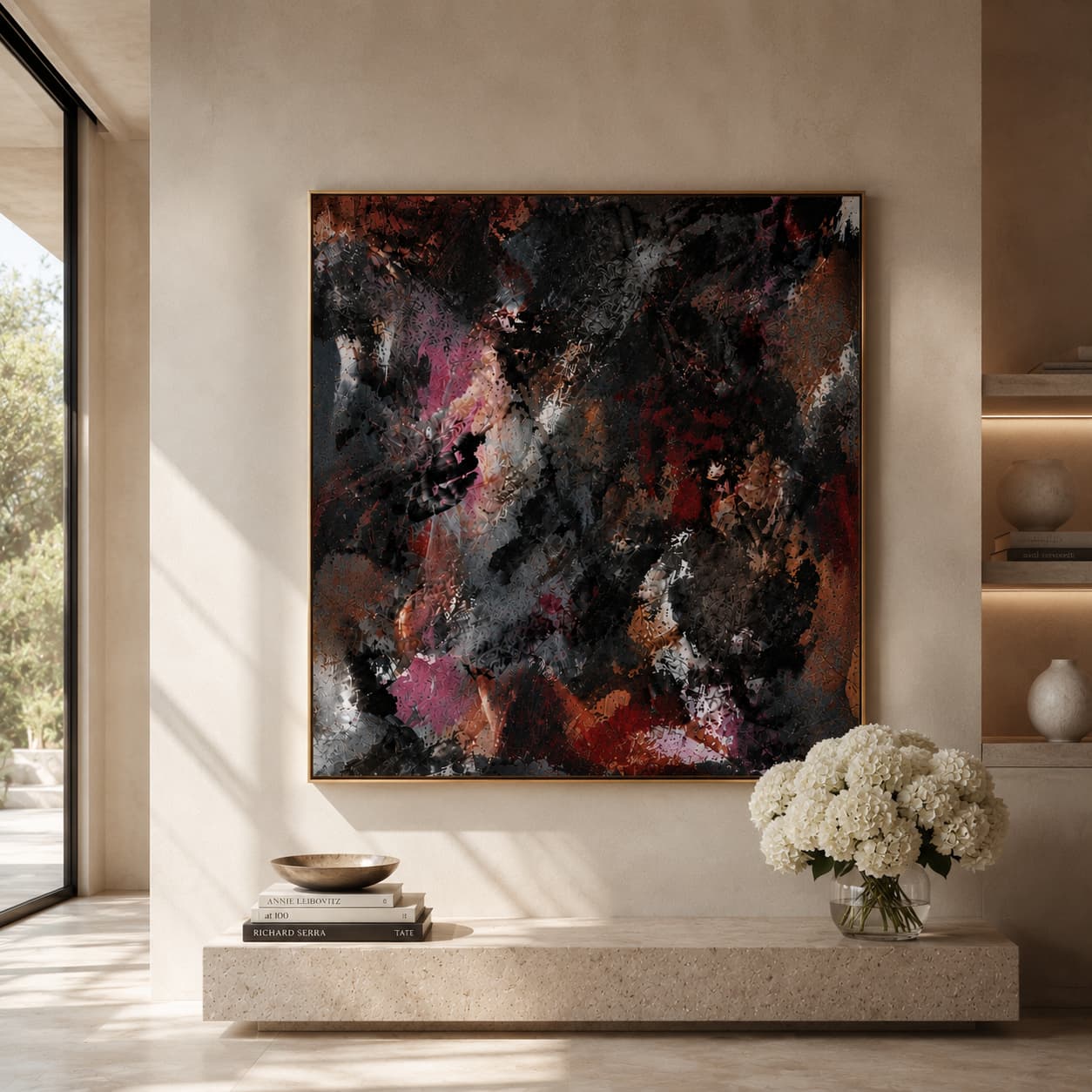
abstract canvas painting with layered texture

Atmosphere and Spatial Coherence

In luxury spaces, atmosphere is everything. Atmosphere is not created by individual objects, but by how those objects relate to each other emotionally.
 
Cheap art often breaks that coherence. Even when it visually fits, it introduces a kind of emotional flatness. The room looks complete but never quite settles. This is why emotionally intelligent interiors rely so heavily on art that can shape atmosphere, not just decorate walls, something I explore further when writing about how art shapes emotional experience in interiors.
 
Art with presence does the opposite. It brings the space into balance. People may not know why the room feels calm, grounded, or resolved, but they feel it immediately.

Longevity and Relevance

Cheap art is almost always trend-dependent. It reflects what is visually popular at the moment of production. As those trends shift, the work begins to feel dated. High-quality art is made with time in mind, not trends, which is why understanding how long high-quality art is designed to last matters when designing luxury spaces.
 
Luxury art is not trend-proof because it avoids style. It is enduring because it operates on an emotional level rather than a stylistic one. It continues to feel relevant because it was never chasing relevance to begin with. This is why I keep my own work in a deliberately slow, private archive like the Collector’s Vault, rather than producing work to chase seasonal demand.

Brand and Perception in Commercial Spaces

In hotels, offices, retreats, and high-end developments, art is not neutral. It is part of the brand experience.
 
When artwork feels mass-produced or generic, it quietly signals compromise. Guests may not articulate it, but they register that something has been shortcut. This affects trust, perception, and memory of the space.
 
Luxury environments rely on coherence between values and execution. Art that lacks integrity breaks that coherence.

Why Cheap Art Is Especially Risky in Luxury Interiors

In mid-range or temporary spaces, cheap art can be perfectly appropriate. The problem arises when it is placed in environments designed to communicate care, longevity, and depth.
 
Luxury interiors ask more of the people who inhabit them. They are often spaces of rest, decision-making, retreat, or focus. Art that is emotionally vacant works against those functions.
 
Instead of supporting the space, it becomes visual noise.
 
This mismatch is why cheap art feels particularly wrong in luxury settings. It does not fail loudly. It fails quietly, by never allowing the space to fully arrive.

How Luxury Art Actually Functions in a Space

Luxury art does not exist to impress visitors. It exists to support the people who live or work there.
 
It changes how the room feels across time, not just on first entry. It becomes part of daily rhythm rather than a static object on the wall.
    • In offices, it can ground attention and reduce visual stress.
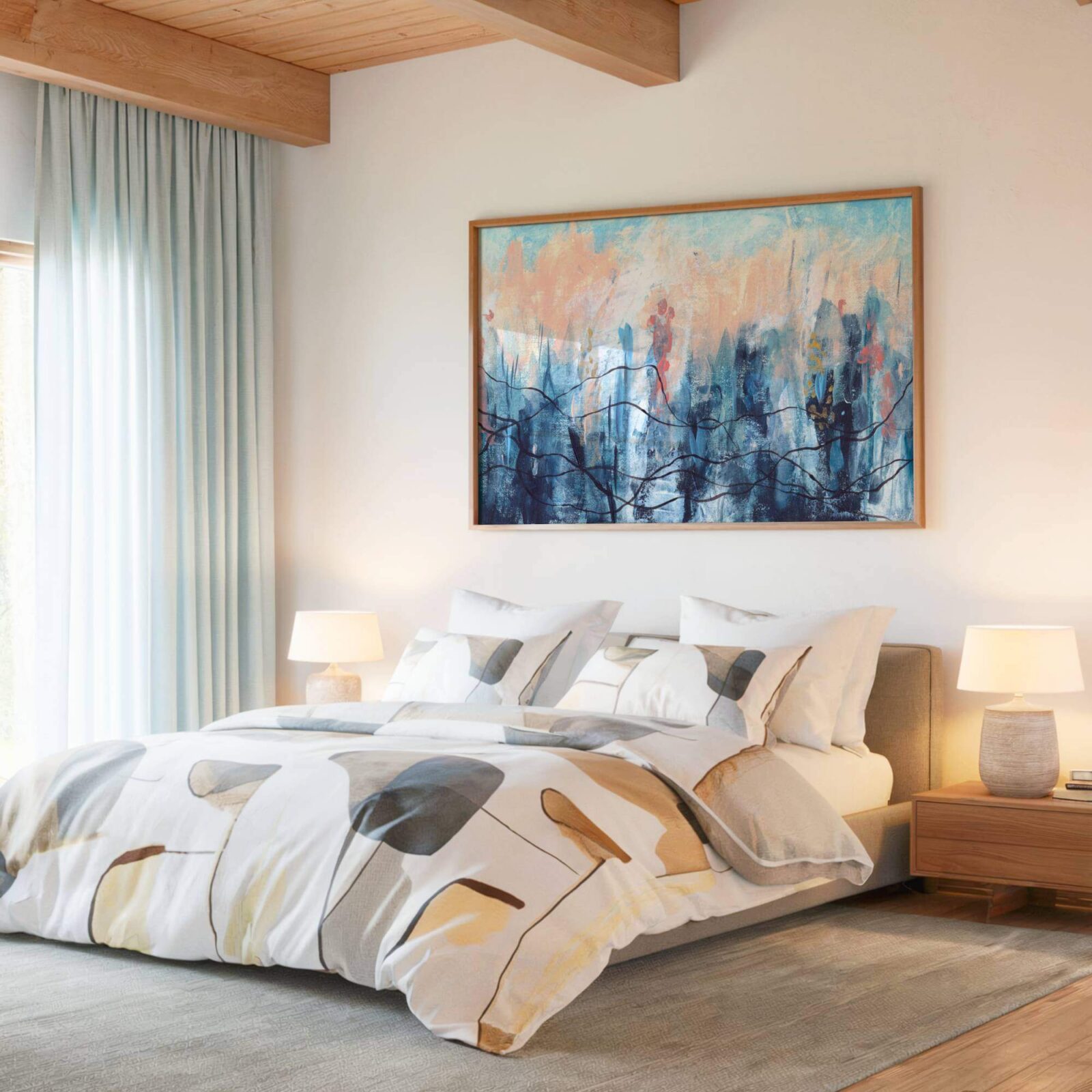
    • In homes, it can create continuity and emotional safety.
    • In hospitality spaces, it can offer calm without sterility.
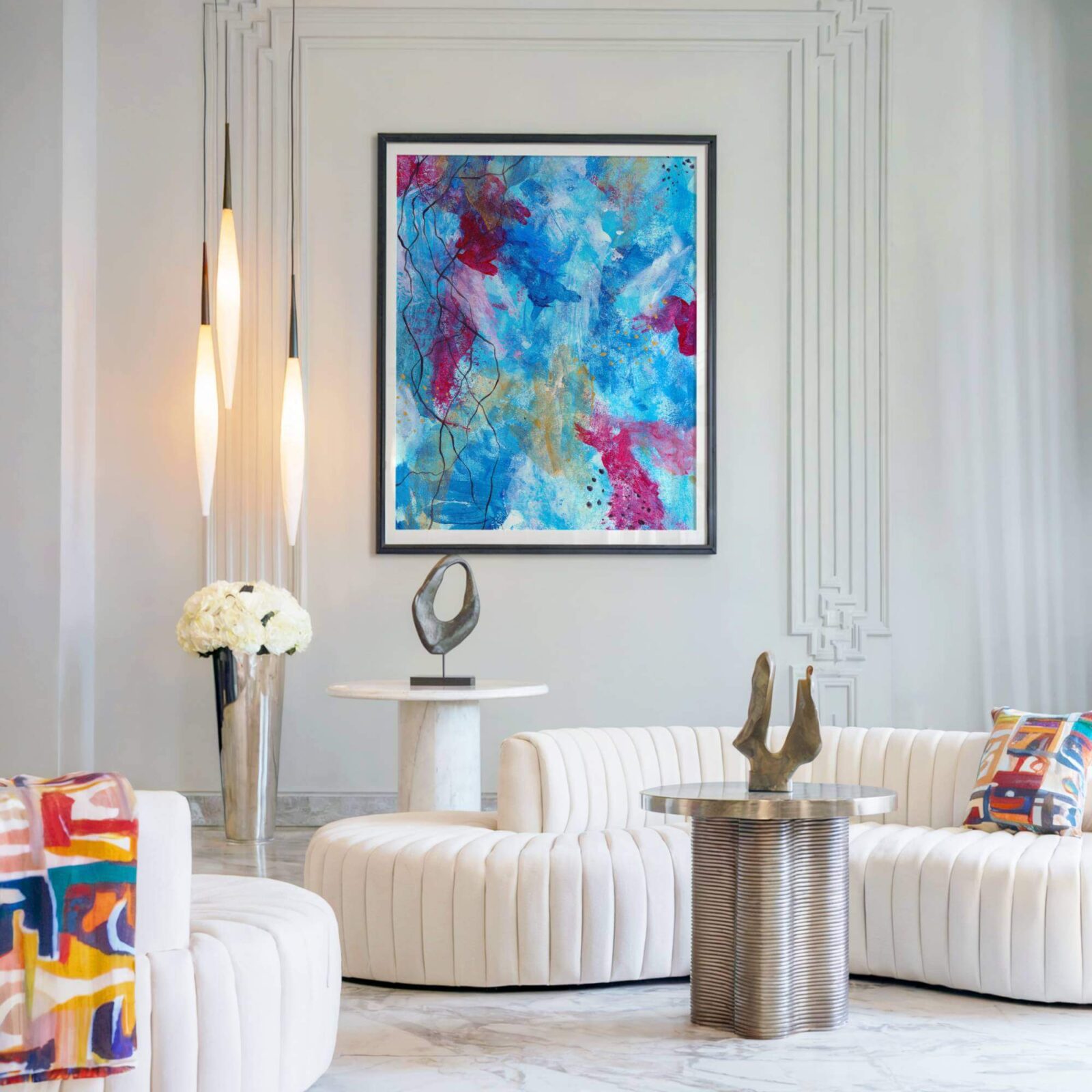
This is not about aesthetic preference. It is about how environments affect the nervous system.

The Illusion of “Luxury-Look” Art

One of the reasons cheap art persists in luxury interiors is that it has become very good at imitating the surface language of high-end work.
 
Large-scale abstraction. Neutral palettes. Textural finishes. Minimal framing.
 
What it cannot replicate is the process. This is the same distinction I make when explaining the difference between decorative art and collector-grade work.
 
Luxury art is shaped by time, decision-making, and restraint. Cheap art is shaped by efficiency. The difference becomes obvious when you live with it rather than glance at it.
 
Luxury-look art performs visually. Luxury art holds emotionally.

How to Tell Whether Art Belongs in a Luxury Space

Instead of asking whether a piece matches the sofa or fills the wall, ask slower questions.
 
Does the work continue to feel relevant after repeated exposure?
 
Does it change subtly depending on light, mood, or time of day?
 
Can you sense the presence of the maker behind the work?
 
Does the piece support the atmosphere you want the space to hold, not just how you want it to look?
 
These questions reveal far more than price points or trends ever will.

The Long-Term Cost of Getting Art Wrong

Replacing artwork is expensive and disruptive, particularly in large or commercial environments. But the greater cost is emotional.
 
A space that never fully settles is a space that never fully works.
 
Luxury is not about excess or visual impact. It is about coherence. Art plays a central role in creating that coherence, whether acknowledged or not.

Cheap Art vs Luxury Art in a Changing Luxury Landscape

As luxury shifts away from performance and toward presence, tolerance for emotionally empty elements decreases.
 
People are no longer looking for spaces that impress. They are looking for spaces that support how they feel and function. Art that lacks depth cannot meet that expectation.
 
Luxury art is not about status. It is about alignment. This is also why many serious buyers are deliberately moving away from traditional sales tactics and spectacle, something I unpack in my piece on why collectors are buying art without a sales pitch.

Conclusion: Why This Difference Matters
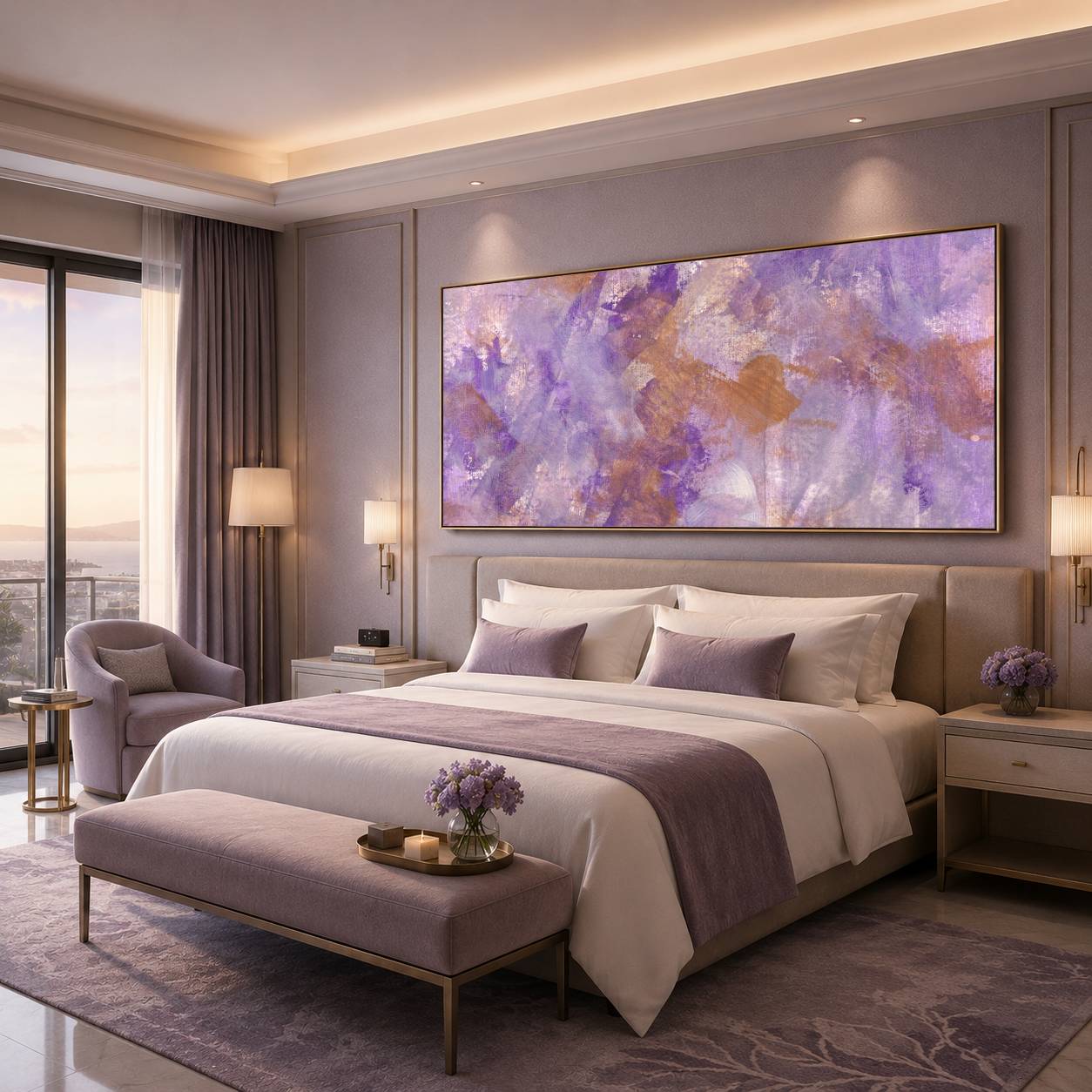
Cheap art and luxury art may look similar at first glance, but they behave very differently over time.
 
One fills a wall. The other holds a space.
 
If a room never quite settles, if it feels finished but not resolved, the art is often the missing piece. Luxury interiors deserve artwork that carries weight, not just surface appeal.
 
Because in the end, people may forget the details of a space, but they will always remember how it made them feel.
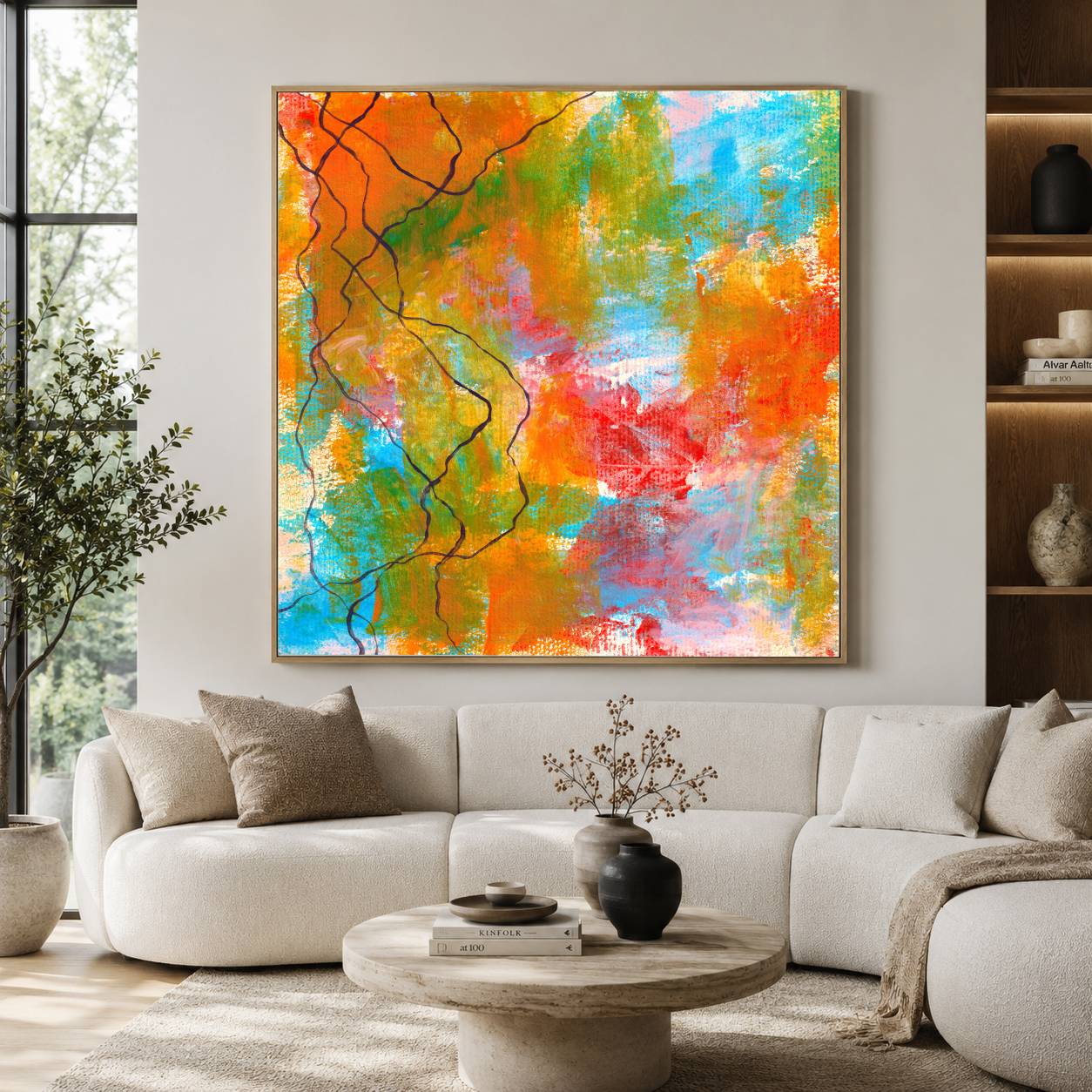
abstract canvas painting with layered texture

Frequently Asked Questions About Cheap Art vs Luxury Art

Is cheap art always a bad choice?

No. Cheap art isn’t a moral failure. It has a place. Temporary homes, rentals, studios, early-stage projects. The problem starts when it’s asked to do a job it was never designed for. Cheap art isn’t built to hold atmosphere, support presence, or carry a space over time. In luxury interiors, that mismatch becomes obvious very quickly.

Why does cheap art feel wrong in an otherwise beautiful space?

Because it doesn’t carry any weight. Luxury spaces rely on coherence. When everything else has been chosen with care and intention, emotionally empty art creates a kind of quiet rupture. People don’t always know what’s wrong, but they feel it. The room never fully settles.

Can abstract art still be cheap or ineffective?

Absolutely. Abstraction alone doesn’t equal depth. Plenty of abstract work is produced to follow trends, fill walls, and move units. If there’s no sustained process, no emotional clarity, and no real authorship behind it, the work may look right but feel hollow once you live with it.

Does luxury art need to be expensive to be legitimate?

Not always, but it does need to be intentional. Price often reflects time, material quality, and process, but the real marker is whether the work holds presence. Luxury art earns its place in a space through what it does over time, not what it costs on the day of purchase.

How much does the artist actually matter?

More than people like to admit. When the artist has a clear philosophy and a disciplined process, that coherence shows up in the work. Art without that grounding often feels interchangeable. You could swap it out tomorrow and nothing in the space would change.

Is this more important in hotels, offices, and retreats?

Yes, because those spaces are asking more of the people inside them. They’re places of rest, focus, decision-making, or recovery. Art that lacks emotional intelligence works against those goals. Art with presence quietly supports them.

Can art really affect how people feel in a space?

It already does. People regulate themselves through their environment whether they’re conscious of it or not. Art with presence can ground, calm, or steady a space. Art without it becomes visual noise. The difference shows up in how people behave, linger, and remember the place.