
Children’s Yoga vs Children’s Pilates: Which Class Is Right for Your Child?
TL;DR
Children’s yoga and children’s Pilates can both support strength, confidence, coordination, posture, focus and body awareness, but they do it in slightly different ways.
Children’s yoga is usually better for children who need calm, breathing, mobility, balance, relaxation, imagination and emotional regulation. It can help children slow down, feel more settled, and build confidence through movement that feels less rigid and more spacious.
Children’s Pilates is usually better for children who need strength, posture, core support, control, coordination and physical confidence. It can help children feel more stable, more aware of their body, and more capable in movement without the pressure of competitive sport.
Some children will clearly prefer one. Some will benefit from both. The right choice depends on your child’s temperament, confidence, energy, body awareness and what they need most right now.
For local class details, start here: Children’s Yoga and Pilates in West Bridgford.
Definition: what is the difference between children’s yoga and children’s Pilates?
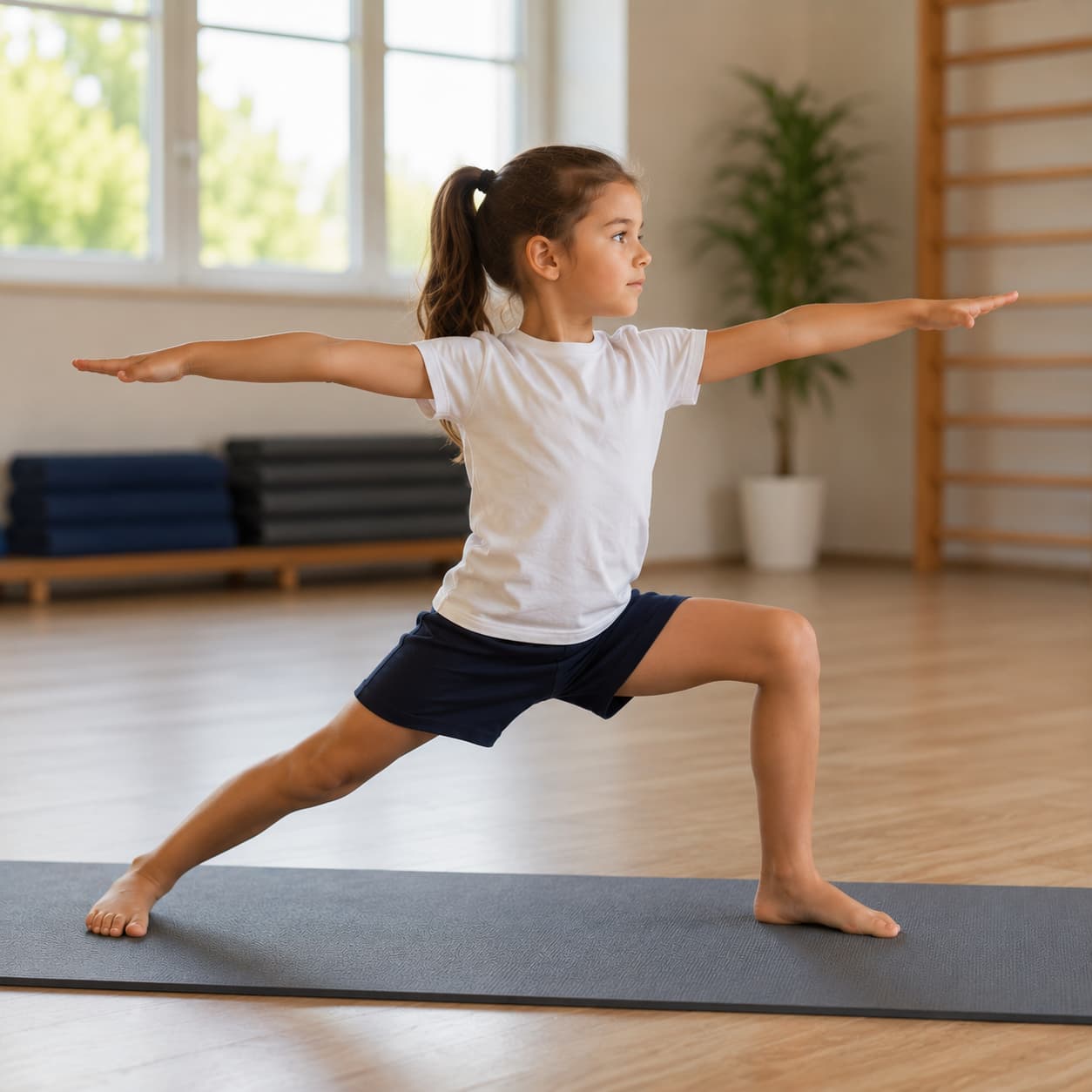
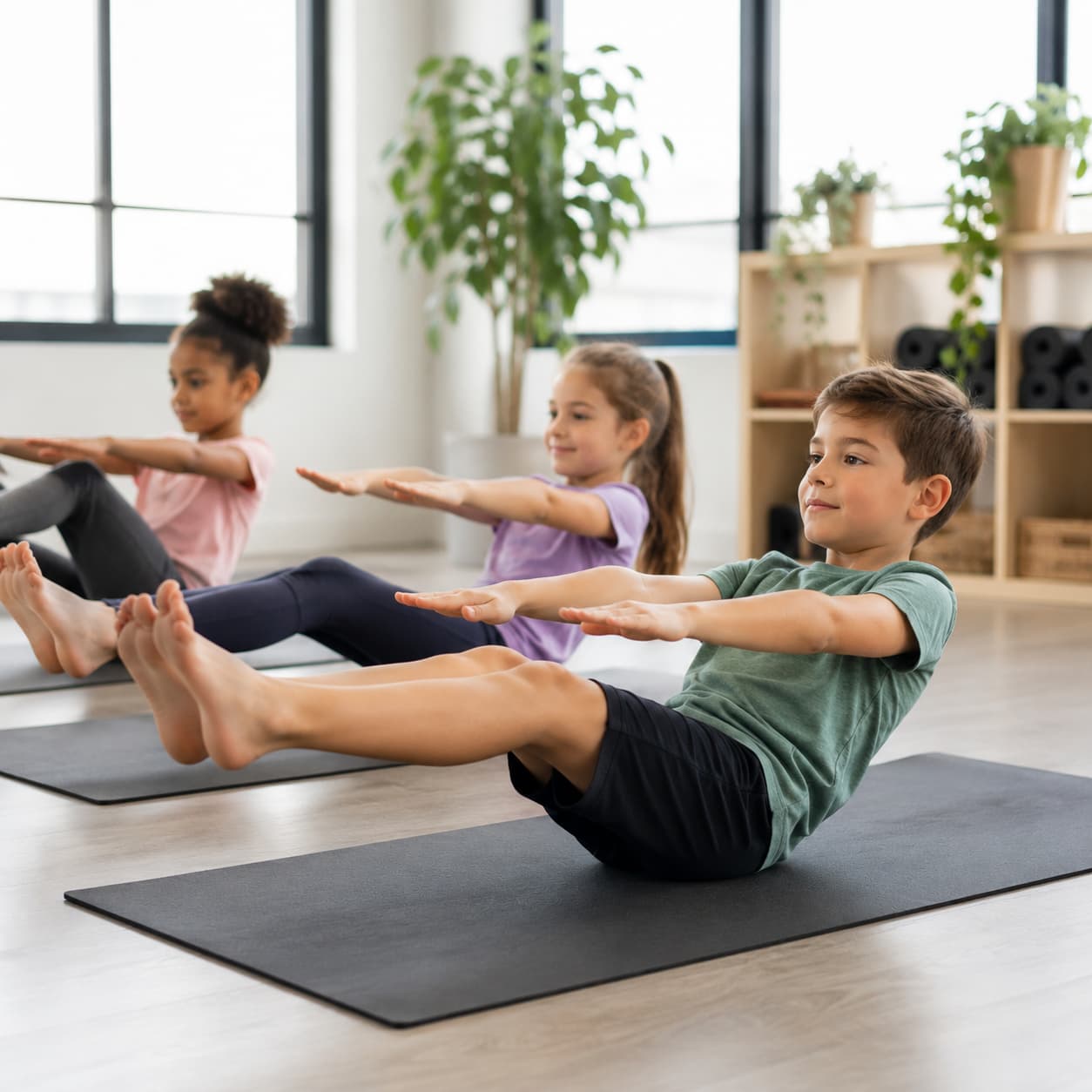
Children’s yoga is a child-friendly movement class that usually includes poses, breathing, balance, mobility, relaxation, focus and imagination. Children’s Pilates is a structured movement class that usually focuses more on strength, posture, core support, coordination, balance and body control. Both should be adapted for children’s age, attention span, confidence and development, rather than copied from adult classes.
Why parents compare children’s yoga and Pilates
Most parents are not sitting at home thinking, “Ah yes, I must now analyse the philosophical and biomechanical differences between yoga and Pilates for my child.”
They are usually thinking something much more practical.
-
- My child needs to move more.
- My child needs confidence.
- My child is always hunched over a screen.
- My child is not into football, gymnastics, dance or team sport.
- My child has lots of energy but not much control.
- My child gets overwhelmed easily.
- My child is physically cautious.
- My child is bendy but not strong.
- My child is strong but not coordinated.
- My child needs something calmer than another loud after-school club where everyone seems to be one missed snack away from total collapse.
That is usually where the yoga versus Pilates question begins.
Parents are not just choosing between two class names. They are trying to understand what kind of movement environment will actually help their child. They want something useful, safe, confidence-building and age-appropriate. They want their child to feel better in their body, not exposed, embarrassed or pushed into another activity that makes them feel like they are already behind.
That is why the distinction matters.
Children’s yoga and children’s Pilates can both be brilliant, but they support children in different ways. The better choice depends on the child in front of you, not on which class sounds trendier, calmer, more impressive, or more likely to make another parent nod approvingly at pick-up.
This article will help you work out which class may be right for your child, especially if you are looking for children’s yoga or children’s Pilates in West Bridgford.
Decision box: yoga or Pilates for your child?
| If your child needs… | Children’s yoga may be better because… | Children’s Pilates may be better because… |
|---|---|---|
|
More calm |
It uses breath, slower movement and relaxation |
It can help focus through controlled movement |
|
Better posture |
It supports mobility, awareness and ease |
It builds core strength, postural support and control |
|
More strength |
It builds strength through poses and balance |
It has a stronger focus on core, hips, shoulders and stability |
|
Better coordination |
It uses varied poses and transitions |
It uses controlled movement patterns and body awareness |
|
Less pressure than sport |
It is non-competitive and calming |
It is non-competitive and structured |
|
More confidence |
It helps children feel safe trying movement |
It helps children see measurable physical progress |
|
Better body awareness |
It teaches children to notice breath, balance and sensation |
It teaches children to control movement and alignment |
|
Support with restlessness |
It helps children slow down and regulate |
It helps energetic children practise control |
|
A calmer after-school activity |
It offers a softer, breath-led movement space |
It offers structured movement without chaos |
|
Physical foundations |
It supports mobility, balance and focus |
It supports strength, posture and stability |
Children’s yoga: what it is really good for
Children’s yoga is often misunderstood.
Some people imagine children lying quietly on mats, breathing peacefully, and behaving like tiny monks with better hamstring mobility. Which is lovely, but also, have these people met children?
A good children’s yoga class should be calm, yes, but it still needs to be engaging. Children need structure, movement, imagination, repetition, variety and enough clarity to understand what they are doing. They also need permission to be children, not miniature adults pretending to enjoy stillness because someone put a singing bowl near them.
Children’s yoga is especially useful because it gives children a way to slow down without making stillness feel like punishment.
That matters.
Many children spend their days being moved from one demand to another. School. Clubs. Screens. Homework. Noise. Social pressure. Instructions. Transitions. Bedtime negotiations that somehow require the diplomacy of a peace treaty.
Yoga can give them a different rhythm.
It can help children notice their breath, move their spine, balance, stretch, strengthen, rest and come back to themselves. It can support focus, confidence, mobility and emotional regulation because it works with the whole child, not just their ability to perform a movement.
The best children’s yoga does not ask children to be perfect.
It gives them a safe structure where they can practise moving, breathing, balancing, resting and trying again.
For children who are anxious, cautious, easily overstimulated, sensitive, tired, restless, or simply in need of a calmer movement space, yoga can be a very good fit.
Children’s Pilates: what it is really good for
Children’s Pilates is often the less familiar option, which is a shame because it can be incredibly useful.
It is not adult Pilates copied onto children. Or at least, it should not be. Children do not need to be lying on mats doing tiny controlled movements while someone talks at length about neutral pelvis until everyone loses the will to live.
Children’s Pilates should be clear, structured and age-appropriate. It should help children build strength, posture, coordination, balance, body awareness and confidence through movement they can understand and actually do.
Pilates is especially useful for children who need more physical support.
That might mean children who struggle with posture, seem physically unsure, collapse into sitting positions, lack core strength, find balance difficult, move quickly but without much control, or feel awkward in their bodies.
It can also help children who are already active but need better stability and awareness. A child can be sporty and still need more control. A child can be flexible and still need more strength. A child can be energetic and still need to learn how to slow movement down.
Pilates teaches children that strength is not just about speed, force or being naturally athletic.
Strength can be steady. Quiet. Controlled. Useful.
It helps children feel how their body supports them. It builds confidence through small, repeatable progress. A child may notice they can balance longer, hold a position with more control, move more slowly, sit taller, or understand how their body works.
That kind of confidence matters because it is earned through experience.
Not forced praise. Not “you’re amazing” shouted at every wobble. Actual progress.
For a deeper article specifically on this, link internally to your children’s Pilates post once published: Children’s Pilates in West Bridgford: How It Helps Strength, Posture and Confidence.
Children’s yoga vs children’s Pilates: the simple comparison
| Feature | Children’s Yoga | Children’s Pilates |
|---|---|---|
|
Main focus |
Calm, mobility, breath, balance and body awareness |
Strength, posture, control, coordination and body awareness |
|
Best for |
Children who need calm, flexibility, focus and relaxation |
Children who need strength, postural support and physical confidence |
|
Movement style |
More flowing, imaginative and breath-led |
More structured, controlled and strength-focused |
|
Physical benefit |
Mobility, balance, flexibility, focus and gentle strength |
Core strength, postural support, balance, coordination and control |
|
Emotional benefit |
Helps children slow down, settle and feel safe in movement |
Helps children feel capable, stable and confident in their body |
|
Pressure level |
Low-pressure when taught well |
Low-pressure when taught well |
|
Good for non-sporty children |
Yes |
Yes |
|
Good for energetic children |
Yes, if taught with enough movement and structure |
Yes, especially for learning control |
|
Good for cautious children |
Yes, because it can feel gentle and spacious |
Yes, if progressions are clear and confidence-led |
|
Yes, very well |
Yes, very well |
Yes, very well |
Which class is better for calm?
If your child needs calm, children’s yoga may be the better starting point.
Yoga gives children more direct access to breathing, rest, slower transitions, relaxation and emotional regulation. It can help them practise settling without being told to “calm down,” which, as every adult knows, is one of the least calming phrases ever invented.
Children’s yoga can be especially helpful for children who are easily overstimulated, anxious, sensitive, tired, restless, or emotionally overloaded after school.
It gives them a place to move without rushing.
It also teaches them that calm is not the same as doing nothing. Calm can be active. It can come through breathing, stretching, balancing, moving slowly, noticing the body and resting properly.
That is a useful lesson.
Some children find stillness difficult at first, and that is completely normal. A good children’s yoga class should not expect children to suddenly become peaceful little statues. It should help them build the skill gradually.
Pilates can also support calm, but usually through control rather than relaxation. It asks children to slow movement down, pay attention and organise their body. For some children, that structure is exactly what helps them settle.
So if your child needs emotional settling, start with yoga.
If your child needs calm through structure and control, Pilates may also work beautifully.
Which class is better for posture?
If posture is the main concern, children’s Pilates may be the stronger choice.
That does not mean yoga is not useful. Yoga can absolutely support posture through mobility, balance, breath and body awareness. It helps children move the spine, open the chest, stretch tight areas, strengthen through poses and become more aware of how they hold themselves.
But Pilates has a more direct relationship with postural strength.
It tends to focus more on core support, spinal control, shoulder stability, hip strength and the ability to organise the body in different positions. This can be useful for children who slump, lean, collapse into one hip, sit awkwardly, struggle to hold themselves upright, or seem physically unsupported.
The important thing is that posture should not be taught through nagging.
Children do not need to be told to “sit up straight” every five minutes like they are being trained for a Victorian portrait. They need strength, awareness, mobility and options.
Good posture is not one perfect shape.
It is the ability to move, adjust and support the body without stiffness or collapse.
Pilates can help children build that support in a very practical way.
Which class is better for strength?
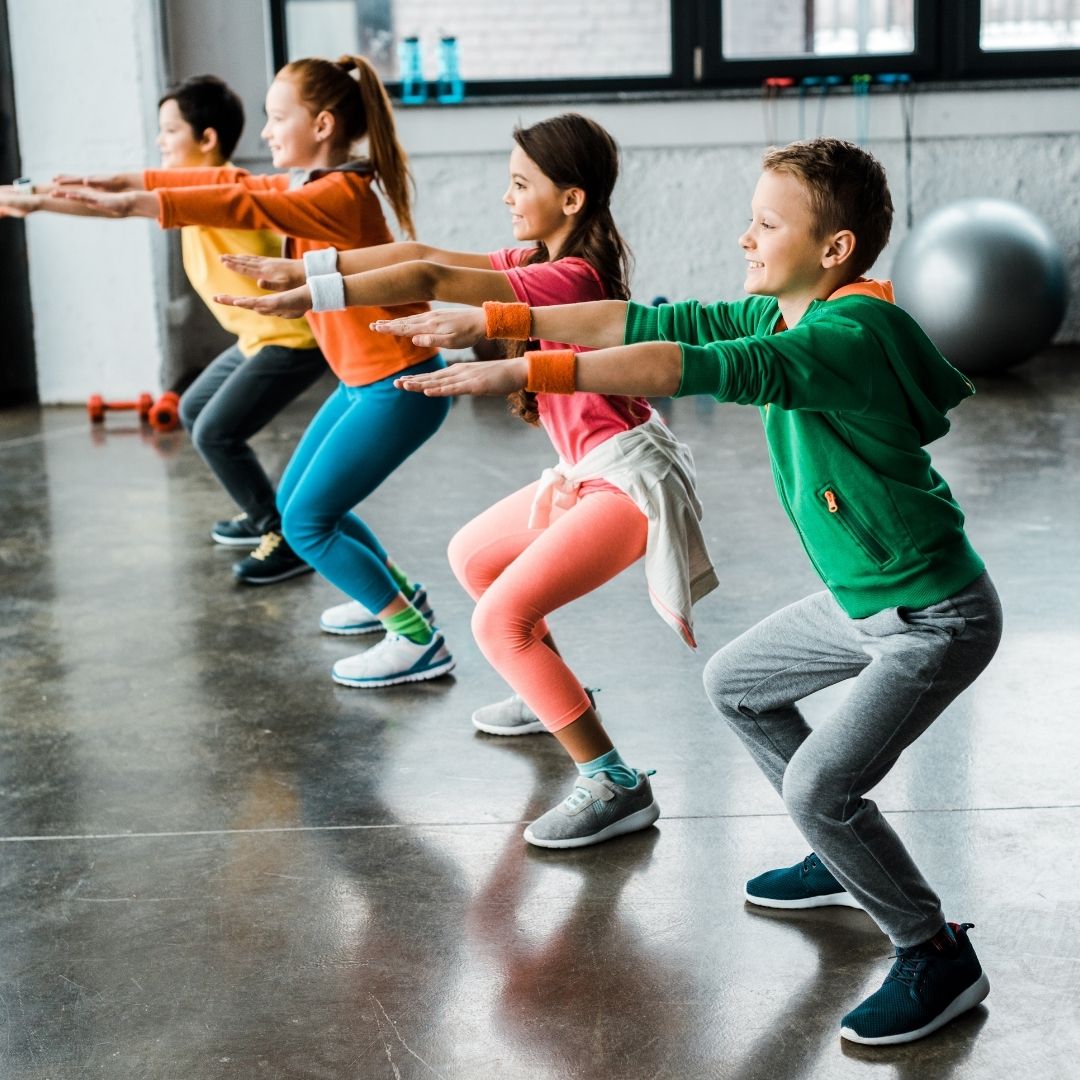
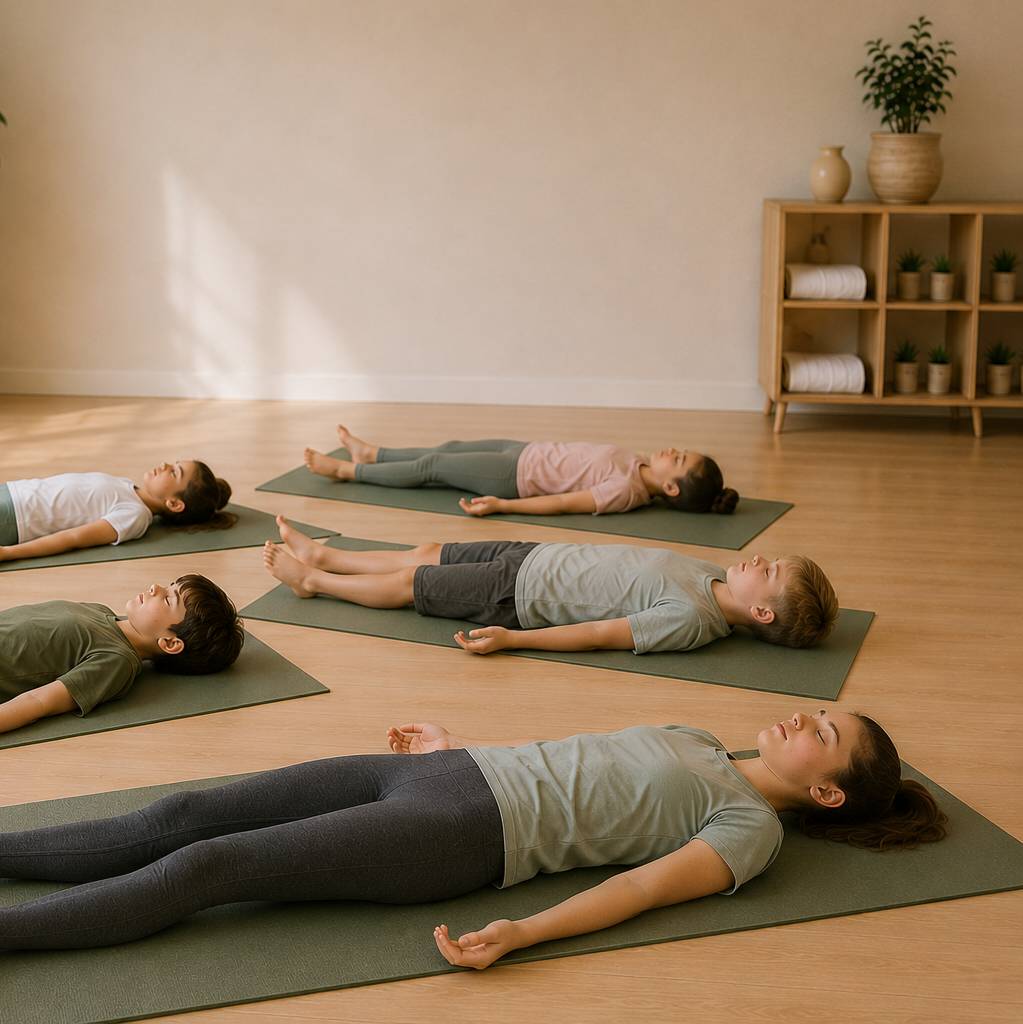
Children’s Pilates usually has the clearer strength focus.
Pilates helps children build strength through control, stability and repetition. It works especially well for core strength, hips, shoulders, back, balance and postural support. The strength is not dramatic or gym-like. It is useful strength.
The kind that helps a child sit better, stand better, balance better, move with more control, and feel less awkward trying physical tasks.
Yoga also builds strength, especially through poses that involve balance, weight-bearing, holding positions and moving between shapes. A good children’s yoga class can absolutely help children become stronger.
The difference is emphasis.
Yoga often blends strength with mobility, breath, imagination and calm.
Pilates usually puts more attention on controlled strength and body organisation.
So if your child is bendy but not strong, Pilates may be useful.
If your child needs strength but also needs calm and flexibility, yoga may be a good fit.
If your child needs both, then frankly, both classes make sense. Annoying for the timetable, useful for the child.
Which class is better for confidence?
Both can build confidence, but in different ways.
Children’s yoga can build confidence by helping children feel safe in movement. It is usually non-competitive, calm and spacious. Children can try poses, balance, breathe, rest and move without feeling as if they are being ranked.
This can be especially helpful for children who are self-conscious, anxious, sensitive or easily discouraged.
Children’s Pilates can build confidence through progress.
A child may notice they can hold a balance for longer, control a movement better, sit taller, coordinate more easily, or feel stronger in their body. That visible, felt progress can be incredibly confidence-building.
Confidence is not always loud.
Sometimes confidence looks like a child trying again. Joining in without needing as much reassurance. Laughing when they wobble. Feeling less embarrassed by movement. Standing a little taller. Taking up a little more space.
Yoga may help a child feel emotionally safer in their body.
Pilates may help a child feel physically more capable in their body.
Both matter.
Which class is better for children who dislike sport?
Both children’s yoga and children’s Pilates can be excellent for children who dislike competitive sport.
This is important because some children decide very early that they are “not sporty.” Sometimes that is because they genuinely do not enjoy sport. Sometimes it is because they had a few awkward experiences in PE, felt compared, got picked last, struggled with coordination, or simply did not enjoy loud, fast, competitive environments.
That does not mean they do not need movement. It means they need a different kind of movement.
Children’s yoga gives them a calm, non-competitive space where movement is not about winning, speed or performance. Children’s Pilates gives them a structured, non-competitive space where movement is about strength, control and progress.
Both can help children realise that movement still belongs to them, even if team sports do not.
That is a big deal.
Because if a child believes movement is only for the sporty kids, they may avoid it for years. Yoga and Pilates can interrupt that story before it becomes part of their identity.
And honestly, good. That story can get in the bin.
Which class is better for energetic children?
This depends on the child.
Some energetic children need yoga because they need help slowing down. They need breath, rhythm, grounding, balance and rest. Yoga can help them practise calm in a way that still includes movement, which is usually much more realistic than expecting them to sit still and “relax” on command.
Other energetic children need Pilates because they need control.
They may move quickly, rush instructions, wobble, collapse, fling themselves around, or use too much force. Pilates can help them slow movement down, organise their body and learn how to use strength without chaos.
So the question is not simply, “Is my child energetic?”
The better question is, “What kind of support does their energy need?”
If their energy feels anxious, overstimulated or emotionally unsettled, yoga may be better. If their energy feels physically uncontrolled, rushed or uncoordinated, Pilates may be better. If both are true, welcome to parenting. Very glamorous. Try both.
Which class is better for cautious children?
Cautious children often need time.
They may want to watch before joining in. They may worry about getting it wrong. They may compare themselves quickly. They may dislike being put on the spot. They may need a class that feels predictable enough to trust.
Children’s yoga can work well because it often feels softer and more spacious. The emphasis on breath, poses, imagination and calm can help cautious children feel less exposed.
Children’s Pilates can also work well if it is taught carefully, because it gives children clear tasks and measurable progress. Some cautious children actually like structure. They like knowing what to do. They like feeling that there is a method.
The teacher matters enormously here.
A cautious child does not need pressure disguised as encouragement. They do not need to be dragged into the centre of the room to “have a go.” They need safety, clarity, patience and enough repetition to feel competent.
Either yoga or Pilates can work if the class is taught with emotional intelligence.
That bit is non-negotiable.
Why the teacher matters more than the label
A good children’s yoga class and a good children’s Pilates class have more in common than a poor version of either.
The label matters, but the teaching matters more.
A children’s yoga class can be brilliant, or it can be chaotic, vague and so fluffy that nobody knows what is happening.
A children’s Pilates class can be brilliant, or it can be too rigid, too adult, too technical and about as joyful as a tax return with hamstring cues.
The best class is one where the teacher understands both movement and children.
That means they can:
-
- Give clear instructions
- Adapt exercises
- Keep the room calm without making it joyless
- Support different confidence levels
- Avoid shaming children’s bodies or abilities
- Build strength and awareness safely
- Make movement feel achievable
- Encourage without fake praise
- Create structure without pressure
- Help children feel capable
Parents should not just ask, “Is this yoga or Pilates?” They should ask, “Will this teacher help my child feel safe, strong, confident and included?” That is the better question.
How children’s yoga and Pilates support school life
Children’s yoga and Pilates are not only useful as after-school activities. They can also support the physical and emotional foundations children need during the school day.
Children sit for long periods. They write, read, carry bags, concentrate, listen, move between activities, manage friendships, process noise, follow instructions and deal with the daily weirdness of being a child in a structured environment.
Movement can help.
Yoga can support breathing, focus, calm, mobility and emotional regulation.
Pilates can support posture, strength, coordination, balance and body awareness.
Both can help children feel more connected to their bodies, which matters for confidence, attention and participation.
This is also why structured movement can work well in schools, not just private classes. If you are reading this from a school or you want to understand the school-facing offer, see: School Movement Programmes.
Children’s yoga and Pilates for West Bridgford families
For West Bridgford families, the practical side matters too.
A class can be wonderful in theory, but if it is miles away, awkwardly timed, badly communicated or unclear, it becomes another thing parents have to manage. And parents are already managing enough. Nobody needs an after-school activity that requires the logistical planning of a minor military operation.
Local children’s yoga and Pilates classes can make movement easier to keep consistent.
That consistency matters because children build confidence through repetition. One class can be enjoyable, but regular practice is where children begin to notice real changes. They become more familiar with the movements. They understand the structure. They trust the teacher. They feel less awkward. They start to recognise progress.
That is where the work begins to settle into the body.
For local class information and registration, use the main page here: Children’s Yoga and Pilates in West Bridgford.
Practical checklist: which class should you choose?
| Your child may suit children’s yoga if… | Your child may suit children’s Pilates if… |
|---|---|
|
They need help slowing down |
They need more strength and control |
|
They get overwhelmed easily |
They seem physically unsure or unstable |
|
They enjoy imagination and softer movement |
They like clear structure and repeatable tasks |
|
They need support with calm and focus |
They need support with posture and body awareness |
|
They are anxious or cautious about movement |
They need confidence through physical progress |
|
They need mobility and breathing |
They need core strength and coordination |
|
They dislike competitive sport |
They dislike competitive sport |
|
They need a gentle way into movement |
They need a structured way into movement |
|
They benefit from relaxation |
They benefit from controlled challenge |
|
They need to feel safe in their body |
They need to feel capable in their body |
What if your child needs both?
Many children need both. This is not a failure of decision-making. It is just reality.
-
- A child may need calm and strength.
- They may need mobility and posture.
- They may need emotional regulation and physical confidence.
- They may need breathing tools and better coordination.
- They may need a softer class one week and a more structured class the next.
Yoga and Pilates can complement each other beautifully because they support different parts of the same bigger picture. Yoga can help children soften, breathe, stretch, balance and settle. Pilates can help children strengthen, stabilise, organise and control movement.
Together, they can give children a broad movement foundation.
This is especially useful for children who are not naturally drawn to competitive sport, but still need movement that supports their growing body, confidence and wellbeing.
So if your child is interested in both, that is not a problem. It may actually be the best answer.
What parents should look for before booking
Before booking a children’s yoga or Pilates class, look beyond the class title.
Check whether the class is genuinely designed for children. Check whether the teacher is qualified and experienced enough to work with children safely. Check whether the class is calm, structured and age-appropriate. Check whether the language feels supportive rather than body-shaming, competitive or weirdly adult.
A good children’s movement class should feel clear, safe and useful.
It should not promise miracles. It should not claim to fix every posture, confidence or emotional issue in six weeks. It should not make children feel as if their body is a problem. It should help children build skills, awareness and confidence over time.
Look for:
-
- Age-appropriate teaching
- Clear structure
- A calm class environment
- Movement that supports strength, posture, mobility and confidence
- Adaptations for different abilities
- No pressure to perform
- A teacher who understands children
- Practical information for parents
- A clear registration process
- A class that feels sustainable for your child and your week
That last point matters.
The best class is the one your child can attend consistently and leave feeling better, not the one that sounds impressive but becomes another weekly battle involving shoes, snacks and emotional negotiations in the car.
Final thoughts: choose the class that meets your child
Children’s yoga and children’s Pilates are not competing for the crown of “best movement class.” They do different jobs.
Children’s yoga is often better for calm, breath, mobility, emotional regulation, relaxation and gentle confidence. Children’s Pilates is often better for strength, posture, control, coordination, stability and physical confidence.
Both can help children feel more at home in their bodies.
The right class depends on what your child needs most. If they need to slow down, breathe and settle, yoga may be the better starting point. If they need strength, posture and control, Pilates may be the better starting point. If they need both, then both may be useful.
The main thing is that movement should not feel like another place where children are judged, ranked or expected to perform.
It should help them feel capable. It should help them feel safe. It should help them build confidence from the inside out.
That is the point.
If you are looking for children’s yoga or children’s Pilates in West Bridgford, you can register interest and read more about the local classes here: Children’s Yoga and Pilates in West Bridgford
Classes are designed to support strength, posture, coordination, confidence, calm and body awareness through structured, age-appropriate movement.
Key takeaways
Children’s yoga is usually the better fit if your child needs calm, breath, mobility and emotional regulation. Children’s Pilates is usually the better fit if your child needs strength, posture, control and physical confidence. Both can be useful, especially for children who need movement without competition, pressure or the expectation that they should already be sporty before they are allowed to enjoy moving.
Frequently Asked Questions
Neither is automatically better. Children’s yoga is usually better for calm, breath, mobility, relaxation and emotional regulation. Children’s Pilates is usually better for strength, posture, control, coordination and physical confidence. The best choice depends on your child’s needs, temperament and confidence.
Children’s yoga usually includes poses, breathing, balance, mobility, relaxation and imagination. Children’s Pilates usually focuses more on strength, posture, core support, coordination and controlled movement. Both should be adapted for children rather than copied from adult classes.
Yes. Children’s yoga can help confidence by giving children a calm, non-competitive space to move, balance, breathe and try new things without pressure. It can be especially helpful for children who are cautious, anxious or easily overwhelmed.
Yes. Children’s Pilates can support posture by building core strength, body awareness, shoulder stability, hip strength and movement control. It is more useful than simply telling children to sit up straight, because it helps them understand how their body supports itself.
Yes. Many children benefit from both. Yoga can support calm, mobility, breath and relaxation, while Pilates can support strength, posture, control and coordination. Together, they can give children a strong, balanced movement foundation.
Both can work well. Children’s yoga and Pilates are non-competitive, so they can be helpful for children who dislike team sports, races or performance-based activities. Yoga may feel softer and calmer, while Pilates may feel more structured and strength-focused.
It depends on the kind of energy. If your child needs help settling and slowing down, yoga may be better. If your child needs help controlling movement, improving coordination and building body awareness, Pilates may be better.
No. Children do not need to be flexible to do yoga. Flexibility is not the goal. A good children’s yoga class supports mobility, balance, breath, confidence and calm without expecting children to force themselves into shapes.
No. Children do not need to be strong before starting Pilates. Pilates helps build strength gradually through controlled, age-appropriate movement. It is especially useful for children who need more stability, posture support and physical confidence.
Yes, when taught properly. Children’s yoga and Pilates should both be accessible for beginners, with clear instructions, simple progressions and options for different confidence levels. Children should not feel embarrassed if they are new or unsure.
Usually comfortable clothes, water and their own mat if requested. For local details, parents should check the main class page here: Children’s Yoga and Pilates in West Bridgford.
You can find local class information and register interest here: Children’s Yoga and Pilates in West Bridgford