Why Desk-Based Teams Need Movement Before More Wellbeing Advice
TL;DR
Desk-based teams do not need another wellbeing PDF telling them to stretch, breathe, drink water, take breaks, manage stress, protect their posture and “prioritise balance” while their calendar looks like a crime scene.
They need movement built into the working day.
Not dramatic movement. Not gym sessions. Not performative wellness. Practical, accessible workplace movement that helps people interrupt stiffness, release tension, breathe properly, reset their posture, manage screen fatigue, and feel less physically trapped by modern work.
Wellbeing advice can be useful, but advice alone does not change the body.
Movement does.
If your team spends most of the day sitting, typing, looking at screens, taking calls, moving between meetings and slowly becoming one with the office chair, a structured workplace movement programme can be far more useful than another talk about wellbeing.
For a practical workplace option, see the Sit Happens programme here: Sit Happens.
Definition: what does workplace movement mean for desk-based teams?
Workplace movement is practical, structured movement training designed to fit the working day. For desk-based teams, it usually includes posture awareness, mobility, breathing, simple strength, desk-based resets, nervous system regulation and movement habits that reduce the physical strain of sitting and screen-based work. It is not a fitness class squeezed into an office. It is movement education built around how people actually work.
Why this conversation matters now
Modern office work is physically strange.
People are expected to sit still for hours, stare into screens, make decisions, answer messages, attend meetings, manage stress, regulate emotions, solve problems, communicate clearly, stay productive, and somehow feel “well” while barely moving their spine.
It is a weird arrangement when you think about it for more than six seconds.
The human body is not designed to be parked in one position all day while the brain does all the labour. Bodies need variation. They need movement, breath, load, mobility, rest, circulation, strength and sensory feedback. They need to change position. They need to move through ranges. They need to reset before discomfort becomes normal.
But many desk-based workplaces still treat the body as if it is just the thing that transports the employee’s head to meetings.
That is where a lot of wellbeing advice falls short.
Most employees already know the basics. They know they should move more. They know they should take breaks. They know sitting all day is not ideal. They know their shoulders are tense. They know their neck feels awful. They know their back does not love the current arrangement. They know they probably should not answer emails while curled over a laptop like a medieval scribe with Wi-Fi.
Knowing is not the problem.
The problem is that advice does not automatically become behaviour.
A team can be told to take movement breaks and still not take them. They can be given posture tips and still collapse into the same positions. They can be sent a wellbeing guide and still spend the afternoon stiff, tired, shallow-breathing and mentally foggy.
That is why desk-based teams need movement before more wellbeing advice.
Because movement is not another concept. It is the thing the body has been waiting for.
Decision box: does your desk-based team need movement training?
| If your team is experiencing… | More wellbeing advice may not be enough because… | Workplace movement can help by… |
|---|---|---|
|
Stiff shoulders, necks or backs |
People may already know they should move but forget during the day |
Giving them simple resets they can use at work |
|
Afternoon energy crashes |
Advice about breaks does not always change physical patterns |
Using movement and breath to support alertness |
|
Long sitting hours |
Sitting is built into the job, not a personal failure |
Teaching movement variety within the working day |
|
Screen fatigue |
The body and eyes are under repeated strain |
Supporting posture, breath, mobility and physical reset |
|
Low engagement with wellbeing content |
Employees may be tired of passive advice |
Making wellbeing practical and embodied |
|
Hybrid working strain |
Home setups vary wildly, and some are frankly criminal |
Giving employees tools they can use anywhere |
|
Stress held in the body |
Mental wellbeing advice may not address physical tension |
Helping people notice and release tension patterns |
|
Poor posture habits |
“Sit up straight” is useless long-term advice |
Building awareness, strength and movement options |
|
Meeting-heavy days |
People move less when schedules are packed |
Creating short resets between cognitive demands |
|
Scepticism about wellbeing |
Employees can smell tokenism from three floors away |
Offering something immediate, useful and real |
The problem with giving desk-based teams more advice
Advice has its place.
Good advice can clarify things. It can educate. It can help people understand what is happening and why it matters. A well-written guide, a useful talk, or a thoughtful wellbeing resource can absolutely support employees.
But advice has limits.
Especially when people are tired.
Desk-based employees are already processing too much information. Emails. Messages. Meetings. Notifications. Documents. Spreadsheets. Policies. Deadlines. Systems. Updates. Training modules. Calendar invites. Someone asking whether everyone has “capacity” while actively adding another task to the pile.
The last thing many teams need is another abstract instruction to improve their wellbeing.
“Take regular breaks.”
“Move more.”
“Be mindful of posture.”
“Manage stress.”
“Prioritise self-care.”
Fine. Lovely. Correct. Also, mostly useless if the working day gives people no practical structure for doing any of it.
The issue is not that employees do not care. It is that the advice often lands as one more thing to remember. One more expectation. One more little wellbeing chore added to a day that already feels full.
That can create the opposite of support.
It can make people feel as if their wellbeing is another performance metric.
Now they are not only expected to work well. They are expected to hydrate, breathe, stretch, regulate, journal, take breaks, eat properly, sleep beautifully, avoid stress, maintain posture and become emotionally balanced by Thursday.
Excellent. No pressure then.
Workplace movement changes the format.
Instead of giving employees more information, it gives them an experience. They feel what happens when they move their shoulders after hours at a screen. They notice how breath affects tension. They understand how sitting patterns show up in the neck, hips, back and jaw. They practise resets they can repeat.
That is much more useful than telling them what they already know.
Desk-based work creates physical habits
One of the biggest misunderstandings about office wellbeing is the idea that discomfort comes from “bad posture.” That is too simplistic.
The issue is usually not one bad position. It is lack of variation.
People sit for long periods. They lean forward. They reach for the mouse. They hold the phone. They tuck one leg under. They collapse into one hip. They lift their shoulders when concentrating. They clench their jaw during difficult emails. They breathe shallowly during calls. They stop moving when the workload increases.
None of this is dramatic. That is exactly why it becomes a problem.
The body adapts to what it repeatedly does. If a team spends years in desk-based positions without enough movement variety, the body starts to treat those patterns as normal. Stiffness becomes normal. Tight shoulders become normal. Low energy becomes normal. Shallow breathing becomes normal. The 3 pm slump becomes normal. Standing up and making a small noise like an elderly haunted wardrobe becomes normal.
Workplace movement training helps employees notice these patterns.
Not in a shaming way. Nobody needs to be told their posture is terrible by someone with a clipboard and a superiority complex. The point is awareness. When people understand how their body responds to work, they can start making small changes.
A shoulder reset before a meeting.
A breathing pattern after a stressful call.
A hip mobility movement after long sitting.
A standing reset between tasks.
A simple spinal movement before returning to the screen.
Small movements matter because they interrupt repetition.
And repetition is the problem.
Why movement works before advice
Movement works differently from advice because it does not stay in the head. Advice asks employees to remember. Movement helps them feel.
That difference matters.
If someone reads that shoulder tension is linked to stress, screen use and posture, they may understand it intellectually. If they spend five minutes moving through guided shoulder mobility and suddenly realise how much tension they were holding, the learning lands differently. It becomes embodied.
That sounds like a fancy word, but it is actually very simple. It means the body understands something, not just the mind. The person feels the difference. They experience the reset. They notice the contrast between before and after.
That makes the tool more memorable.
Employees are more likely to use a movement again if they have felt it work. Not because they were persuaded by a slide deck. Not because someone said “evidence-based” in a serious voice. Because their body went, “Oh. That helped.”
This is why workplace movement training can cut through wellbeing fatigue.
It is immediate.
People do not have to believe in it first. They do not have to be wellness people. They do not have to own a yoga mat, wear leggings, enjoy herbal tea, or start describing their nervous system on LinkedIn.
They just have to move. Then they can decide whether it helped. That is a much better starting point for sceptical teams.
The body is part of productivity, whether companies admit it or not
A lot of workplace productivity conversations pretend the body is irrelevant. Focus is discussed as if it lives only in the brain. Energy is treated like a mindset issue. Stress is framed as something employees should manage privately. Posture is reduced to ergonomics. Movement is treated as optional.
But the body is involved in all of it.
If someone is stiff, tense, tired, under-moving, shallow-breathing and physically uncomfortable, that affects how they work. It affects attention. It affects mood. It affects patience. It affects communication. It affects how quickly they fatigue. It affects how much effort it takes to stay present.
This does not mean movement solves every workplace problem.
It absolutely does not.
If workloads are impossible, leadership is poor, expectations are unclear, or the culture is quietly eating people alive, no amount of shoulder circles will fix that. Workplace movement should never be used as a decorative sticking plaster over structural problems. Employees are not stupid. They know when they are being offered a breathing exercise instead of actual support.
But within its proper scope, movement is powerful.
It helps people manage the physical demands of work. It gives them practical tools for tension, posture, breath, mobility and energy. It reminds them that they are not just brains in office chairs.
That matters because desk-based work is not physically neutral. It shapes people. Workplace movement gives them a way to shape back.
Workplace movement is not the same as telling people to exercise
This is important.
When companies hear “movement,” they sometimes think it means exercise classes. Gym sessions. Fitness challenges. Step counts. Lunchtime workouts. A corporate plank challenge that makes everyone quietly hate the wellbeing committee.
That is not what workplace movement needs to be.
Workplace movement for desk-based teams is not about turning employees into athletes. It is not about weight loss. It is not about performance. It is not about getting sweaty between meetings or making people feel exposed in front of colleagues.
It is about practical movement that fits the working day.
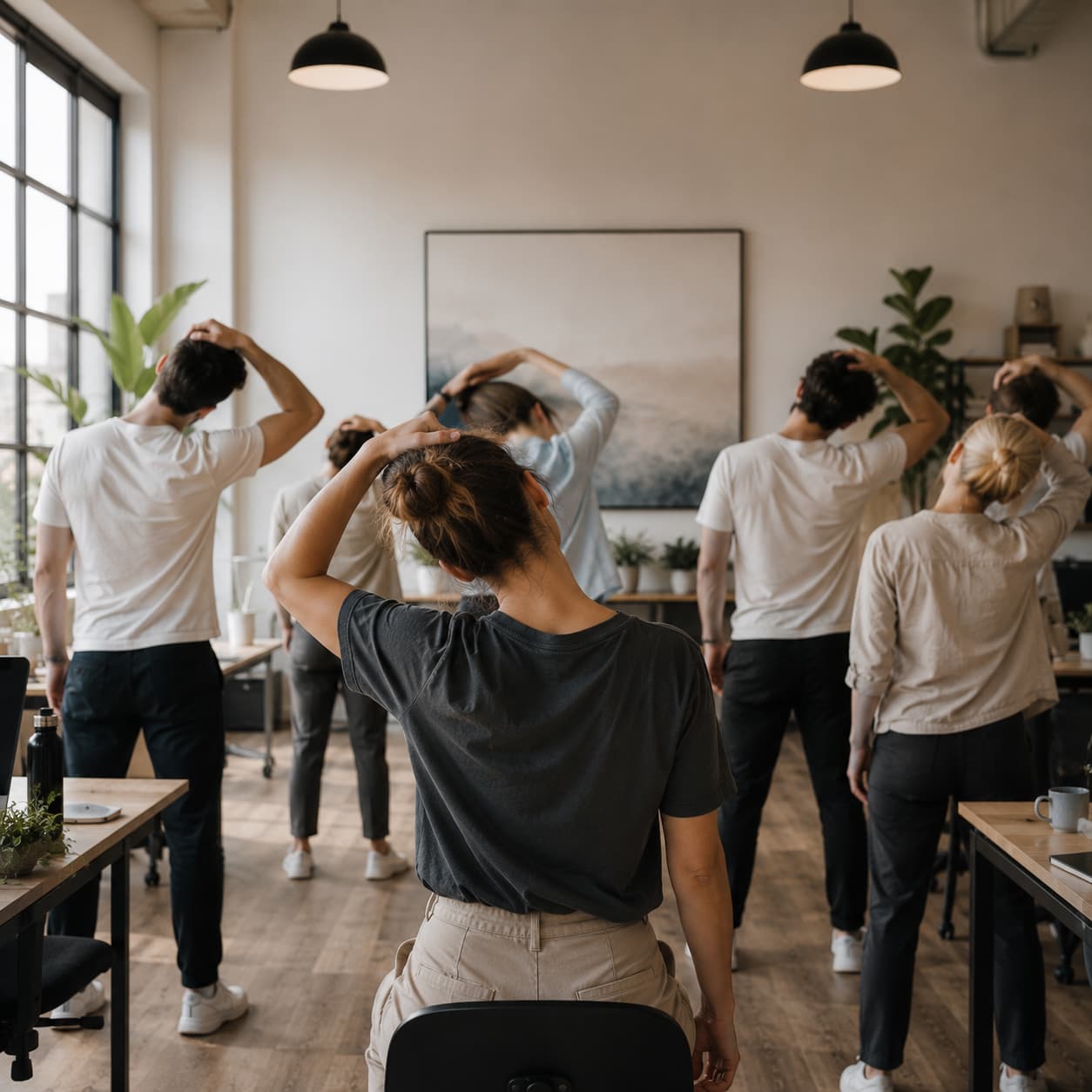
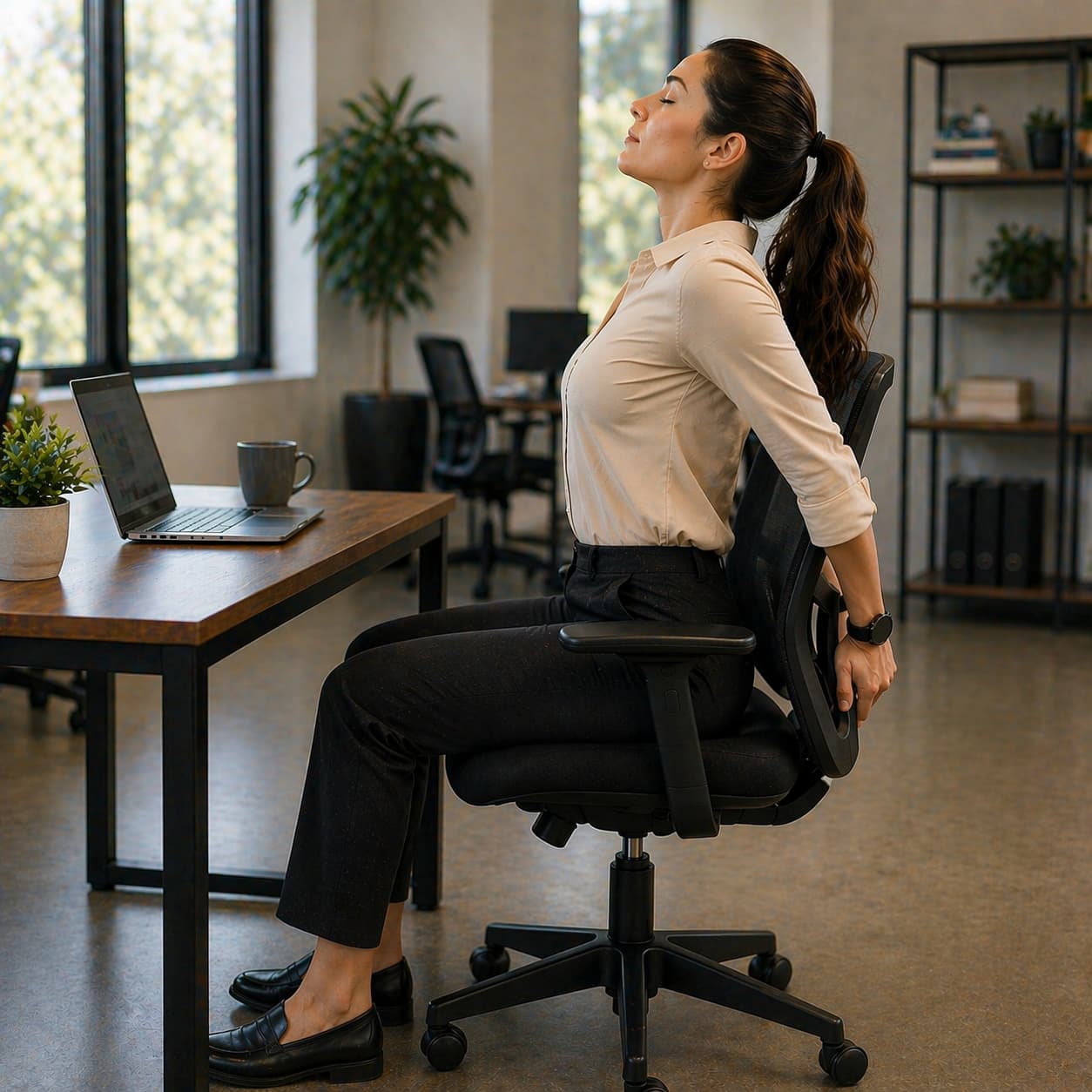
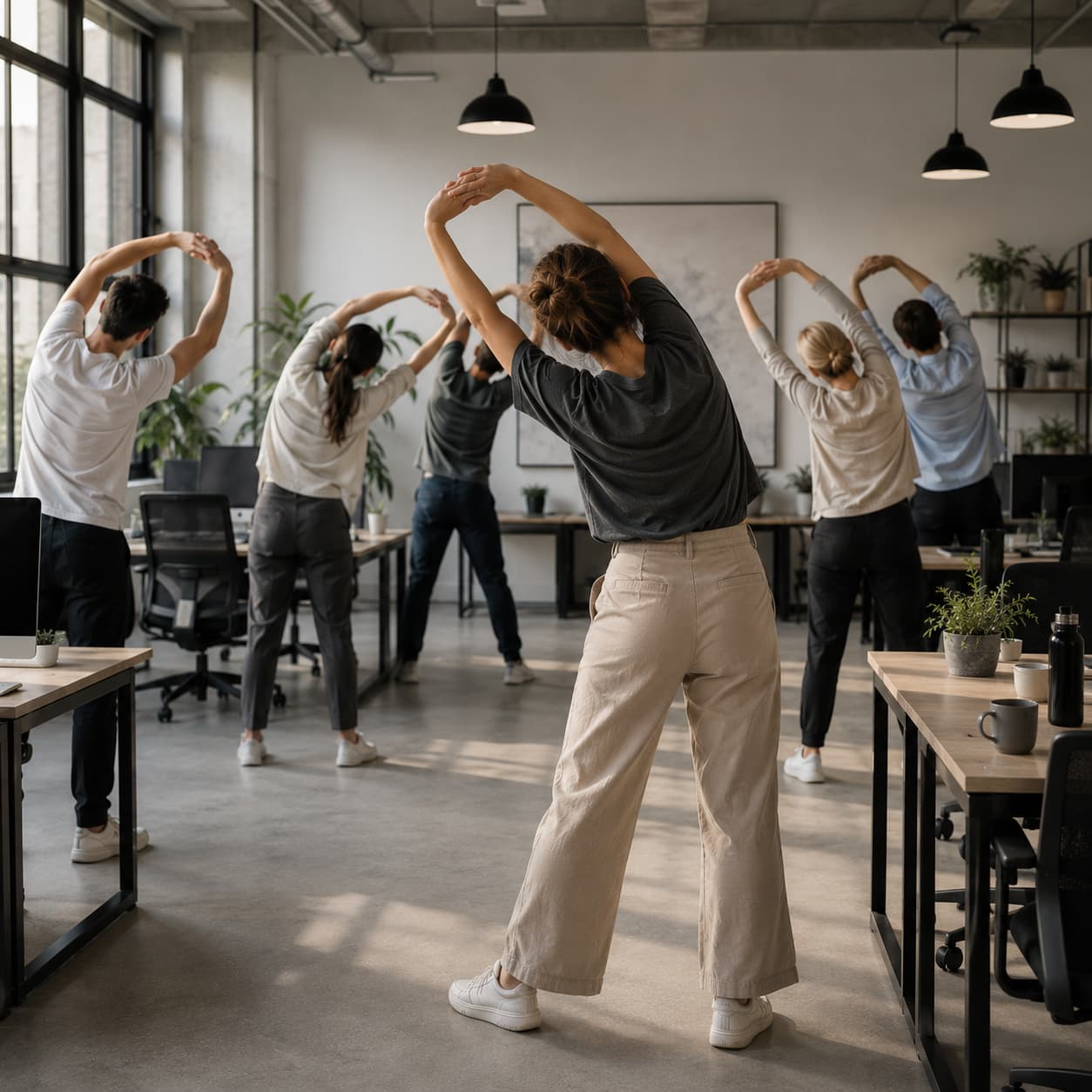
The movements may be small. They may be done standing beside a desk, sitting in a chair, or in a meeting room. They may focus on shoulders, spine, hips, breath, feet, balance, posture, mobility or simple strength. They should be accessible to mixed abilities and adaptable for different confidence levels.
This matters because many employees feel uncomfortable with workplace fitness.
They may not want to exercise in front of colleagues. They may have injuries. They may feel self-conscious. They may be inactive. They may hate the idea of “wellness activities” because previous versions involved forced fun, Lycra, or someone with too much enthusiasm and a headset microphone.
Workplace movement should not feel like that. It should feel professional, useful and calm. It should meet people where they are.
If a team can leave a session with two or three practical tools they actually use during the week, that is already more valuable than an hour of advice they politely forget.
What desk-based teams actually need
Desk-based teams need support that matches the reality of their working day.
They need tools that work in ordinary clothes, ordinary spaces and ordinary schedules. They need movements that can be done between meetings, before a difficult call, after a long spreadsheet session, or when the body starts sending passive-aggressive messages through the neck.
They need simple ways to:
- Reduce shoulder and neck tension
- Move the spine after long sitting
- Support posture without rigid “sit up straight” nonsense
- Breathe more fully during stressful periods
- Reset energy in the afternoon
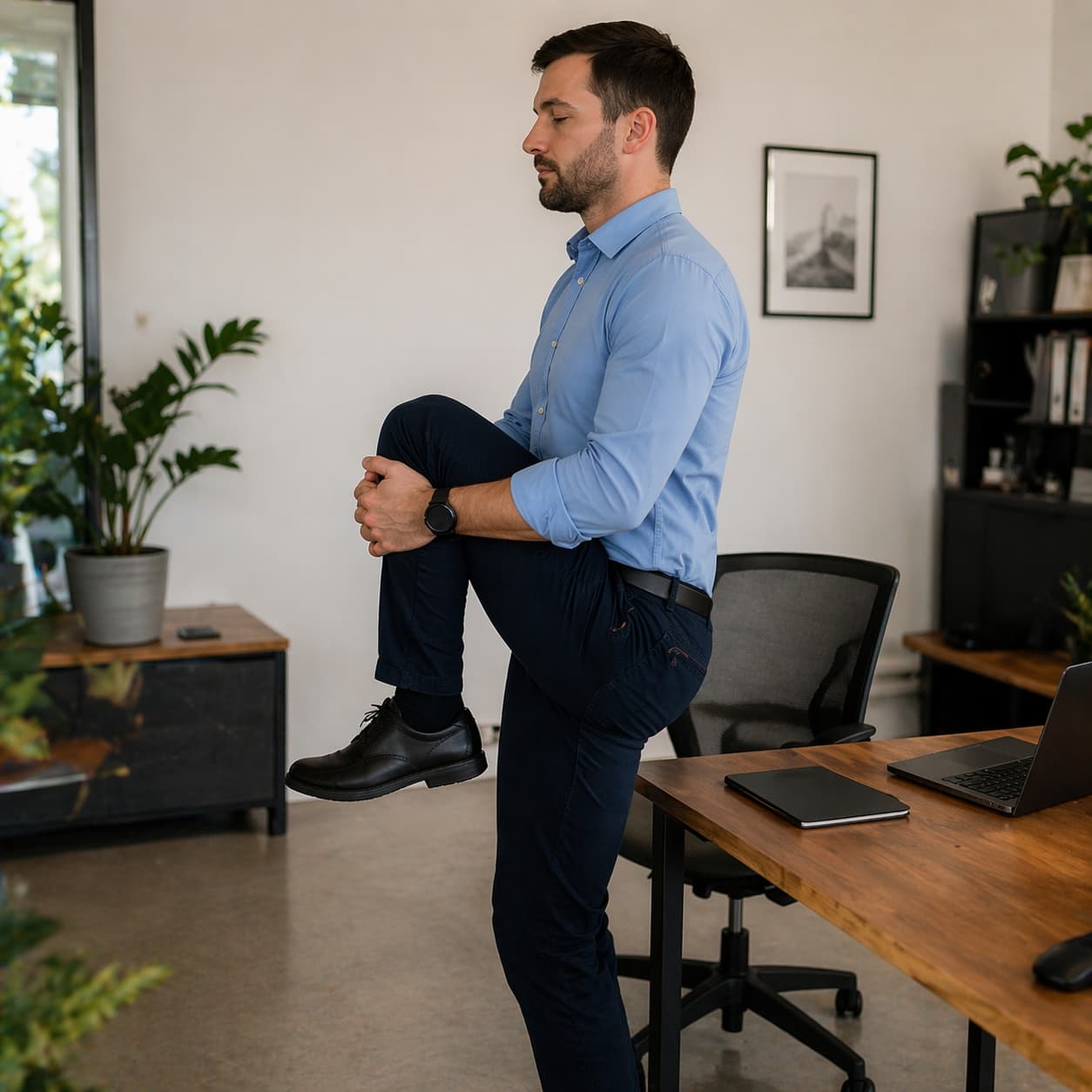
- Move hips and legs after hours at a desk
- Interrupt screen fatigue
- Build awareness of tension habits
- Use short movement breaks without feeling awkward
- Make movement feel normal during the working day
That last point matters most. Movement needs to become normal. Not a special event. Not a wellbeing week novelty. Not something employees do once when HR books a session, and everyone claps politely at the end.
Normal.
A stretch before a meeting. A reset after lunch. A breathing tool before a presentation. A posture check that does not involve shame. A two-minute mobility break between deep work blocks. A culture where people are allowed to move without feeling like they are being unprofessional.
That is the shift. Desk-based teams do not need more advice about movement. They need movement to become part of how work happens.
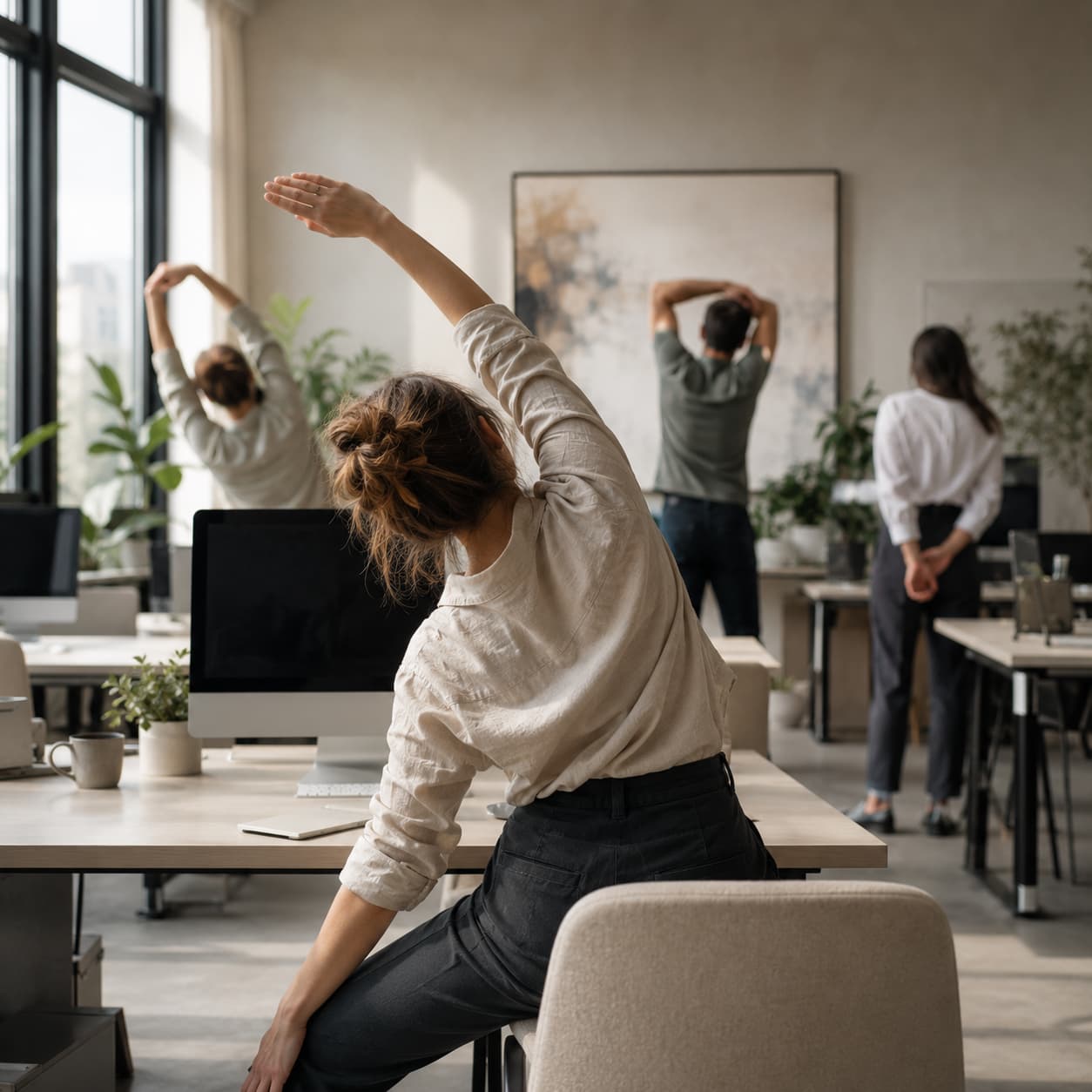
Comparison table: wellbeing advice vs workplace movement
| Feature | More wellbeing advice | Workplace movement training |
|---|---|---|
|
Main format |
Information, guidance, tips or reminders |
Practical movement experience |
|
Employee role |
Passive reader or listener |
Active participant |
|
Main limitation |
Easy to understand but hard to apply |
Requires participation but creates immediate feedback |
|
Best use |
Education and awareness |
Habit-building and physical reset |
|
Effect on the body |
Indirect |
Direct |
|
Relevance to desk work |
Often broad or general |
Built around sitting, screens, posture and tension |
|
Employee experience |
Can feel like another task |
Can feel immediately useful |
|
Risk |
Wellbeing fatigue, low engagement, tokenism |
Needs skilled delivery to feel safe and relevant |
|
Long-term value |
Stronger when paired with action |
Stronger when repeated and embedded |
|
Best outcome |
Employees know what might help |
Employees practise what helps |
Why posture advice usually fails
Posture advice often fails because it is too static.
“Sit up straight.”
“Pull your shoulders back.”
“Keep your spine neutral.”
“Do not slouch.”
Fine, but for how long? Three minutes? Until the next email? Until the body gets tired and slowly melts back into the chair like warm cheese?
The body is not designed to hold one perfect position all day.
Posture is not a fixed shape. It is a living relationship between strength, mobility, breath, awareness, fatigue, stress, environment and habit. Good posture is not about freezing yourself into an ideal position. It is about having enough movement options that no single position becomes the only one.
That is why movement is more useful than posture advice alone.
A desk-based employee does not need to be told to sit perfectly. They need to know how to move out of the position they have been stuck in. They need to feel how their shoulders move. They need to understand how breath affects their ribs and spine. They need to notice how hips, feet, pelvis and back all influence sitting and standing.
Workplace movement teaches posture through experience.
It gives employees ways to reset, vary position, build awareness and support themselves without turning posture into another thing to get wrong.
That is a much healthier approach. Nobody needs to feel morally judged by their chair.
Why stress advice often misses the body
Stress is not only a thought pattern. It is physical.
People hold stress in their jaw, shoulders, breath, stomach, hands, chest, hips and back. They brace. They clench. They lift the shoulders. They stop breathing properly. They sit still for hours while internally running from a predator called “Tuesday.”
So when workplace wellbeing advice focuses only on mindset, time management or resilience, it can miss a major part of the experience.
Movement gives stress somewhere to go.
Again, not magically. Not in a “do three stretches and become reborn” way. Let’s not be ridiculous.
But movement can help employees notice and release physical tension. It can shift breathing. It can create a pause between tasks. It can interrupt the body’s stress posture. It can help people return to themselves after being pulled into screens, meetings and pressure.
For desk-based teams, this is especially important because stress and stillness often combine.
People are mentally overloaded and physically under-moving. That is a rough pairing. The body is full of activation, but there is no outlet. So the tension sits there, quietly accumulating.
Workplace movement offers a practical outlet. Not a cure-all. A tool. That is enough.
Hybrid teams need movement even more
Hybrid working has many benefits, but it has also created a glorious variety of questionable work setups.
Some people have proper desks and chairs. Some work from kitchen tables. Some work from sofas. Some perch at breakfast bars. Some use laptops in positions that should probably require a small apology to the spine. Some have excellent equipment but never move. Some have terrible equipment and also never move.
Hybrid teams need workplace movement because their physical environments are inconsistent.
In an office, at least there may be some ergonomic standard. At home, all bets are off. One employee might be working from a beautiful home office. Another might be working from a dining chair designed by someone who clearly had no interest in human comfort.
Movement gives hybrid workers tools they can use wherever they are.
They can learn desk resets that work at home or in the office. They can practise mobility that does not require equipment. They can understand how to vary position, reset breath, move shoulders, support posture and interrupt long sitting wherever their laptop happens to be.
This is where workplace movement becomes more useful than generic wellbeing advice.
Advice says, “Make sure your workstation is set up correctly.”
Movement says, “Here is how to support your body even when your workstation is imperfect, because real life exists.” Much better.
Why employees engage better when support feels practical
Employees are more likely to engage with wellbeing support when it feels relevant.
Not theoretical. Not patronising. Not wrapped in corporate language so polished it has lost all contact with human suffering.
Relevant.
A desk-based employee with neck tension does not necessarily want a lecture on wellbeing. They want their neck to stop feeling like a badly packed suitcase. Someone with afternoon fatigue may not need another reminder to manage energy. They may need a two-minute reset that helps them feel awake enough to finish the day without becoming emotionally attached to the biscuit tin.
Practical support earns trust.
When employees feel an immediate difference, they are more likely to listen. When the session connects directly to their workday, they are more likely to use it again. When the provider understands office reality, people relax.
This is why workplace movement can be a strong entry point for wider wellbeing.
It does not ask people to buy into a big concept first. It gives them something useful, then builds from there.
That is how trust works.
Especially with sceptical teams.
And honestly, sceptical teams are often the best test. If the movement is useful, they will know. If it is nonsense, they will also know, and they will tell each other in the kitchen within six minutes.
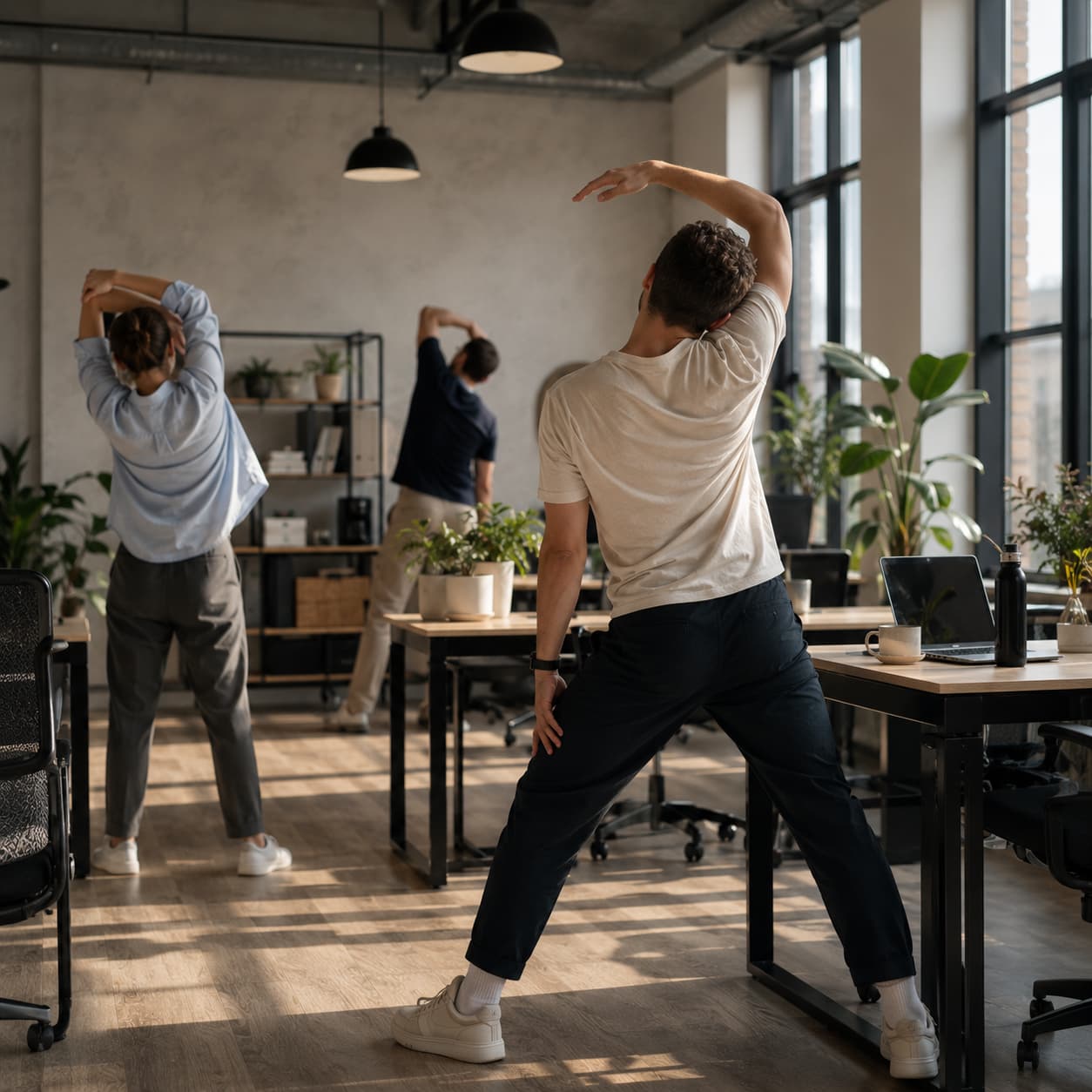
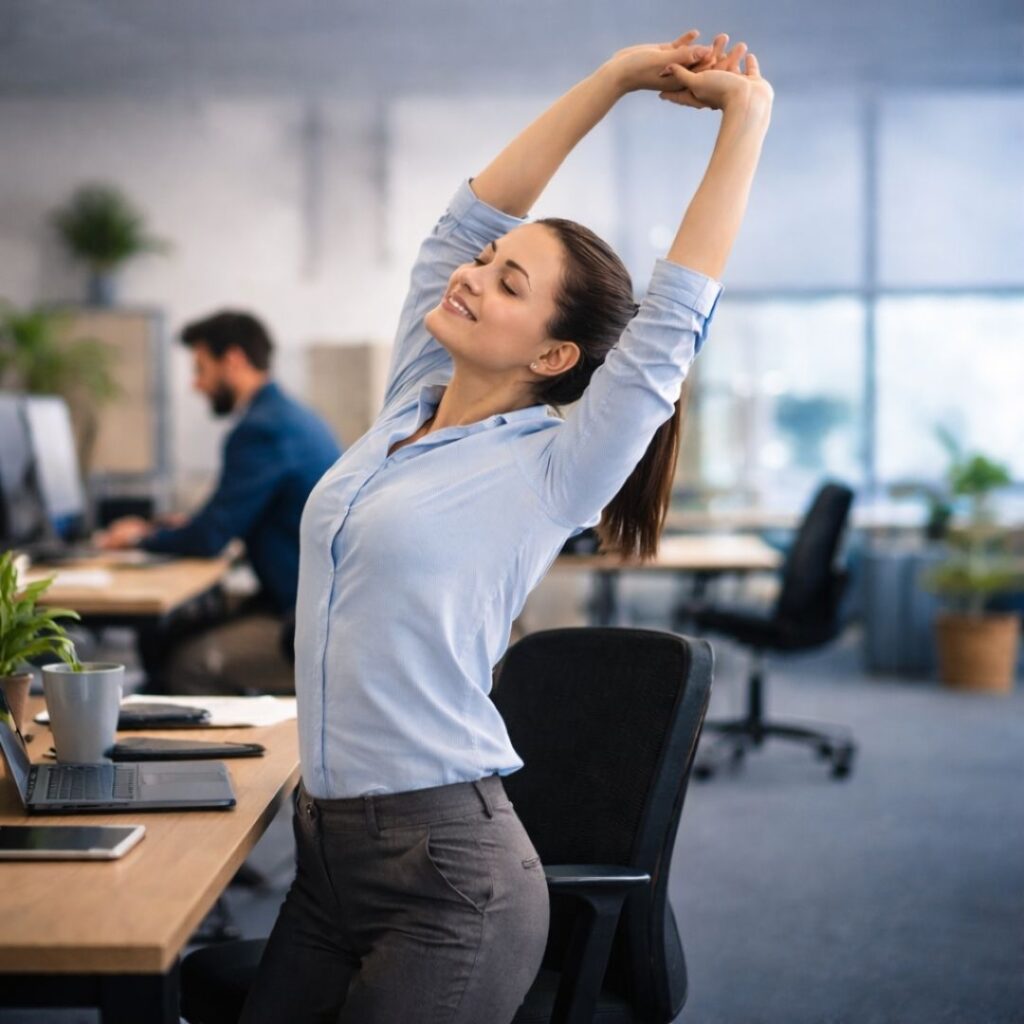
What a good workplace movement session should include
A good workplace movement session should not feel random.
It should have a clear structure, a practical purpose and enough flexibility to suit the group. It should be accessible without being so watered down that it becomes pointless. It should feel professional without being stiff. It should explain enough for people to understand the value, but not so much that the session becomes a lecture with occasional arm movements.
For desk-based teams, a strong session might include:
- A short explanation of how desk work affects the body
- Awareness of common tension patterns
- Breath and ribcage movement
- Shoulder and neck mobility
- Spinal movement
- Hip and leg resets for sitting
- Simple posture support
- Gentle strength or stability work
- Desk-based or standing movement options
- Short resets employees can repeat independently
- A calm finish or grounding exercise
- Practical takeaways for the working day
The session should also avoid making people feel awkward.
Nobody wants to be asked to lie on the floor in office clothes unless that has been clearly planned and everyone has consented to the mild indignity of it. Nobody wants to be singled out for “bad posture.” Nobody wants a fitness instructor shouting “feel the burn” in a meeting room named after a local river.
Workplace movement should respect the setting. It should feel like it belongs there.
Why one-off wellbeing sessions are not always enough
One-off sessions can be useful.
They are a good introduction. They work well for wellbeing days, staff development days, team events or companies testing whether workplace movement is a good fit. They give employees a direct experience and can create a useful starting point.
But one session will not change a team’s movement habits by itself.
That is not a failure. It is just how habits work.
People need repetition. They need reminders. They need progression. They need to practise the tools often enough that they become familiar. They need movement to become normal inside the working day, not something they did once in a conference room and then forgot because the inbox returned with a knife.
A longer workplace movement programme can build this properly.
It can start with awareness, then develop posture support, mobility, breath, simple strength, coordination, balance, energy resets and recovery tools over time. Employees get repeated exposure. They begin to recognise their own patterns. They become more confident using the movements independently.
That is where change becomes more realistic. Advice can be delivered once. Movement needs to be practised. Annoying, but true.
Where Sit Happens fits in
Sit Happens was built around this exact problem.
Desk-based work asks people to stay mentally sharp while physically under-moving. It asks employees to focus while stiff, communicate while tense, stay productive while fatigued, and regulate stress while sitting in positions their body quietly despises.
Sit Happens is a practical workplace movement programme for teams who spend too much time sitting, typing, meeting, scrolling, bracing and pretending their shoulders are fine.
It combines posture awareness, mobility, breathing, simple strength, movement resets and calm physical tools that fit the working day. It is designed to be accessible, structured and useful, without turning the workplace into a gym or making employees feel like they have accidentally joined a wellness cult.
The point is simple.
Help people move better during the day.
Help them notice tension before it becomes normal.
Help them use short resets that support posture, energy, focus and physical wellbeing.
Help the body become part of the wellbeing conversation, not an afterthought parked under a desk.
You can read more about the programme here: Sit Happens.
For the wider movement practice, including workplace sessions and other movement offers, see Movement.
Practical checklist before booking movement for a desk-based team
| Question | Why it matters |
|---|---|
|
What physical issues are staff actually reporting? |
The session should respond to real needs, not vague wellbeing language |
|
Are employees mostly office-based, hybrid or remote? |
The tools should match where people work |
|
How long are people sitting each day? |
Long sitting changes what movement support is needed |
|
Are staff dealing with neck, shoulder, back or hip tension? |
These are common desk-based patterns |
|
Is the team sceptical about wellbeing initiatives? |
Practical movement may land better than another advice session |
|
Do employees need desk-based options? |
Not every workplace has space for full mat-based movement |
|
Should the session be one-off or ongoing? |
Habit change needs repetition |
|
Can the session happen during work time? |
Employees engage better when participation is genuinely supported |
|
Will staff receive simple takeaways? |
Tools are more useful when they can be repeated |
|
Pre- and post-session feedback can show value clearly |
Feedback forms, attendance, comfort, energy, focus, and posture awareness can all be tracked |
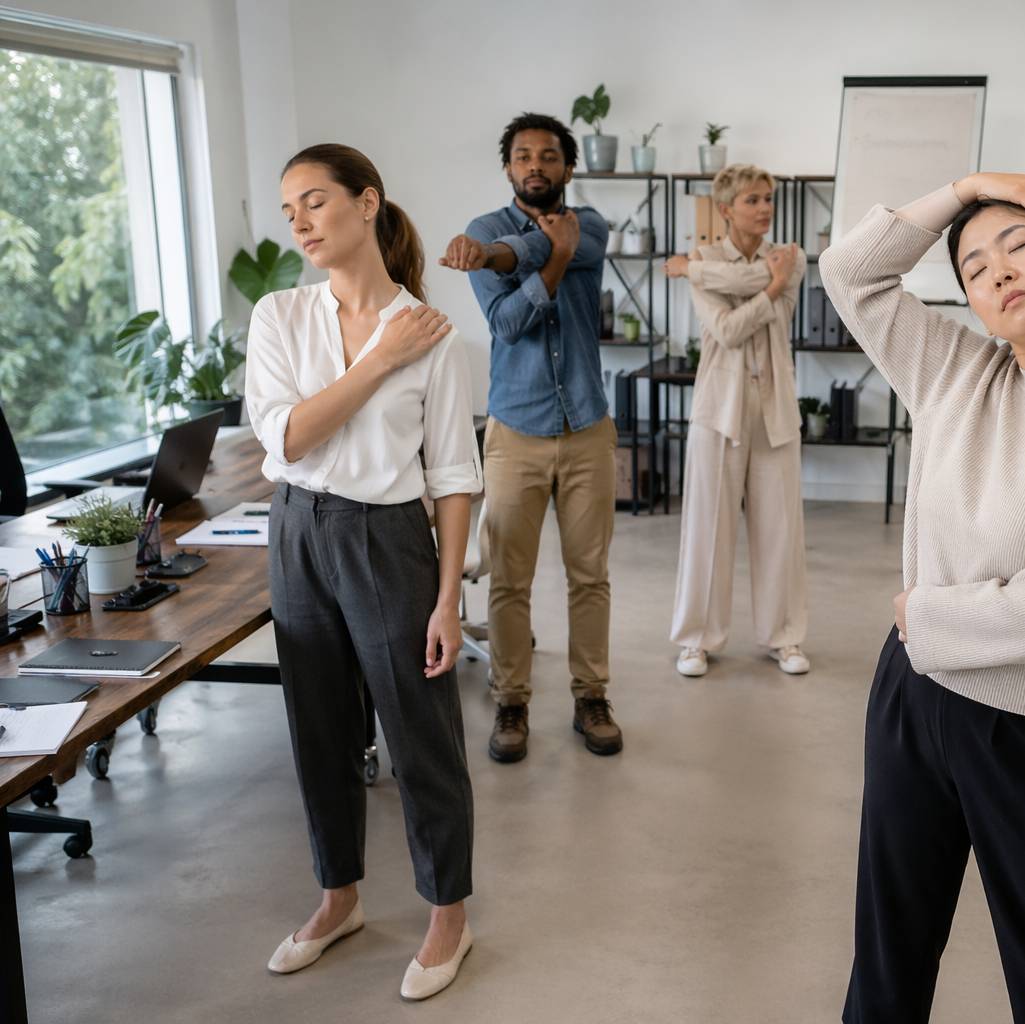
What companies should stop doing
Companies should stop treating wellbeing as if the right advice will magically overcome a badly designed working day.
Employees do not need to be told endlessly to look after themselves while the structure of the day makes that difficult. If calendars are packed, breaks are discouraged, movement feels awkward, workloads are too high and people are rewarded for staying glued to their desks, then wellbeing advice starts to feel hollow.
This is where workplace movement can be useful, but only if it is supported properly.
- Do not book a session and then make people feel guilty for attending.
- Do not schedule it at the worst possible time and wonder why engagement is low.
- Do not frame movement as a perk while ignoring the fact that everyone is overloaded.
- Do not make it compulsory in a way that creates resentment.
- Do not use it as proof that the company “cares” while refusing to address bigger issues.
Movement works best when it is part of a genuinely supportive culture.
That does not mean everything has to be perfect. No workplace is. But employees need to feel that the session is there to help them, not to tick a wellbeing box.
Because if it feels like box-ticking, they will know. They always know.
What companies should do instead
Companies should make movement easy, normal and practical.
That might mean booking a workplace movement session as an introduction. It might mean offering a short programme over several weeks. It might mean adding movement resets into team days. It might mean supporting managers to model breaks and movement rather than treating constant availability as a badge of honour.
The most useful approach is usually simple:
- Identify the real physical strain in the team.
- Book practical movement support that matches the working environment.
- Give employees tools they can use immediately.
- Repeat the work often enough for habits to form.
- Gather feedback.
- Adjust based on what people actually need.
This does not need to become a massive wellbeing production. It does not need branded water bottles, a campaign slogan or a launch email written in the voice of a very excited smoothie. It needs to be useful.
Desk-based teams need movement that fits their day, respects their intelligence and gives them something they can actually apply. That is the whole point.
Final thoughts: bodies are not office equipment
Desk-based teams need movement before more wellbeing advice because the body cannot be informed into feeling better.
It has to move.
Advice can help people understand the problem, but movement helps them experience the solution. It gives employees a way to interrupt stiffness, release tension, reset posture, breathe more fully, improve awareness and return to work with a little more physical presence.
This is not about turning offices into gyms. It is not about forcing people into fitness culture. It is not about pretending movement fixes every workplace issue.
It is about recognising that desk-based work has physical consequences, and those consequences need practical support.
Employees are not just brains attached to inboxes. They are bodies. Tired bodies. Tense bodies. Capable bodies. Bodies that need variation, breath, strength, mobility and rest.
More advice will not replace that. Movement is the missing piece.
If your team spends most of the day sitting, working at screens, moving between meetings and carrying tension through the working day, Sit Happens offers practical workplace movement training designed for real office life.
Start here: Sit Happens
You can also explore the wider movement practice here: Movement
Key takeaway
Desk-based teams need movement before more wellbeing advice because the problem is not only mental load. It is physical stagnation. Long sitting hours, screen use, shallow breathing, tension, poor movement variety and low body awareness all affect how employees feel, focus and work. Practical workplace movement gives teams something they can actually use during the day, instead of another piece of advice they are too tired to apply.
Frequently Asked Questions
Desk-based teams need movement because sitting for long periods, working at screens and holding tension through the day affects posture, energy, focus, breathing and physical comfort. Most employees already know they should move more. The useful bit is giving them simple movements they can actually use during the working day.
No. Workplace movement is not the same as exercise. It is not about workouts, fitness levels, weight loss or making people sweat in front of colleagues. It is practical movement designed around desk work, including posture resets, mobility, breathing, simple strength and movement habits that fit into the working day.
Wellbeing advice is not enough because advice does not automatically change behaviour. Employees may understand that movement, posture and breaks matter, but still forget them when the day gets busy. Workplace movement gives people a direct experience and practical tools, which makes the advice easier to apply.
Yes, workplace movement can help with posture by improving awareness, mobility, strength and movement variety. It is more useful than simply telling people to sit up straight. Good posture is not one perfect position. It is the ability to move, adjust and support the body through the day.
It can support stress management by helping employees notice and release physical tension. Stress often shows up in the body through shallow breathing, tight shoulders, jaw tension, bracing and stillness. Movement gives the body a practical way to reset, although it should not be used as a substitute for addressing bigger workplace pressures.
Yes. Hybrid teams often need workplace movement because home workstations vary so much. Some employees have proper setups, while others work from kitchen tables, sofas or awkward laptop positions. Movement tools can be used at home or in the office, which makes them useful across different working environments.
Usually, no. Many workplace movement sessions can be done without equipment. Depending on the session, employees may use a chair, desk, wall or open floor space. The best format depends on the workplace, the group and whether the session is desk-based, standing or mat-based.
A workplace movement session can be 45, 60 or 90 minutes depending on the aim. A shorter session works well as an introduction or wellbeing day activity. A 90-minute session allows more time for education, movement practice and takeaways. A longer programme is better for building habits.
Some might at first, which is why delivery matters. A good workplace movement session should feel calm, professional and accessible. It should not involve forced performance, fitness tests or anything that makes people feel exposed. The aim is to make movement feel normal, not embarrassing.
Companies can use simple pre- and post-session feedback to measure changes in tension, energy, focus, posture awareness and confidence using the tools. For longer programmes, they can also track attendance, employee comments, repeated use of movement breaks and reported physical comfort during the working day.
A one-off session can be useful as an introduction, but it will not usually change habits by itself. Desk-based teams benefit most when movement is repeated and built into the culture. A one-off session opens the door. A programme helps people actually walk through it without immediately returning to their laptop goblin posture.
Companies can explore Sit Happens, a practical workplace movement programme for desk-based teams, here: Sit Happens. The wider movement practice is available here: Movement.