
How to Implement a Corporate Wellness Program That Works
Corporate wellness programs are everywhere. Yoga apps. Mindfulness subscriptions. Step challenges. Lunch-and-learns about stress that somehow make people more stressed.
And yet, participation rates remain stubbornly low.
The issue is not that people do not want support. It is that most corporate wellness programs are designed around optics, not lived experience. They look good in HR decks. They tick compliance boxes. They photograph well. But they do not integrate into how people actually work, sit, think, and move across a real working day.
If you want to implement a corporate wellness program that people genuinely use, not tolerate, not ignore, and not quietly resent, the approach has to change.
This article walks through how to design and implement a corporate wellness program that earns trust, builds consistent engagement, and delivers tangible results without becoming another abandoned initiative.

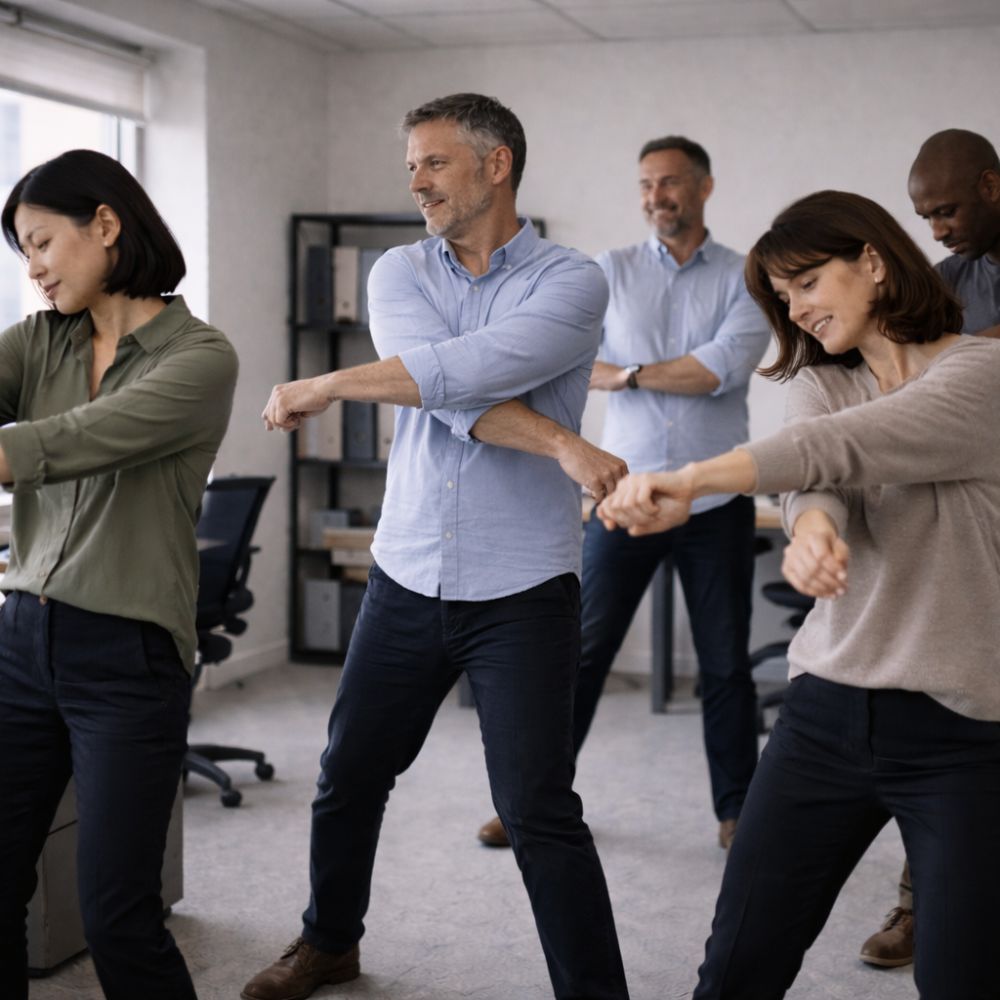
Why Most Corporate Wellness Programs Fail to Engage Employees
Before talking about implementation, it is worth being clear about what typically goes wrong.
Most corporate wellness programs fail because they are layered on top of already overloaded systems. They assume people have spare energy, spare time, and spare cognitive capacity. They also tend to focus on symptoms rather than conditions.
Stress workshops without workload conversations. Mindfulness sessions without physical support for sitting. Fitness challenges for people already exhausted by sedentary demand.
When wellness is framed as something employees must opt into, manage, and maintain on top of their existing responsibilities, it becomes another form of labour. Even well-intended initiatives can quietly reinforce the message that coping is an individual responsibility rather than a shared organisational one.
If participation is low, it is not because people are unmotivated. It is because the program does not respect how fatigue, posture, attention, and workload interact across the day.
Start With How Work Is Actually Done, Not With Wellness Trends
The most effective corporate wellness programs begin with observation, not aspiration.
Before selecting any activities, tools, or providers, you need to understand how people actually work in your organisation. Not the job descriptions, but the physical and cognitive reality of the day.
How long do people sit without interruption. How often do they transition between tasks. How much of their work is reactive versus focused. Where do they hold tension. When does fatigue show up.
A wellness program that ignores these factors will always feel bolted on.
This is why programs grounded in physical intelligence, not just mental techniques, tend to perform better over time. The body is where workload is absorbed. If the body is unsupported, no amount of motivational messaging will fix that.
If you already offer movement-based or physical support initiatives, this is where they should be referenced internally.
Internal link suggestion: link to your core movement or workplace wellbeing philosophy page.
Define Clear Outcomes Beyond “Wellbeing”
“Wellbeing” is too vague to be operational.
If you want a program people use, it needs outcomes that matter both to employees and to the organisation. Not abstract happiness metrics, but functional improvements.
Examples include reduced physical discomfort during sitting, improved tolerance for long meetings, better transition out of work at the end of the day, or sustained concentration without burnout.
When outcomes are framed in practical terms, employees can feel the difference quickly. That felt improvement is what drives ongoing engagement.
This is also where many corporate wellness programs lose credibility. If success is measured only in attendance or survey sentiment, people quickly sense that the program exists for reporting rather than support.
Define outcomes that show up in bodies and behaviour, not just dashboards.


Design the Program to Integrate Into the Working Day
One of the biggest predictors of participation is whether the program fits into the working day without friction.
If sessions require people to log in early, stay late, change clothes, or relocate physically, uptake will drop. Not because people do not care, but because energy is finite.
The most effective programs work with existing rhythms. Short, structured sessions during work hours. Clear start and end points. Predictable timing. No pressure to perform or share.
This is where structured movement programs designed specifically for cognitive work environments have a clear advantage. They do not require gym clothes or high intensity. They focus on restoring function rather than pushing capacity.
If your organisation already offers a flagship program that integrates movement and cognitive support, this is where it should be positioned as the backbone rather than an optional extra.
This is where structured, work-specific movement programs tend to outperform generic wellness initiatives. Programs such as Sit Happens are designed around the physical reality of desk-based work rather than around exercise trends. Instead of asking people to add more effort, they reduce unnecessary muscular demand created by sitting, standing, and transitioning between tasks throughout the day.
Because the sessions are built to fit inside work hours, require no clothing changes, and focus on restoring function rather than pushing capacity, participation becomes easier to sustain. The program does not compete with work. It supports it.
Why Opt-In Wellness Fails When Energy Is Already Depleted
One of the quiet assumptions behind most corporate wellness programs is that people have enough spare capacity to choose wellness when offered.
In reality, depleted systems do not opt in. They conserve.
When people are cognitively overloaded, physically braced, and under constant low-level demand, even beneficial activities are filtered out if they feel optional, additional, or effortful. This is not resistance. It is self-protection.
Wellness programs that rely on motivation misunderstand fatigue. The body does not respond to good intentions when it is already compensating. It responds to reduced demand, clearer structure, and physical support.
This is why programs that are embedded into work hours outperform those positioned as perks. When participation does not require a decision, energy can be directed toward recovery rather than justification.
You can read about how physical demand builds silently during desk-based work here.
The Role of Physical Safety in Psychological Wellbeing at Work
Psychological safety is often discussed as a communication issue. In practice, it is also a physical one.
People who are bracing, holding their breath, or managing discomfort are less open, less reflective, and less resilient. Not because they are unwilling, but because the nervous system is prioritising stability.
This is why programs grounded in physical intelligence, rather than motivation or emotional disclosure, tend to create more lasting change. In Sit Happens, for example, the primary focus is not stress management as a concept, but the physical conditions that create stress in the first place. Sitting patterns, load distribution, breathing habits, and postural compensation are addressed directly, often leading to improved focus and emotional regulation as secondary effects.
Corporate wellness programs that ignore the physical environment tend to overestimate how much emotional work people can do. Conversely, programs that restore physical ease often see secondary psychological benefits without explicitly targeting them.
This is particularly relevant in office-based settings where prolonged sitting, screen use, and static posture dominate the day.
Supporting the body is not a detour from wellbeing. It is often the fastest route into it.
Why Consistency Beats Variety in Workplace Wellness
Many corporate wellness calendars are built around novelty. New themes. New speakers. New formats.
While variety looks good on paper, it often undermines trust. People do not relax into something that keeps changing. They remain alert, evaluative, and unsure of what is expected.
Consistency allows the nervous system to settle. When people know what the session will involve, how long it will last, and what it will demand of them, participation becomes easier.
This does not mean programs should be static. It means they should evolve slowly, with a recognisable core.
Wellness that feels reliable is more likely to be used than wellness that feels impressive.
You can read my article, “Your Team Is Burnt Out Because Their Bodies Are (A Practical Guide to Workplace Physiology)” here.
What “Engagement” Actually Looks Like in a Well-Designed Program
Engagement is often measured by visible enthusiasm. Attendance spikes. Chat activity. Verbal feedback.
In reality, some of the strongest signals of engagement are quieter. People returning without prompting. Fewer last-minute cancellations. Reduced resistance to scheduling.
You may not hear effusive praise. What you will see is steadiness.
Well-designed programs integrate so smoothly that they stop being discussed. They become part of how the working day is held.
This is a better outcome than excitement. Excitement fades. Integration stays.
I’ve written an article called “What Happens When You Stop Performing and Actually Listen to Yourself” for you to read.

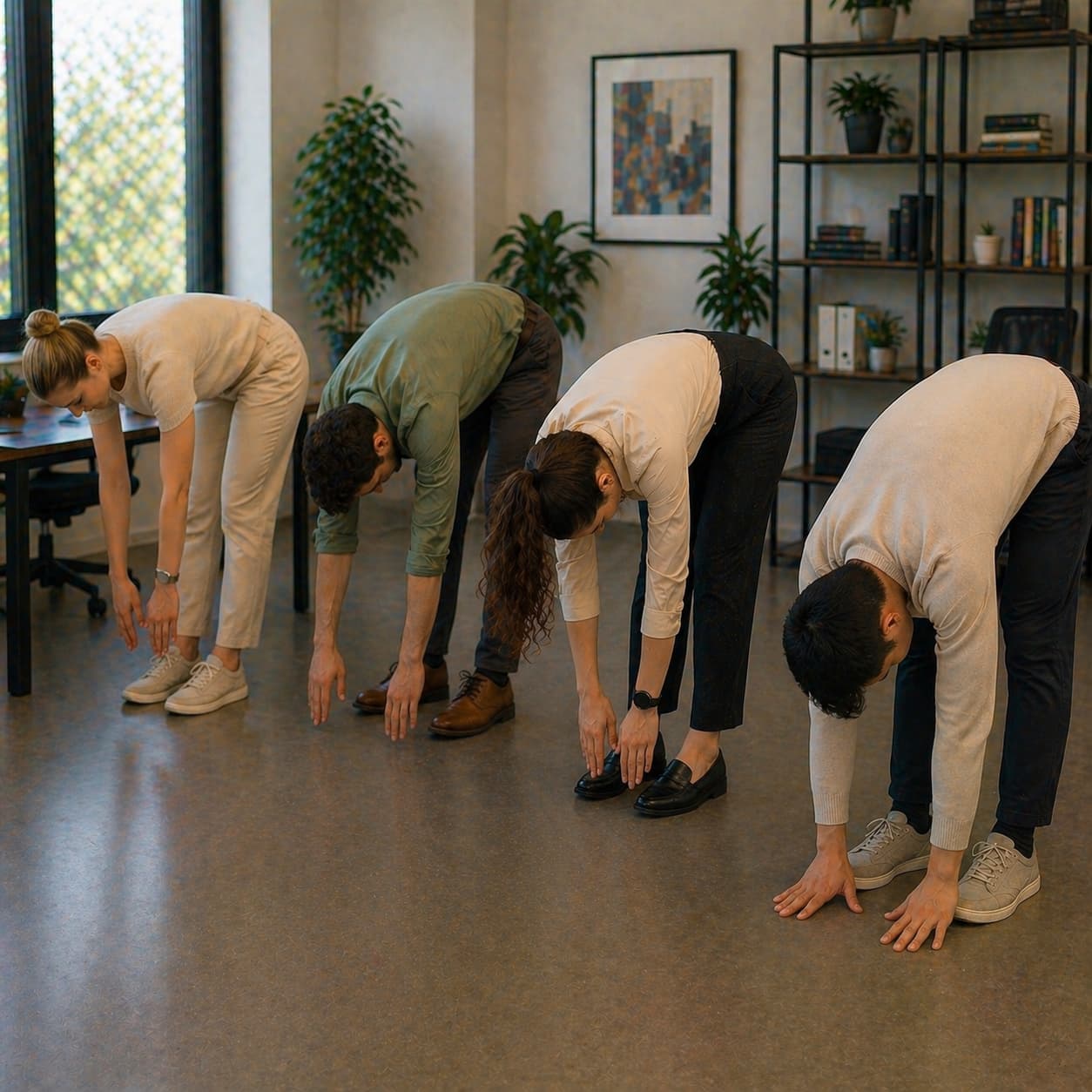
Choose Delivery Formats That Build Psychological Safety
People will not engage with wellness initiatives if they feel exposed.
Group sharing, forced participation, or overly personal framing can quietly repel the very people who need support most. Psychological safety is not built through enthusiasm. It is built through predictability, neutrality, and respect for boundaries.
Programs that focus on guided experience rather than discussion tend to be more inclusive. Clear instructions. No requirement to speak. No pressure to reflect publicly. Optional depth rather than mandatory vulnerability.
When employees feel they can participate without being evaluated, wellness stops feeling like another performance metric.
This matters particularly in high-performing or hierarchical environments where people are already managing perception.
Communicate the Program Without Over-Selling It
One of the fastest ways to undermine a corporate wellness program is to oversell it.
Promises of transformation, life change, or emotional breakthroughs raise expectations that the program cannot realistically meet. They also trigger scepticism, especially in organisations that value competence and evidence.
Effective communication focuses on what the program does, how it fits into the day, and what participants are likely to notice first. Reduced tension. Better focus. Easier sitting. Clearer transitions.
Understated language builds trust. People are far more likely to try something that feels grounded than something that feels evangelical.
If you have written content explaining your approach to workplace wellbeing in plain terms, this is a good place to reference it.
Internal link suggestion: link to an article on your site about work, posture, or cognitive load.
Pilot, Observe, and Adjust Before Scaling
Rolling out a wellness program organisation-wide without a pilot is a common mistake.
A small, contained pilot allows you to observe real engagement patterns. Who attends consistently. When energy dips. What feedback emerges without prompting.
Crucially, it also allows employees to talk to each other about the program organically. Peer endorsement is far more powerful than internal promotion.
Use the pilot phase to adjust timing, pacing, and framing. Resist the urge to add more content. Often, doing less but doing it well is what increases uptake.
Once the program has found its rhythm, scaling becomes simpler and more sustainable.
Support Managers So the Program Is Not Undermined
Even the best wellness program will fail if managers unintentionally undermine it.
If attendance is technically allowed but subtly discouraged through workload pressure or comments about priorities, people will notice. Support from leadership does not require enthusiasm. It requires consistency.
Managers need clarity on why the program exists, what outcomes it supports, and how participation should be protected within the working day.
This is where many organisations benefit from providing managers with a short, practical briefing rather than a motivational speech. Clear expectations reduce mixed signals.


Measure What Matters and Let the Program Evolve
Measurement should support learning, not justify existence.
Rather than tracking every possible metric, focus on a small number of indicators that reflect real change. Reduced discomfort. Improved concentration. Fewer complaints related to fatigue or pain.
Qualitative feedback matters here. Not testimonials, but patterns. What people mention unprompted. What changes they notice without being asked.
Wellness programs that are allowed to evolve remain relevant. Those that are frozen in their original format tend to fade, regardless of initial enthusiasm.
Final Thoughts
Implementing a corporate wellness program that people want to use is not about adding more content or chasing trends. It is about designing support that respects how work actually feels in the body and mind.
When wellness is integrated rather than imposed, when outcomes are practical rather than abstract, and when participation is protected rather than performative, engagement follows naturally.
People do not need to be convinced to care about their wellbeing. They need programs that stop asking them to work harder at it.
Frequently Asked Questions About Corporate Wellness Programs
Will people actually use this, or will it quietly die after a few weeks?
Programs tend to fade when they demand extra energy or feel disconnected from real work. When a program is scheduled within work hours, has a clear structure, and reduces discomfort rather than adding tasks, usage tends to stabilise rather than spike and disappear.
Consistency matters more than excitement.
What if employees say they are “too busy” to attend?
“That’s exactly when it matters” is the honest answer.
When people are too busy, they are usually operating in compensation mode. Programs that acknowledge workload rather than compete with it are more likely to be used. This often requires leadership to protect the time, not just approve the initiative.
Is this just another wellbeing initiative dressed up differently?
It can be, if it focuses on messaging rather than conditions.
Employees can tell the difference between programs that aim to change how they cope and programs that change the environment they are coping within. The latter earns trust faster and keeps it longer.
Do we need to collect personal data or feedback for this to work?
No. In fact, minimal data collection often increases participation.
You will learn more from patterns of attendance, consistency, and informal feedback than from surveys that people rush through. The goal is not to monitor wellbeing, but to support it.
How does this work for people who are sceptical of wellness programs?
Scepticism is often a sign of past over-promising.
Programs that are practical, neutral in tone, and focused on physical ease rather than emotional disclosure tend to disarm scepticism. People do not need to believe in the program. They only need to feel better afterward.
What if leadership supports the idea but behaviour does not change?
Mixed signals undermine even well-designed programs.
If workload, meeting culture, or informal expectations contradict the program’s intent, participation will suffer. Supporting wellness does not require enthusiasm, but it does require consistency in how time and priorities are handled.
Is this the same as yoga or fitness sessions at work?
No. Programs like Sit Happens are not exercise classes and are not designed to increase fitness. They focus on reducing unnecessary effort created by prolonged sitting and cognitive work. The aim is not to make people stronger or more flexible, but to make work feel less physically and mentally costly.
Is this suitable for remote or hybrid teams?
Yes, if the program is designed for real environments rather than ideal ones.
Remote teams benefit when sessions are structured, predictable, and do not rely on high interaction or disclosure. The same principles apply: reduce friction, support the body, respect energy.
How do we know if it is worth continuing?
Look for steadiness rather than spikes.
If people keep coming without reminders, if resistance drops, and if complaints related to discomfort or fatigue reduce, the program is doing its job. Wellness that works rarely needs defending.