
Office Movement Training for HR Teams: Questions to Ask Before Booking
TL;DR
Not all office movement training is designed for real workplaces.
Some programmes are essentially fitness classes awkwardly transported into conference rooms. Others rely heavily on motivational wellbeing language without properly understanding how desk-based work affects the body and nervous system over time.
Before booking workplace movement support, HR teams should look beyond surface-level branding and ask practical questions about structure, delivery style, accessibility, regulation, employee comfort and long-term sustainability.
The best office movement training should help employees feel physically better during the working day without making the workplace feel performative, forced or emotionally exhausting.
For practical movement-based workplace wellbeing support, explore Sit Happens or read Why Workplace Wellbeing Needs Physical Practice, Not Just Advice.
Definition: what is office movement training?
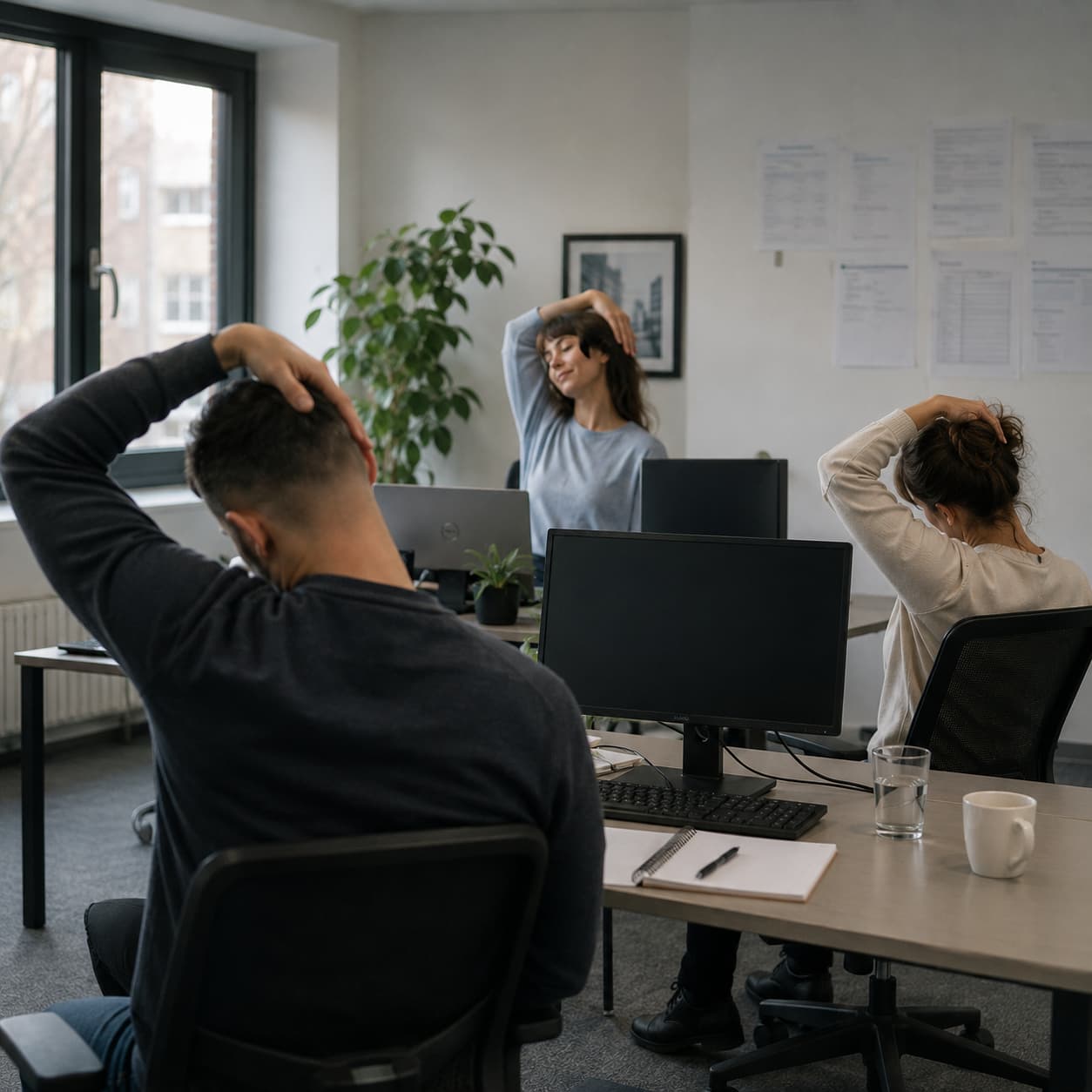
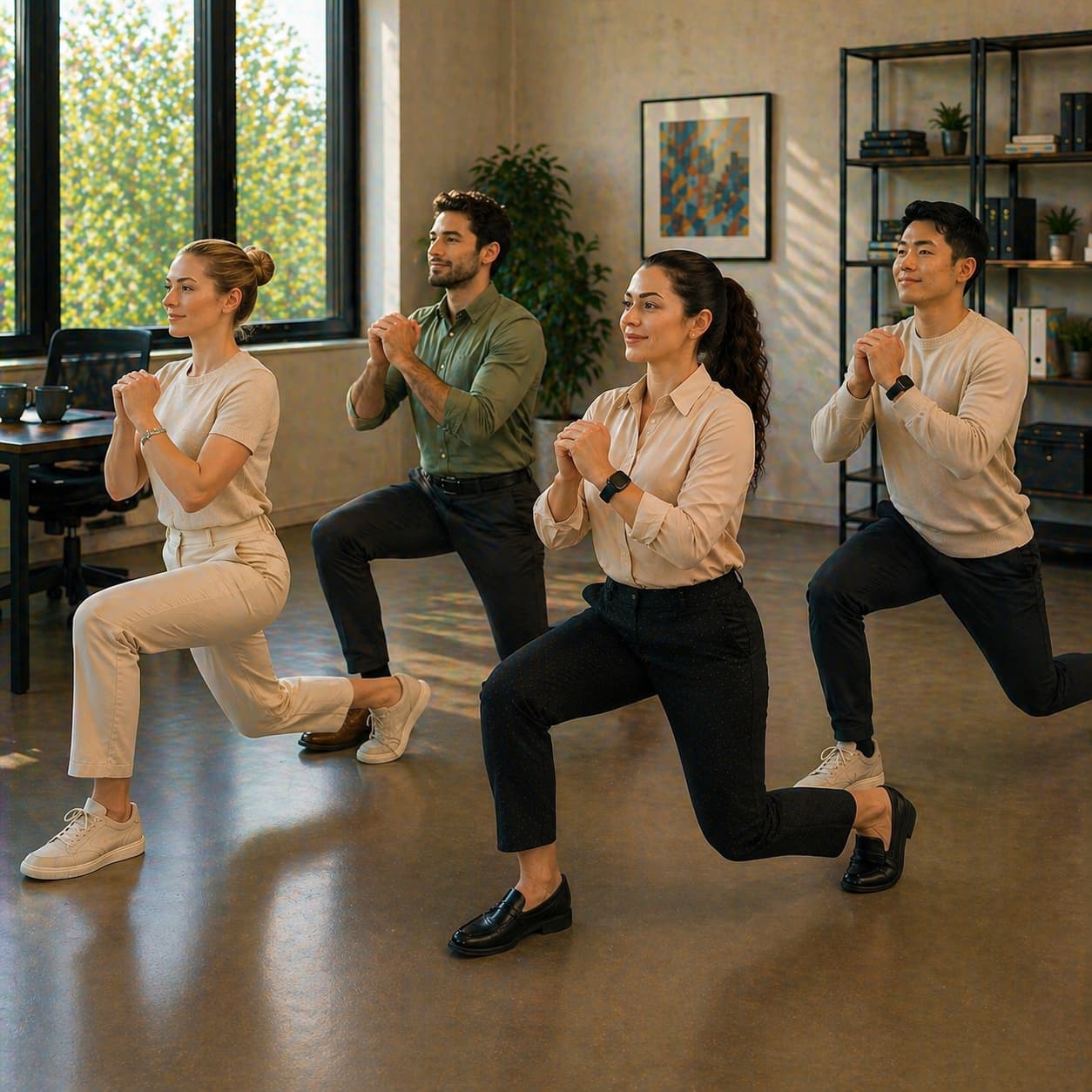
Office movement training refers to structured workplace movement sessions designed to support desk-based employees through posture variation, mobility, breathing, movement awareness and nervous system regulation. Unlike traditional fitness classes, office movement training focuses on helping employees reduce stiffness, fatigue, physical tension and mental overload within real working environments.
Why HR teams are increasingly looking at movement-based wellbeing support
Most HR teams already know employees are exhausted.
The signs are visible everywhere once organisations stop pretending constant cognitive overload is simply “modern working culture” and not something gradually flattening people physically and emotionally over time.
Employees are sitting for long periods, concentrating intensely, moving less, recovering poorly and carrying enormous levels of low-grade stress physically throughout the workday. Many people feel stiff, mentally foggy and physically disconnected by mid-afternoon despite technically spending most of the day sitting in ergonomic chairs beside motivational posters about collaboration.
That contradiction matters because prolonged desk work creates a very specific type of fatigue.
The nervous system remains active while the body becomes increasingly static. Breathing changes. Posture becomes rigid. Physical tension accumulates gradually. Movement variety decreases. Energy drops. Concentration becomes harder to sustain. Employees begin carrying stress physically even in relatively non-physical roles.
This is one reason workplace movement support has become far more relevant across modern organisations. Employers are recognising that wellbeing cannot remain entirely psychological or informational while employees themselves are increasingly physically dysregulated throughout the working day.
As explored in Why Desk-Based Teams Need Movement Before More Wellbeing Advice, people rarely need another wellbeing email explaining stress conceptually. They need practical support that helps the body experience regulation directly.
That is where movement training can become genuinely valuable, when it is done properly.
Why not all workplace movement programmes are actually suitable for workplaces
One of the biggest mistakes HR teams make is assuming every movement-based wellbeing programme automatically fits workplace environments simply because someone attached the word “corporate” to a yoga mat and built a LinkedIn banner around it.
Some workplace movement programmes are essentially fitness classes relocated into offices with very little understanding of workplace psychology, nervous system regulation or employee comfort. Others lean so heavily into wellness language that employees feel emotionally trapped inside a mindfulness seminar they never voluntarily signed up for in the first place.
Neither extreme usually works particularly well. Employees do not want to feel judged physically.
-
- They do not want forced participation.
- They do not want performative positivity.
- They do not want workplace wellbeing turning into awkward group vulnerability disguised as stretching.
Good office movement training feels grounded, practical and emotionally intelligent. It acknowledges how real employees actually feel during work instead of pretending everyone arrives energetically prepared to foam-roll their emotional barriers away beside the stationery cupboard at 2pm on a Wednesday.
This is why HR teams need to ask better questions before booking anything.
Because the difference between genuinely supportive workplace movement and painfully corporate wellness theatre becomes obvious extremely quickly once employees are in the room.
Why awareness alone rarely changes how employees feel
Information does not automatically become embodiment. That is one of the biggest problems with purely advice-based wellbeing strategies.
Someone can fully understand the importance of movement, boundaries, posture, rest and stress management while still remaining physically dysregulated most of the week because the nervous system responds far more strongly to repeated physical experience than abstract knowledge alone.
People often continue sitting in physically draining positions despite knowing movement would help. They continue holding tension unconsciously despite understanding stress intellectually. Entire organisations discuss wellbeing constantly while maintaining working structures that physically overload employees every single day.
Awareness matters. But practice changes patterns.
That is why physical workplace wellbeing support tends to create more sustainable results. Employees are not simply told what regulation should feel like theoretically. They begin experiencing it physically through breathing, posture variation, movement and nervous system shifts that happen inside the body itself.
Once someone physically experiences the difference between being constantly braced and genuinely regulated, their relationship with stress and work often changes far more meaningfully than it would through information alone.
Because ultimately, the nervous system does not care how many inspirational infographics someone has read on LinkedIn before 9am. It responds to physical state.
The first question HR teams should ask: does this actually suit desk-based employees?
A surprising number of workplace movement providers still design sessions as though employees are recreational athletes with unlimited energy and enthusiasm rather than cognitively overloaded adults carrying physical tension from prolonged sitting and constant screen exposure.
That mismatch creates problems immediately.
Desk-based employees often need regulation before intensity. Their nervous systems are already overstimulated. Their posture is often restricted. Their movement confidence may be low. Some employees may feel physically self-conscious, especially in workplace environments where vulnerability already feels uncomfortable.
Good office movement training recognises this reality from the beginning.
The focus should sit on helping employees feel physically better rather than physically pushed. Mobility, posture variation, breathing, spinal movement, gentle strengthening and nervous system regulation usually create stronger long-term results than aggressive workplace fitness sessions pretending everyone secretly wants bootcamp energy during lunch breaks.
This becomes especially important for organisations trying to improve actual engagement rather than simply ticking a wellbeing box internally.
Employees participate more consistently when the sessions feel supportive rather than performative.
And honestly, most people would rather feel calmer and less physically broken after work than spend forty-five minutes sweating through an office HIIT session while trying not to make eye contact with payroll.
HR teams should ask how the sessions are structured
Structure matters enormously within workplace movement training because employees regulate more successfully when sessions feel calm, organised and psychologically safe. HR teams should ask:
-
- How are sessions paced?
- Are they suitable for all movement levels?
- Is participation adaptable?
- Does the structure support nervous system regulation?
- Are employees forced into uncomfortable participation?
- Is the environment physically accessible?
The best movement sessions usually contain clear flow and progression without becoming rigid or intimidating. Employees should feel able to participate without fear of embarrassment, excessive correction or fitness-based comparison.
This is one reason How Sit Happens Helps Teams Reduce Stiffness, Fatigue and Brain Fog focuses heavily on practical accessibility rather than athletic performance. Employees are far more likely to continue engaging with movement when it feels usable inside real working life.
Workplace wellbeing should reduce pressure. Not create another category of it.
HR teams should ask whether the provider understands nervous system regulation
This question matters far more than many organisations realise. A great deal of workplace exhaustion is not simply muscular fatigue. It is a nervous system overload created through sustained cognitive demand, prolonged sitting, screen exposure and constant mental responsiveness throughout the day.
Movement can absolutely help with this. But only if the sessions themselves support regulation rather than increasing overstimulation further. HR teams should therefore ask whether the provider understands:
-
- Breathing and nervous system response
- Stress physiology
- Desk-based physical tension
- Cognitive fatigue
- Posture variation
- Emotional comfort within workplace environments
- Sustainable movement integration
This does not mean sessions need to become deeply therapeutic or emotionally intense. In fact, the opposite is usually true. Employees often regulate better through calm, practical movement than through highly emotional workplace wellness experiences that accidentally make everyone feel like unwilling participants in a corporate healing retreat.
The best movement training usually feels surprisingly ordinary. Employees breathe better. Move more naturally. Feel less physically trapped. Regain concentration.
Leave feeling clearer rather than emotionally extracted. That subtlety matters enormously.
Why HR teams should avoid programmes built entirely around motivation
Motivation is unreliable. Structure is sustainable.
Many workplace wellbeing programmes fail because they depend heavily on temporary emotional enthusiasm rather than practical integration into real working life. Employees leave the session feeling briefly inspired before immediately returning to the same physical habits, working patterns and nervous system overload that created the problem originally.
Good office movement training avoids this trap.
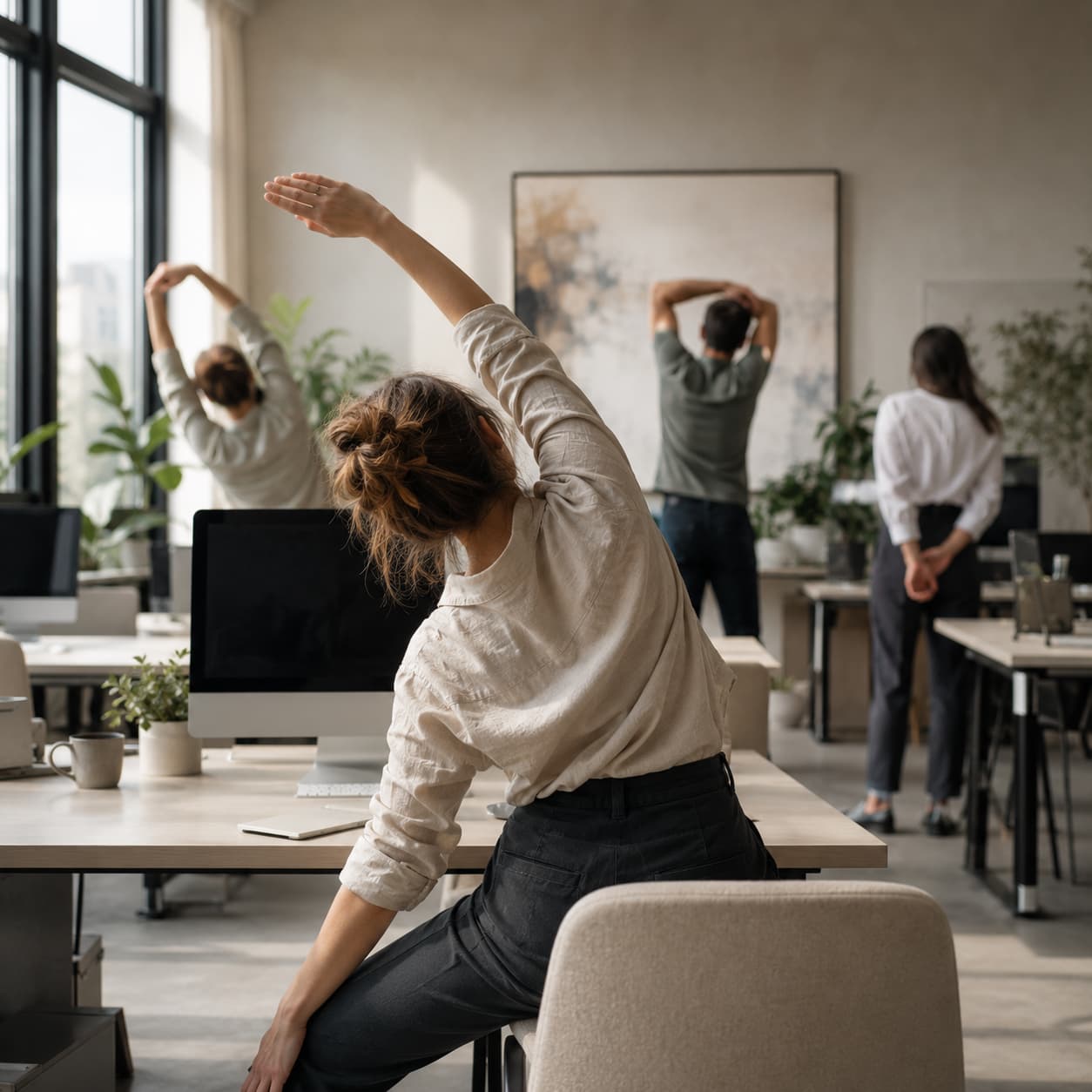
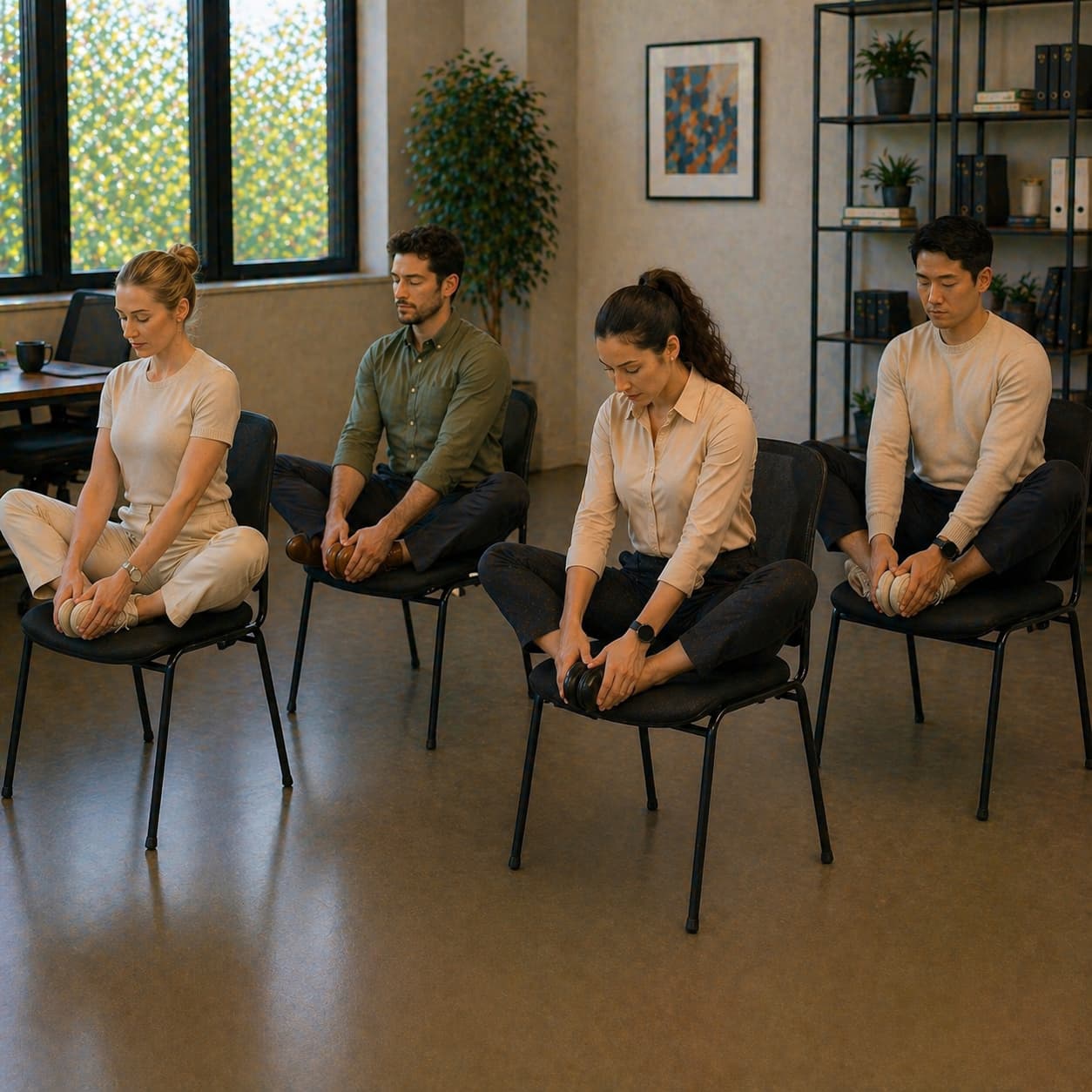
Instead of relying purely on motivational energy, it gives employees practical physical tools they can actually use throughout the workday itself. Small posture changes. Breathing awareness. Movement transitions. Walking habits. Spinal mobility. Physical resets between meetings.
These things sound simple because they are.
And simplicity usually works better than elaborate corporate wellbeing performances designed mainly for social media photography and one enthusiastic internal newsletter before everyone quietly forgets the programme existed two weeks later.
The body responds to consistency more than inspiration.
That is important for HR teams to understand before investing in workplace wellbeing support.
Decision box: what should HR teams look for before booking movement training?
| Good office movement training should… | Avoid programmes that… |
|---|---|
|
Support real desk-based employees |
Treat employees like fitness clients |
|
Feel calm and practical |
Feel performative or forced |
|
Include nervous system regulation |
Focus only on intensity |
|
Be adaptable for different abilities |
Require high fitness levels |
|
Improve physical comfort |
Prioritise entertainment over support |
|
Fit realistically into workdays |
Create additional stress |
|
Encourage sustainable movement habits |
Depend entirely on motivation |
|
Respect employee comfort levels |
Push unwanted participation |
|
Focus on regulation and movement quality |
Focus purely on calorie burn |
|
Feel grounded and emotionally intelligent |
Feel awkwardly corporate |
HR teams should ask how employee comfort is handled
This is one of the most overlooked parts of workplace wellbeing delivery. Employees arrive with very different relationships to movement, confidence and physical visibility. Some feel comfortable participating immediately. Others may feel anxious, physically self-conscious or uncomfortable moving in front of colleagues.
Good workplace movement training respects that reality rather than bulldozing through it with forced enthusiasm.
HR teams should ask:
-
- Is participation pressure-free?
- Can employees modify movement?
- Is the delivery inclusive?
- How are different comfort levels handled?
- Is the environment psychologically safe?
This matters enormously because employee wellbeing cannot realistically improve through programmes that quietly trigger embarrassment or social discomfort underneath the surface.
Movement support should help employees feel more physically regulated and comfortable, not more exposed.
And honestly, nobody needs mandatory workplace lunges performed beside the finance department while pretending this is everyone’s deepest personal dream.
Why practicality matters more than novelty
Some workplace wellbeing providers focus heavily on novelty because novelty photographs well and sound exciting during internal planning meetings.
But novelty is not the same thing as effectiveness. Employees rarely need more stimulation. They usually need more steadiness.
Practical movement support tends to create better long-term results because employees can realistically integrate it into working life. Breathing more effectively during stressful periods. Standing between meetings. Improving posture variation. Reducing stiffness gradually. Learning small physical regulation tools.
These things continue helping after the formal session ends.
This is explored further in How to Reduce Desk Stiffness Without Turning Work Into a Fitness Class, where the emphasis sits firmly on sustainable workplace movement rather than performance culture.
The best workplace wellbeing strategies usually look less exciting on Instagram and more effective six months later.
HR teams should ask whether the programme feels inclusive
Inclusivity within the workplace movement is not just about fitness level. It is about emotional accessibility, too.
Employees differ enormously in age, mobility, confidence, injury history, neurodivergence, stress levels and previous experiences with movement environments. Good movement training recognises this without making participation feel clinical or overly cautious.
HR teams should ask whether:
-
- Sessions are suitable for beginners
- Employees can adapt movement comfortably
- Different body types and abilities are considered
- The language feels accessible
- Participation feels supportive rather than performative
A surprising amount of workplace wellbeing fails simply because employees quietly feel the sessions were designed for someone else.
Inclusive delivery changes that immediately. People engage more openly when movement support feels realistic, grounded and non-judgemental.
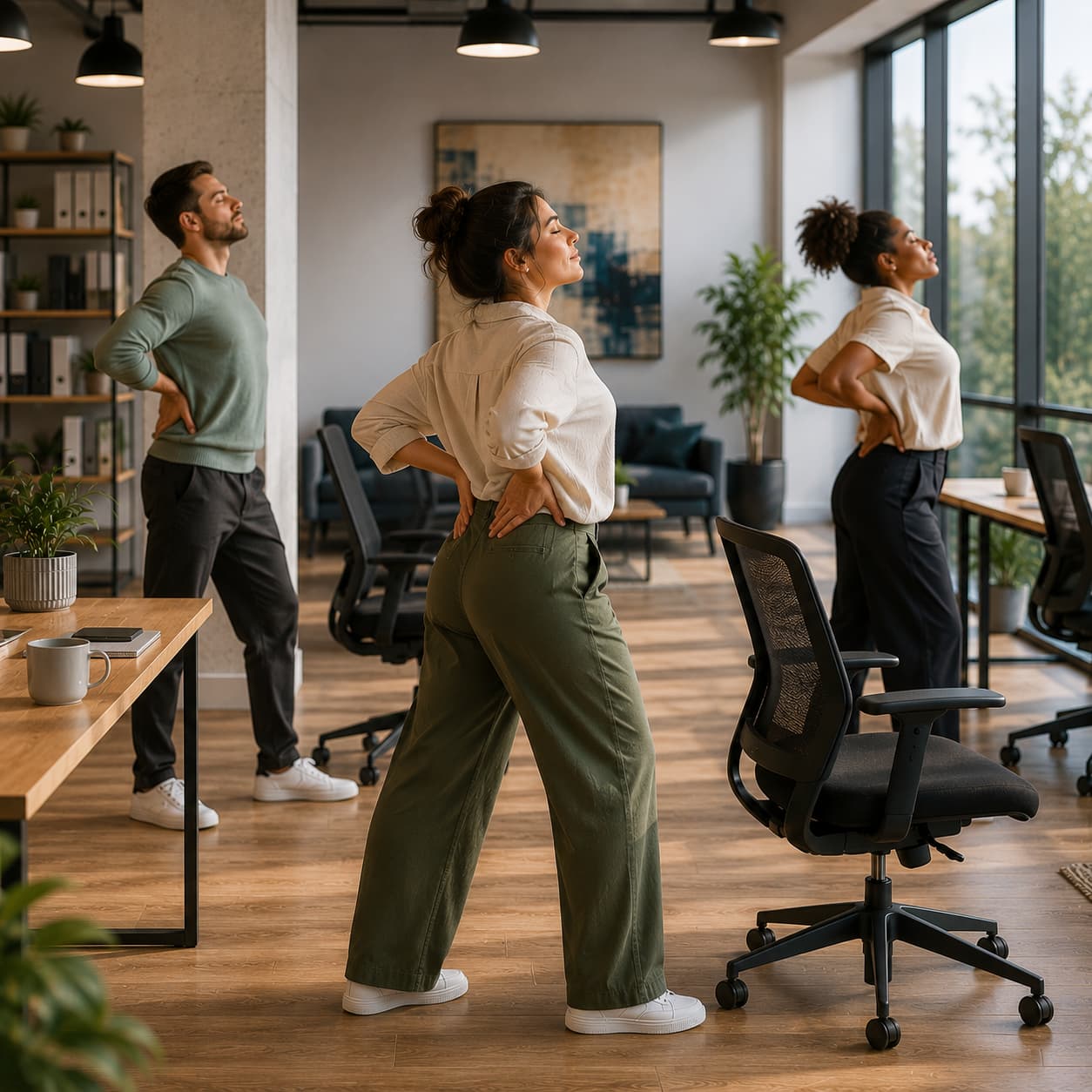
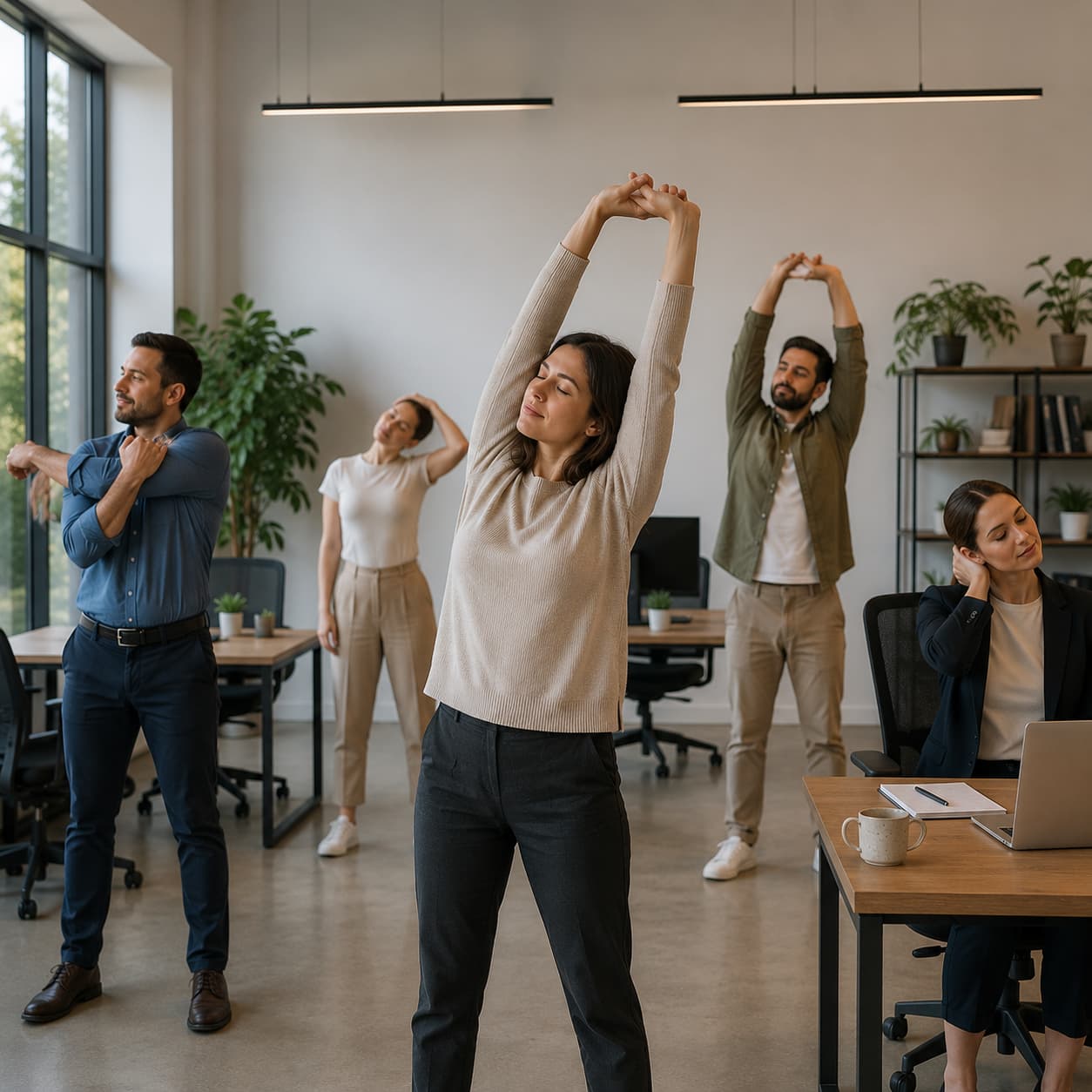
Why workplace movement should support concentration, not interrupt it
Some organisations worry that movement sessions will disrupt productivity.
In reality, good workplace movement training often improves focus precisely because employees stop remaining physically static for such long periods. Movement changes breathing, circulation, posture and nervous system state, all of which influence concentration directly.
This is why employees often return from practical movement sessions feeling mentally clearer rather than distracted.
The body was never designed for uninterrupted cognitive load without movement variation.
Employees usually think more effectively once the nervous system stops feeling physically trapped.
As discussed in Why Workplace Wellbeing Needs Physical Practice, Not Just Advice, wellbeing support becomes far more effective when employees physically experience regulation rather than simply hearing about it conceptually.
Because ultimately, the nervous system learns through experience. Not PowerPoint.
Comparison table: effective workplace movement vs performative corporate
| Effective workplace movement | Performative corporate wellness |
|---|---|
|
Practical and grounded |
Highly branded and motivational |
|
Supports regulation |
Focuses on excitement |
|
Designed for real employees |
Designed for appearance |
|
Sustainable and adaptable |
Built around temporary enthusiasm |
|
Inclusive and calm |
Often socially uncomfortable |
|
Helps physical wellbeing directly |
Relies heavily on awareness |
|
Fits into real workdays |
Feels disconnected from reality |
|
Reduces tension and fatigue |
Often adds stimulation |
|
Encourages sustainable habits |
Depends on momentum |
|
Employee-centred |
Presentation-centred |
Why HR teams should think long term rather than one-off wellbeing events
One-off wellbeing days can feel enjoyable temporarily, but sustainable workplace wellbeing usually comes from repetition and integration rather than isolated events.
The nervous system changes through consistent experience. Movement habits develop through repetition. Posture awareness improves gradually. Employees regulate better when movement becomes normal rather than occasional.
This does not necessarily mean organisations need huge long-term programmes immediately. But HR teams should consider whether the movement support being booked can realistically contribute to sustained cultural and physical shifts over time.
Because ultimately, employees do not become physically healthier through one afternoon of enthusiastic wellness branding before returning to exactly the same movement patterns indefinitely afterwards.
The body responds to what happens consistently. Not ceremonially.
Practical checklist before booking office movement training
| Questions HR teams should ask | Why it matters |
|---|---|
|
Is the programme suitable for desk workers? |
Employees need regulation, not overload |
|
Does the provider understand workplace stress? |
Context matters |
|
Is the movement adaptable? |
Inclusivity improves engagement |
|
Does the structure feel calm and practical? |
Employees regulate better this way |
|
Will participation feel psychologically safe? |
Comfort affects uptake |
|
Is the language grounded and accessible? |
Employees disengage from jargon quickly |
|
Does the training support nervous system regulation? |
Stress is physical too |
|
Can employees realistically sustain the tools? |
Long-term impact matters |
|
Does the programme reduce pressure rather than add it? |
Wellbeing should feel supportive |
|
Will employees leave feeling physically better? |
That is the actual goal |
Final thoughts: the best workplace movement training feels human, not performative
Good office movement training does not try to transform employees into wellness influencers between meetings. It helps people feel physically better in their real working life.
That difference matters enormously.
The best programmes reduce tension instead of creating more stimulation. They help employees regulate rather than perform. They support posture, breathing, movement and nervous system steadiness in ways that feel practical enough to continue using long after the formal session ends.
Most employees do not need workplace wellness theatre. They need physical support that acknowledges how modern work actually feels inside the body.
And honestly, HR teams already know which programmes their employees will quietly dread attending the second the calendar invite arrives. The strongest workplace movement training rarely looks the loudest. It simply works.
If your organisation is looking for grounded, movement-based wellbeing support designed specifically for desk-based teams, explore Sit Happens.
You can also read:
Why Workplace Wellbeing Needs Physical Practice, Not Just Advice
How Sit Happens Helps Teams Reduce Stiffness, Fatigue and Brain Fog
Why Desk-Based Teams Need Movement Before More Wellbeing Advice
How to Reduce Desk Stiffness Without Turning Work Into a Fitness Class
Key takeaway
Good office movement training should support employee wellbeing realistically, calmly and sustainably rather than turning the workplace into an uncomfortable pseudo-fitness environment employees secretly dread attending.
Frequently Asked Questions
Office movement training is structured workplace movement support designed to help employees reduce stiffness, fatigue, physical tension and nervous system overload during the workday.
No. Good office movement training focuses more on posture, mobility, breathing, regulation and sustainable movement rather than athletic performance.
Many organisations recognise that prolonged desk work contributes to fatigue, physical discomfort, reduced concentration and nervous system overload.
HR teams should ask about adaptability, employee comfort, nervous system regulation, inclusivity, structure and whether the sessions realistically suit desk-based employees.
No. Workplace movement sessions should be accessible for varied movement abilities and comfort levels.
Yes. Movement supports breathing, circulation, posture and nervous system regulation, all of which influence focus and cognitive performance.
Prolonged stress and static working conditions affect the nervous system physically, influencing fatigue, posture, concentration and emotional resilience.
Practical movement tools, calm delivery and realistic integration into working life usually create stronger long-term engagement.
Many fail because they rely heavily on motivation, performative wellness culture or one-off enthusiasm rather than sustainable physical support.
Sit Happens is a workplace movement programme designed for desk-based teams, helping employees reduce stiffness, fatigue and brain fog through practical movement and nervous system support.