
How to Reduce Desk Stiffness Without Turning Work Into a Fitness Class
TL;DR
Desk stiffness is usually caused less by “bad posture” and more by staying in the same position for too long without enough movement variation during the day. Most office workers do not need to turn the workplace into a fitness class to feel better. They need practical movement strategies that fit naturally into real working life.
Simple things such as posture variation, standing transitions, walking briefly between meetings, shoulder mobility, breathing properly and reducing prolonged static sitting can make a significant difference to how the body feels during and after work.
The goal is not perfection. The goal is to help people feel less physically trapped inside the same working position all day.
For practical workplace movement support, explore Sit Happens or read Workplace Movement Sessions in Nottingham: What Local Employers Need to Know.
Definition: what causes desk stiffness?
Desk stiffness refers to muscular tightness, restricted mobility or physical discomfort caused by prolonged sitting, screen work and reduced movement throughout the working day. Common areas affected include the neck, shoulders, upper back, lower back and hips. In most cases, desk stiffness develops gradually because the body spends too much time in the same position without enough movement variation.
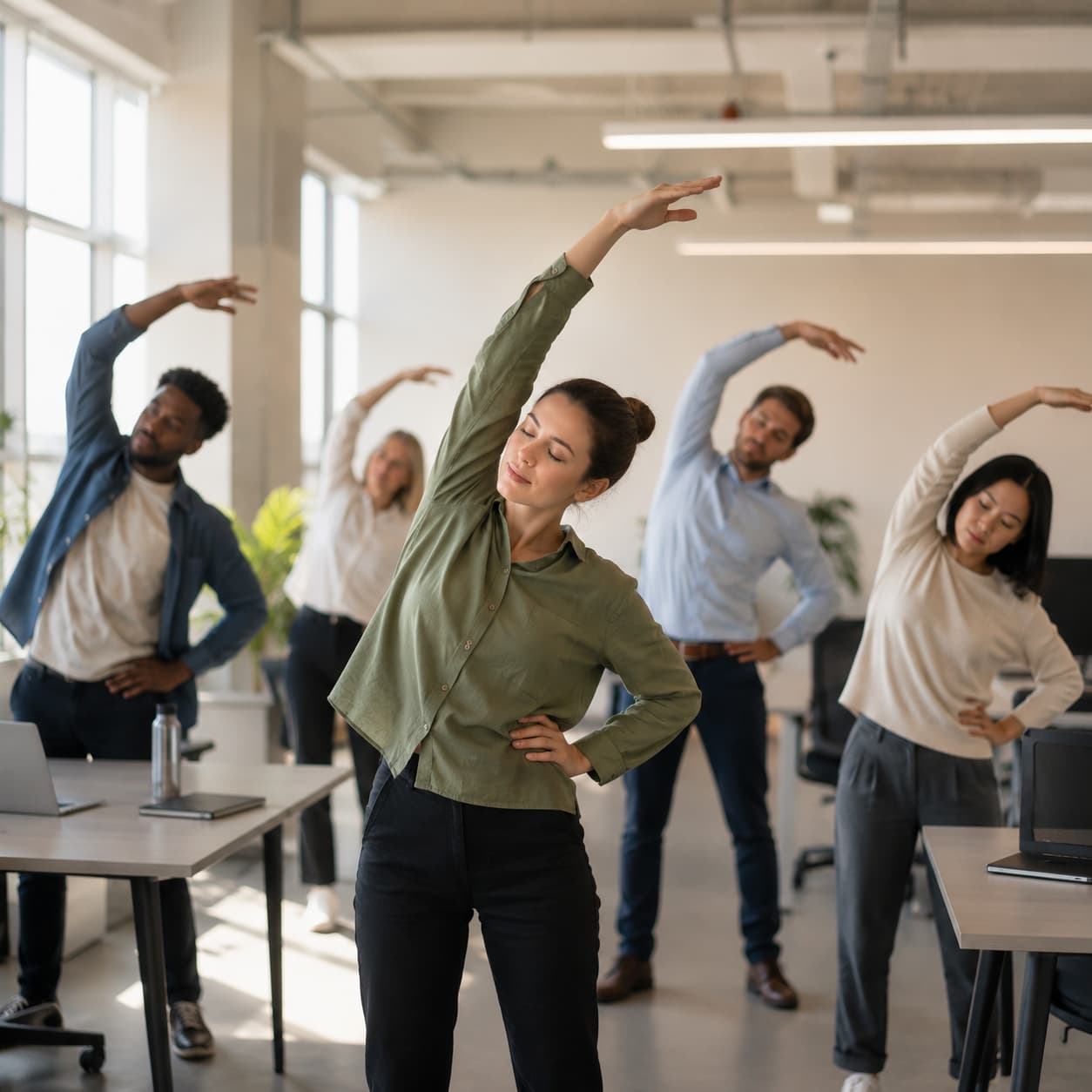
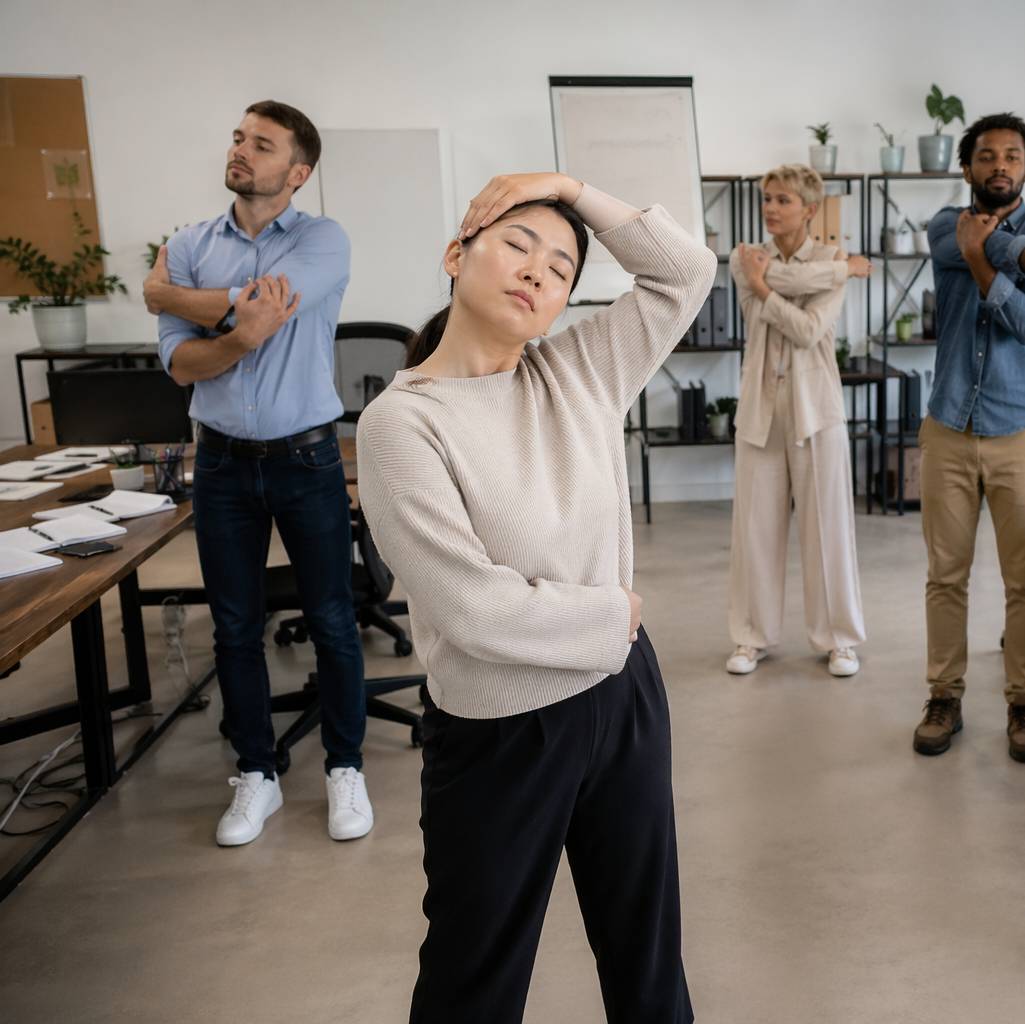
Why so many desk workers feel physically exhausted by the end of the day
One of the strangest things about modern office work is that people can spend most of the day sitting down and still feel completely physically drained by the evening.
That confusion makes sense on the surface because many employees assume tiredness should come from obvious physical effort. If someone has been lifting boxes all day, walking constantly or doing manual labour, physical fatigue feels logical. Sitting at a laptop for eight hours should theoretically feel easier.
Except the body does not really experience desk work as “doing nothing.”
The nervous system stays switched on for hours. The eyes stay fixed forward. The arms repeat tiny movements constantly. The breath becomes shallower. The hips remain flexed. The spine stops changing position enough. The shoulders begin quietly climbing towards the ears while someone answers email number ninety-three of the day, pretending everything is absolutely manageable.
Then, eventually, the body starts protesting. Not dramatically at first.
Just enough tension in the neck to notice during the drive home. Slight stiffness in the hips after sitting through meetings all afternoon. A strange feeling between the shoulder blades. Lower-back tightness that appears the second someone stands up. A kind of heavy, static fatigue that feels different from normal exercise tiredness because nothing actually moved enough to release it.
That is what prolonged desk work often creates: mental demand combined with physical stillness.
And the body is not particularly fond of that combination.
The real problem is usually lack of movement variation
A lot of people obsess over posture while completely ignoring movement variety.
That is understandable because posture advice is everywhere. Sit properly. Pull your shoulders back. Keep your core engaged. Adjust your chair. Align your monitor. Buy a standing desk. Buy another standing desk because apparently the first standing desk was spiritually insufficient.
Some of those things can help, but posture alone is rarely the real issue. The body does not actually want one perfect position all day. It wants options.
Human bodies are designed to shift, rotate, reach, walk, breathe, lean, twist, stand and move between different positions naturally throughout the day. Desk work dramatically reduces that variety. Even someone with a technically “good” desk setup can still become stiff because the body remains inside the same physical pattern for too long.
That is why many people feel surprisingly better after active weekends, even when they technically move more and do more physically demanding things. The body usually tolerates varied movement far better than static stillness.
Desk stiffness is often less about sitting badly and more about sitting continuously. Once people understand that, the solution becomes far more practical and far less obsessive.
Why “sit up straight” is usually terrible advice
Most posture advice sounds simple because it ignores how actual humans work.
“Sit up straight” assumes people can consciously maintain one ideal position while simultaneously concentrating, typing, solving problems, attending meetings, managing stress and surviving workplace life in general. Realistically, most people sit upright for approximately twelve seconds before drifting back into whatever position their nervous system and workload negotiate together.
That does not mean posture awareness is useless. It just means posture should be dynamic rather than rigid. Good posture is not a frozen shape.
Good posture is the ability to move easily between positions without accumulating excessive tension. Someone who shifts naturally, breathes well, stands regularly, and changes movement patterns throughout the day will often feel far better than someone forcing themselves into “perfect posture” while remaining physically rigid for hours.
Rigid posture can actually become exhausting because the muscles never get a break. People constantly brace, trying to maintain alignment rather than allowing the body to move naturally.
This is one reason workplace movement tends to work more effectively than endless ergonomic guilt. Instead of trying to force employees into one ideal position forever, movement restores variety, mobility and adaptability.
And honestly, most people already know they slouch sometimes.
They do not need another infographic aggressively reminding them like a disappointed PE teacher trapped inside LinkedIn.
Why office work creates shoulder and neck tension so quickly
The neck and shoulders usually become tight because the body starts compensating for everything underneath them.
When people spend long periods working at screens, several things tend to happen gradually at the same time. The upper back becomes less mobile. Breathing becomes smaller and more restricted. The ribcage moves less. The head drifts slightly forward. The arms stay positioned in front of the body for extended periods. The nervous system remains cognitively alert while physical movement decreases.
The shoulders then begin carrying more stabilising tension because the rest of the system is not moving enough.
This is why people often feel temporary relief after stretching the neck but find the tension returns almost immediately afterwards. The neck itself is not always the real issue. The whole working posture pattern contributes to the problem.
Movement works better because it changes the pattern rather than attacking one isolated muscle group. Shoulder circles, spinal movement, breathing, standing transitions and upper-back mobility often create more meaningful relief than aggressively yanking the neck sideways while sitting the same way for another five hours afterwards.
The body responds surprisingly well once it stops feeling trapped in one position.
Why breathing changes stiffness more than people realise
Breathing affects posture far more than most people understand.
During concentrated desk work, breathing often becomes restricted without anyone noticing. Employees hold their breath while replying to stressful emails, shorten their breathing during difficult tasks, or unconsciously brace through meetings and deadlines. Over time, this changes how the ribcage moves, how the shoulders behave and how much tension accumulates through the upper body.
The body cannot stay relaxed if breathing stays shallow all day.
That is partly mechanical and partly neurological. Reduced rib movement affects spinal movement. Shoulder muscles start helping with breathing more than they should. The neck becomes tighter. The upper back stiffens. The nervous system remains subtly braced because the breathing pattern never fully settles.
This is why even very small breathing resets can create noticeable physical relief. Not because breathing is magical. Because the body is mechanical.
When breathing improves, movement improves too. The ribs expand more naturally. The shoulders soften slightly. The upper back regains mobility. Tension patterns shift. The nervous system stops behaving like every spreadsheet is an approaching predator.
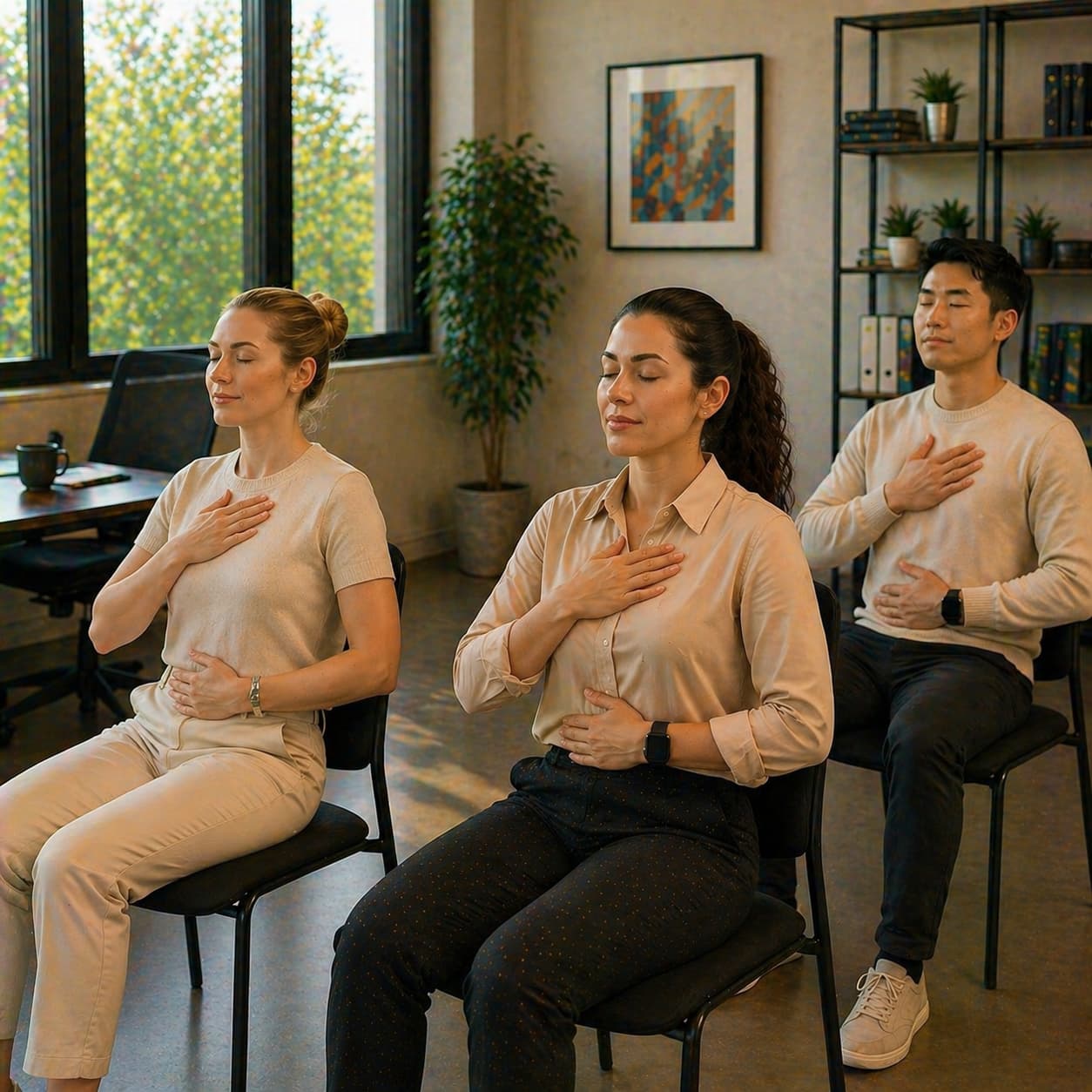
In workplace movement sessions, breathing usually works best when paired with gentle movement rather than treated like a separate wellness ritual. Employees do not need to meditate under a Himalayan singing bowl in the conference room. They simply need the body to remember how to move and breathe together again.
Why hips and lower backs become stiff during long workdays
The hips spend most of desk work in one position.
That matters because hips are designed for movement, not prolonged stillness. Walking, rotating, stepping, reaching and shifting weight all help maintain healthy mobility naturally. Sitting continuously removes much of that variation, which means the body gradually adapts to shortened ranges of movement throughout the day.
The lower back often gets blamed for this even though the problem usually involves the entire system around it.
When hips stop moving enough, the pelvis becomes less dynamic. The glutes contribute less. The spine compensates. The lower back absorbs extra tension because movement options elsewhere become more limited. Then people stand up after a long meeting and move like someone unfolding a camping chair left in storage for several winters.
Again, the issue is rarely sitting itself. The issue is uninterrupted sitting.
A body that sits sometimes, stands sometimes, walks regularly, and changes position frequently usually copes much better than a body trapped inside one shape all day.
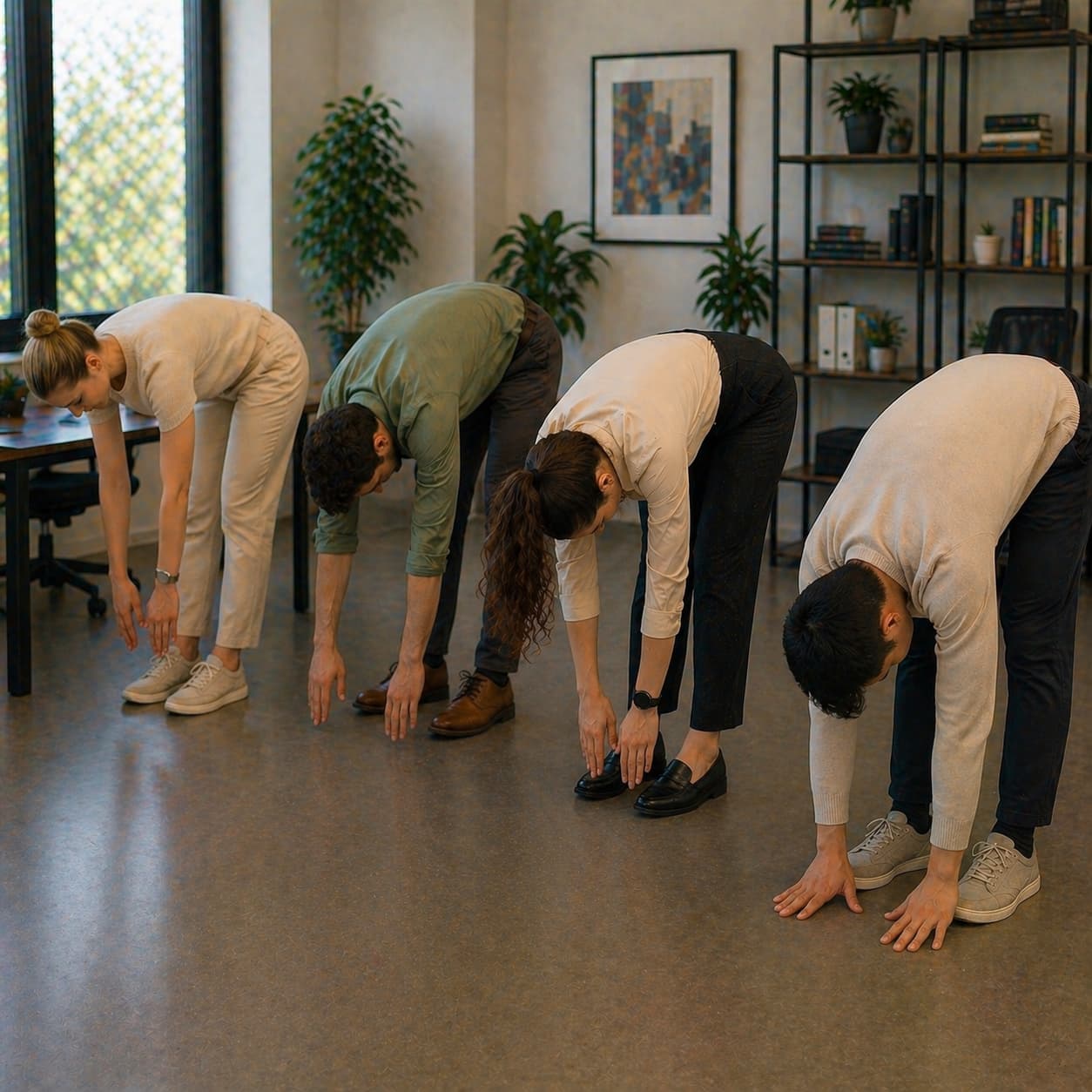
This is why simple movement interruptions matter so much. Standing briefly between meetings, walking during calls, shifting positions regularly or introducing gentle mobility resets often helps reduce stiffness before it becomes deeply uncomfortable.
The body generally responds better to small, consistent interruptions than dramatic attempts at “fixing” stiffness once it has fully settled in.
Why workplace movement should feel practical, not performative
Many employees already feel physically tired by the middle of the working week.
That is why turning workplace wellbeing into a forced fitness experience often backfires. People do not necessarily want lunchtime bootcamps, competitive wellness challenges or mandatory enthusiasm involving resistance bands near a flipchart.
Most desk workers are not asking for more intensity. They are asking for relief. That is an important difference.
Workplace movement works best when it feels grounded, calm and practical enough to fit naturally into office life. Short movement resets, breathing, mobility, posture variation and standing transitions tend to help far more than trying to transform work into a pseudo-gym environment.
Employees are far more likely to continue using movement tools that feel manageable in real working conditions.
This is one reason Sit Happens focuses on practical movement support rather than performance culture. The goal is helping teams feel physically better during work, not making everyone perform wellness in front of colleagues while secretly wondering if they can escape back to Excel.
Because sustainable movement usually looks ordinary. Not theatrical.
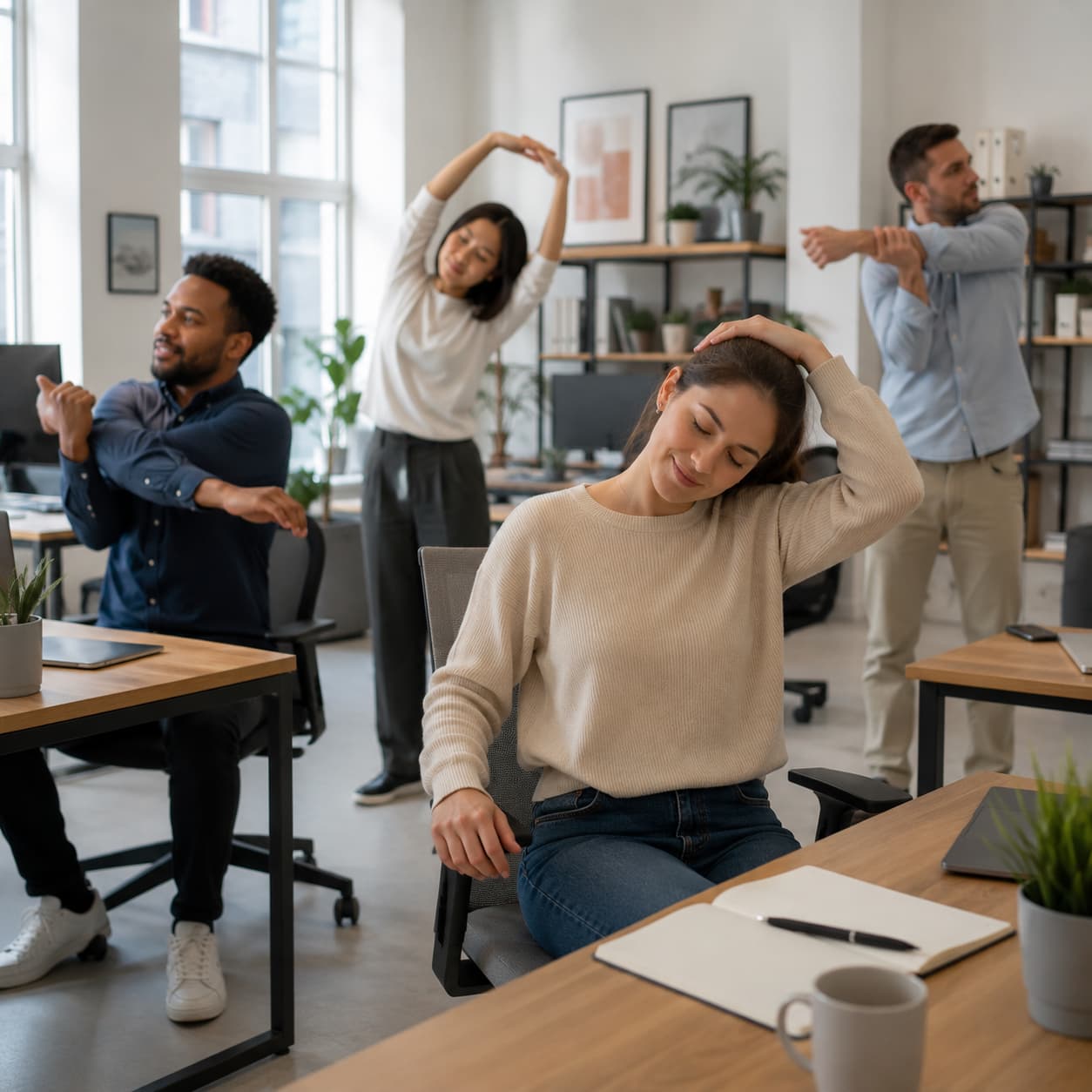
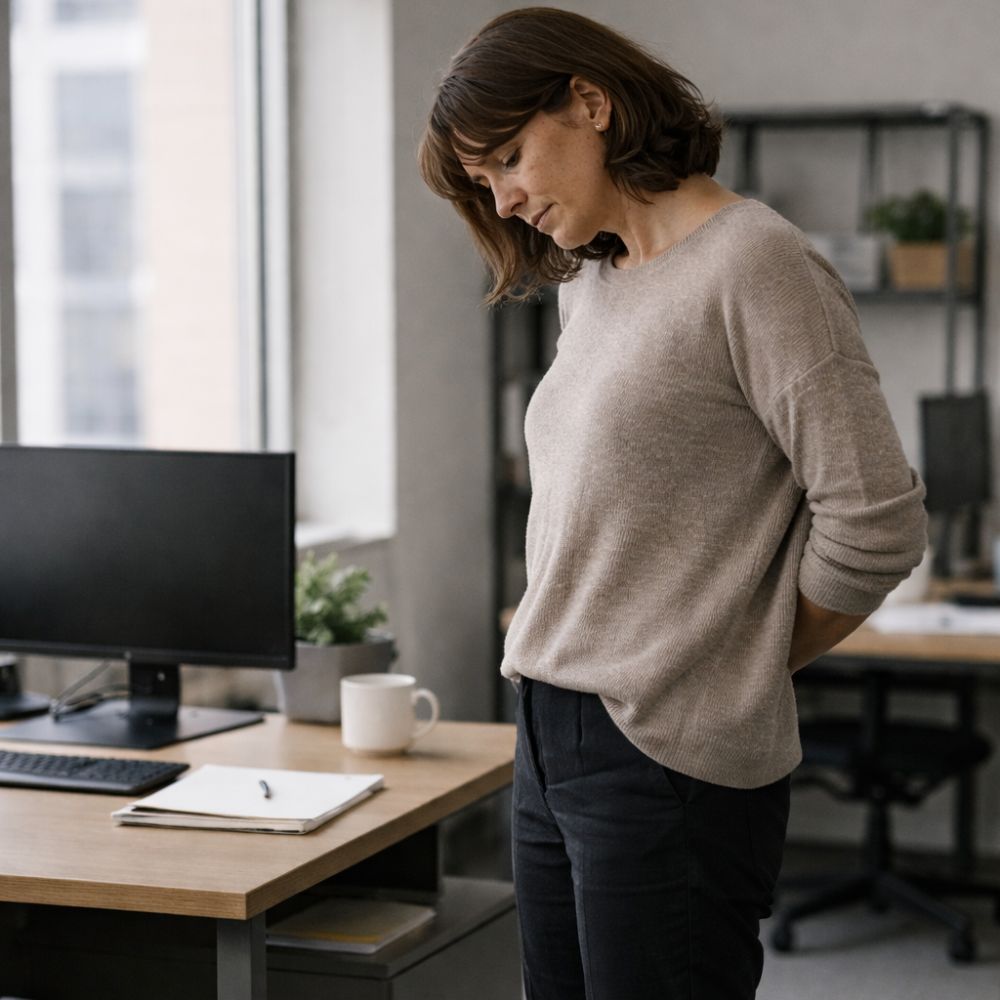
Why movement helps reduce brain fog too
Desk stiffness and mental fatigue are closely connected.
When people remain physically static for long periods, the entire system starts slowing down slightly. Breathing becomes shallower. Energy drops. Focus softens. Eyes become tired. The body feels heavy. Concentration becomes more difficult even though someone technically has not stopped working all day.
Movement interrupts that state.
Walking briefly between tasks, standing up after meetings, rotating the spine, breathing more fully or changing posture can help reset attention surprisingly quickly because the body and brain do not operate separately. Physical state influences cognitive state constantly.
This is explored further in How Sit Happens Helps Teams Reduce Stiffness, Fatigue and Brain Fog, where workplace movement is discussed not as fitness but as physical support for concentration, energy and nervous system regulation throughout the day.
The body does not need intense stimulation.
It usually just needs interruption from prolonged stillness. Why walking is still one of the most effective tools available. People massively underestimate walking because it feels too simple.
Modern wellness culture tends to reward complexity. If an intervention does not involve specialist equipment, expensive apps or someone shouting “optimise” repeatedly into a podcast microphone, people assume it cannot possibly matter very much.
Meanwhile, walking quietly solves half the problem.
Walking restores natural movement patterns without creating additional stress. The hips move dynamically again. The spine rotates. The arms swing naturally. The breath changes. The nervous system shifts. The eyes stop staring at the same fixed distance. The body experiences variation.
Even short walks can help reduce stiffness because they interrupt static positioning before the body fully settles into it.
This becomes especially valuable during meeting-heavy days where employees move directly from one cognitive demand to another with almost no physical transition in between. A short walk after a difficult call or before another task can completely change how the body feels.
And honestly, some emails should absolutely be walked off before replying.
Why desk stiffness gets worse during stressful periods
Stress changes movement patterns dramatically.
People become physically smaller under pressure. Breathing shortens. The jaw tightens. The shoulders rise. Movement reduces. The body braces unconsciously because the nervous system interprets sustained stress as something requiring protection.
This is why many employees feel far stiffer during high-pressure work periods, even if their workstation has not changed at all. The body adapts to emotional load physically.
Someone may technically sit the same way every day, but the amount of tension held inside that posture changes depending on stress, workload, deadlines and cognitive pressure. During difficult periods, employees often stop moving naturally because their nervous system prioritises concentration and vigilance over physical freedom.
Movement helps because it interrupts that bracing pattern.
Breathing improves. The spine moves more naturally. The shoulders soften slightly.
The nervous system receives a signal that the body can stop armouring itself constantly.
That is why movement support matters even in relatively low-intensity workplaces. Employees do not need physically demanding jobs to accumulate serious physical tension. Desk work creates its own version of overload. It is just quieter.
What employers should actually encourage instead
The healthiest workplace cultures usually make movement feel normal rather than exceptional.
Employees should not feel awkward standing briefly, stretching their shoulders, walking during calls or resetting posture between meetings. If movement becomes socially acceptable, people naturally use it more often without needing endless reminders or forced wellness initiatives.
That matters because behaviour follows culture.
If everyone remains glued to chairs for eight straight hours because standing up somehow feels rebellious, stiffness becomes inevitable. If movement is treated as practical maintenance instead of suspicious behaviour, the entire physical atmosphere of the workplace changes.
This does not require dramatic policy changes. Small things help:
| Helpful workplace habits | Why they matter |
|---|---|
|
Brief movement between meetings |
Interrupts prolonged sitting |
|
Walking during calls |
Restores natural movement |
|
Standing transitions |
Reduces stiffness accumulation |
|
Calm movement sessions |
Builds sustainable habits |
|
Better meeting spacing |
Allows physical resets |
|
Encouraging posture variation |
Reduces rigid positioning |
|
Breath-led mobility |
Helps regulate tension |
|
Short walking breaks |
Supports energy and focus |
|
Leadership participation |
Normalises movement behaviour |
|
Practical wellbeing support |
Feels usable rather than performative |
Why consistency matters more than intensity
Most desk stiffness improves through repetition rather than dramatic intervention.
Tiny movement interruptions repeated consistently throughout the day often help more than occasional intense stretching sessions performed once the body already feels completely wrecked. The nervous system and connective tissues respond well to regular variation because the body starts expecting movement again rather than preparing for endless stillness.
That is why sustainable workplace movement usually looks surprisingly simple.
-
- Standing up regularly.
- Walking more.
- Breathing properly.
- Rotating the spine occasionally.
- Changing positions.
- Moving the shoulders.
- Not waiting until the body feels awful before acknowledging it exists.
Intensity is often overrated in workplace wellbeing. Consistency changes far more.
Final thoughts: the body was never designed for stillness this long
The body can tolerate sitting.
It just does not particularly enjoy being trapped inside one physical pattern all day while simultaneously processing stress, deadlines, concentration and screen fatigue for hours without interruption.
Most desk stiffness is not a sign of failure. It is a fairly logical response to modern working conditions.
The solution is rarely forcing perfect posture or turning work into a fitness class that employees secretly dread. What helps most is restoring movement variety throughout the day in ways that feel practical enough to continue consistently.
-
- More walking.
- More posture changes.
- More breathing.
- More spinal movement.
- More permission for the body to stop behaving like office furniture.
Because ultimately, reducing desk stiffness is not really about optimisation. It is about helping people feel physically human again while they work.
If your team spends long hours sitting, working at screens and dealing with stiffness, fatigue or posture strain, Sit Happens offers practical workplace movement sessions designed for real office life.
You can also explore Movement, read Workplace Movement Sessions in Nottingham: What Local Employers Need to Know or explore Why Desk-Based Teams Need Movement Before More Wellbeing Advice.
Key takeaway
Reducing desk stiffness does not require intense exercise, awkward office workouts or forcing employees into wellness culture they secretly hate. What helps most is regular movement variation throughout the working day, combined with practical posture awareness, mobility, breathing and opportunities for the body to stop repeating the exact same physical pattern for hours at a time.
Frequently Asked Questions
Desk stiffness is usually caused by prolonged sitting, reduced movement variation and static working positions maintained for long periods during the day.
Not always. In many cases, stiffness develops because the body stays in the same position too long rather than because someone sits “incorrectly.”
Simple strategies such as standing regularly, walking briefly, changing positions, improving breathing and introducing gentle mobility throughout the day can help reduce stiffness significantly.
No. Workplace movement works best when it feels practical and sustainable rather than intense or performative.
Screen work often reduces upper-back movement, changes breathing patterns and increases muscular tension through the shoulders and neck during prolonged concentration.
Yes. Walking restores natural movement patterns, improves circulation and interrupts prolonged static sitting.
Stress often creates unconscious physical bracing patterns, including shallow breathing and increased muscular tension, especially through the neck and shoulders.
Yes, but posture should remain dynamic rather than rigid. Regular movement and posture variation are usually more helpful than trying to hold one perfect position all day.
Sit Happens is a workplace movement programme designed for desk-based teams, helping employees reduce stiffness, fatigue and brain fog through practical movement strategies.
Yes. Movement tools can be adapted for office, hybrid and home-working environments, making them practical for modern desk-based work.