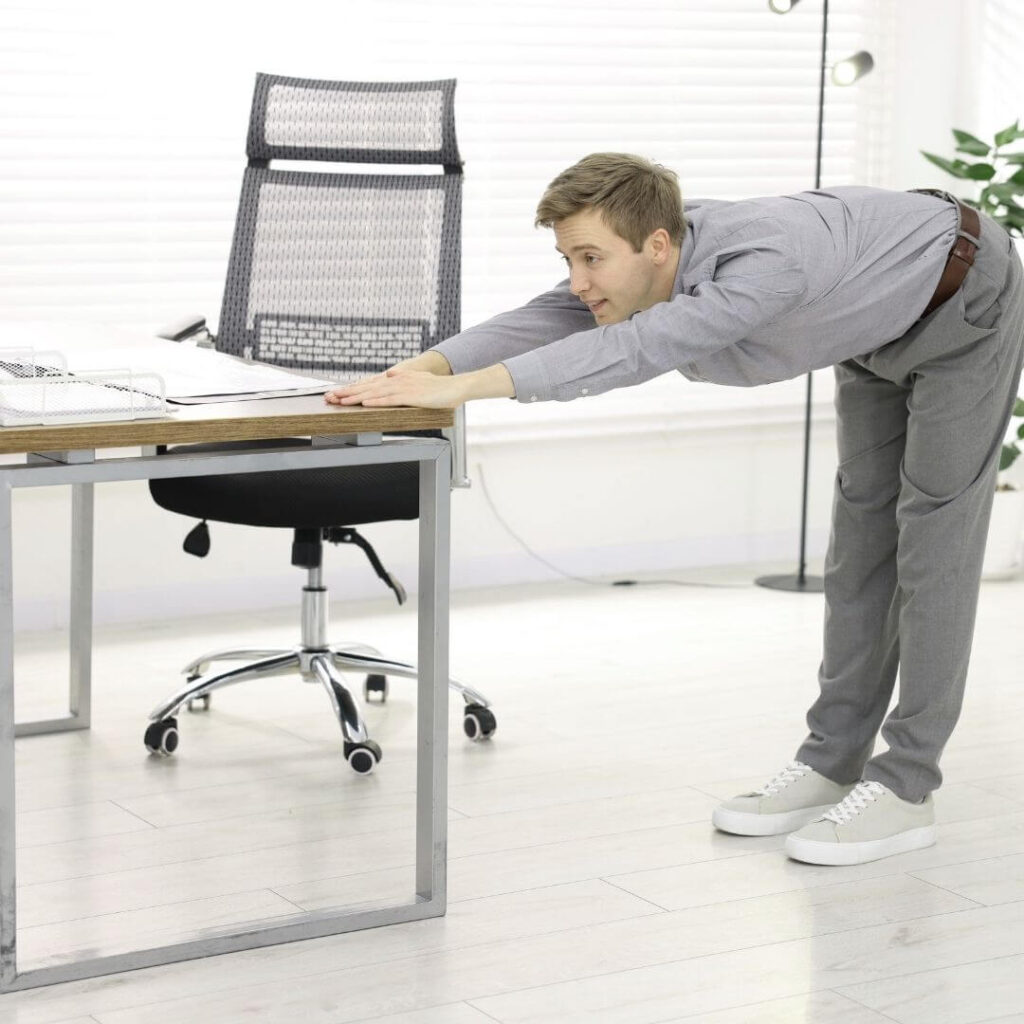
ROI of Workplace Movement Programmes: What Companies Actually Measure

Most companies don’t ask about workplace wellbeing ROI because they want a philosophical answer. They ask because someone in operations, HR, or finance needs to justify the spend.
 
The difficulty is that movement programmes don’t behave like equipment purchases. You don’t install them and suddenly see a single number jump. What changes first is how people feel during the working day, and that eventually changes how they perform.
 
Teams stop ending the day exhausted. Afternoon concentration becomes more stable. Fewer people complain about necks, backs, and shoulders every week. None of those things look dramatic individually, but when they accumulate across months, the operational difference becomes obvious.
 
This article explains what organisations realistically measure when evaluating workplace movement programmes, what changes appear first, and why structured delivery produces far stronger returns than occasional wellbeing events.

ROI Starts With What Actually Happens During the Workday

The simplest way to understand workplace movement ROI is to look at what sitting-heavy work is already costing organisations. Long static working patterns affect circulation, muscle activity, breathing mechanics, and cognitive stamina. That combination quietly reduces output long before it shows up as absence.
 
If you want the physiological explanation behind this, What Chronic Sitting Does to the Nervous System breaks it down clearly.
 
When organisations introduce short, repeatable movement sessions during the working week, the first measurable returns usually appear in daily comfort and concentration rather than financial metrics. Over time, those daily improvements influence larger organisational outcomes.

The First ROI Signals (Usually Within the First Month)

The earliest changes are simple and practical.
 
Employees report less stiffness by the end of the day. Fewer people stand up from their desks looking like they’ve just finished a long-haul flight. Teams often notice they can stay focused for longer stretches without needing constant breaks driven by fatigue.
 
These early improvements are not surprising. Physical movement supports circulation and alertness, which directly affects cognitive endurance. If your organisation relies heavily on thinking work, the connection between physical support and mental performance becomes difficult to ignore. This relationship is explained in Why Cognitive Work Needs Physical Support.
 
Participation patterns are another early indicator. When sessions fit easily into the working day, attendance tends to increase rather than fade. That alone tells companies the programme is operationally workable.

What Companies Begin to Measure After Several Months

Once programmes run consistently for a few months, companies usually start looking at broader indicators.
 
Managers often notice fewer mid-afternoon performance dips. Teams maintain steadier energy levels during longer work cycles. Short-term absence linked to physical discomfort sometimes begins to decline, particularly in heavily desk-based departments.
 
None of these outcomes come from a single session. They appear because movement becomes part of the weekly rhythm rather than a one-off event. That is why structured delivery matters. A clear overview of how these programmes are built can be found in Workplace Movement Program.

Why One-Off Workshops Rarely Produce ROI

Many organisations start with isolated wellbeing workshops and then conclude that workplace wellbeing “doesn’t work.” In reality, the issue is not the concept — it is the delivery model.
 
Behaviour changes when people repeat small actions regularly. A single session might introduce useful ideas, but without repetition, employees return to exactly the same working patterns within days. Programmes that run weekly, even in short sessions, create much stronger results because they reinforce the habits that keep people comfortable and focused.
 
This is also why workplace-specific delivery models exist. Sessions designed for office environments, such as Sit Happens, are structured so employees can participate without leaving the building or changing clothes, which keeps participation levels high: https://vikithorbjorn.art/sit-happens

The ROI Companies Often Overlook

One of the most underestimated returns of workplace movement programmes is performance consistency. Many organisations operate in knowledge-heavy environments where output depends on sustained concentration rather than bursts of effort. When teams feel physically better, they work more consistently across the entire day.
 
That consistency rarely shows up as a single dramatic metric, but managers notice it quickly. Meetings feel sharper. Late-day errors decrease. Employees are less drained by Thursday afternoon. These small operational improvements are often what convince companies to continue programmes long term.
 
For organisations comparing different workplace wellbeing delivery formats and costs, this overview may be useful: https://vikithorbjorn.art/corporate-wellness-programmes-uk
Corporate Wellness Programmes UK Costs, Formats and What Companies Should Expect

How Companies Track ROI Without Overcomplicating It

Contrary to what many expect, organisations rarely use complex analytics systems to evaluate workplace movement programmes. Most track simple indicators:
    • Participation trends
    • Short employee comfort surveys
    • Absence pattern comparisons
    • Manager feedback on energy levels and concentration
    • Internal engagement feedback
These indicators, observed over several months, usually provide a clear picture of whether the programme is working.

Where Movement Programmes Fit in Modern Workplace Strategy

Corporate wellbeing is gradually shifting from a morale initiative to an operational support system. Desk-based work creates predictable physical and cognitive strain patterns, and organisations are beginning to recognise that ignoring those patterns has measurable costs.
 
Movement-based programmes address those costs directly. When they are embedded into the working week rather than treated as occasional events, their impact becomes visible across comfort, engagement, and performance stability.
 
If you want to see how these programmes operate inside real working environments, Movement in the Workplace provides a practical overview

The Practical Reality of ROI

The ROI of workplace movement programmes rarely appears as a single number on a dashboard. It appears as fewer complaints, steadier concentration, stronger participation in wellbeing initiatives, and more consistent performance across the working week.
 
Companies expecting instant transformation often miss these signals. Companies that track gradual operational changes usually see the value clearly within a few months, particularly in environments where employees spend most of the day seated.

Questions Companies Usually Ask About ROI

What usually changes first when these programmes start running?

Comfort. People stop feeling as stiff by the end of the day, and the mid-afternoon slump becomes less dramatic. Those are usually the first signals something is working.

Do companies actually see financial ROI, or is it more indirect?

It’s usually indirect at first. You see fewer short-term absence days linked to discomfort, steadier productivity across the week, and better energy levels. Over time those translate into financial value, but they rarely show up as a single line item.

Is it realistic to expect results from a single workshop?

Not really. Workshops can be useful for introducing the idea, but ROI usually comes from repetition, short sessions delivered consistently over several weeks.

How do companies track whether the programme is worth continuing?

Most keep it simple. They look at attendance, short internal feedback surveys, and whether managers notice fewer complaints about fatigue or discomfort. You don’t need complicated dashboards to see whether something is helping.

Which teams tend to benefit the most?

Teams that spend most of the day seated or doing cognitively heavy work. When people rely on sustained concentration, even small improvements in physical comfort make a noticeable difference.

What tends to convince leadership to keep the programme running?

Consistency. When managers notice that teams are finishing the day with more energy and fewer complaints, the value becomes obvious fairly quickly.

Does participation really matter that much?

Yes. Even well-designed programmes only work if people actually attend. That’s why delivery inside the working day usually produces better ROI than optional after-hours sessions.

Where can we see how a structured workplace movement programme is delivered?

You can review the delivery structure here: https://vikithorbjorn.art/sit-happens