fbpx

Yoga for Children to Move, Release, and Feel Calm
This page explains the philosophy and intention behind my approach to yoga and movement for children. If you want a broader overview of how this work is held across different ages and stages, you can read more here: Yoga and Movement for Children
 
If you’re looking for current class details for ages 5-13 in Nottingham, you can find those here: Kids & Tween Yoga Classes (Ages 5-13)
 
Children carry more than we often realise.
 
They carry noise, expectation, stimulation, pressure to behave, pressure to perform, pressure to keep up. Even when their lives look simple from the outside, their nervous systems are rarely quiet. Many children move through their days switched on, alert, reactive, and tired in a way that does not always show up as words.
 
Yoga gave me a way to slow down, to release tension I did not know I was holding, and to be present in my body rather than stuck in my head. Over time, it became a place where emotion could move without needing to be explained, justified, or fixed. That experience matters to me. And I believe children need access to that kind of space too.
 
Not as therapy. Not as discipline. And definitely not as something they have to be good at.
 
As a place to move, to play, to be challenged gently, and to feel calm without being told to calm down.
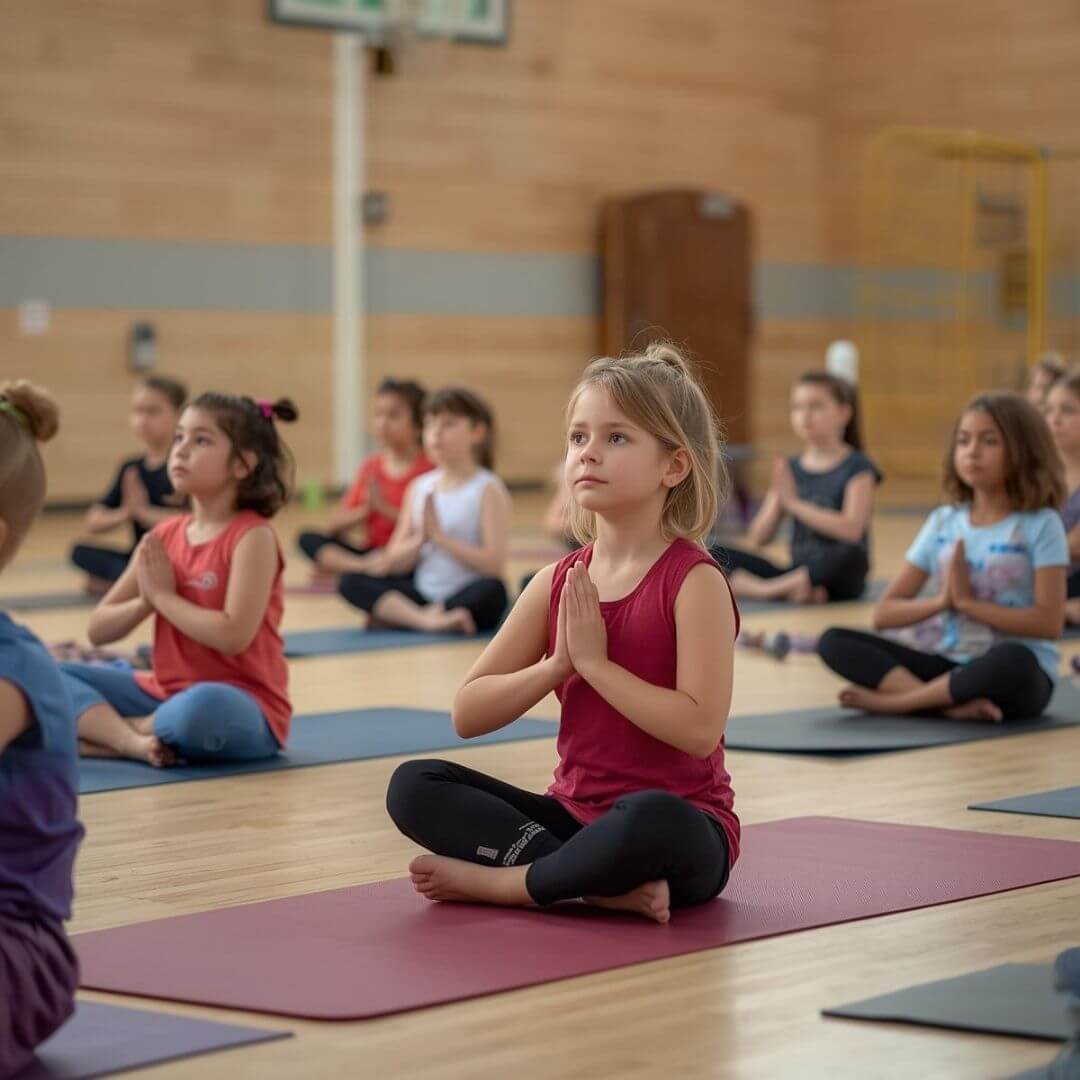
Children seated on yoga mats with hands together during a closing moment of class
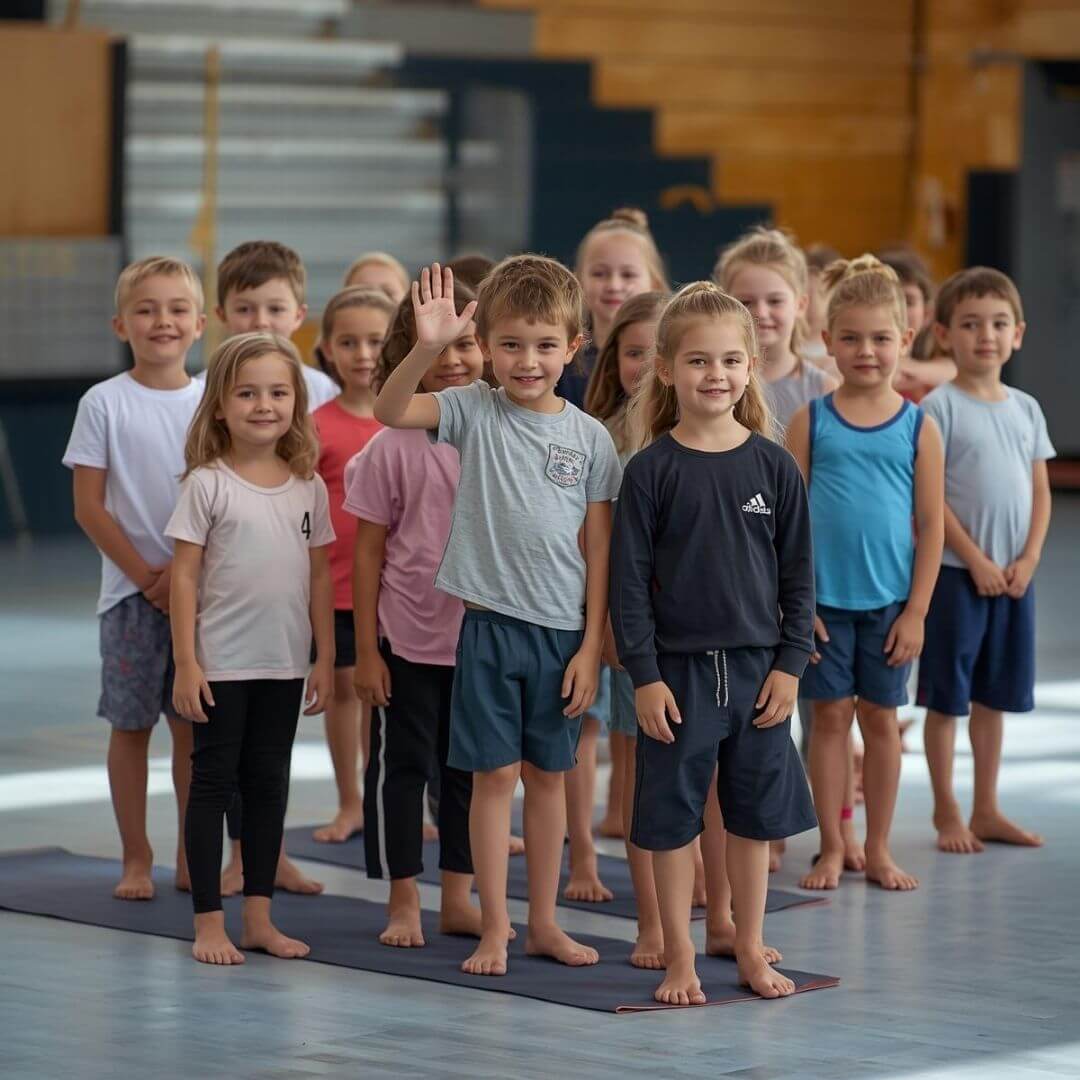
Group of children standing on yoga mats in a spacious indoor hall

What this Space is About

This work is rooted in the belief that children do not need more instruction on how to behave. They need opportunities to come back into their bodies in a way that feels safe, curious, and contained.
 
Yoga offers that because it combines movement, attention, and rest in a way that allows the nervous system to settle naturally. It gives children a chance to discharge energy, to test strength and balance, to stretch and soften, and then to pause. Calm is not forced. It emerges.
 
The calm that comes from movement is different from the calm that comes from compliance. One is internal. The other is imposed. Children know the difference.
 
In this space, movement is not chaotic, but it is not rigid either. There is structure, but there is also play. There is challenge, but it is offered with care. Children are invited to explore what their bodies can do, how it feels to try, how it feels to rest, and how it feels to be present with themselves.

Why Movement Matters for Emotional Processing

Children process emotion through their bodies long before they can articulate it. When there is no outlet for that physical processing, feelings tend to spill out sideways as restlessness, frustration, withdrawal, or overwhelm.
 
Yoga creates a rhythm where movement and stillness support each other. Strong poses give children a sense of capability and grounding. Flowing sequences allow energy to move through rather than get stuck. Moments of rest offer a chance to integrate what has just happened.
 
Nothing has to be explained. Nothing has to be labelled. The body does the work quietly.
 
This matters because many children are already being asked to manage more than their nervous systems are ready for. Screens, schedules, school environments, social pressures, and constant input leave little room for genuine release. Yoga offers a counterbalance. Not by removing stimulation entirely, but by teaching children how to return to themselves within it.

Play, Challenge, and Presence

This is not about asking children to sit still for long periods or to perform calmness on cue. It is about recognising that calm often comes after movement, not before it.
 
Play is essential here. Play invites curiosity, lowers defences, and makes challenge feel safe. Through playful movement, children explore balance, coordination, strength, and flexibility without the pressure of getting things right. They learn through doing, not through correction.
 
Challenge is also important. Children need to feel capable. They need moments where something is slightly difficult and they discover that they can stay with it. That sense of capability builds confidence in a way that praise alone never does.
 
Presence grows from this combination. When the body is engaged, attention follows. When attention settles, space opens up for rest. Calm becomes a felt experience rather than a rule to follow.
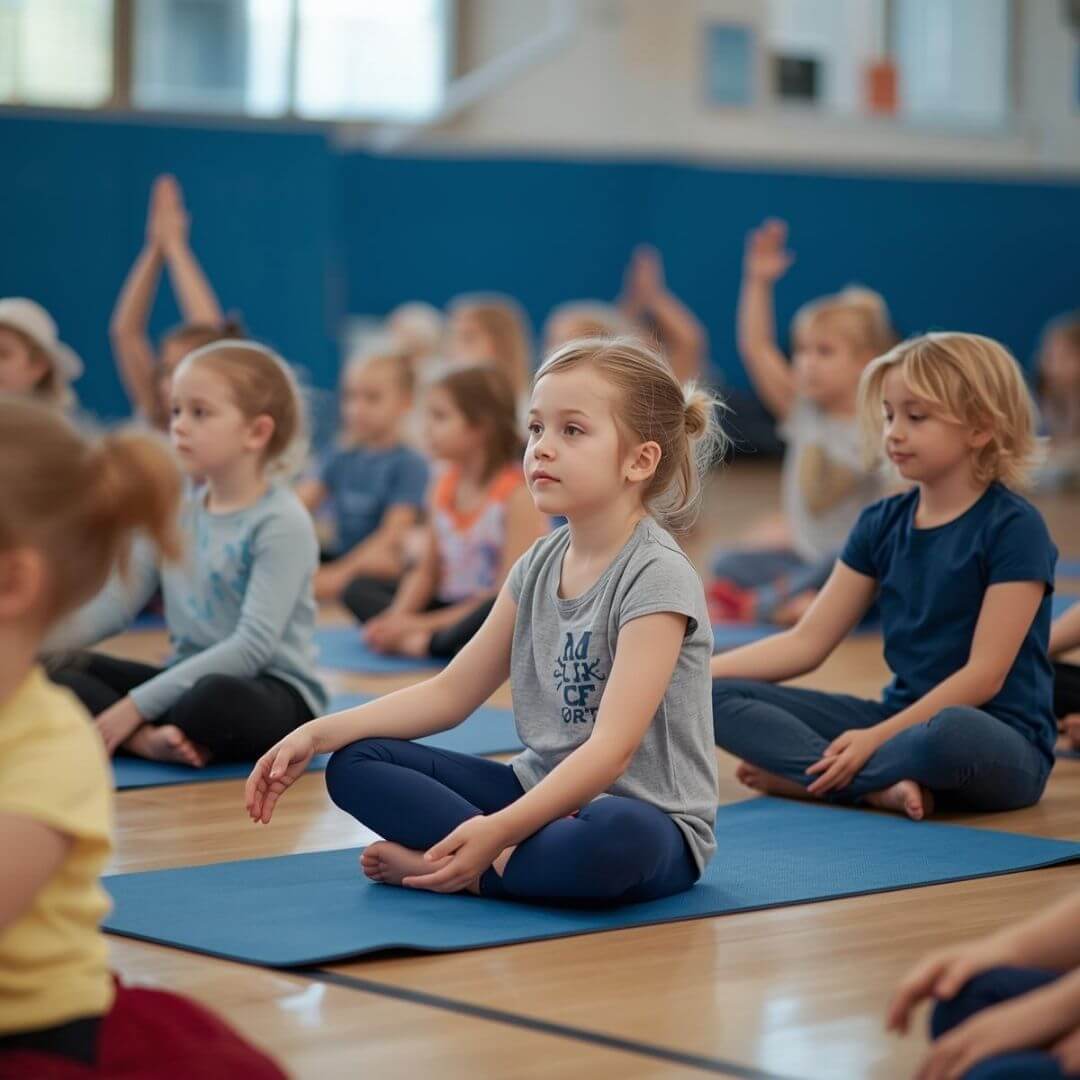
Children sitting cross-legged on mats during a quiet moment in a yoga session
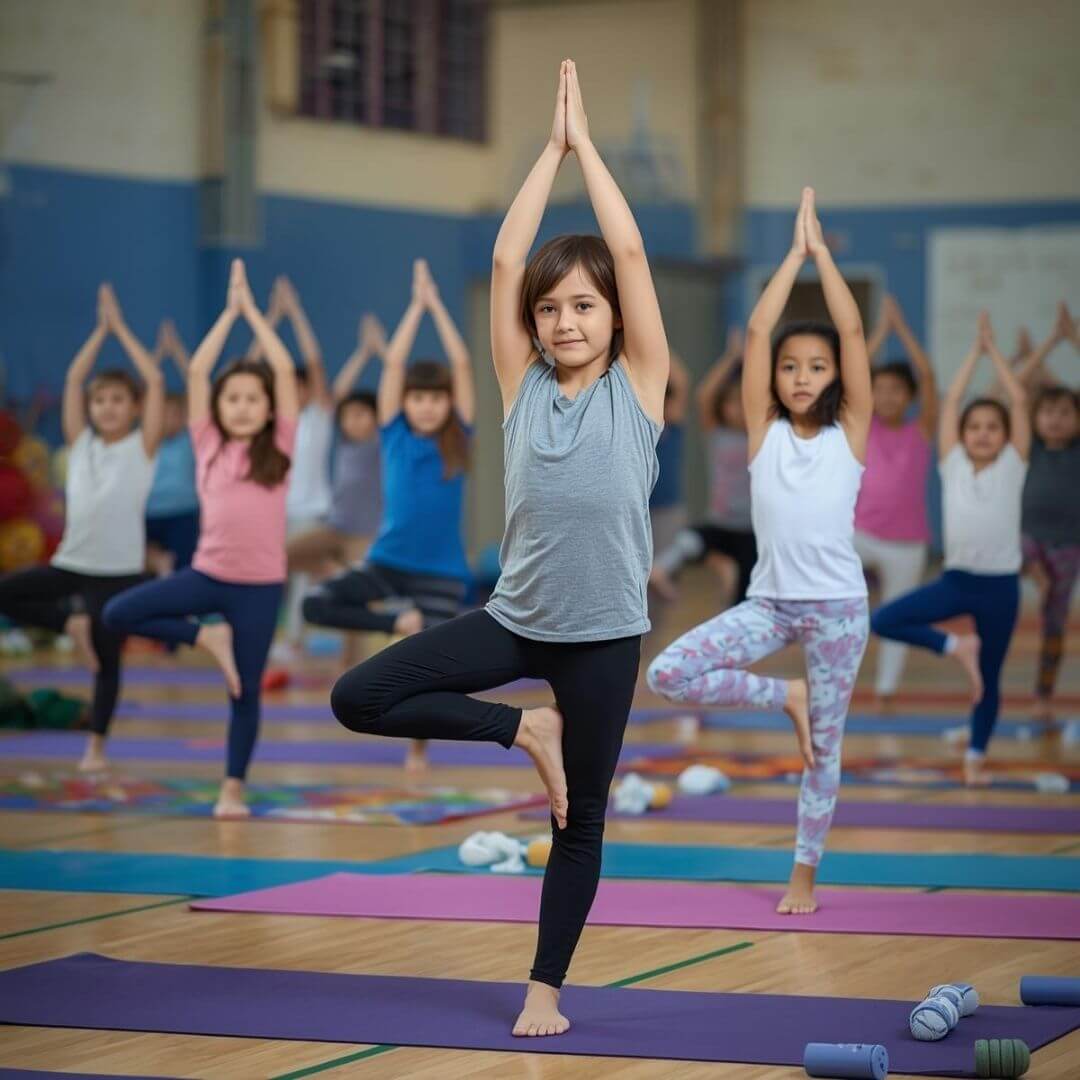
Children practising balance poses during a yoga for children class

Who this is For

This space is for children who need a place to move and reset. Children who carry a lot. Children who are sensitive, energetic, thoughtful, or simply tired in a way that is hard to name.
 
It is for families who value emotional health, not as a performance, but as something lived day to day. Families who understand that regulation is learned through experience, not instruction.
 
It is not about fixing children. It is about supporting them.
 

For parents who want to explore this approach in practice, I currently offer weekly kids and tween yoga and movement classes in Nottingham.

You can read full details, including age range, structure, and how to register interest, here: https://vikithorbjorn.art/kids-yoga-nottingham

A Quiet Intention

I’m taking time to shape this work carefully. When it becomes a practical offering, it will be grounded, structured, and respectful of children’s needs and limits. There will be clarity, boundaries, and care in how it is held.
 
For now, this page exists to name the intention and the values behind it. To say, simply and honestly, that children deserve spaces where they can move, release, and feel calm in their own way.
 
If this way of thinking resonates with you, you are in the right place.

What This Kind of Yoga Space Looks Like for Children

Parents often ask what actually happens in a yoga space like this. Not in terms of poses or sequences, but in terms of how it feels for a child to be there.
 
The sessions are built around movement first. Children arrive as they are, often carrying the residue of the day. There is no expectation that they settle immediately. Movement gives the body a way to release what it is holding before anything else is asked of it.
 
Playful sequences, balance work, and strength-based poses give children something to engage with physically. These moments matter because they allow energy to move rather than be suppressed. Children are not asked to perform calm. Calm emerges as the body finds its rhythm.
 
Rest comes after movement, not before it. This is important. When a child has had a chance to stretch, push, balance, and explore, stillness becomes accessible rather than frustrating. Quiet moments are short and optional at first. Over time, children often choose them themselves.
 
There is structure, but it is not rigid. Sessions follow a predictable shape so children know what to expect, but within that shape there is room for curiosity and variation. Challenge is offered gently, without pressure to get things right.
 
Emotional processing happens without discussion. Children are not asked to talk about how they feel. They are given space to move, breathe, and notice. For many children, this is where regulation actually begins.
 
This is not about producing flexible bodies or perfectly behaved children. It is about giving children access to a state of presence they can recognise and return to. A sense of calm that comes from inside rather than from instruction.

Frequently Asked Questions

Is this suitable for kids who can’t sit still?

Yes. And that’s kind of the point.
Kids aren’t expected to arrive calm or focused. Movement comes first. Once the body has had a chance to move, settling often happens on its own. Not perfectly, not instantly, but more naturally than when kids are asked to be still from the start.

Is this just a normal kids yoga class?

No. And if you’ve tried a few and they didn’t quite land, that’s usually why.
This isn’t about teaching poses or asking children to perform calm. Yoga is used as a way to move, play, challenge the body a little, and then rest. The emphasis is on how it feels, not how it looks.

Do children have to talk about their feelings?

No. There’s no group sharing, no checking in, no pressure to explain anything.
A lot of processing happens physically. Movement, breath, and rest do the work without needing words. For many kids, that’s a relief.

What ages is this for?

It’s aimed at children between 5 and 13 years ol.

It’s for kids who benefit from structure, movement, and a bit of space to slow down without being told to.

Is this okay for anxious or sensitive children?

Yes. The sessions are predictable and held with care, but they’re not rigid.

Children aren’t pushed to join in straight away and they’re not corrected constantly. Sensitive kids often respond well to knowing what’s coming next, while still having room to choose how they take part.

Will kids be challenged, or is it very gentle?

They’ll be challenged, but in a playful way.
Strength, balance, and coordination are part of it. There’s no competition and no comparison. Feeling capable in their body often does more for confidence than being told they’re doing well.

Is this meant to fix behaviour?
No. That’s not what this is about.
 
This isn’t a behaviour programme. It’s about giving kids a way to regulate through movement so daily life feels a bit easier for them, from the inside out.
When will sessions be available?

Session details and availability are shared on the class page, where you can also register your interest.

If you’d like to see how this approach is offered in a real, structured class setting, you can find full details here.