
Children’s Movement Classes in Rushcliffe: Yoga, Pilates and Confidence Through Movement
TL;DR
Children’s movement classes in Rushcliffe can give children a calmer, more structured way to build strength, posture, coordination, confidence and body awareness without the pressure of competitive sport.
These classes are not about forcing children into perfect poses, turning them into mini athletes, or pretending every child wants to spend their week chasing a ball around a field while an adult shouts “spread out” into the wind.
They are about helping children feel more capable in their bodies.
Through yoga, Pilates and structured movement, children can learn how to balance, breathe, strengthen, stretch, focus, move with control, recover from wobbling, and build confidence in a way that feels steady rather than performative.
For local class details, the main page is here: Children’s Yoga and Pilates in West Bridgford.
If you are still deciding whether yoga or Pilates is the better fit for your child, read: Children’s Yoga vs Children’s Pilates: Which Class Is Right for Your Child?
Definition: what are children’s movement classes?
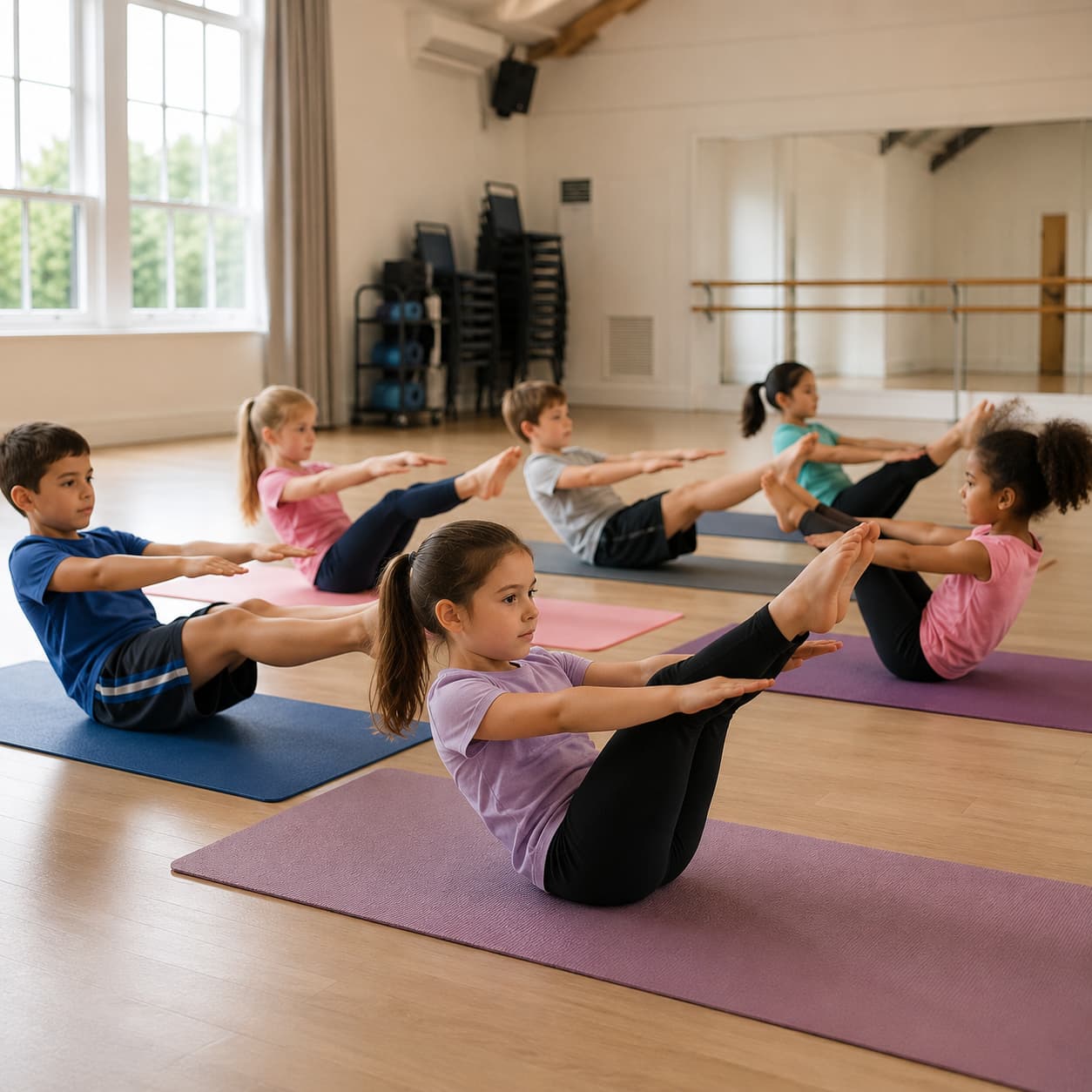
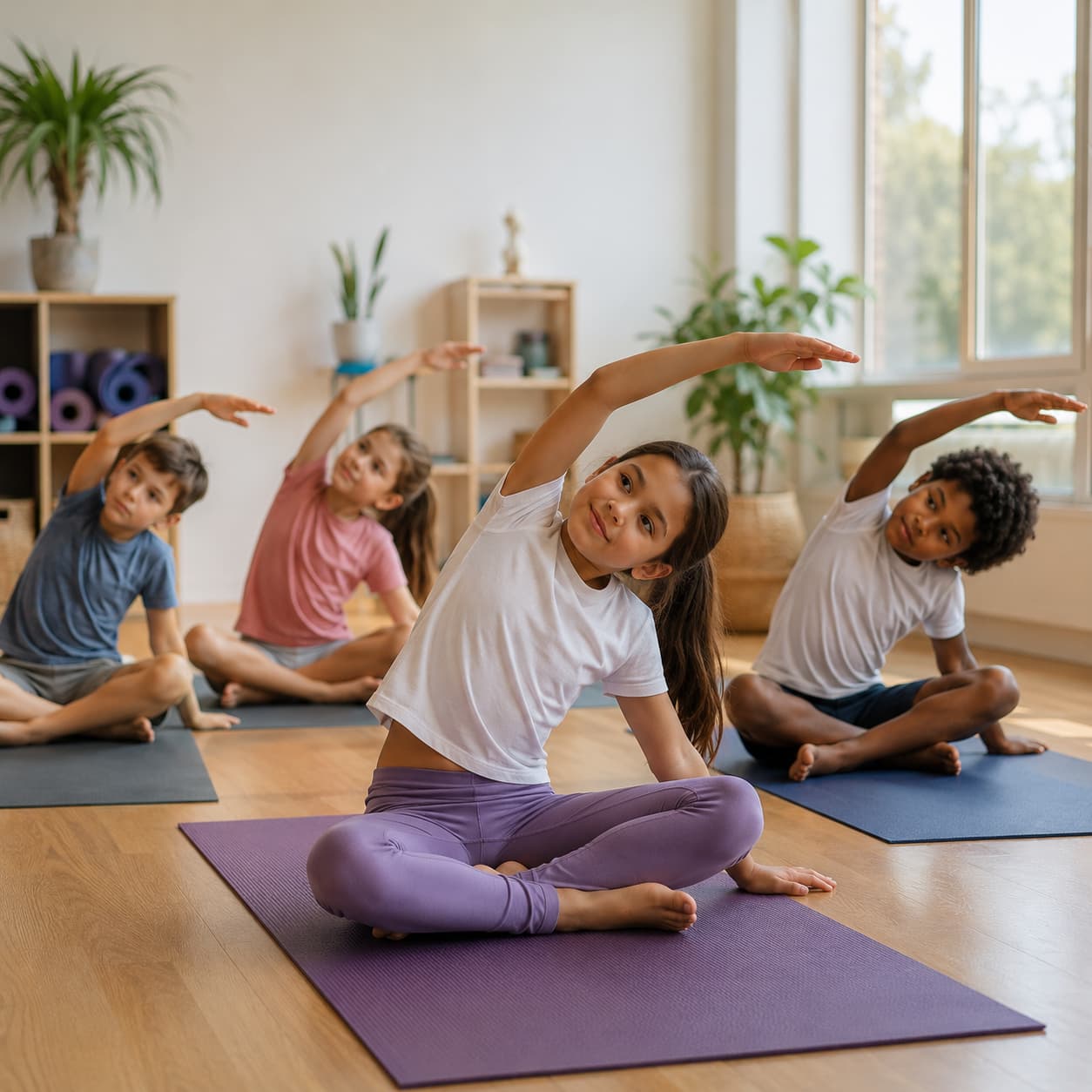
Children’s movement classes are structured, age-appropriate sessions that help children develop strength, balance, coordination, posture, mobility, body awareness, focus and confidence through guided movement. They may include yoga, Pilates, balance work, simple strength exercises, breathing, stretching, posture awareness and calming tools. The aim is not performance. The aim is physical confidence, movement literacy and a healthier relationship with the body.
Why children’s movement classes matter
Children need movement, but not all children need the same kind of movement.
That sounds obvious, but it is often forgotten. A lot of children’s physical activity is still built around sport, speed, competition, noise, teams, winning, losing, being picked, being watched, and having to perform in front of other children who may or may not be kind about it. Some children thrive in that environment. Brilliant. Let them run, kick, throw, compete and enjoy themselves. No problem.
But some children do not thrive there.
Some children are physically cautious. Some are bendy but not strong. Some are strong but not coordinated. Some are bright and capable but feel awkward in their bodies. Some are anxious. Some are easily overstimulated. Some are not interested in sport, but still need movement. Some are already sporty but need better posture, balance, mobility and control. Some are full of energy, but that energy comes out sideways like a shopping trolley with one dodgy wheel.
This is where children’s movement classes become useful.
A good children’s movement class gives children a different kind of physical space. It does not ask them to win. It does not ask them to be naturally athletic. It does not ask them to perform confidence before they have built it. It gives them clear structure, practical movement, repetition, encouragement, challenge, calm and enough room to improve without feeling judged.
That matters because movement is not only about fitness.
Movement affects how children feel in their bodies, how they hold themselves, how they manage effort, how they recover from mistakes, how they concentrate, how they balance, how they breathe, and how confident they feel when asked to try something new.
In Rushcliffe, where many families are looking for thoughtful, structured activities that support both physical development and emotional wellbeing, children’s yoga, Pilates, and movement classes can offer something that sits between sport, wellbeing and body confidence.
Not soft. Not fluffy. Not “everyone lie down and imagine you are a cloud” for forty-five minutes, because honestly, no.
Structured. Calm. Useful. Human.
Why Rushcliffe families are looking for different movement options
Rushcliffe has plenty of active families, schools, sports clubs and after-school options, but that does not mean every child has found the kind of movement that suits them.
Some children love football, netball, dance, gymnastics, swimming or athletics. Others tolerate those things because adults keep saying they are good for them, which is true but not always persuasive when a child feels self-conscious, tired, overwhelmed or simply uninterested.
Parents often start looking for alternatives when they notice that their child needs movement, but not necessarily another competitive activity.
They may notice their child slumping over screens, complaining of tiredness, struggling with balance, avoiding PE, becoming anxious in busy environments, moving with very little control, or losing confidence because they do not feel “sporty.” They may also notice that their child is physically capable, but needs better posture, coordination, core strength, mobility or focus.
Children’s movement classes can meet that need because they are not built around comparison.
Yoga and Pilates both give children ways to move that are structured but not competitive. They can support children who need calm, children who need strength, children who need confidence, and children who need to feel that movement belongs to them even if they do not enjoy traditional sport.
That last part is important.
When a child decides they are “not good at movement,” that belief can follow them for years. It can shape how they approach PE, exercise, posture, confidence and even how much space they feel allowed to take up physically. A well-taught movement class can interrupt that story early, before it hardens into something they carry into adulthood.
And frankly, that story deserves to be interrupted.
Decision box: is a children’s movement class right for your child?
| If your child needs… | A movement class may help by… | Best fit may be… |
|---|---|---|
|
Avoids competitive sport |
Giving them movement without pressure, ranking or performance |
Yoga, Pilates or mixed movement |
|
Struggles with posture |
Building strength, awareness and better physical support |
Pilates or structured movement |
|
Gets overwhelmed easily |
Offering a calmer, clearer environment with breathing and grounding |
Yoga or gentle movement |
|
Has lots of energy but little control |
Helping them slow movement down and develop coordination |
Pilates or structured movement |
|
Lacks confidence in PE |
Letting them build skills steadily and safely |
Yoga, Pilates or mixed movement |
|
Is flexible but not strong |
Adding stability, core support and controlled strength |
Pilates |
|
Is strong but stiff |
Supporting mobility, breath and movement variety |
Yoga or mixed movement |
|
Finds balance difficult |
Practising balance in a low-pressure setting |
Yoga, Pilates or structured movement |
|
Needs better focus |
Using movement, breath and repetition to build attention |
Yoga or Pilates |
|
Needs a calmer after-school activity |
Providing structure without chaos |
Yoga, Pilates or mixed movement |
Children’s movement is not just “exercise for kids”
Children’s movement classes should not be treated as a smaller, cuter version of adult fitness.
Children are not tiny adults with school bags and suspicious snack habits. Their bodies, attention spans, confidence, coordination and emotional needs are different. A good children’s movement class has to be developmentally appropriate, clearly taught, adaptable, safe, and emotionally intelligent enough to notice when a child needs challenge and when they need reassurance.
The aim is not to exhaust them.
The aim is to build physical confidence.
That means children learn how to move with more awareness. They learn how to balance, strengthen, stretch, coordinate, breathe, pause, recover and try again. They learn that wobbling is not failure. They learn that strength can be quiet. They learn that calm can be practised. They learn that movement does not have to involve being shouted at across a pitch by someone holding a whistle like a tiny weapon.
A good movement class gives children tools.
Some of those tools are physical, such as stronger posture, better balance, more control, improved mobility and clearer coordination. Some are emotional, such as patience, confidence, self-trust, focus and the ability to stay with something that feels challenging without immediately giving up.
That is why children’s movement classes can be so valuable.
They build the foundations underneath sport, school, confidence and everyday physical life.
Yoga for children in Rushcliffe
Children’s yoga can be especially useful for children who need calm, focus, mobility, balance, breath and emotional regulation.
That does not mean the class should be silent, serious or painfully worthy. Children’s yoga should still feel alive. It needs enough structure to be safe and enough imagination to keep children engaged, but it should not dissolve into chaos or become so fluffy that nobody knows whether they are exercising, pretending to be a tree, or waiting for snack time.
When taught well, yoga gives children a way to slow down without being told off for having energy.
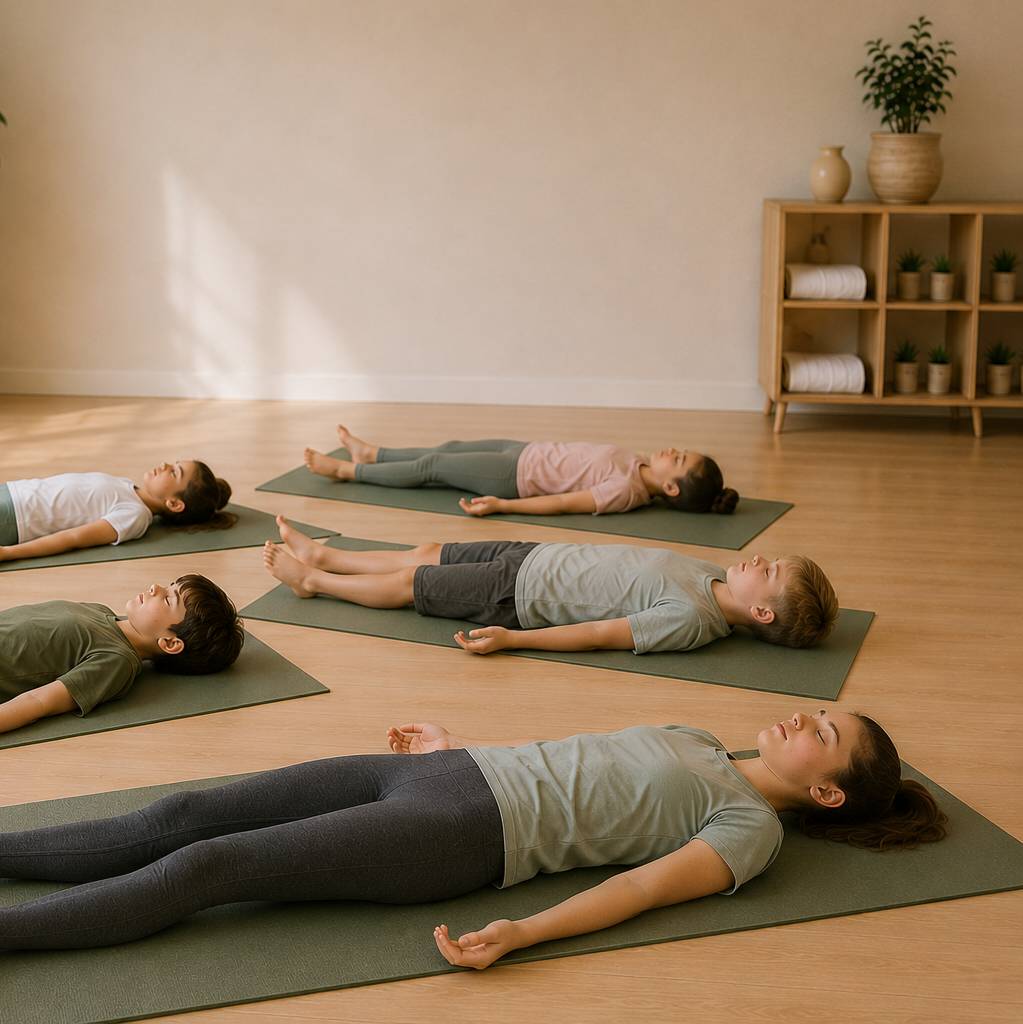
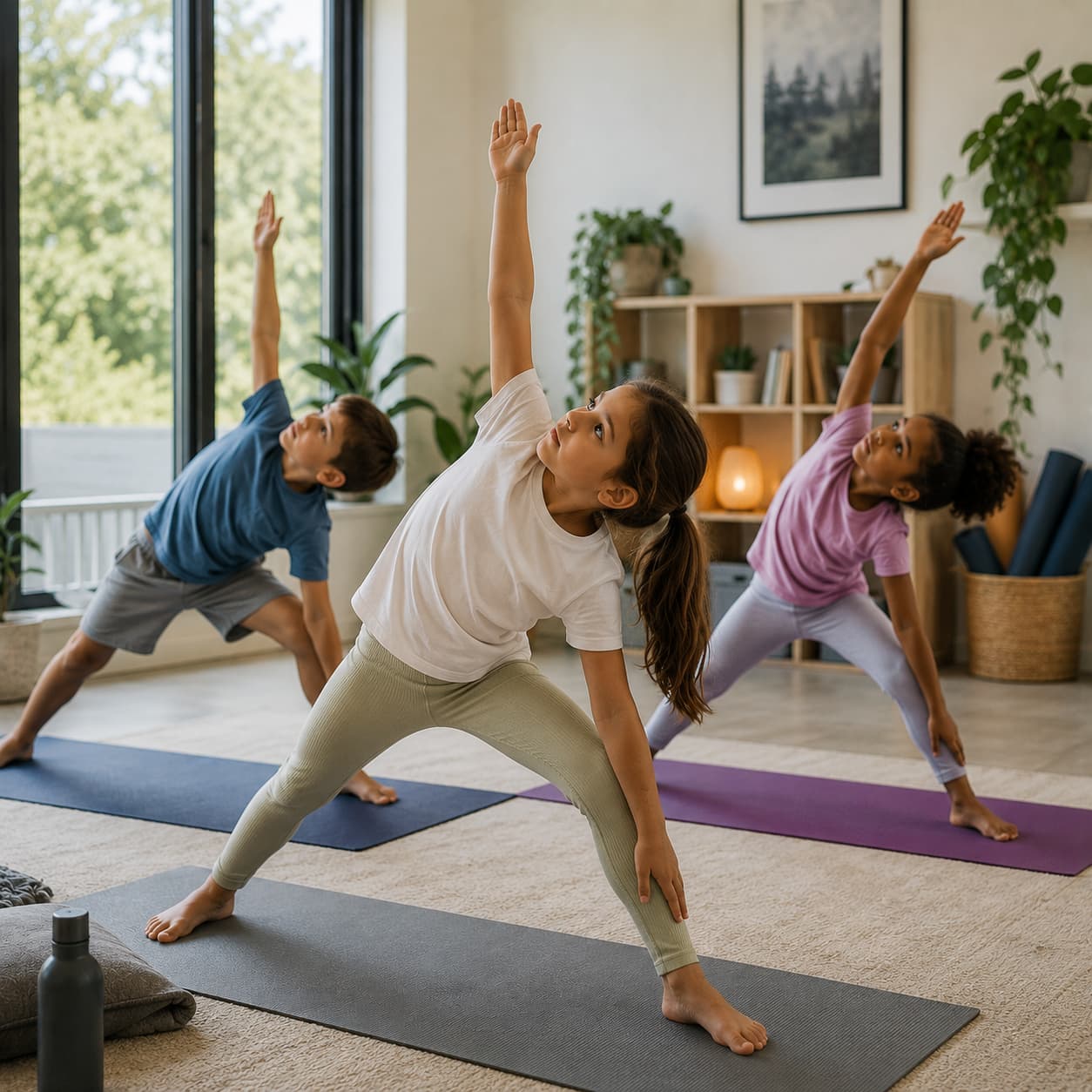
It helps them move through poses, practise balance, stretch tight areas, build gentle strength, breathe more fully and finish with some kind of calmer ending. It can be particularly useful after school, when many children are tired, overstimulated, hungry, emotionally full, or carrying the day in their bodies.
Yoga can help children learn that calm is not something adults demand from them.
It is something they can practise.
That is a very different message.
For parents comparing yoga and Pilates, the article Children’s Yoga vs Children’s Pilates: Which Class Is Right for Your Child? explains the difference in more detail, especially if you are trying to work out whether your child needs more calm, more strength, or a bit of both.
Pilates for children in Rushcliffe
Children’s Pilates is a brilliant option for children who need strength, posture, control, coordination and physical confidence.
It is often less familiar to parents than yoga, but it can be incredibly useful, especially for children who slump, wobble, move quickly without control, lack core strength, seem physically unsure, or need more support around posture and body awareness.
Children’s Pilates should not look like an adult class copied onto children. Nobody needs a room full of children being asked to find their neutral pelvis for twenty minutes while their souls leave their bodies. It needs to be clear, structured, age-appropriate and practical.
The strength work should feel accessible. The instructions should be simple. The movements should help children feel what their body is doing without making them self-conscious. The aim is not perfection. The aim is control, awareness and progress.
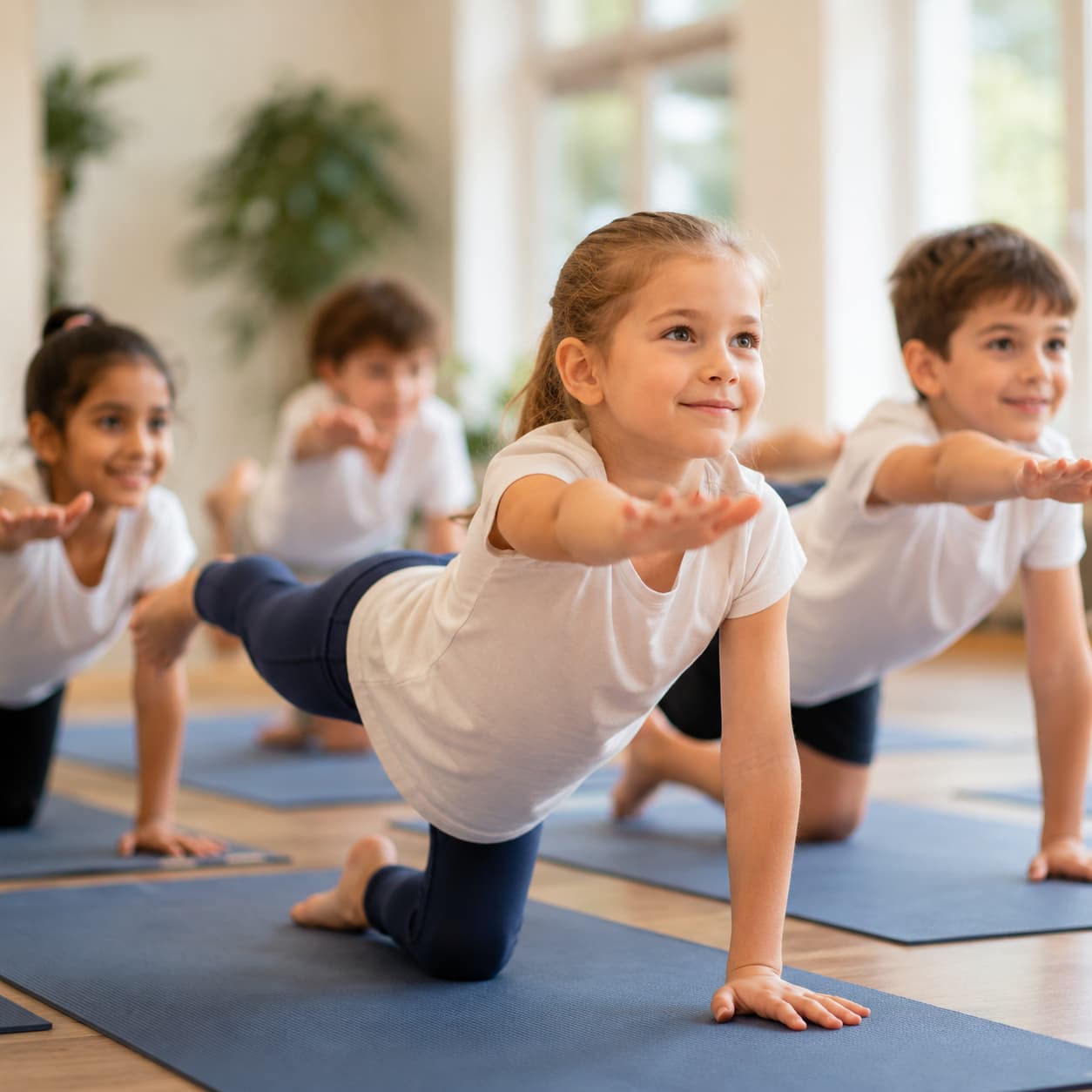
Pilates can help children understand how their body supports them. They may start to feel stronger through the centre of the body, more stable in balance, more aware of posture, more coordinated in transitions, and more confident when asked to try controlled movement.
For a more detailed explanation, read Children’s Pilates in West Bridgford: How It Helps Strength, Posture and Confidence, which goes deeper into why Pilates can be such a strong option for children who need structured physical development without competitive pressure.
Why confidence through movement matters
Confidence is often misunderstood.
People sometimes talk about confidence as if children can simply be encouraged into it. Tell them they are amazing. Clap loudly. Say “well done” twelve times. Hope for the best.
Encouragement helps, of course, but confidence built through movement is different because it comes from experience. A child tries something, wobbles, adjusts, tries again, improves slightly, notices the improvement, and begins to trust themselves a little more.
That is real confidence.
Not performance confidence. Not loud confidence. Not the kind of confidence that depends on being the best in the room. Physical confidence is quieter than that. It is the feeling of “I can try this.” It is the ability to recover from a mistake without falling apart. It is knowing that a wobble is not a disaster. It is feeling strong enough to participate. It is being able to take up space without apologising for having a body.
Children’s yoga and Pilates can both support this beautifully because they create small, repeatable experiences of progress.
A child may hold a balance for longer. Move more slowly. Sit taller. Breathe through a challenge. Try a pose they avoided before. Notice they are stronger than they thought. Feel less embarrassed when they wobble. Join in more quickly next time.
Those moments look small from the outside.
They are not small to the child.
They are the building blocks of self-trust.
Movement classes for children who do not like sport
One of the strongest reasons to offer children’s movement classes in Rushcliffe is that not every child enjoys sport, but every child deserves access to movement.
This is not about being anti-sport. Sport can be brilliant. It teaches teamwork, skill, discipline, resilience, joy, competition and physical capability when it is taught well. But sport is not the only route into movement, and for some children it is not the right route at all.
Some children dislike the noise. Some dislike the pressure. Some dislike being watched. Some dislike the speed. Some dislike the comparison. Some dislike the feeling of being behind before they have even started. Some are simply not interested, which is allowed, despite what certain adults seem to believe.
Movement classes give those children another way in.
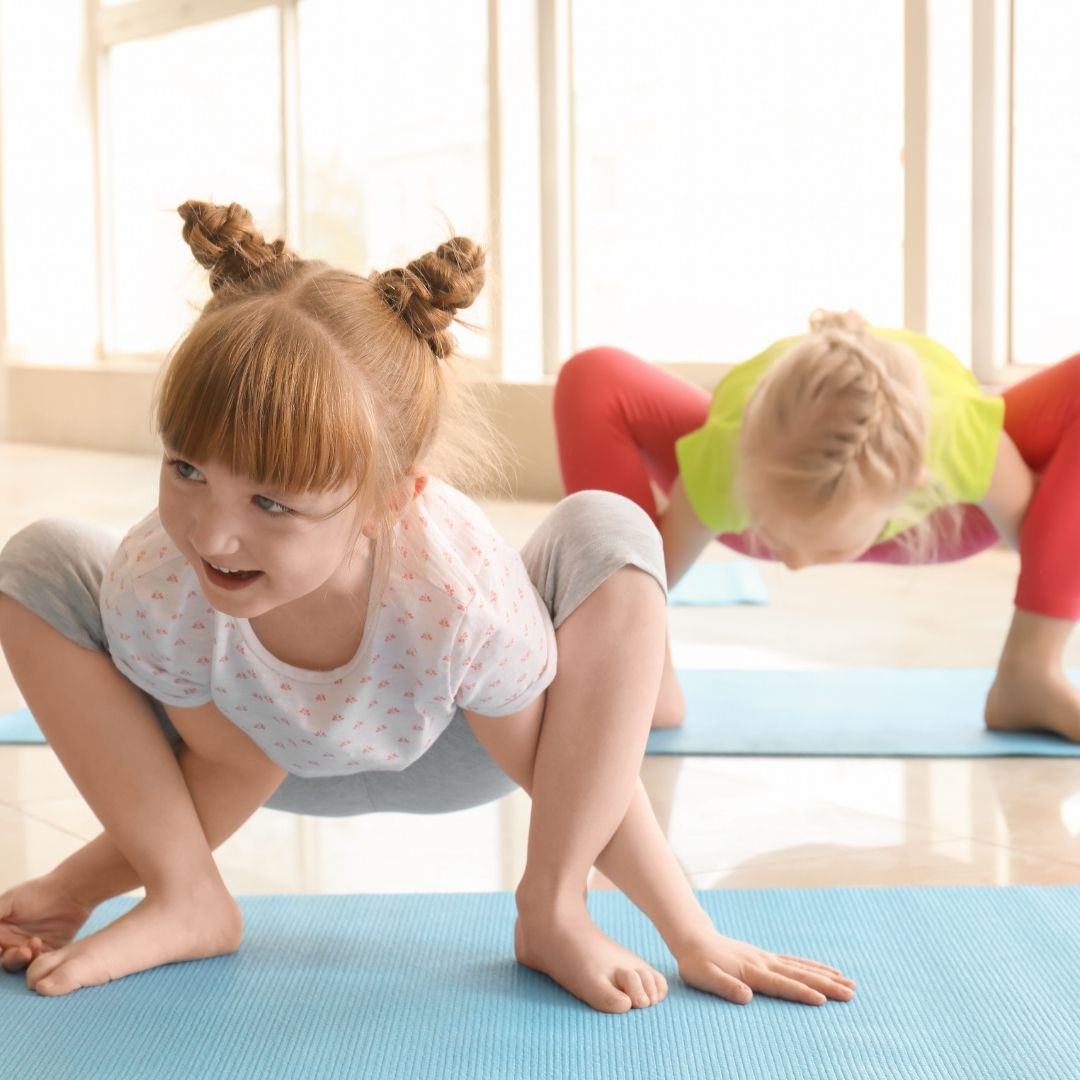
Yoga and Pilates are not about scoring, winning, racing or being picked. They are about learning how the body moves and how it can be supported. That can be a relief for children who have quietly decided that movement is not for them.
A good movement class can help them discover that they are not “bad at movement.”
They may just need a different environment. That distinction matters enormously.
Movement classes for sporty children too
Children’s movement classes are not only for children who avoid sport.
Sporty children can benefit too, especially if they need better mobility, balance, posture, breath, control, body awareness or recovery.
A child can be fast but stiff. Strong but uncoordinated. Competitive but poor at slowing down. Flexible but lacking stability. Energetic but unaware of how they move. Confident in sport but less confident in quieter, controlled movement.
Yoga and Pilates can fill those gaps.
Yoga can support mobility, balance, breathing, focus and recovery. Pilates can support strength, control, core stability, posture and coordination. Together, they can help children build a broader movement foundation that supports sport rather than competing with it.
This is important because children’s bodies are still developing. The more movement variety they experience, the more options they have. If they only move in one way, through one sport or one set of patterns, they may miss out on other foundations that help them move better overall.
Movement variety is not extra. It is part of healthy physical development.
Why posture support should not mean nagging children to sit up straight
Parents often worry about posture, and understandably so.
Children spend a lot of time sitting, reading, writing, using screens, carrying bags, leaning over desks and folding themselves into strange positions that look medically questionable but apparently feel comfortable to them. It is easy to look at a child slumped over a tablet and think, “That cannot be good.”
But posture support should not become constant correction.
Telling a child to sit up straight rarely builds lasting posture. It usually creates a short-lived adjustment, followed by collapse, followed by another reminder, followed by irritation on both sides, followed by everyone needing a biscuit.
Posture is not one perfect position.
It is the ability to move, support, adjust and vary position. Children need strength, mobility, body awareness and enough confidence to understand how their body feels in different shapes. Pilates can help with this through core support, control and stability. Yoga can help through mobility, breath, balance and awareness.
A good children’s movement class teaches posture through experience, not nagging.
Children feel what it is like to stand tall, balance, move the spine, support themselves through the centre, open the chest, breathe into the ribs, and shift from collapse into support. That is much more useful than being told to sit up straight every time they look like a prawn over their homework.
Why body awareness is a skill children can learn
Body awareness is the ability to understand where your body is in space and how it is moving.
Some children develop this naturally through play, sport and physical exploration. Others need more support. They may bump into things, struggle with balance, move too quickly, avoid physical challenges, find coordination difficult, or seem disconnected from what their body is doing.
Yoga, Pilates and structured movement can help because they slow things down enough for children to notice.
They practise moving one part of the body at a time. They learn how to balance. They learn how to coordinate arms and legs. They learn how to move with control rather than rushing. They learn how breath changes effort. They learn how to adjust when something feels unstable.
This is not just useful in class.
Body awareness supports everyday life. It helps with sitting, standing, walking, running, writing posture, carrying bags, playing sport, navigating space, and feeling more physically confident.
For some children, improved body awareness can be the difference between avoiding movement and feeling able to join in.
That is not a small thing.
Why calm and structure can exist together
Children’s classes often fall into one of two traps.
They are either too chaotic, with lots of noise, energy and enthusiasm but not enough structure, or they are too rigid, with too many rules, too much correction and not enough room for children to be human.
A good movement class needs both calm and structure.
Calm does not mean boring. Structure does not mean strict. The two can work together beautifully when the class has a clear rhythm, age-appropriate expectations, simple instructions, repeated patterns, room for progress, and a teacher who can hold the space without making it feel tense.
Children often relax when they know what is expected.
They do not need endless novelty. They need enough familiarity to feel safe and enough challenge to stay engaged. They need a class where movement feels organised, but not pressured. They need to know that wobbling is allowed, trying again is normal, and nobody is going to make a public drama out of their body doing something unexpected.
This is especially important for children who are anxious, cautious or easily overwhelmed.
A calm, structured movement class can give them a place to build confidence without being pushed too hard too soon.
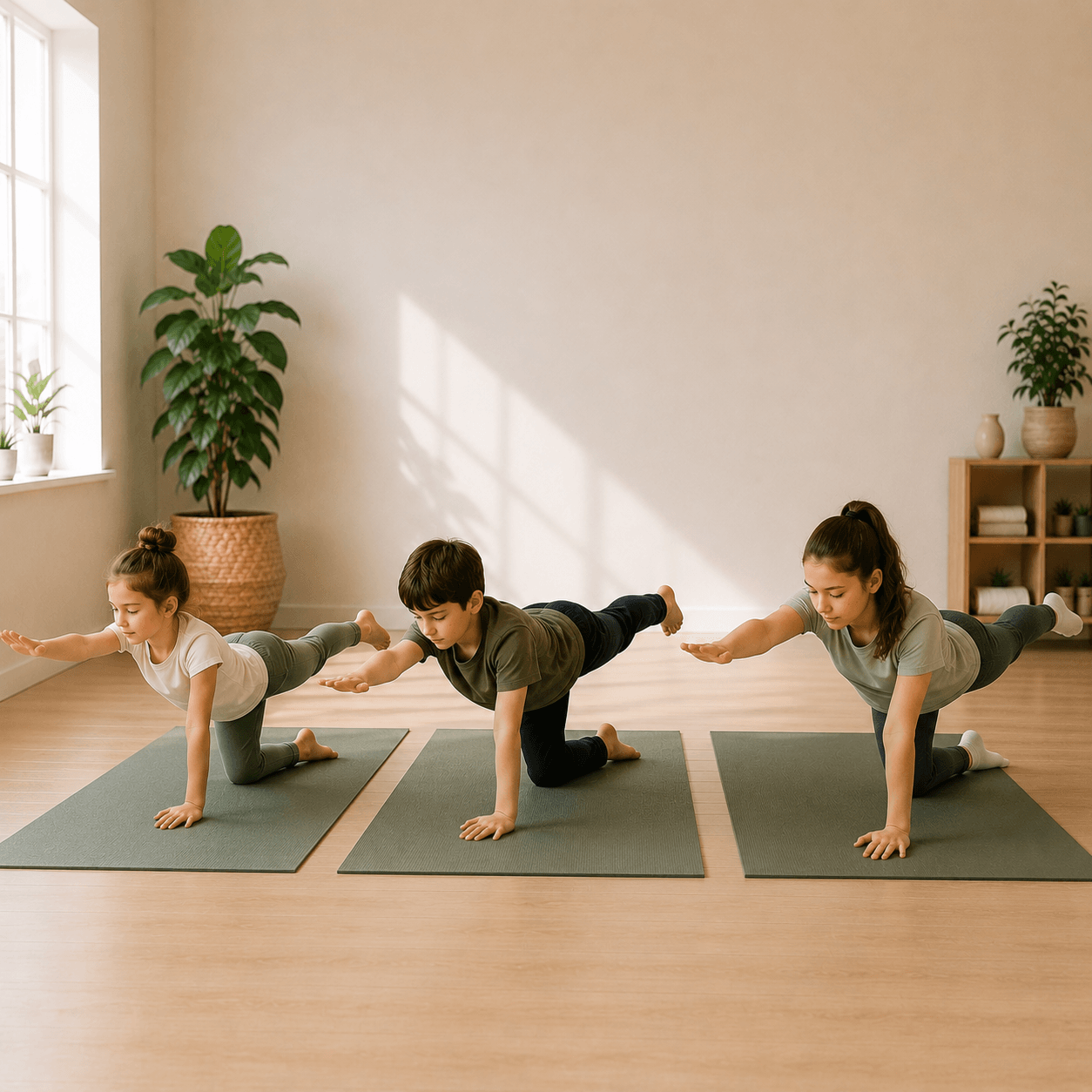
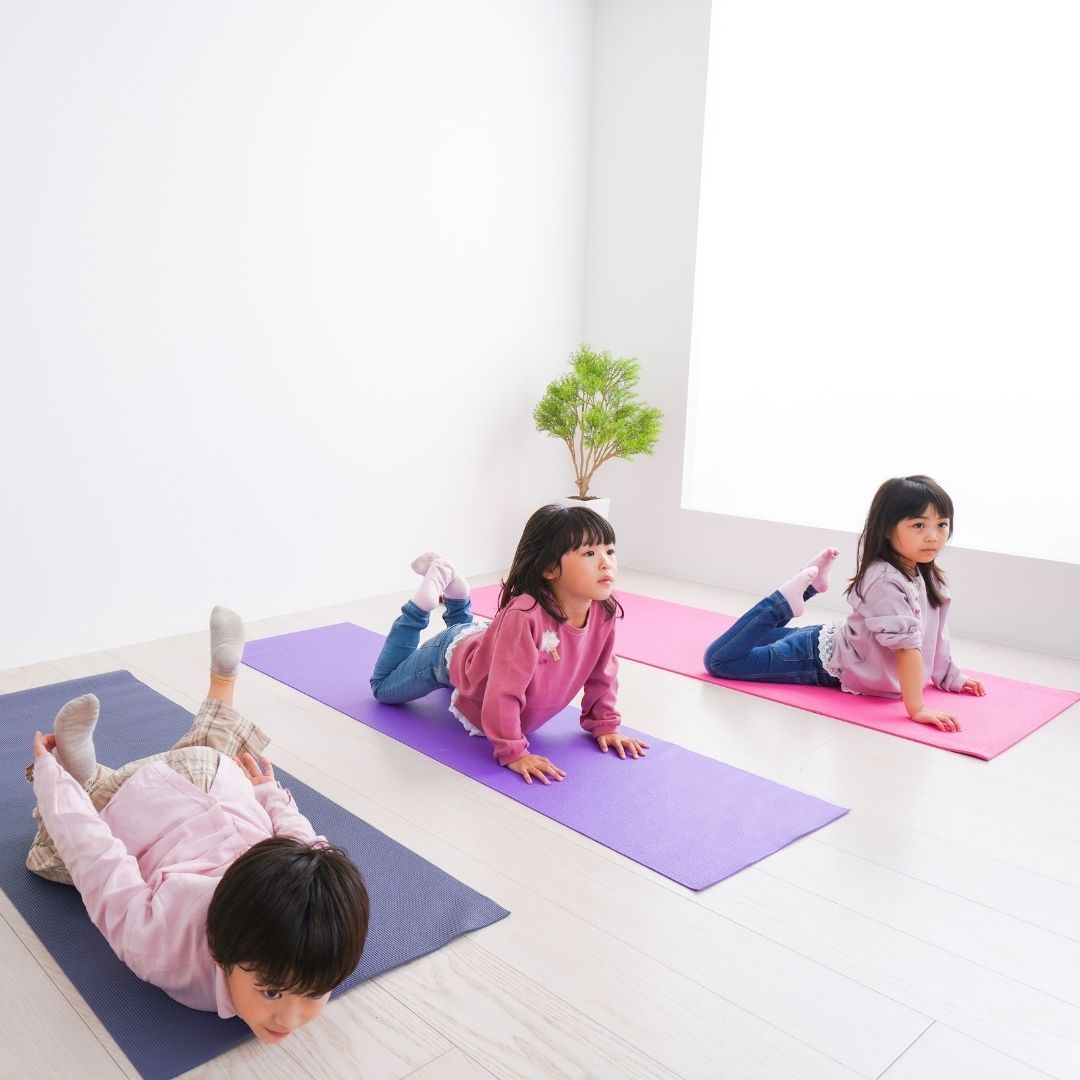
What children’s movement classes may include
A children’s movement class may include yoga, Pilates and broader structured movement depending on the session focus, age group and needs of the children.
A well-rounded class might include simple warm-up movements, balance practice, yoga-based poses, Pilates-based strength and control work, core awareness, posture support, mobility for the spine, hips and shoulders, coordination exercises, breath awareness, gentle stretching, focus games or movement challenges, calm finishing work and confidence-building progressions.
The point is not to cram everything into one session like a movement buffet where everyone leaves confused.
The point is to create a clear, useful class that supports children’s bodies and attention. Some sessions may lean more towards yoga, with breath, balance, mobility and calm. Others may lean more towards Pilates, with strength, posture, coordination and control. Some may combine both.
The structure should always serve the children in the room. Not the other way around.
Children’s yoga, Pilates and movement in West Bridgford
West Bridgford is the natural starting point for local children’s yoga and Pilates classes, especially for families looking for structured, non-competitive movement close to home.
The main class page is here: Children’s Yoga and Pilates in West Bridgford.
These classes are designed to support strength, posture, coordination, confidence, calm and body awareness through structured, age-appropriate movement. They are not childcare. They are not competitive sport. They are not vague wellness fluff.
They are movement classes for children who need to build physical confidence in a calmer, more considered way.
For families across Rushcliffe, this gives children a local route into yoga, Pilates and structured movement without needing to fit into a sport-first model.
Children’s movement across Rushcliffe
Although the current local class focus is West Bridgford, the need for children’s movement support is wider than one neighbourhood.
Families across Rushcliffe may be looking for children’s yoga, children’s Pilates, posture support, confidence-building activities, non-competitive after-school clubs, or a calmer alternative to traditional sport. Some parents may want something that helps their child move more without adding another loud, overstimulating activity to the week. Others may be looking for something that supports school readiness, focus, posture, balance or confidence.
Children’s movement classes can meet those needs because they sit in a useful middle ground.
They are active, but not frantic. Structured, but not harsh. Supportive, but not patronising. They give children a way to build strength, mobility, balance, breath, coordination and self-trust without needing to perform, compete or prove they are already good at movement.
That is especially valuable for children who are still working out how they feel in their bodies.
How school movement programmes connect to this work
Children’s movement classes and school movement programmes share the same foundation: helping children build physical confidence, body awareness, coordination, posture, focus and calm through structured movement.
The difference is the setting.
Private classes give families a local after-school option. School movement programmes bring the same kind of structured support into the school day, where children can benefit as part of a wider group.
For schools, this kind of movement can complement PE by supporting the physical foundations that help children participate more confidently. It can be especially useful for pupils who need more body awareness, balance, mobility, strength, focus or emotional regulation.
Schools can read more about structured sessions here: School Movement Programmes.
Children’s movement and the wider movement practice
The children’s classes sit inside a broader movement practice that includes yoga, Pilates, structured movement, workplace movement and embodied confidence.
That matters because the children’s work is not random. It is connected to a wider understanding of how movement affects posture, confidence, focus, energy and emotional regulation across different ages and settings.
You can explore the wider movement work here: Movement.
This broader foundation matters because children’s movement should not be treated as a novelty. It should be taught with the same care, structure and intelligence as adult movement, while still being appropriate for children’s bodies, attention spans and emotional needs.
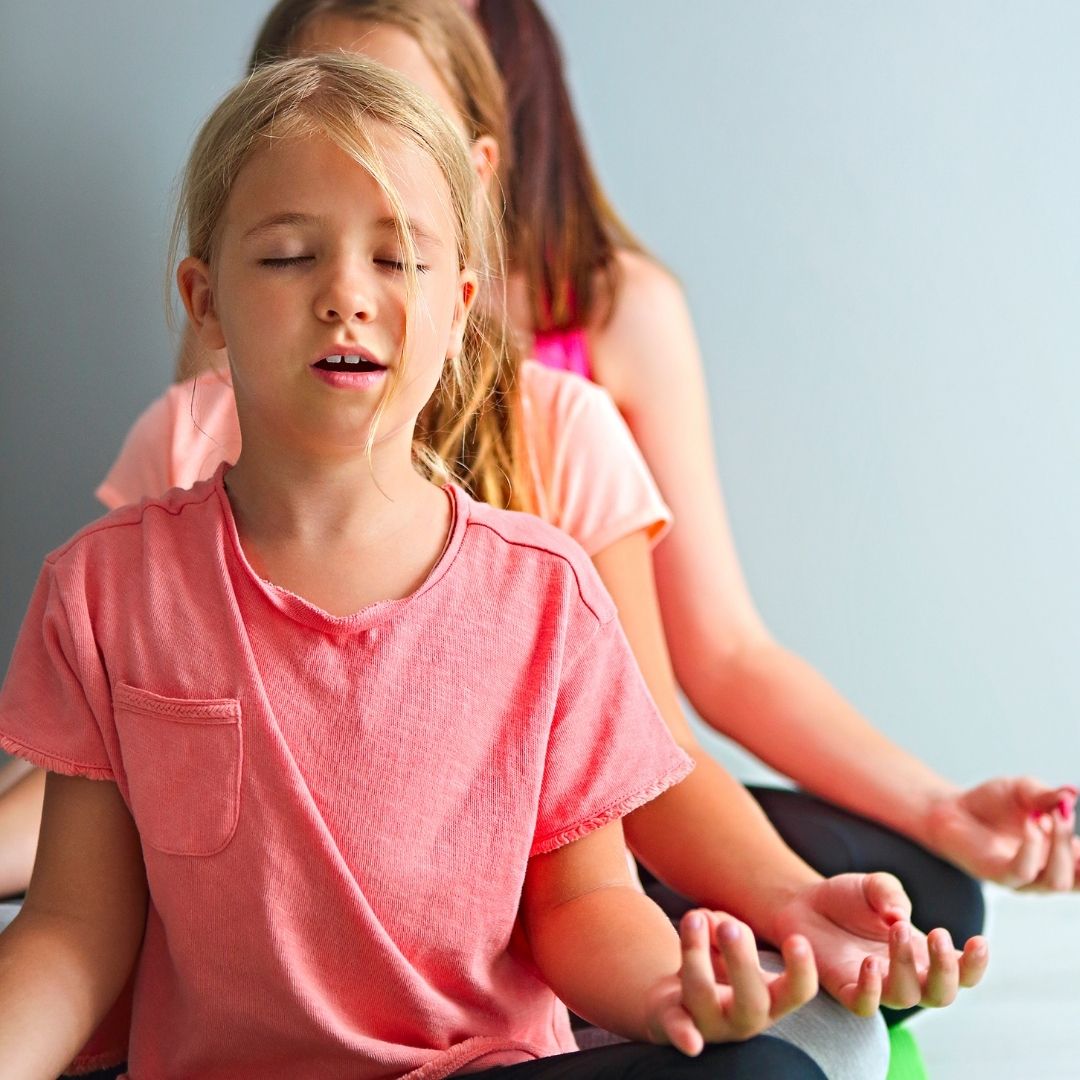
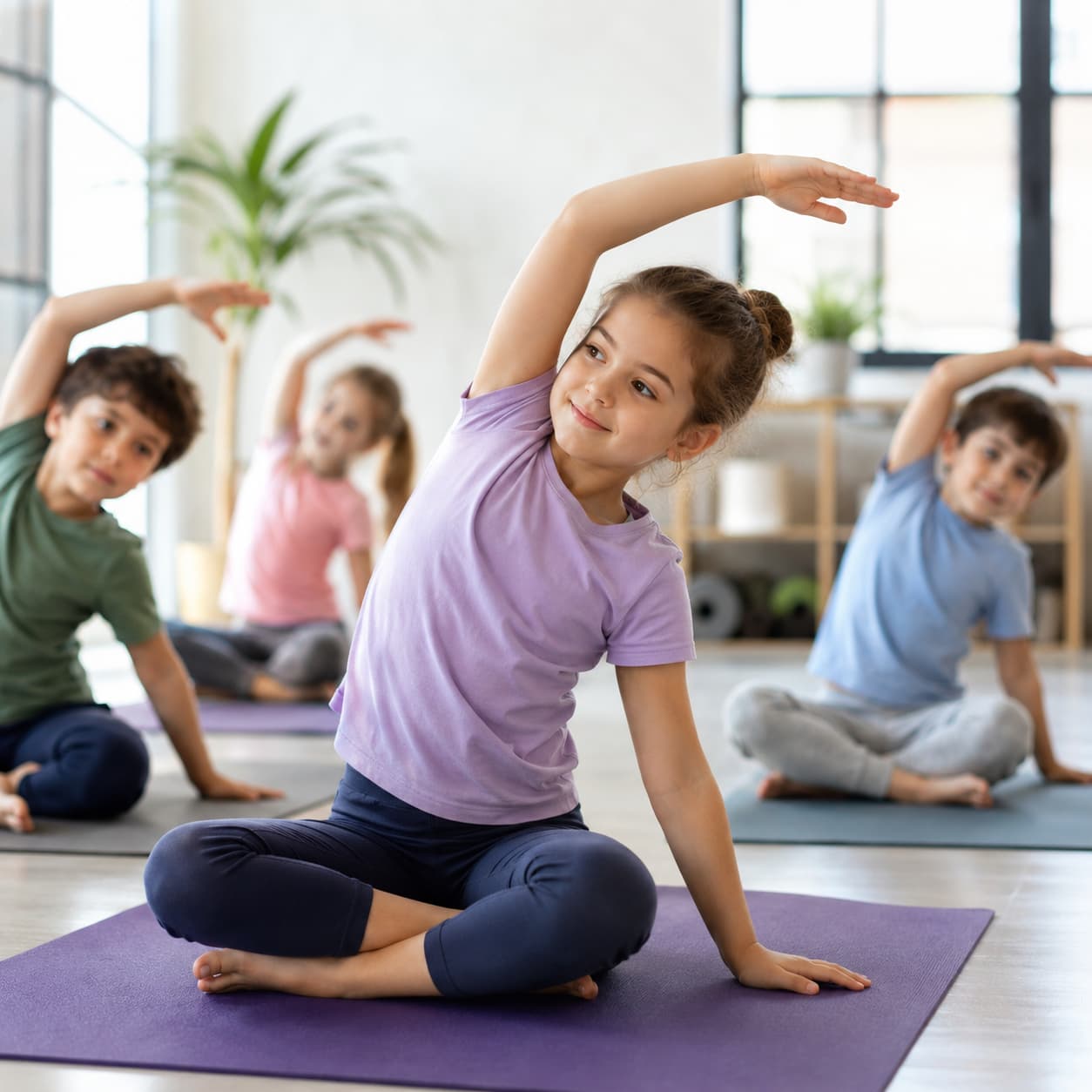
Comparison table: yoga, Pilates and structured movement for children
| Type of movement | Main focus | Best for children who need… | What it supports |
|---|---|---|---|
|
Children’s yoga |
Breath, balance, mobility, calm, focus |
More calm, flexibility, emotional regulation and gentle confidence |
Body awareness, relaxation, balance, mobility and focus |
|
Children’s Pilates |
Strength, posture, control, coordination |
More core support, stability, posture and physical confidence |
Strength, control, coordination, balance and posture |
|
Structured movement |
Varied movement skills, confidence and coordination |
A broader movement foundation without sport pressure |
Confidence, movement literacy, balance, mobility and control |
|
Mixed yoga and Pilates |
Calm plus strength |
Breath, posture, strength, flexibility, focus and confidence |
Both emotional regulation and physical support |
|
School movement sessions |
Group movement in school settings |
Physical foundations that support learning and participation |
Coordination, focus, confidence, posture and wellbeing |
Practical checklist for parents
| Question | Why it matters |
|---|---|
|
Does your child enjoy competitive sport? |
If not, yoga or Pilates may offer a better movement environment |
|
Does your child need more calm? |
Yoga may support breath, focus and emotional regulation |
|
Does your child need more strength? |
Pilates may support posture, core strength and control |
|
Does your child seem physically cautious? |
A structured, low-pressure class can help build confidence gradually |
|
Does your child move quickly but without control? |
Pilates or structured movement can help them slow down and coordinate |
|
Does your child struggle with posture? |
Movement-based posture support is more useful than nagging |
|
Does your child need a calmer after-school activity? |
Yoga and Pilates can provide structure without chaos |
|
Is the class age-appropriate? |
Children need teaching designed for their development, not adult classes copied badly |
|
Is the teacher qualified and emotionally intelligent? |
Children need safe, clear and supportive instruction |
|
Can your child attend consistently? |
Confidence and progress build through repetition |
What parents should expect from a good class
Parents should expect a children’s movement class to feel structured, safe, clear and age-appropriate.
It should not feel like a free-for-all. It should not feel like a mini bootcamp. It should not feel like adult yoga or Pilates with smaller mats and more chaos. It should not make children feel embarrassed, corrected, exposed or compared.
A good class should help children understand what they are doing and why it matters, without overloading them with technical language. It should give them enough repetition to improve, enough variation to stay engaged, and enough encouragement to feel safe trying.
Parents should expect children to build confidence gradually.
Not every child will love every movement immediately. Some will wobble. Some will watch before joining in. Some will rush. Some will get frustrated. Some will surprise themselves. That is normal. The aim is not instant perfection. The aim is steady progress.
A good movement class gives children a place to practise being in their body without pressure.
That is valuable in itself.
What parents should not expect
Parents should not expect a children’s movement class to fix everything in one session.
It will not instantly correct posture, remove anxiety, transform confidence, improve coordination, solve screen habits, and turn a tired child into a glowing embodiment of balanced wellbeing by next Tuesday.
That would be lovely, obviously. Also nonsense.
Movement works through repetition. Children need time to build strength, awareness, balance, control and confidence. Some changes may be visible quickly, especially in how a child engages with movement, but deeper confidence takes longer.
Parents should also not expect every class to look impressive from the outside. Some of the most important work is subtle. A child trying again after wobbling. A child is slowing down. A child breathing instead of giving up. A child joining in without needing as much reassurance. A child standing taller because they feel more capable.
That is the good stuff. Not always flashy. Very much worth it.
Why consistency matters
Children build confidence through repeated experience.
One class can be enjoyable, but regular attendance gives children time to understand the structure, trust the teacher, learn the movements, notice progress and feel more settled in the environment. Consistency also helps movement become normal.
Instead of being a one-off novelty, it becomes part of the child’s week. They know what to expect. They recognise the warm-up. They remember the balance. They understand the breathing. They start to feel the difference between rushing and control, collapse and support, tension and ease.
This is where confidence grows. Not because someone tells them to be confident, but because their body begins to give them evidence.
-
- “I can do this.”
- “I remember this.”
- “I improved.”
- “I wobbled, but I stayed with it.”
- “I tried again.”
That is how movement becomes self-trust.
Why the teacher matters
The teacher matters enormously in children’s movement classes.
A good teacher does more than demonstrate exercises. They hold the room. They notice the children. They adapt. They give clear instructions. They keep the energy steady. They challenge without pushing too hard. They encourage without being fake. They understand that children need structure, humour, patience and boundaries.
They also understand that movement can bring up vulnerability.
Children may feel awkward. They may compare themselves. They may be embarrassed by wobbling. They may not want to be seen trying something new. They may mask discomfort with silliness or refusal. A good teacher does not turn that into a battle. They create a space where children can participate without feeling exposed.
This is why emotionally intelligent teaching matters.
Not as a soft extra. As part of safety. Children learn better when they feel safe enough to try.
How this supports long-term physical confidence
The long-term aim of children’s movement classes is not simply that a child learns a few yoga poses or Pilates exercises.
The deeper aim is that they develop a healthier relationship with movement.
They learn that movement can be calm, structured, enjoyable and non-competitive. They learn that strength can be built. They learn that posture is something they can feel, not just something adults nag them about. They learn that flexibility is not the only goal. They learn that wobbling is part of balance. They learn that their body is not something to be judged, but something to understand and support.
That can affect how they approach movement later.
A child who feels confident in their body is more likely to try new activities, participate in PE, enjoy physical challenges, recover from mistakes, and carry movement into adolescence and adulthood without as much shame or avoidance.
That is the bigger picture. Children’s movement classes are not just about filling an after-school slot.
They are about giving children physical foundations they can keep building on.
Final thoughts: movement gives children somewhere to build confidence
Children’s movement classes in Rushcliffe offer something many families are quietly looking for: a structured, calm, non-competitive way for children to build strength, posture, coordination, focus, body awareness and confidence.
Yoga can help children slow down, breathe, balance, stretch, move and settle.
Pilates can help children build strength, posture, control, coordination and physical confidence.
Structured movement can give children a broader foundation that supports school, sport, everyday life and long-term wellbeing.
The best class is not the one that sounds most impressive. It is the one that helps your child feel safe enough to try, supported enough to improve, and confident enough to keep going.
Movement should not be another place where children feel judged. It should be somewhere they learn what their body can do.
And when that is taught well, it can change far more than how a child moves. It can change how they carry themselves.
If you are looking for children’s movement classes in Rushcliffe, including yoga and Pilates for children in West Bridgford, you can read more and register interest here: Children’s Yoga and Pilates in West Bridgford
Classes are designed to support strength, posture, coordination, confidence, calm and body awareness through structured, age-appropriate movement.
Key takeaways
Children’s movement classes in Rushcliffe are useful for children who need more than another busy after-school activity. Yoga, Pilates and structured movement can support strength, posture, coordination, focus, confidence and calm in a non-competitive setting, especially for children who may not naturally gravitate towards team sports but still need regular, intelligent movement.
Frequently Asked Questions
Children’s movement classes are structured sessions that help children build strength, balance, coordination, posture, mobility, body awareness, focus and confidence. They may include yoga, Pilates, breath work, stretching, simple strength exercises and movement challenges, depending on the class and age group.
No. Children’s movement classes are not the same as PE. They can support the physical foundations that help children participate more confidently in PE, but they are usually calmer, more focused and less competitive. The emphasis is on body awareness, confidence, posture, coordination and movement quality.
Yes, when taught in an age-appropriate way. Yoga can support calm, balance, mobility, breathing and focus. Pilates can support strength, posture, coordination, control and physical confidence. Both can be useful for children who need movement without competitive pressure.
Children’s yoga usually focuses more on breath, balance, mobility, calm and relaxation, while children’s Pilates usually focuses more on strength, posture, control, coordination and core support. If you are deciding between the two, read Children’s Yoga vs Children’s Pilates: Which Class Is Right for Your Child?.
Yes. Children’s movement classes can be especially helpful for children who do not enjoy competitive sport. Yoga and Pilates give children a way to move, strengthen, balance and build confidence without racing, scoring, teams or performance pressure.
Movement classes can support posture by helping children build strength, mobility, body awareness and control. Pilates is especially useful for postural support, while yoga can help with mobility, breath and balance. The aim is not to nag children to sit up straight, but to help them understand and support their body.
Yes. Movement classes can help children build confidence by giving them repeated experiences of trying, improving, wobbling, recovering and progressing. Confidence grows when children feel capable in their bodies, not when they are pressured to perform.
Yes, a good children’s movement class should be suitable for beginners. Children do not need to be flexible, strong, sporty or experienced before joining. The class should offer clear instructions, simple progressions and adaptations for different confidence levels.
The current local focus is children’s yoga and Pilates in West Bridgford, serving families in and around Rushcliffe. You can read more and register interest here: Children’s Yoga and Pilates in West Bridgford.
Children should usually wear comfortable clothing, bring water and bring their own mat if requested. Parents should check the main class page for the latest details before attending.
Yes, structured movement can also be delivered in school settings, depending on availability and the school’s needs. School sessions can support coordination, posture, balance, confidence, focus and emotional wellbeing. Schools can read more here: School Movement Programmes.
You can register interest and read more about local children’s yoga and Pilates classes here: Children’s Yoga and Pilates in West Bridgford