
Movement and Attention Span: What Actually Helps
The connection between movement and attention span in children is far more significant than most people realise, yet it is often treated as a secondary factor rather than a foundational one.
When children move regularly, their nervous systems receive a constant stream of sensory information that helps the brain stay alert, organised, and capable of sustained focus. When that movement disappears, attention does not suddenly collapse, but it does begin to fade in subtle, predictable ways that are frequently misunderstood as distraction or lack of discipline.
Attention span has become one of those phrases that gets repeated so often it has lost its depth. Parents worry about it, teachers discuss it, and the default explanation tends to point toward screens, overstimulation, or a general decline in patience.
Some of that may be true.
But it leaves out something much more immediate and far easier to influence. The body. Human attention is not produced by the brain in isolation. It is supported continuously by circulation, breathing, posture, muscle activity, balance, and the way the nervous system regulates itself in response to the environment.
Modern life, however, asks children to do something that does not quite align with how that system works. Sit still for extended periods and concentrate as if the body were irrelevant. It isn’t.
What Is the Link Between Movement and Attention Span?
Movement and attention span in children refers to how physical activity supports the brain’s ability to stay focused by regulating alertness, sensory input, and nervous system balance.
When movement is present, attention tends to stabilise and last longer. When it is absent for too long, the brain gradually loses the input it relies on to stay engaged. This is not a motivational issue. It is a physiological one.
TLDR
If you strip the whole topic down to its essentials, the pattern becomes quite simple.
- Movement provides the sensory input that keeps the brain alert
- Long periods of stillness reduce that input and lower focus
- Short movement breaks can restore attention surprisingly quickly
- Regular physical activity makes concentration easier over time
The rest of this article simply explains why that happens.


What Movement and Attention Span Actually Means
When people talk about attention span, they are usually referring to the ability to stay focused on one task without mentally drifting elsewhere, but that ability depends on a delicate balance within the nervous system that is constantly being adjusted in the background.
If the brain becomes under-stimulated, attention fades because there is not enough activation to sustain focus. If it becomes overstimulated, attention breaks down because the system becomes chaotic.
Somewhere between those two extremes sits a stable, functional level of alertness.
Movement plays a direct role in maintaining that balance.
When the body moves, even in small ways, circulation increases slightly, oxygen delivery improves, and muscles and joints begin sending continuous feedback to the brain about pressure, position, and movement. At the same time, the vestibular system in the inner ear tracks changes in balance and orientation, contributing further to the brain’s awareness of the body in space.
All of this information keeps the nervous system engaged.
When the body remains still for too long, those signals gradually diminish, and attention begins to drift, not because the individual has lost interest, but because the system that supports focus is receiving less input.
This is why children start shifting, fidgeting, or losing concentration halfway through a task. The body is not interrupting attention. It is attempting to restore it.
The Brain Was Built for Movement
One of the simplest ways to understand this relationship is to consider how human cognition developed.
For most of human history, thinking and moving were not separate activities. People walked while navigating terrain, reached while gathering, balanced while carrying, and adjusted constantly to changes in the environment.
The brain evolved alongside those movements, not apart from them.
Systems such as the vestibular system and proprioception did not develop purely to support physical coordination. They also contribute to awareness, orientation, and attention.
Every time the body moves, those systems send information back to the brain. That information does more than guide movement. It helps regulate alertness.
When movement is removed for extended periods, the brain simply receives fewer of those signals, and attention becomes harder to maintain.
Why Sitting Too Long Quietly Reduces Focus
Sitting itself is not the problem. People can sit comfortably and think clearly without difficulty.
The issue begins when sitting continues for too long without interruption.
Over time, circulation slows slightly, breathing becomes shallower, posture becomes more rigid, and the level of sensory input from muscles and joints decreases. None of these changes are dramatic, but together they gradually lower the level of activation in the nervous system.
Attention does not disappear all at once. It softens, becomes less stable, and eventually drifts.
This is why long lessons, meetings, or study sessions tend to follow a predictable pattern. At the beginning, focus is relatively strong. As time passes, restlessness appears. Eventually, concentration becomes difficult to sustain at all.
The brain is not failing in those moments. It is responding exactly as biology would expect.
Movement Wakes the Brain Back Up
What makes movement so effective is that it reverses this process quickly.
Even small changes such as standing up, walking across a room, stretching, or shifting posture are enough to increase circulation and restore sensory input to the nervous system. Within a few minutes, alertness improves and attention becomes easier to sustain again.
Many people notice that ideas begin to flow more easily after a short walk, or that a task that felt impossible suddenly becomes manageable again after a brief break.
There is nothing mysterious about this. Movement simply reintroduces the signals the brain relies on to stay engaged.
Movement vs Stillness for Focus
The difference between these two states becomes clearer when placed side by side.
| State | Body | Brain | Result |
|---|---|---|---|
|
Prolonged stillness |
Reduced sensory input and circulation |
Lower activation |
Attention gradually fades |
|
Regular movement |
Continuous sensory feedback and active circulation |
Balanced alertness |
Focus becomes easier to sustain |
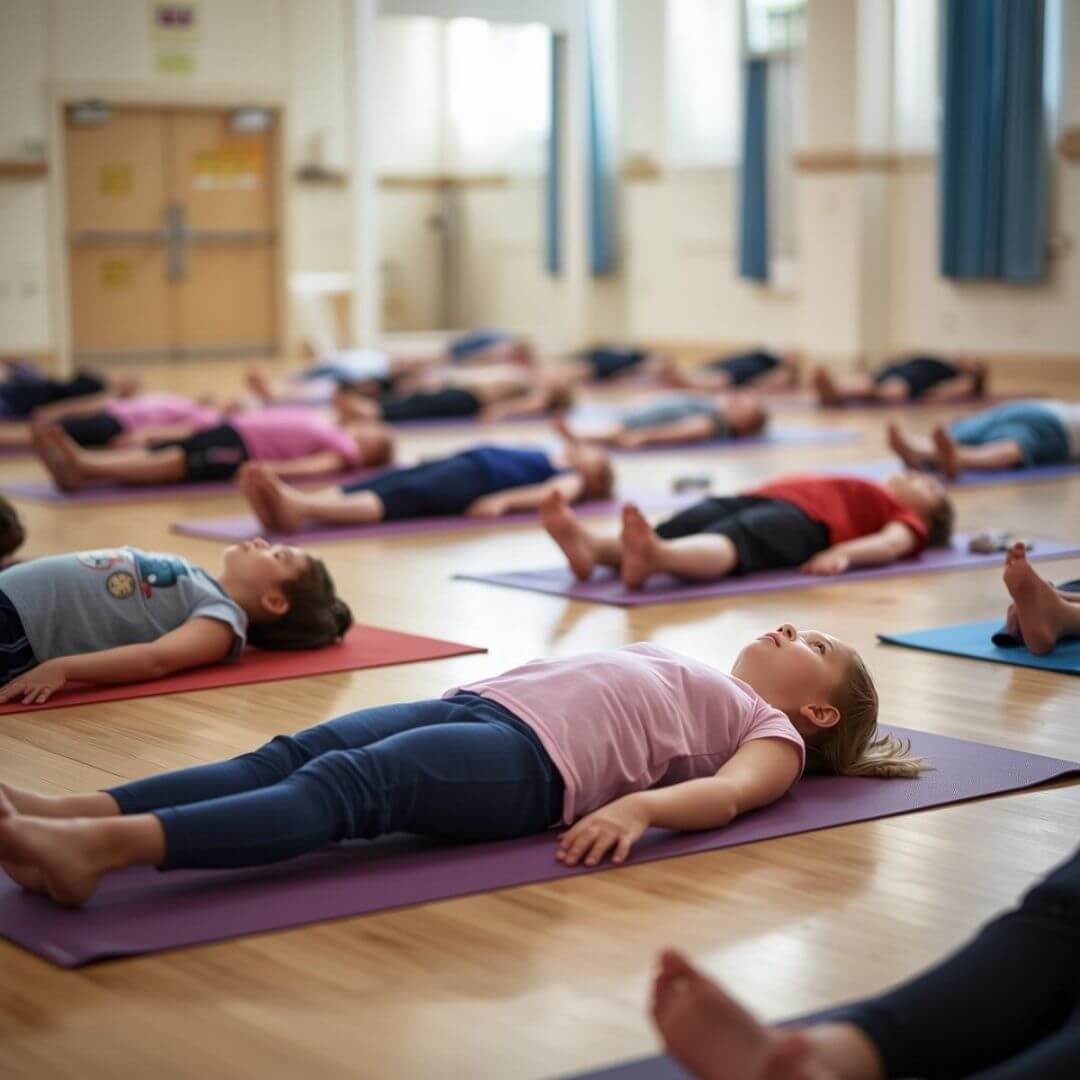
The shift is subtle in the moment, but significant over time. This is why even a short period of movement can restore attention that seemed completely lost just minutes earlier.

When to Use Movement and When to Stay Still
Understanding the theory is useful, but knowing when to apply it is what actually makes a difference in practice.
If a child is already focused and engaged, there is no need to interrupt that state. Attention does not need fixing when it is working.
If focus begins to drift after ten or fifteen minutes, introducing a short period of movement is often far more effective than asking the child to concentrate harder.
If frustration or restlessness starts to build, movement should usually come before correction, because the issue is often not behavioural but physiological.
And if the body is clearly seeking stimulation, forcing stillness tends to increase resistance rather than improve attention.
In simple terms, movement is not a reward or a break from learning. It is often what allows learning to continue.
Movement and Attention in Children
Children rely on movement even more than adults because their nervous systems are still developing.
Activities such as climbing, crawling, balancing, running, and jumping provide the brain with a wide range of sensory experiences that help organise coordination, regulate energy, and support attention.
When children are required to remain still for long periods, that flow of information is reduced significantly.
What adults often interpret as distraction or lack of discipline is, in many cases, the body attempting to restore the stimulation that the brain needs.
Movement, in this context, is not separate from focus. It is part of how focus is maintained. It also means that equipment matters far less than most people assume, especially when you look at what equipment children actually need for movement classes.
Why Movement Breaks Help Children Learn
Many teachers notice that children return from recess calmer and more capable of concentrating than they were before the break.
This becomes easier to understand when you consider what happens during play. Running, climbing, balancing, and jumping all activate the sensory systems that regulate attention. Circulation increases, the vestibular system becomes active, and the nervous system receives a rich stream of input.
When children return to a quieter environment, the brain is far more prepared to engage.
Even short movement breaks during structured learning can produce a similar effect, which is why environments that allow occasional movement often feel more manageable rather than more chaotic.
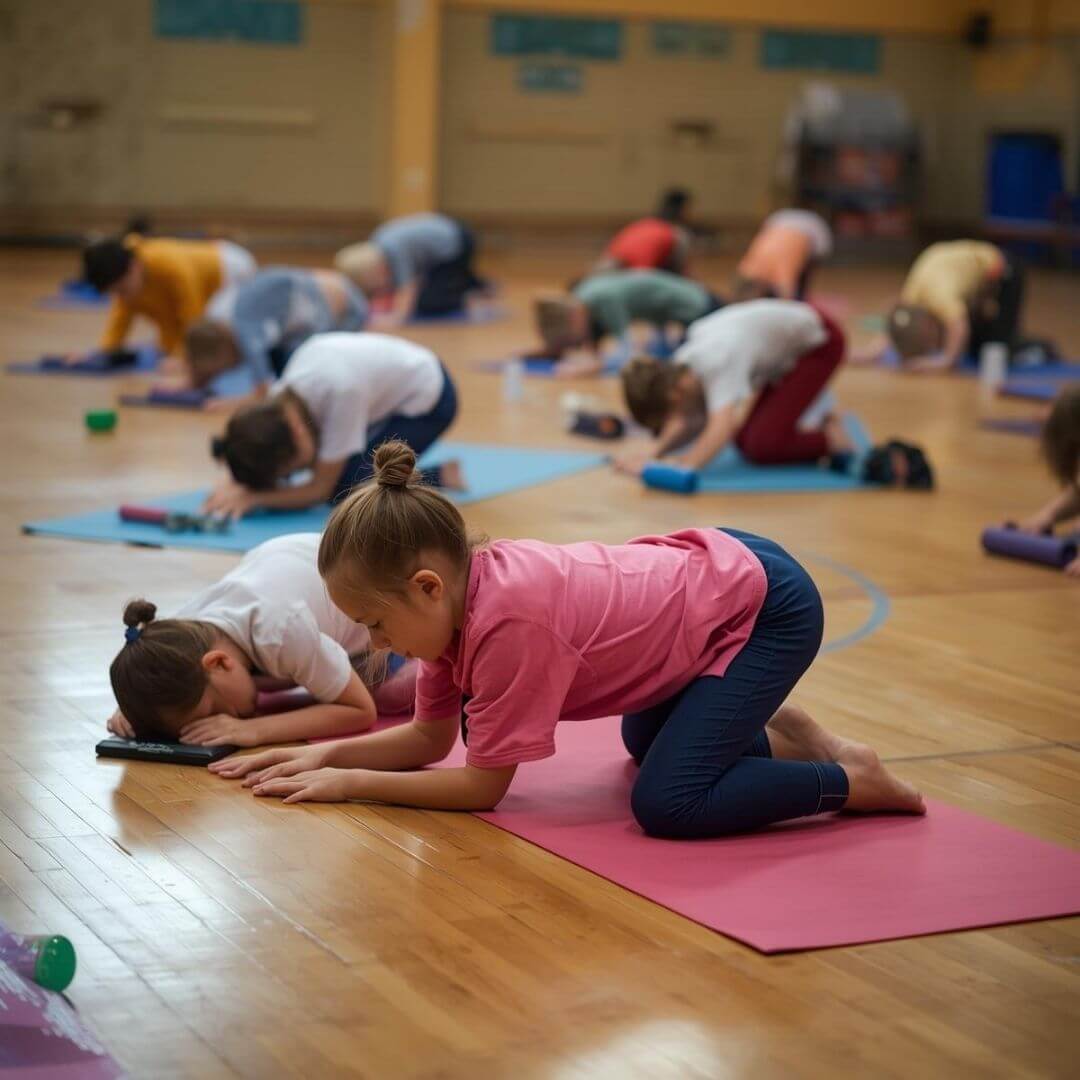
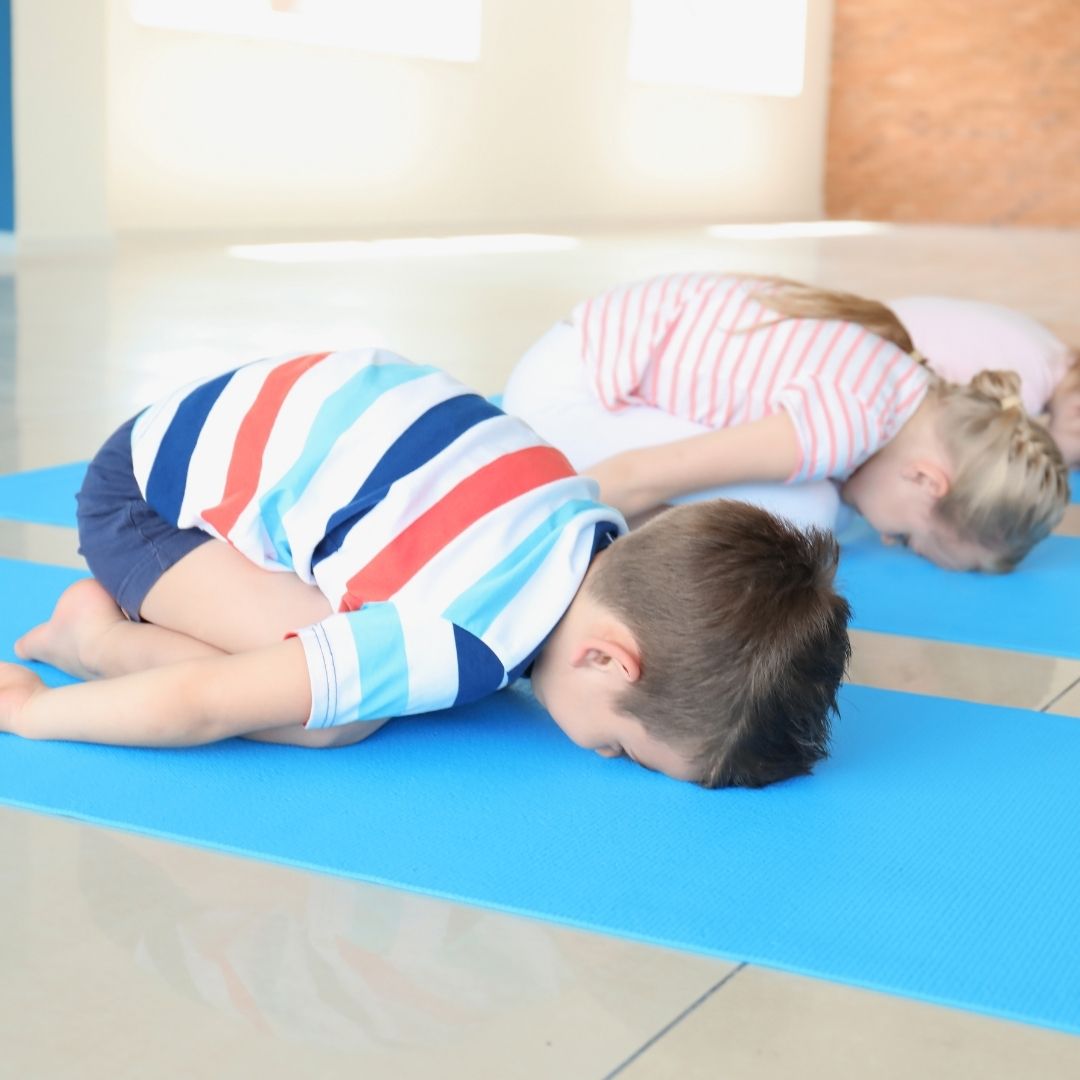
This is also the principle behind structured movement sessions such as children’s yoga and movement classes, especially when you understand what to look for in a children’s movement class.
Balance and Coordination Strengthen Focus
Balance activities are particularly effective because they require the brain to coordinate multiple systems simultaneously.
Maintaining stability involves visual input, muscle feedback, and signals from the inner ear, all working together in real time. This level of coordination demands attention.
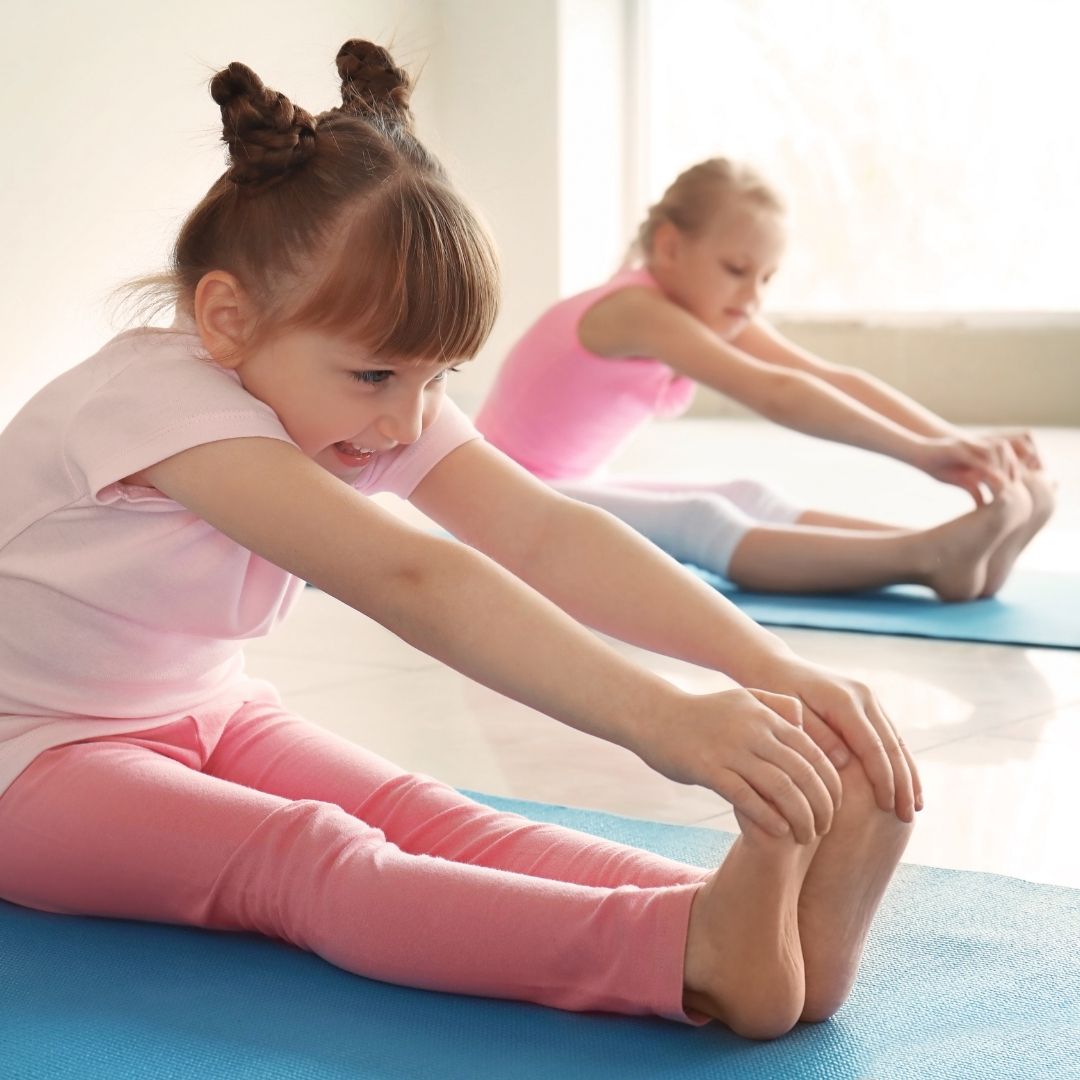
As a result, activities such as balancing on one foot, navigating obstacle courses, or practising controlled movement patterns tend to sharpen focus naturally.
They may look simple, but they engage the brain in a way that directly supports attention.

The Power of Rhythmic Movement
Rhythmic movement has a different but equally important effect.
When children move in a steady, repeating pattern, the nervous system begins to organise itself around that rhythm. Energy becomes more predictable and less chaotic, which makes it easier for the brain to settle into a focused state.
Activities such as skipping, running in a consistent pattern, or repeating simple movement sequences often lead to improved concentration afterwards. The body finds a rhythm, and the brain follows.
Why Some Children Need More Movement Than Others
Not all children regulate attention in the same way, and this variation is completely normal. Some children can sit and focus for longer periods without difficulty, while others require more frequent movement to maintain the same level of engagement.
For some, small adjustments such as shifting posture or tapping a foot are enough to sustain attention. For others, more active movement is necessary.
In both cases, movement is not a distraction. It is part of the system that supports focus. Recognising this difference is often the key to reducing unnecessary frustration for both children and adults.
Movement Helps Regulate Emotions Too
Attention and emotional regulation are closely connected. When children become frustrated, anxious, or overwhelmed, their ability to focus drops quickly, which is often less about behaviour and more about how they are trying to self-regulate, which is why understanding why children struggle to self-regulate without daily movement becomes important.
Running, jumping, stretching, or even simple physical activity allows the body to release tension and restore balance within the nervous system.
Many parents recognise the moment when a child becomes irritable after sitting for too long. In many cases, the most effective response is not to push through, but to allow movement.
Once the system settles, attention often returns on its own.
Simple Ways to Use Movement During Homework
This is where the theory becomes practical. A child may begin homework with good focus, but after ten or fifteen minutes, attention starts to fade. The instinct is often to encourage them to keep going, but this usually leads to more resistance.
A short movement break is often far more effective.
That might mean a quick run outside, a few jumps, balancing, or simply walking around the room. After a few minutes, the child returns to the task, and the work that felt difficult suddenly becomes manageable again.
Nothing about the task has changed. The state of the nervous system has.

Why Learning and Movement Should Not Be Separated
Modern education often treats movement and learning as separate activities, but from a developmental perspective, they are closely linked.
Movement provides the sensory experiences that help the brain organise information, regulate energy, and maintain attention.
When those experiences are removed entirely, learning becomes more difficult.
This pattern is not limited to children. It also appears in adult environments, where cognitive work depends far more on physical support than most people realise. Approaches that integrate movement, such as workplace movement and wellbeing systems, are built around the same principle.
Movement as a Reset Button
One of the simplest ways to think about movement is as a reset mechanism.
As attention fades, the signals from the body become quieter, posture stiffens, and the nervous system shifts toward lower activation.
Movement interrupts that process by reintroducing sensory input, increasing circulation, and restoring balance. Within a short period of time, the system reorganises itself, and attention becomes easier again.
Why Regular Movement Prevents Attention Problems
While movement breaks are useful, the broader goal is to prevent attention from collapsing in the first place.
Children who move regularly throughout the day tend to maintain focus more easily because their nervous systems are already active and well-regulated.
Outdoor play, climbing, walking, and varied physical activity all contribute to this baseline state. In other words, movement prepares the brain for learning before the task even begins.

Conclusion
When the relationship between movement and attention span in children is understood clearly, the problem becomes far less complicated.
Attention is not just a mental skill that can be improved through effort alone. It is supported continuously by the body and the nervous system.
When movement is present, the brain receives the signals it needs to stay alert and engaged. When it is absent for too long, those signals fade, and attention becomes harder to sustain.
The solution is not complex.
The brain works better when the body is allowed to move.
If you want to see how this is applied in a structured environment, you can explore yoga and movement for children here.
Key Takeaways
- Attention depends on the body as much as the brain
- Prolonged stillness reduces sensory input and weakens focus
- Movement restores alertness and supports concentration
- Short movement breaks can reset attention quickly
- Some children naturally require more movement than others
- Movement is part of focus, not a distraction
Frequently Asked Questions
Movement supports attention by increasing sensory input and helping the nervous system maintain a balanced level of alertness, which makes it easier for the brain to stay focused.
Because physical activity stimulates the systems that regulate attention, allowing the brain to return to a more organised and focused state.
Most children benefit from movement every ten to fifteen minutes during sustained tasks, although this can vary depending on the individual.
Controlled and coordinated movement such as walking, balancing, stretching, or rhythmic activity tends to regulate attention more effectively than chaotic bursts of energy.
Fidgeting can be a way of creating sensory input that helps the brain maintain alertness when sitting still for too long.
In many cases, yes. Introducing regular movement can improve focus by supporting the underlying systems that regulate attention.
When used appropriately, movement often improves attention rather than disrupting it, particularly when it is structured and purposeful.
Not necessarily. When used intentionally, small movement opportunities can help children regulate their attention and remain engaged with learning.