
What to Look for in a Children’s Movement Class (Beyond “Fun”)
If you search for a children’s movement class, the first promise you will encounter is almost always the same. It will be described as fun.
Fun is not a bad thing. Children should enjoy movement. Enjoyment increases participation, and participation builds consistency. But when fun becomes the main selling point, it quietly replaces something far more important.
Fun does not tell you whether a child is developing coordination.
Fun does not tell you whether strength is being built safely.
Fun does not tell you whether the nervous system is learning regulation.
Fun does not tell you whether confidence is growing in a stable way.
A class can be noisy, energetic, colourful, and still lack structure. It can be entertaining without being developmental. It can exhaust children without strengthening them.
When parents ask what to look for in a children’s movement class, what they are really asking is whether the hour they are paying for is contributing to something that lasts.
This article examines how to choose a kids movement class with discernment. We will look at structure, physical literacy, emotional safety, instructor education, progression, and long-term confidence building. Because the goal is not simply to occupy children. The goal is to help them move well, think clearly, and feel capable inside their own bodies.
If you would like to see how these principles apply in a structured setting for ages 5 to 13, you can explore the full program overview here.
TL;DR: The Short Version for Busy Parents
A high-quality children’s movement class should offer:
- Clear structure and visible progression
- Development of balance, coordination, and strength
- Emotional safety alongside physical safety
- Achievable challenge that builds confidence
- Breath and regulation components
- Age-appropriate instruction
- Consistency rather than novelty for its own sake
- A qualified instructor who understands child development
- Fun is welcome. Structure is essential.
Why “Fun” Alone Is an Inadequate Measure of Quality
It is easy to market movement to children using the language of entertainment. Parents are tired. Schedules are tight. The promise of an hour that leaves a child smiling and slightly tired sounds reasonable.
The difficulty is that enjoyment is immediate, while development is gradual. Entertainment delivers a visible result in the moment. Structured movement delivers a quieter, slower transformation.
A class that prioritises constant stimulation can look successful from the outside. Children are laughing. Music is playing. The pace is high. Yet without progression and deliberate skill development, the long-term children’s movement class benefits remain limited.
Development often looks less dramatic. It might involve holding a balance for five breaths. It might involve refining a squat pattern. It might involve practising coordination across the midline of the body. These actions are not flashy. They are foundational.
When evaluating what to look for in a children’s movement class, begin by asking whether the session has an underlying framework. Is there a clear beginning, middle, and end? Is there a reason for each section? Is there a visible skill focus?
If the answer is unclear, the experience may be enjoyable but structurally thin.
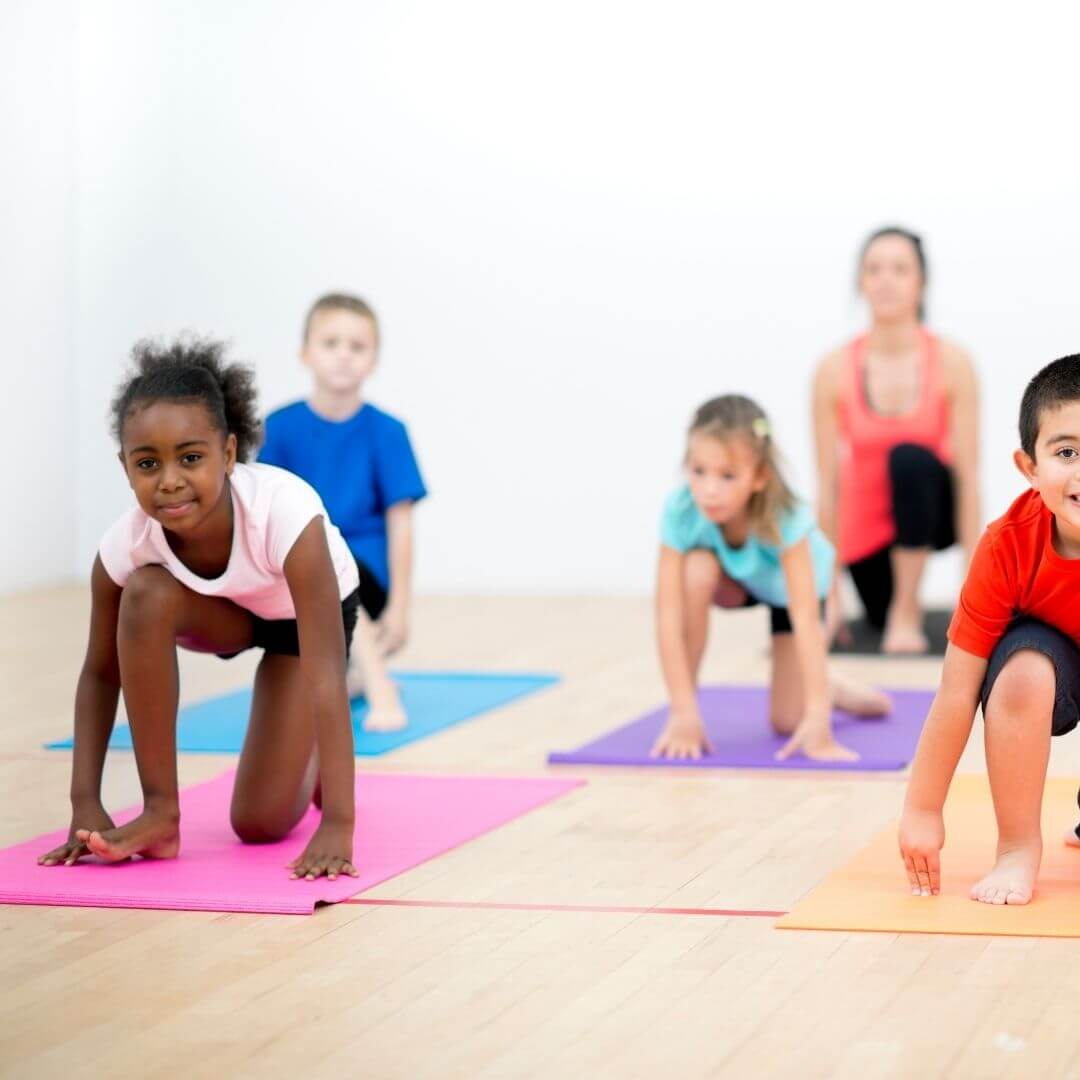
Structured Movement for Children Builds Physical Literacy
Physical literacy is not a buzzword. It refers to the fundamental movement skills that underpin all future physical activity. These include balance, coordination, rhythm, spatial awareness, agility, strength, and mobility.
Without physical literacy, children may participate in sport yet feel awkward. They may move frequently, but without control. They may expend energy without building competence.
A strong kids yoga and movement program integrates these components deliberately. It does not rely on chance exposure. It does not assume children will simply “pick it up.”
Look for evidence of:
-
- Single-leg balance variations
- Controlled strength exercises using bodyweight
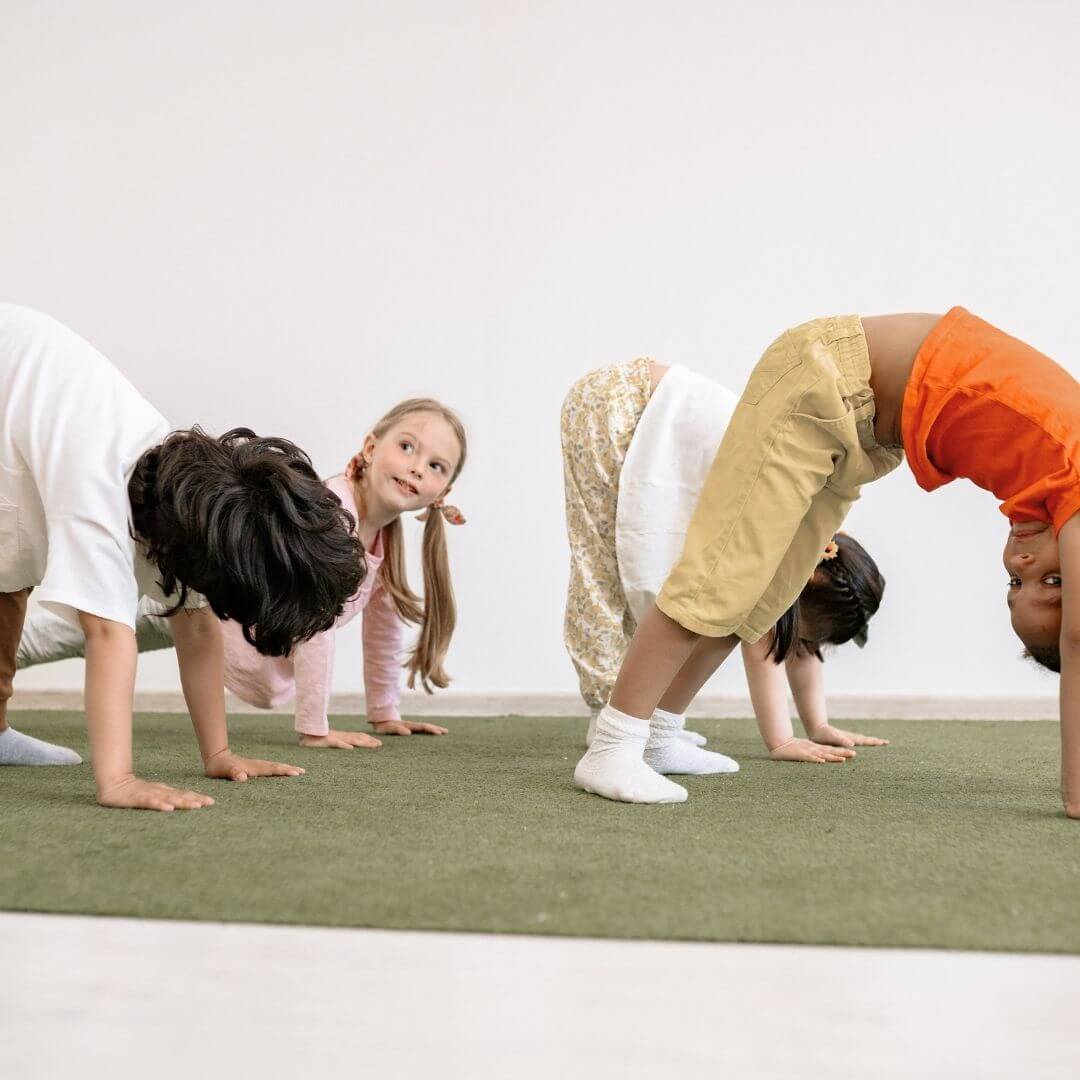
- Multi-directional movement rather than straight-line repetition
- Cross-body coordination patterns
- Age-appropriate mobility work
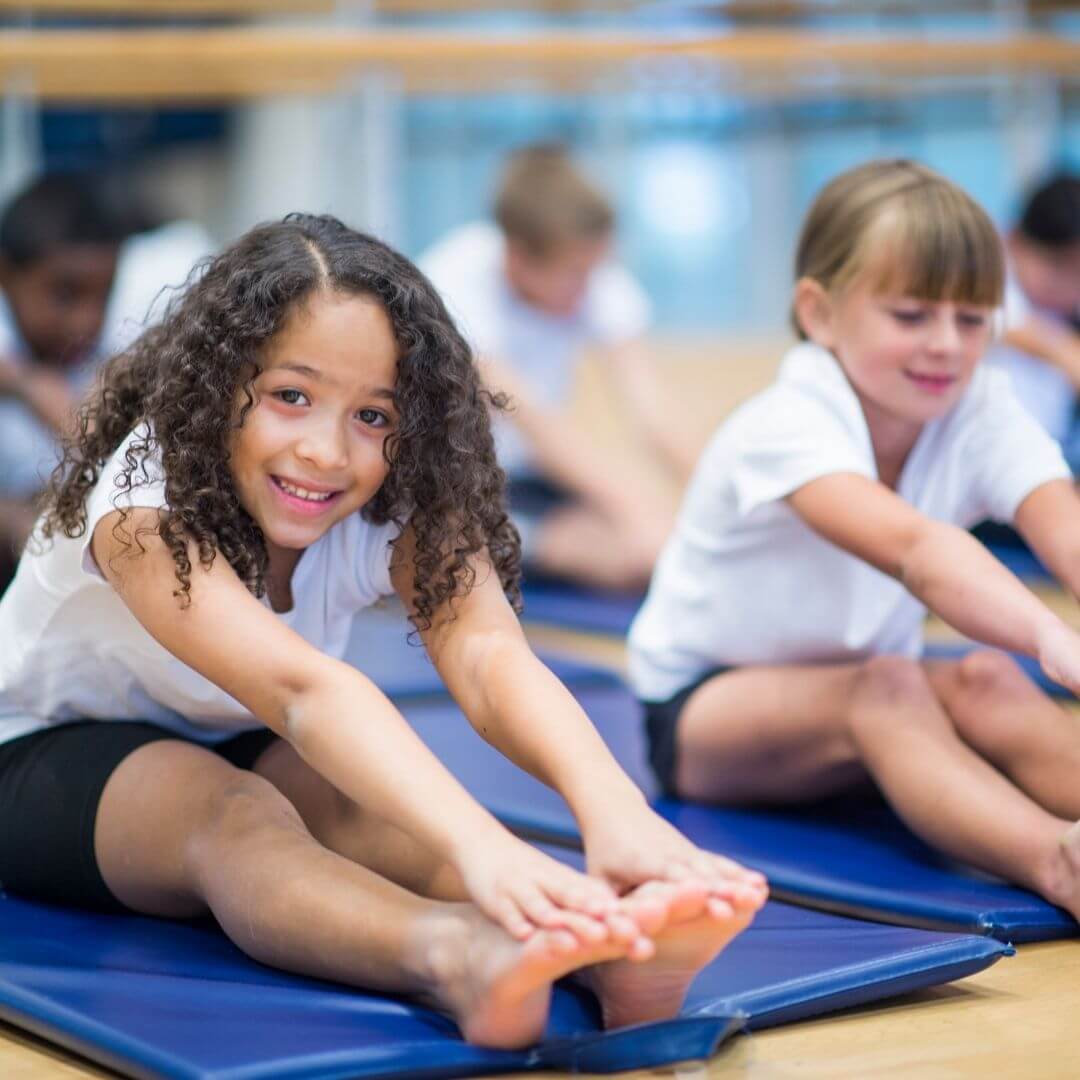
Structured movement for children means that these elements are layered over time. A simple balance becomes more refined. A basic strength hold becomes more stable. Coordination drills become smoother.
When these foundations are built early, children often enter adolescence with a more secure physical base. They feel more comfortable attempting new activities because their bodies respond reliably.
That comfort is confidence.
Some sessions focus specifically on helping children move, release, and feel calm, which is an important component of overall regulation.
Progression Is the Marker of Intentional Teaching
Progression is what separates structured development from random activity.
In a well-designed programme, skills are revisited. They are not replaced every week with something entirely new. Children recognise patterns. They experience improvement. They understand that effort produces change.
When learning is structured, a class might follow a consistent framework:
-
- Warm-up patterns that reinforce mobility and coordination
- Strength components that increase gradually in complexity
- Balance work that builds endurance and focus
- A regulated cool-down to reset the nervous system
If every session is entirely different, children may enjoy the novelty, but the body has little opportunity to consolidate skills. Consistency creates depth.
When considering how to choose a kids’ movement class, ask the instructor directly how progression works. A confident, educated teacher will be able to explain this clearly.
Emotional Safety Is Not Optional
Children’s movement class benefits extend beyond muscle and coordination. They include emotional regulation, resilience, and self-trust.
These outcomes depend heavily on the environment.
A confidence-building movement class does not rely on humiliation, comparison, or public ranking. It avoids language that frames ability as fixed. It allows children to wobble, attempt, and try again without embarrassment.
For a deeper look at how structured challenge develops confidence over time, explore how confidence-building movement classes are designed to layer progress rather than rely on praise alone.
You should see instructors offering guidance without aggression. You should hear language that focuses on effort rather than talent. You should notice that quieter children are not overshadowed by louder ones.
When children feel safe, they experiment. When they experiment, they improve. When they improve, they internalise capability.
If the tone feels chaotic or shaming, development becomes unstable.
The Nervous System Deserves Attention Too
Modern childhood often involves overstimulation. Screens, noise, rapid transitions, and constant input leave many children dysregulated without realising it.
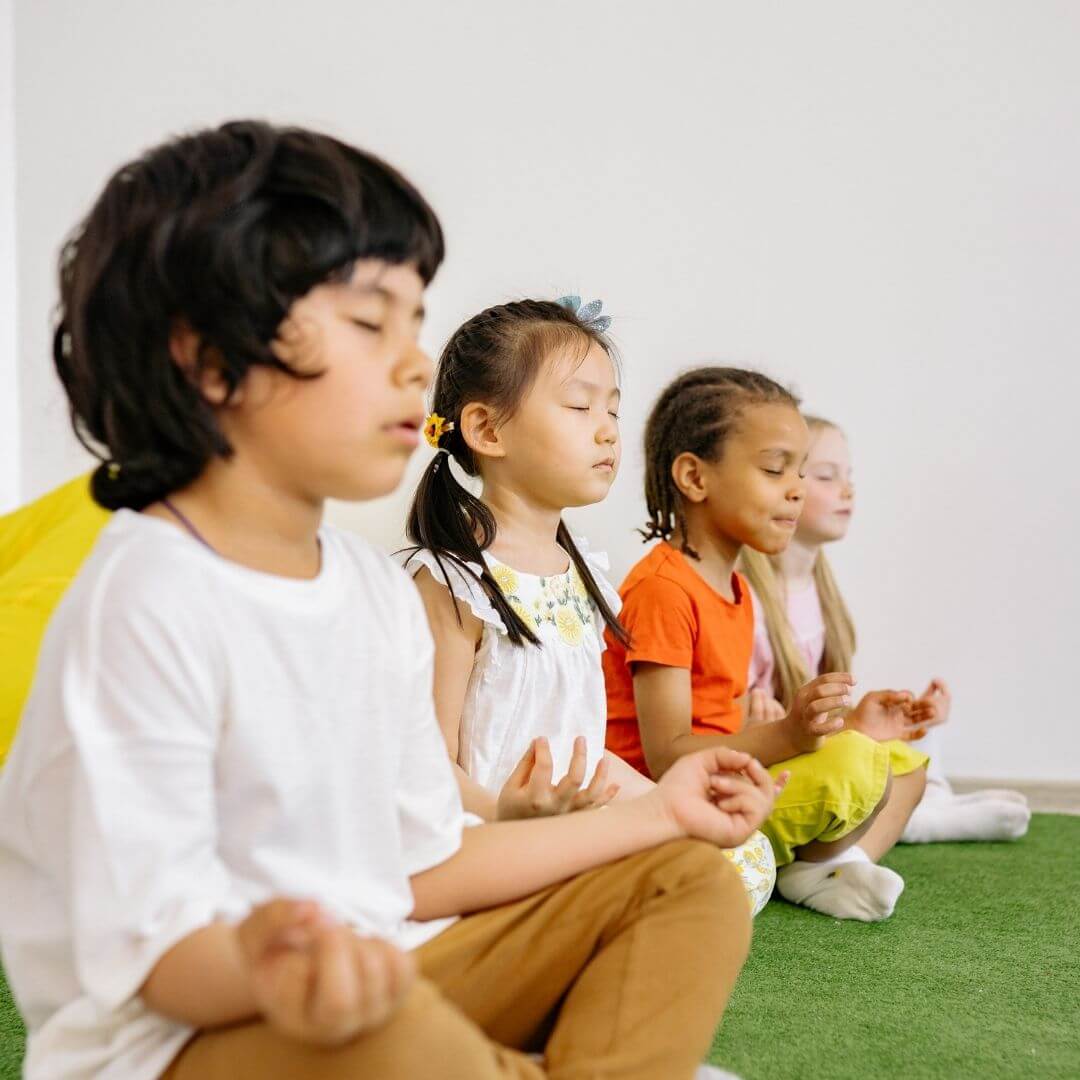
A thoughtful children’s movement class incorporates breath and regulation. Not as something mystical, but as something practical.
Children can learn:
- How to slow breathing after exertion
- How to focus attention on one task
- How to calm their body before transitioning
- How to notice tension and release it
These are transferable skills. They influence behaviour at school. They influence emotional control at home. They influence sleep patterns and concentration.
If a session never slows down, never invites stillness, never integrates breath awareness, an important developmental opportunity is being missed.
If you’re curious about the link between movement and regulation, this piece explains why children struggle to self-regulate without daily movement and how structured activity supports steadiness.
Age Appropriateness Changes Everything
A five-year-old does not process instruction the same way a thirteen-year-old does. Their coordination patterns differ. Their strength capacity differs. Their attention span differs.
Structured movement for children should respect developmental stages.
Younger children benefit from:
- Clear, simple cues
- Repetition with slight variation
- Shorter focus intervals
- Playful framing without chaos
Older children benefit from:
- Technical refinement
- Stronger strength challenges
- Longer sequences
- A tone that respects growing maturity
If age groups are mixed without adaptation, progression can stall for both ends of the spectrum.
When asking what to look for in a children’s movement class, consider whether age is treated as a meaningful factor or an afterthought.
Competition Versus Personal Development
Competition has a place. It can motivate certain children. It can build resilience when framed correctly.
However, constant comparison can also undermine emerging confidence.
In many confidence-building movement classes, emphasis is placed on personal improvement. Children are encouraged to focus on their own balance, their own strength, and their own progression.
This does not remove the challenge. It shifts the reference point.
Instead of asking who can hold the longest, the question becomes whether you can hold longer than last week. Instead of asking who is fastest, the question becomes whether your coordination feels smoother.
Internal benchmarks create more stable confidence than external comparisons.
For children who need a quieter environment, Pilates can be a brilliant option. Children’s Pilates in West Bridgford: How It Helps Strength, Posture and Confidence explains why.
The Instructor’s Education Is Not Cosmetic
An instructor’s training matters.
When evaluating how to choose a kids movement class, examine whether the instructor understands anatomy, joint safety, developmental psychology, and group management. Enthusiasm without knowledge can lead to poorly scaled exercises, unnecessary strain, or chaotic sessions.
A qualified instructor should be able to:
-
- Adapt exercises for different abilities
- Recognise fatigue or misalignment
- Offer regressions and progressions
- Manage group energy without shouting
- Explain why certain movements are included
This depth of knowledge often shows in subtle ways. Clear instructions. Calm authority. Logical sequencing.
You may not need a medical dissertation, but you should see evidence of genuine movement education.
Environment Reflects Philosophy
The physical and emotional environment of a class reveals a great deal.
Is the space organised? Are transitions smooth? Do children understand expectations? Is there a clear beginning and ending ritual?
Structure does not mean rigidity. It means clarity.
Children tend to relax when boundaries are predictable. They do not need constant novelty. They need stability.
An organised environment communicates that the session has purpose. That purpose contributes to meaningful children’s movement class benefits.
Consistency Creates Long-Term Results
One session can inspire. Consistent sessions create change.
When selecting a children’s movement class, consider whether the programme encourages regular attendance and long-term participation.
Physical literacy and confidence do not develop overnight. They require repetition, refinement, and patience.
A structured program that runs weekly, with visible progression and age-appropriate scaling, is more likely to deliver lasting results than sporadic workshops.
Signs a Program May Be Developmentally Weak
Not every energetic class is harmful. But there are indicators that suggest a lack of structure:
-
- No visible progression from week to week
- Constant game switching without skill refinement
- Instructor relying on volume rather than clarity
- No balance or strength focus
- No cool-down or regulation component
- Children are frequently disengaged or disruptive
If you cannot identify what children are learning beyond expending energy, ask questions.
The Long-Term Impact of Structured Movement
The true children’s movement class benefits appear gradually.
Children who move with control often demonstrate:
-
- Improved posture
- Better coordination in sport
- Greater willingness to try new activities
- Increased resilience after mistakes
- Enhanced focus in academic settings
- They stand differently. They attempt differently. They recover differently.
Movement education is not about producing elite athletes. It is about producing capable humans who trust their bodies.
Conclusion: Choose Structure Over Noise
Selecting a children’s movement class is not about filling time. It is about shaping experience.
The environment you choose influences how your child perceives challenge, effort, and capability. It influences whether movement becomes something chaotic or something grounding.
A class built on structure, progression, and calm authority will often look less dramatic than one built on spectacle. It will also produce steadier results.
If you are seeking a structured kids yoga and movement program in Nottingham for ages 5 to 13, with clear progression and a focus on physical literacy and emotional stability, you can read about more here: https://vikithorbjorn.art/yoga-and-movement-for-children/
Choose carefully. Development lasts longer than noise.
You might want to read the article about After-School Movement Classes: What Parents Should Ask First, too.
Key Takeaway: How to Decide in 10 Minutes
If you are standing in a hall watching a children’s movement class and trying to work out whether it is right for your child, ignore how loud it is and look for these five things:
Is there a visible structure?
Can you identify a warm-up, skill section, strength or balance focus, and a clear finish? If it feels random, it probably is.
Are skills repeated and refined?
Ask what progression looks like over six weeks. If the answer is vague, development may be accidental rather than intentional.
How does the instructor correct children?
Calm guidance builds confidence. Public comparison or sarcasm chips away at it.
Is the challenge scaled?
Children should be offered easier and harder options. If everyone does exactly the same thing regardless of ability, growth will plateau.
Does the session end regulated, not chaotic?
A strong class finishes with steadiness. Children should leave grounded, not overstimulated.
If you can confidently answer yes to those five questions, you are likely looking at a structured, confidence-building movement class rather than an hour of organised entertainment.
Questions Parents Tend to Ask Once They Start Looking
Watch one session if you can. Don’t listen to the music or the marketing. Look at what the children are doing twice. Are they repeating skills and getting better at them, or just switching games every five minutes? If you can see structure, you’re in the right place.
Confidence shows up quietly. Children start attempting things they avoided before. They wobble and try again instead of looking around to see who’s watching. If the class encourages retrying instead of ranking, confidence is being built.
It depends on the environment. In a good class, the reference point is personal progress, not who is fastest or strongest. Children who don’t enjoy team sports often do well in structured movement settings because they are not constantly being compared.
Not necessarily, but some form of regulation helps. If a session only ramps energy up and never brings it down, children leave overstimulated. A well-run class usually finishes calmer than it started.
Once a week is enough if the program has progression. Random attendance at random sessions rarely builds much. Consistency is what allows strength, coordination and confidence to layer properly.
You want someone who understands movement and growing bodies. That might be yoga, Pilates, PE, sport science or child development. What matters is that they can scale exercises and explain why they’re doing them, not just that they like kids.
Notice how much time the instructor spends regaining control. If half the session is shouting children back into line, learning isn’t going very deep. Energy is fine. Chaos as a teaching strategy isn’t.
If you ask about progression and the answer is “we just keep it fun and see how it goes,” that’s your answer. Fun should sit on top of structure, not replace it.