
How to Choose Large Abstract Canvas Art for Open-Plan Homes
Introduction: Open-Plan Spaces Look Calm. They Rarely Feel That Way
Open-plan homes are sold as freedom. More light, more space, more connection between areas. Fewer walls, fewer constraints, fewer interruptions between how you live, work, eat, and rest.
And visually, that often holds up. The room looks good. Clean lines. Thoughtful furniture. Everything is placed with intention.
But then you actually live in it. And something doesn’t quite settle.
You notice it in small ways. You move through the space but don’t fully relax into it. You sit down, but your attention keeps drifting. Even when everything is “done,” the room feels like it’s still asking something from you.
That’s not a styling issue. It’s structural.
Open-plan design removes physical boundaries, which means something else has to take over their role. Without that, the space stays visually open but emotionally loose. The body keeps scanning, trying to locate edges, anchors, or some form of containment.
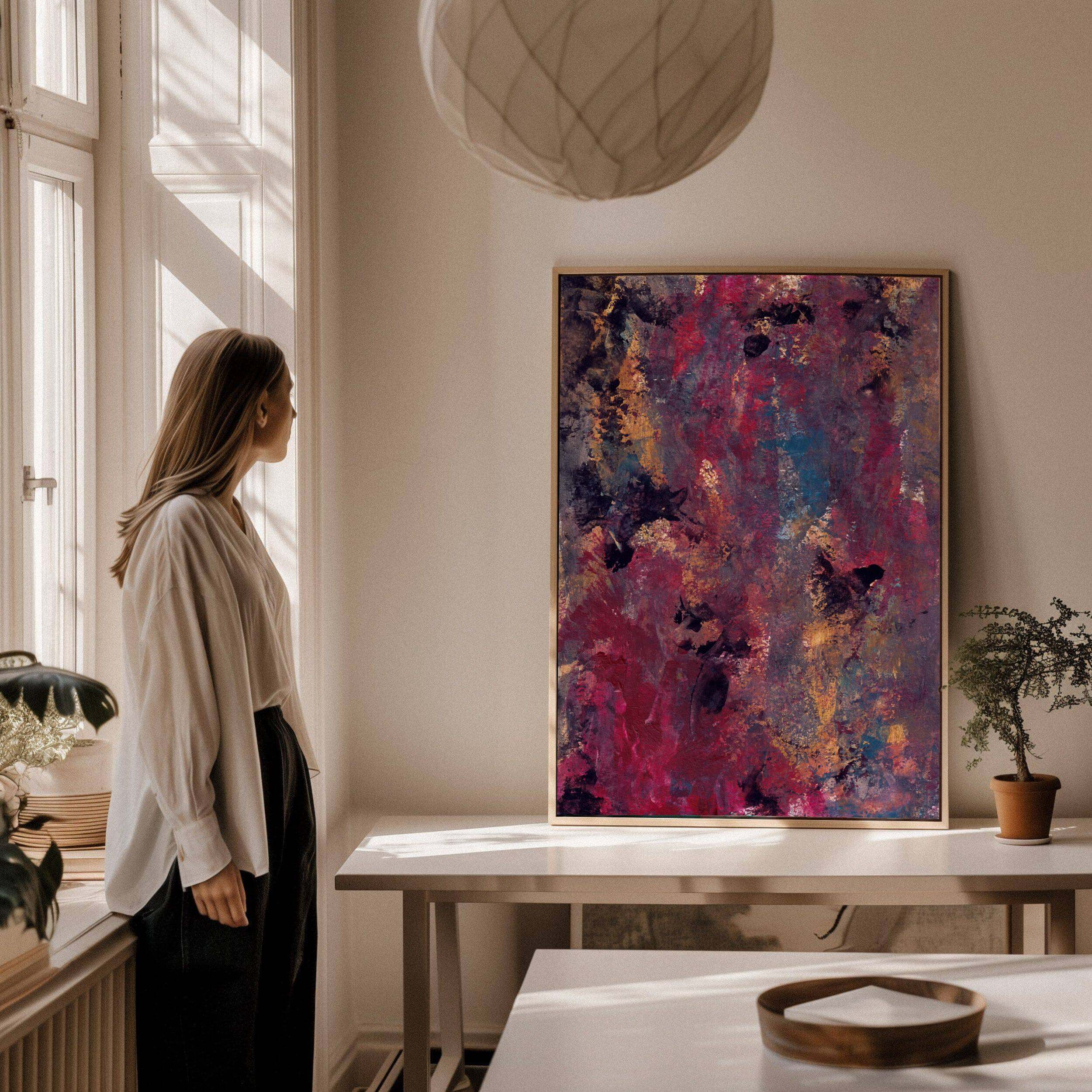
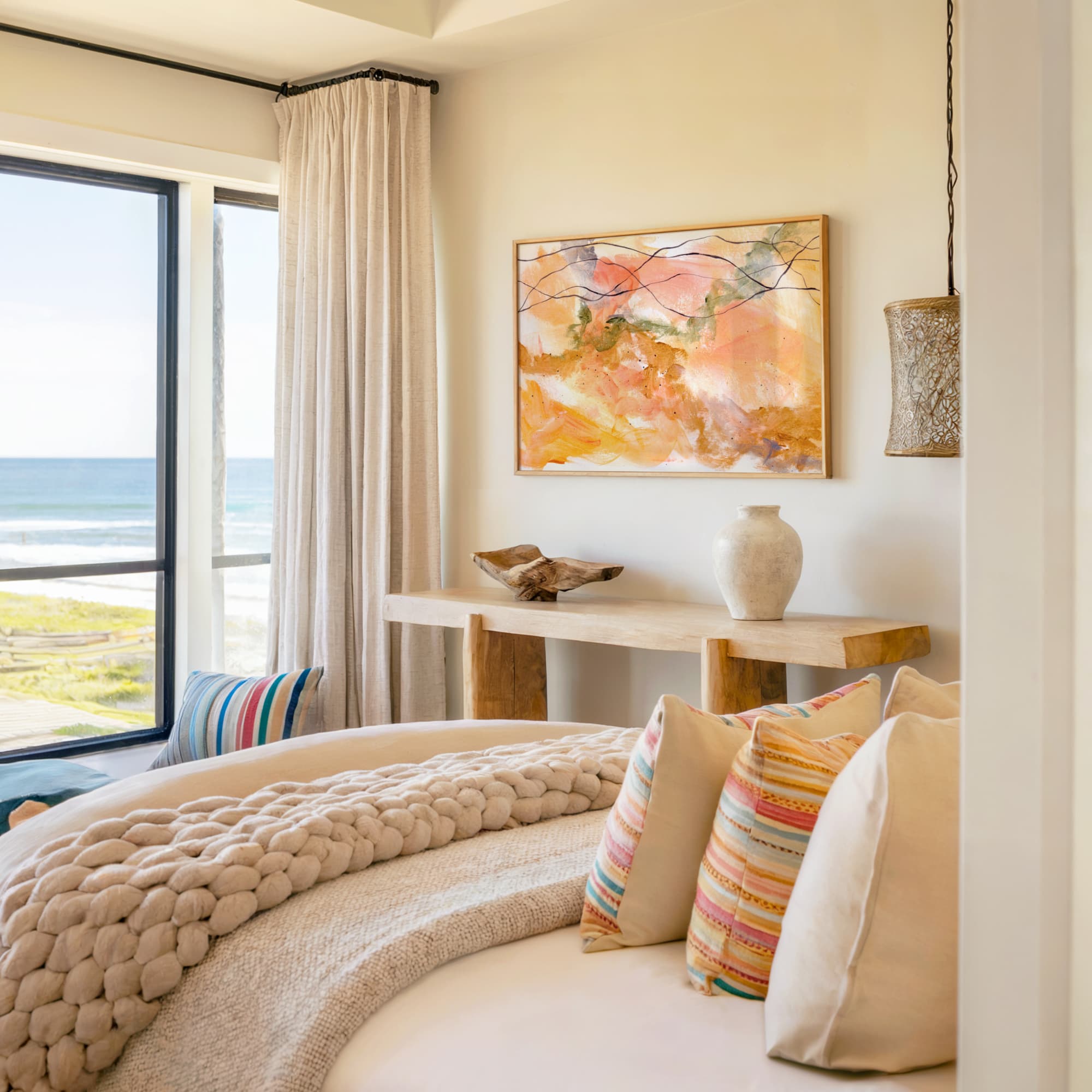
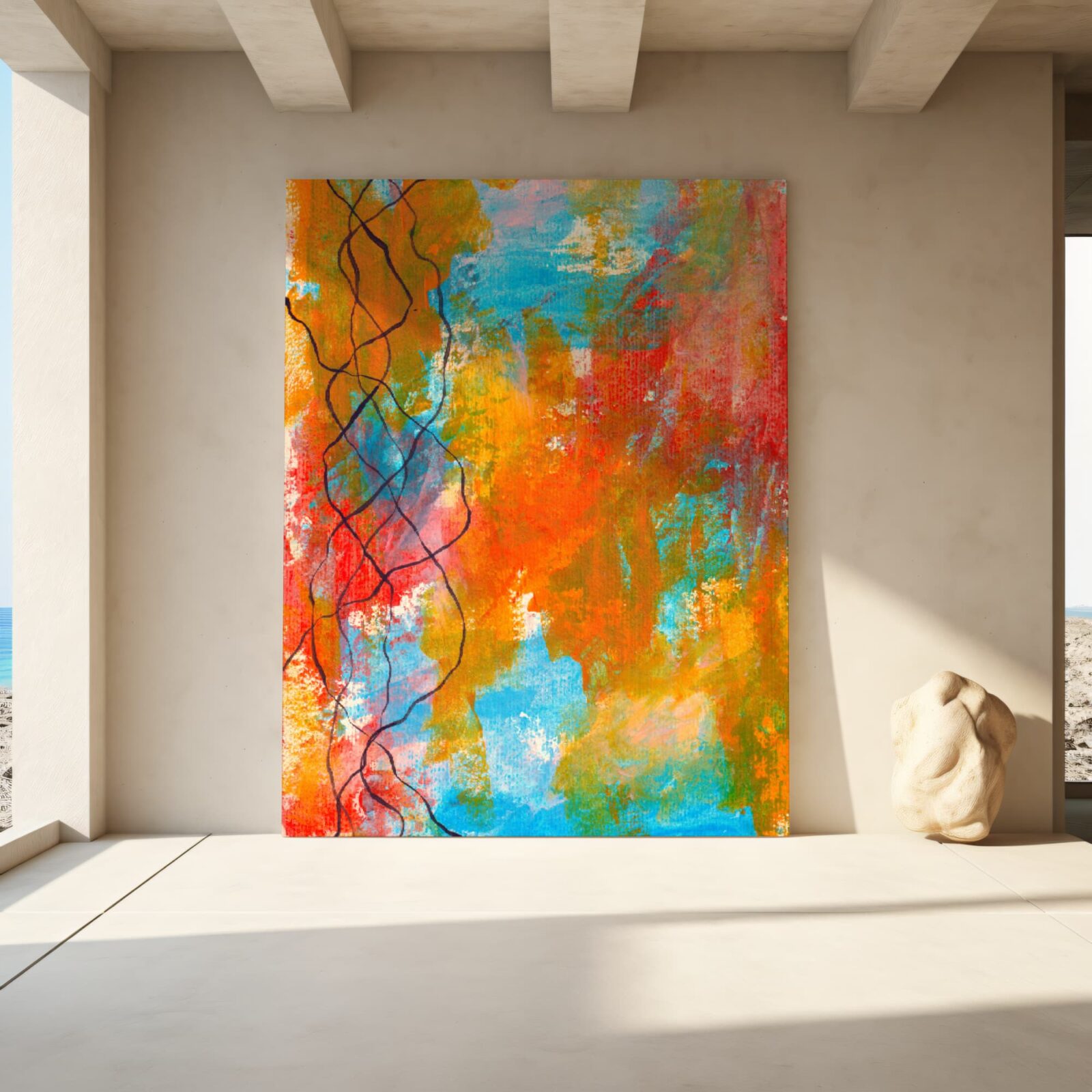
This is where large abstract canvas art becomes essential. Not as decoration. Not as a finishing touch. But as a way of restoring balance to a space that has lost its natural boundaries.
TLDR
Open-plan homes often feel visually unsettled not because anything is obviously wrong, but because the absence of physical boundaries leaves the space without enough structure for the eye and body to settle. Smaller pieces of artwork rarely resolve this, as they lack the scale and presence required to anchor a wide visual field, which means the eye continues to move without finding a point of rest. Large abstract canvas art changes that dynamic by introducing weight, reducing visual fragmentation, and allowing attention to stabilise, so the space no longer feels like something that needs to be constantly processed.
Why Open-Plan Spaces Create Subtle Fatigue
Most people assume fatigue at home comes from lifestyle. Work stress, screen time, lack of sleep. And yes, all of that matters. But there’s another layer that’s quieter and far less obvious. The environment itself.
When a space is visually unresolved, the brain doesn’t switch off. It keeps processing. It keeps searching for structure, even if you’re not consciously aware of it.
This is similar to what happens in workplaces where fatigue builds not just from workload, but from the environment. Physical and visual conditions can reduce concentration, slow reaction time, and increase mental effort over time. Now translate that into a home.
If your living space:
- has long, uninterrupted sightlines
- lacks clear visual anchors
- blends multiple functions into one continuous field
then your attention never fully settles.
You’re not stressed. You’re just slightly “on” all the time. That low-level activation is what makes open-plan homes feel more draining than they should. And most people try to solve it with furniture or layout. But the real issue is visual structure.
Why Small and Medium Artwork Quietly Fails in These Spaces
This is where almost everyone gets it wrong. They buy artwork that feels safe.
Something mid-sized. Easy to place. Not too dominant. Something that won’t take over the room.
And on the wall, it looks fine. It fills the space. It matches the palette. It doesn’t clash with anything. But it doesn’t do anything either.
Because in an open-plan environment, the scale of the room is not defined by one wall. It’s defined by the entire visual field.
So when the artwork is too small:
- it doesn’t anchor anything
- it gets absorbed into the surroundings
- the eye continues moving, looking for resolution
I’ve actually already addressed this concept in my work in “How Scale Influences Emotional Safety in a Space”, where smaller pieces create ongoing visual scanning rather than stability.
That scanning is the problem. It’s subtle, but constant. And over time, it contributes to that feeling of “something’s off” without being able to name why.
What Large Abstract Canvas Art Does Differently
When the scale is right, the shift is not subtle, even if it’s difficult to explain at first.
The room stops feeling like one long, continuous surface where everything competes for attention and begins to organise itself in a way that feels more stable and easier to sit in. It’s not that the artwork suddenly becomes the most important thing in the room, but that it gives everything else something to relate to.
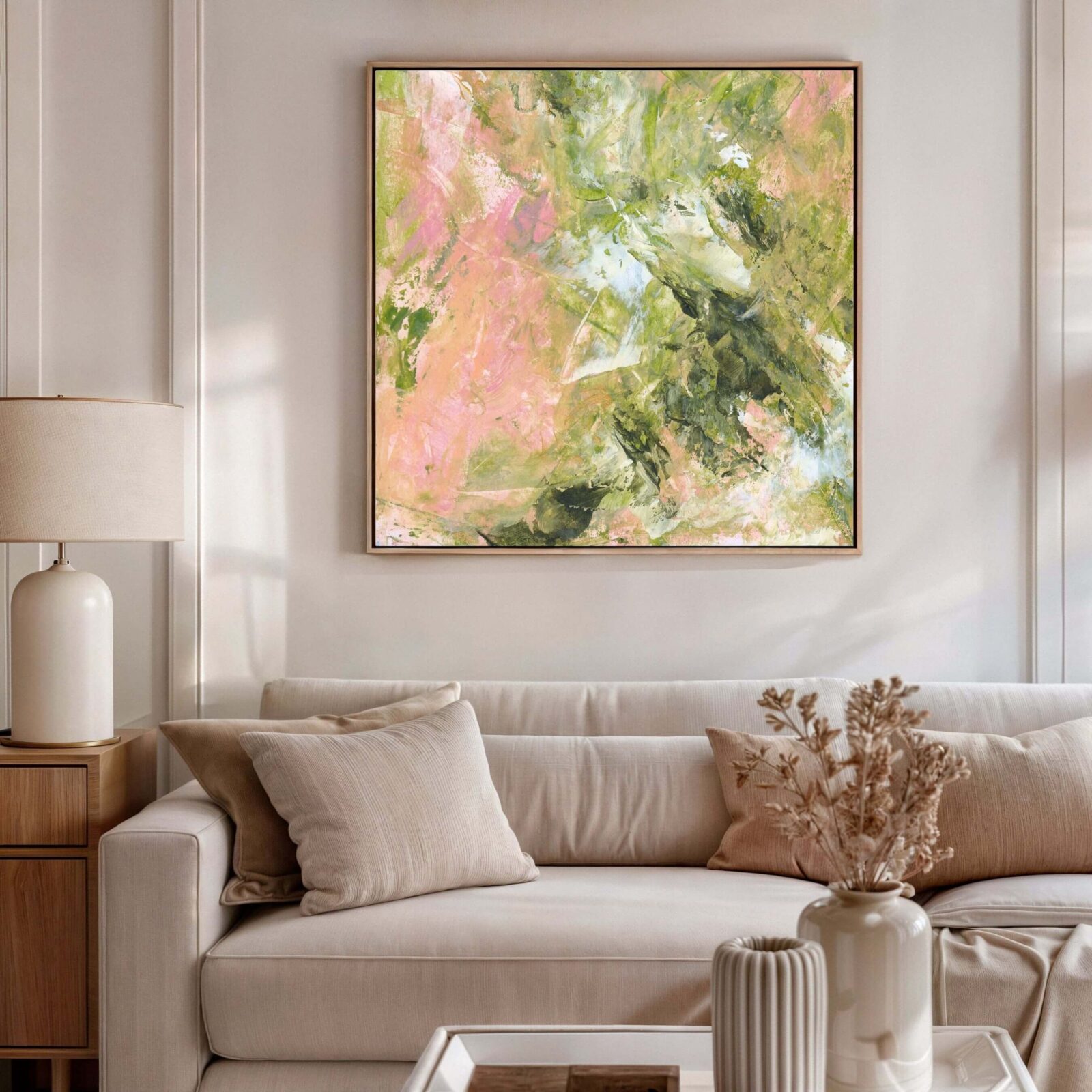
A large piece doesn’t simply fill a wall, it carries enough visual weight to hold part of the space in place. It gives the eye somewhere to land without effort, which means you’re no longer scanning across furniture, lighting, and architectural lines trying to make sense of how it all fits together.
Once that constant, low-level searching stops, the rest of the body follows without needing instruction. You sit down and stay seated. Your attention doesn’t keep drifting. The space starts to feel like somewhere you can actually be in, rather than something you are still processing in the background.
This is why larger works often feel calmer, even when they are visually bold. The calm doesn’t come from minimal colour or soft tones, it comes from resolution. When the visual field is resolved, the brain no longer has to keep working to understand it.
If you want to go deeper into how scale affects the way a space feels rather than just how it looks, this article breaks it down properly:
https://vikithorbjorn.art/how-scale-influences-emotional-safety-in-a-space
The difference, in practice, is straightforward.
When the artwork has enough presence, the space holds together. When it doesn’t, everything remains slightly loose.
Why Abstract Work Holds Open Spaces Better Than Literal Imagery
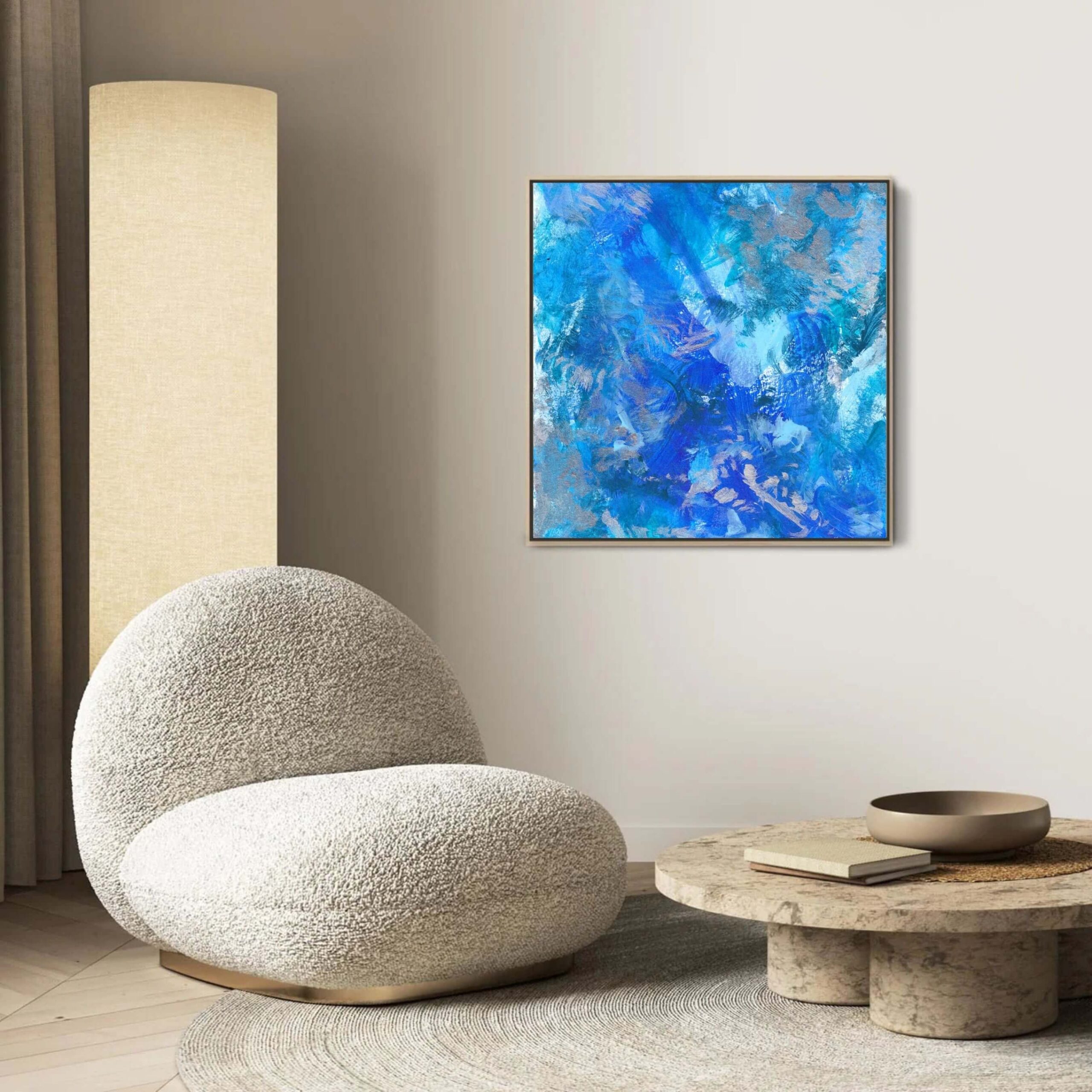
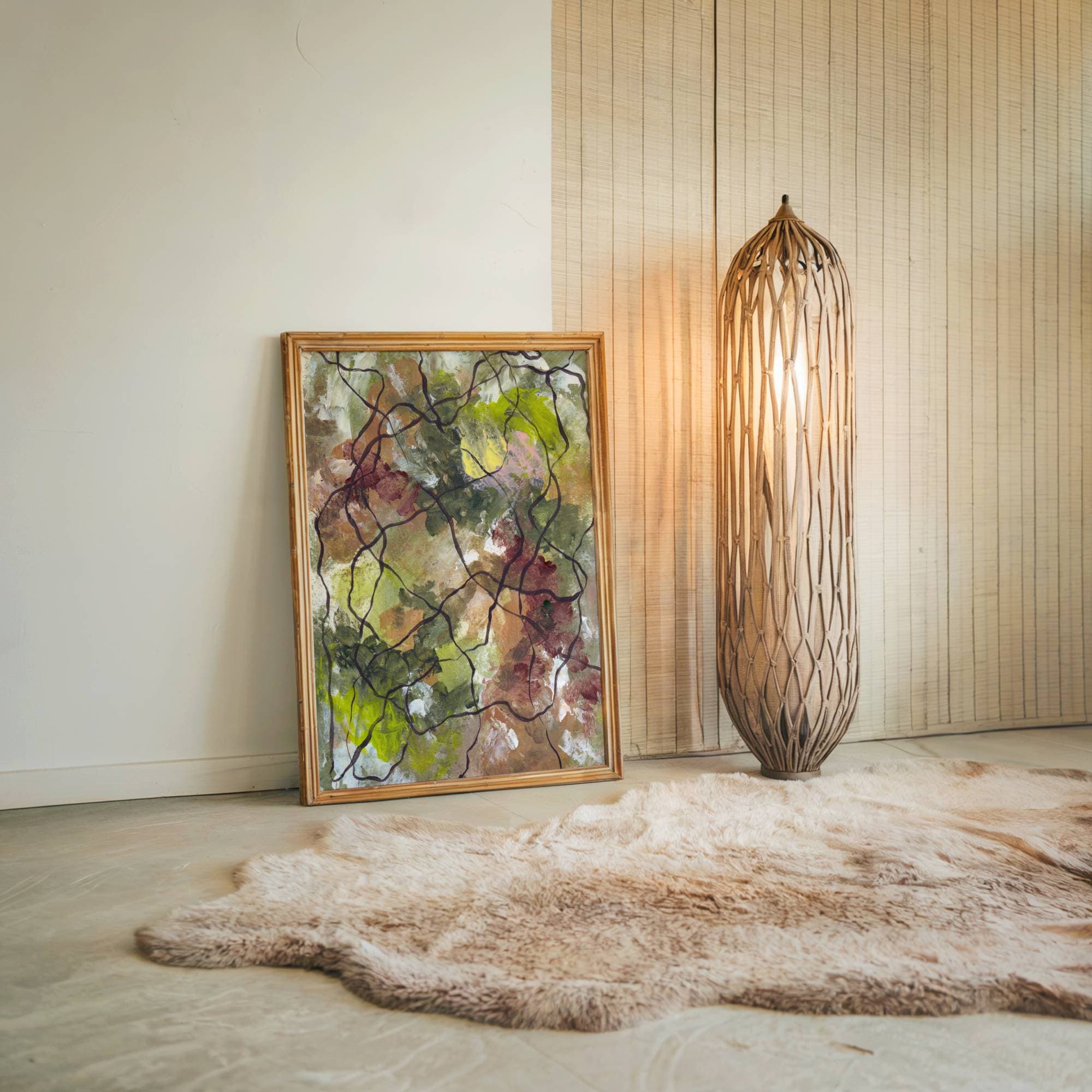
There’s a reason abstract art performs better in open-plan homes. It doesn’t compete with the room.
Figurative or highly detailed work introduces narrative. It asks questions. It invites interpretation in a very direct way.
In a smaller, contained room, that can work beautifully. In an open-plan environment, it becomes another layer of cognitive load.
Abstract work removes that.
It doesn’t require decoding. It doesn’t demand attention in the same way. Instead, it creates a field the eye can settle into.
Minimal or abstract compositions also reduce visual complexity, which allows the brain to process the environment more efficiently and without strain.
That’s why abstract pieces often feel calmer over time. Not because they’re “simpler.” Because they’re less demanding.
The Role of Visual Boundaries in Open-Plan Design
You might not have walls anymore. But your body still expects boundaries.
In traditional homes, walls define space. They create separation between functions without you having to think about it. In open-plan layouts, that structure has to be recreated.
Furniture helps. Lighting contributes. But neither fully resolves the issue. Large-scale artwork can.
It creates:
- visual containment around seating areas
- subtle zoning between functions
- a sense of enclosure without physical barriers
This becomes especially important in:
- living and dining combinations
- kitchen-living transitions
- long, uninterrupted walls
You’ve already explored this idea in more depth in The Ultimate Guide To Integrating Abstract Art Into Your Home Décor where art is positioned as something that anchors a space rather than decorates it.
In open-plan homes, that role becomes even more critical. Because without it, everything blends. And when everything blends, nothing holds.
Why Most People Dramatically Undershoot Scale
People don’t slightly underestimate scale. They massively underestimate it. Because they’re choosing based on the wall, not the space.
A piece might look large when viewed in isolation. But once it’s placed in a wide, open environment, it shrinks visually.
This is why so many homes end up with artwork that technically fits but feels irrelevant. The correct question is not:
“What size works for this wall?”
It’s:
“What size resolves this space?”
And in most cases, the answer is larger than expected. If a piece feels slightly too big at first, you’re usually closer to the correct scale than when it feels safe.
Minimalism, Restraint, and Why Quiet Work Feels More Expensive
There’s a reason restrained work often feels more considered. When visual noise is reduced, the brain doesn’t have to work as hard. It processes the image smoothly, without interruption.
Minimalist compositions use negative space and limited elements to create clarity rather than stimulation. That clarity allows deeper engagement over time.
As a result:
- attention settles more easily
- visual fatigue decreases
- the space feels more intentional
I’ve touched on similar ideas in
my Why Emotionally Intelligent Interiors Always Include Art article, where the focus is not on decoration, but on how art supports the emotional tone of a space.
Quiet work does not demand attention. It earns it. And in open-plan homes, that distinction matters.
Living With Large Art Over Time Feels Different Than You Expect
There’s always hesitation before going larger. People worry:
- it will dominate the room
- they’ll get bored of it
- it’s too much
In practice, the opposite happens. The work becomes quieter.
Not because it fades, but because it integrates.
Smaller, trend-driven pieces often lose relevance quickly. They stop registering. The eye ignores them because they don’t contribute to the structure of the space.
Larger, emotionally grounded work deepens.
It becomes part of how the space feels, not just how it looks.
This long-term relationship is something I’ve already explored in The Psychology of Living With Abstract Art Over Time.
And it’s one of the key differences between buying art and simply filling a wall.
How to Choose the Right Piece Without Overcomplicating It
You don’t need a rigid system for this, and you definitely don’t need to start analysing styles, movements, or whether something fits a trend that will feel outdated in six months. What you actually need is the willingness to look at your space honestly, without trying to convince yourself that it already works.
Walk into the room as if you’ve never seen it before and pay attention to how it feels rather than how it looks. There will almost always be a point where the space doesn’t quite settle, where your attention drifts slightly or where something feels visually unresolved, even if everything is technically “in place.” It’s not empty in the literal sense, and it’s not unfinished in a way that would be obvious to someone else, but there is a quiet lack of cohesion that you can feel if you stop long enough to notice it.
That point of tension is where the artwork belongs.
Not because it fills a gap, but because it resolves something that the space itself hasn’t managed to do on its own.
From there, the decision becomes much simpler, because you are no longer choosing based on taste alone. You are choosing based on function, even if that function is subtle. The piece needs to hold its own without demanding constant attention, it needs to carry enough scale to stabilise the area it sits within, and it needs to exist without introducing unnecessary complexity that would pull the eye back into scanning rather than allowing it to rest.
What tends to go wrong at this stage is that people revert to habits that feel safe but ultimately weaken the space. They start breaking the wall into smaller moments by adding multiple pieces that never quite relate to each other, or they focus too heavily on matching colours instead of understanding how the work interacts with the room as a whole. In many cases, the artwork is treated as the final decorative layer, something to be added once everything else is finished, rather than something that should have been considered as part of the structure from the beginning.
The shift is simple but important.
Instead of asking what looks good on the wall, you start asking what the space is missing.
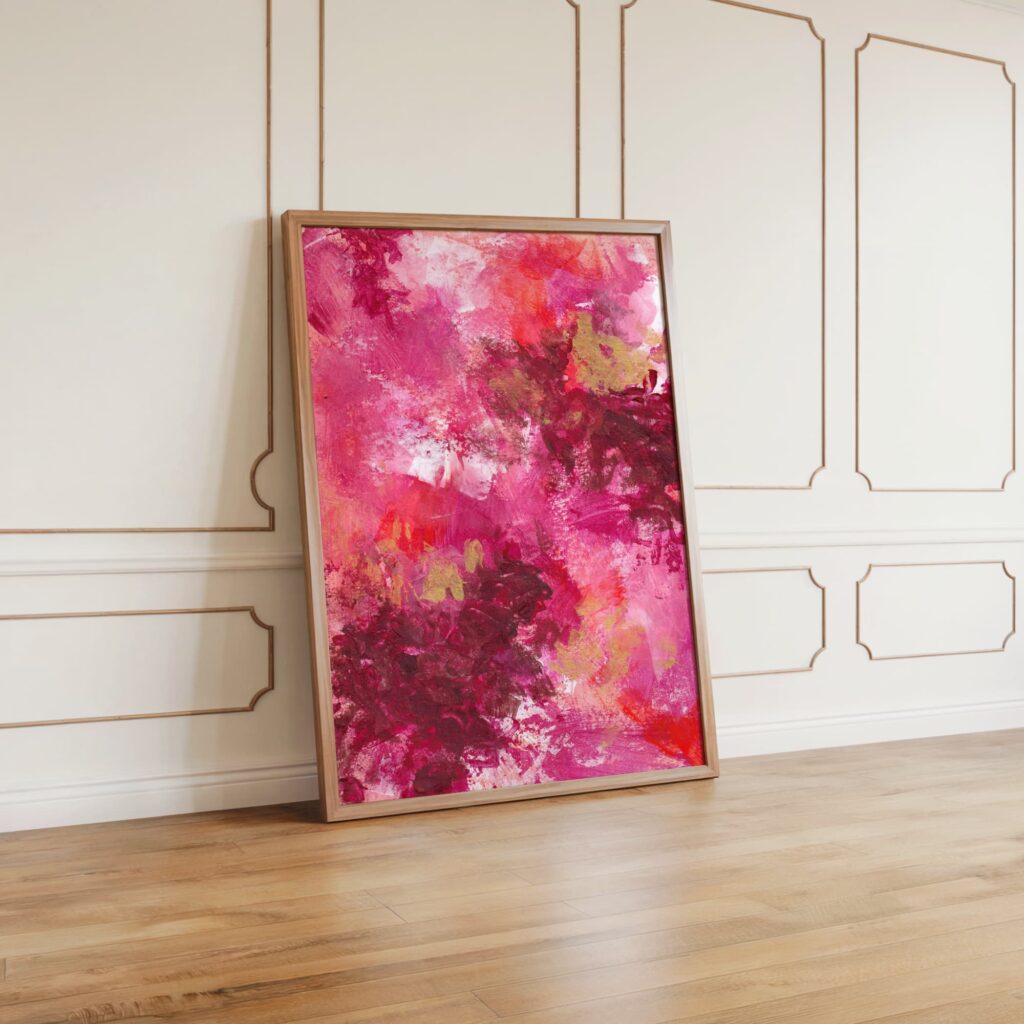
And once you see it that way, the decision becomes far less about preference and far more about resolution. If you want to buy canvas art, check out this article, or request private catalogue access here.
Conclusion: Open Space Needs Something That Holds It Back
Open-plan living is often described in terms of freedom, but what people rarely acknowledge is that too much openness without any form of visual containment can feel just as restrictive as too many walls. When everything flows into everything else without interruption, the space can start to feel loose, almost as if it lacks the tension required to hold attention in place.
Balance is what matters, not openness on its own.
If a space leans too far into structure, it becomes rigid and controlled, leaving little room for movement or ease. If it leans too far in the opposite direction, it loses coherence, and the experience of being in it becomes subtly draining because nothing quite settles. Most open-plan homes sit somewhere in that second category, even when they are beautifully designed, because the elements that would normally create boundaries have been removed without being replaced.
Large abstract canvas art sits precisely in that missing middle.
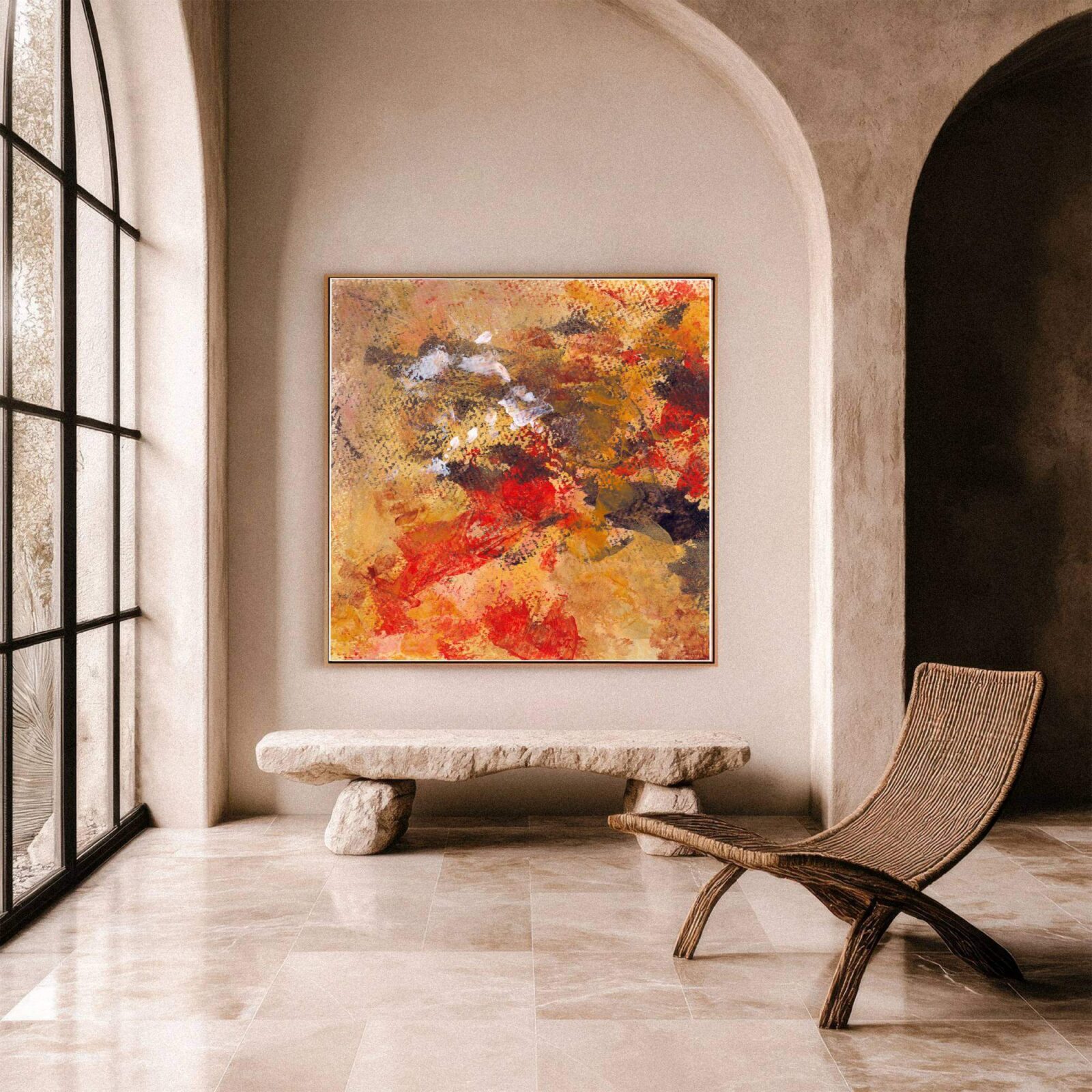
It does not divide the space in the way a wall would, and it does not compete with the architecture for attention, but it introduces enough weight and presence to stabilise what would otherwise remain open and unresolved. It gives the room something to organise itself around, which in turn allows everything else to make more sense.
Once that happens, the change is not dramatic in a visual sense, but it is immediate in how the space feels. Movement becomes easier, attention becomes less fragmented, and the underlying tension that was previously unnoticed begins to dissolve. You are not consciously reacting to the artwork itself, but to the fact that the environment is no longer asking your brain to constantly process it.
The space holds.
And because the space holds, you no longer have to.
Key Takeaway
The decision is not about what looks good on a wall, but about what allows the space to finally feel complete, because the right piece of art does not decorate the environment; it resolves it.
Frequently Asked Questions About Art Scale and Emotional Impact
No. It’s about proportion. Even smaller spaces benefit from fewer, larger works.
Only when it’s visually chaotic. Calm, restrained work usually has the opposite effect.
Because it lacks the visual weight to anchor the wider environment.
In most open-plan spaces, this creates fragmentation rather than cohesion.
In areas that feel visually unresolved, such as behind seating or along long walls.
Often yes, because it doesn’t add narrative complexity to an already open environment.
Less likely. Larger works tend to integrate into the space over time.
Choosing artwork based on wall size instead of spatial impact.