Workplace Movement Sessions in Nottingham: What Local Employers Need to Know
TL;DR
Workplace movement sessions in Nottingham give local employers a practical way to support desk-based teams who are dealing with stiffness, fatigue, brain fog, posture issues and the physical strain of long working days.
These sessions are not fitness classes. They are not office yoga awkwardly shoved between meetings. They are not another wellbeing talk where everyone nods politely and then goes back to sitting like a folded receipt.
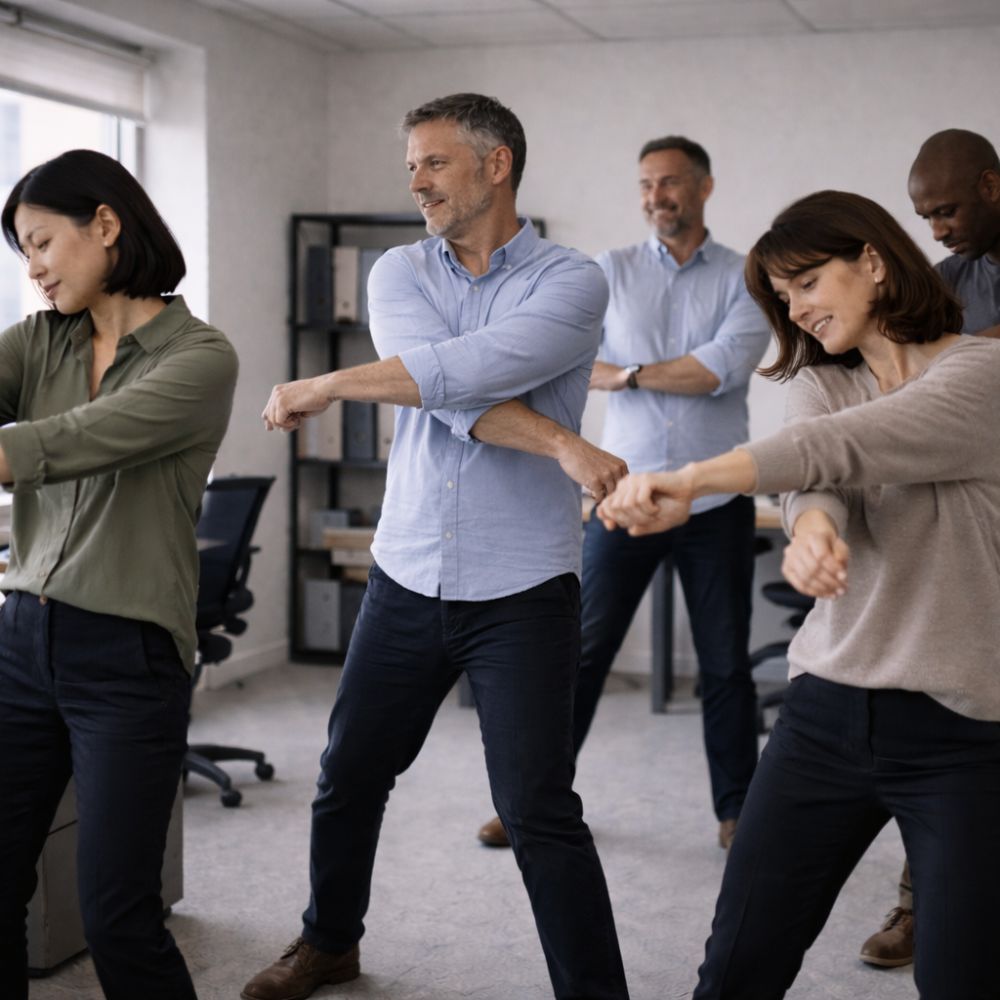
Workplace movement sessions use simple, structured movement, posture awareness, breath, mobility and short resets that employees can actually use during the working day.
For employers, the value is straightforward. If your team spends hours sitting, working at screens, moving between meetings and carrying tension through the day, movement support is not a fluffy extra. It is practical maintenance for the people doing the work.
You can explore the main programme here: Sit Happens.
Definition: what are workplace movement sessions?
Workplace movement sessions are structured movement sessions delivered in a work setting to help employees reduce stiffness, improve posture awareness, support energy, move more confidently and reset during the working day. They may include mobility, breath work, simple strength, desk-based movement, standing resets and practical tools for screen-heavy or desk-based teams.
Why local employers are looking for workplace movement sessions
Modern work asks a lot from people while giving their bodies very little to work with.
Employees sit for long stretches, look at screens, answer messages, attend meetings, manage deadlines, concentrate under pressure, switch tasks constantly and somehow remain professional while their shoulders slowly migrate towards their ears.
That is not neutral.
The body responds to the way work is designed. Long sitting hours affect posture, energy, mobility, breathing and comfort. Screen work can create tension in the neck, shoulders, back, jaw and eyes. Meeting-heavy days often leave no real transition between one cognitive demand and the next. Hybrid work adds another layer, because not every home setup is exactly a triumph of ergonomic excellence. Some are basically a laptop, a dining chair and a prayer.
For Nottingham employers, workplace movement sessions offer a practical response to that reality.
They are useful for office teams, hybrid teams, school staff, small businesses, professional service firms, creative teams, leadership teams and any workplace where people spend a large part of the day sitting, typing, talking, concentrating or bracing themselves through the next calendar invite.
The point is not to turn the workplace into a gym. The point is to give staff simple movement tools they can use before stiffness, fatigue and brain fog become the normal working atmosphere.
For a more detailed explanation of how this works in practice, read How Sit Happens Helps Teams Reduce Stiffness, Fatigue and Brain Fog.
Workplace movement is not another wellbeing lecture
A lot of employees are tired of wellbeing advice. Not because wellbeing does not matter, but because advice can become another thing to process, remember and feel guilty about not doing.
Move more. Stretch. Take breaks. Drink water. Breathe. Get outside. Fix your posture. Reduce stress. Prioritise balance. Lovely. Correct. Also not massively helpful when someone has six meetings, a deadline, a stiff neck and a lunch break that has become theoretical.
Workplace movement sessions work differently because they are experiential.
Employees do not just hear that movement helps. They feel it. They move their shoulders and notice the tension. They breathe differently and notice the shift. They stand, mobilise, reset and realise how long they had been sitting in one shape. The learning lands in the body, not just the brain.
That matters because behaviour rarely changes through advice alone.
Most people already know they should move more during the working day. The missing piece is structure. A good workplace movement session gives people specific tools, clear timing and a better understanding of how to use movement inside the actual working day.
Not someday. Not when things calm down. Not after the next wellbeing newsletter. Now, between the tasks they already have.
What workplace movement sessions can help with
Workplace movement sessions are useful because they address the physical patterns that build up quietly during the day.
These patterns are rarely dramatic at first. A bit of shoulder tension. A stiff back. Tight hips. Heavy eyes. Afternoon fatigue. Foggy thinking. A tendency to hold one’s breath when concentrating. A posture that starts the day reasonably upright and ends somewhere between “tired prawn” and “collapsed office accessory.”
Over time, those patterns become normal. Workplace movement helps interrupt them.
It can support:
| Workplace issue | How movement sessions help |
|---|---|
|
Neck and shoulder stiffness |
Mobility, breath and posture resets help reduce tension patterns |
|
Back discomfort from sitting |
Spinal movement, hip resets and posture awareness create more variety |
|
Afternoon fatigue |
Short movement breaks help employees shift physical state |
|
Brain fog |
Breath-led movement and standing resets can support focus and alertness |
|
Poor posture habits |
Movement-based awareness is more useful than simply saying “sit up straight” |
|
Screen fatigue |
Regular physical resets help interrupt long static periods |
|
Stress held in the body |
Breath and movement help employees notice and release bracing |
|
Hybrid working strain |
Tools can be used at home, in the office or between meetings |
|
Low engagement with wellbeing advice |
Practical movement feels more immediate than passive information |
|
Meeting-heavy days |
Movement creates physical transitions between cognitive demands |
Why desk-based teams need movement before more advice
Desk-based teams often do not need more information.
They need interruption. They need a way to break the physical pattern of sitting, typing, bracing, staring, scrolling, concentrating and slowly becoming one with the chair.
This is why movement matters before more wellbeing advice.
Advice can tell someone what they should do. Movement gives them a way to do it. A two-minute reset between meetings can be more useful than a ten-page guide on workplace wellbeing that nobody has the capacity to read. A short shoulder sequence can teach someone more about their tension than another reminder about posture. A breath-led movement break can help the body shift state in a way a slide deck never will.
For a deeper article on this, read Why Desk-Based Teams Need Movement Before More Wellbeing Advice.
The short version is this: if the work is physical enough to create stiffness, fatigue and tension, the solution has to include the body too.
What happens in a workplace movement session?
A workplace movement session should feel practical, calm and relevant to the working day.
It should not feel like a performance. Nobody should feel exposed, judged or dragged into fitness culture against their will. Employees do not need to be flexible, sporty, strong or confident. They just need enough space to move safely and enough willingness to try.
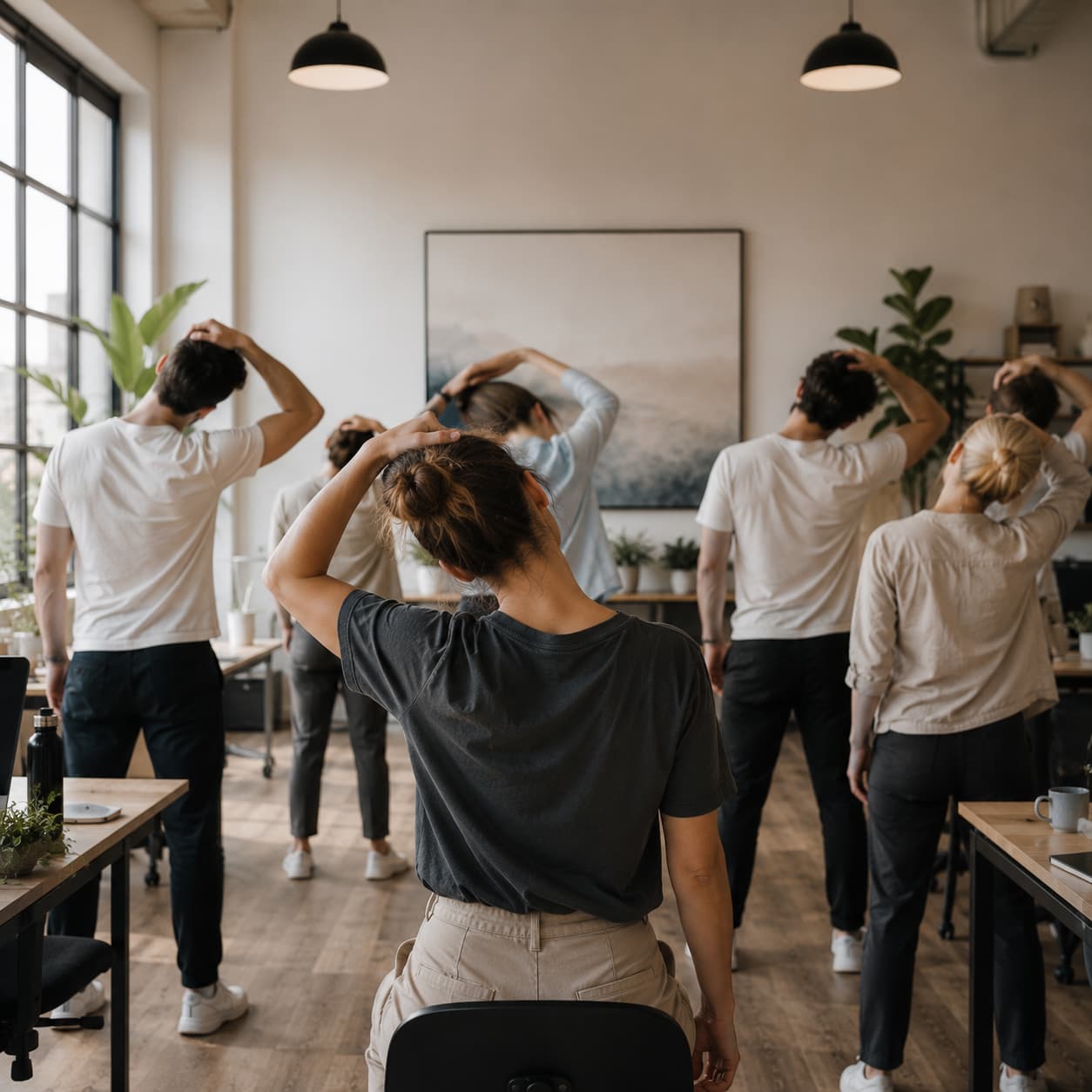
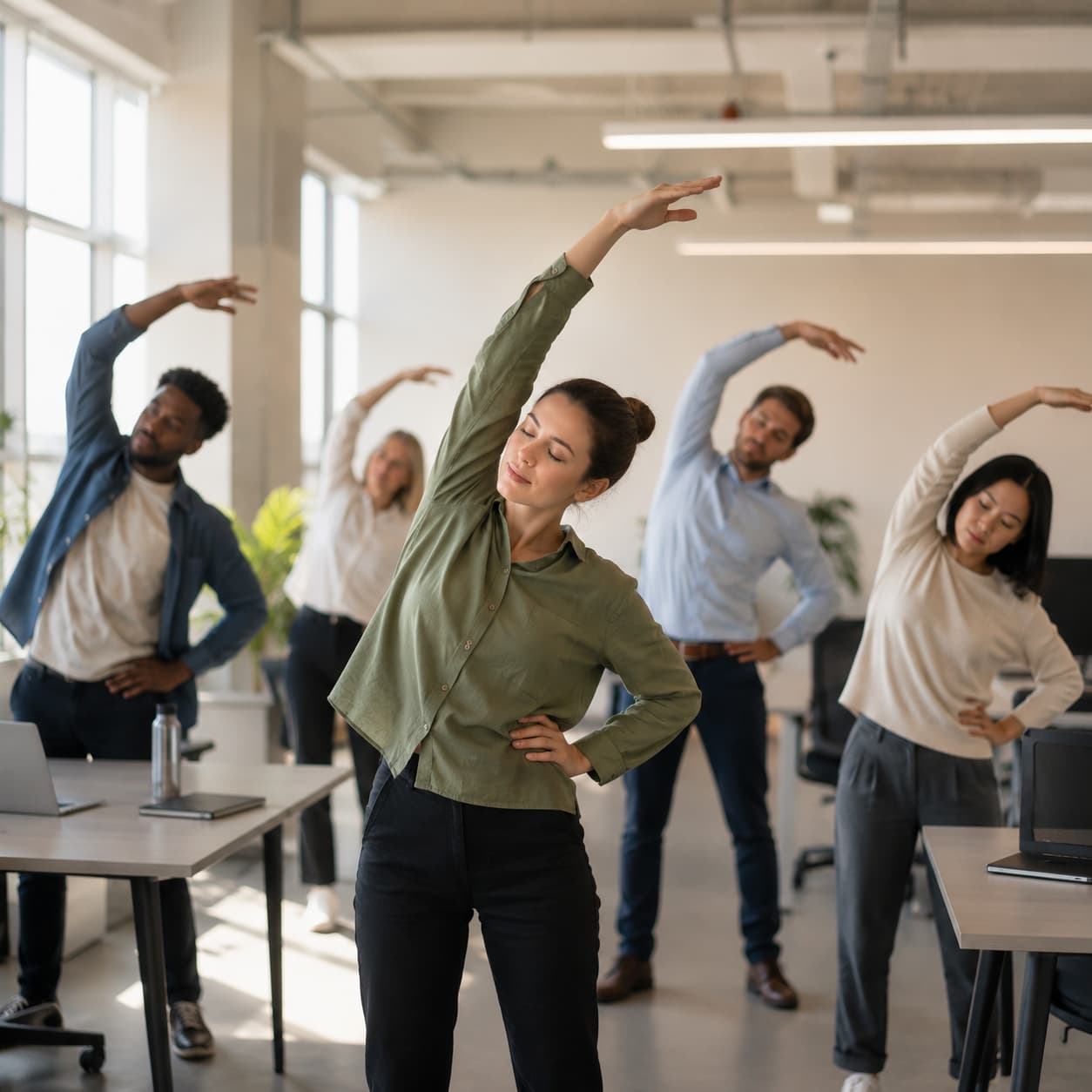
A session may include posture awareness, shoulder mobility, neck and upper-back movement, ribcage and breathing work, spinal movement, hip and leg resets, simple strength, balance, desk-based tools, standing sequences and a calmer finish.
The structure depends on the workplace, the team and the available space, but the aim stays the same: help people understand what desk-based work does to the body and give them movement tools they can use again.
A good session should leave employees thinking something like:
-
- “That actually helped.”
- “I did not realise I was that tense.”
- “I could use that between meetings.”
- “My shoulders feel better.”
- “That was much less awkward than I expected.”
That last one matters. Workplace wellbeing can get painfully cringey very quickly if it is delivered badly. Practical movement should feel grounded, professional and human, not like someone has trapped the finance team inside a wellness retreat they did not consent to.
Why posture support should be movement-based
Posture advice is often useless because it is too static.
“Sit up straight” is not a strategy. It is a temporary instruction, and most people obey it for about twelve seconds before returning to whatever shape their workload, fatigue and chair have negotiated between them.
Posture needs movement.
The body is not meant to hold one perfect position all day. It needs variation, strength, mobility, breath and awareness. A person can have a decent desk setup and still feel stiff if they barely move. Ergonomics can help, but no chair is magical. Even a very expensive chair cannot move your spine for you, which is rude, frankly, considering the price of some of them.
Workplace movement sessions teach posture through experience.
Employees learn how their shoulders, ribcage, spine, hips, breath and sitting habits affect how they feel. They learn how to reset without obsessing over perfection. They learn that posture is not about being rigid. It is about having more options.
That is a much healthier message.
Nobody needs to feel morally judged by their chair.
Why movement helps with fatigue and brain fog
Fatigue at work is not always about laziness or poor motivation.
Sometimes it is the result of mental overload combined with physical stillness. The brain is working hard, but the body is under-moving. There is pressure without release, concentration without breath, meetings without transition and screen time without enough physical reset.
That combination can leave employees feeling heavy, foggy and oddly drained, even when they have technically been sitting down all day.
Movement changes state.
It does not need to be intense. It does not need to be sweaty. It does not need to involve burpees, which should not be introduced into an office unless the carpet has done something truly unforgivable.
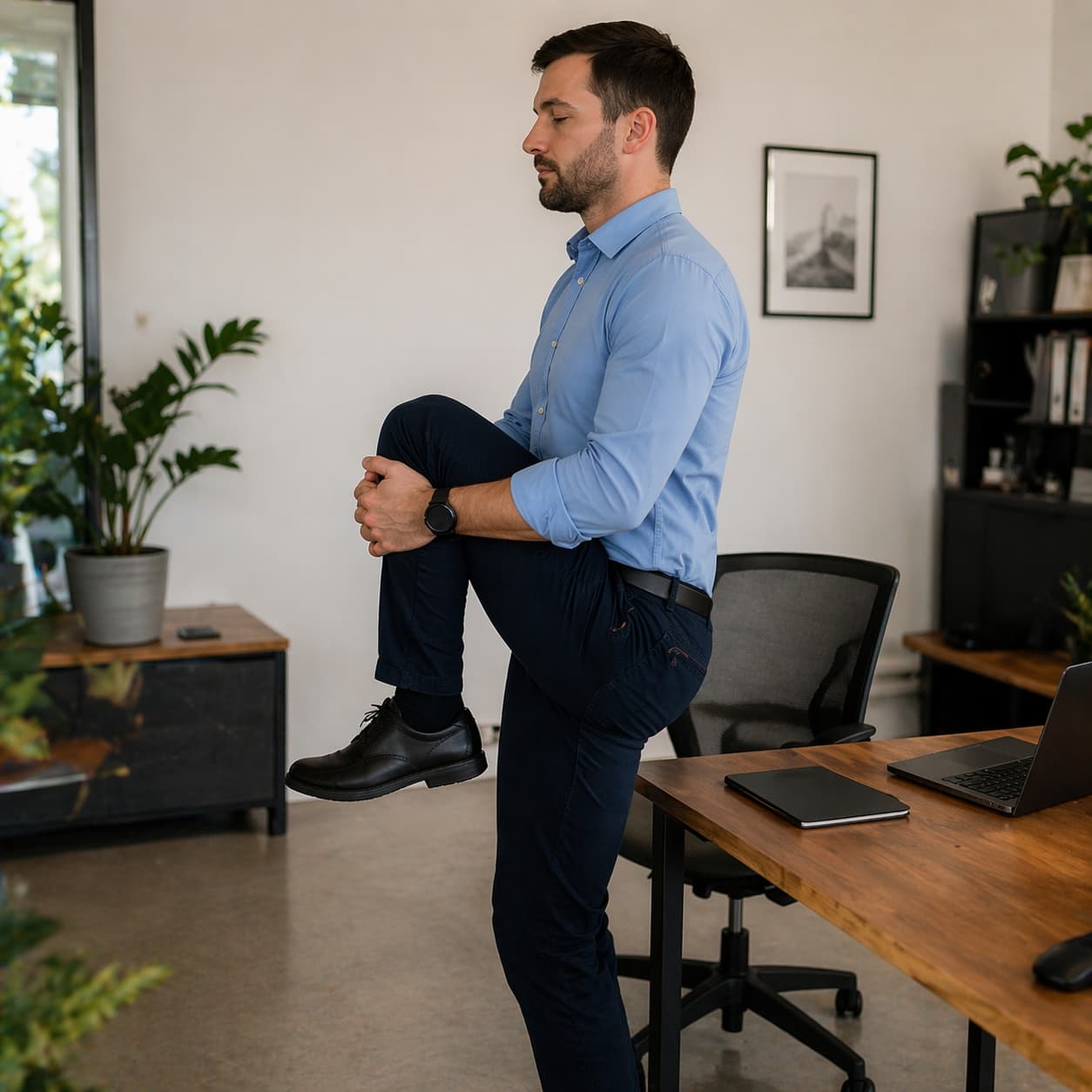
Simple movement can help employees feel more alert, more physically present and less trapped in one static pattern. Breath-led movement can support the nervous system. Shoulder and spinal movement can reduce stiffness. Standing resets can wake up the body. Short breaks can create clearer transitions between tasks.
For employers, this matters because energy and focus are not only mental issues.
They are physical, too.
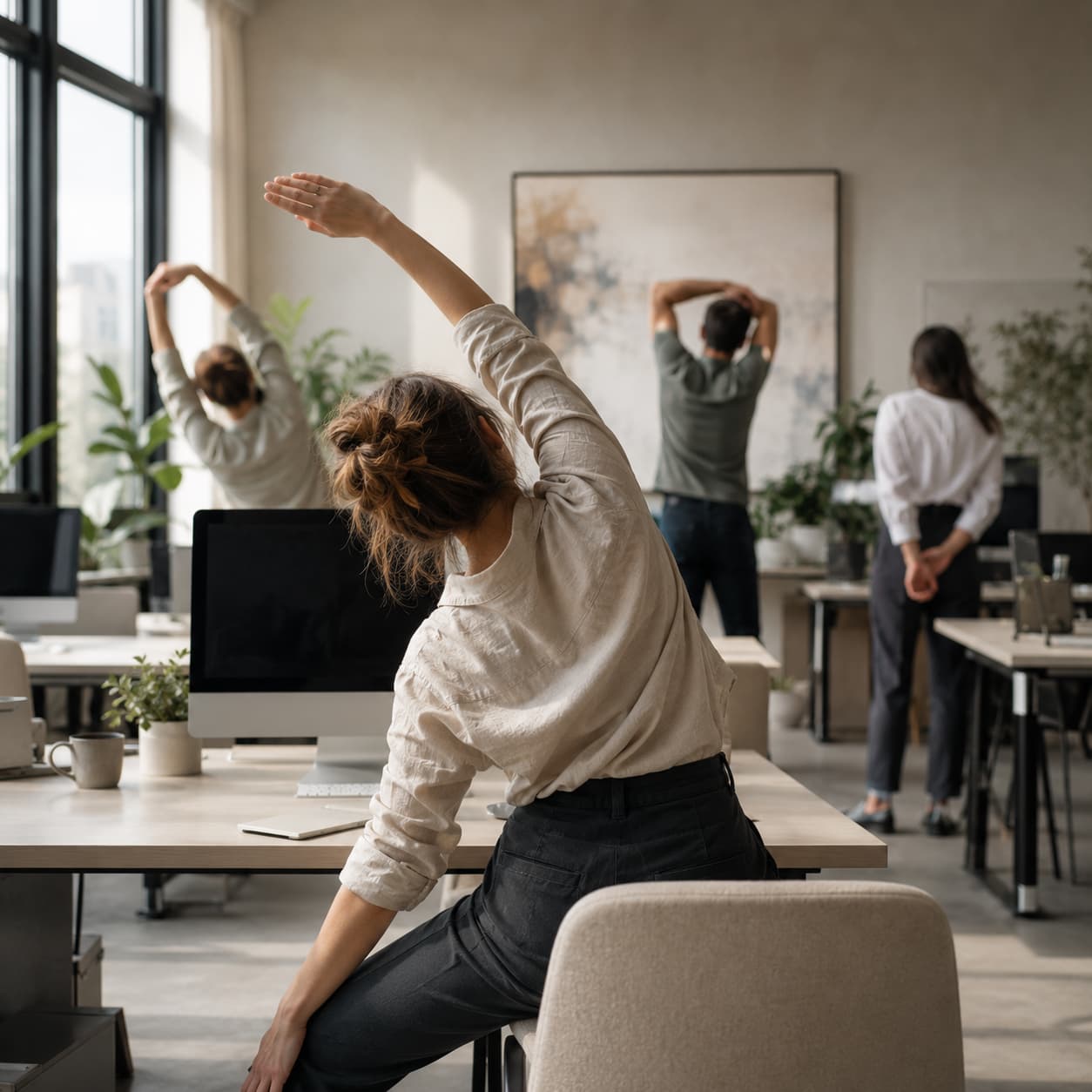
Why local delivery matters for Nottingham employers
For Nottingham employers, local workplace movement sessions can be easier to arrange, easier to repeat and more relevant to the working culture of local teams.
A local provider can deliver in offices, meeting rooms, workplace settings, staff development days, wellbeing events or team sessions without turning the whole thing into a giant logistical operation. This matters because workplace wellbeing often fails when it becomes too complicated. If booking the support feels harder than the original problem, nobody wins.
Local delivery also means the session can feel more grounded.
Not a generic corporate package delivered by someone who has no idea how the team works. Not a glossy wellbeing product with suspiciously cheerful stock photos and the emotional depth of a branded water bottle. Something practical, human and adaptable.
For Nottingham businesses, this can work especially well for:
| Workplace type | How sessions can help |
|---|---|
|
Office-based teams |
Support posture, stiffness, energy and focus |
|
Hybrid teams |
Teach tools employees can use anywhere |
|
Schools and education teams |
Support staff who spend long days standing, sitting and managing pupil demands |
|
Small businesses |
Offer practical wellbeing without a huge programme |
|
Professional services |
Help screen-heavy teams reset during demanding work |
|
Creative teams |
Support focus, posture and physical awareness |
|
Leadership teams |
Build better habits around breaks, energy and tension |
|
Wellbeing days |
Add something practical rather than another passive talk |
|
HR-led initiatives |
Provide measurable, experience-based support |
|
Meeting-heavy teams |
Create movement tools for task switching and mental fatigue |
One-off session or ongoing programme?
A one-off workplace movement session can be a very useful starting point.
It introduces the team to the work, gives employees immediate tools and helps employers see how staff respond. It can work well for wellbeing days, staff training days, team development sessions or companies testing whether workplace movement is the right fit.
But one session will not change habits by itself.
That is not a failure. It is just how bodies and habits work. People need repetition. They need reminders. They need to practise the tools until they feel familiar. They need movement to become normal in the working day, not something they did once in a meeting room and then forgot because the inbox returned with a knife.
An ongoing programme, such as Sit Happens, allows the work to build properly. A team can start with awareness, then develop mobility, posture support, breath, simple strength, energy resets, recovery tools and more confidence using movement independently.
The one-off session opens the door.
The programme helps people actually walk through it without immediately returning to laptop goblin posture.
How Sit Happens fits in
Sit Happens is a practical workplace movement programme designed for desk-based teams.
It exists because modern work asks people to sit, type, think, decide, meet, manage, write, listen, respond and stay professionally pleasant while their bodies are quietly filing complaints in the background.
The programme combines posture awareness, mobility, simple strength, breath, movement resets and calmer physical tools that employees can use during the working day. It is designed to reduce stiffness, support energy, improve body awareness and help teams manage the physical effects of desk-based work.
It is not fitness culture. It is not vague wellbeing fluff. It is not another lecture about stress. It is a workplace movement for real bodies doing real work.
You can explore the programme here: Sit Happens, or read more about the wider movement practice here: Movement.
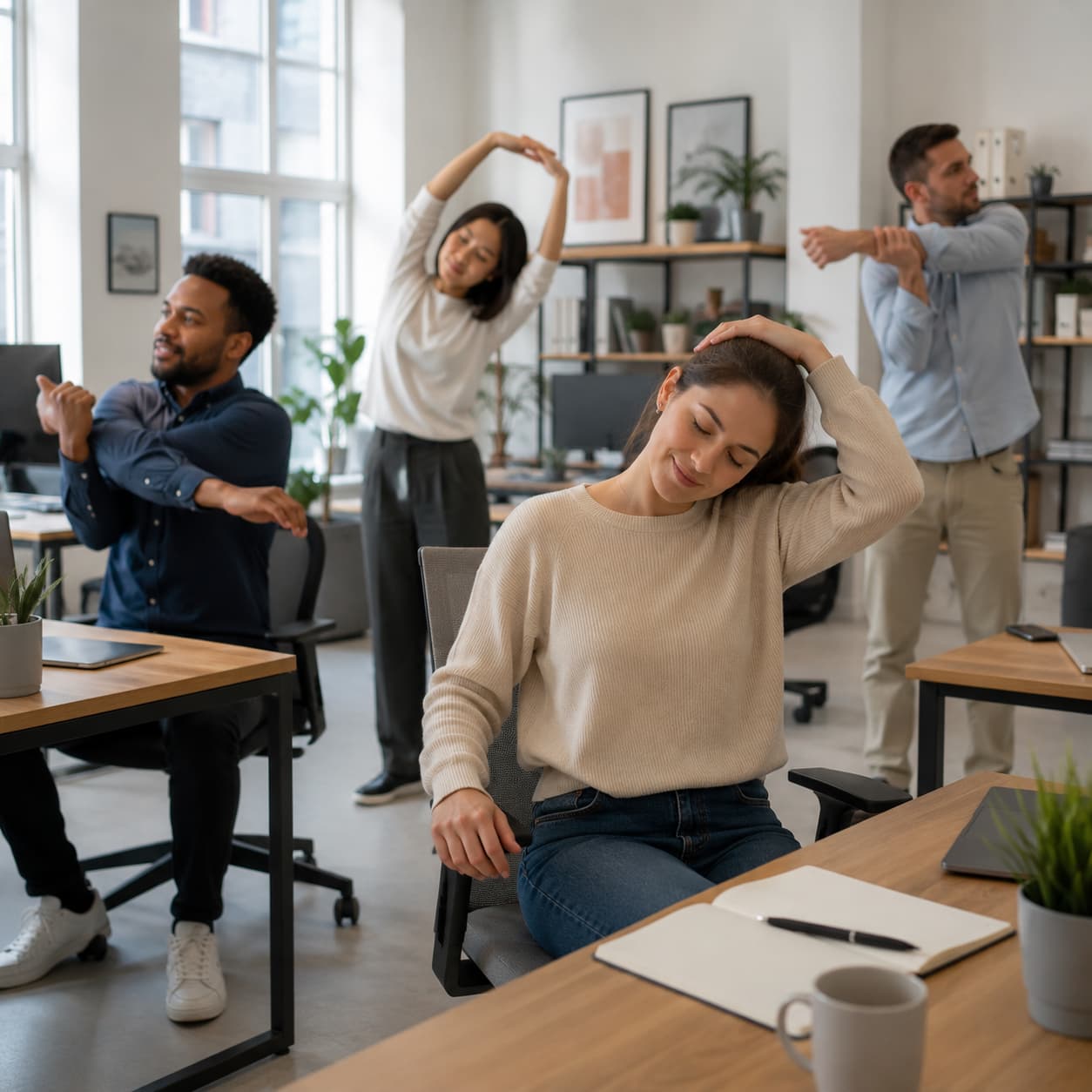
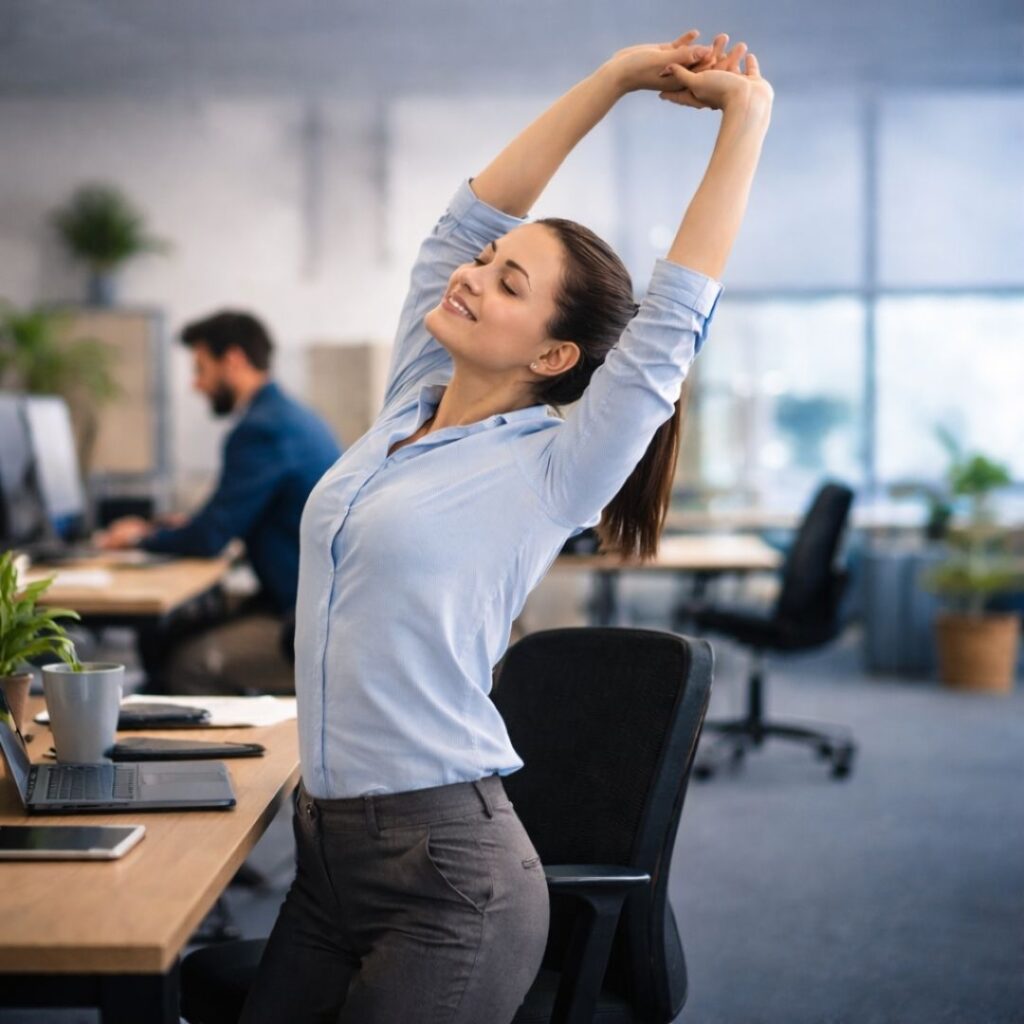
What employers should look for in a workplace movement provider
A workplace movement provider needs more than a movement qualification.
They need to understand the workplace.
Teaching adults in an office is not the same as teaching a studio class. Employees may feel self-conscious. They may be dressed for work. They may have injuries, stiffness, scepticism or zero desire to perform movement in front of colleagues. Some may be enthusiastic. Some may be deeply suspicious. Some may only be there because HR made the calendar invite sound compulsory without technically saying so.
The delivery has to respect that.
A good workplace movement provider should offer clear instruction, safe adaptations, calm confidence, practical tools, professional communication and a tone that does not make everyone want to crawl into the stationery cupboard.
They should understand posture, mobility, breath and simple strength, but they should also understand how to make movement feel normal and useful at work.
Look for someone who can:
| What to look for | Why it matters |
|---|---|
|
Teach clearly |
Employees need simple, usable instructions |
|
Adapt movement |
Mixed teams need options |
|
Avoid performance pressure |
Staff should not feel exposed or judged |
|
Understand desk-based strain |
The session must match the work environment |
|
Keep it practical |
Employees need tools they can repeat |
|
Manage the room calmly |
Workplace sessions need professional delivery |
|
Explain without lecturing |
People need context, not a biomechanics seminar |
|
Respect workplace culture |
The session should fit the team |
|
Offer clear formats |
Employers need to know what they are booking |
|
Support follow-up |
Habit change needs repetition |
Practical checklist before booking a workplace movement session
| Question | Why it matters |
|---|---|
|
Is your team mostly desk-based? |
The session should match the physical demands of the work |
|
Are employees reporting stiffness or fatigue? |
This helps shape the session focus |
|
Is brain fog or afternoon slump common? |
Movement resets can support energy and alertness |
|
Are staff hybrid or office-based? |
Tools should work across real work environments |
|
Do employees need desk-based options? |
Not every workplace has space for mat-based movement |
|
Would a one-off or programme work better? |
One session introduces tools, repeated sessions build habits |
|
Can the session happen during work time? |
Staff engage better when participation is genuinely supported |
|
Is the space suitable? |
Meeting rooms, offices and open spaces can all work with planning |
|
Do you want feedback from staff? |
Simple feedback helps show value |
|
What outcome matters most? |
Stiffness, energy, focus, posture or general wellbeing may shape the format |
Where workplace movement fits in a wellbeing strategy
Workplace movement should not replace proper wellbeing support. It should sit alongside it.
A strong wellbeing strategy may include mental health support, workload review, management training, flexible working, good communication, reasonable expectations, ergonomic awareness and clear boundaries. Movement does not replace those things, and it should never be used as a shiny distraction from bigger structural problems.
Employees are not daft. They know the difference between genuine support and a company handing them a breathing exercise while leaving the workload untouched.
But movement adds something essential. It brings the body into the wellbeing conversation.
Too many wellbeing strategies focus on advice, resources, awareness and signposting while forgetting that employees are sitting in actual bodies all day. Bodies that get stiff, tired, tense, underused and overloaded.
Workplace movement makes wellbeing more practical. It gives employees something they can do, feel and use. That is why it belongs in the mix.
What Nottingham employers should expect
Employers should expect a workplace movement session to be accessible, structured and practical.
It should not require employees to be fit, flexible or confident. It should not require a full gym setup. It should not make staff feel embarrassed. It should not become a motivational circus with lunges.
A good session should help employees understand their bodies better and leave with simple tools they can use at work.
That might mean a shoulder reset they can use between meetings, a breathing technique before a difficult call, a spinal movement after long sitting, a hip reset during the afternoon slump, or a posture cue that does not involve shame.
The best result is not that everyone leaves transformed. The best result is that staff leave with something useful.
Useful is underrated. Useful is what people remember.
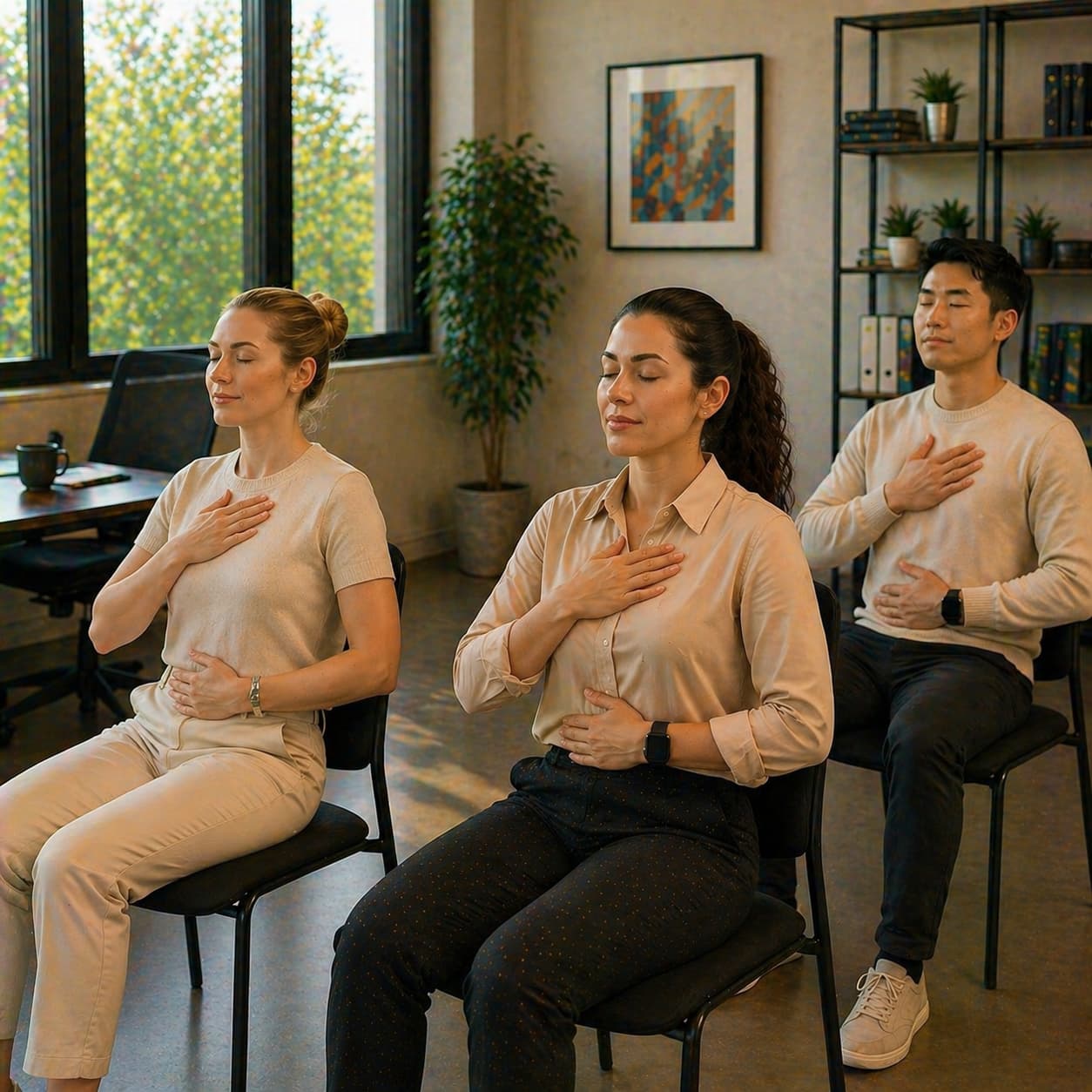
Final thoughts: workplace movement is practical wellbeing
Workplace movement sessions in Nottingham give local employers a grounded way to support teams who spend long hours sitting, working at screens and managing the physical strain of modern work.
They are not a replacement for good leadership, sensible workloads or proper wellbeing support.
They are not fitness classes. They are not token wellbeing.
They are practical sessions that help employees move better, notice tension earlier, reset posture, breathe more fully, reduce stiffness and manage fatigue with tools that fit the working day.
For desk-based teams, that matters. Because the body is not separate from focus, energy, mood or performance. It is part of all of it.
If people are expected to sit, think, decide, communicate and produce for hours at a time, their bodies need support too. That should not be controversial. It should be basic maintenance.
If your Nottingham team spends long hours sitting, working at screens, moving between meetings and dealing with stiffness, fatigue or brain fog, Sit Happens offers practical workplace movement sessions designed for real office life.
You can also explore the wider movement practice here: Movement.
Key takeaway
Workplace movement sessions help Nottingham employers support staff wellbeing in a practical, physical and accessible way. Instead of giving employees more advice about posture, stress and energy, these sessions teach simple movement tools that can reduce stiffness, support focus, improve body awareness and help teams feel less physically wrecked by desk-based work.
Frequently Asked Questions
Workplace movement sessions are practical movement sessions delivered in a work setting to help employees reduce stiffness, improve posture awareness, support energy and move more during the working day. They may include mobility, breath work, simple strength, posture resets and desk-based movement.
No. Workplace movement sessions may include elements of yoga, Pilates, mobility and breath work, but they are designed around the working day rather than a traditional yoga class. The focus is practical movement for desk-based teams.
They are suitable for office teams, hybrid teams, leadership teams, school staff, professional service teams and any employees who spend long periods sitting, working at screens or dealing with stiffness and fatigue during the day.
No. Employees do not need to be fit, flexible or experienced. Sessions should be accessible and adaptable, with options for different bodies, confidence levels and movement experience.
Yes. They can support posture by helping employees build awareness, mobility, breath and simple strength. The aim is not to force one perfect sitting position, but to help people move, reset and support their bodies through the day.
It can help by giving employees physical resets during the working day. Short movement breaks can support circulation, breath, alertness and body awareness, which may help reduce the sluggish feeling that builds during long periods of sitting.
Yes. Workplace movement sessions can be delivered in offices, meeting rooms or suitable workplace spaces. Many movements can be done standing, seated or using minimal space.
Yes. Hybrid teams can benefit because the tools can be used both at home and in the office. This is useful when employees have different work setups and need practical ways to support their bodies wherever they work.
Sessions can vary depending on the employer’s needs. A shorter session may work well as an introduction or wellbeing day activity, while a longer session or repeated programme gives more time for practice, progression and habit-building.
Sit Happens is a practical workplace movement programme for desk-based teams. It combines posture awareness, mobility, simple strength, breath and movement resets to help employees reduce stiffness, fatigue and brain fog during the working day.
Employers can use simple staff feedback before and after sessions to track changes in stiffness, energy, focus, posture awareness and confidence using movement tools. Longer programmes can also track attendance, engagement and repeated use of resets.
Nottingham employers can explore the Sit Happens programme here: Sit Happens.