
Kids Movement Classes in West Bridgford: What Happens in a Session?
TL;DR
Kids movement classes in West Bridgford are structured sessions combining elements of yoga, Pilates, coordination, balance, mobility, breathing and strength-based movement in a calm, inclusive environment designed specifically for children.
The sessions are not military fitness drills disguised as childhood development, nor are they chaotic “burn energy” classes where everyone spends forty-five minutes screaming while cartwheeling into folding chairs.
Children move, strengthen, balance, stretch, breathe and build confidence through carefully structured activities that support posture, coordination, focus, body awareness and emotional regulation while still feeling engaging and enjoyable.
The emphasis sits on movement quality, confidence and participation rather than competition or performance pressure.
To learn more, visit Children’s Yoga & Pilates in West Bridgford or read Children’s Movement Classes in Rushcliffe: Yoga, Pilates and Confidence Through Movement.
Definition: what are kids movement classes?
Kids movement classes are structured physical sessions designed to support children’s coordination, balance, posture, mobility, strength, confidence and body awareness through age-appropriate movement activities. Sessions may include elements of yoga, Pilates, breathing, functional movement, balance work and mobility exercises adapted specifically for children.
Why children often need something different from traditional sports clubs
A lot of children enjoy competitive sport and absolutely thrive inside those environments.
They love football, gymnastics, athletics, dance, martial arts or team-based activity where energy is high, movement is fast and competition feels exciting rather than intimidating. Those environments can build resilience, teamwork and physical confidence brilliantly when the child genuinely connects with them.
But not every child experiences movement that way.
Some children become overwhelmed by loud environments and constant competition. Some quietly decide they are “bad at movement” because they are not the fastest, strongest or most naturally coordinated child in the room. Others physically need more support with posture, coordination, balance and body awareness before they feel comfortable participating confidently in more performance-based activities.
That is often where structured movement classes help enormously.
The focus shifts away from constant comparison and towards helping children actually understand and feel their own body more clearly. Instead of movement being entirely performance-driven, children begin learning how to balance, stabilise, breathe, coordinate, strengthen and move with more awareness and confidence.
Importantly, this does not mean the classes are passive or overly soft.
Children still move properly. They strengthen. They challenge balance. They improve mobility. They learn coordination patterns. They build physical confidence. The environment simply feels calmer, more inclusive and more structured than many high-energy sports settings.
And honestly, quite a lot of children need exactly that.
What actually happens during a session?
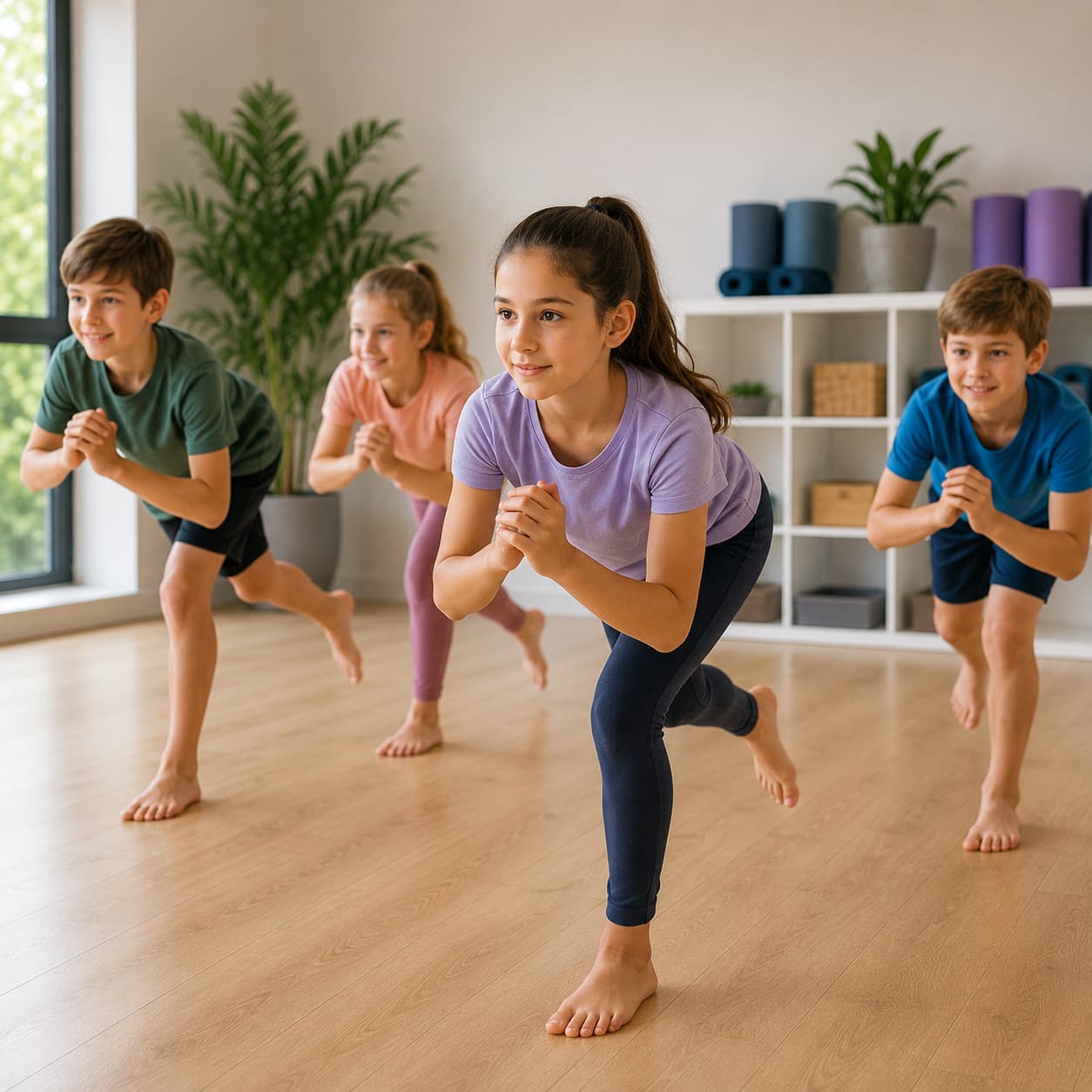
Most children’s movement sessions follow a structured flow because children generally respond extremely well to predictable physical environments. When children know what to expect physically, they usually settle faster, participate more confidently and regulate their energy more successfully throughout the class. A typical session may include:
-
- Arrival and grounding activities
- Warm-up movement and mobility
- Coordination and balance exercises
- Yoga or Pilates-inspired movement patterns
- Strength and posture work
- Partner or group activities
- Breathing and focus exercises
- Gentle mobility or stretching
- A calmer closing sequence
The structure itself matters because many children thrive when movement feels organised rather than chaotic. The aim is not simply to tire children out. It is to help them feel more physically connected, coordinated and confident while still enjoying the process.
Children often move through the session without even fully realising how many developmental skills they are building simultaneously because the activities are woven together naturally rather than presented like a formal training programme designed by somebody aggressively obsessed with optimisation podcasts.
Why the warm-up matters more than parents often realise
The beginning of the session is not just about “burning energy.”
A good warm-up helps children transition physically and emotionally into the space. Many children arrive carrying the sensory overload of the school day, social dynamics, classroom concentration or excess physical restlessness from sitting for long periods. The opening part of class helps settle the nervous system while gradually preparing the body for movement.
Warm-ups may include mobility patterns, playful movement sequences, balance work, walking patterns, coordination drills or breathing-focused movement depending on the age group.
This stage also gives children time to reconnect with physical awareness before progressing into more structured movement work. Some children arrive highly energetic and dysregulated. Others arrive anxious, tired or withdrawn. The warm-up helps bring the group into a more shared physical rhythm without needing to force calm through endless verbal correction.
Children generally regulate more successfully through movement than through constant instructions. That matters enormously.
Why balance and coordination are such a big part of the sessions
Many children now spend large portions of the day sitting, using screens or moving within relatively repetitive environments. As a result, balance, coordination and body awareness often need far more support than people realise.
Children may struggle standing confidently on one leg, controlling movement smoothly, coordinating opposite sides of the body or maintaining posture comfortably for sustained periods. Sometimes this shows up physically. Sometimes it shows up behaviourally because children who feel physically disorganised often become frustrated, distracted or avoidant.
Movement classes help build these foundations gradually. Children may work on:
-
- Single-leg balance
- Cross-body coordination
- Spatial awareness
- Controlled movement transitions
- Stability and posture
- Rhythm and timing
- Movement sequencing
- Core strength and body control
This is one reason Primary School Movement Sessions: What Pupils Actually Need Beyond PE matters so much for schools and parents alike. Foundational movement skills influence far more than sport. They affect posture, concentration, confidence and physical comfort throughout childhood.
And unlike adults, children are still building those movement maps in real time.
How yoga and Pilates are adapted for children
Children’s yoga and Pilates should never feel like miniature adult wellness culture awkwardly shrunk into child-sized leggings.
Children do not need deep spiritual lectures about alignment while sitting in candlelight pretending to understand their inner journey before Year 5 maths homework. They need movement that feels engaging, structured and physically supportive for their actual developmental stage.
Yoga and Pilates elements are adapted through:
-
- Simpler language
- More movement variation
- Shorter activity transitions
- Playful sequencing
- Age-appropriate challenges
- Clear structure and repetition
- Balance between focus and fun
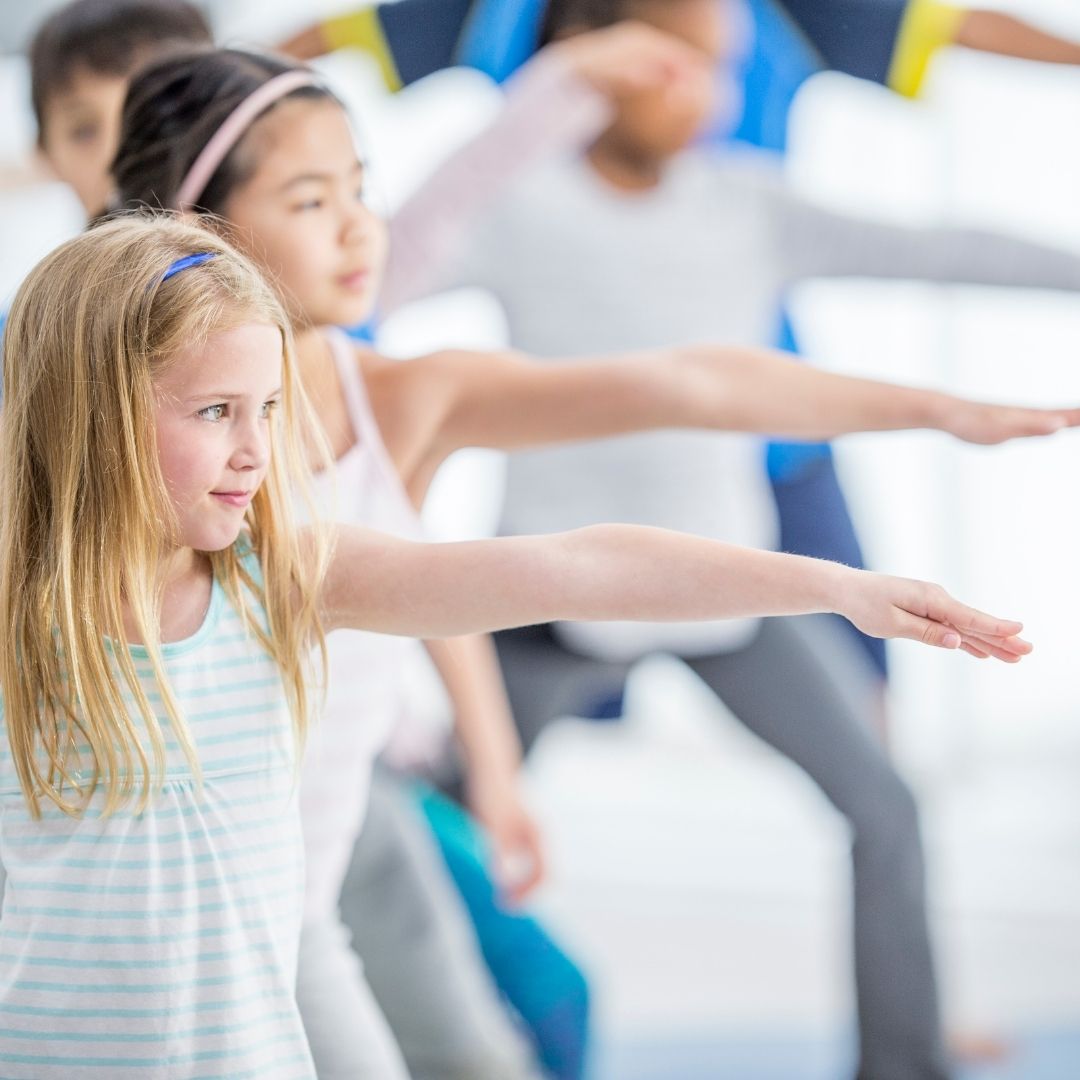
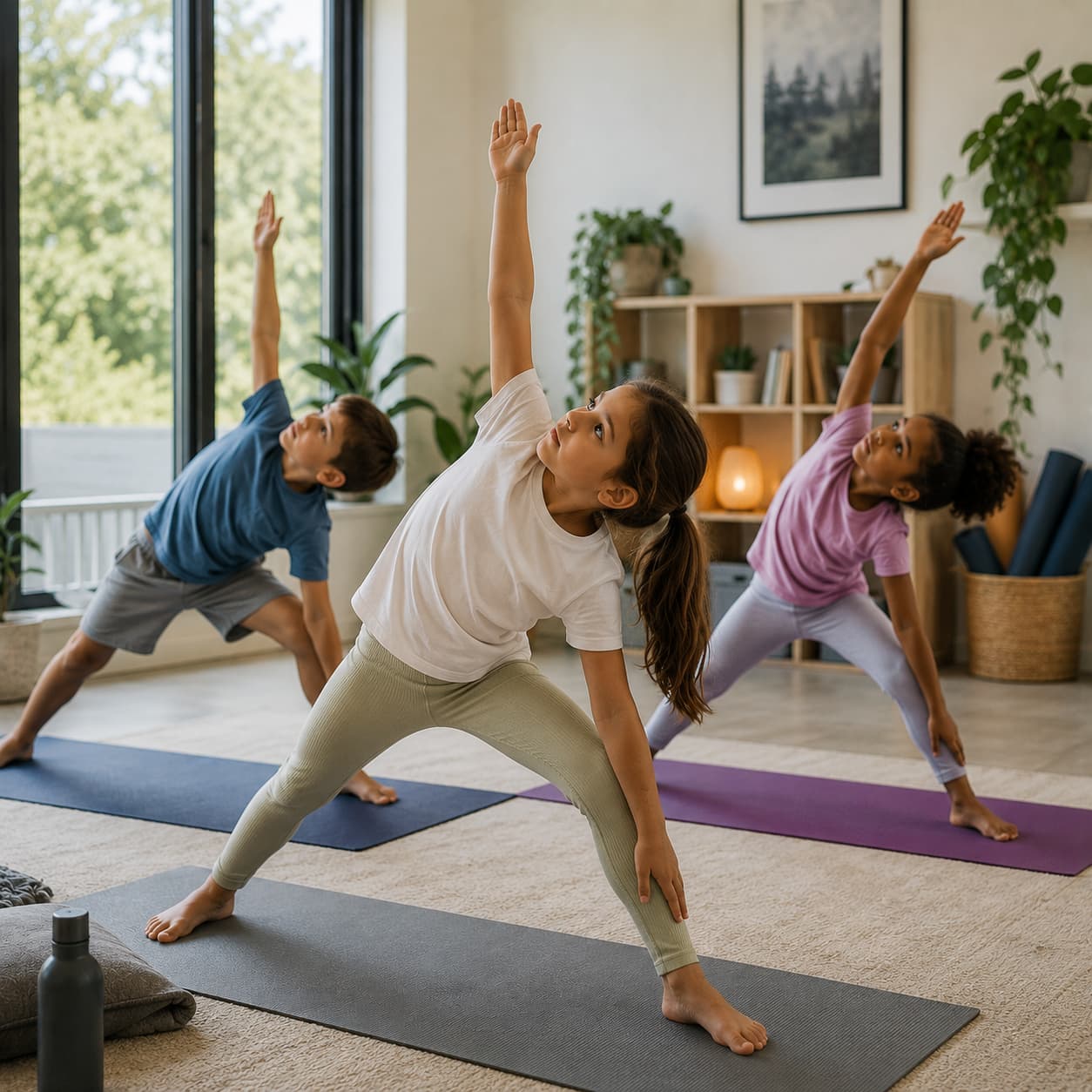
Children may practise breathing, mobility, balance, posture and strength through movement patterns inspired by yoga and Pilates, but delivered in a way that feels natural for children rather than overly formal or performative.
This is explored further in Children’s Yoga vs Children’s Pilates: Which Class Is Right for Your Child?, where the differences between the approaches become much clearer for parents trying to decide what may suit their child best.
Because ultimately, the goal is not creating tiny wellness influencers. The goal is to help children move and feel better.
Why strength work is included too
A lot of people still hear “children’s movement” and imagine only stretching, breathing or soft mobility work.
In reality, children need strength too. Not bodybuilding. Not aggressive conditioning. Actual foundational strength.
Children benefit enormously from learning how to stabilise their body, support posture, control movement and develop physical confidence through age-appropriate strengthening activities. This may include balance holds, crawling patterns, standing strength work, core stability, controlled transitions or movement sequences that challenge coordination and control simultaneously.
Importantly, this strength work is integrated naturally into the class rather than framed as punishment or performance.
Children often enjoy challenge when it feels achievable and supportive instead of constantly competitive. Building physical capability gradually helps children trust their body more, which often improves confidence far beyond the movement class itself.
This is especially important for children who currently avoid physical activity because they already feel physically “behind.”
Movement confidence develops through successful experiences, not humiliation.
Why breathing and regulation are part of the sessions too
Children experience stress physically just like adults do. Some children become physically restless when overwhelmed. Others withdraw. Some struggle concentrating after long school days. Others feel emotionally overloaded without fully understanding why.
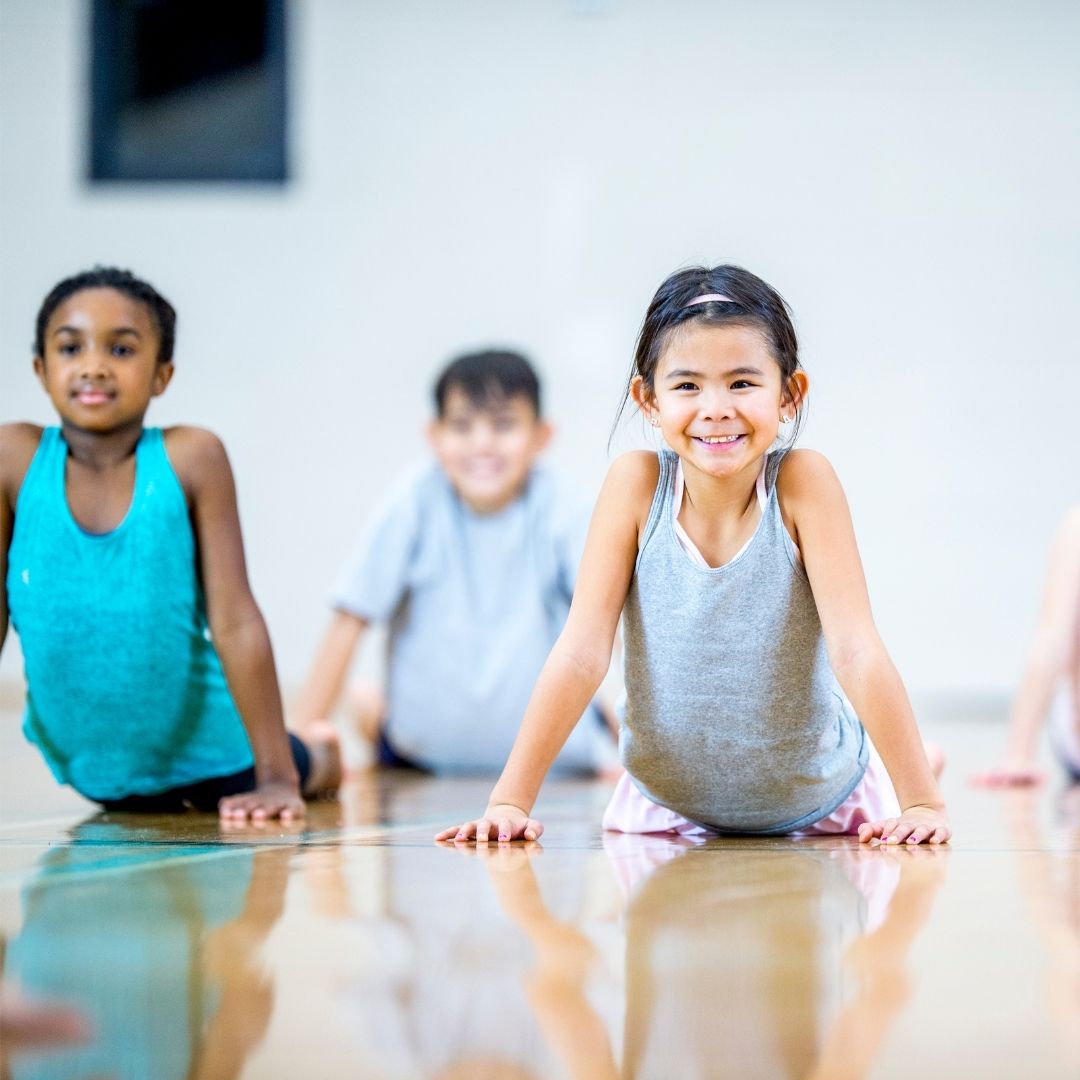
Breathing and calmer movement help children regulate physically without making the sessions feel heavy or therapeutic in an awkward, forced way. Children may practise:
-
- Slower breathing
- Movement with breath awareness
- Calmer transitions
- Grounding exercises
- Focus-based balance work
- Relaxation at the end of class
These tools help children learn how movement affects how they feel physically and emotionally. That awareness becomes incredibly valuable over time because children begin recognising how to settle themselves physically instead of remaining permanently overstimulated.
Again, this does not mean the class becomes silent meditation while everyone levitates emotionally above the church hall floor.
Children still laugh, move, wobble and occasionally fall over dramatically like confused baby giraffes discovering balance for the first time. They are still children. The environment simply supports regulation rather than chaos.
Why confidence is one of the biggest outcomes parents notice
One of the most important things movement classes can give children is not flexibility or posture. It is confidence.
Children who feel physically capable usually participate more comfortably in life generally. They move differently socially. They carry themselves differently. They become more willing to try unfamiliar things because they trust their body more.
This confidence does not usually appear through pressure or comparison. It develops gradually through repeated positive experiences where children feel capable, included and physically supported.
-
- A child balancing successfully after struggling initially.
- A child participating without fear.
- A child learning coordination patterns more confidently.
- A child realising movement does not have to feel embarrassing or stressful.
These moments matter far more than people sometimes realise. Because children form relationships with movement very early, and those relationships often continue well into adulthood.
Decision box: who are these classes especially good for?
| What pupils may struggle with | How movement sessions help |
|---|---|
|
Poor coordination |
Builds movement foundations gradually |
|
Low confidence in sport |
Creates calmer participation environments |
|
Difficulty focusing |
|
|
Physical restlessness |
Channels movement more constructively |
|
Poor posture |
Encourages mobility and body awareness |
|
Reduced balance |
Improves stability and coordination |
|
Emotional dysregulation |
Introduces calmer physical regulation tools |
|
Fear of competition |
Removes constant performance comparison |
|
Low body awareness |
Helps children connect with movement safely |
|
Excessive sitting |
Reintroduces movement variety into the day |
Why structure matters so much in children’s movement sessions
Children generally thrive when sessions feel predictable enough to create safety while still containing enough variation to remain engaging.
Completely chaotic environments often dysregulate children further because their nervous systems remain overstimulated throughout the session. Overly rigid environments can also create anxiety because movement begins feeling overly corrected or performative.
Good movement classes sit somewhere in the middle.
The structure feels calm and clear, but the sessions still feel enjoyable and dynamic enough for children to remain engaged physically and emotionally.
This balance becomes especially important in mixed groups where children arrive with completely different personalities, confidence levels and energy states. Some children need calming. Others need activation. Some need reassurance. Others need a challenge.
Structured movement allows all of that to coexist more successfully.

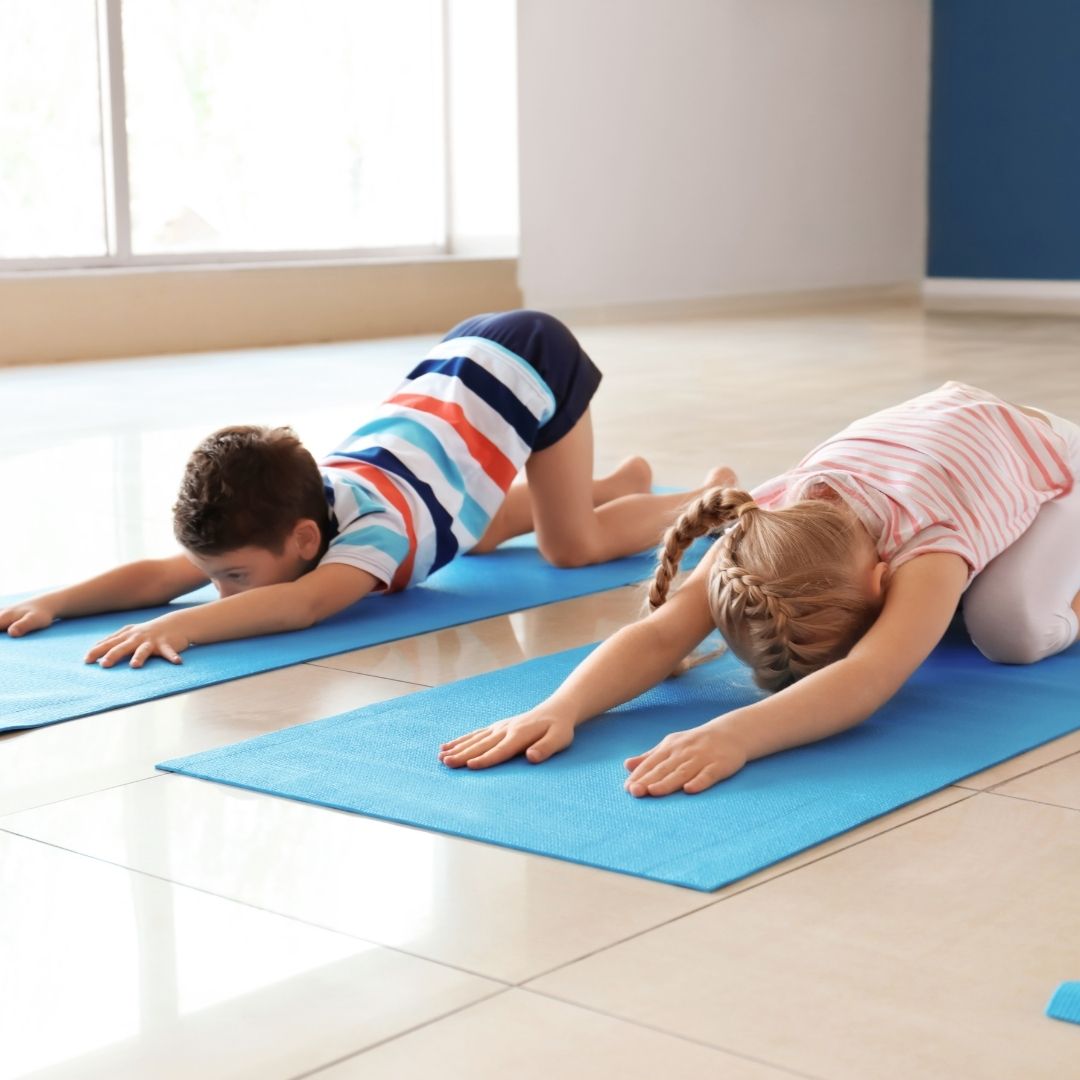
Comparison table: kids movement classes vs typical sports clubs
| Traditional PE | Structured movement sessions |
|---|---|
|
Often sport-focused |
Focuses on movement foundations |
|
Can involve competition |
Usually calmer and less competitive |
|
Builds teamwork and athletic skills |
Builds coordination and body awareness |
|
Fast-paced group activities |
More controlled movement patterns |
|
Strong for physical activity |
Strong for regulation and posture |
|
Great for sport participation |
Great for movement confidence |
|
Often externally performance-based |
More internally awareness-based |
|
Develops game skills |
Develops foundational movement quality |
|
Valuable for active play |
Valuable for calmer physical regulation |
|
Important for all pupils |
Complements PE rather than replacing it |
Practical checklist: what parents should expect from a good session
| What schools should consider | Why it matters |
|---|---|
|
Age-appropriate delivery |
KS1 and KS2 pupils need different structures |
|
Calm classroom management |
Sessions should support regulation, not chaos |
|
Inclusive teaching style |
All pupils should feel able to participate |
|
Strong safeguarding understanding |
Essential in school settings |
|
Clear physical structure |
Predictability helps children feel safe |
|
Balance of movement and focus |
Sessions should feel engaging but grounded |
|
Practical school experience |
School delivery differs from studio teaching |
|
Adaptability for mixed abilities |
Classes should support varied needs |
|
Emotional awareness |
Many children regulate physically |
|
Sustainable delivery |
Schools need provision that fits real timetables |
Final thoughts: children need movement that helps them feel good in their body
Children do not need every movement environment to revolve around competition, performance or constant comparison. Many children need calmer spaces where they can build confidence, coordination, strength and body awareness gradually without feeling judged for not being the fastest or most naturally sporty child in the room.
That is what good movement classes provide. Children move properly.
-
- They strengthen.
- They balance.
- They coordinate.
- They breathe.
- They learn how their body works.
And most importantly, they begin building a healthier relationship with movement itself. Because ultimately, the real goal is not creating perfect posture or tiny athletes.
It is helping children feel physically confident enough to move through life comfortably in their own bodies. And honestly, that matters far beyond childhood movement classes.
To learn more about local movement classes, visit Children’s Yoga & Pilates in West Bridgford or explore School Movement Programmes in Nottingham.
You can also read:
Children’s Yoga vs Children’s Pilates: Which Class Is Right for Your Child?
Children’s Movement Classes in Rushcliffe: Yoga, Pilates and Confidence Through Movement
Primary School Movement Sessions: What Pupils Actually Need Beyond PE
Key takeaways
A good children’s movement class should help children feel stronger, calmer, more coordinated and more confident inside their own body rather than simply exhausting them for forty-five minutes and sending them home sweaty with a sticker and emotional confusion.
Frequently Asked Questions
Children usually take part in structured movement activities including balance work, mobility, yoga-inspired movement, Pilates-based exercises, coordination drills, breathing and strength activities.
No. The classes focus more on confidence, coordination and participation rather than competition or performance pressure.
Yes. Many quieter or anxious children respond very positively to calmer movement environments where the emphasis is not entirely performance-based.
Classes are adapted for different age groups so that activities remain appropriate for children’s developmental stage and attention span.
No. The sessions are designed to support children with varied movement confidence and experience levels.
Yes. Children move, strengthen, balance and coordinate throughout the class while still working within a calm and structured environment.
Children build confidence gradually through positive movement experiences, improved body awareness and feeling physically capable inside a supportive environment.
Yes. Children’s Pilates is adapted specifically for children and focuses on posture, coordination, strength and controlled movement in age-appropriate ways.
Breathing and calmer movement help children regulate energy, improve focus and feel more physically settled after busy school days.
Children should usually bring comfortable clothing, water and their own mat where requested.